Quick answer: Red light therapy is a real thing with a real mechanism and a genuinely mixed evidence record. It has expert-panel backing for pattern hair loss and several wound types, decent controlled evidence for skin aging, weak-to-moderate evidence for some kinds of pain, and no accepted evidence at all for weight loss. Almost everything else you have read sits somewhere in between.
The problem with most writing on this topic is that it treats "does red light therapy work" as one question. It isn't. The light is the same; the claims are not. So this page grades them separately, and every grade points to the page where the underlying trials are laid out.
What red light therapy actually is
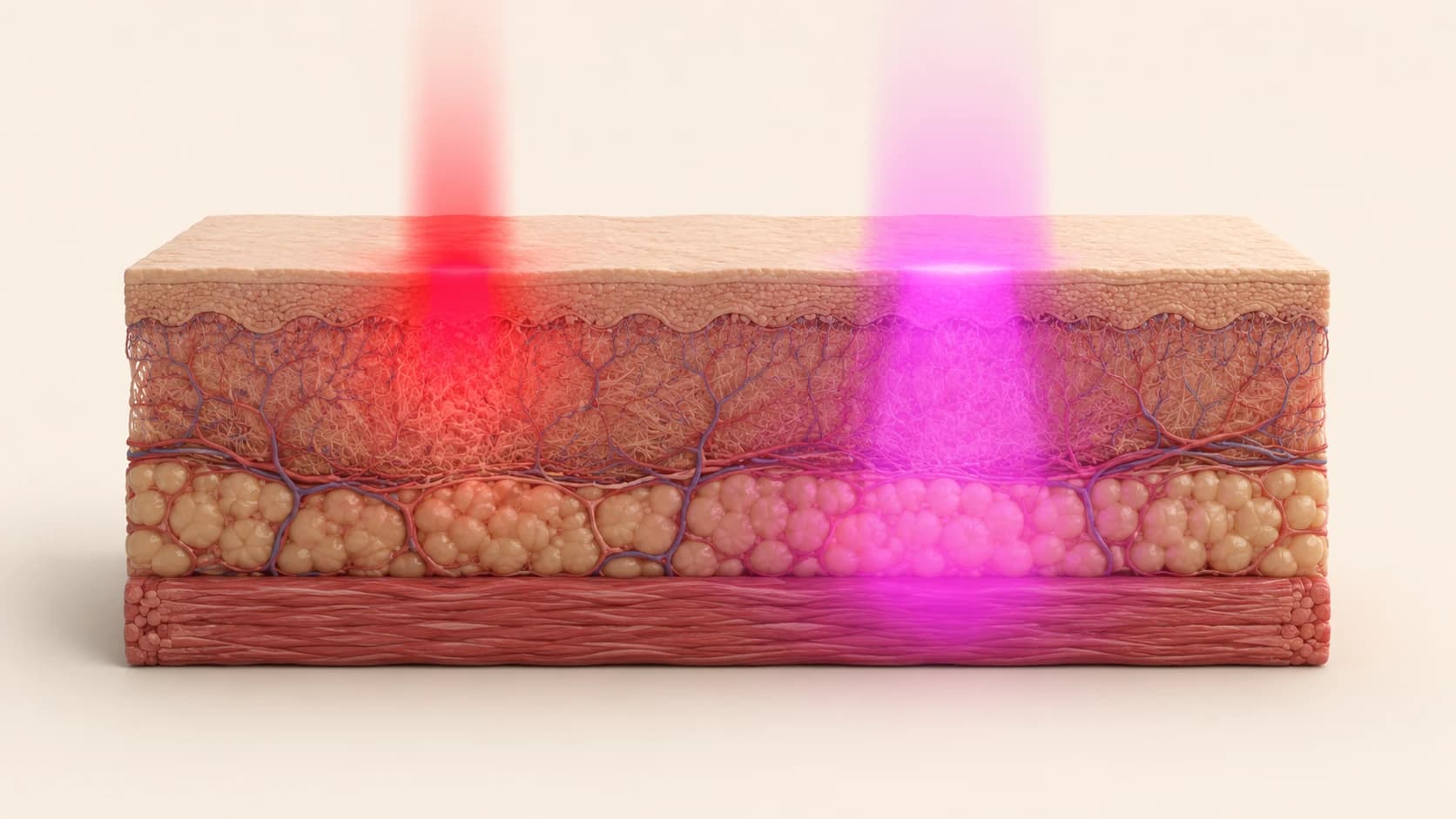
Red light therapy is the consumer name for what the research literature calls photobiomodulation (PBM). A 2024 CME review in the Journal of the American Academy of Dermatology defines it as the use of red light, roughly 620–700 nm, and near-infrared light, roughly 700–1440 nm, at non-thermal power levels (JAAD CME, 2024).
Three things follow from that definition, and they rule out most of the fear and most of the hype at once:
- It is not UV. Red and near-infrared light sit at the opposite end of the visible spectrum from ultraviolet. There is no tanning, no UV burn risk and no UV-driven DNA damage pathway.
- It is not heat therapy. "Non-thermal" is part of the definition. An infrared heat lamp that warms your skin is doing something different from a 660 nm LED panel.
- It is dose-dependent in an awkward way. More is not better — see the section on dose below, which is the single most misunderstood part of this whole field.
If you want the cellular detail — cytochrome c oxidase, ATP, why 660 nm and 850 nm are the two numbers on every box — that is laid out in how red light therapy works.
What the evidence supports, claim by claim
This is the table most buying guides won't publish, because most of the rows are unflattering.
| Claim | What the best available evidence says | Where to read the trials |
|---|---|---|
| Skin aging, wrinkles, collagen | A randomised controlled trial in 136 people found improved complexion, reduced skin roughness and increased intradermal collagen density | Red light therapy for skin |
| Pattern hair loss | Endorsed by the 2025 JAAD expert consensus; a 16-week sham-controlled trial found +41.9 hairs/cm² vs +0.7 in controls | Red light therapy for hair growth |
| Wound ulcers, radiation dermatitis, peripheral neuropathy | Sufficient evidence per the same 2025 expert consensus — but these are clinical, supervised uses, not home ones | — |
| Muscle soreness and recovery | Meaningful but modest; strongest before exercise and at 72–96 hours after | Muscle recovery guide |
| Joint and musculoskeletal pain | Statistically positive for knee osteoarthritis but at very low GRADE certainty; better for rheumatoid arthritis hands, short-term only | Red light therapy for pain |
| Acne | A Cochrane review of 71 trials concluded high-quality evidence is lacking | Red light therapy for skin |
| Depression and mood | The real evidence is for bright white light, not red light | Light therapy for depression |
| Weight loss | No accepted evidence. Cleveland Clinic states this plainly | Red light therapy for weight loss |
The 2025 consensus in the top rows came from an international panel of 21 experts who ran a systematic review and a two-round Delphi process, and it found sufficient evidence for photobiomodulation in peripheral neuropathy, androgenetic alopecia, wound ulcers of various causes, decubitus ulcers, diabetic foot ulcer pain and acute radiation dermatitis (Maghfour et al., 2025). Notice what is not on that list: nothing about fat, nothing about detox, nothing about metabolism.
For the fuller version of the positive column, see red light therapy benefits. For the honest version of "will it work for me", see does red light therapy work.
The caveat that applies to every row above
Most of the trials that produced those positive numbers used clinical laser devices, not the LED panels and masks sold for home use. A 2024 review in the Journal of Functional Morphology and Kinesiology notes that LED light does not penetrate the way the coherent laser light used in clinics does (Lawrence & Sorra, 2024). Cleveland Clinic puts the consumer version of the same point more simply: at-home devices "may be less powerful than devices that may be used by dermatologists or other trained skin professionals" (Cleveland Clinic).
That does not make home devices useless. It means the honest expectation for a home panel is some fraction of a modest clinical effect, and any page that quotes a laser trial to sell you an LED mask has skipped a step.
Dose: why more is not better
Photobiomodulation follows a biphasic dose response: too little light does nothing, a middling dose helps, and past a certain point the benefit shrinks and then reverses. Huang and colleagues documented this across cell and animal models — cultured fibroblasts peaked at 2.5 J/cm² and were damaged at 10 J/cm², and in a brain-injury model a dose of 36 J/cm² worked while 360 J/cm² made the benefit "totally disappear" (Huang et al., 2011).
This is why "I'll just leave it on longer" is not a strategy, and why the sensible protocol questions are covered separately in how often you should use red light therapy.
Red light therapy pros and cons
| Pros | Cons |
|---|---|
| Good safety record in adults; the 2025 expert consensus concluded red light PBM does not cause DNA damage | Effects are gradual and modest, and highly claim-specific |
| No UV exposure, no downtime, no needles | Most strong trials used clinical lasers, not consumer LEDs |
| Genuinely supported for a short list of uses | Home device output is inconsistent and rarely third-party verified |
| Can be done at home once you own the device | Entirely out of pocket, and prices range from tens to hundreds |
| Few reported side effects when used as directed | Overuse can reduce the benefit rather than increase it |
| Sessions are short — typically minutes, not hours | Requires months of consistency before you can judge it |
If a single row from that table decides it for you, it should probably be the second one on the right.
Safety, in one paragraph
Red light therapy is generally well tolerated. Cleveland Clinic describes it as appearing safe and not associated with side effects when used short-term and as directed, while noting that misuse — too often, or against the instructions — can damage skin or unprotected eyes (Cleveland Clinic). The detail lives in two places: red light therapy side effects for what actually gets reported, and who should not use red light therapy for the specific groups who should check with a clinician first.
Choosing a device, briefly
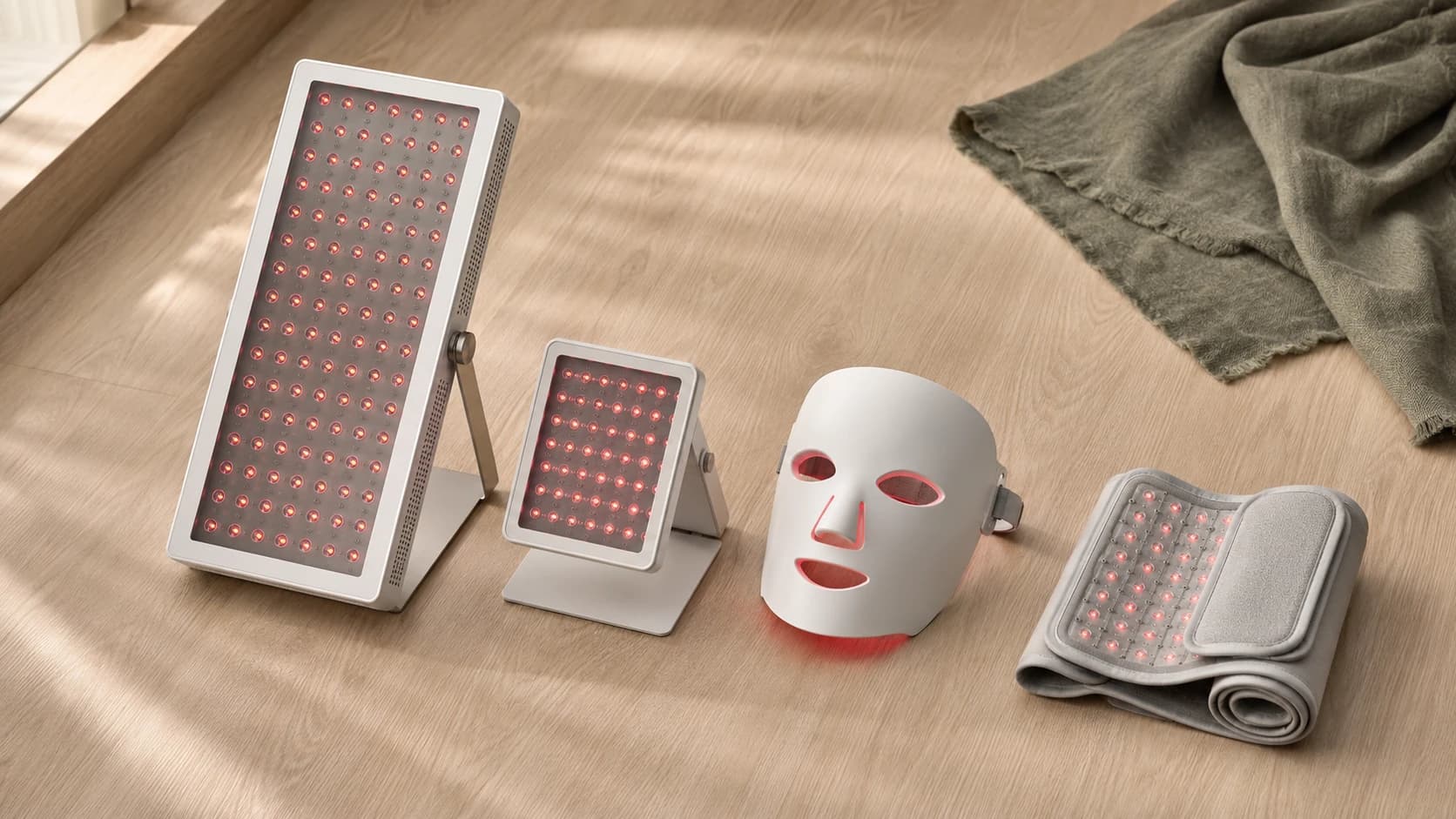
The device question splits three ways, and the right answer is entirely determined by the body part you care about.
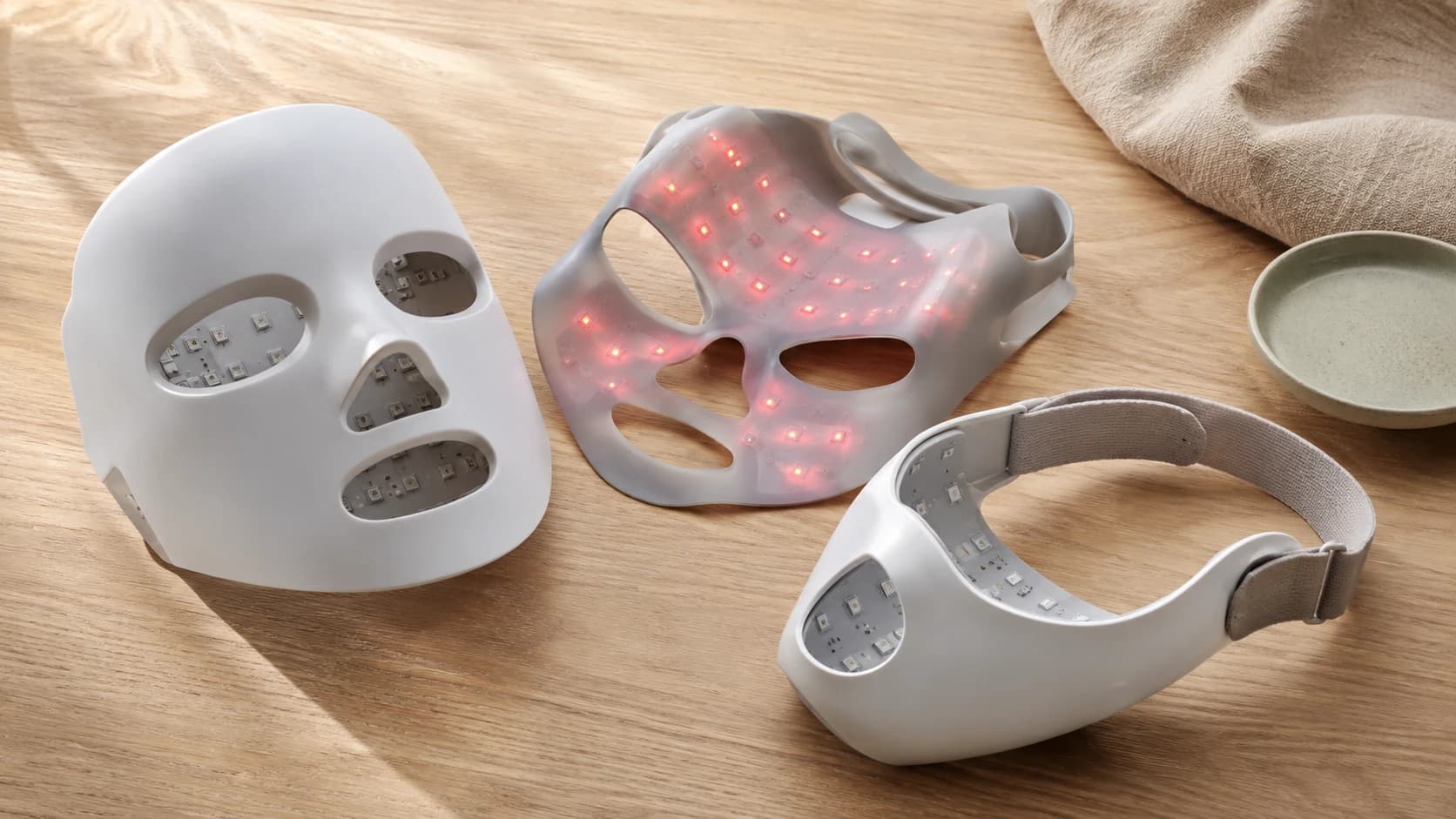
- Masks cover the face hands-free and are the format with the most consumer regulatory activity. Start with red light therapy masks, then the best red light therapy mask comparison.
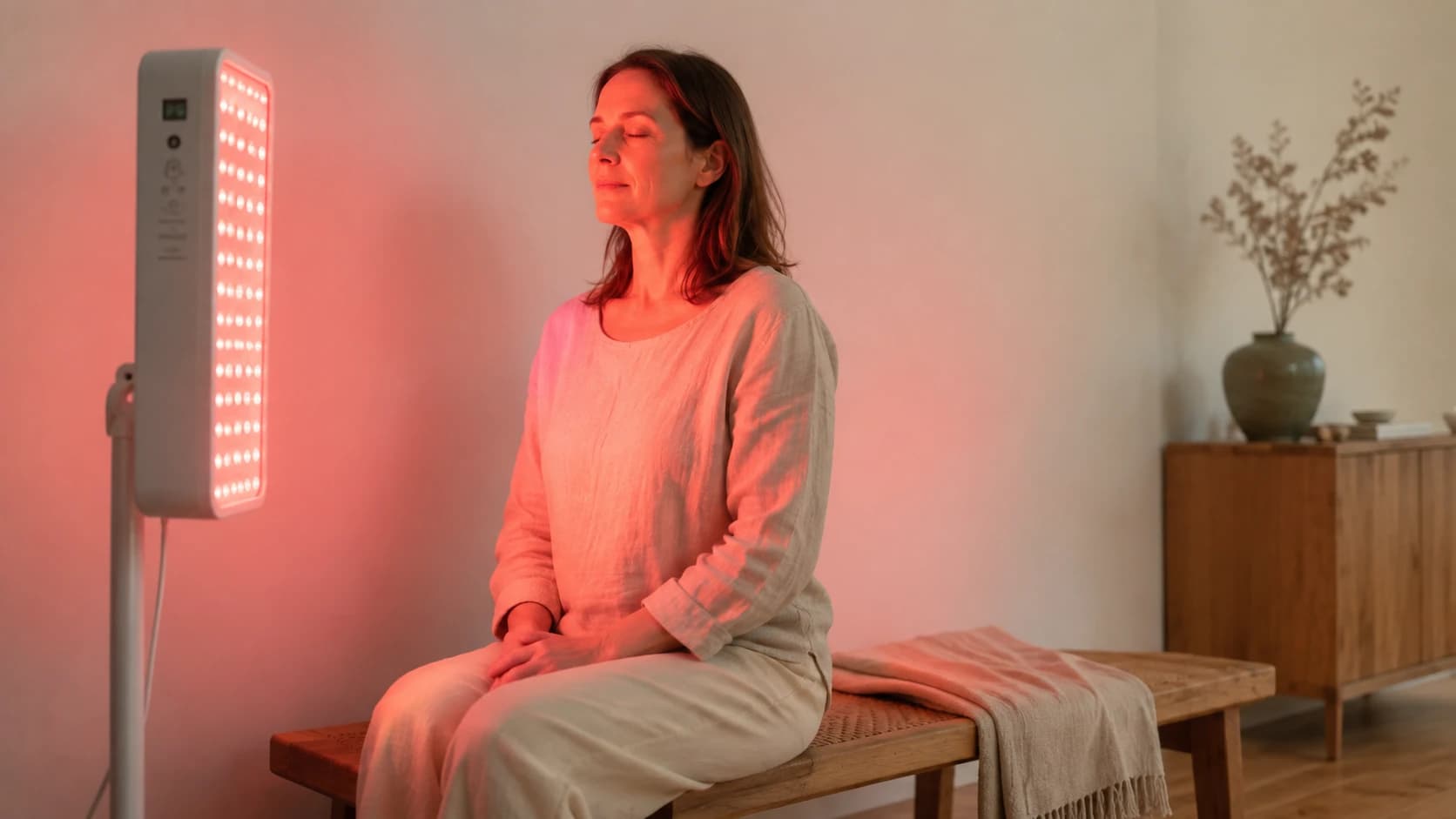
- Panels, lamps and larger machines cover bigger areas — back, legs, joints. See red light therapy panels for how to read irradiance and coverage claims.
- Whole setups for home use, including specific current models, are compared in our best red light therapy device for home use roundup.
One regulatory note worth carrying into any purchase: nearly every consumer LED device in the United States is FDA-cleared, not FDA-approved. Clearance under a Class II 510(k) means the manufacturer showed the device is substantially equivalent to one already on the market — it is not a finding that the device produces a particular result for you. The clearances are public and searchable in the FDA's own 510(k) database, which means any "FDA-cleared" claim on a box is something you can check yourself in about a minute.
The bottom line
Red light therapy is neither a scam nor a shortcut. It is a modest, slow, reasonably safe intervention with a narrow band of genuine support — skin aging, pattern hair loss, some wound and pain applications — surrounded by a much wider band of marketing. If your expectation is "a small, gradual improvement in one specific thing, after two to three months of consistent use, using a device whose limits I understand", the evidence can support that. If your expectation is anything faster or broader, it can't.
Frequently Asked Questions (FAQ)
What is red light therapy? Red light therapy, known in the research literature as photobiomodulation, is the use of red light (roughly 620–700 nm) and near-infrared light (roughly 700–1440 nm) at power levels low enough not to heat the tissue. It is not UV light and it is not a heat lamp.
Does red light therapy actually work? It depends entirely on what you are asking it to do. A 21-expert panel writing in the Journal of the American Academy of Dermatology in 2025 found sufficient evidence for androgenetic alopecia, several kinds of wound ulcer, peripheral neuropathy and acute radiation dermatitis. Cleveland Clinic states there is no scientific evidence for weight loss, cancer, cellulite or mental health conditions.
What are the pros and cons of red light therapy? The main pros are a good safety record in adults, no UV exposure, no downtime and real evidence for a handful of specific uses. The main cons are that results are gradual and modest, most strong trials used clinical lasers rather than consumer LED panels, home devices are largely unregulated on dose, and the cost is entirely out of pocket.
Is red light therapy the same as light therapy for depression? No, and this is the most common mix-up. The depression evidence is for bright white light boxes at around 10,000 lux, not red light. In the 2024 JAMA Psychiatry meta-analysis, nine of the eleven trials used 10,000-lux bright light for 30 to 60 minutes a day.
How long does red light therapy take to work? For skin, controlled trials typically run for weeks to a few months of regular sessions. For pattern hair loss, a 16-week sham-controlled trial measured its result at week 16. Cleveland Clinic describes ongoing treatment one to three times a week for weeks or even months. Nothing here works in a single session.
Medical disclaimer: This article is for informational purposes only. Always consult a qualified healthcare provider before making changes to your health routine.
Sources
- Maghfour J, et al. Evidence-based consensus on the clinical application of photobiomodulation. Journal of the American Academy of Dermatology, 2025 — journal abstract. https://www.jaad.org/article/S0190-9622(25)00659-0/abstract
- Photobiomodulation CME part I. Journal of the American Academy of Dermatology, 2024 — journal abstract. https://www.jaad.org/article/S0190-9622(24)00186-5/abstract
- Cleveland Clinic. Red Light Therapy — patient education article. https://my.clevelandclinic.org/health/articles/22114-red-light-therapy
- Huang YY, Sharma SK, Carroll J, Hamblin MR. Biphasic dose response in low level light therapy — an update. Dose-Response, 2011 — PubMed Central. https://pmc.ncbi.nlm.nih.gov/articles/PMC3315174/
- Lawrence J, Sorra K. Photobiomodulation as medicine. Journal of Functional Morphology and Kinesiology, 2024 — PubMed Central. https://pmc.ncbi.nlm.nih.gov/articles/PMC11503318/
- Wunsch A, Matuschka K. A controlled trial to determine the efficacy of red and near-infrared light treatment. Photomedicine and Laser Surgery, 2014 — PubMed. https://pubmed.ncbi.nlm.nih.gov/24286286/
- Barbaric J, et al. Light therapies for acne. Cochrane Database of Systematic Reviews, 2016 — PubMed. https://pubmed.ncbi.nlm.nih.gov/27670126/
- Yoon JS, Ku WY, Lee JH, Ahn HC. Low-level light therapy using a helmet-type device for androgenetic alopecia. Medicine (Baltimore), 2020 — PubMed Central. https://pmc.ncbi.nlm.nih.gov/articles/PMC7373546/
- US Food and Drug Administration. 510(k) Premarket Notification database. https://www.accessdata.fda.gov/scripts/cdrh/cfdocs/cfpmn/pmn.cfm
All sources accessed 7 August 2026.

Marcus Thorne
A wellness tools researcher who reads the regulatory filing, not just the brochure.