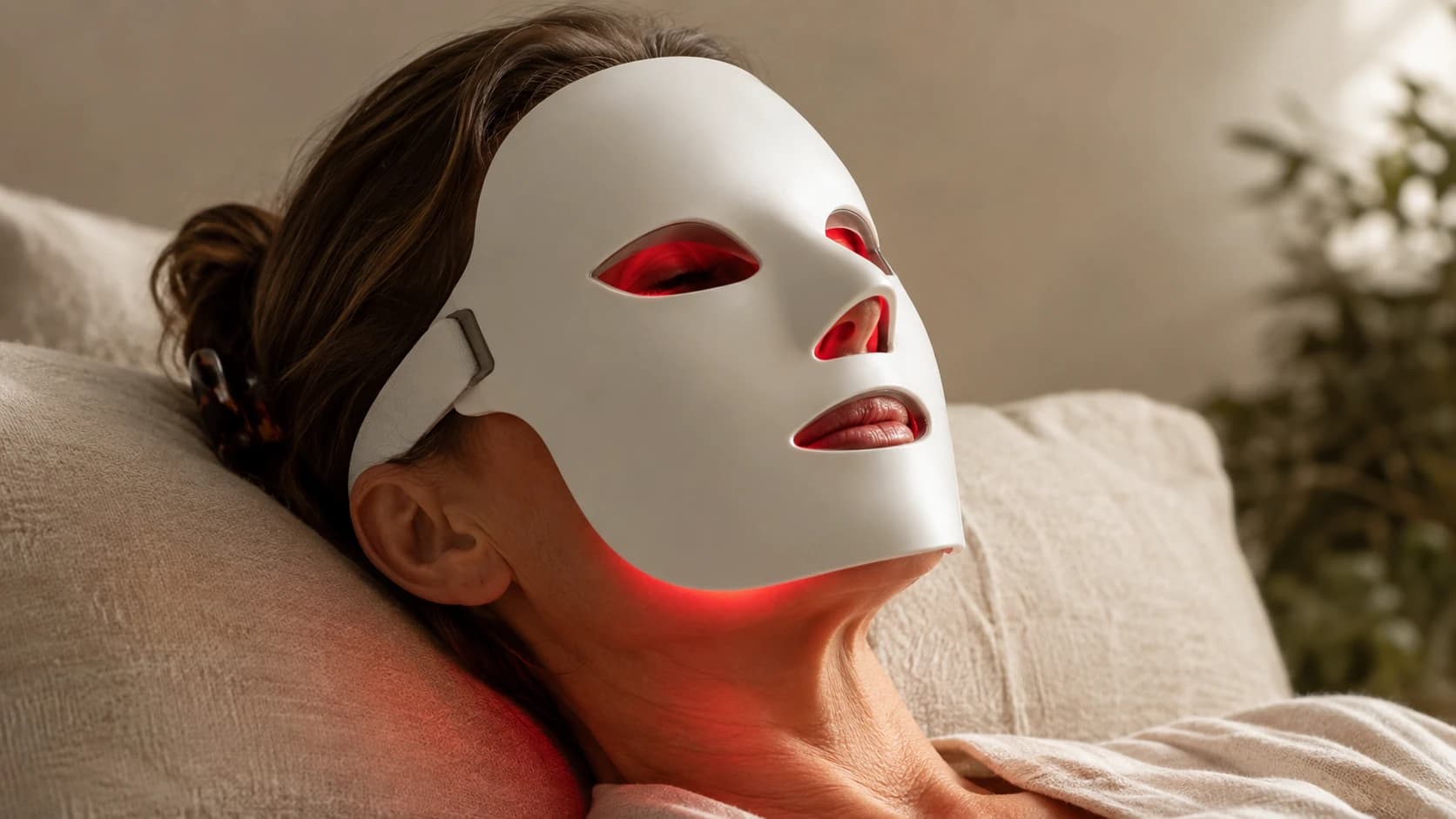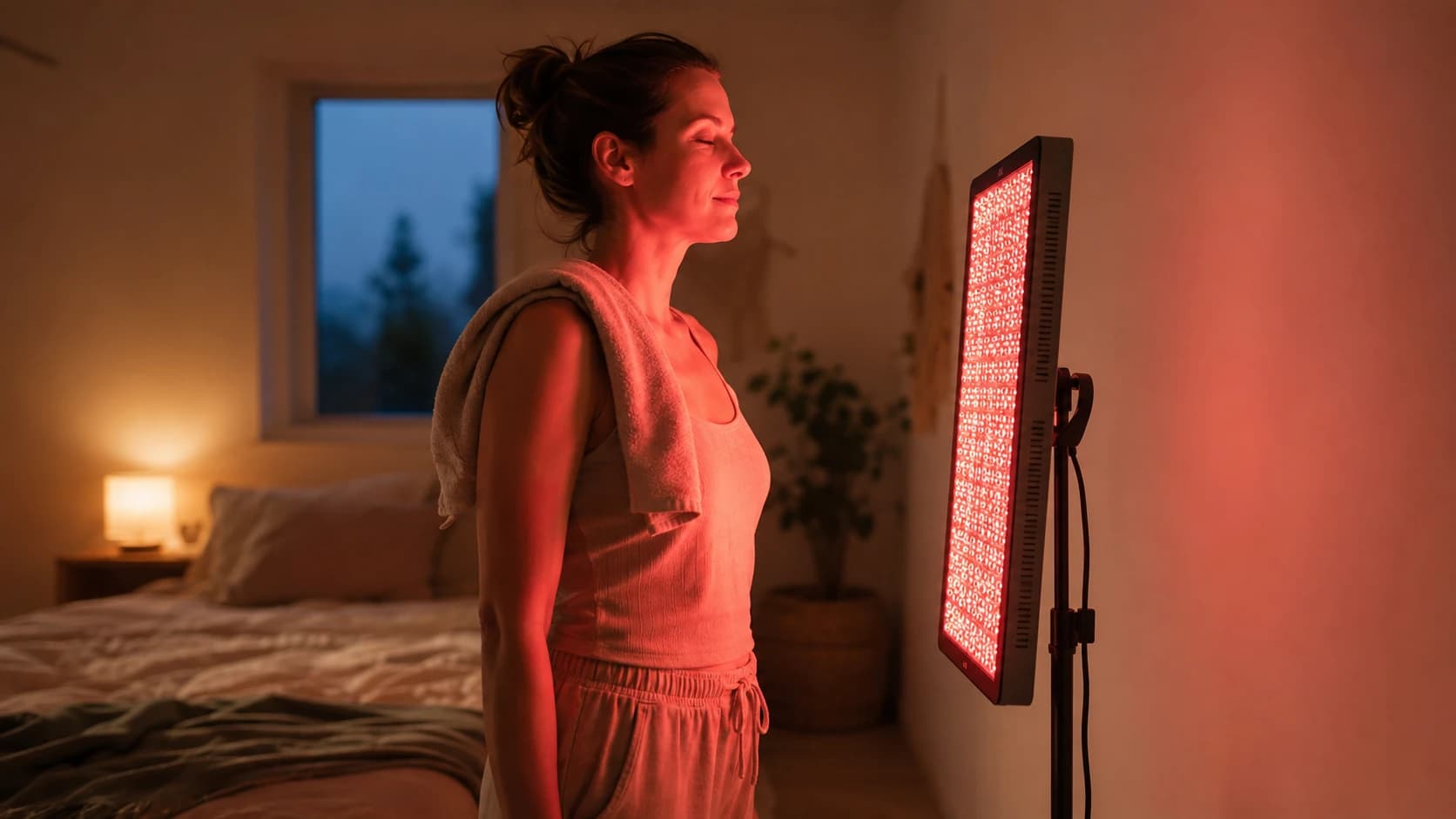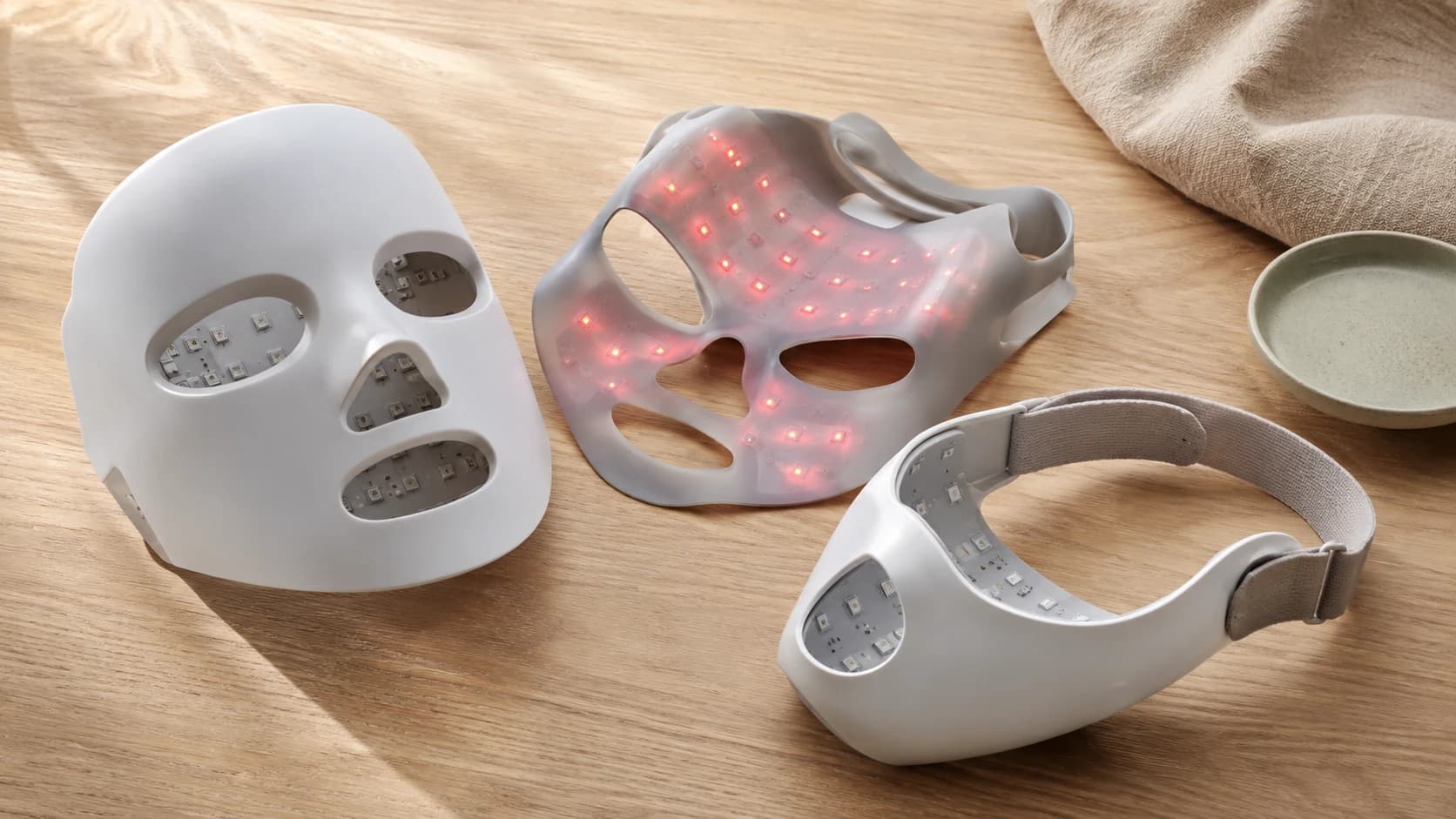
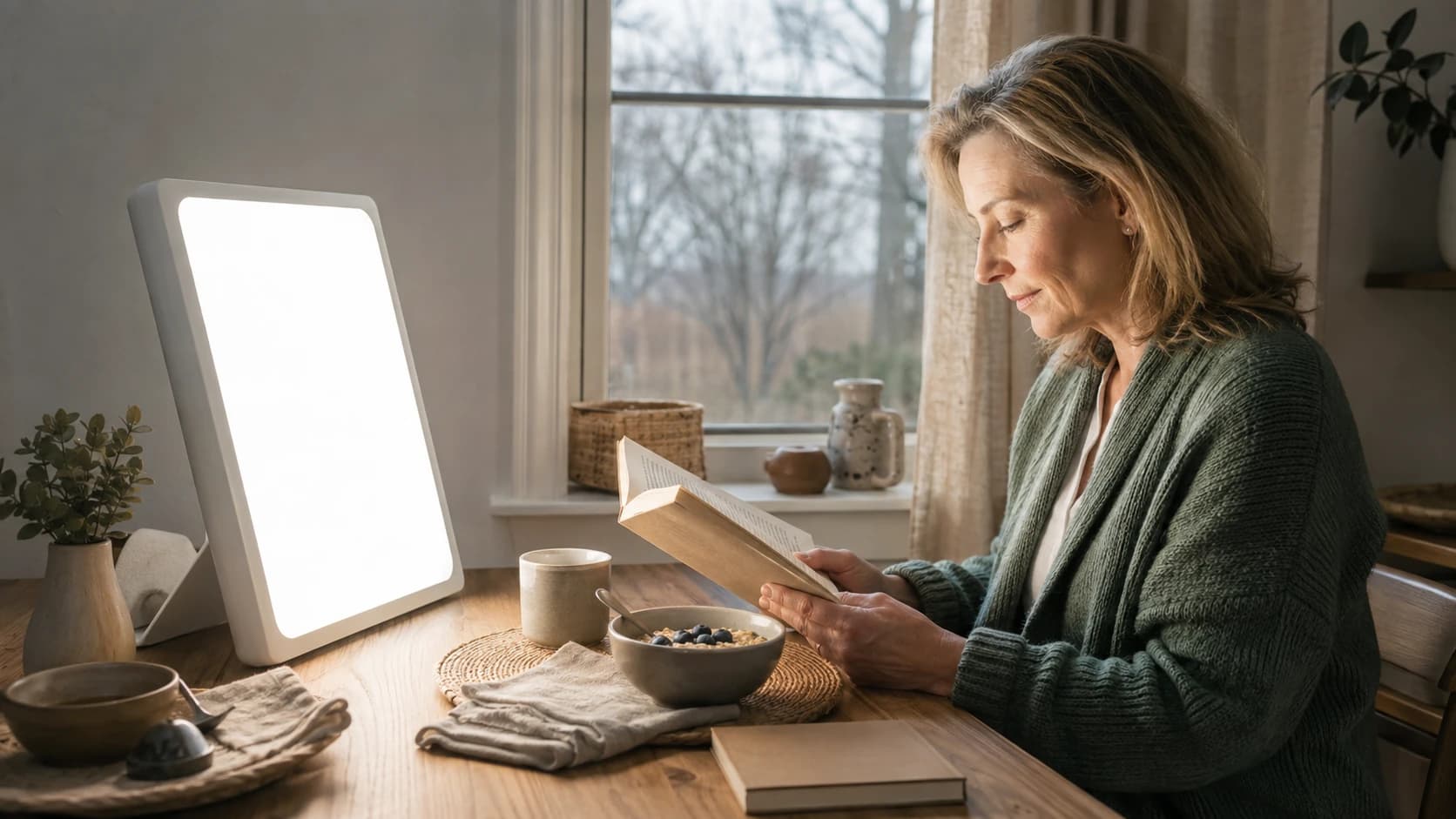
Quick answer: Light therapy for depression works, and it is not red light therapy. The evidence is for bright white light at around 10,000 lux, viewed for 30 to 45 minutes in the morning. Cleveland Clinic states plainly that there is no scientific evidence supporting red light therapy for mental health conditions. Two different devices, two different bodies of research, one very confusing shared word.
Two technologies, one name
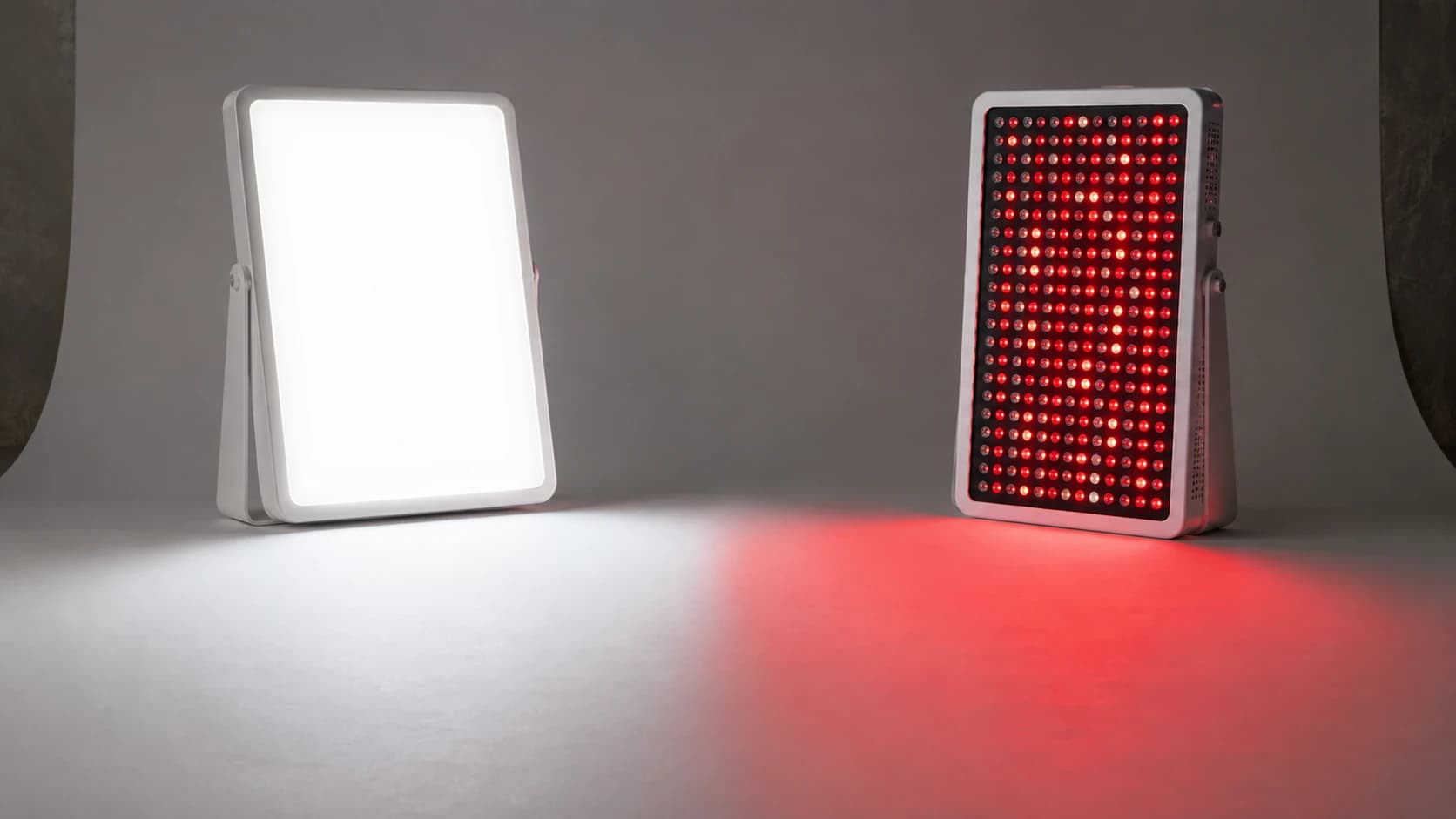
The word "light therapy" covers two things that have almost nothing in common except the word.
| Bright light therapy | Red light therapy (photobiomodulation) | |
|---|---|---|
| What it emits | Broad-spectrum white light, ~10,000 lux, UV filtered | Red ~620–700 nm and near-infrared ~700–1440 nm |
| Where it acts | Through the eyes, on circadian and mood systems | On tissue at the treatment site |
| Session | 30–45 minutes, usually morning | Typically minutes, on skin or scalp |
| Depression evidence | Substantial — see below | None accepted; Cleveland Clinic says so explicitly |
If you have arrived here because a red light panel was marketed to you for mood, that table is the whole answer. The rest of this page is what the real evidence supports instead.
Seasonal affective disorder: the established use
The National Institute of Mental Health describes light therapy as "a mainstay for treating winter-pattern SAD" since the 1980s. Its description of the protocol is specific: "The person sits in front of a very bright light box (10,000 lux) every day for about 30−45 minutes, usually first thing in the morning, from fall to spring" (NIMH).
NIMH also notes that the box "is about 20 times brighter than ordinary indoor light, filters out the potentially damaging UV light, making this a safe treatment for most" — and that light therapy is one of four treatment categories, alongside psychotherapy, antidepressant medication and vitamin D, that can be used alone or in combination. In one comparison it cites, cognitive behavioural therapy adapted for SAD and light therapy "were equally effective in improving SAD symptoms".
That last point is worth carrying: light therapy is an option among options, not a first-line default that outperforms the alternatives.
Non-seasonal depression: newer, and stronger than expected
This is the part most people do not know. A 2024 systematic review and meta-analysis in JAMA Psychiatry pooled 11 randomised clinical trials in 858 patients with non-seasonal depressive disorders — both unipolar major depressive disorder and bipolar depression (Menegaz de Almeida et al., 2024).
| Outcome | Bright light therapy | Comparator | Odds ratio |
|---|---|---|---|
| Remission, overall | 40.7% | 23.5% | 2.42 (95% CI 1.50–3.91) |
| Response, overall | 60.4% | 38.6% | 2.34 (95% CI 1.46–3.75) |
| Remission, trials under 4 weeks | 27.4% | 9.2% | 3.59 (95% CI 1.45–8.88) |
| Remission, trials over 4 weeks | 46.6% | 29.1% | 2.18 (95% CI 1.19–4.00) |
Nine of the eleven trials used 10,000-lux bright light for 30 to 60 minutes daily; one used 7,000 lux and one 5,000 lux. The authors reported low risk of bias overall and low-to-moderate heterogeneity (I² of 21% for remission, 41% for response).
Their own stated limitations belong here too: follow-up timeframes varied, one adolescent inpatient study had high discontinuation, individual depressive subtypes could not be analysed separately, and remission and response were defined differently across trials.
Where red light therapy actually stands on mood
Cleveland Clinic's assessment is unambiguous: "There's no scientific evidence to support red light therapy use in weight loss, cancer, cellulite removal or mental health conditions" (Cleveland Clinic).
The 2025 international expert consensus on photobiomodulation, which did find sufficient evidence for several indications — androgenetic alopecia, various wound ulcers, peripheral neuropathy, acute radiation dermatitis — does not list a psychiatric indication among them (Maghfour et al., 2025).
There is an active research area applying near-infrared light to the head, sometimes called transcranial photobiomodulation, and pilot trials exist. We did not open and verify those primary papers for this article, so we are not summarising their results here — and pilot-stage research is in any case not a basis for a consumer purchase. What can be said with confidence is that no authoritative body currently endorses red light therapy for depression.
The circadian angle, which is real but different
There is one genuine, evidence-adjacent connection between red light and mood, and it runs through sleep rather than through mood directly. Red light disturbs circadian signalling less than blue or white light does, which is why red is sometimes suggested as an evening ambient light. Our home device roundup covers what the sleep evidence does and does not support.
That is a plausible sleep-hygiene argument, not a depression treatment. Conflating the two is exactly the move this page exists to prevent.
If you are considering light therapy for low mood
- Buy the right device. A 10,000-lux light box is a distinct product from a red light panel or LED mask. Check the lux rating and that UV is filtered.
- Use it in the morning, for the duration NIMH describes, consistently through the season.
- Talk to a clinician first if you have an eye condition or take photosensitising medication. NIMH specifically flags that these groups "may need to use alternative treatments or use light therapy under medical supervision". Our who should avoid red light therapy page lists the relevant medication classes.
- Do not stop or change prescribed treatment on your own. Light therapy sits alongside psychotherapy and medication in NIMH's framing, not in place of them.
- If you have bipolar disorder, light therapy is a clinical decision rather than a self-directed one — several trials in the meta-analysis above involved bipolar depression, and treatment for it is managed differently.
If low mood is persistent or severe, or if you are having thoughts of harming yourself, contact a healthcare professional or a local crisis line rather than a device.
For the rest of the red light therapy picture — where it does have evidence and where it does not — see our what red light is actually good for and the evidence for red light.
Frequently Asked Questions (FAQ)
Does light therapy work for depression? Bright white light therapy does. NIMH describes it as a mainstay for winter-pattern seasonal affective disorder since the 1980s, and a 2024 JAMA Psychiatry meta-analysis of 11 trials in 858 patients found remission in 40.7% of people receiving bright light therapy for non-seasonal depression versus 23.5% of comparators.
Is red light therapy good for depression? No — this is the most common confusion in the category. Cleveland Clinic states there is no scientific evidence supporting red light therapy for mental health conditions. The depression evidence is for bright white light at around 10,000 lux, which is a different device doing a different thing.
What light box do you need for depression? NIMH describes sitting in front of a very bright light box rated at 10,000 lux for about 30 to 45 minutes daily, usually first thing in the morning, from fall to spring. It notes such boxes filter out potentially damaging UV light.
How quickly does light therapy help depression? In the 2024 meta-analysis, trials shorter than four weeks showed remission in 27.4% of bright light therapy patients versus 9.2% of comparators, so effects appear within weeks. Longer trials showed higher absolute remission in both groups.
Is light therapy a replacement for antidepressants or therapy? No. NIMH lists light therapy, psychotherapy, antidepressant medication and vitamin D as treatments that can be used alone or in combination, and notes that CBT adapted for SAD and light therapy were equally effective in one comparison. Which combination fits you is a clinical decision.
Medical disclaimer: This article is for informational purposes only. Always consult a qualified healthcare provider before making changes to your health routine.
Sources
- National Institute of Mental Health. Seasonal Affective Disorder — NIMH publication, revised 2023. https://www.nimh.nih.gov/health/publications/seasonal-affective-disorder
- Menegaz de Almeida A, et al. Bright light therapy for nonseasonal depressive disorders: a systematic review and meta-analysis. JAMA Psychiatry, 2024 — PubMed Central. https://pmc.ncbi.nlm.nih.gov/articles/PMC11447633/
- Cleveland Clinic. Red Light Therapy — patient education article. https://my.clevelandclinic.org/health/articles/22114-red-light-therapy
- Maghfour J, et al. Evidence-based consensus on the clinical application of photobiomodulation. Journal of the American Academy of Dermatology, 2025 — journal abstract. https://www.jaad.org/article/S0190-9622(25)00659-0/abstract
All sources accessed 13 August 2026.

Marcus Thorne
A wellness tools researcher who thinks the most useful thing here is telling two technologies apart.