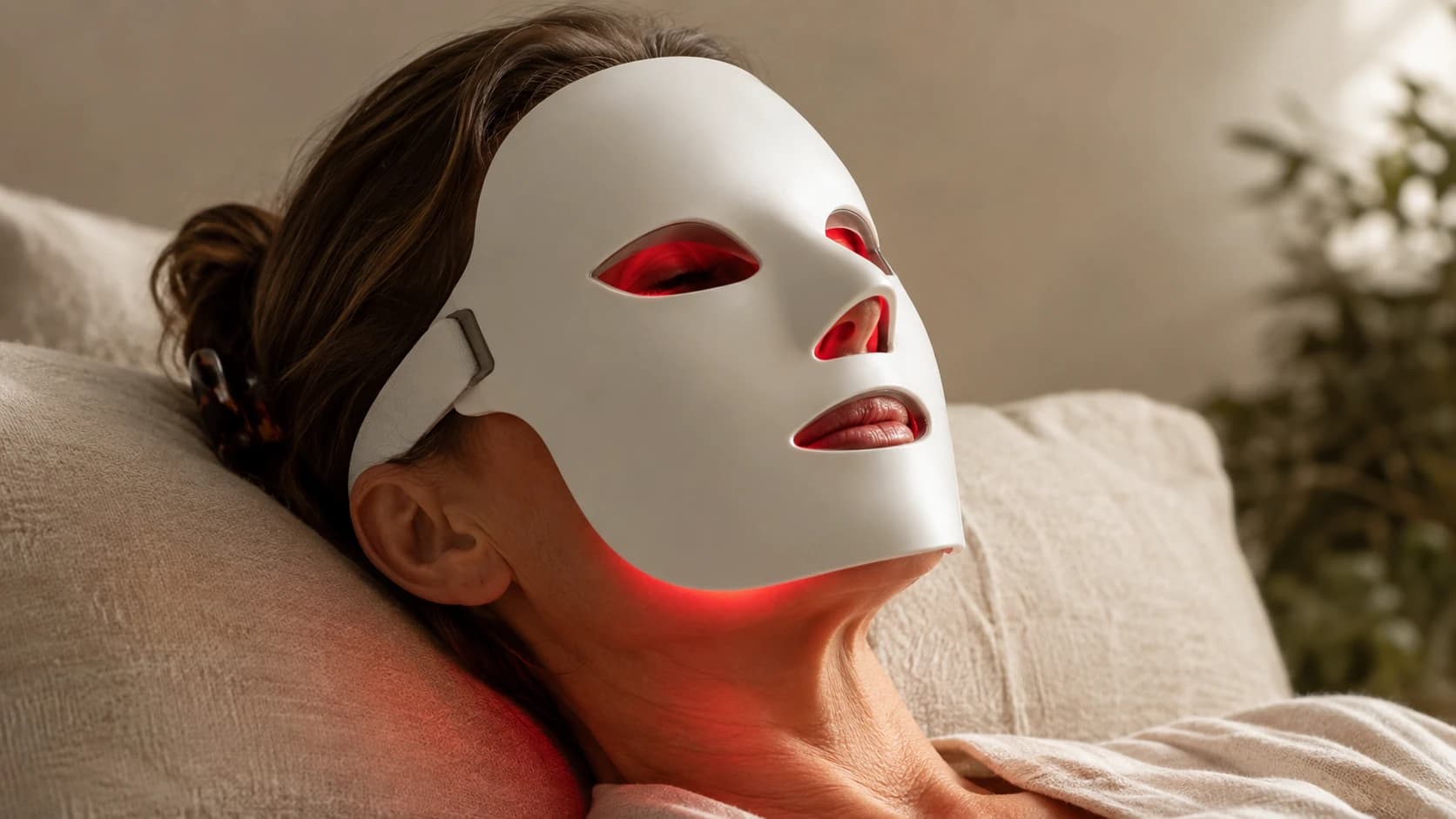
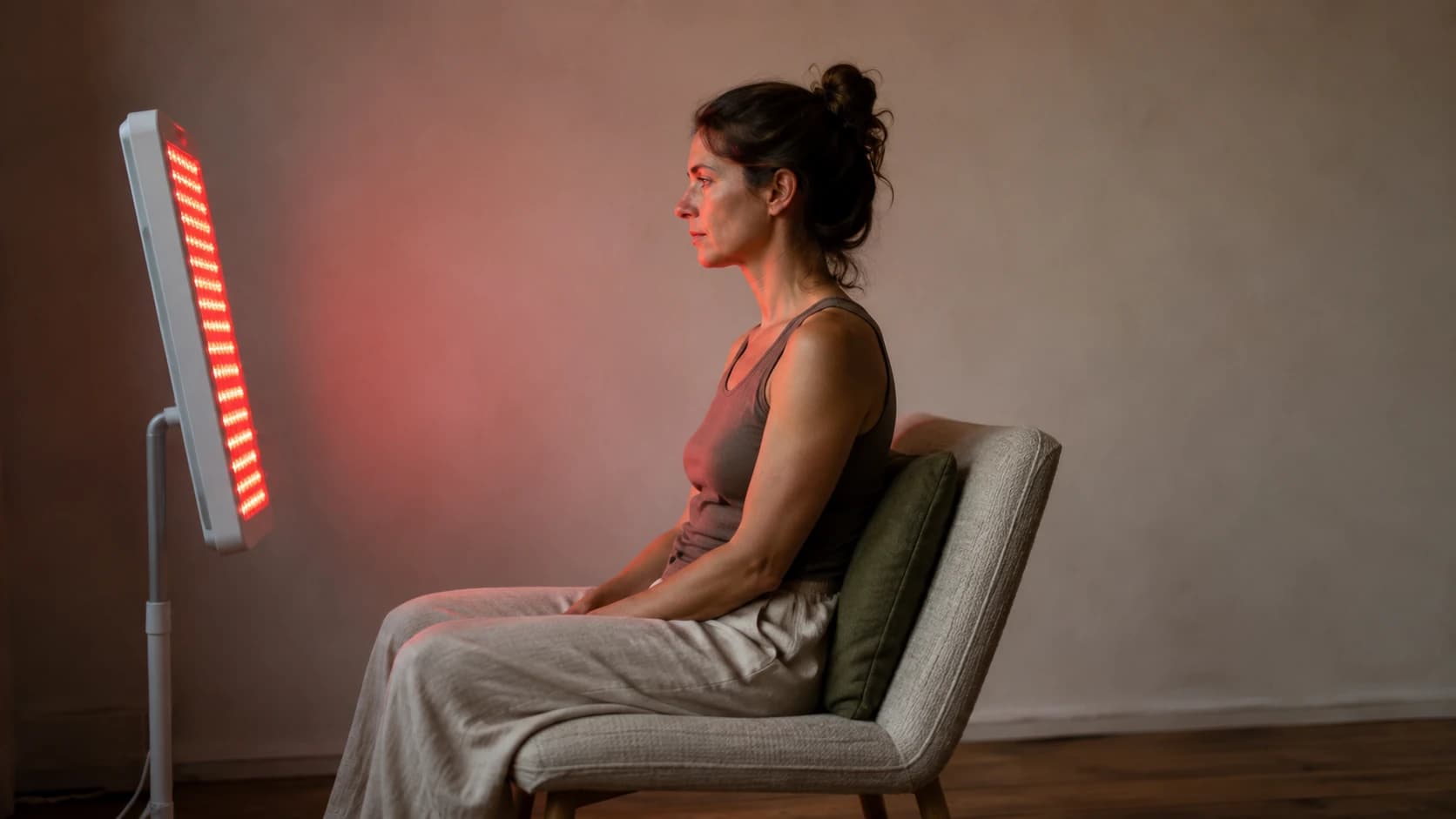
Quick answer: Yes for a short, specific list — pattern hair loss, skin aging, several clinical wound and pain applications. No for weight loss and mood. And "it worked for me" reviews plus before-and-after photos are the two weakest forms of evidence in the entire category, for reasons that have nothing to do with honesty.
The three kinds of evidence you are being shown
Search this question and you get three very different things presented as if they were the same:
- Sham-controlled trials, where neither the participant nor the assessor knows who got real light.
- User reviews, where nobody is blinded, nothing is controlled and the sample selects itself.
- Before-and-after photos, where a single variable — lighting — can manufacture the entire result.
Only the first tells you whether the light did anything. The other two tell you something worth knowing, but not that.
What the controlled trials found
Pattern hair loss — the cleanest consumer result. A 16-week multicentre, randomised, double-blind, sham-device-controlled trial in 59 adults used a helmet combining 21 laser diodes and 30 LEDs at 655 ± 5 nm, 25 minutes every other day. Hair density rose 41.90 hairs/cm² in the treated group versus 0.72 in the sham group; hair thickness rose 7.50 μm versus a 15.03 μm decline (both P < .001) (Yoon et al., 2020). A sham device is the key detail: the control group sat under a helmet that looked and felt identical.
Skin aging — a real but modest result. A randomised controlled trial in 136 people found improved complexion, reduced measured skin roughness and increased intradermal collagen density against an untreated control (Wunsch & Matuschka, 2014).
Formal expert backing. An international panel of 21 experts, working from a systematic review and a two-round Delphi process, found sufficient evidence for photobiomodulation in androgenetic alopecia, wound ulcers of various causes, decubitus ulcers, diabetic foot ulcer pain, peripheral neuropathy and acute radiation dermatitis (Maghfour et al., 2025).
Where it gets weaker. Pooled photobiomodulation results for knee osteoarthritis showed a moderate reduction in pain at rest across 10 trials in 542 people — rated very low certainty by the authors, with no significant improvement on a functional walking test (Oliveira et al., 2024). For acne, a Cochrane review of 71 trials concluded that high-quality evidence is lacking (Barbaric et al., 2016).
Where it stops. Cleveland Clinic states there is no scientific evidence supporting red light therapy for weight loss, cancer, cellulite removal or mental health conditions (Cleveland Clinic).
The full graded map, claim by claim, is in red light therapy benefits.
Why red light therapy reviews contradict each other
Two people can buy the same panel and write opposite reviews without either of them being wrong about their own experience. Four reasons, and they compound:
- They are not delivering the same dose. Distance, session length and frequency vary enormously between users, and the biphasic dose response means an overlong session can deliver less benefit than a shorter one. Huang and colleagues documented doses where the effect reversed entirely (Huang et al., 2011).
- They are not treating the same thing. A review from someone using it on fine lines tells you nothing about a knee.
- Nothing is blinded, and the outcome is subjective. Skin appearance and pain both fluctuate on their own. A reviewer who spent several hundred dollars is not a neutral observer of their own face.
- Reviews are written early. Most arrive within the return window. The trials above measured at 12–16 weeks.
Reviews are genuinely useful for the things they can observe directly: build quality, whether the timer works, how loud the fan is, whether the strap holds, whether support answers. Treat them as a hardware report, not a clinical result.
How to read a before-and-after photo

Before-and-after pairs are the most persuasive and least reliable thing in this category. Four variables can create an apparent result with no biological change at all:
| Variable | What it changes |
|---|---|
| Lighting direction | Side lighting casts shadows into every line; flat frontal lighting erases them |
| Camera and distance | A shorter distance and wider lens exaggerate features; the two shots are often not matched |
| Expression and posture | A relaxed jaw and slightly raised chin remove years without removing anything |
| Skin state | Hydration, makeup, time of day and recent cleansing all change how skin reflects light |
This is precisely why the trials above measured outcomes instrumentally — skin roughness, collagen density, hairs per square centimetre — or used blinded assessors. When a result is easy to influence, researchers stop trusting eyes.
If you want your own honest before-and-after, control what the marketers don't: same room, same time of day, same light source in the same position, same distance, same neutral expression, no makeup, and at least 12 weeks apart. Most people who do this discover their real result is smaller than they hoped and larger than nothing — which is exactly what the trials predict.
A realistic results timeline
Based on how the trials above were actually run, rather than on packaging copy:
- Weeks 1–4. Nothing reliably visible. Any change you notice at this stage is more likely lighting or attention than tissue.
- Weeks 4–12. The window in which skin trials typically begin registering measurable change. Effects are gradual.
- Week 16 and beyond. The point at which the sham-controlled hair trial measured its result. Cleveland Clinic frames this as ongoing treatment one to three times a week for weeks or even months.
- If you stop. No published evidence supports permanence. The Cochrane rheumatoid arthritis review found short-term benefit that did not appear long-lasting (Brosseau et al., 2005).
Getting the session mechanics right matters more than the brand you buy; that is covered in how often you should use red light therapy.
The honest verdict
Red light therapy works in the sense that a well-designed trial can measure its effect on specific tissues. It does not work in the sense most buyers hope for — quickly, dramatically, or across the board. The gap between those two sentences is where the entire marketing industry for these devices operates.
If you are deciding whether to buy one, the two useful next steps are our the full claim-by-claim map for the full claim-by-claim map, and what the downside looks like for what the downside actually looks like.
Frequently Asked Questions (FAQ)
Does red light therapy actually work? For a specific short list, yes. A 2025 expert consensus in the Journal of the American Academy of Dermatology found sufficient evidence for androgenetic alopecia, several wound ulcer types, peripheral neuropathy and acute radiation dermatitis, and a randomised trial in 136 people found measurable skin improvements. For weight loss, cellulite and mental health, Cleveland Clinic states there is no scientific evidence.
How long before red light therapy shows results? Longer than most people expect. The main sham-controlled hair trial measured its result at 16 weeks. Skin trials typically run weeks to months. Cleveland Clinic describes ongoing treatment one to three times a week for weeks or even months. If a device promises visible change in days, that timeline is not from a trial.
Are red light therapy before-and-after photos reliable? Usually not on their own. Lighting angle, camera, expression, makeup, hydration and time of day all change how skin photographs, and none of them are controlled in a typical marketing pair. In controlled research, outcomes are measured instrumentally or by blinded assessors precisely because photographs are so easy to influence.
Why do red light therapy reviews contradict each other? Because the reviewers are not all doing the same thing. Wavelength, distance, session length, frequency and the condition being treated all vary, and the biphasic dose response means an overlong session can deliver less benefit than a shorter one. Reviews also cannot control for the natural fluctuation of skin and pain.
Does red light therapy work as well at home as in a clinic? Generally not. Most positive trials used clinical laser devices, and a 2024 review notes that LED light in home devices does not penetrate as deeply. Cleveland Clinic says at-home devices may be less powerful than those used by dermatologists.
Medical disclaimer: This article is for informational purposes only. Always consult a qualified healthcare provider before making changes to your health routine.
Sources
- Yoon JS, Ku WY, Lee JH, Ahn HC. Low-level light therapy using a helmet-type device for the treatment of androgenetic alopecia. Medicine (Baltimore), 2020 — PubMed Central. https://pmc.ncbi.nlm.nih.gov/articles/PMC7373546/
- Wunsch A, Matuschka K. A controlled trial to determine the efficacy of red and near-infrared light treatment. Photomedicine and Laser Surgery, 2014 — PubMed. https://pubmed.ncbi.nlm.nih.gov/24286286/
- Maghfour J, et al. Evidence-based consensus on the clinical application of photobiomodulation. Journal of the American Academy of Dermatology, 2025 — journal abstract. https://www.jaad.org/article/S0190-9622(25)00659-0/abstract
- Oliveira S, Andrade R, Valente C, et al. Effectiveness of photobiomodulation in reducing pain and disability in patients with knee osteoarthritis. Physical Therapy, 2024. https://academic.oup.com/ptj/article-abstract/104/8/pzae073/7679396
- Barbaric J, et al. Light therapies for acne. Cochrane Database of Systematic Reviews, 2016 — PubMed. https://pubmed.ncbi.nlm.nih.gov/27670126/
- Huang YY, Sharma SK, Carroll J, Hamblin MR. Biphasic dose response in low level light therapy — an update. Dose-Response, 2011 — PubMed Central. https://pmc.ncbi.nlm.nih.gov/articles/PMC3315174/
- Brosseau L, et al. Low level laser therapy (Classes I, II and III) for treating rheumatoid arthritis. Cochrane Database of Systematic Reviews, 2005. https://www.cochrane.org/evidence/CD002049_low-level-laser-therapy-rheumatoid-arthritis
- Lawrence J, Sorra K. Photobiomodulation as medicine. Journal of Functional Morphology and Kinesiology, 2024 — PubMed Central. https://pmc.ncbi.nlm.nih.gov/articles/PMC11503318/
- Cleveland Clinic. Red Light Therapy — patient education article. https://my.clevelandclinic.org/health/articles/22114-red-light-therapy
All sources accessed 8 August 2026.

Marcus Thorne
A wellness tools researcher who has read more sham-controlled trials than product reviews.