This page contains Amazon affiliate links. If you buy through them, The Wellness Voyage may earn a small commission at no extra cost to you. Commission does not influence which devices are selected or how they are ranked — see our affiliate disclosure.
How we evaluate products → — we do not test products first-hand. This is what we check instead, and what we cannot tell you.
If you have been waking up with stiff joints, watching fine lines deepen, or lying awake despite exhaustion, you have probably wondered whether a red light therapy device for home use could actually help. This guide compares the best-selling devices on Amazon against the published evidence and the FDA clearance record, and is explicit about where the evidence stops. The sources it rests on are listed in full at the end.
The evidence for skin rejuvenation is genuinely encouraging, and for pain and muscle recovery it is moderate. The sleep question is where the marketing and the trials diverge most sharply, and that section below does not land where the category's advertising does. Where a device is a reasonable buy, this guide says so; where the evidence does not support the claim on the box, it says that too.
This guide covers everything you need to make an informed decision: the science, the top Amazon-available devices (real links, real specs), a side-by-side comparison table, and a practical FAQ grounded in current evidence. If you want the evidence picture before the shopping list, start with our red light therapy overview, which grades every claim in this category one by one.
How Red Light Therapy Works: The Science
Red light therapy—formally called photobiomodulation (PBM)—works by delivering specific wavelengths of visible red light (typically 630–670 nm) and near-infrared (NIR) light (typically 810–850 nm) to tissues. This isn't heat therapy, and it has nothing to do with UV light. It's a non-thermal, non-invasive form of light energy that your cells can absorb and use.
The Mitochondria Connection
The leading proposed mechanism involves cytochrome c oxidase (CCO), an enzyme in the mitochondria. The hypothesis is that red and NIR photons absorbed by CCO change mitochondrial signalling and ATP production, which in turn affects collagen synthesis, oxidative stress and cell signalling. A 2024 narrative review in the International Journal of Molecular Sciences (Hernández-Bule et al., 2024) surveys this literature and concludes PBM has potential across dermatological conditions while calling for standardised protocols. Worth being precise here: CCO as the primary photoacceptor is the dominant hypothesis, not a settled fact — and a mechanism is not an outcome. What matters for a buying decision is the clinical evidence below, not the cellular story.
What the Clinical Trials Reveal for Skin
For skin rejuvenation and anti-aging, the evidence base is the most mature. A 2023 study in Skin Research and Technology (Couturaud et al., 2023) using a 630 ± 10 nm red LED mask twice a week for three months measured dermal density by ultrasound, reporting a 26.4% increase at 28 days, 41% at 56 days and 47.7% at 84 days. Two things to hold onto: dermal density on ultrasound is a structural proxy, not a histological measurement of collagen fibres, and the trajectory shows this is a months-long commitment rather than a four-week one. A separate controlled trial by Wunsch and Matuschka (PubMed 24286286) reported improvements in fine lines and intradermal collagen density against an untreated control group.
One caution about the percentages that circulate for this category: retail pages widely quote figures such as "26% wrinkle reduction" and "52% acne lesion reduction". The 26% appears to be this study's 26.4% dermal density result restated as wrinkle reduction, which is not what was measured. We could not trace the acne figure to any primary source we could open. Neither is reproduced here as a benefit claim.
Importantly, a 2025 expert consensus published in the Journal of the American Academy of Dermatology (JAAD) reached unanimous agreement that PBM is safe for adult skin use and that red light PBM does not induce DNA damage—a concern some people have raised.
Inflammation and Pain
Red and NIR light penetrate tissues at different depths: 660 nm red light reaches the dermis (roughly 1–2 mm), while 850 nm NIR can reach 3–5 mm into muscle and joint tissue. This depth differential makes dual-wavelength panels useful for both surface-level skin concerns and deeper musculoskeletal applications. Multiple clinical trials have documented reductions in pro-inflammatory cytokines following PBM, although effect sizes vary by condition and dosage protocol.
Best Red Light Therapy Devices for Home Use in 2026: In-Depth Reviews
After reviewing Amazon's current best-sellers, filtering by wavelength quality (660 nm red + 850 nm NIR as a baseline standard), review count, star ratings, and FDA registration status where claimed, here are the top picks across price tiers and use cases.
🏆 Best Overall for General Home Use: Viconor Red Light Therapy Lamp (660nm + 850nm)
The Viconor has become one of the most consistently recommended entry-to-mid-range red light therapy panels on Amazon, and for good reason. It features 120 LEDs in a 1:2 ratio of 660 nm to 850 nm chips per bulb (each LED contains one 660 nm and two 850 nm chips), which delivers higher NIR saturation useful for deeper tissue penetration. The curved panel design helps focus and concentrate the light output.
What users report: Positive feedback centers on ease of setup, the stable adjustable stand, and visible results for skin texture and joint discomfort within 4–6 weeks of consistent use. The device ships with protective goggles and a hanging kit.
Honest limitations: Irradiance figures published by the brand are not independently verified by a third-party spectroradiometer, which is a common industry gap. Treat the manufacturer's irradiance claims as approximate. Also, individual results vary considerably—some reviewers note minimal effect after 8+ weeks, which is consistent with clinical study variance.
Best for: General body use, face + neck, pain/inflammation, beginners who want a complete setup out of the box.
🥈 Best Budget Panel: Hooga HG300 Red Light Therapy Panel
The Hooga HG300 is a legitimate budget option from a small U.S.-based brand that has earned a strong reputation in the red light therapy community. Independent testing by Light Therapy Insiders measured peak irradiance at around 69 mW/cm² and an average of approximately 55 mW/cm²—respectable for a device in this price tier. It uses 60 single-chip 5W LEDs in a balanced 1:1 ratio of 660 nm and 850 nm.
The HG300 is manufactured in an FDA-registered facility, includes a built-in timer, cooling fans, and comes with a kickstand and carrying handle. Hooga backs it with a 3-year warranty—substantially better than most competitors at this price point.
Honest limitations: Third-party reviewer Alex at Light Therapy Insiders noted the cooling fan produces approximately 51 dB of noise—noticeably louder than typical tabletop devices. There's no advanced spectrum (no 630 nm, 810 nm, or 830 nm), so you're limited to two wavelengths. That said, 660 nm + 850 nm covers the most evidence-supported therapeutic window.
Best for: Budget-conscious buyers, targeted use on joints or face, people new to red light therapy who want a well-documented entry point.
🌟 Best Device for the Face: CurrentBody Skin LED Light Therapy Face Mask
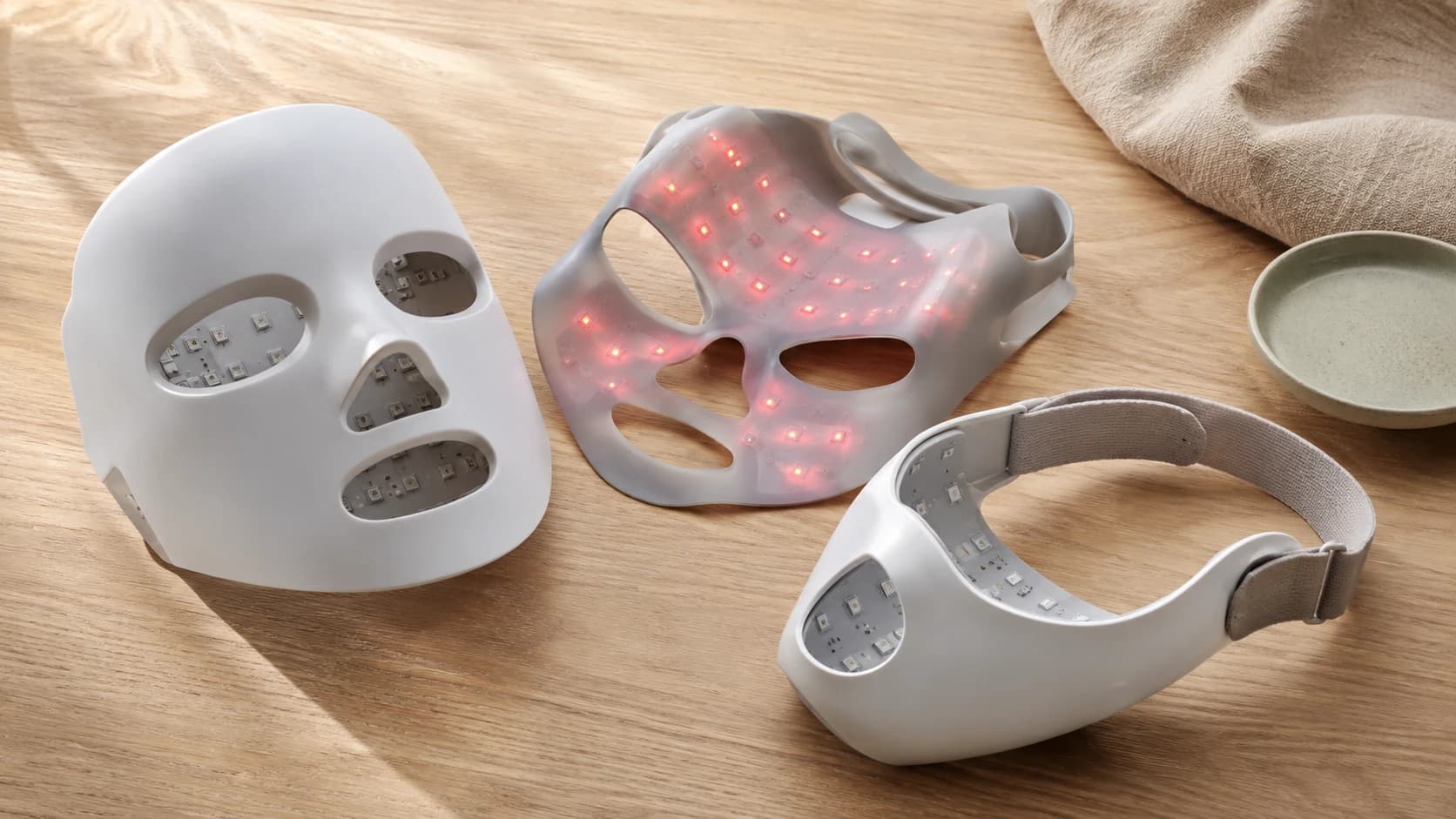
If you're looking for a clinically backed, full-face red light therapy device, the CurrentBody Skin LED Light Therapy Face Mask is one of the most credible options available on Amazon right now. Unlike a traditional handheld wand, it uses a patented flexible silicone mask design that wraps to the contours of your face — ensuring even light coverage across every zone simultaneously, hands-free.
It emits the two most clinically recognized anti-aging wavelengths: 633 nm red light and 830 nm near-infrared, both verified through CurrentBody's proprietary Veritace® end-to-end LED testing system — a meaningful transparency advantage over most competitors who rely on unverified manufacturer specs. Irradiance is measured at approximately 30 mW/cm².
What users report: Consistent reviewers note improved skin texture, reduced fine lines (particularly around the mouth and forehead), and a brighter complexion after 4–8 weeks of 3–5 sessions per week. Treat that as buyer sentiment, not evidence. The manufacturer also cites a 56-day study run by the testing laboratory Eurofins (2025, 30 female subjects aged 40–55) reporting improvements in skin luminosity and elasticity against baseline. Two caveats a buyer should weigh: it was commissioned by the brand rather than independently initiated, and a comparison against baseline with no sham-treated control group cannot separate the light from the moisturiser, the routine or the season.
Honest limitations: This is a mask, not a wand — coverage is full-face rather than targeted zone-by-zone. It sits at a higher price point (~$260–$400 depending on the season), requires charging, and cannot be used while connected to a power source. Not suitable for pregnant individuals, those with photosensitivity, epilepsy, or a pacemaker.
Best for: Full-face anti-aging, collagen stimulation, even skin tone, users who prefer a hands-free routine over targeted wand work.
🥈 Runner-Up Wand for Face: LightStim for Wrinkles LED Wand
LightStim is one of the longest-standing brands in the home red light therapy space, with devices that have been used in medical spas and dermatologist offices for over two decades. The LightStim for Wrinkles uses its proprietary MultiWave technology to simultaneously emit four wavelengths: 605 nm, 630 nm, 660 nm, and 855 nm—offering both visible red and near-infrared coverage in a single wand.
It is cleared by the FDA for facial wrinkle reduction under the over-the-counter product code the agency calls OHS — "Light Based Over The Counter Wrinkle Reduction" (21 CFR 878.4810), which you can check yourself in the 510(k) database. What that clearance means is substantial equivalence to a device already on the market — not that a specific outcome was proven. Manufacturer marketing for this device quotes a 100% participant-response figure from studies submitted to the FDA; those submissions are not published in the 510(k) summary, we could not obtain them, and a 100% response rate is not a figure we are willing to repeat unverified.
Honest limitations: LightStim is on the higher end of the price spectrum for wands (~$249). The head size is small, making it time-consuming to cover the entire face zone by zone. It is a plug-in device, not battery-powered, which limits portability.
Best for: Users who want FDA-cleared multi-wavelength coverage for facial anti-aging and are willing to invest more for a clinically validated product.
Honorable Mention: BestQool Dual-Chip Red Light Therapy Panel (660nm + 850nm)
BestQool builds elite-grade dual-chip panels that combine 660 nm and 850 nm in each diode. This compact ~50W model is rated at up to roughly 70 mW/cm² of irradiance at 3 inches — comparable in output to the Hooga HG300 rather than a big step up, but from a brand that publishes independent third-party testing for several models, which improves transparency compared to many competitors.
Best for: Users who prioritise an established brand with published third-party testing and a compact, well-built dual-chip panel (~$385).
Device Comparison Table
| Device | Wavelengths | Irradiance | FDA | Price | Button |
|---|---|---|---|---|---|
| Viconor Panel | 660 nm + 850 nm | ~50–80 mW/cm² | Yes (Facility) | ~$60–$90 | Buy Now |
| Hooga HG300 | 660 nm + 850 nm | ~55–69 mW/cm² | Yes (Facility) | ~$100–$160 | Buy Now |
| CurrentBody Mask | 633 nm + 830 nm | ~30 mW/cm² | Yes | ~$260–$400 | Buy Now |
| LightStim Wand | 605/630/660/855 nm | Clinical Grade | Cleared | ~$249 | Buy Now |
| BestQool Panel | 660 nm + 850 nm | ~70 mW/cm² | Yes | ~$385 | Buy Now |
Prices are approximate as of March 2026 and subject to change. Always verify current pricing on Amazon.
Does Red Light Therapy Work for Sleep?
This is one of the most searched questions about red light therapy, and it deserves a careful, evidence-based answer—not a marketing one.
The short answer: There is promising but limited evidence, particularly for shift workers and athletes. For general insomnia in the general population, the evidence is mixed and not yet conclusive.
Here's what the research actually shows:
The circadian mechanism is real. The key reason red light is being studied for sleep is that it has far less impact on circadian disruption compared to blue or white light. Photoreceptors in the retina that control melatonin suppression (via melanopsin in intrinsically photosensitive retinal ganglion cells) are most sensitive to short-wavelength blue light (~480 nm). Red light (~630 nm) has minimal activation of these receptors. A 2025 study comparing red vs. blue LED exposure in healthy adults (Sanchez-Cano et al., 2025) found that while both lights initially suppressed melatonin after one hour, red light allowed melatonin recovery to 26.0 pg/mL by the second hour vs. just 7.5 pg/mL under blue light—a statistically significant difference (p = 0.019).
The athlete study. One of the most cited early studies on red light and sleep (Zhao et al., 2012) found that 14 days of 30-minute whole-body red light therapy improved sleep quality scores and raised serum melatonin in Chinese female basketball players. However, this was a small cohort study (n=10 per group) in elite athletes—generalizability to average adults is limited.
The insomnia disorder study — and it cuts against the marketing. A 2023 randomized, single-blind study in Frontiers in Psychiatry (Pan et al., 2023) exposed people with insomnia disorder and healthy controls to red light, white light or darkness for one hour before bed. Red light at just 75 lux increased subjective alertness, anxiety and negative emotions in both groups, and worsened sleep quality — with the authors concluding those mood changes mediated the sleep disruption. This is the only controlled trial here that tested red light in the evening for the outcome buyers actually want, and it found harm rather than benefit. Anyone using a red panel as an evening wind-down should know that.
For shift workers, the evidence is stronger. A 2025 systematic review and meta-analysis in Scientific Reports (PMC11696139) covering 11 studies found that light therapy significantly improved total sleep time (by an average of ~32 minutes, p < 0.00001) and sleep efficiency in shift workers. However, this was broadly "light therapy," not exclusively red light—and optimal parameters involved medium illuminance (900–6000 lux) for at least 1 hour.
The bottom line on sleep: Using red light instead of blue or white light in the evening hours is a low-risk strategy supported by circadian science. There is meaningful evidence that it disrupts melatonin less than blue light, and a 2012 RCT by Zhao et al. in Journal of Athletic Training (PubMed 23182016) found modest improvements in sleep quality for female basketball players. However, strong, controlled evidence that red light therapy directly improves sleep in the general adult population with insomnia is not yet established. If you have clinical insomnia, red light therapy is not a substitute for cognitive behavioral therapy for insomnia (CBT-I), which remains the gold-standard evidence-based treatment.
Bottom Line: Who Should Buy What
Here's a quick-reference summary answering all three primary questions:
Best red light therapy device for home use (overall):
- Budget: Hooga HG300 (~$100–$160) Buy Now
- Mid-range: Viconor 120-LED Panel (~$60–$90) Buy Now
- Elite-grade dual-chip: BestQool Panel (~$385) Buy Now
Best red light therapy wand for face:
- Best overall: CurrentBody Skin LED Face Mask (~$260–$400) Buy Now
- Best clinical validation: LightStim for Wrinkles (~$249) Buy Now
Does red light therapy work for sleep?
- Yes, as a circadian-friendly evening light — switching to red light in the 1–2 hours before bed instead of white/blue light is evidence-supported and low-risk.
- As a direct sleep treatment — evidence is promising but limited; don't rely on it exclusively for clinical insomnia.
Who should not use red light therapy: People with photosensitivity disorders, those taking photosensitizing medications, pregnant individuals, or those with active skin cancers should consult a healthcare professional before use. Our dedicated guide to who should not use red light therapy separates the documented contraindications from the many unsourced ones that circulate online.
FAQ
Is red light therapy safe for home use?
For most healthy adults, on the current evidence. A 2025 expert consensus in the Journal of the American Academy of Dermatology (JAAD, 2025) reached unanimous agreement that PBM is a safe modality for adult patients and that red light PBM does not induce DNA damage. Note that this consensus rests on a literature search run in June 2022, so it does not account for anything published since. Standard precautions apply: use protective eyewear, do not stare directly into the lights, and follow manufacturer guidelines for session length and distance. People with photosensitivity conditions or those on photosensitizing medications should check with a clinician first — who should not use red light therapy sets out those groups in detail.
How often should you use a red light therapy wand for face?
Most clinical protocols and device manufacturers recommend 3–5 sessions per week, with each session lasting 3–10 minutes per treatment zone. The Solawave wand, for instance, recommends 3–5 sessions weekly. LightStim recommends 3 minutes per area, 5–7 days per week. Most peer-reviewed trials with visible skin improvements used twice-weekly or daily protocols over 4–12 weeks. Consistency over several weeks matters more than any single session. Starting with 3 days per week and evaluating your skin's response over 4 weeks is a reasonable approach.
What are the side effects of red light therapy?
The reported safety profile is good when devices are used as directed, but the honest position is that the frequency of minor effects in home users has not been quantified in controlled trials. Effects described anecdotally include transient skin redness, eye strain when goggles are not used, and headache with extended close-range use — we found no controlled data putting a number on any of them, so we are not inventing one. LED red light devices do not emit ultraviolet radiation, so UV damage is not a mechanism here. Overuse (very long sessions at close range) is expected to reduce benefit rather than increase it, via the biphasic dose response — which is why manufacturer guidance on time and distance matters. Our red light therapy side effects page separates what has actually been reported in trials from what merely circulates.
What is the best wavelength for sleep?
For sleep-related benefits, the evidence points to red light in the 630–670 nm range as being significantly less disruptive to circadian rhythms and melatonin secretion than blue light (around 460–480 nm) or broad-spectrum white light. The 2025 comparative study in healthy adults (Sanchez-Cano et al., 2025) specifically used 631 nm red light and observed significantly faster melatonin recovery compared to blue light. Near-infrared wavelengths (850 nm) are largely invisible and their direct impact on circadian photoreceptors appears minimal. If your primary interest is supporting sleep, look for a device with visible red light around 630–660 nm used as an evening ambient light source, not as a high-intensity therapy device pointed at your eyes.
How long until you see results from red light therapy?
Results depend heavily on the application. For skin improvements (texture, fine lines, tone), most controlled clinical trials have documented measurable changes beginning at 4 weeks, with more pronounced results at 8–12 weeks of consistent use. For pain and inflammation, some users report improvement within 1–2 weeks of daily sessions, though musculoskeletal conditions vary widely. For sleep, the circadian benefits of switching to red evening light may be felt within a few days. Be skeptical of any device claiming visible anti-aging results in less than 4 weeks—the biological processes involved (collagen synthesis, fibroblast activation) take time. If you see no change after 12 weeks of consistent use 3–5 times per week, that particular modality may not be effective for your specific concern.
Can red light therapy help with muscle recovery?
This is one of the better-studied applications, though the picture is not settled. Red and NIR light (particularly 850 nm) reach muscle tissue. A 2025 systematic review and meta-analysis in the Journal of Functional Morphology and Kinesiology (Tsou et al., 2025) reported statistically significant reductions in pain scores at 72 and 96 hours post-exercise and improved strength recovery at 24 and 48 hours — while explicitly noting heterogeneity between the included studies and calling for larger trials with standardised parameters. Typical protocols involve using a panel over the muscle group for 10–15 minutes within an hour pre- or post-exercise. That said, effect sizes in studies vary considerably, and the research is not yet standardized for optimal dosing. For a deeper look at the evidence, timing windows, and session protocols, see our red light therapy muscle recovery guide.
How often should you use a red light therapy device at home?
Cleveland Clinic describes ongoing treatment one to three times a week for weeks or even months. The important counterintuitive point is that longer sessions are not better: photobiomodulation follows a biphasic dose response, and past the optimal dose the benefit shrinks rather than grows. Our guide to how often you should use red light therapy sets out the protocols the published trials actually used.
Should I buy a wand or a panel for home use?
It depends on your primary goal. Wands (like the Solawave or LightStim) are best for targeted facial anti-aging—they're portable, precise, and FDA-cleared for facial use. They're not efficient for full-body coverage. Panels are better for larger areas: back, legs, arms, or full-body wellness. If your primary concern is skin on your face, a quality wand is the more practical choice. If you want whole-body benefits—recovery, inflammation, sleep support—a panel sized to cover at least your torso makes more sense. Many people end up with both over time, starting with whichever addresses their primary concern.
Does red light therapy work for hair growth?
There is meaningful evidence for androgenic alopecia (pattern hair loss). The 2025 JAAD expert consensus on PBM listed androgenic alopecia among the applications with sufficient evidence to support PBM as an effective treatment option. Multiple RCTs have documented increased hair density and reduced shedding with LLLT/PBM devices cleared for this purpose. If you're interested specifically in hair growth, look for devices with FDA clearance for androgenic alopecia (not just general wellness), which typically use 655 nm wavelengths in scalp-targeted formats. General body or face panels are not optimized for scalp delivery.
Conclusion
Weighing these devices against the published evidence, the picture is uneven rather than clear. Skin aging has the most mature controlled evidence of anything in this category. Muscle recovery and some kinds of pain have moderate support with acknowledged heterogeneity between trials. The sleep evidence is thin and rests largely on one small athlete cohort. It is not a cure-all, and no device here will outperform its own dose. With realistic expectations and consistent use over several weeks, it can be a reasonable part of a home routine — for a claim-by-claim map of where the evidence actually is, start at our red light therapy overview.
For most people starting out, the Hooga HG300 offers the best-documented value for a panel. For the face, the CurrentBody Skin LED Mask is our pick on coverage and on the fact that its wavelengths are actually verified rather than asserted; if you would rather treat zone by zone with a handheld, the LightStim for Wrinkles is the runner-up. Every one of those is a comfort-and-consistency decision, not a clinical one — the evidence in this category attaches to the light, not to any particular brand.
Browse current prices and buyer reviews at the links above. And as always, consult a healthcare provider if you have any underlying skin conditions, are pregnant, or take photosensitizing medications before beginning any light therapy protocol.
Product selections are based on published clinical evidence, the FDA 510(k) record, and verified Amazon availability as of August 2026. No manufacturer paid for inclusion in this guide. This page carries Amazon affiliate links, disclosed at the top; commission does not influence which devices are selected or how they are ranked.
Medical disclaimer: This article is for informational purposes only and does not constitute medical advice. Consult a qualified healthcare provider before making changes to your health routine.
See also: Red Light Therapy: What It Does and What It Doesn't, Red Light Therapy Panels, Lamps and Machines Compared, Best Red Light Therapy Mask, How to Boost Metabolism Naturally.
Sources
- Maghfour J, Mineroff J, Ozog DM, Jagdeo J, Lim HW, et al. Evidence-based consensus on the clinical application of photobiomodulation. Journal of the American Academy of Dermatology. 2025;93(2):429-443. https://www.jaad.org/article/S0190-9622(25)00659-0/abstract
- Couturaud V, Le Fur M, Pelletier M, Granotier F. Reverse skin aging signs by red light photobiomodulation. Skin Research and Technology. 2023. https://pmc.ncbi.nlm.nih.gov/articles/PMC10311288/
- Wunsch A, Matuschka K. A controlled trial to determine the efficacy of red and near-infrared light treatment in patient satisfaction, reduction of fine lines, wrinkles, skin roughness, and intradermal collagen density increase. Photomedicine and Laser Surgery. 2014;32(2):93-100. PMID: 24286286. https://pubmed.ncbi.nlm.nih.gov/24286286/
- Hernández-Bule ML, Naharro-Rodríguez J, Bacci S, Fernández-Guarino M. Unlocking the power of light on the skin: a comprehensive review on photobiomodulation. International Journal of Molecular Sciences. 2024. https://pmc.ncbi.nlm.nih.gov/articles/PMC11049838/
- Tsou YA, Chang NJ, Chang WD. Effects of photomodulation therapy for delayed onset muscle soreness: a systematic review and meta-analysis. Journal of Functional Morphology and Kinesiology. 2025. https://pmc.ncbi.nlm.nih.gov/articles/PMC12286287/
- Sanchez-Cano A, Luesma-Bartolomé MJ, Solanas E, Orduna-Hospital E. Comparative effects of red and blue LED light on melatonin levels during three-hour exposure in healthy adults. Life (Basel). 2025. https://pmc.ncbi.nlm.nih.gov/articles/PMC12113466/
- Pan Y, et al. Effects of red light on sleep and mood in healthy subjects and individuals with insomnia disorder. Frontiers in Psychiatry. 2023. https://pmc.ncbi.nlm.nih.gov/articles/PMC10484593/
- Light therapy for sleep in shift workers: systematic review and meta-analysis. Scientific Reports. 2025. https://pmc.ncbi.nlm.nih.gov/articles/PMC11696139/
- Zhao J, et al. Red light and the sleep quality and endurance performance of Chinese female basketball players. Journal of Athletic Training. 2012;47(6):673-678. PMID: 23182016. https://pubmed.ncbi.nlm.nih.gov/23182016/
- Avci P, et al. Low-level laser (light) therapy (LLLT) in skin: stimulating, healing, restoring. Seminars in Cutaneous Medicine and Surgery. 2013;32(1):41-52. PMID: 24049929. https://pubmed.ncbi.nlm.nih.gov/24049929/
- Hamblin MR. Mechanisms and mitochondrial redox signaling in photobiomodulation. Photochemistry and Photobiology. 2018;94(2):199-212. PMID: 29164625. https://pubmed.ncbi.nlm.nih.gov/29164625/
- US Food and Drug Administration. 510(k) Premarket Notification database. https://www.accessdata.fda.gov/scripts/cdrh/cfdocs/cfpmn/pmn.cfm
All sources accessed 18 August 2026.

Marcus Thorne
A wellness tools researcher who reads the 510(k) record before the product page.