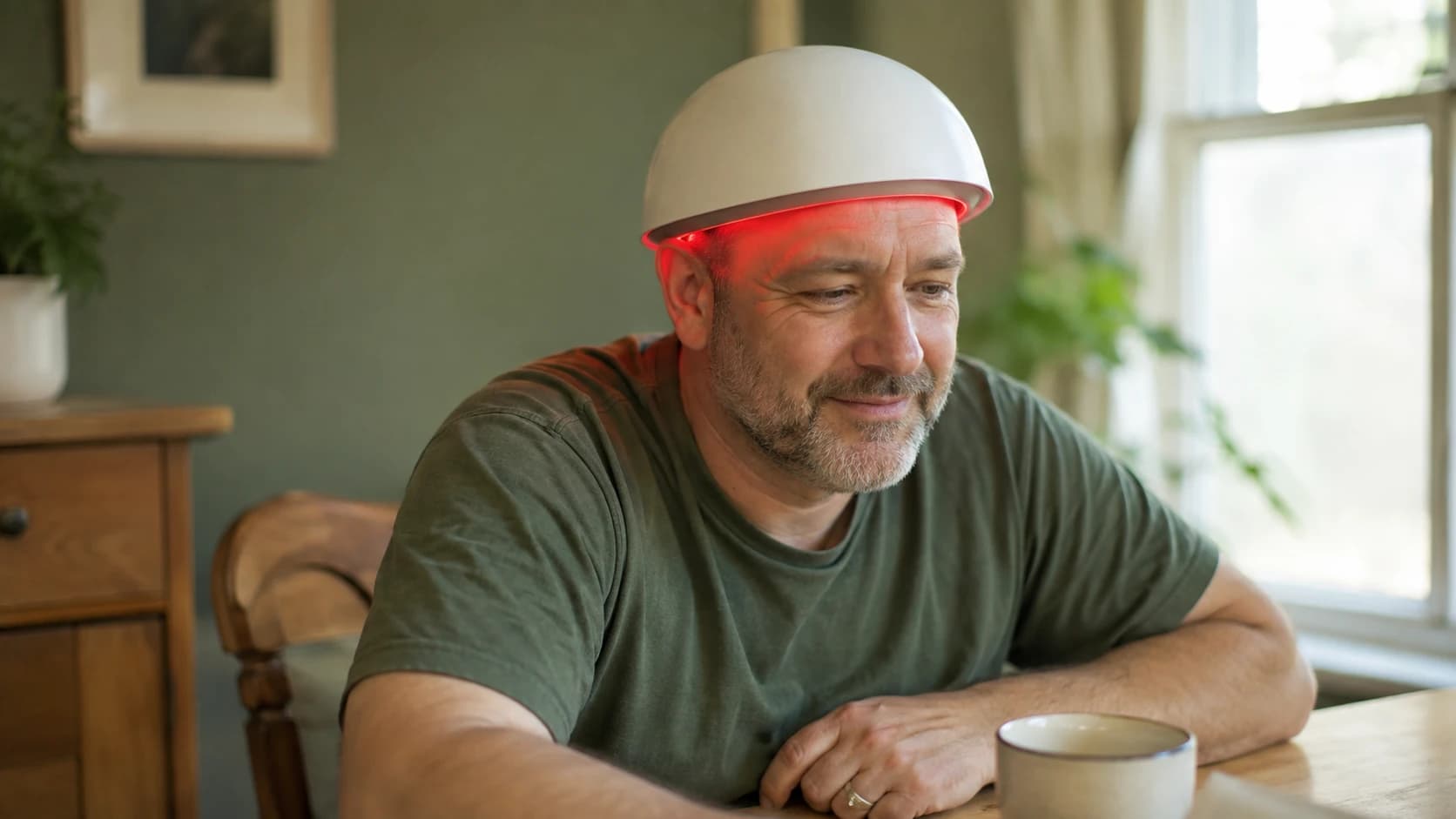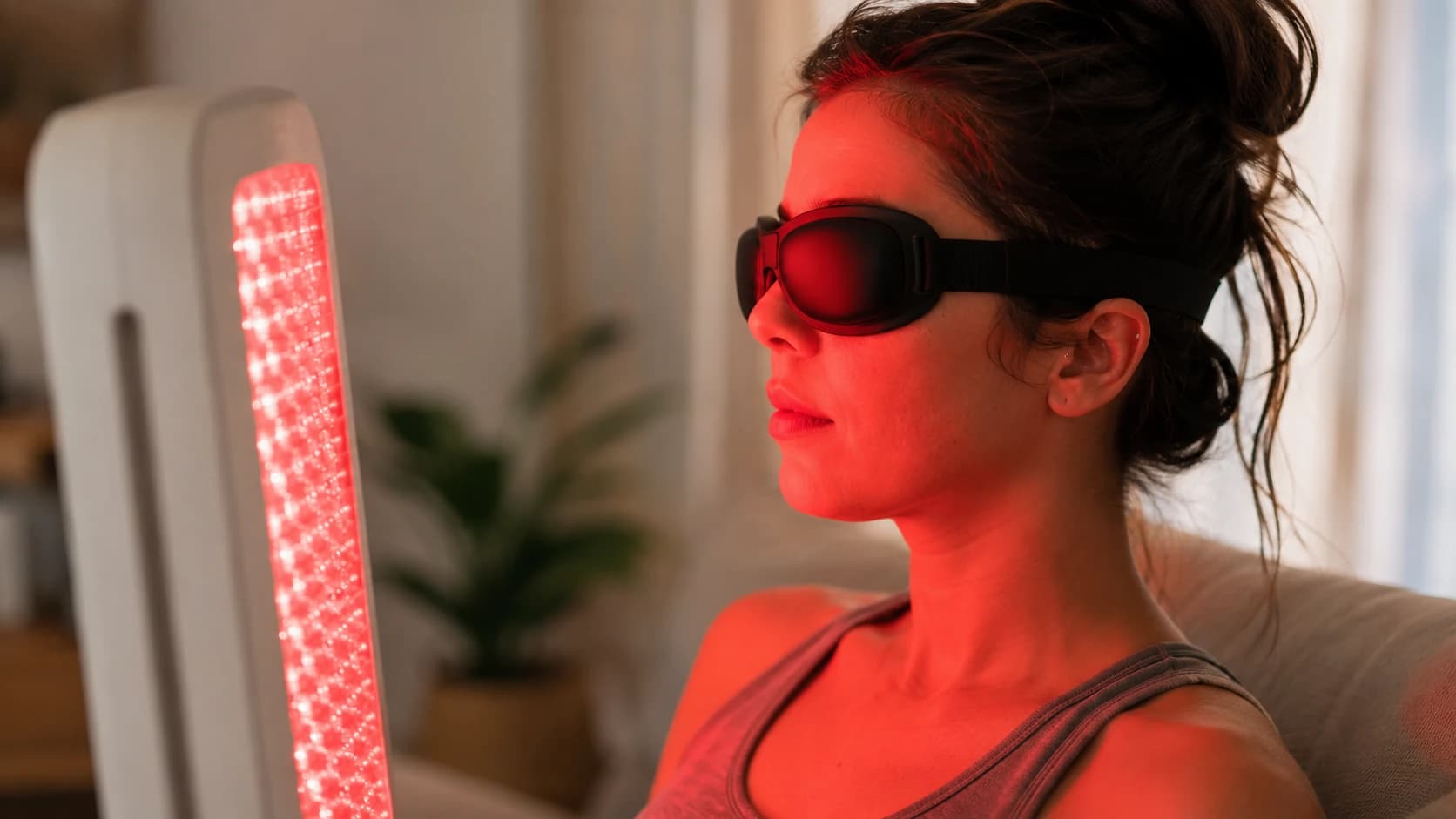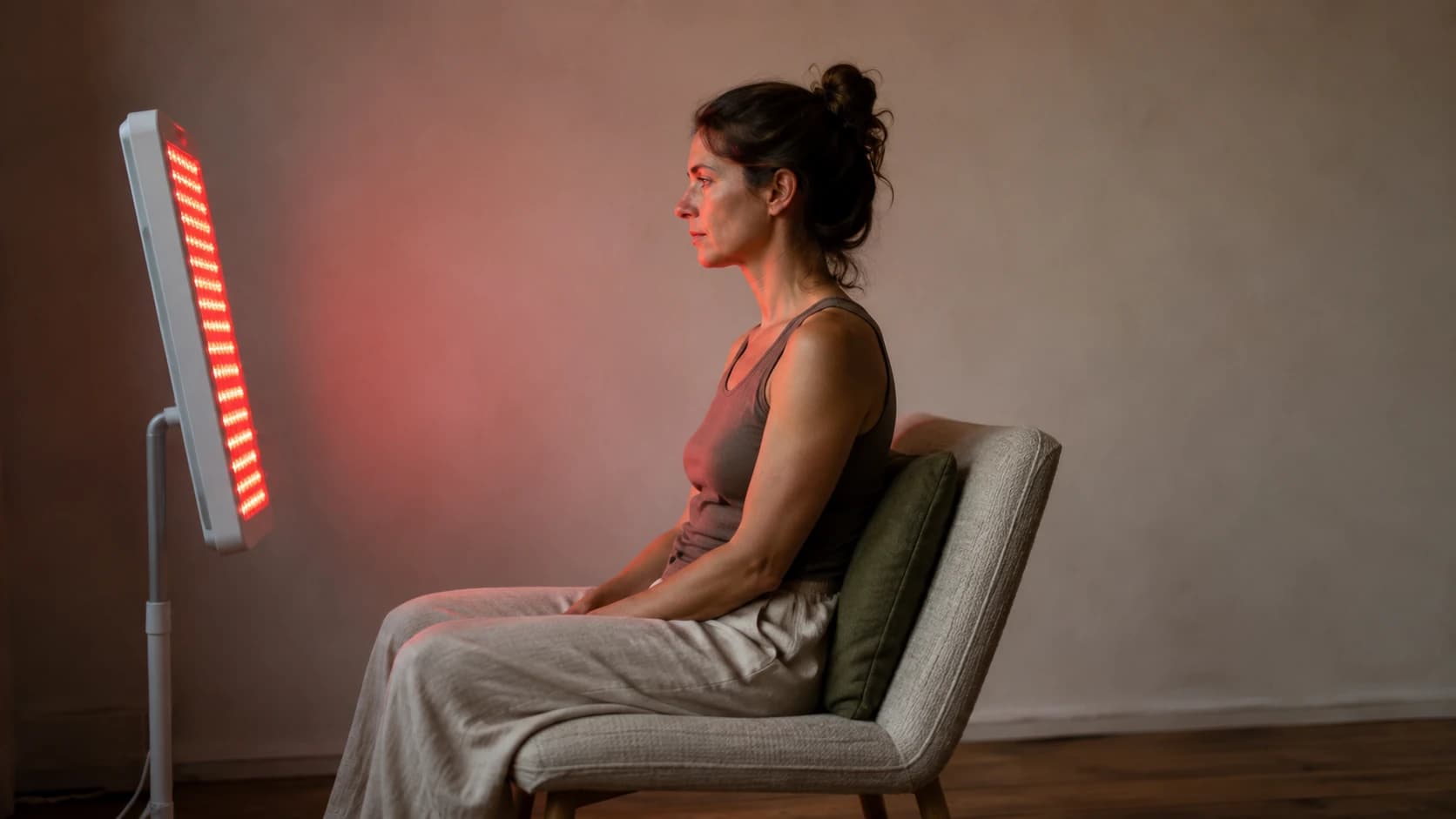

Red light therapy is one of the few wellness gadgets with real research behind it, and skin is where that evidence is strongest. It is not a magic wand, the effects are gradual and modest, but for skin aging in particular, controlled studies back it up. Here is an honest look at what red light therapy does for skin, where the evidence is solid, and where it is thinner than the marketing suggests.
How it works, briefly
Red light therapy, also called photobiomodulation, shines red and near-infrared light onto the skin. The light is absorbed by the mitochondria, the cell's power plants, which appears to nudge skin cells to make more collagen and fewer of the enzymes that break collagen down (Avci et al., 2013; JAAD CME, 2024). More collagen means firmer, smoother skin, which is the basis for the anti-aging claims.
Skin aging: the strongest case
This is where the evidence is most convincing. In a randomized controlled trial of 136 people, regular red and near-infrared light treatments improved skin complexion, reduced measured skin roughness, and increased collagen density compared with an untreated control group (Wunsch & Matuschka, 2014). A major review of light therapy in skin reported that most patients improved by at least one photoaging grade after a course of LED treatments (Avci et al., 2013).
The realistic takeaway: red light therapy can produce genuine, if modest, improvements in fine lines, texture, and firmness over weeks of consistent use. It will not replace what sun protection and not smoking do for your skin, but as an add-on it has a real basis.
Acne: more modest, and honest about it
Red light is often sold for acne too, and here the picture is weaker. Red light can influence the skin's oil glands and reduce some inflammation, and it is sometimes combined with blue light, which targets acne bacteria (Avci et al., 2013). But a Cochrane review, the most rigorous kind, looked at 71 trials of light therapies for acne and concluded that high-quality evidence is lacking, with most studies small and at high risk of bias (Barbaric et al., 2016).
So red light may help some people's acne a little, but it is not a reliable first-line treatment. If acne is your main concern, proven options from a doctor or dermatologist should come first.
Wound healing and other uses
Beyond cosmetics, light therapy has been studied for wound healing, where reviews report faster skin repair and some protection of skin cells against UV damage (Avci et al., 2013). These are promising but mostly studied in clinical settings, so treat at-home wound use cautiously and involve a clinician for anything beyond minor issues.
Home device vs clinic: the honest caveat
This matters as much for skin as for muscle. Many of the positive studies used professional lasers or medical-grade LED arrays, which deliver light differently from consumer panels. A 2024 review notes that the LED light in home devices does not penetrate or perform identically to clinical laser systems (Lawrence & Sorra, 2024). Home panels can still help, especially for surface skin, but expect more gradual, modest results than the clinical-trial headlines, and budget accordingly.
How to use it sensibly
- Wavelength. For skin specifically, around 660 nm red light targets the surface well; many panels also include near-infrared for deeper effects.
- Consistency. The studies run for weeks to months. A few sessions a week, kept up over time, matters more than any single session.
- Distance and time. Follow the manufacturer's guidance; more is not better, and there is a point where extra light stops adding benefit.
- Eye protection. Always use the goggles your device provides, and do not stare into the diodes.
For device-selection details, see our red light therapy for muscle recovery guide and our best red light therapy devices for home use roundup. If the face is your main concern, red light therapy masks explains why the format helps more than the specifications suggest, and how often to use red light therapy covers session length and frequency.
Safety and who should be careful
Red light therapy is non-thermal and generally well tolerated, but some people should check with a clinician first — the groups below are covered in more detail in who should not use red light therapy, alongside what is documented and what is merely repeated (JAAD CME, 2024):
- People with photosensitivity disorders such as lupus or porphyria
- Anyone taking photosensitizing medication (some antibiotics, retinoids, and others)
- People with active skin cancer or untreated suspicious lesions in the treatment area
- Pregnant people, as a precaution, given limited data
The bottom line
For skin aging, red light therapy is one of the better-supported wellness tools: a real, if modest, effect on wrinkles, texture, and collagen, backed by controlled research. For acne, the evidence is weaker and it should not replace proven treatments. And home devices are not the same as clinical ones, so keep expectations realistic. Used consistently and safely, it is a credible add-on, not a miracle. For how skin compares with every other claim made for this technology, see our where skin sits among the other claims, or browse our wellness guides for more.
Frequently Asked Questions (FAQ)
Does red light therapy actually work for skin? For skin aging, yes, more than for most wellness gadgets. A controlled trial found red and near-infrared light improved wrinkles, skin roughness, and collagen density. Effects are gradual and modest, not dramatic.
Does red light therapy help with acne? Possibly a little, but the evidence is weaker. Red light can affect oil glands and is sometimes combined with blue light, but a major review found the overall evidence for light therapy in acne is low quality. It is not a first-line acne treatment.
Are home red light devices as good as in-clinic ones? Usually not as strong. Many studies used professional lasers or medical LED arrays. Home LED panels can still help, but expect more modest, slower results.
How long until I see results on my skin? Most studies run for weeks to a few months of regular sessions. Consistency matters more than any single session, and changes are gradual.
Is red light therapy safe for skin? For most people, yes, when used as directed with eye protection. Avoid it or check with a clinician if you have a photosensitivity disorder, take photosensitizing medication, have active skin cancer in the area, or are pregnant.
Medical disclaimer: This article is for informational purposes only. Always consult a qualified healthcare provider before making changes to your health routine.
Sources
- Wunsch A, Matuschka K. A controlled trial to determine the efficacy of red and near-infrared light treatment in patient satisfaction, reduction of fine lines, wrinkles, skin roughness, and intradermal collagen density increase. Photomedicine and Laser Surgery, 2014 — PubMed. https://pubmed.ncbi.nlm.nih.gov/24286286/
- Avci P, et al. Low-level laser (light) therapy (LLLT) in skin: stimulating, healing, restoring. Seminars in Cutaneous Medicine and Surgery, 2013 — PubMed Central. https://pmc.ncbi.nlm.nih.gov/articles/PMC4126803/
- Barbaric J, et al. Light therapies for acne. Cochrane Database of Systematic Reviews, 2016 — PubMed. https://pubmed.ncbi.nlm.nih.gov/27670126/
- Lawrence J, Sorra K. Photobiomodulation as medicine: low-level laser therapy (LLLT) for acute tissue injury or sport performance recovery. Journal of Functional Morphology and Kinesiology, 2024 — PubMed Central. https://pmc.ncbi.nlm.nih.gov/articles/PMC11503318/
- Photobiomodulation CME overview. Journal of the American Academy of Dermatology, 2024. https://www.jaad.org/article/S0190-9622(24)00186-5/abstract
All sources accessed 31 May 2026.

Marcus Thorne
A wellness tools researcher focused on what the evidence actually says.