Somewhere between a fasting blood draw and a rushed follow-up appointment, most people meet the word "cholesterol" as a single number on a lab printout, with maybe two minutes of explanation attached. Cholesterol isn't a toxin or a mystery ingredient — it's a substance your body makes on purpose because it needs it. What actually matters is which particles are carrying it, how much is circulating, and what that means for your arteries over time. This guide covers what cholesterol is, what it does, where the word comes from, how LDL and HDL move it around, and what your numbers mean, with links out to the deeper posts on levels, testing, symptoms, diet, and medication for whichever question brought you here.
What Is Cholesterol?
Cholesterol is a waxy, fat-like substance — technically a sterol — that every cell in your body uses to build its outer membrane. Your liver makes about 80% of it; food supplies the rest (Cleveland Clinic).
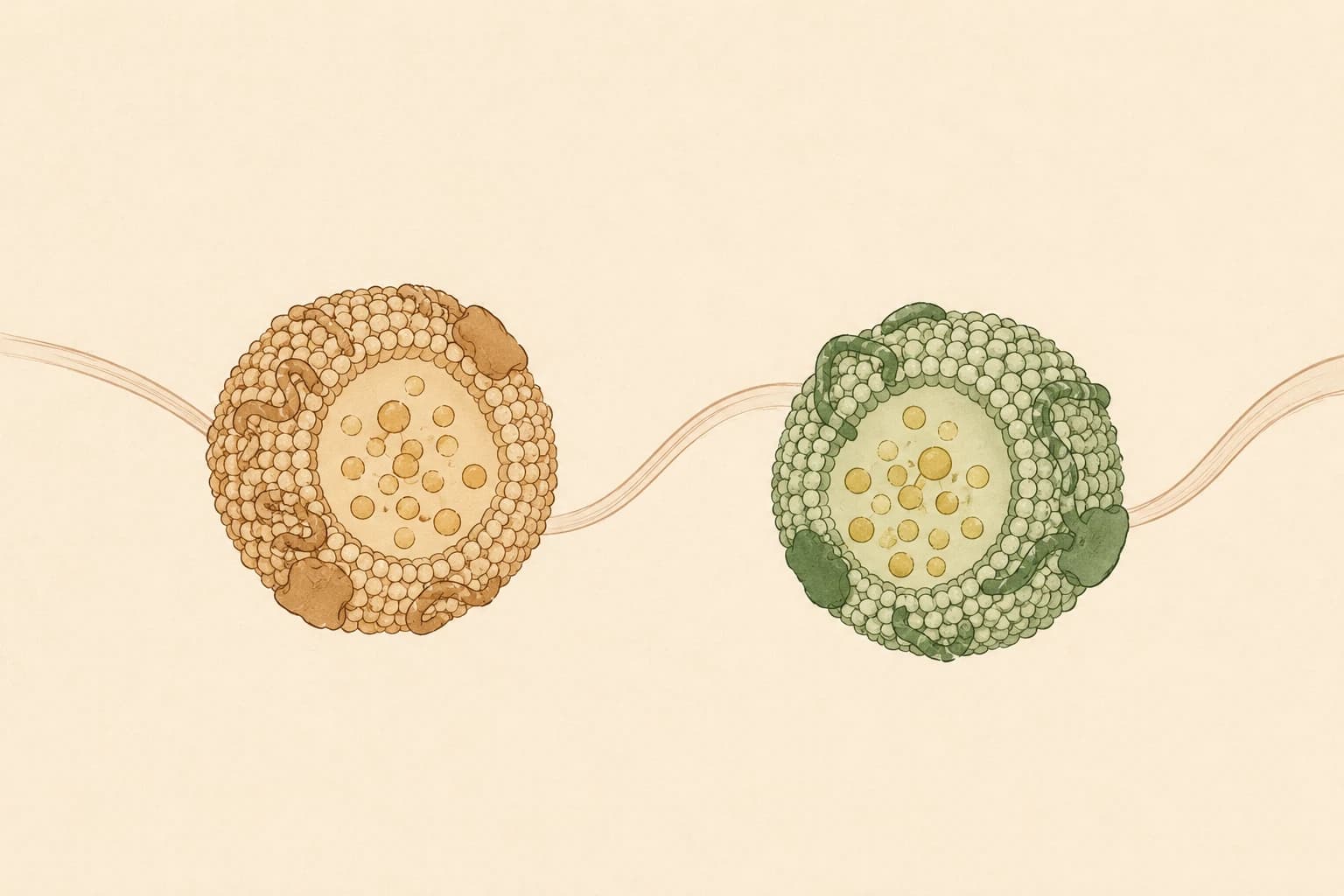
Here's the part most explainers skip past: cholesterol can't travel through your bloodstream on its own. Blood is mostly water, and cholesterol is fat — the two don't mix, in the same literal sense that oil doesn't mix into a glass of water. So cholesterol hitches a ride on carrier particles called lipoproteins, small bundles of fat and protein that the National Heart, Lung, and Blood Institute (NHLBI) describes simply as particles that "carry cholesterol in your blood and throughout your body." Cleveland Clinic puts it more vividly: lipoproteins are "like little boats that travel through your bloodstream." LDL and HDL, the two names on every lab report, are two types of these boats, not two types of fat. The cholesterol molecule they're carrying is chemically identical either way. What differs is the vessel it's riding in, and where that vessel is headed.
What Does Cholesterol Do in the Body?
Cholesterol builds the structure of every cell membrane in your body, gives your liver the raw material to make bile acids for digesting fat, and serves as a building block for hormones, including the sex hormones, and for vitamin D (Cleveland Clinic).
One role rarely makes it into consumer health content: the brain. Peer-reviewed research describes the brain as "the most cholesterol-rich organ," holding about 20% of the body's total cholesterol, and states plainly that cholesterol "is required for synapse and dendrite formation" — the physical connections neurons use to communicate with each other (PMC, "Cholesterol: Its Regulation and Role in Central Nervous System Disorders"). Deplete cholesterol experimentally and those synaptic connections degrade.
None of this makes cholesterol the enemy. The problem most people actually run into isn't that cholesterol exists; it's having too much of the wrong carrier particle circulating in the blood for too long. That distinction is what the rest of this guide, and this entire cluster of posts, is really about.
Where the Word "Cholesterol" Comes From
The name is older than the biology behind it. "Cholesterol" traces to the Greek khole (bile) and steros (solid, stiff) — a nod to where the compound was first noticed: in gallstones, the solid deposits found in bile. French chemist Michel Eugène Chevreul coined the term cholestérine for it in 1827, building on an earlier 1775 observation that gallstones contained a fat-like substance (Etymonline).
The modern spelling, with the "-ol" ending chemists use for alcohols, was adopted in 1894, once the compound was correctly identified as a secondary alcohol rather than a simple fat.
The bile root isn't a coincidence. As the previous section covered, your liver genuinely does use cholesterol to manufacture bile acids, so the 19th-century chemists who named it after where they found it were closer to the compound's actual job than they probably realized.
How Cholesterol Travels: LDL, HDL, and Lipoproteins
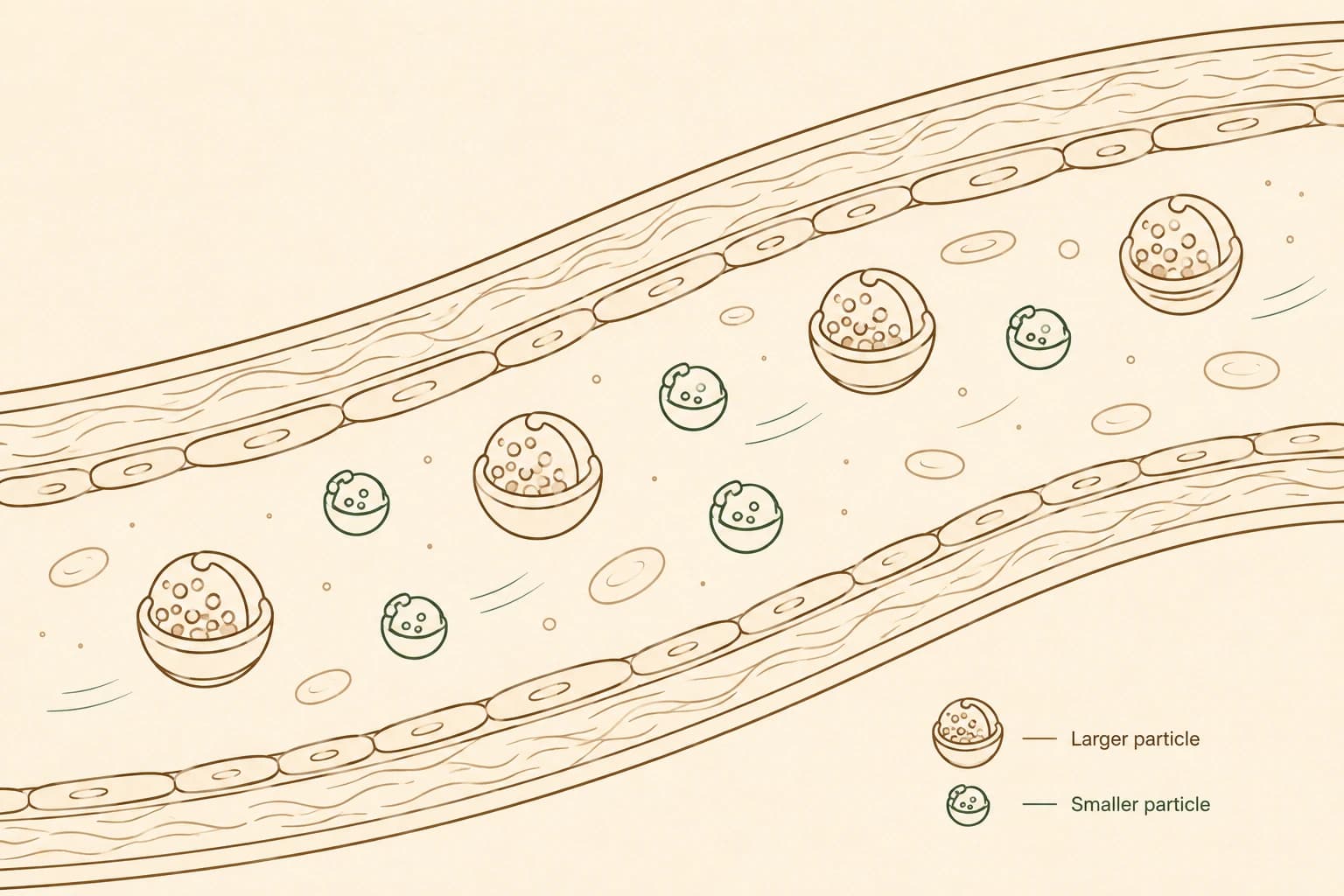
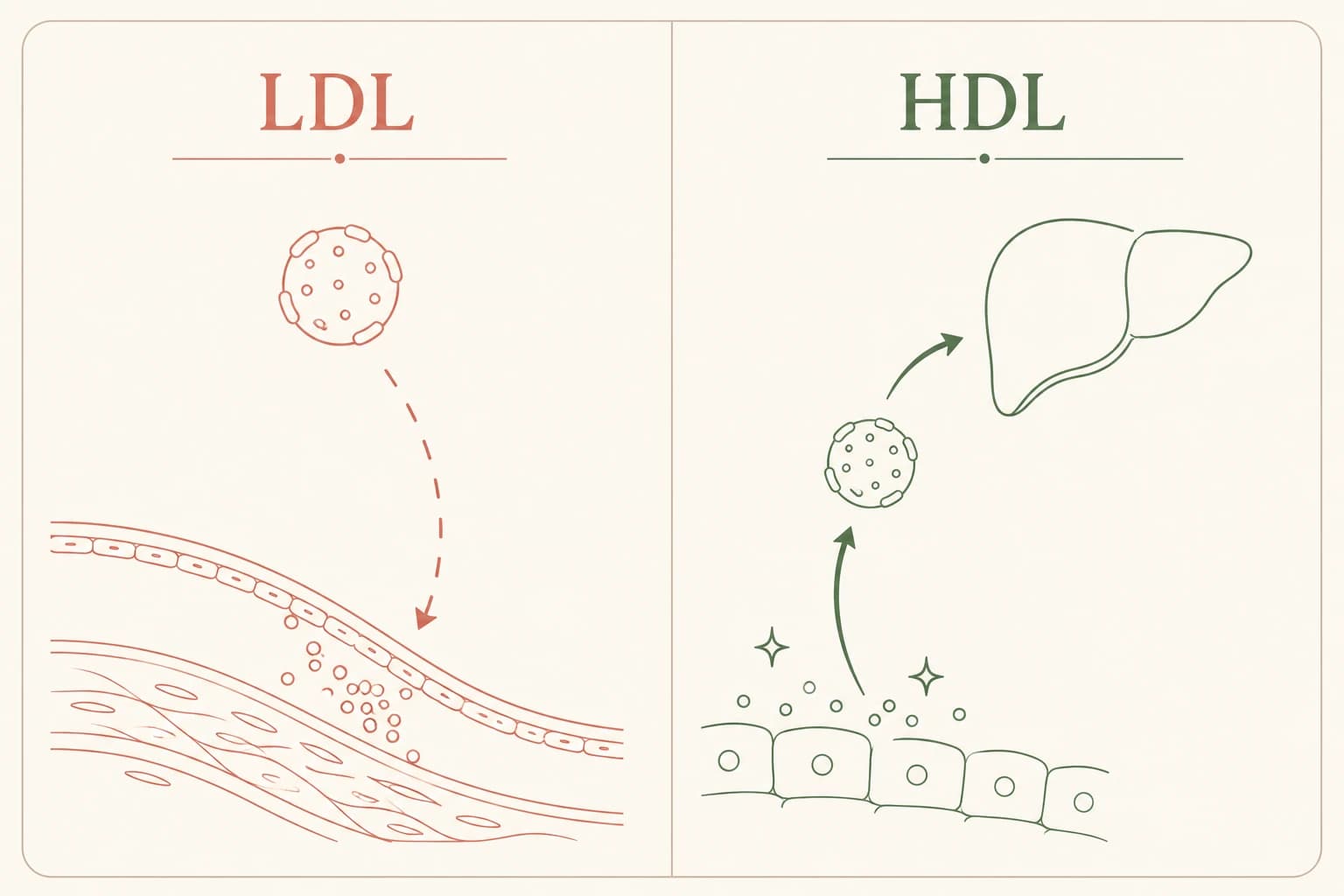
Building on the lipoprotein framing above: LDL (low-density lipoprotein) is the particle that carries cholesterol from your liver out to the rest of your body. That's a necessary job — cells need the delivery — but when more LDL particles are circulating than your tissues need, the excess can work its way into artery walls and start the slow buildup of plaque. That's the entire basis for LDL's "bad cholesterol" nickname: not that the cholesterol itself is harmful, but that too much of this particular delivery vehicle raises the odds some of its cargo ends up somewhere it shouldn't.
HDL (high-density lipoprotein) runs largely in reverse. It picks up excess cholesterol from tissues and arteries and carries it back to the liver for disposal or recycling, a process often called reverse cholesterol transport. More HDL activity generally means more cholesterol getting cleared out rather than deposited, which is the basis for calling it "good" cholesterol.
The numbers on your own lab report, and what's actually worth doing if one of them is off, are covered in the posts below.
LDL, HDL, and Non-HDL Cholesterol at a Glance
| LDL | HDL | |
|---|---|---|
| Full name | Low-density lipoprotein | High-density lipoprotein |
| Nickname | "Bad" cholesterol | "Good" cholesterol |
| What it does | Carries cholesterol from the liver to the rest of the body | Carries excess cholesterol from tissues back to the liver |
| General target | Lower is generally better | Higher is generally better |
There's a third figure worth knowing, even though it rarely gets explained alongside LDL and HDL: non-HDL cholesterol. It's calculated as your total cholesterol minus your HDL, which means it captures LDL plus the other cholesterol-carrying particles, like VLDL, that also contribute to plaque buildup but don't show up as "LDL" on a standard panel. Cleveland Clinic recommends keeping non-HDL no more than 30 mg/dL above your LDL target, and notes that a related, more precise marker called apoB, which counts the actual number of artery-affecting particles rather than the cholesterol they're carrying, is "even more accurate at predicting risk than non-HDL" (Cleveland Clinic — Non-HDL Cholesterol). Neither number replaces LDL on a routine panel, but both are worth asking about if you have a family history of heart disease or a borderline LDL result.
For the deeper dive on each: what actually moves your LDL number, what raises or lowers HDL, and a full side-by-side LDL vs. HDL comparison.
What Are Normal Cholesterol Levels?
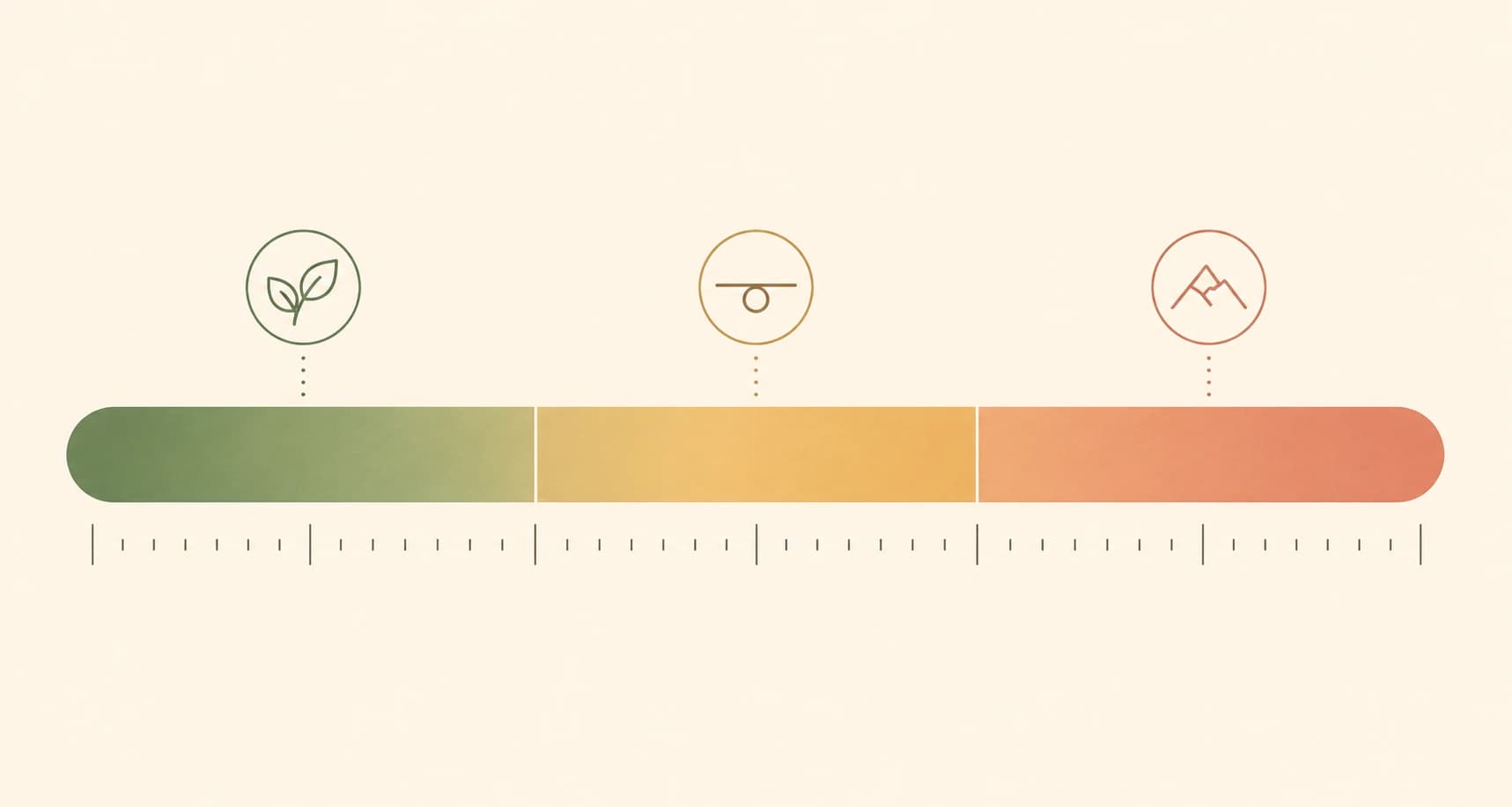
These are the general-population screening categories most US authorities still use as the baseline (Cleveland Clinic — Cholesterol Numbers; Cleveland Clinic — LDL Cholesterol; NHLBI):
| Marker | Desirable | Borderline High | High |
|---|---|---|---|
| Total cholesterol | Below 200 mg/dL (5.17 mmol/L) | 200–239 mg/dL (5.17–6.18 mmol/L) | 240 mg/dL (6.21 mmol/L) or above |
| LDL cholesterol | Below 100 mg/dL (2.59 mmol/L) | 130–159 mg/dL (3.36–4.11 mmol/L) | 160 mg/dL (4.14 mmol/L) or above |
| Triglycerides | Below 150 mg/dL (1.69 mmol/L) | 150–199 mg/dL (1.69–2.25 mmol/L) | 200 mg/dL (2.26 mmol/L) or above |
HDL runs the opposite direction from the other three, which is easy to miss if you skim: here, higher is the goal. Cleveland Clinic's sex-specific ranges put low HDL below 40 mg/dL (1.03 mmol/L) for men or below 50 mg/dL (1.29 mmol/L) for women; normal is 40–80 mg/dL (1.03–2.07 mmol/L) for men or 50–80 mg/dL (1.29–2.07 mmol/L) for women; and above 80 mg/dL (2.07 mmol/L) counts as high for everyone, which, unlike the other three markers, is generally still a good result rather than a red flag (Cleveland Clinic — HDL Cholesterol).
You can check the mg/dL-to-mmol/L conversion yourself rather than taking it on faith: divide a cholesterol figure by 38.67, or a triglyceride figure by 88.57 (NCBI Bookshelf, lipid conversion factors). Take total cholesterol's 200 mg/dL cutoff as an example: 200 ÷ 38.67 = 5.17 mmol/L, exactly the figure in the table above.
A March 13, 2026 update from the American College of Cardiology, the American Heart Association, and several partner societies adds a second, different set of numbers that's easy to confuse with the table above: risk-tiered LDL-C treatment targets of below 100, below 70, or below 55 mg/dL, assigned according to a person's calculated cardiovascular risk category (ACC.org). Those are treatment goals a clinician sets once someone is already being risk-stratified or treated, not a replacement for the general-population "desirable" screening range above. If your doctor has given you a specific LDL target lower than "below 100," this newer risk-tiered framework is almost certainly why.
For the full age- and sex-stratified breakdown, including the "elevated" and "very high" tiers this section simplifies, see normal cholesterol levels by age. Our lipids explained guide covers the broader NIH reference-range framework and how these categories compare across countries, if you want that wider context.
Getting Your Cholesterol Tested
A cholesterol test is just a blood draw. The results come from something called a lipid panel, which measures total cholesterol, LDL, HDL, and triglycerides from one sample. The part that surprises people who last had one done years ago: most people no longer need to fast beforehand. A 2026 update to US cholesterol guidelines states that a non-fasting lipid profile is an acceptable baseline test for most people, reserving a fasting sample for those with a family history of dyslipidemia, a suspected genetic lipid disorder, or a non-fasting triglyceride result of 400 mg/dL or higher (Guideline Central, summarizing the 2026 ACC/AHA/Multisociety Dyslipidemia Guideline).
The old fasting rule wasn't arbitrary. It existed because triglycerides can spike 20–30% after a meal, which would throw off the reading (Harvard Health Publishing). LDL and HDL are much less affected by recent food intake, part of why the guidance has loosened for most routine screening.
The full mechanics, including what each line on your results actually measures and when your doctor might still ask you to fast, are in getting a cholesterol test.
High Cholesterol: Why It Usually Has No Symptoms
High cholesterol itself usually causes no symptoms at all. Most people find out from a routine blood test, not from how they feel (NHLBI), which is exactly why the levels and testing sections above matter more than waiting to feel something wrong.
There's one real exception, and it's worth keeping separate from a vague general symptom list: a small set of physical signs, xanthomas (fatty deposits on the skin) and corneal arcus (a grayish ring around the cornea), can appear in cases of severe or familial hypercholesterolemia specifically, not in ordinary elevated cholesterol (NHLBI).
Familial hypercholesterolemia (FH) is a genetic condition that causes very high LDL from birth, and it's more common than most people assume: heterozygous FH affects somewhere between roughly 1 in 250 and 1 in 311 people, depending on which population estimate you use, and globally only about 1% of people who have it have actually been diagnosed (CDC Office of Genomics and Precision Health).
Beyond genetics, high cholesterol has real, mostly modifiable causes: diet and lifestyle patterns, but also specific medical conditions and medications that can raise it independent of what you eat. What causes high cholesterol covers the full list, and high cholesterol covers what happens in your body once it's elevated, including how the symptomless plaque-buildup timeline eventually connects to symptoms of downstream complications like angina or stroke.
How to Lower Cholesterol: Diet, Lifestyle, and Supplements
Diet and lifestyle changes can move the needle, and the honest range is worth setting expectations around: cutting back on saturated fat, eating more fiber, and following a balanced pattern like the Mediterranean diet can typically reduce cholesterol levels by up to 10% over about 8 to 12 weeks (British Heart Foundation). That's a real, meaningful change, but cholesterol also has a genetic and hepatic-production component that diet doesn't touch, which is part of why two people eating the same way can see different results.
One myth worth flagging early, because it changes what good diet advice should actually say: the long-standing 300 mg/day dietary cholesterol cap is outdated. Federal dietary guidelines dropped that fixed limit years ago in favor of qualitative guidance, keeping dietary cholesterol as low as possible without compromising overall diet quality, and the American Heart Association's own 2019 science advisory found the evidence doesn't generally support a link between dietary cholesterol and cardiovascular risk, which is part of why current AHA guidance allows healthy adults up to a whole egg a day (American Heart Association). The full explanation, including why saturated fat turned out to matter more than dietary cholesterol itself, is in foods to avoid with high cholesterol.
For the complete picture: how to lower cholesterol is the main lifestyle hub, cholesterol diet covers what to eat and in what amounts, foods to avoid with high cholesterol covers what to cut back and the eggs question in full, and supplements to lower cholesterol covers which supplements have real trial evidence behind them and which don't. Chronic inflammation is part of this picture too; see our guide to anti-inflammatory foods for the wider eating pattern that supports heart health alongside your cholesterol numbers specifically.
Cholesterol Medication: Statins and What's New
Statins remain the first-line medication for high cholesterol, and they work: at the maximum dose of the most potent statin (rosuvastatin, 40 mg), LDL-C reductions of about 60% have been documented (NCBI Bookshelf / Endotext).
The side-effect anxiety around statins is real but often overstated relative to what randomized trials actually attribute to the drug. The Cholesterol Treatment Trialists' Collaboration pooled data from 19 placebo-controlled trials totaling 123,940 participants and found muscle pain or weakness reported in 27.1% of the statin group versus 26.6% of the placebo group, a gap small enough that the researchers concluded more than 90% of muscle-symptom reports in statin users weren't actually caused by the statin itself (The Lancet / CTT Collaboration, via PMC). The full nuance here, including why real-world reporting rates run higher than trial data, is in statin side effects.
The medication landscape also just changed. On July 16, 2026, the FDA approved enlicitide (brand name Lipfendra) as the first once-daily oral PCSK9 inhibitor, a drug class that previously required injections (Merck; Merck, FDA-approved prescribing information). In its approval trials, it reduced LDL-C versus placebo at 24 weeks by 55.8% in the CORALreef Lipids trial and 59.4% in the CORALreef HeFH trial, depending on the trial population (Merck, CORALreef Lipids; Merck, CORALreef HeFH).
Worth separating clearly, because the two facts are easy to conflate: that LDL-lowering effect is proven. Whether enlicitide actually reduces heart attacks and strokes, the outcome that matters most, is not yet proven. The dedicated cardiovascular-outcomes trial, CORALreef Outcomes, has an estimated primary completion date in November 2029 (ClinicalTrials.gov, NCT06008756). A new drug can lower a lab number years before anyone knows whether that translates into fewer heart attacks. Enlicitide covers what's actually been shown so far.
For a full walkthrough of statins, non-statin options, and how doctors decide between them, see cholesterol medication.
Bottom Line
Cholesterol itself isn't the enemy. Your cells, your hormones, and your brain all depend on it. What actually drives risk is having too much of the wrong carrier particle circulating for too long, and the two things that reliably move that number are how you eat and live day to day, and, when that's not enough on its own, medication.
Where to go from here depends on why you're reading this. If you just got lab results back, start with normal cholesterol levels to understand what your numbers mean, or getting a cholesterol test if you're wondering what the test itself involves. If you're worried about symptoms, high cholesterol and what causes high cholesterol walk through what's actually happening and why. And if you're ready to act, how to lower cholesterol is the place to start.
Frequently Asked Questions (FAQ)
Is all cholesterol bad for you? No. Cholesterol itself is essential — every cell membrane in your body, plus bile acid, hormone, and vitamin D production, depend on it. What actually matters for health risk is how much is circulating and which lipoprotein, LDL or HDL, is carrying it.
Where does cholesterol come from — food or your own body? Mostly your own body. The liver produces about 80% of the cholesterol in your bloodstream, and food supplies the remaining roughly 20%.
What's the difference between cholesterol and lipids? Lipids are the broader category of fats, oils, and related compounds. Cholesterol is one specific type, a sterol, distinct from triglycerides (the main fat in food and body fat stores) and phospholipids (which form cell membranes). See our lipids explained guide for the full picture.
What is a lipoprotein, and why does it matter more than the word "cholesterol" itself? A lipoprotein is the particle that actually carries cholesterol through your bloodstream, since cholesterol is fat-based and blood is water-based. LDL and HDL are two types of lipoproteins, not two types of cholesterol — the cholesterol molecule they carry is identical, so your lab results are really describing which carrier particles you have too many or too few of.
Why does the brain need cholesterol? The brain holds about 20% of the body's total cholesterol and depends on that supply for synapse and dendrite formation, the physical connections neurons use to communicate with each other.
Medical disclaimer: This article is for informational purposes only. Always consult a qualified healthcare provider before making changes to your health routine.
Sources
- Cleveland Clinic. What Is Cholesterol? — Health article. https://my.clevelandclinic.org/health/articles/23922-what-is-cholesterol
- National Heart, Lung, and Blood Institute (NIH). Blood Cholesterol — Health topic overview. https://www.nhlbi.nih.gov/health/blood-cholesterol
- Cholesterol: Its Regulation and Role in Central Nervous System Disorders — Peer-reviewed review, PubMed Central. https://pmc.ncbi.nlm.nih.gov/articles/PMC3483652/
- Etymonline. Cholesterol — Etymology reference. https://www.etymonline.com/word/cholesterol
- Cleveland Clinic. LDL Cholesterol — Health article. https://my.clevelandclinic.org/health/articles/24391-ldl-cholesterol
- Cleveland Clinic. HDL Cholesterol — Health article. https://my.clevelandclinic.org/health/articles/24395-hdl-cholesterol
- Cleveland Clinic. Non-HDL Cholesterol — Health article. https://my.clevelandclinic.org/health/articles/non-hdl-cholesterol
- Cleveland Clinic. Cholesterol Numbers: What Do They Mean? — Health article. https://my.clevelandclinic.org/health/articles/11920-cholesterol-numbers-what-do-they-mean
- National Heart, Lung, and Blood Institute (NIH). High Blood Triglycerides — Health topic. https://www.nhlbi.nih.gov/health/high-blood-triglycerides
- NCBI Bookshelf (AHRQ). Lipid Conversion Factors, Appendix A. https://www.ncbi.nlm.nih.gov/books/NBK83505/
- American College of Cardiology. ACC/AHA Release New Clinical Guideline for Managing Dyslipidemia — Journal scan, published March 13, 2026. https://www.acc.org/latest-in-cardiology/journal-scans/2026/03/13/15/20/acc-aha-release-new-clinical-guideline-for-managing-dyslipidemia
- Guideline Central. Summary of the 2026 ACC/AHA/Multisociety Dyslipidemia Guideline. https://www.guidelinecentral.com/guideline/5099440/
- Harvard Health Publishing. Making Sense of Cholesterol Tests. https://www.health.harvard.edu/heart-health/making-sense-of-cholesterol-tests
- National Heart, Lung, and Blood Institute (NIH). Blood Cholesterol — Symptoms. https://www.nhlbi.nih.gov/health/blood-cholesterol/symptoms
- CDC Office of Genomics and Precision Health. How Common Is FH? — Genomics and Precision Health Blog, published January 25, 2021. https://blogs.cdc.gov/genomics/2021/01/25/how-common-is-fh/
- British Heart Foundation. How Long Does It Take to Lower Cholesterol? https://www.bhf.org.uk/informationsupport/heart-matters-magazine/medical/how-long-to-lower-cholesterol
- American Heart Association. Here's the Latest on Dietary Cholesterol and How It Fits in With a Healthy Diet — News article, published August 25, 2023. https://www.heart.org/en/news/2023/08/25/heres-the-latest-on-dietary-cholesterol-and-how-it-fits-in-with-a-healthy-diet
- NCBI Bookshelf / Endotext. Cholesterol Lowering Drugs. https://www.ncbi.nlm.nih.gov/books/NBK395573/
- The Cholesterol Treatment Trialists' Collaboration. Effects of statin therapy on muscle symptoms — The Lancet, via PubMed Central. https://pmc.ncbi.nlm.nih.gov/articles/PMC7613583/
- Merck. Merck's LIPFENDRA (Enlicitide) Is the First and Only Once-Daily Oral PCSK9 Inhibitor Approved by the U.S. FDA — Press release, July 16, 2026. https://www.merck.com/news/mercks-lipfendra-enlicitide-is-the-first-and-only-once-daily-oral-pcsk9-inhibitor-approved-by-the-u-s-fda-to-reduce-ldl-c-in-adults-with-hypercholesterolemia/
- Merck. LIPFENDRA (enlicitide) — FDA-approved prescribing information. https://www.merck.com/product/usa/pi_circulars/l/lipfendra/lipfendra_pi.pdf
- Merck. Merck's Enlicitide Decanoate, an Investigational Oral PCSK9 Inhibitor, Significantly Reduced LDL-C in Phase 3 CORALreef Lipids Trial — Press release, November 8, 2025. https://www.merck.com/news/mercks-enlicitide-decanoate-an-investigational-oral-pcsk9-inhibitor-significantly-reduced-ldl-c-in-phase-3-coralreef-lipids-trial/
- Merck. Merck's Enlicitide Decanoate, an Investigational Oral PCSK9 Inhibitor, Significantly Reduced LDL-C in Adults With Heterozygous Familial Hypercholesterolemia (HeFH) in Phase 3 CORALreef HeFH Trial — Press release, November 9, 2025. https://www.merck.com/news/mercks-enlicitide-decanoate-an-investigational-oral-pcsk9-inhibitor-significantly-reduced-ldl-c-in-adults-with-heterozygous-familial-hypercholesterolemia-hefh-in-phase-3-coralreef-hefh-tr/
- ClinicalTrials.gov. CORALreef Outcomes (NCT06008756). https://clinicaltrials.gov/study/NCT06008756

Olivia Smith, RDN
A registered dietitian who translates lab numbers into plain language.