

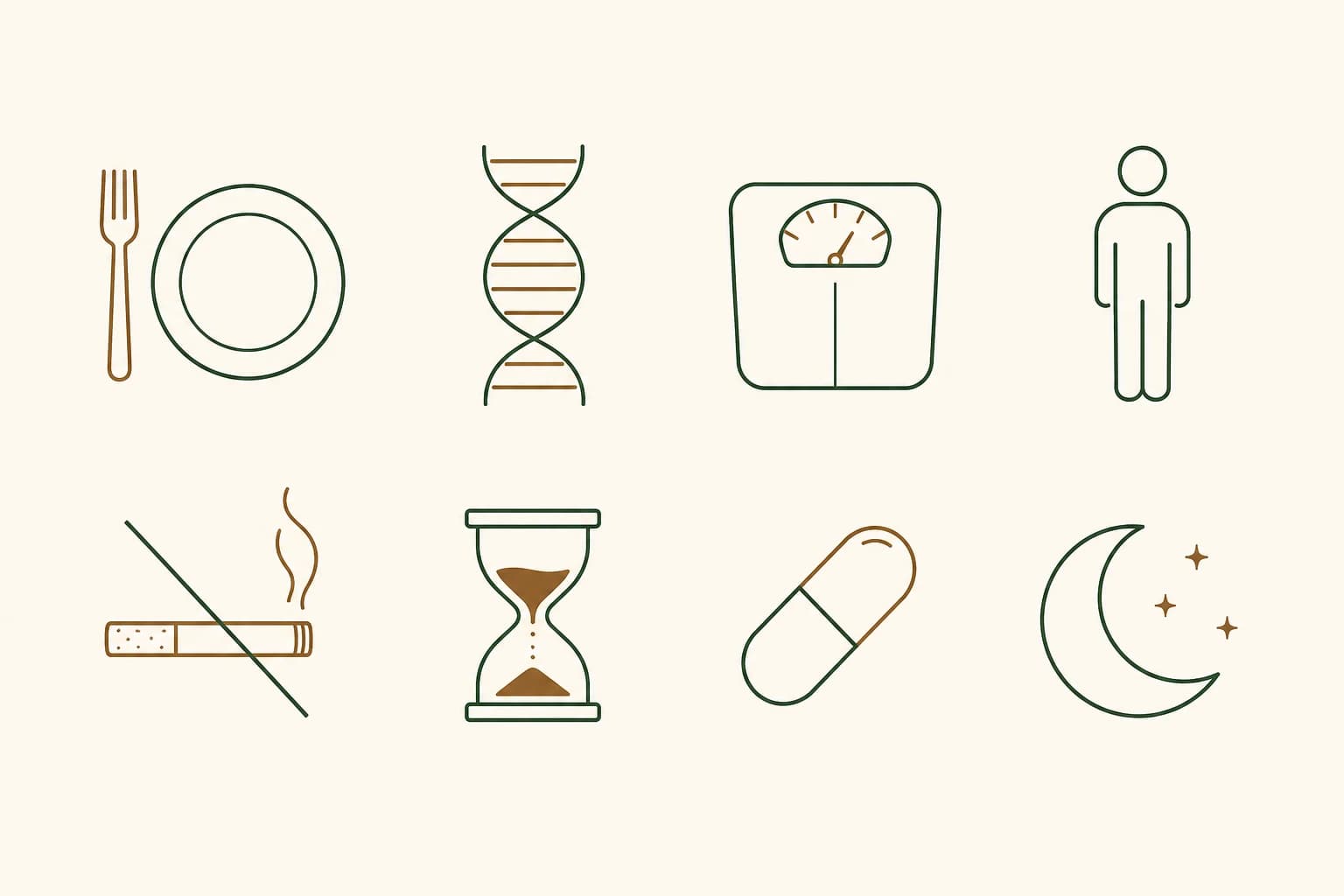
High cholesterol usually comes from some combination of diet, genetics, body weight, inactivity, smoking, alcohol, stress and sleep, age, and a handful of medical conditions and medications, not a single explanation (NHLBI). Even the American Heart Association's own dedicated causes page covers only a fraction of that list. This guide takes each real cause in turn, starting with the two biggest levers, diet and genetics, and ends with an honest answer to the question people actually want resolved: is this mostly something I did, or something I inherited? For what "high cholesterol" itself means and its health risks, see our high cholesterol guide — this post is about the why. For the basics of what cholesterol actually is and why the body needs it, see our cholesterol explained guide.
Diet: The Biggest Lifestyle Lever
Saturated fat and trans fat are the clearest dietary drivers of high LDL. NHLBI puts a general ceiling on saturated fat at no more than 10% of daily calories (NHLBI). For the underlying fat-type chemistry, see our lipids explained guide rather than re-deriving it here.
Beyond fat type, ultra-processed food intake is independently linked to worse lipid outcomes, even after studies adjust for saturated fat, sugar, and salt content. In a small Spanish cohort of 1,082 older adults (mean age 68), the highest versus lowest tertile of ultra-processed food intake was associated with more than double the odds of incident hypertriglyceridemia specifically, an odds ratio of 2.66 — worth noting honestly that the confidence interval was wide (95% CI 1.20–5.90) given the small sample (Donat-Vargas et al., Journal of Nutrition, 2021, PMID 34038538). In a much larger US cohort of 91,891 adults, the highest versus lowest quintile of ultra-processed food consumption carried a cardiovascular-mortality hazard ratio of 1.50 (Zhong et al., International Journal of Behavioral Nutrition and Physical Activity, 2021). For the broader eating-pattern picture that overlaps with inflammation, see our anti-inflammatory foods guide.
Dietary cholesterol itself is a more nuanced story than it used to be: federal dietary guidelines dropped the old 300 mg/day cap in favor of a qualitative "as low as possible" standard, and current AHA guidance allows healthy adults up to a whole egg a day (American Heart Association, August 25, 2023). For the full eggs-and-cholesterol deep dive, see foods to avoid with high cholesterol. For the full picture of what to build meals around instead, see our cholesterol diet guide.
Is High Cholesterol Hereditary? Familial Hypercholesterolemia, Explained
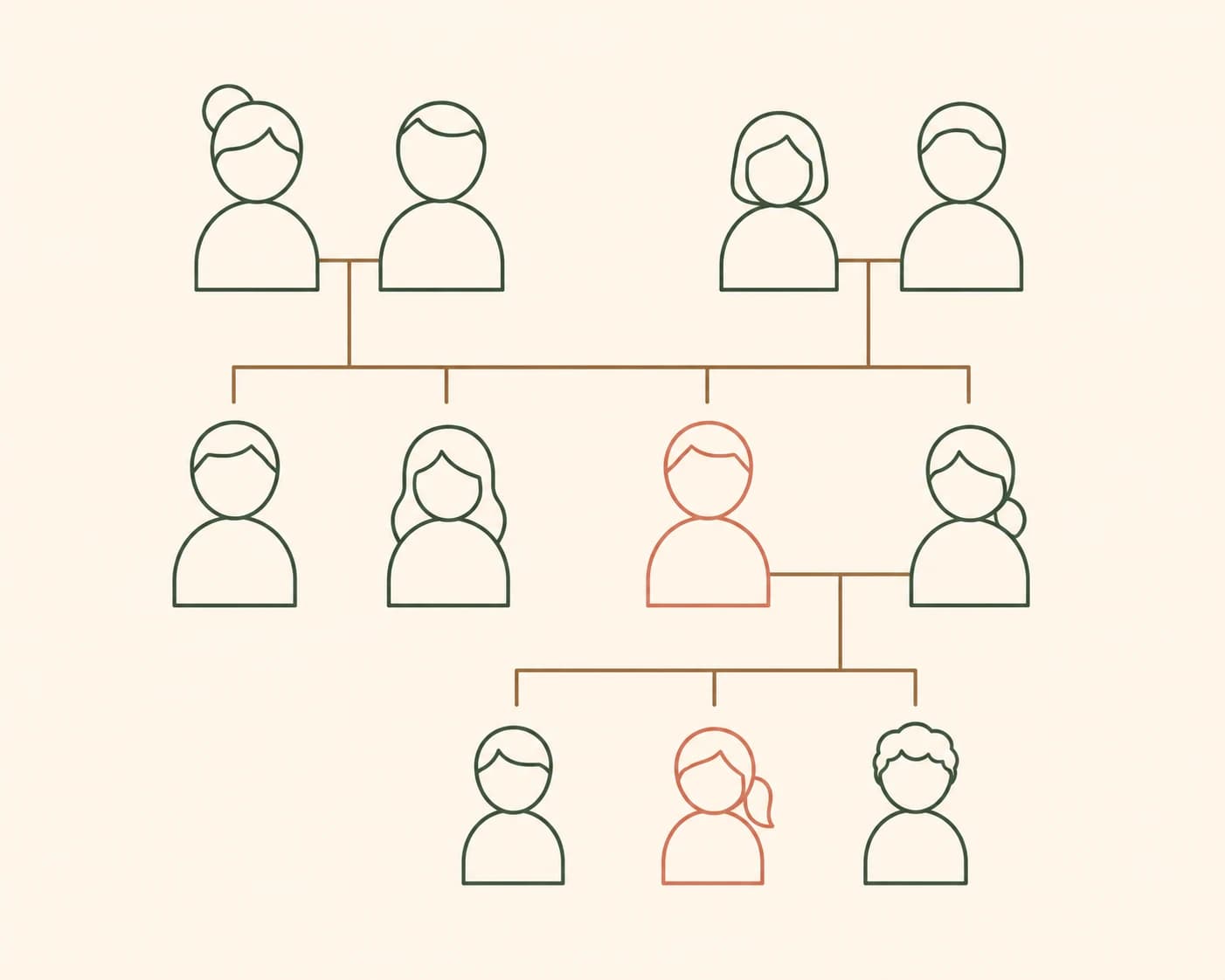
Yes, for a meaningful minority of people, high cholesterol is primarily genetic, a condition called familial hypercholesterolemia (FH). The honest prevalence figure is a range, not one precise number: heterozygous FH affects an estimated 1 in 250 people by the original, most-cited estimate, or closer to 1 in 311 per a more recent meta-analysis, in the general population (CDC Office of Genomics and Precision Health), a range independently corroborated by a similar 1-in-250-to-350 estimate from a 2024 American Academy of Family Physicians editorial (AAFP). Globally there are roughly 25 million people with FH, over 1 million in the US, and only about 1% are diagnosed, meaning roughly 99% go undiagnosed (CDC). FH is far more common among people who already have cardiovascular disease, about 1 in 17, an 18-times jump from the general-population rate (CDC).
Inheritance is straightforward once explained: FH is autosomal dominant, meaning one mutated gene copy from just one parent is enough to cause it, caused by variants in one of three genes, LDLR, APOB, or PCSK9, plus a fourth, LDLRAP1, which causes a distinct, recessive form (MedlinePlus Genetics; MedlinePlus). That's the well-estimated heterozygous form above. Homozygous FH, where a person inherits a mutated copy from both parents, is far rarer, and no single reliable modern prevalence figure exists for it, so it's worth resisting the temptation to quote one precise number for both forms as if they were the same condition.
Diagnostic LDL thresholds that point toward FH: above 190 mg/dL in adults, or above 155 mg/dL in children (AAFP). A narrow set of physical signs, xanthomas, xanthelasma, corneal arcus, and tendon xanthomas on the Achilles or the hands and elbows, can appear with FH specifically — see our high cholesterol guide for the full treatment of what these signs mean and don't mean. The American Heart Association recommends screening starting around age 2, with universal screening between ages 9 and 11, and again at 19 (AHA).
Weight and Body Fat
Carrying excess body fat, especially around the abdomen, tends to raise LDL and triglycerides and lower HDL; NHLBI lists overweight and obesity among its named medical-condition causes (NHLBI). For the diet and weight-management angle in depth, see how to lower cholesterol.
Physical Inactivity
A sedentary lifestyle is one of NHLBI's named lifestyle causes, working partly by keeping HDL lower than it would otherwise be (NHLBI).
Smoking
Smoking specifically lowers HDL, "particularly in women" (NHLBI). Worth being precise here: MedlinePlus notes smoking reduces HDL without necessarily raising total cholesterol (MedlinePlus), a more accurate distinction than the vague "smoking raises cholesterol" framing you'll see elsewhere.
Alcohol
NHLBI gives a specific threshold rather than a vague "too much": more than two drinks a day for men, or more than one drink a day for women, is associated with a higher total cholesterol level (NHLBI).
Stress and Poor Sleep
NHLBI lists both stress and poor sleep among its recognized lifestyle-related causes, alongside diet, inactivity, smoking, and alcohol (NHLBI). Worth being honest that the mechanism and size of this particular effect are less precisely quantified in NHLBI's own material than diet's effect is, so this section stays intentionally short rather than overstating it. For how stress and metabolic health interact more broadly, see cortisol and blood sugar.
Age (and the Pattern Around Menopause)
High cholesterol becomes more common with age, peaking in diagnosis between ages 40 and 59 (NHLBI). The actual numbers by age band: high total cholesterol affects 6.0% of adults 20–39, 16.7% of adults 40–59, and 11.3% of adults 60 and older (NCHS Data Brief No. 515, via NCBI Bookshelf). NHLBI notes hormonal shifts around menopause are part of why sex-specific patterns emerge with age, without specifying a more precise mechanism beyond that.
Diabetes and Insulin Resistance
Diabetes is one of NHLBI's named medical-condition causes of high cholesterol (NHLBI).
Hypothyroidism (an Underactive Thyroid)
An underactive thyroid is a real, partly reversible cause: untreated hypothyroidism raises total cholesterol and especially LDL, and treating it with thyroid medication lowers cholesterol again (Harvard Health Publishing, March 9, 2026). The honest caveat, straight from that same source: cholesterol can remain elevated even after thyroid treatment if diet or genetics are also contributing factors.
Medications That Can Raise Cholesterol
Several common medication classes can raise cholesterol as a side effect: NHLBI names seven categories — arrhythmia medicines, beta-blockers, chemotherapy medicines, diuretics, immunosuppressive medicines, retinoids, and steroids (NHLBI) — and MedlinePlus adds a few more specifics, including certain birth control pills and some antidepressants (MedlinePlus). This doesn't mean stopping a prescribed medication on your own; a cholesterol rise from a needed medication is a conversation for the prescribing clinician, not a reason to stop cold.
Other Medical Conditions Linked to High Cholesterol
Beyond diabetes, hypothyroidism, and excess weight already covered, NHLBI names four more conditions associated with high cholesterol: chronic kidney disease, HIV/AIDS, lupus, and polycystic ovary syndrome (PCOS), plus sleep apnea (NHLBI).
So Is It Mostly Diet, or Mostly Genetics? The Honest Answer
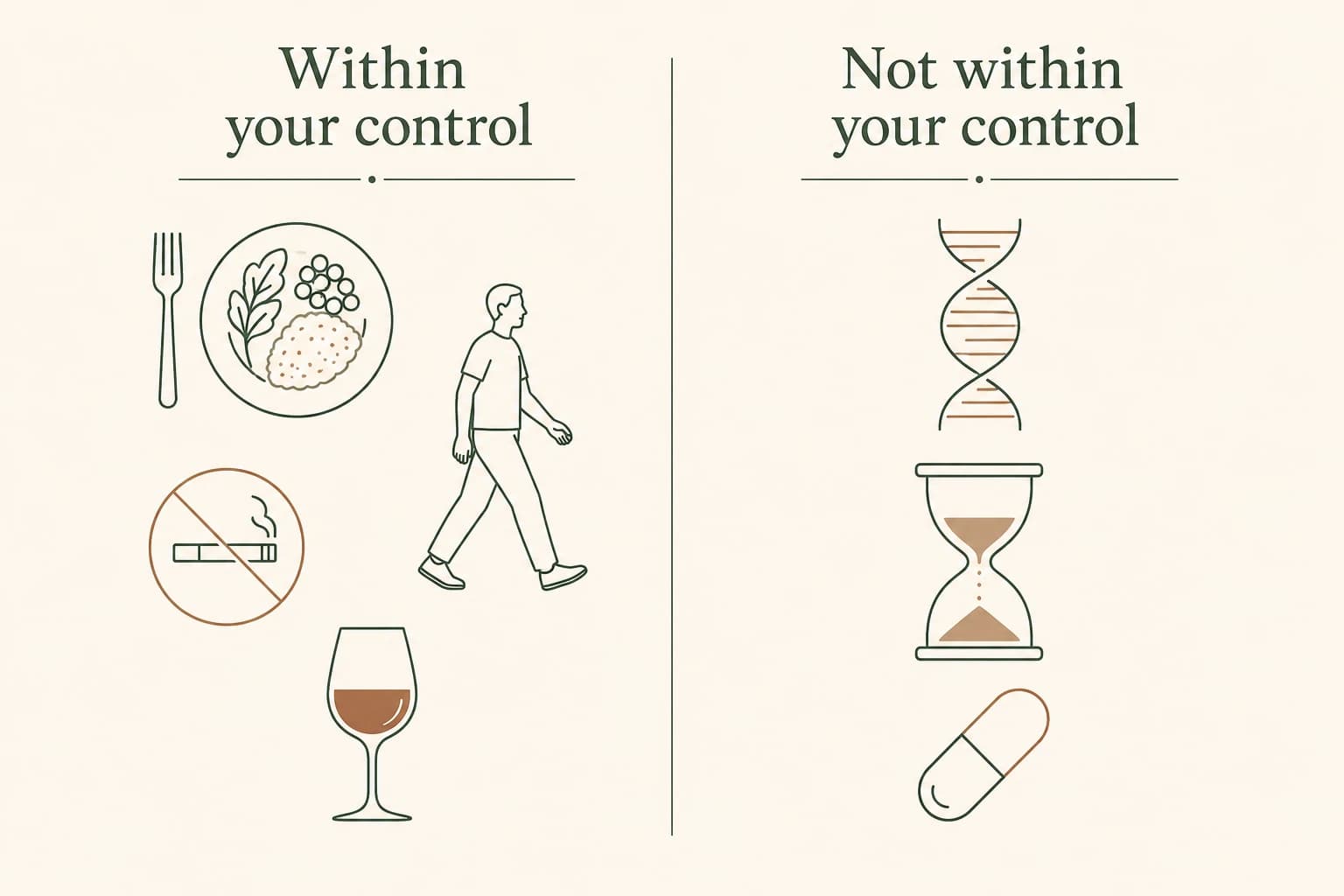
There's no reliable published statistic breaking down what share of high-cholesterol cases are primarily lifestyle-driven versus primarily genetic. Both the AHA and NHLBI describe lifestyle as "the most common cause" without ever attaching a supporting percentage, and no credible source found for this post supplies one, so it's worth stating that plainly rather than inventing a plausible-sounding split. Practically, this means someone who eats reasonably well, stays active, doesn't smoke, and still has high LDL has a real reason to ask their clinician about a family-history-based FH check, given that roughly 99% of FH cases go undiagnosed globally.
Bottom Line
Most of the causes on this list are things you can act on; a few, genetics and age chief among them, you can't. The two aren't mutually exclusive: a family history doesn't mean diet stops mattering, and a genuinely clean diet doesn't rule out a genetic cause. For the practical next step, see how to lower cholesterol.
Frequently Asked Questions (FAQ)
What percentage of high cholesterol cases are caused by genetics versus lifestyle? No reliable published statistic breaks this down. Both the AHA and NHLBI describe lifestyle as "the most common cause" without a supporting percentage, and no credible source gives one, so treat any specific split you see elsewhere with skepticism.
Is high cholesterol hereditary, or does it always come from diet? Both are real causes. For most people diet and lifestyle matter most, but for a meaningful minority, a genetic condition called familial hypercholesterolemia is the primary driver, affecting roughly 1 in 250 to 1 in 311 people.
What's the difference between hyperlipidemia and hypercholesterolemia? Hypercholesterolemia specifically refers to high LDL cholesterol, while hyperlipidemia is the broader umbrella term covering any elevated blood fat, including triglycerides, not just cholesterol.
Can a thin, physically active person still have high cholesterol? Yes. Genetics, age, certain medical conditions, and medications can all raise cholesterol independent of weight or activity level, which is exactly why familial hypercholesterolemia is worth ruling out when someone with an otherwise healthy lifestyle has a high result.
Can stress or poor sleep cause high cholesterol? NHLBI lists both among its recognized lifestyle-related causes, though the size of their individual effect is less precisely quantified in the clinical literature than diet's effect is.
Medical disclaimer: This article is for informational purposes only. Always consult a qualified healthcare provider before making changes to your health routine.
Sources
- National Heart, Lung, and Blood Institute (NIH). Blood Cholesterol — Causes. https://www.nhlbi.nih.gov/health/blood-cholesterol/causes
- Donat-Vargas C, et al. Ultra-Processed Food Consumption and Risk of Dyslipidemia and Hypertriglyceridemia. Journal of Nutrition, 2021;151(8):2390-2398 — PubMed. https://pubmed.ncbi.nlm.nih.gov/34038538/
- Zhong GC, et al. Association of Ultra-Processed Food Consumption with Cardiovascular Mortality. International Journal of Behavioral Nutrition and Physical Activity, 2021;18:21 — PubMed Central. https://pmc.ncbi.nlm.nih.gov/articles/PMC7860226/
- American Heart Association. Here's the Latest on Dietary Cholesterol and How It Fits in With a Healthy Diet — News article, published August 25, 2023. https://www.heart.org/en/news/2023/08/25/heres-the-latest-on-dietary-cholesterol-and-how-it-fits-in-with-a-healthy-diet
- CDC Office of Genomics and Precision Health. How Common Is FH? — Genomics and Precision Health Blog, published January 25, 2021. https://blogs.cdc.gov/genomics/2021/01/25/how-common-is-fh/
- American Academy of Family Physicians. Editorial: Familial Hypercholesterolemia — American Family Physician, published September 2024. https://www.aafp.org/pubs/afp/issues/2024/0900/editorial-hypercholesterolemia.html
- MedlinePlus Genetics (National Library of Medicine, NIH). Familial Hypercholesterolemia. https://medlineplus.gov/download/genetics/condition/familial-hypercholesterolemia.pdf
- MedlinePlus Medical Encyclopedia (National Library of Medicine, NIH). Familial Hypercholesterolemia. Reviewed May 8, 2024. https://medlineplus.gov/ency/article/000392.htm
- American Heart Association. Familial Hypercholesterolemia (FH). Reviewed March 13, 2026. https://www.heart.org/en/health-topics/cholesterol/genetic-conditions/familial-hypercholesterolemia-fh
- National Center for Health Statistics (CDC), via NCBI Bookshelf. Total and High-density Lipoprotein Cholesterol in Adults: United States, August 2021–August 2023 — NCHS Data Brief No. 515, published November 2024. https://www.ncbi.nlm.nih.gov/books/NBK610675/
- Harvard Health Publishing. What's the Connection Between an Underactive Thyroid, Cholesterol, and Blood Sugar Levels? Published March 9, 2026. https://www.health.harvard.edu/diabetes-and-metabolic-health/whats-the-connection-between-an-underactive-thyroid-cholesterol-and-blood-sugar-levels
- MedlinePlus Medical Encyclopedia (National Library of Medicine, NIH). High Blood Cholesterol Levels. Reviewed January 1, 2025. https://medlineplus.gov/ency/article/000403.htm

Olivia Smith, RDN
A registered dietitian who triages causes before jumping to a fix.