Diet accounts for only about 20–30% of the cholesterol in your blood — genetics and your liver's own production drive the rest (Cleveland Clinic), which is worth knowing before a "foods to avoid" list starts to feel like the whole story. Three things genuinely move blood cholesterol: saturated fat, the biggest lever; trans fat, worse gram for gram; and, per newer research, heavily processed and fried food generally. Dietary cholesterol itself, found concentrated in eggs and shellfish, turns out to matter far less than assumed for most people, which is exactly why eggs get their own detailed section below rather than a place on the avoid list. For the full picture of what to eat instead, see our cholesterol diet guide; for what's actually driving a high number in the first place, see our guide to what cholesterol is and does.
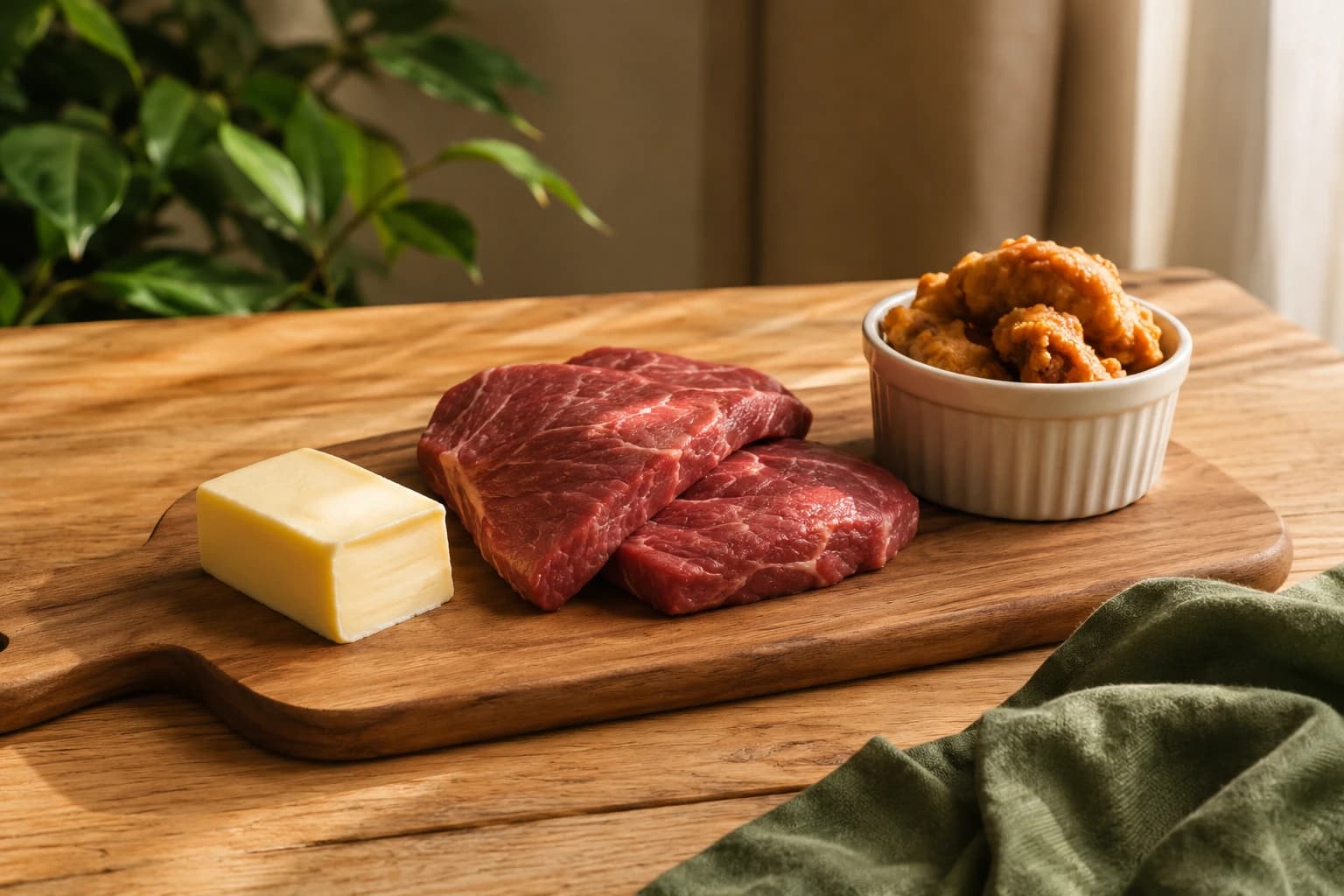
The AHA names the top saturated-fat sources plainly: fatty beef, pork, poultry skin, butter, cheese, ice cream, and tropical oils like coconut and palm (American Heart Association). In practice, this isn't a list of foods to cut entirely — it's a list of foods worth trading down in frequency and portion, which is a more sustainable framing than an all-or-nothing "never eat this again" approach that rarely survives contact with real life.
Saturated Fat: Still the Biggest Lever
Saturated fat is the single food factor most consistently linked to raising LDL, more so than dietary cholesterol itself. The AHA recommends under 6% of daily calories from saturated fat, roughly 13g a day on a 2,000-calorie diet (American Heart Association).
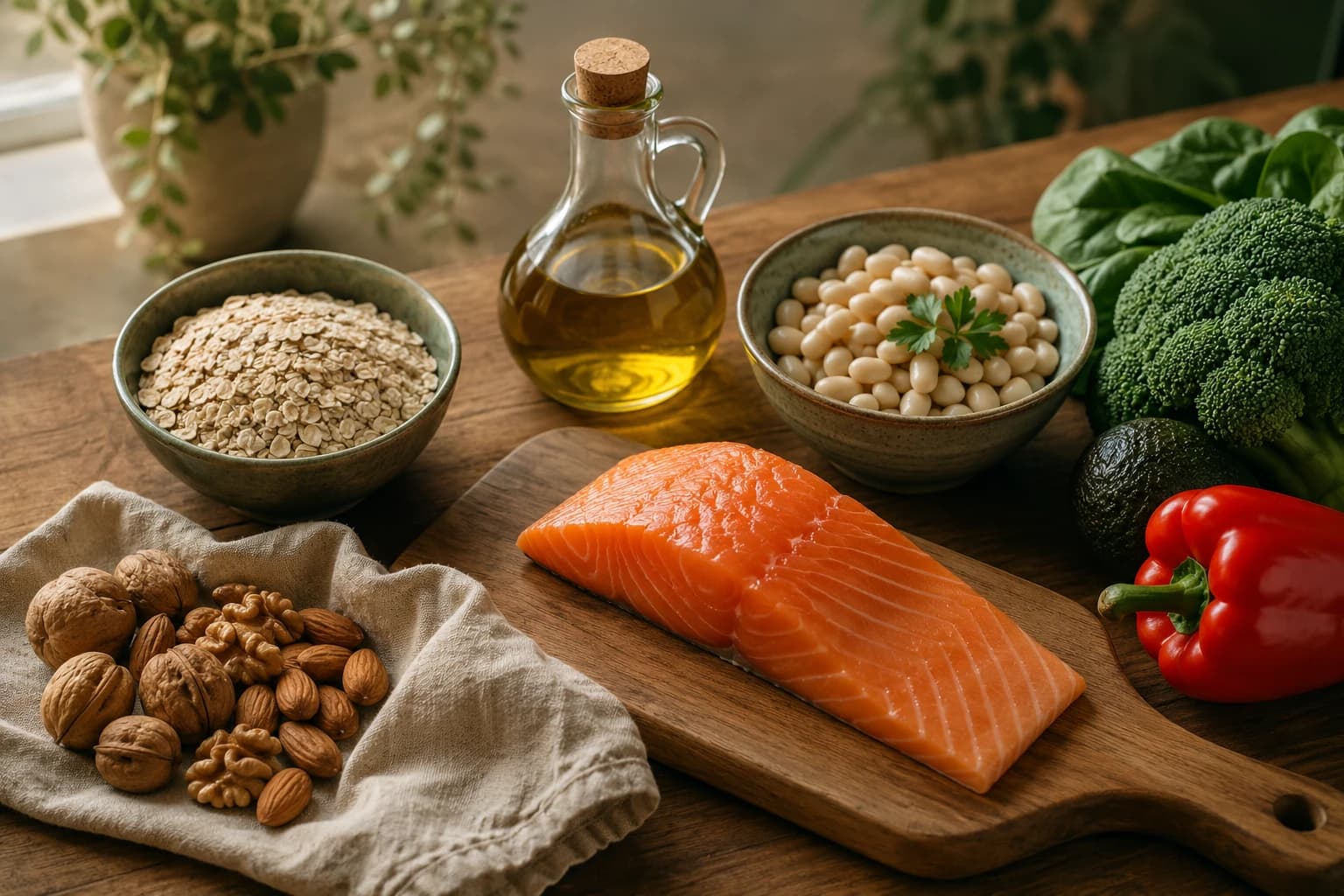
Cleveland Clinic gives specific swaps most competitors don't: limit cheese to about 3oz a week, choose 90% lean ground beef or cuts like sirloin and tenderloin over fattier options, swap bacon, sausage, and hot dogs for minimally processed lean turkey or chicken deli meat, and choose baked or air-fried chicken over fried (Cleveland Clinic). For the underlying fat chemistry behind why saturated fat behaves differently from unsaturated fat, see our lipids explained guide.
Trans Fat: Worse Than Saturated Fat, Gram for Gram
Trans fat is uniquely harmful because it does both things at once: it raises LDL and lowers HDL, where saturated fat mainly raises LDL alone (Cleveland Clinic).
The regulatory history is worth date-stamping. The FDA determined in 2015 that partially hydrogenated oils, the main source of artificial trans fat, were no longer "generally recognized as safe," with a compliance deadline of June 18, 2018. Around that determination, an estimate attributed to the CDC held that removing partially hydrogenated oils from the food supply could prevent up to 20,000 heart attacks and 7,000 coronary deaths a year (Food Safety News).
Here's a literacy tool most competitor pages skip: products with under 0.5g of trans fat per serving can legally list "0g trans fat" on the nutrition panel (Cleveland Clinic). That means the label alone can undersell what's actually in a multi-serving package — eat three servings of something labeled "0g trans fat" and you could still be getting close to 1.5g. Check the ingredient list itself for "partially hydrogenated oil" — especially in fried fast food, some packaged baked goods, and imported products not subject to the US phase-out. Since the 2018 compliance deadline, this is a smaller problem in mainstream US packaged food than it used to be, but it hasn't disappeared entirely, particularly in restaurant fryer oil and some imported snack foods.
Ultra-Processed and Fried Food: A Newer Piece of the Picture
Beyond classic saturated-fat and trans-fat content, a growing body of research links ultra-processed food intake itself to worse lipid outcomes, independent of, not just because of, its saturated fat content. In a prospective cohort of 1,082 Spanish adults over 60, the highest versus lowest tertile of ultra-processed food intake carried more than double the odds of incident hypertriglyceridemia (OR 2.66, 95% CI 1.20–5.90) and low HDL cholesterol (OR 2.23, 95% CI 1.22–4.05) — worth being precise that LDL itself was not significantly associated in this particular study, so it's a triglyceride-and-HDL finding specifically, not a blanket "processed food raises LDL" claim (Donat-Vargas et al., Journal of Nutrition, 2021). The broader cardiovascular signal is larger in scale: a 2024 umbrella review of 45 meta-analyses covering more than 9.8 million participants found higher ultra-processed food intake associated with a cardiovascular disease mortality risk ratio of 1.50 (95% CI 1.37–1.63) (BMJ, 2024). For the wider eating-pattern picture that overlaps with inflammation, see our anti-inflammatory foods guide.
Sugar, Alcohol, and Triglycerides
Added sugar and alcohol mainly move triglycerides rather than LDL specifically, a different mechanism from saturated or trans fat, but they still belong on a "foods that raise cholesterol" list. Cleveland Clinic notes baked goods and sweets add sugar "that can raise triglycerides" (Cleveland Clinic), and the standard alcohol ceiling in cholesterol-management diet plans is no more than 2 drinks a day for men or 1 for women (MedlinePlus).
Eggs and Cholesterol: What the Evidence Actually Shows
One large egg contains 186mg of dietary cholesterol (USDA National Agricultural Library), about 60% of a day's cholesterol %DV, but only around 8% of a day's saturated fat %DV (Cleveland Clinic). That gap between the two percentages is exactly why major health authorities no longer treat eggs the same way they treat red meat or butter.

The history explains the shift. The AHA originally recommended capping dietary cholesterol at 300mg/day, a policy dating to the 1960s. The 2015–2020 Dietary Guidelines for Americans dropped that specific numeric cap because, in the guidelines' own reasoning, "the totality of scientific evidence and experimental data did not validate the hypothesis that dietary cholesterol increases blood cholesterol" (Soliman, Nutrients, 2018, via PMC). Current AHA guidance, stated precisely: healthy adults can include "up to a whole egg or the equivalent" in their diet each day, and for people whose LDL is already low, "a few eggs per week are considered tolerable, depending on the overall content of the diet"; older adults with healthy cholesterol levels can have up to two eggs a day; and for anyone with a high LDL level, the AHA's guidance is to reduce sources of both saturated fat and dietary cholesterol generally, rather than a specific egg count (American Heart Association).
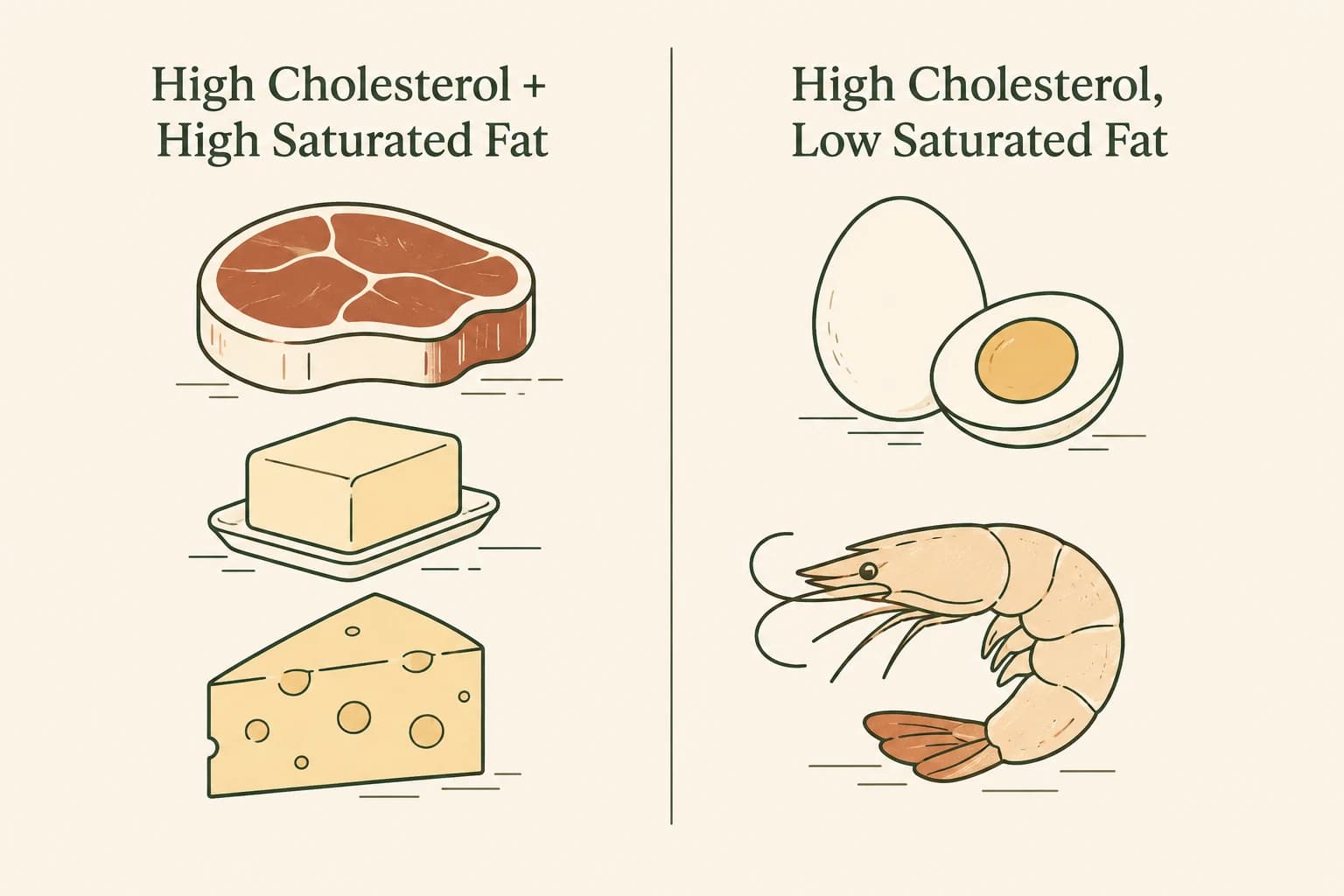
The mechanism, from the same AHA source: "foods high in dietary cholesterol also tend to be high in saturated fat. The exceptions are eggs and shellfish." That's the honest core of the whole eggs question — and it's also true that you can't fully isolate an egg's own effect from how it's served: a poached egg and an egg fried in butter alongside bacon aren't nutritionally the same breakfast, even though both start from the same egg.
Worth being transparent about the range across sources rather than quietly picking one: Harvard Health's older guidance, reviewed April 2020, more conservatively suggests "as many as four egg yolks a week" (Harvard Health Publishing). That predates the AHA's 2023 statement and is more conservative — the AHA position is the more current one, but naming both rather than hiding the discrepancy is the honest way to present it. And a final caveat: someone with familial hypercholesterolemia or already very high LDL may be advised to moderate further by their own clinician — this section is general guidance, not personalized advice for every situation.
Bottom Line: What to Actually Cut Back On
In order of impact: saturated fat first, trans fat second, in smaller quantity but worse per gram, ultra-processed and fried food as an emerging independent factor, and added sugar and alcohol specifically for triglycerides. Eggs are not on this list the way older advice implied. And it's worth repeating the opening honesty note one more time: diet is only about 20–30% of the cholesterol-blood-level story, so a foods-to-avoid list is one real lever, not the whole answer — for the rest of the picture, including genetics and underlying medical conditions, see our guide to what causes high cholesterol. For what to eat instead, see cholesterol diet; for the full lifestyle plan, see how to lower cholesterol; for portion sizes and a nutrient breakdown if nuts are one of your swaps, see best nuts for sustained energy; and for where supplements genuinely fit in, see supplements to lower cholesterol.
Frequently Asked Questions (FAQ)
Are eggs actually bad for high cholesterol? Not the way older advice implied — one egg has 186mg of dietary cholesterol but only about 8% of a day's saturated fat, and current AHA guidance allows healthy adults up to a whole egg a day, since dietary cholesterol turns out to matter far less than saturated fat for most people's blood cholesterol.
Is dietary cholesterol the same thing as saturated fat? No — they're different nutrients that happen to overlap in many foods like red meat and butter, but eggs and shellfish are the notable exception, high in dietary cholesterol yet relatively low in saturated fat.
If a label says "0g trans fat," does that mean there's really none in the product? Not necessarily — US labeling rules allow "0g trans fat" on products with under 0.5g per serving, so check the ingredient list for "partially hydrogenated oil" rather than trusting the nutrition panel alone.
Does sugar raise cholesterol? Added sugar mainly raises triglycerides rather than LDL cholesterol specifically, which is a different mechanism from saturated or trans fat but still belongs on a foods-to-limit list for cholesterol management.
What single food raises LDL cholesterol the most? There's no single worst food, but saturated fat sources overall, fatty red meat, butter, full-fat cheese, and tropical oils like coconut and palm, are the most consistently documented dietary driver of higher LDL.
Medical disclaimer: This article is for informational purposes only. Always consult a qualified healthcare provider before making changes to your health routine.
Sources
- Cleveland Clinic. Cholesterol Diet: How Nutrition & Foods Impact Levels. Reviewed October 17, 2022. https://my.clevelandclinic.org/health/articles/16867-cholesterol--nutrition-tlc
- American Heart Association. Saturated Fats. https://www.heart.org/en/healthy-living/healthy-eating/eat-smart/fats/saturated-fats
- Cleveland Clinic. High Cholesterol: Foods to Eat and Avoid. Published October 13, 2021. https://health.clevelandclinic.org/high-cholesterol-foods-to-eat-and-avoid
- Cleveland Clinic. Why Trans Fats Are Bad for You. Updated June 6, 2023. https://health.clevelandclinic.org/why-trans-fats-are-bad-for-you
- Food Safety News. FDA Finalizes Decision to Ban Trans Fat. Published June 2015. https://www.foodsafetynews.com/2015/06/fda-finalizes-decision-to-ban-trans-fat/
- Donat-Vargas C, et al. Ultra-Processed Food Consumption and Risk of Dyslipidemia and Hypertriglyceridemia — Journal of Nutrition, 2021, via PubMed. https://pubmed.ncbi.nlm.nih.gov/34038538/
- Ultra-Processed Food Exposure and Adverse Health Outcomes — Umbrella review, BMJ, 2024, via PubMed. https://pubmed.ncbi.nlm.nih.gov/38418082/
- MedlinePlus (National Library of Medicine, NIH). How to Lower Cholesterol with Diet. https://medlineplus.gov/howtolowercholesterolwithdiet.html
- USDA National Agricultural Library. Cholesterol Content of Foods. https://www.nal.usda.gov/sites/default/files/page-files/cholesterol.pdf
- American Heart Association. Here's the Latest on Dietary Cholesterol and How It Fits in With a Healthy Diet. Published August 25, 2023. https://www.heart.org/en/news/2023/08/25/heres-the-latest-on-dietary-cholesterol-and-how-it-fits-in-with-a-healthy-diet
- Soliman GA. Dietary Cholesterol and the Lack of Evidence in Cardiovascular Disease — Nutrients, 2018, via PubMed Central. https://pmc.ncbi.nlm.nih.gov/articles/PMC6024687/
- Harvard Health Publishing. How to Lower Your Cholesterol Without Drugs. Reviewed April 15, 2020. https://www.health.harvard.edu/heart-health/how-to-lower-your-cholesterol-without-drugs

Olivia Smith, RDN
A registered dietitian who reads ingredient lists more than nutrition labels.