
This guide is educational: what these medications are and broadly how they work, not guidance for choosing, starting, stopping, or combining any of them. Those are decisions to make with your own doctor, based on your specific labs, risk, and health history — nothing here is a substitute for that conversation. For what "high cholesterol" itself means, see our high cholesterol guide, and for the underlying biology, see our cholesterol guide.
What Cholesterol Medications Actually Do
Cholesterol medications lower LDL, and for some classes triglycerides, through one of three basic mechanisms: blocking the liver's own cholesterol production, blocking cholesterol absorption in the gut, or helping the liver clear more LDL out of the bloodstream. A March 13, 2026 guideline from the American College of Cardiology, the American Heart Association, and several partner societies keeps statins as the foundation of treatment, naming bempedoic acid and PCSK9 monoclonal antibodies as add-on options when a statin alone isn't enough (ACC.org). Everything below is typically layered on top of a statin, not swapped in for one.
Statins for Cholesterol: Still the First-Line Choice
Statins remain the most-prescribed cholesterol drug class, taken by more than 92 million US adults (Cleveland Clinic). They work by blocking HMG-CoA reductase, the liver enzyme the body needs to make cholesterol; with that pathway blocked, the liver responds by getting rid of more cholesterol from the body overall (Cleveland Clinic).
Statins are grouped into three intensity tiers based on how much they lower LDL, rather than every statin working identically:
| Intensity | Approximate LDL-C reduction |
|---|---|
| High-intensity | More than 50% |
| Moderate-intensity | 30% to 49% |
| Low-intensity | Under 30% |
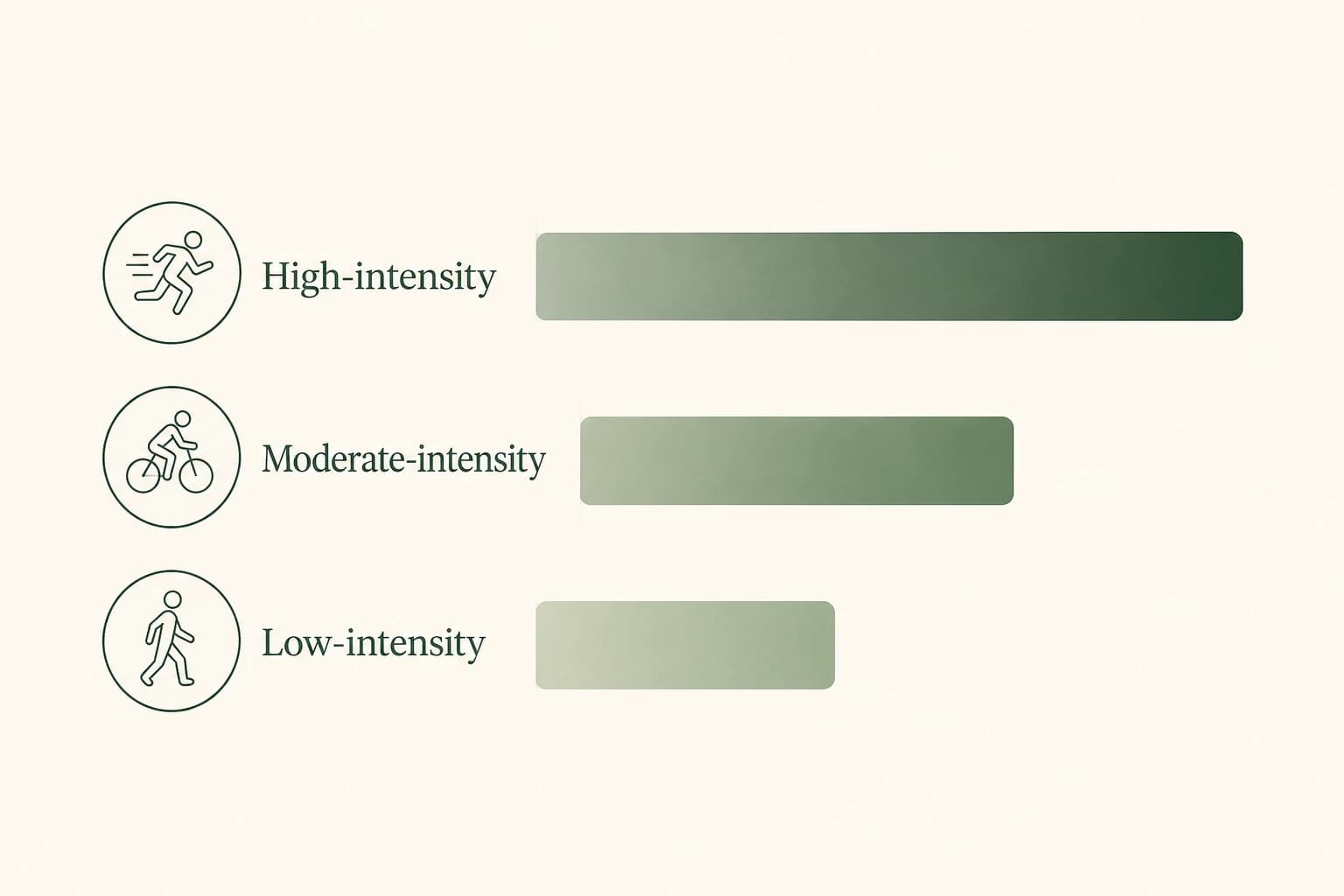
(Table per NCBI Bookshelf / StatPearls, "Statin Medications".) Which tier a specific statin falls into depends on both the drug and the dose — several statins can land in different tiers depending on how much is prescribed — so this is a framework for understanding the categories, not a guide to which statin or dose is right for any individual; that's a decision made with your own doctor.
Ezetimibe and Bile Acid Sequestrants: Blocking Absorption
These two classes work in the gut rather than the liver. Ezetimibe blocks a transport protein that absorbs cholesterol from food and bile in the small intestine, typically added to a statin when LDL isn't at goal, or used on its own in people who can't tolerate a statin. Bile acid sequestrants (cholestyramine, colestipol, colesevelam) bind bile acids in the gut, which forces the liver to pull more cholesterol out of the blood to make replacement bile acids. Both produce a meaningful but generally more modest LDL drop than a statin alone.
Fibrates and Niacin: For Triglycerides, Not Just LDL
Fibrates and niacin target triglycerides and HDL more than LDL, and are used less often today now that other options exist. Fibrates work by activating a receptor (PPAR-alpha) that increases the clearance of triglyceride-rich particles from the blood. Niacin can lower LDL and raise HDL, but worth stating plainly: "niacin didn't show cardiovascular benefit when added to statins" in modern trials (Cleveland Clinic) — a real limitation, not a reason to avoid it outright, but a genuine caveat. (Niacin is also sold over the counter as a supplement — for typical dosing there, see supplements to lower cholesterol.) Combining a fibrate with a statin carries interaction risk that needs a doctor's supervision, not a general reassurance to lean on.
Bempedoic Acid: An Option When Statins Cause Muscle Pain
Bempedoic acid works similarly to a statin, blocking an earlier step in the same cholesterol-production pathway, but it's activated specifically in the liver rather than in muscle tissue — which is thought to be why it appears to cause less muscle-related side effects than statins do, a genuine differentiator most consumer content barely mentions. A large cardiovascular-outcomes trial in statin-intolerant patients found real benefit on both LDL and cardiovascular events, though the exact trial figures are worth confirming directly with a clinician or a primary source rather than treating any single secondhand number as settled, given how much coverage of this trial varies across outlets.
The PCSK9 Pathway: Injectables, an RNA Drug, and the First Oral Pill
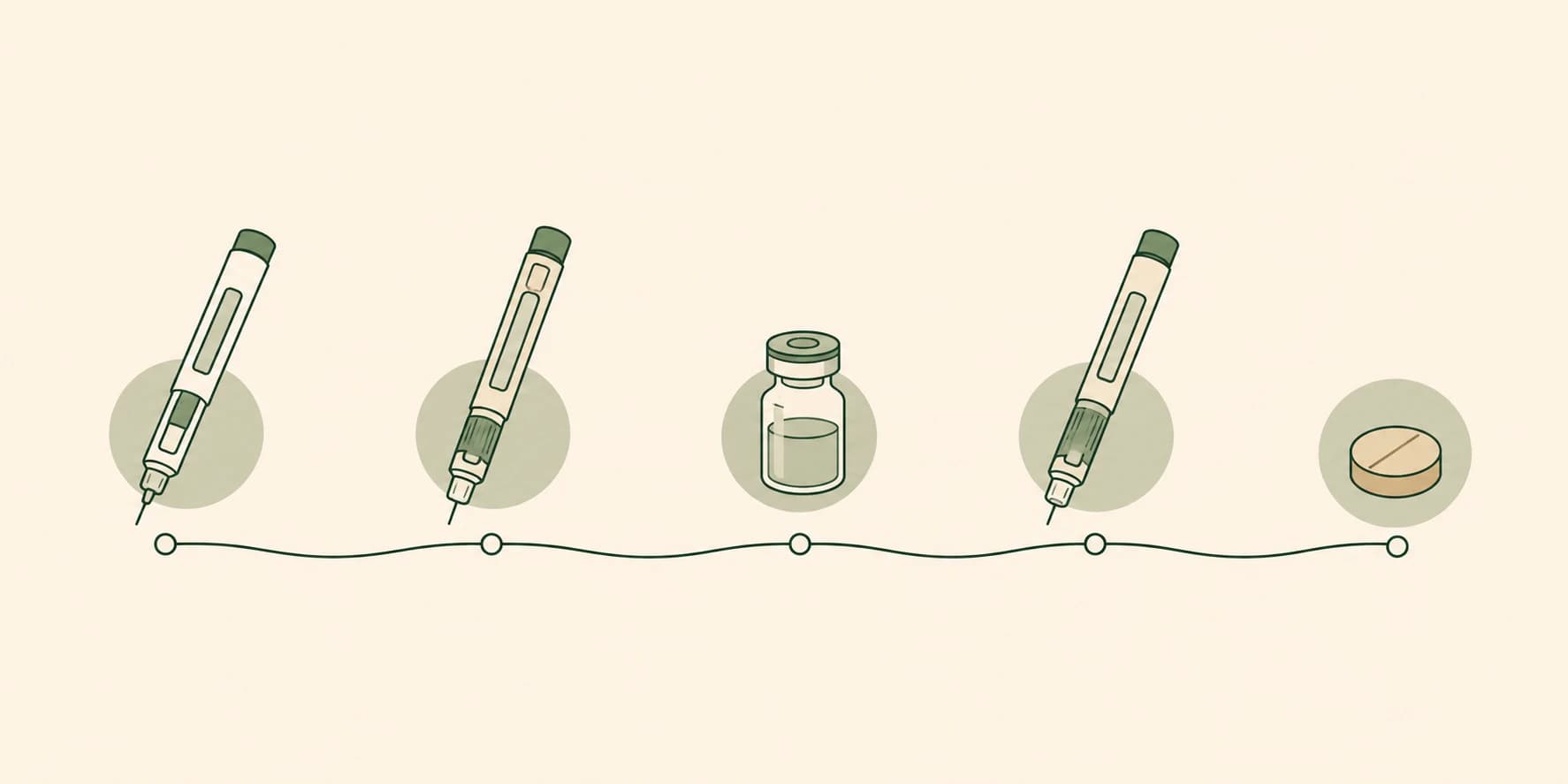
PCSK9 is a protein that normally marks LDL receptors for destruction after they've delivered cholesterol to the liver. Blocking PCSK9 lets the liver keep more of those receptors in circulation, pulling more LDL out of the blood. This is the biggest differentiation opportunity in the current medication landscape, since no single competitor page currently covers the full picture together:
- Evolocumab and alirocumab — injectable monoclonal antibodies, given every two weeks or monthly, that bind PCSK9 directly. As a class, PCSK9 monoclonal antibodies can lower LDL by roughly 45–65% (NCBI Bookshelf / StatPearls, "PCSK9 Inhibitors").
- Inclisiran — a PCSK9-pathway drug, mechanistically distinct from evolocumab and alirocumab, given by injection on a different schedule from the other two (Mayo Clinic).
- Lerodalcibep (brand Lerochol) — a newer once-monthly injectable, FDA-approved December 15, 2025, that almost no consumer content mentions (LIB Therapeutics).
- Enlicitide (brand Lipfendra) — the first and only once-daily oral PCSK9 inhibitor, FDA-approved July 16, 2026 (Merck press release; Merck, FDA-approved prescribing information). In its approval trials, it reduced LDL-C versus placebo at week 24 by 55.8% in the CORALreef Lipids trial (Merck) and by 59.4% in the separate CORALreef HeFH trial in people with heterozygous familial hypercholesterolemia (Merck), plus a 28% reduction in Lp(a), a genetically-determined lipoprotein most other lipid drugs don't touch (American Heart Association Newsroom).
Worth separating clearly, because the two facts are easy to conflate for any PCSK9-pathway drug, and especially for one this new: enlicitide's LDL-lowering effect is proven. Whether it actually reduces heart attacks and strokes is not yet proven — the dedicated outcomes trial, CORALreef Outcomes, isn't expected to read out until around 2029. For the full depth on enlicitide, see enlicitide.
How the 2026 Guideline Changes Who Gets What
The March 13, 2026 guideline mentioned above restored risk-based numeric LDL-C targets: under 100 mg/dL for people at borderline or intermediate risk, under 70 mg/dL for high risk, and under 55 mg/dL for very-high-risk secondary prevention (ACC.org). It also replaced the older Pooled Cohort Equations risk calculator with a newer tool called PREVENT-ASCVD, and added a recommendation for universal Lp(a) screening at least once in adulthood, both genuinely new and not yet reflected on most patient-facing sites (ACC.org). For the full numbers breakdown by marker and age, see normal cholesterol levels.
How Doctors Choose (and Combine) These Drugs
Most people start with a statin, and other classes get added, not substituted, when LDL isn't at goal or a statin genuinely isn't tolerated. In general clinical practice, statin therapy is typically maximized first; ezetimibe is often the first add-on since it's inexpensive and well-tolerated; PCSK9-pathway drugs or bempedoic acid tend to come next for people who need a larger reduction or can't tolerate a statin at all; bile acid sequestrants, fibrates, and niacin are used more selectively today. Very rare, severe genetic forms of high cholesterol, like homozygous familial hypercholesterolemia, sometimes require additional medications beyond what's covered here — a specialist conversation, not something this general overview can responsibly detail.
What These Drugs Cost
Cholesterol-drug pricing changes quickly, and list price is often not what a patient actually pays after insurance, so treat the figures below as a snapshot rather than something to rely on for a specific purchase decision. Statins, especially older generic ones, are typically inexpensive. PCSK9-pathway drugs are the most expensive class: as of a July 16, 2026 report, enlicitide's list price is expected at about $10.50 a pill, or $315 for a 30-day supply, compared with currently available injectable PCSK9-pathway options in the roughly $500-to-$600-a-month range (Yahoo Finance). For Medicare patients, the Inflation Reduction Act's Part D provision caps annual out-of-pocket drug costs at $2,100 for 2026 (CMS.gov), a real legislated backstop worth knowing about regardless of which specific drug is involved.
Statin Side Effects: What's Real and What's Overstated
Real-world muscle-pain reporting runs meaningfully higher than what randomized trials attribute directly to the statin itself. The Cholesterol Treatment Trialists' Collaboration's pooled analysis of 19 placebo-controlled trials totaling 123,940 participants found muscle symptoms in 27.1% of the statin group versus 26.6% of the placebo group, concluding that more than 90% of muscle-symptom reports in the statin group were not actually caused by the statin (CTT Collaboration, via PMC). Rhabdomyolysis, the rare but serious muscle-breakdown reaction people worry about most, affects only a few cases per million people taking statins (Mayo Clinic). For the full picture, including why real-world and trial numbers differ this much, see statin side effects.
Bottom Line
Statins remain the proven, first-line foundation for most people who need medication. The newer classes, bempedoic acid, the PCSK9-pathway drugs, and now an oral PCSK9 pill, exist mainly for people who need more LDL reduction or genuinely can't tolerate a statin, and each comes with its own proven-versus-not-yet-proven caveats worth knowing before a conversation with a prescriber. Medication doesn't replace diet and lifestyle changes — it's typically layered onto them. For that side of the picture, see how to lower cholesterol.
Frequently Asked Questions (FAQ)
What's the difference between a statin and a PCSK9 inhibitor? Statins block an enzyme the liver uses to make cholesterol; PCSK9 inhibitors work differently, blocking a protein that would otherwise mark LDL receptors for destruction, so the liver keeps more receptors in circulation to pull LDL out of the blood.
Is enlicitide (Lipfendra) the same thing as a statin? No — enlicitide is an oral PCSK9 inhibitor, a different drug class and mechanism from a statin, though both classes ultimately lower LDL cholesterol.
Do I still need cholesterol medication if I already eat a healthy diet? That depends entirely on your individual risk and lab results, which is a question for your own doctor — medication is typically layered onto diet and lifestyle changes, not a replacement for them, and some people need both.
What is the newest cholesterol medication available in 2026? Enlicitide (brand name Lipfendra), the first oral PCSK9 inhibitor, was FDA-approved on July 16, 2026.
Can you take more than one cholesterol medication at the same time? Multiple classes are often combined in practice, but which medications to combine, and whether it's appropriate for you, is a decision for your doctor, not something to determine on your own.
Medical disclaimer: This article is for informational purposes only. Always consult a qualified healthcare provider before making changes to your health routine.
Sources
- American College of Cardiology. ACC/AHA Release New Clinical Guideline for Managing Dyslipidemia — Journal scan, published March 13, 2026. https://www.acc.org/latest-in-cardiology/journal-scans/2026/03/13/15/20/acc-aha-release-new-clinical-guideline-for-managing-dyslipidemia
- Cleveland Clinic. Statins: How They Work & Side Effects. https://my.clevelandclinic.org/health/treatments/22282-statins
- NCBI Bookshelf / StatPearls. Statin Medications. https://www.ncbi.nlm.nih.gov/books/NBK430940/
- Cleveland Clinic. Niacin (Vitamin B3) Capsules and Tablets. https://my.clevelandclinic.org/health/drugs/18874-niacin-capsules-and-tablets
- NCBI Bookshelf / StatPearls. PCSK9 Inhibitors. https://www.ncbi.nlm.nih.gov/books/NBK448100/
- Mayo Clinic. Cholesterol Medications: Consider the Options. https://www.mayoclinic.org/diseases-conditions/high-blood-cholesterol/in-depth/cholesterol-medications/art-20050958
- LIB Therapeutics. US FDA Approves LIB Therapeutics' Lerochol for Adults With Elevated LDL Cholesterol — Press release, December 15, 2025. https://libtherapeutics.com/news-and-events/us-food-and-drug-administration-approves-lib-therapeutics-lerochol-for-adults-with-elevated-ldl-cholesterol.html
- Merck. LIPFENDRA (enlicitide) — FDA-approved prescribing information. https://www.merck.com/product/usa/pi_circulars/l/lipfendra/lipfendra_pi.pdf
- Merck. Merck's LIPFENDRA (Enlicitide) Is the First and Only Once-Daily Oral PCSK9 Inhibitor Approved by the U.S. FDA — Press release, July 16, 2026. https://www.merck.com/news/mercks-lipfendra-enlicitide-is-the-first-and-only-once-daily-oral-pcsk9-inhibitor-approved-by-the-u-s-fda-to-reduce-ldl-c-in-adults-with-hypercholesterolemia/
- Merck. Merck's Enlicitide Decanoate, an Investigational Oral PCSK9 Inhibitor, Significantly Reduced LDL-C in Phase 3 CORALreef Lipids Trial — Press release, November 8, 2025. https://www.merck.com/news/mercks-enlicitide-decanoate-an-investigational-oral-pcsk9-inhibitor-significantly-reduced-ldl-c-in-phase-3-coralreef-lipids-trial/
- Merck. Merck's Enlicitide Decanoate, an Investigational Oral PCSK9 Inhibitor, Significantly Reduced LDL-C in Adults With Heterozygous Familial Hypercholesterolemia (HeFH) in Phase 3 CORALreef HeFH Trial — Press release, November 9, 2025. https://www.merck.com/news/mercks-enlicitide-decanoate-an-investigational-oral-pcsk9-inhibitor-significantly-reduced-ldl-c-in-adults-with-heterozygous-familial-hypercholesterolemia-hefh-in-phase-3-coralreef-hefh-tr/
- American Heart Association Newsroom. Investigational Daily Pill Lowered "Bad" Cholesterol as Much as Injectables — Published November 8, 2025. https://newsroom.heart.org/news/investigational-daily-pill-lowered-bad-cholesterol-as-much-as-injectables
- Yahoo Finance. FDA Approves First-of-Its-Kind Cholesterol Pill Lipfendra: What It Will Cost — Published July 16, 2026. https://finance.yahoo.com/personal-finance/banking/article/fda-approves-first-of-its-kind-cholesterol-pill-lipfendra-what-it-will-cost-204503986.html
- CMS.gov. 2026 Medicare Advantage and Part D Rate Announcement — Fact sheet. https://www.cms.gov/newsroom/fact-sheets/2026-medicare-advantage-part-d-rate-announcement
- Cholesterol Treatment Trialists' (CTT) Collaboration. Effects of Statin Therapy on Muscle Symptoms — Published in The Lancet, via PubMed Central. https://pmc.ncbi.nlm.nih.gov/articles/PMC7613583/
- Mayo Clinic. Statin Side Effects: Weigh the Benefits and Risks. https://www.mayoclinic.org/diseases-conditions/high-blood-cholesterol/in-depth/statin-side-effects/art-20046013

Olivia Smith, RDN
A registered dietitian who explains the drug landscape without prescribing any of it.