If a statin is giving you a new ache, an odd lab result, or something else you're unsure about, talk to whoever prescribed it before you skip a dose or stop on your own. Stopping abruptly removes real cardiovascular protection, and in most cases what's happening has a name, a real number, and a straightforward next step. This guide covers that evidence: what statin side effects actually are, how common each one really is, which ones need same-day attention, and what a doctor might consider if one doesn't go away. For what statins are and how they work, see our cholesterol medication guide — this post picks up from there.
How Common Are Statin Side Effects, Really?
In the largest pooled analysis of statin trials ever conducted, muscle symptoms were reported by 27.1% of people taking a statin versus 26.6% on placebo — a gap small enough that over 90% of muscle symptoms reported on a statin weren't actually caused by it (CTT Collaboration, via PMC). That's the trial-controlled number. Real-world reporting runs much higher: Cleveland Clinic cites up to 30% of people who try a statin experiencing muscle pain in everyday practice (Cleveland Clinic). Both figures are correctly sourced — they're measuring different things, a discrepancy explained further down. What follows covers muscle symptoms first, then rhabdomyolysis, liver enzymes, blood sugar, and the grapefruit interaction.
The CTT Collaboration: What 123,940 Trial Participants Actually Experienced
The Cholesterol Treatment Trialists' (CTT) Collaboration is the largest, most rigorous dataset on statin side effects that exists: individual-participant data pooled from 23 randomized trials, 19 of them statin-versus-placebo comparisons totaling 123,940 people, published in The Lancet in 2022 (CTT Collaboration, via PMC). Muscle pain or weakness was reported by 16,835 people allocated to a statin (27.1% of that group) versus 16,446 allocated to placebo (26.6%) — an overall rate ratio of 1.03 (95% CI 1.01–1.06). Worth reading those percentages carefully: 123,940 is the combined total across both arms, so each percentage is calculated against its own arm of roughly 62,000, not against the full pooled figure.
That excess wasn't spread evenly over time, a detail left out almost everywhere else: the rate ratio was 1.07 (95% CI 1.04–1.10) in year one, then 0.99 (95% CI 0.96–1.02) afterward — no measurable excess at all. The collaboration's plain-language summary: about 14 out of 15 muscle-symptom reports in statin users weren't attributable to the statin, falling to about 9 in 10 on a high-intensity statin (CTT Collaboration). Its conclusion: "Statin therapy caused a small excess of mostly mild muscle pain. Most (>90%) of all reports of muscle symptoms by participants allocated statin therapy were not due to the statin" (CTT Collaboration, via PMC).
The SAMSON Trial: Why So Many People Blame the Pill
A landmark 2021 trial called SAMSON tested something no observational study can: whether statin muscle pain is actually caused by the statin, by giving the same 60 people months of statin, months of an identical-looking placebo, and months of no tablet at all, without telling them which was which (Howard et al., JACC, via PMC). Forty-nine of the 60 completed the full year. On a 0–100 symptom-intensity scale, average scores were 8.0 on no-tablet months, 15.4 on placebo months, and 16.3 on statin months — statin versus placebo was not statistically significant (P = 0.388), while both tablet conditions were significantly worse than no tablet (P < 0.001 each).
The trial's headline finding is its "nocebo ratio" of 0.90: roughly 90% of the symptom burden people felt on the statin, they also felt on a placebo pill they couldn't tell apart from it. Its conclusion: "Side effects from taking statin tablets are verifiable but are driven by the act of taking tablets rather than whether the tablets contain a statin." One caveat worth stating alongside that finding: SAMSON enrolled 60 people, not 150,000 — landmark and widely cited, but a different scale of evidence than the CTT analysis above. The most useful number for anyone currently off a statin over side effects: at 6-month follow-up, half the participants had successfully restarted one.
Why the Numbers on Different Websites Don't Match
Three real, correctly sourced numbers about statin muscle pain look contradictory side by side, but they're measuring different things.
| What's being measured | Figure | Source |
|---|---|---|
| Real-world clinical reporting | Up to 30% | Cleveland Clinic |
| Placebo-controlled estimate | About 5% or less excess | Mayo Clinic |
| Blinded-trial-attributable excess | About 1 percentage point (27.1% vs. 26.6%), concentrated in year one | CTT Collaboration |
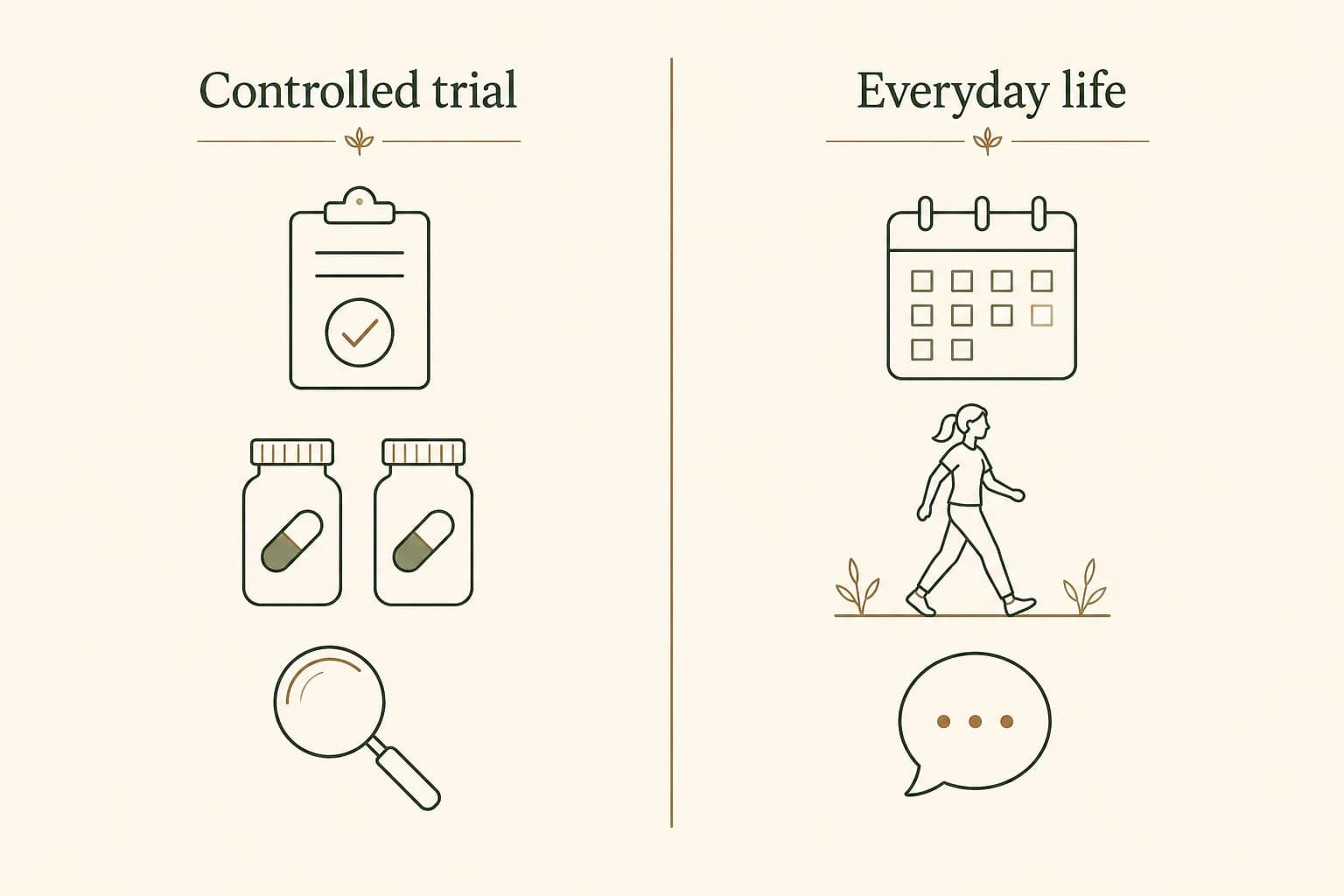
Cleveland Clinic's 30% figure describes how often people report muscle pain after starting a statin in ordinary practice (Cleveland Clinic). Mayo Clinic puts the real excess risk versus placebo at about 5% or less (Mayo Clinic). CTT's blinded, placebo-controlled data puts the attributable excess smaller still, around 1 percentage point. None of the three is wrong: real-world, unblinded reporting captures the nocebo effect SAMSON measured directly, ordinary muscle aches from aging or exercise that would have happened anyway, and the fact that people who've read about statin side effects are more likely to notice and report one, a pattern Mayo Clinic names explicitly. A blinded trial strips almost all of that out, which is why its number comes out smaller — not because it's more "real," but because it isolates one cause out of several that produce the identical symptom.
Rhabdomyolysis: The Rare but Serious Reaction
Rhabdomyolysis, severe muscle breakdown that can damage the kidneys, is the side effect statin users worry about most — and it's genuinely rare: only a few cases occur per million people taking statins (Mayo Clinic). The warning signs that make this actionable rather than just frightening: severe, unexplained muscle pain or weakness together with dark or tea-colored urine call for medical attention the same day, not a wait-and-see approach.
History shows what a genuine problem statin looked like. Cerivastatin, sold through the 1990s, was withdrawn in August 2001 after being linked to 31 rhabdomyolysis deaths in the US; 12 involved a person also taking gemfibrozil, a triglyceride drug that raises blood levels of some statins through a drug-interaction effect (Charatan, BMJ, via PMC). An FDA official at the time put its rhabdomyolysis rate at roughly 10 times higher than other statins. That episode is why statin drug interactions get taken seriously today — a real historical example of what went wrong once, not a reason to be wary of the statins prescribed now.
Statins and Liver Enzymes: The 2012 Policy Change Explained
Serious liver injury from statins is rare: the NIH's LiverTox resource states a rate of about 1 case per million person-years of use (LiverTox, NCBI Bookshelf). Milder ALT elevations above three times the normal upper limit are more common but still uncommon: about 0.1% of statin users versus 0.04% on placebo.
Because serious liver injury is uncommon and hard to predict, the monitoring policy changed in 2012: the FDA moved away from recommending routine, repeated liver-enzyme testing after starting a statin. Current guidance calls for a liver-function test around the time a statin is started or switched, with no further routine testing unless symptoms appear (Harvard Health Publishing). Harvard Health's framing of the FDA's reasoning: after millions of statin users, "it's clear that liver damage is extremely rare." The policy reflects that routine monitoring wasn't catching problems earlier than waiting for symptoms did — not that liver risk went up.
Statins and New-Onset Diabetes: The JUPITER Numbers, Honestly Explained
Statins modestly raise the chance of being diagnosed with type 2 diabetes. In the JUPITER trial, a large primary-prevention study of rosuvastatin, 270 of roughly 8,901 people in the statin group were diagnosed with diabetes (about 3.0%) versus 216 of roughly 8,901 on placebo (about 2.4%) over a median 1.9 years — a hazard ratio of 1.25 (95% CI 1.05–1.49) (Ridker et al., The Lancet, via PMC).
A detail most side-effect pages skip: diagnosis came 5.4 weeks earlier on average in the statin group, consistent with the drug accelerating detection of diabetes risk already present in some cases, rather than causing entirely new disease. The trial's own risk-benefit framing: among people with baseline diabetes risk factors, diabetes cases rose 28% but the primary cardiovascular endpoint fell 39% in that same group — 93 vascular events or deaths avoided for every 54 new diabetes cases. Among people without those risk factors, there was no diabetes increase at all (hazard ratio 0.99) while cardiovascular protection held just as strong.
Grapefruit and Statins: Which Ones Actually Interact
Not every statin interacts with grapefruit. Atorvastatin, lovastatin, and simvastatin can; rosuvastatin, pravastatin, pitavastatin, and fluvastatin generally don't (Cleveland Clinic). The mechanism is specific: grapefruit contains compounds that block an enzyme called CYP3A4 in the gut wall, which normally breaks some statins down before they fully reach the bloodstream. Block it, and more of the drug gets through than intended.
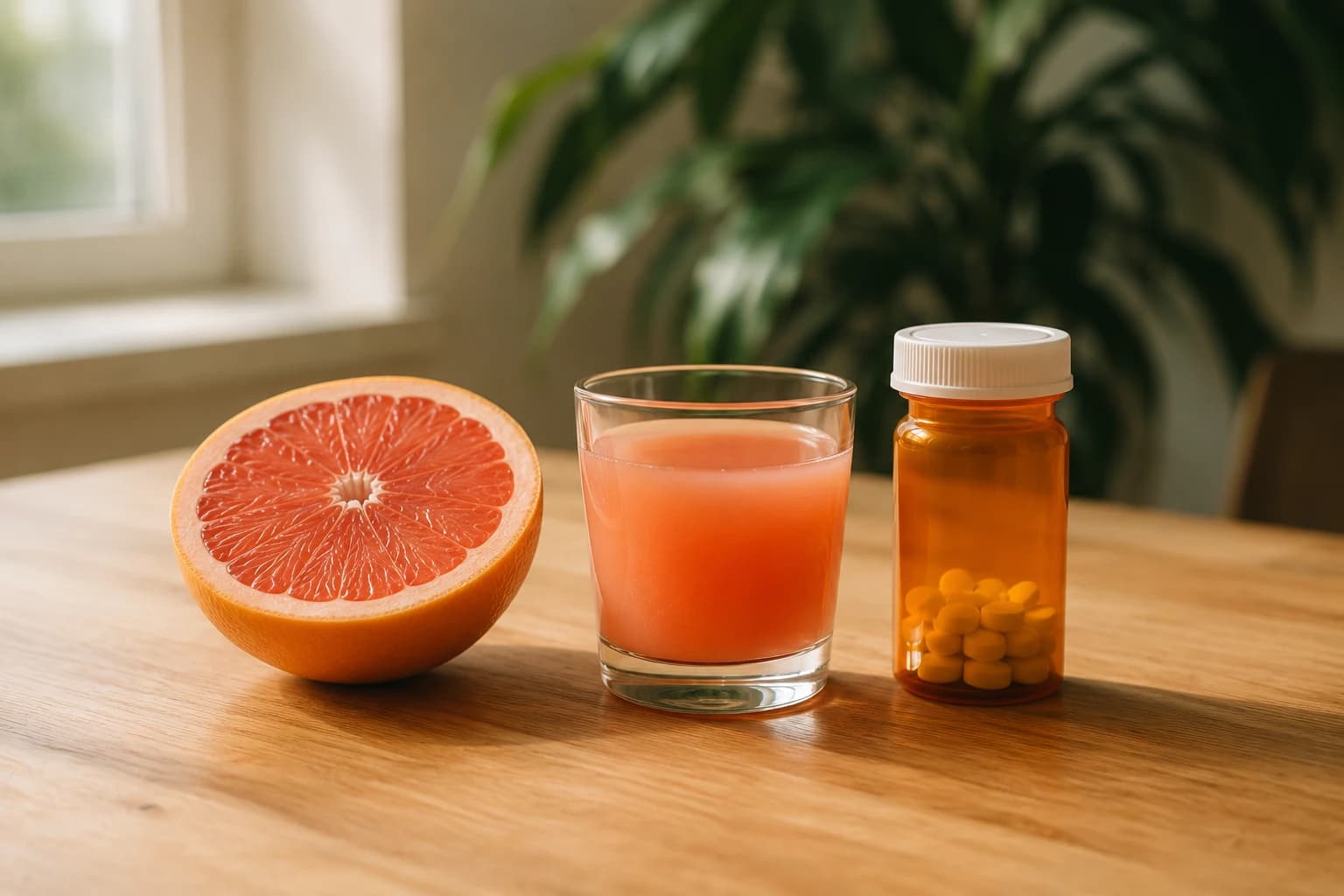
One pharmacokinetic study found daily grapefruit juice increased simvastatin blood levels by an average of 3.6-fold, ranging 1.8- to 6.0-fold across participants (Lilja et al., British Journal of Clinical Pharmacology, via PMC) — closer to an accidental dose increase than a rounding error. The practical guidance stays reassuring: half a grapefruit or a single glass of juice is generally fine for most people on an affected statin; the real caution is large, regular daily intake, closer to a liter or more of juice a day (Cleveland Clinic). If grapefruit is a daily habit, mention it to a pharmacist or doctor rather than working around it alone.
What Actually Helps If You're Having Side Effects
The single most important step is also the simplest: don't stop a statin on your own. These are heart-protective drugs, stopping abruptly removes real cardiovascular protection, and most muscle symptoms behind a side-effect scare are manageable with something smaller than quitting altogether.
What a doctor might do, in general terms, once a side effect is real and persistent: a supervised pause followed by slow reintroduction — Cleveland Clinic reports that with gradual reintroduction, 70% of people initially labeled "statin intolerant" end up able to take a statin again, 60% daily and 10% a few times a week (Cleveland Clinic); switching to a different statin, since not all share the same interaction or muscle-symptom profile, as the grapefruit section above shows; or adjusting the dose or schedule. Which of these makes sense is a clinical decision based on labs, risk, and the side effect, not something to work out alone.
CoQ10 supplements come up constantly, so it's worth addressing directly: the original theory was that statins deplete coenzyme Q10, but Cleveland Clinic notes research hasn't actually found that, and large meta-analyses show no consistent benefit from supplementing it for muscle pain, despite promising small early trials (Cleveland Clinic). It's low-risk for someone who feels it helps, not an evidence-backed fix.
Statins remain the most-studied, first-line option for lowering LDL — see LDL cholesterol for what your own reduction means against a target number. For non-statin options, including a newly approved oral one, see enlicitide, and the full drug-class landscape in cholesterol medication.
Bottom Line
Most statin side effects are real, but smaller and more manageable than online anecdote makes them sound: over 90% of muscle symptoms in trial data aren't actually caused by the drug, and the most serious reactions are rare enough to be measured in cases per million, not percent. None of that is a reason to self-diagnose or self-adjust — a new symptom is worth a call to your doctor, and a persistent one is worth a real conversation about what's causing it and what the options actually are. For the broader picture, see cholesterol medication or our cholesterol guide.
Frequently Asked Questions (FAQ)
Do statins really cause muscle pain in 1 out of 4 people? About 27% of people on a statin report muscle pain or weakness in the largest pooled trial analysis available, but nearly the same share, 26.6%, report it on placebo too — so the statin itself accounts for only a small fraction of that number, not the full 1-in-4 figure.
What is the nocebo effect, and how do we know statin side effects are partly caused by it? The nocebo effect is when expecting a side effect makes you more likely to notice or report one, even from an inactive pill. The SAMSON trial showed this directly: symptom scores on a placebo pill (15.4) were nearly identical to scores on the actual statin (16.3), both well above taking no tablet at all (8.0).
How do I know if muscle pain from a statin is serious enough to call a doctor? Ordinary, mild muscle aches are common and usually not dangerous, but severe, unexplained muscle pain or weakness together with dark or tea-colored urine are warning signs of rhabdomyolysis and call for medical attention the same day, not a wait-and-see approach.
Can I eat grapefruit if I'm taking a statin? It depends which statin: atorvastatin, lovastatin, and simvastatin can interact with grapefruit, while rosuvastatin, pravastatin, pitavastatin, and fluvastatin generally don't. For statins that do interact, occasional grapefruit is generally fine; the real caution is large, regular daily intake.
Should I stop taking my statin if I have side effects? Not on your own. Stopping a statin abruptly removes real cardiovascular protection, and most side effects can be addressed with a supervised pause, a different statin, or a dose change — decisions to make with your doctor, not before that conversation happens.
Medical disclaimer: This article is for informational purposes only. Always consult a qualified healthcare provider before making changes to your health routine.
Sources
- Cholesterol Treatment Trialists' Collaboration. Effect of Statin Therapy on Muscle Symptoms: An Individual Participant Data Meta-Analysis of Large-Scale, Randomised, Double-Blind Trials — The Lancet, 2022, via PubMed Central. https://pmc.ncbi.nlm.nih.gov/articles/PMC7613583/
- Cholesterol Treatment Trialists' Collaboration. New Study on Statins and Muscle Pain — Plain-language summary. https://www.cttcollaboration.org/news/new-study-muscle-pain
- Howard JP, Wood FA, Finegold JA, et al. Side Effect Patterns in a Crossover Trial of Statin, Placebo, and No Treatment (the SAMSON trial) — Journal of the American College of Cardiology, 2021, via PubMed Central. https://pmc.ncbi.nlm.nih.gov/articles/PMC8453640/
- Mayo Clinic. Statin Side Effects: Weigh the Benefits and Risks. https://www.mayoclinic.org/diseases-conditions/high-blood-cholesterol/in-depth/statin-side-effects/art-20046013
- Cleveland Clinic. Is My Statin to Blame for Muscle Pain? https://health.clevelandclinic.org/statin-muscle-pain
- Ridker PM, Pradhan A, MacFadyen JG, Libby P, Glynn RJ. Cardiovascular Benefits and Diabetes Risks of Statin Therapy in Primary Prevention — The Lancet, 2012, via PubMed Central. https://pmc.ncbi.nlm.nih.gov/articles/PMC3774022/
- LiverTox: Clinical and Research Information on Drug-Induced Liver Injury. Statins — NIH/NIDDK, NCBI Bookshelf. https://www.ncbi.nlm.nih.gov/books/NBK548067/
- Harvard Health Publishing. FDA Changes Safety Information on Statin Drugs. https://www.health.harvard.edu/blog/fda-changes-safety-information-on-statin-drugs-201202294429
- Cleveland Clinic. Can You Safely Mix Statins and Grapefruit? https://health.clevelandclinic.org/statins-grapefruit-safely-mix
- Lilja JJ, Neuvonen M, Neuvonen PJ. Effects of Regular Consumption of Grapefruit Juice on the Pharmacokinetics of Simvastatin — British Journal of Clinical Pharmacology, 2004, via PubMed Central. https://pmc.ncbi.nlm.nih.gov/articles/PMC1884539/
- Charatan F. Bayer Decides to Withdraw Cholesterol Lowering Drug — BMJ, 2001, via PubMed Central. https://pmc.ncbi.nlm.nih.gov/articles/PMC1120974/
- Cleveland Clinic. Can a CoQ10 Supplement Help if I'm Taking a Statin? https://health.clevelandclinic.org/can-coq10-supplement-help-im-taking-statin

Olivia Smith, RDN
A registered dietitian who separates the side effects worth a same-day call from the ones that are common and mild.