
LDL is the number most people's eyes jump to first on a cholesterol printout, usually because someone has told them, correctly, to watch it. What that number actually represents, and why it earns the "bad" nickname, rarely gets explained beyond a single vague sentence. This guide covers what LDL cholesterol is, the real mechanism behind why it matters, the normal-to-high ranges in both mg/dL and mmol/L, and where LDL fits alongside newer markers like non-HDL cholesterol and apoB.
What Is LDL Cholesterol?
LDL, low-density lipoprotein, isn't a fat itself. It's a particle, a lipoprotein, that carries cholesterol from your liver through your bloodstream to the rest of your body. Cleveland Clinic describes lipoproteins as "like little boats that travel through your bloodstream" (Cleveland Clinic), and the National Heart, Lung, and Blood Institute defines them in the same structural terms: "small, round particles made of lipids (fats) and proteins" that carry cholesterol through the blood (NHLBI).
Cholesterol itself isn't optional or inherently harmful. Every cell in your body needs it for its membrane, and it's a building block for hormones, vitamin D, and bile acids. For the full picture of what cholesterol does, see our full cholesterol explainer. This post is about the specific carrier particle that gets the most attention on a lab report, and why.
Why LDL Is Called "Bad" Cholesterol
LDL earns the "bad" label because, when too much of it is circulating, it's the particle most associated with depositing cholesterol into artery walls and starting the slow buildup of plaque, a process called atherosclerosis.
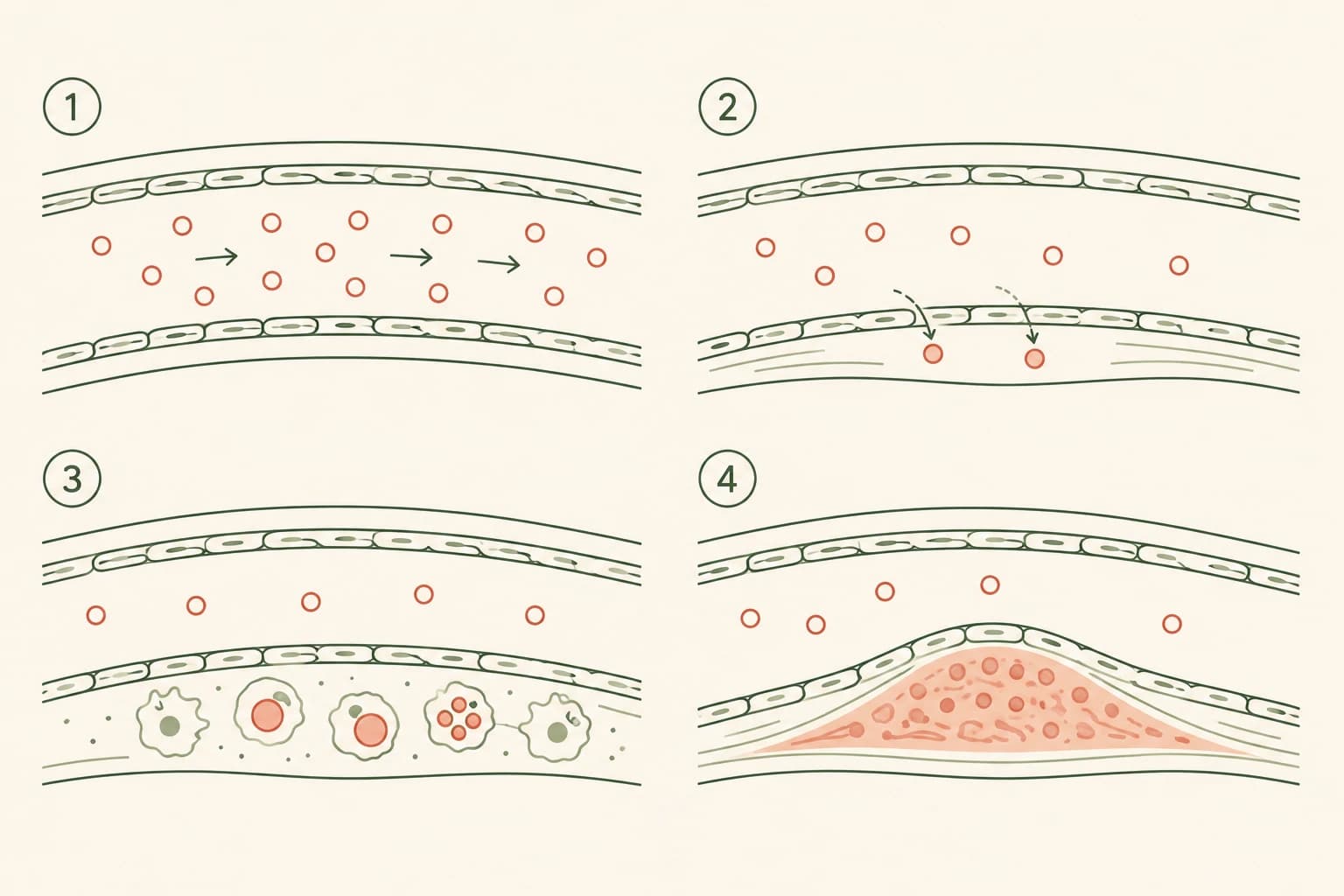
The mechanism is more specific than "it clogs your arteries," and it's worth understanding, because it explains why the number matters over years rather than days. When excess LDL is circulating, some of it works its way into the inner lining of an artery wall, where it can become oxidized. That oxidized LDL triggers a local inflammatory response and draws in immune cells called monocytes. Once inside the artery wall, monocytes transform into macrophages, which engulf the oxidized LDL through receptors on their surface and, in doing so, become "foam cells," named for their foamy appearance under a microscope. Foam cells are the building blocks of the fatty streak, the hallmark early lesion of atherosclerosis (PMC, "Mechanisms of Oxidized LDL-Mediated Endothelial Dysfunction and Its Consequences for the Development of Atherosclerosis").
That's a years-long process, not something triggered by one meal or one high reading. It's also why a single LDL result is one data point in a longer story rather than a verdict on its own. HDL, LDL's counterpart, mainly works in the opposite direction, carrying cholesterol away from tissues rather than depositing it — see HDL cholesterol for the full picture, or LDL vs. HDL for the direct side-by-side comparison.
LDL Normal Range: mg/dL and mmol/L
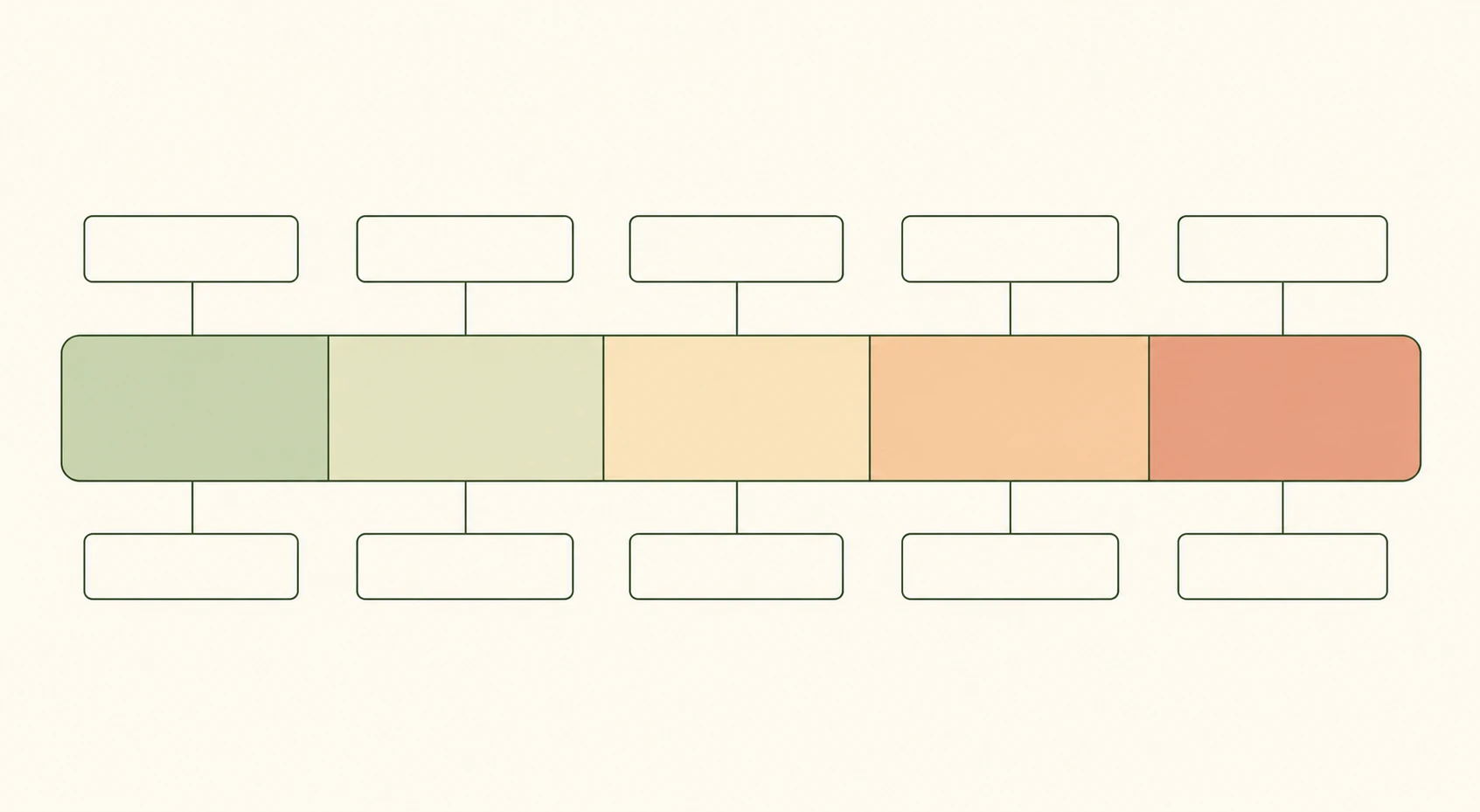
| Category | mg/dL | mmol/L |
|---|---|---|
| Normal | Below 100 | Below 2.59 |
| Elevated | 100–129 | 2.59–3.34 |
| Borderline High | 130–159 | 3.36–4.11 |
| High | 160–189 | 4.14–4.89 |
| Very High | 190 or above | 4.91 or above |
These are Cleveland Clinic's published cutpoints (Cleveland Clinic — LDL Cholesterol). You can check the mmol/L conversion yourself: divide the mg/dL figure by 38.67 (NCBI Bookshelf, lipid conversion factors). Take the 100 mg/dL cutoff — 100 ÷ 38.67 ≈ 2.59 mmol/L, exactly the figure in the table.
There isn't one "normal" that fits everyone, and this is where most range tables stop short. A March 13, 2026 update from the American College of Cardiology, the American Heart Association, and several partner societies sets risk-tiered LDL-C treatment targets that sit below the general screening range above: below 100 mg/dL for people at borderline or intermediate cardiovascular risk, below 70 mg/dL for those at high risk, and below 55 mg/dL for secondary prevention in people already at very high risk of a cardiovascular event (ACC.org). In other words, your own actual target depends on your broader cardiovascular risk profile, not just which row of the table your number falls into. For the full age- and sex-stratified breakdown across all four lipid markers, see normal cholesterol levels.
Beyond the Number: Non-HDL Cholesterol and ApoB
LDL-C alone doesn't capture every artery-affecting particle in your blood, which is why some clinicians also look at non-HDL cholesterol or apoB. Non-HDL is calculated simply as total cholesterol minus HDL, which means it includes LDL plus other cholesterol-carrying particles, like VLDL, that a standard LDL number misses (MedlinePlus). Cleveland Clinic recommends keeping non-HDL no more than 30 mg/dL above your LDL target (Cleveland Clinic — Non-HDL Cholesterol).
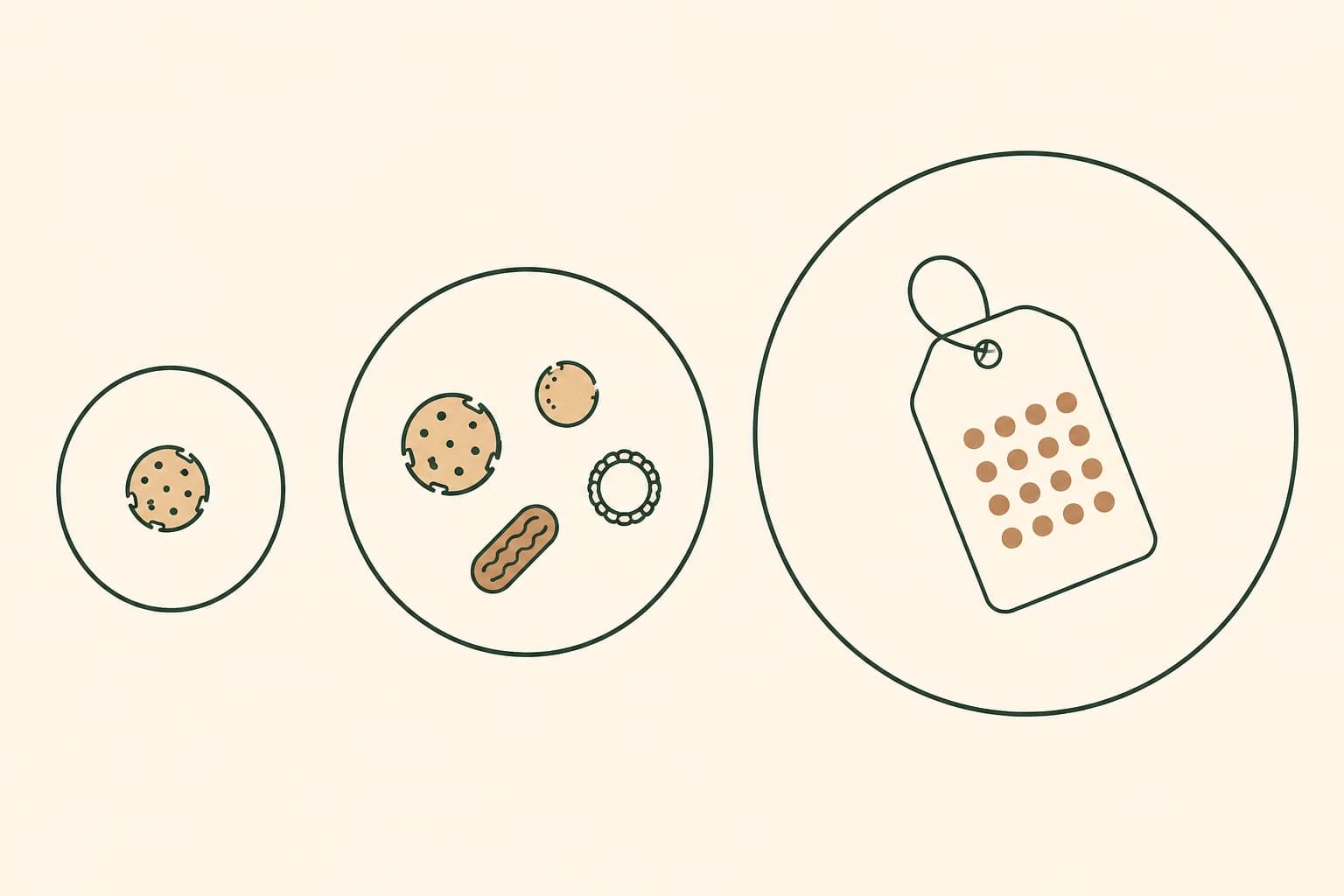
ApoB is a newer, more precise measure worth knowing about, without needing to chase it down for every reader: it counts the actual number of artery-affecting particles rather than the cholesterol they're carrying, and Cleveland Clinic notes that "research shows apoB measurements are even more accurate at predicting risk than non-HDL" (Cleveland Clinic — Non-HDL Cholesterol). That doesn't mean everyone needs to request it. It's an emerging, more precise option worth asking about if you have a family history of heart disease or a borderline LDL result, not a replacement for the standard panel.
What Causes High LDL?
Several things can push LDL up, and they don't all involve diet: what you eat, genetics (including familial hypercholesterolemia), certain medical conditions, and certain medications can all raise LDL (NHLBI). What causes high cholesterol covers the full list in depth.
How LDL Is Tested
LDL is measured as part of a standard lipid panel, and on most lab reports it isn't measured directly. It's calculated from your total cholesterol, HDL, and triglycerides using the Friedewald formula: LDL-C = total cholesterol − HDL-C − (triglycerides ÷ 5), a method that "became the standard method for LDL-c assessment" in routine labs (PMC, "Validation of the Friedewald Formula in Patients with Metabolic Syndrome").
Most people no longer need to fast beforehand. A 2026 update to US cholesterol guidelines states a non-fasting lipid profile is an acceptable baseline test for most people, reserving a fasting sample for those with a family history of dyslipidemia or premature ASCVD, a personally known or suspected disorder in triglyceride metabolism, or a non-fasting triglyceride result of 400 mg/dL or higher (Guideline Central, summarizing the 2026 ACC/AHA/Multisociety Dyslipidemia Guideline). The old fasting rule existed because triglycerides can spike 20–30% after a meal, which would throw off that calculation (Harvard Health Publishing). For the full mechanics of what each line on your results means, see cholesterol test.
Lowering High LDL: Where to Start
The main levers are diet, physical activity, weight where relevant, and, depending on overall cardiovascular risk, medication. Statins, the most commonly prescribed option, work by reducing cholesterol production in the liver, which prompts liver cells to make more LDL receptors and pull more LDL out of the bloodstream (NCBI Bookshelf / Endotext, "Cholesterol Lowering Drugs"). This post is deliberately about understanding the number, not a tactics guide. For the full, numbers-based breakdown of what actually moves LDL and by how much, see how to lower cholesterol.
Frequently Asked Questions (FAQ)
Is there one "normal" LDL number that applies to everyone? No. The general screening categories (below 100 mg/dL is normal) apply to the average person, but a March 2026 US guideline update sets lower, risk-tiered treatment targets, as low as below 55 mg/dL, for people already at high cardiovascular risk.
What's the difference between LDL cholesterol and non-HDL cholesterol? LDL-C measures one carrier particle. Non-HDL cholesterol (total cholesterol minus HDL) captures LDL plus other cholesterol-carrying particles like VLDL, which is why some clinicians consider it a more complete risk marker than LDL alone.
Do I need to fast before an LDL cholesterol test? Usually not anymore. A 2026 guideline update states a non-fasting lipid profile is an acceptable baseline test for most people; fasting is now reserved for specific situations like a suspected disorder in triglyceride metabolism or very high triglycerides.
What LDL number should I aim for if I already have heart disease? Under the March 2026 ACC/AHA/Multisociety guideline, people at very high cardiovascular risk, including those with existing atherosclerotic disease, have a treatment target below 55 mg/dL, a lower goal than the general-population "normal" range.
Can LDL cholesterol itself cause symptoms? No. An elevated LDL result causes no symptoms on its own — it's a silent number found through a blood test, not something you feel.
Medical disclaimer: This article is for informational purposes only. Always consult a qualified healthcare provider before making changes to your health routine.
Sources
- Cleveland Clinic. What Is Cholesterol? — Health article. https://my.clevelandclinic.org/health/articles/23922-what-is-cholesterol
- National Heart, Lung, and Blood Institute (NIH). Blood Cholesterol — Health topic overview. https://www.nhlbi.nih.gov/health/blood-cholesterol
- National Heart, Lung, and Blood Institute (NIH). Blood Cholesterol — Causes. https://www.nhlbi.nih.gov/health/blood-cholesterol/causes
- Mechanisms of Oxidized LDL-Mediated Endothelial Dysfunction and Its Consequences for the Development of Atherosclerosis — Peer-reviewed review, PubMed Central. https://pmc.ncbi.nlm.nih.gov/articles/PMC9199460/
- Cleveland Clinic. LDL Cholesterol — Health article. https://my.clevelandclinic.org/health/articles/24391-ldl-cholesterol
- NCBI Bookshelf (AHRQ). Lipid Conversion Factors, Appendix A. https://www.ncbi.nlm.nih.gov/books/NBK83505/
- American College of Cardiology. ACC/AHA Release New Clinical Guideline for Managing Dyslipidemia — Journal scan, published March 13, 2026. https://www.acc.org/latest-in-cardiology/journal-scans/2026/03/13/15/20/acc-aha-release-new-clinical-guideline-for-managing-dyslipidemia
- MedlinePlus (National Library of Medicine, NIH). Cholesterol Levels: What You Need to Know. https://medlineplus.gov/cholesterollevelswhatyouneedtoknow.html
- Cleveland Clinic. Non-HDL Cholesterol — Health article. https://my.clevelandclinic.org/health/articles/non-hdl-cholesterol
- Validation of the Friedewald Formula in Patients with Metabolic Syndrome — Peer-reviewed study, PubMed Central. https://pmc.ncbi.nlm.nih.gov/articles/PMC3941209/
- Guideline Central. Summary of the 2026 ACC/AHA/Multisociety Dyslipidemia Guideline. https://www.guidelinecentral.com/guideline/5099440/
- Harvard Health Publishing. Making Sense of Cholesterol Tests. https://www.health.harvard.edu/heart-health/making-sense-of-cholesterol-tests
- NCBI Bookshelf / Endotext. Cholesterol Lowering Drugs. https://www.ncbi.nlm.nih.gov/books/NBK395573/

Olivia Smith, RDN
A registered dietitian who reads lab panels for a living.