
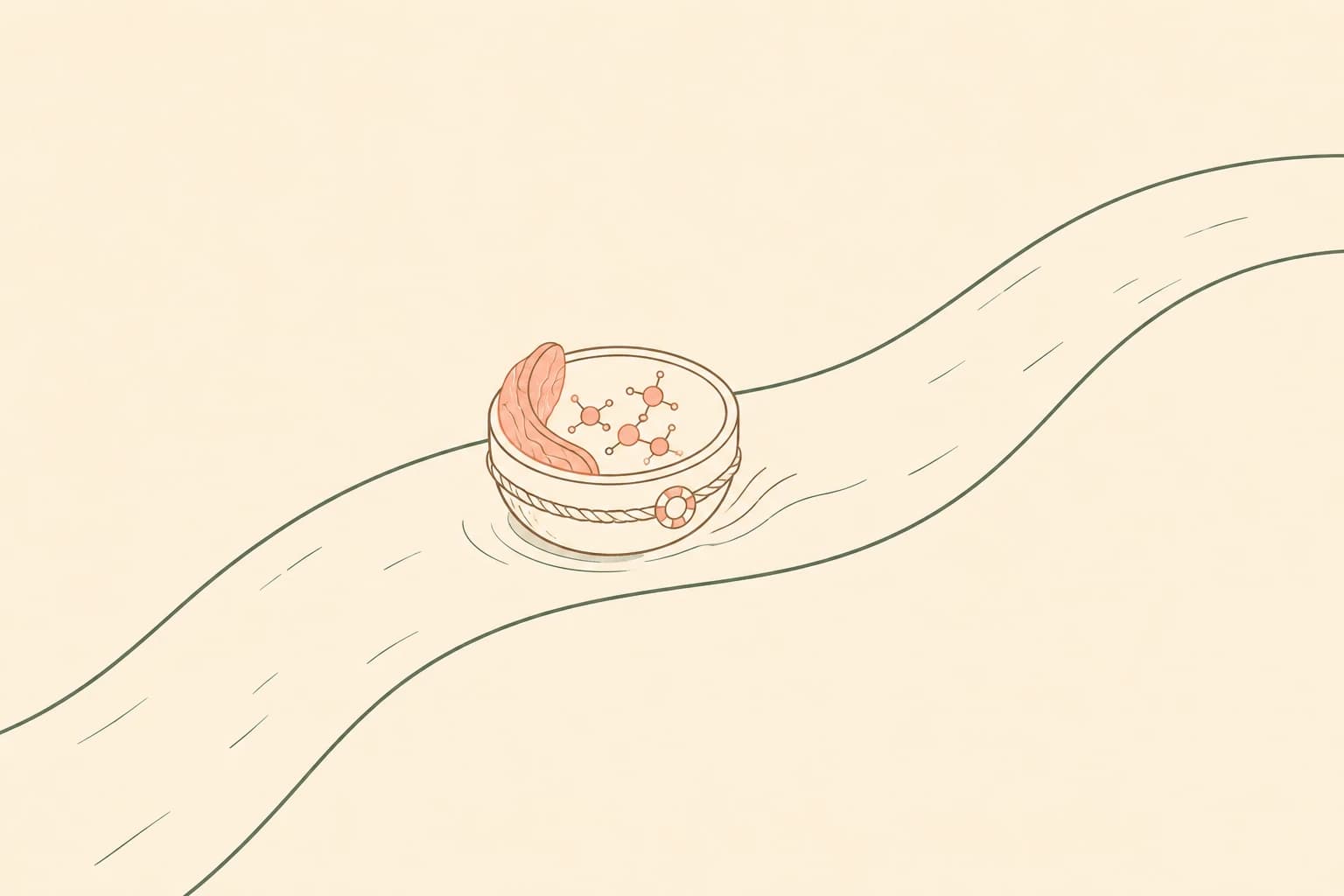
HDL gets called "good cholesterol" so often that the phrase barely registers anymore, but few explanations say why, or what a very high number might actually mean. This guide covers what HDL is, the mechanism behind its protective reputation, the normal ranges in mg/dL and mmol/L, and an honest look at what raising your HDL number can and can't do for your actual heart-disease risk.
What Is HDL Cholesterol?
HDL, high-density lipoprotein, isn't a fat itself. Like LDL, it's a particle, a lipoprotein, that transports cholesterol through your blood (NHLBI). It earns the "good" label because of the direction it moves cholesterol, not because it's a different kind of fat. For the full biology of what cholesterol does in your body and why LDL and HDL are carrier particles rather than different substances, see our cholesterol fundamentals guide.
Why Is HDL Called "Good" Cholesterol? Reverse Cholesterol Transport, Explained
HDL is protective because it picks up excess cholesterol from your tissues and artery walls and carries it back to your liver for disposal. Cleveland Clinic puts it plainly: "HDL particles pick up extra cholesterol in your blood and deliver it to your liver. Your liver then breaks down this cholesterol and sends it out of your body." (Cleveland Clinic) Cardiologists call this reverse cholesterol transport — essentially the opposite route LDL takes.
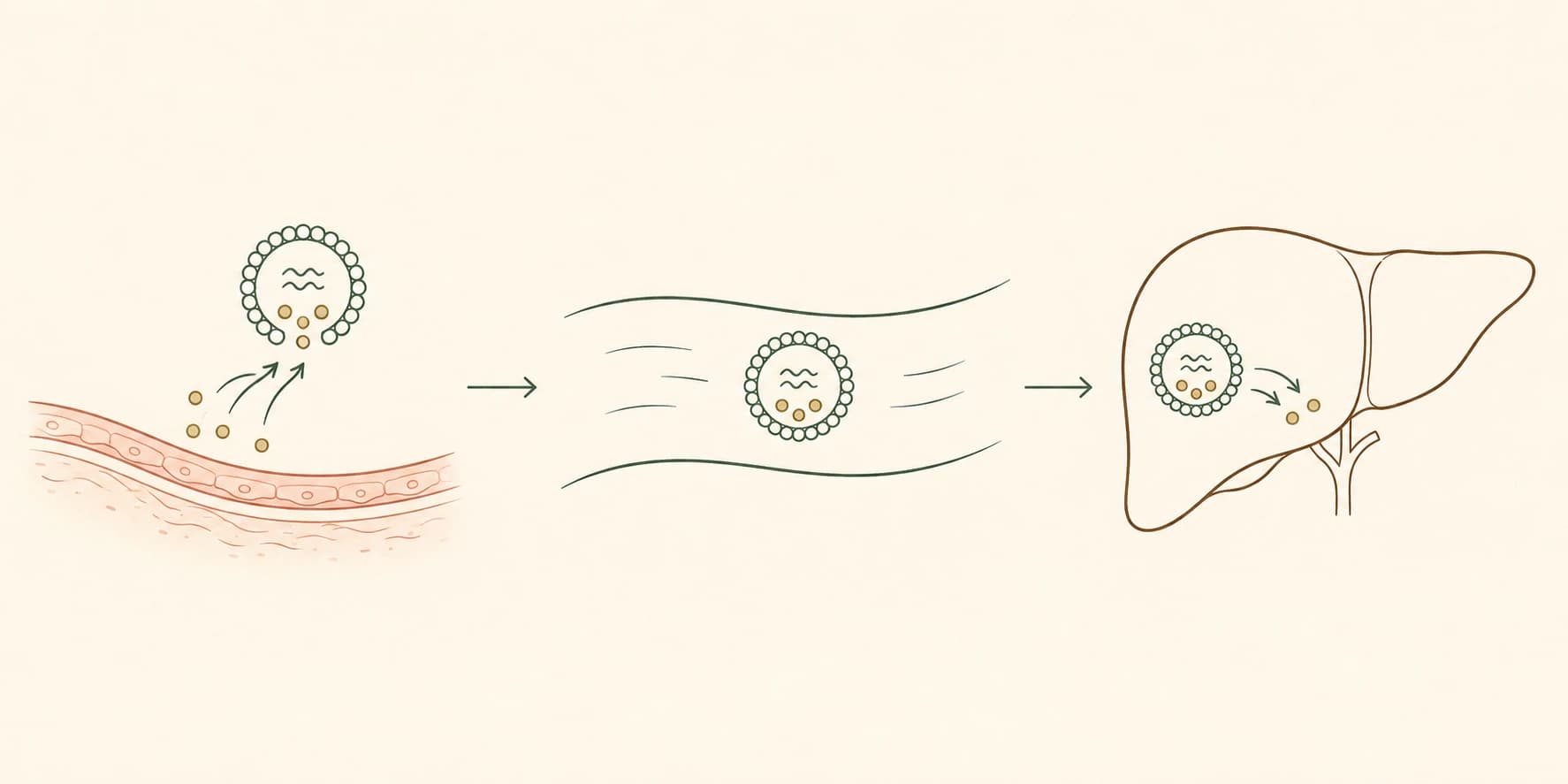
HDL has a couple of secondary roles worth knowing about too: Cleveland Clinic notes it also has anti-inflammatory properties and plays a role in preventing blood clots (Cleveland Clinic).
HDL Normal Range: What Your Number Means (mg/dL and mmol/L)
| Category | mg/dL (men) | mg/dL (women) | mmol/L (men) | mmol/L (women) |
|---|---|---|---|---|
| Low | Below 40 | Below 50 | Below 1.03 | Below 1.29 |
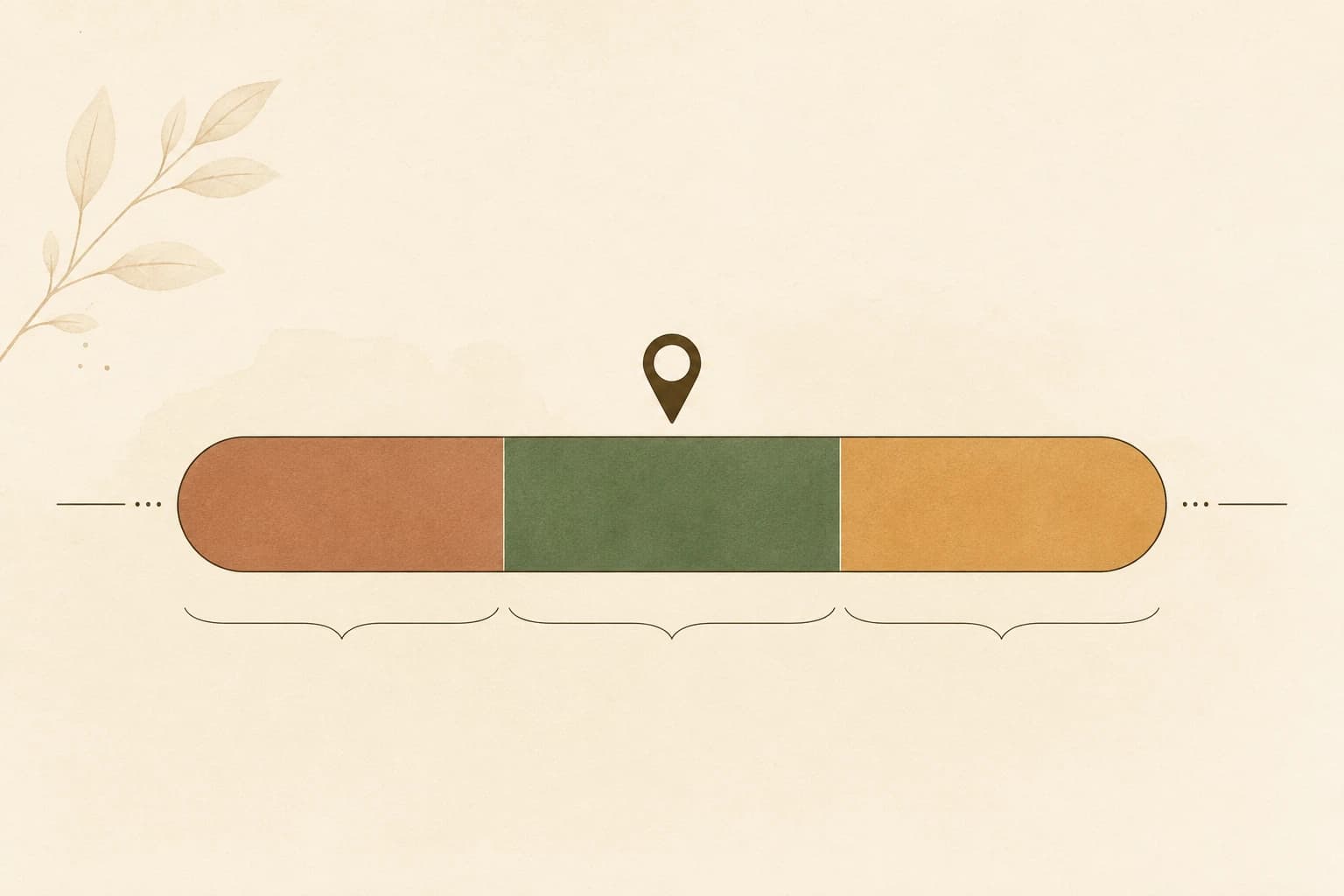
| Normal | 40–80 | 50–80 | 1.03–2.07 | 1.29–2.07 |
| High | Above 80 (everyone) | Above 80 (everyone) | Above 2.07 | Above 2.07 |
These are Cleveland Clinic's published sex-specific ranges, with kids and teens generally falling between 45 and 80 mg/dL (Cleveland Clinic). The mmol/L figures come from dividing each mg/dL threshold by 38.67 (NCBI Bookshelf, lipid conversion factors) — for example, 80 ÷ 38.67 ≈ 2.07 mmol/L.
Within that normal band, 60 mg/dL (1.55 mmol/L) or higher carries specific weight: under the NCEP ATP III framework still used to interpret cholesterol risk factors, "HDL cholesterol >60 mg/dL counts as a 'negative' risk factor; its presence removes one risk factor from the total count" (NHLBI — ATP III At-A-Glance Quick Desk Reference). In plain terms, an HDL that high is treated as working in your favor when a clinician is adding up your overall cardiovascular risk factors. For how HDL fits alongside total cholesterol, LDL, and triglycerides together, see normal cholesterol levels, and our lipids explained guide for the broader reference-range framework.
Is a Very High HDL Level Always a Good Sign?
No, not always. This is the question most HDL content skips entirely. A very high HDL, above roughly 80 mg/dL (2.07 mmol/L), isn't automatically extra protection. Cleveland Clinic states plainly that "you don't want your HDL cholesterol to be too high," because "abnormally high levels may suggest that there's an underlying dyslipidemia (abnormal balance between good and bad cholesterol)," and that if your HDL is too high, "your provider will look into the cause and tell you if you need treatment" (Cleveland Clinic). That doesn't mean an unusually high HDL is something to be alarmed about on its own. It means it's worth mentioning to your doctor rather than assuming higher is automatically better without limit, the same way it would be for almost any lab value.
How Much Does HDL Actually Move Your Heart-Disease Risk?
Pooled prospective data have found each 1 mg/dL increase in HDL cholesterol is associated with roughly a 2% lower coronary heart disease risk in men and a 3% lower risk in women, drawn from Gordon et al.'s pooled analysis of prospective American cohort studies, including the Framingham Heart Study, published in Circulation in 1989 (PMC, "HDL in Atherosclerotic Cardiovascular Disease: In Search of a Role," Cells, 2021).
That figure is worth reading carefully: it's an association from decades of observational data, not a guarantee that artificially raising any individual's HDL by a given amount will lower their personal risk by a proportional amount. That distinction, association versus intervention, is exactly what the next section is about.
Can You Raise Your HDL? What Actually Works — and What Doesn't
This is where the honest answer gets more complicated than "raise your good cholesterol." There are two different questions here: what raises the number, and what actually improves outcomes. They don't always overlap.
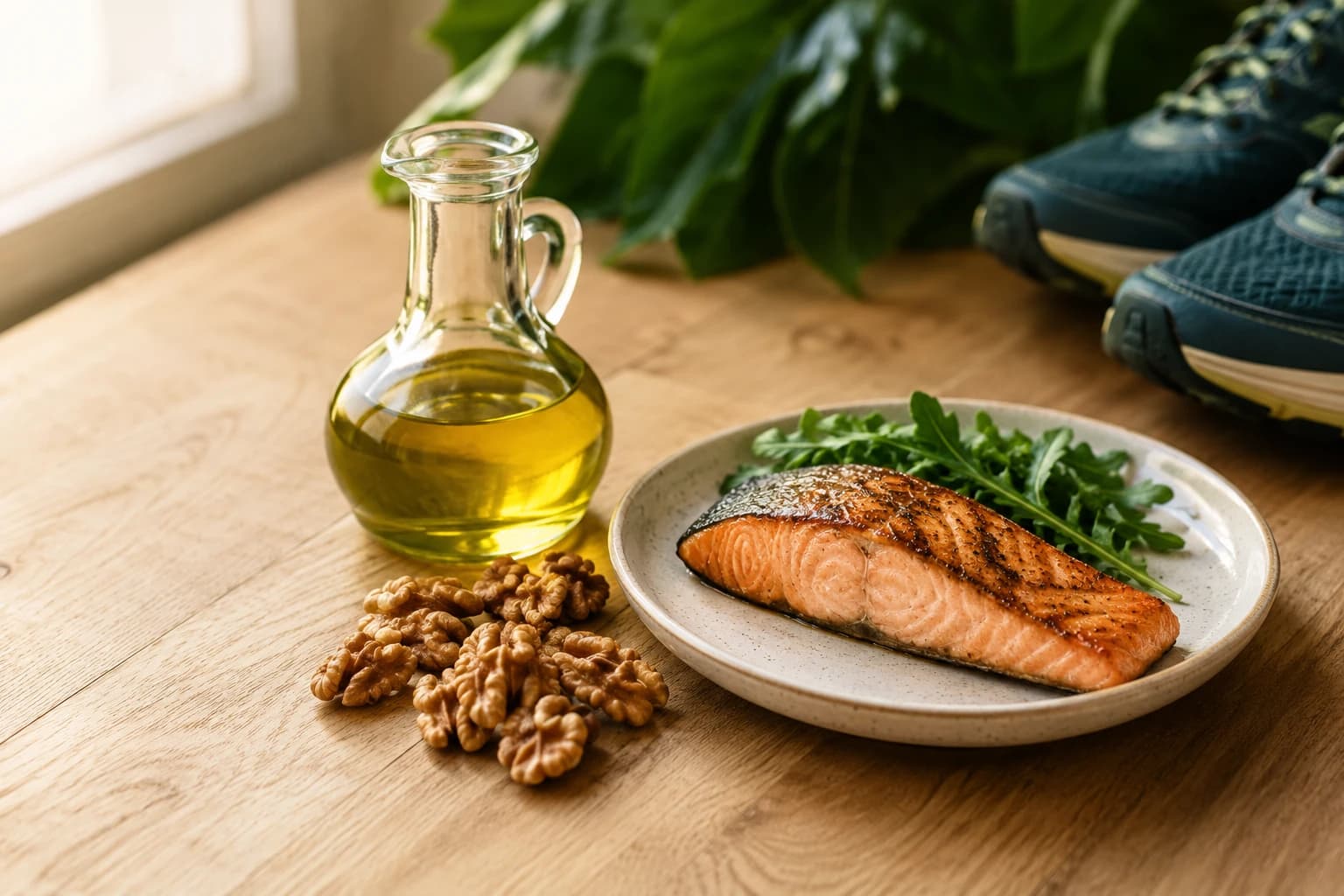
What tends to work. A March 2026 Harvard Health update states plainly that pharmaceutical companies have spent heavily trying to find a safe HDL-raising drug without success, and that healthy lifestyle practices are the approach that actually helps: losing 5–10% of body weight can raise HDL, alongside regular exercise, avoiding trans fats, cutting back on refined carbohydrates, quitting smoking, and moderate alcohol intake (Harvard Health Publishing, March 9, 2026). For the broader lifestyle picture that overlaps with lowering LDL too, see our lifestyle-changes guide.
What hasn't worked, despite raising the number. This is the part almost no competitor page states plainly. In the AIM-HIGH trial (3,414 patients: 1,718 on niacin, 1,696 on placebo, 94% already on statin therapy), niacin raised HDL-C by 25% versus 11.8% on placebo, and also improved LDL and triglycerides — but the trial showed no reduction in cardiovascular events (PMC, "Niacin Therapy, HDL Cholesterol, and Cardiovascular Disease"). The HPS2-THRIVE trial found the same pattern with niacin. A whole class of drugs called CETP inhibitors tells a similar story: torcetrapib (ILLUMINATE trial) was halted after it caused excess mortality despite raising HDL by more than 70%; dalcetrapib (Dal-OUTCOMES) and evacetrapib (ACCELERATE) were both stopped for futility; and anacetrapib (REVEAL) produced only a modest 9% reduction in cardiovascular events over four years despite more than doubling HDL (PMC, "HDL in Atherosclerotic Cardiovascular Disease: In Search of a Role").
The honest synthesis: HDL is a genuinely useful marker for understanding your risk, but "raise it by whatever means available" isn't currently supported by trial evidence the way LDL-lowering with statins is. For the wider medication landscape, including where niacin and other options actually do and don't fit, see cholesterol medication.
HDL vs. LDL: The Short Version
LDL and HDL are both lipoprotein particles carrying the same cargo, cholesterol, in opposite directions: LDL toward your tissues and arteries, HDL back to your liver. That's the entire reason one gets managed down and the other gets interpreted in context rather than simply maximized. For the full picture of LDL specifically, including its own normal ranges and the mechanism behind why excess LDL matters, see LDL cholesterol. For the direct side-by-side comparison, including how the two combine into your total cholesterol number, see LDL vs. HDL.
Frequently Asked Questions (FAQ)
Is a very high HDL level always a good sign? Not necessarily. HDL above roughly 80 mg/dL (2.07 mmol/L) isn't automatically extra protection — Cleveland Clinic notes it can sometimes signal an underlying lipid or metabolic issue, so an unusually high result is worth discussing with your doctor rather than assuming it's simply better.
What is a normal HDL level in mmol/L, not just mg/dL? Using the standard ÷38.67 conversion, a normal HDL range of 40–80 mg/dL (men) or 50–80 mg/dL (women) works out to about 1.03–2.07 mmol/L (men) or 1.29–2.07 mmol/L (women).
Do niacin or other HDL-raising drugs actually lower heart attack risk? In major trials, no. Niacin added to a statin raised HDL substantially in the AIM-HIGH and HPS2-THRIVE trials without reducing cardiovascular events, and several CETP-inhibitor drugs that raised HDL sharply either failed to help or caused harm.
Can my HDL be too low even if my total cholesterol is normal? Yes. Total cholesterol can look "normal" while HDL specifically is low (below 40 mg/dL for men or 50 mg/dL for women), which is why HDL is reported as its own line on a lipid panel rather than folded entirely into the total.
How much can diet and exercise realistically raise HDL cholesterol? There's no single guaranteed number, but losing 5–10% of body weight is one of the more reliably effective levers, alongside regular aerobic activity, not smoking, and limiting alcohol.
Medical disclaimer: This article is for informational purposes only. Always consult a qualified healthcare provider before making changes to your health routine.
Sources
- National Heart, Lung, and Blood Institute (NIH). Blood Cholesterol — Health topic overview. https://www.nhlbi.nih.gov/health/blood-cholesterol
- Cleveland Clinic. HDL Cholesterol — Health article. https://my.clevelandclinic.org/health/articles/24395-hdl-cholesterol
- NCBI Bookshelf (AHRQ). Lipid Conversion Factors, Appendix A. https://www.ncbi.nlm.nih.gov/books/NBK83505/
- National Heart, Lung, and Blood Institute (NIH) / National Cholesterol Education Program. ATP III Guidelines At-A-Glance Quick Desk Reference. https://www.nhlbi.nih.gov/files/docs/guidelines/atglance.pdf
- HDL in Atherosclerotic Cardiovascular Disease: In Search of a Role — Peer-reviewed review, Cells, 2021, via PubMed Central. https://pmc.ncbi.nlm.nih.gov/articles/PMC8394469/
- Harvard Health Publishing. How Can I Raise My HDL Cholesterol? Published March 9, 2026. https://www.health.harvard.edu/heart-health/how-can-i-raise-my-hdl-cholesterol
- Niacin Therapy, HDL Cholesterol, and Cardiovascular Disease: Is the HDL Hypothesis Defunct? — Peer-reviewed review, PubMed Central. https://pmc.ncbi.nlm.nih.gov/articles/PMC4829575/

Olivia Smith, RDN
A registered dietitian who cares more about outcomes than about single numbers.