
The changes with real evidence behind them are eating less saturated fat and more soluble fiber, losing even a modest amount of weight, getting regular aerobic exercise, quitting smoking, moderating alcohol, and, when lifestyle isn't enough on its own, medication (Cleveland Clinic; American Heart Association). This guide walks through each lever with its real, sourced effect size, honestly worth knowing before you start: diet and lifestyle together only account for roughly 20–30% of the cholesterol in your blood, since genetics and your liver's own production drive the rest (Cleveland Clinic) — which is exactly why results vary person to person, and why this isn't a guilt-inducing checklist. For what's actually driving your number in the first place, see our causes guide.
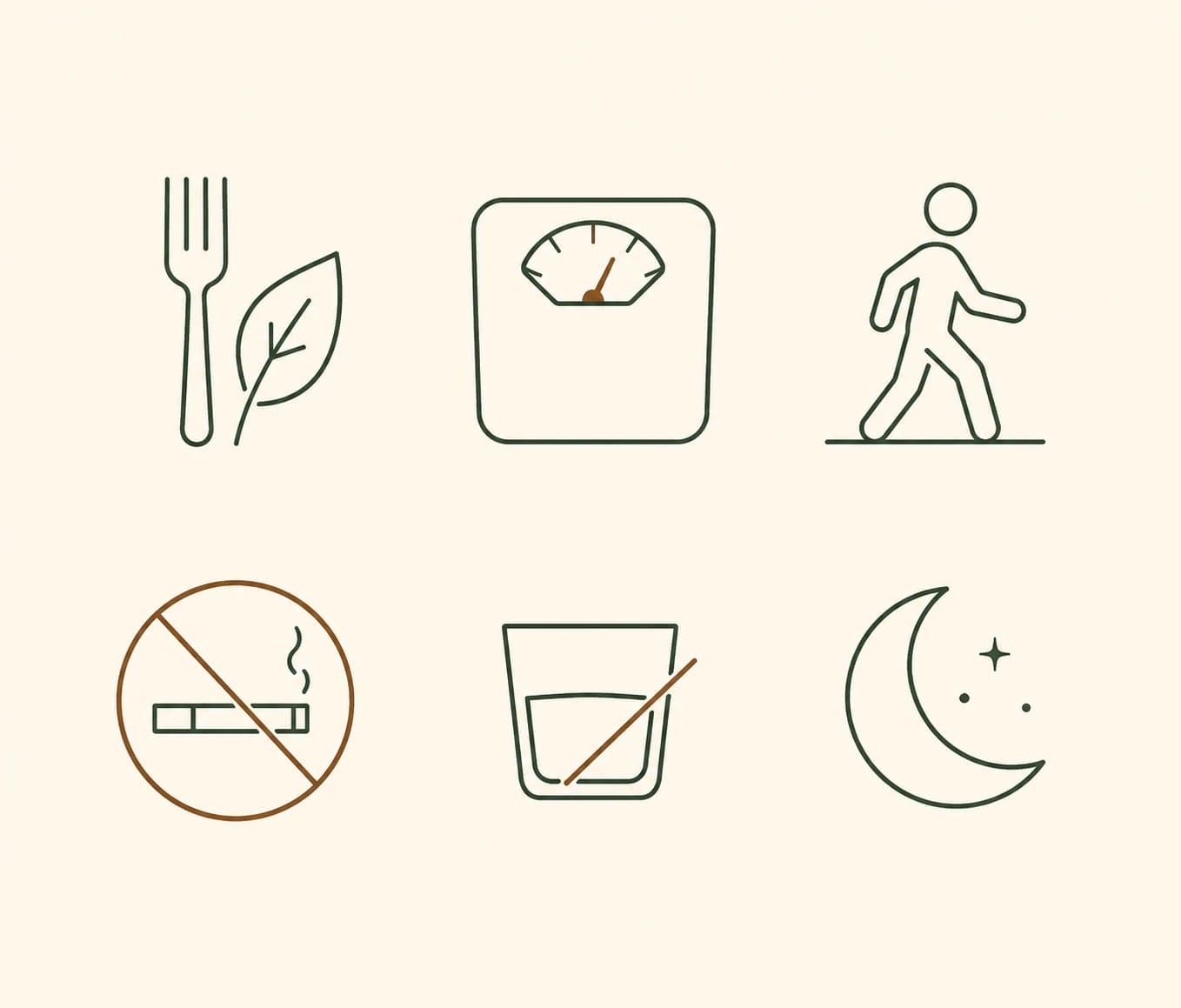
The order below roughly follows evidence strength and effort-to-benefit ratio, the same rough order a dietitian would actually walk a patient through: diet and weight first, since they're the best-quantified; exercise next; then smoking and alcohol; then sleep and stress as real but more preliminary supporting context.
| Lever | Real, quantified effect |
|---|---|
| Weight loss | Maintaining or reaching a healthy weight lowers LDL, though no single verified percentage applies to everyone |
| Saturated fat | 5–6% of daily calories (roughly 11–13g on a 2,000-calorie diet) |
| Soluble fiber | 10–25g/day, per the federal Therapeutic Lifestyle Changes target |
| Aerobic exercise | 150 minutes/week → up to ~20% lower cholesterol, over about 12 months |
| Quitting smoking | HDL begins rising within under 3 weeks |
| Alcohol | ≤2 drinks/day (men) or ≤1 drink/day (women) |
How to Lower Cholesterol Naturally With Diet
The biggest dietary levers are cutting saturated fat, adding soluble fiber, and, for some people, adding plant sterols. This general approach is sometimes called the Therapeutic Lifestyle Changes (TLC) diet, and its numeric targets, in one place: total fat 25–35% of daily calories, saturated fat under 7% of daily calories, dietary cholesterol under 200mg/day, soluble fiber 10–25g/day, and plant stanols/sterols around 2g/day (MedlinePlus). Both fat figures are shares of your total daily calories, not shares of each other. Cleveland Clinic's own diet guidance narrows saturated fat further, to 5–6% of daily calories, working out to roughly 11–13g on a 2,000-calorie diet (Cleveland Clinic). In practice, that means leaning on foods like oats and beans for soluble fiber rather than trying to hit a fiber number from supplements alone. For the full foods-and-meal-pattern deep dive, see cholesterol diet, which covers walnuts' FDA-qualified heart-health claim alongside oats and fatty fish — for portion sizes and a nutrient breakdown by nut, see best nuts for sustained energy; for what to cut back on, see foods to avoid with high cholesterol. Drinks are a smaller lever than any of these, but if you are curious where hibiscus tea sits on the evidence, we cover the blood pressure and LDL numbers in hibiscus tea and blood pressure.
Losing Weight to Reduce Cholesterol
Reaching or maintaining a healthy weight lowers LDL cholesterol and reduces the risk of a heart attack or stroke, independent of the other benefits weight loss brings (American Heart Association). Worth being honest that no single, verified percentage applies to everyone here, since the exact effect depends on how much weight is lost and a person's starting point — this is a real, worthwhile lever, just not one with a single universal number attached to it. This is also one of the levers with the most overlap across the whole list: weight loss tends to move saturated-fat intake and activity level at the same time, which is part of why it ranks near the top of the effort-to-benefit order above.
How Much Exercise Actually Lowers Cholesterol
The standard target is at least 150 minutes a week of moderate-intensity aerobic activity — walking, cycling, and swimming all count (American Heart Association). Worth flagging the timeline contrast explicitly: exercise alone can produce up to roughly a 20% cholesterol reduction, but that's over a much longer window, about 12 months, than diet's 8-to-12-week timeline covered further down (British Heart Foundation).

Quitting Smoking and Cutting Back on Alcohol
Smoking and vaping lower HDL, "good" cholesterol, and quitting reverses that: the American Heart Association states plainly that "quitting smoking can help lower your triglycerides and raise your HDL" (AHA). The timeline is genuinely fast relative to most other levers on this page: a review of within-subject changes found HDL cholesterol rises within under 3 weeks of quitting, with the biggest gains typically in the first 3 to 13 weeks (Biomarker Research, 2013, via PubMed Central).
For alcohol, the actual moderation figure is ≤2 drinks a day for men or ≤1 drink a day for women (MedlinePlus) — this is a moderation guideline used in cholesterol-management diet plans, not a claim that alcohol itself directly raises everyone's cholesterol.
Sleep's Less-Certain Role in Cholesterol
Sleep's link to cholesterol is real but less settled than diet, weight, or exercise, and it's worth saying so plainly rather than overclaiming. A 2019 cross-sectional study using NHANES data (2,705 adults) found HDL cholesterol was highest among people sleeping about 8 hours a day, triglycerides were lowest around 6 hours a day, and no significant association turned up for LDL specifically (Journal of Diabetes and Metabolic Disorders, 2019, via PubMed Central). The study's own limitation matters here: a cross-sectional design can show these numbers moving together, but it can't establish that short sleep causes the lipid differences, only that they're associated — so this isn't a basis for "sleep more to lower your cholesterol by X" as a proven, actionable claim. It's reasonable to treat consistent, adequate sleep as a supporting habit alongside the better-evidenced levers above, not as a standalone lipid-lowering strategy in its own right.
Stress and Cholesterol: The Cortisol Connection
Chronic stress is linked to less favorable cholesterol numbers, plausibly through cortisol's effect on the liver's cholesterol output, and the picture is more established for chronic or occupational stress than for everyday short-term stress. Two named studies make this more concrete than a vague "stress is bad for your heart" claim: an occupational study of more than 91,500 adults across professions linked job-related stress to higher LDL and lower HDL, and a separate study of 439 commercial drivers linked high work-related stress to higher LDL and triglycerides and lower HDL (WebMD). This is associational evidence, not a controlled trial proving that reducing stress lowers cholesterol by a specific amount. For the deeper cortisol-and-diet picture, see our cortisol diet guide.
How Long Does It Take to Lower Cholesterol?
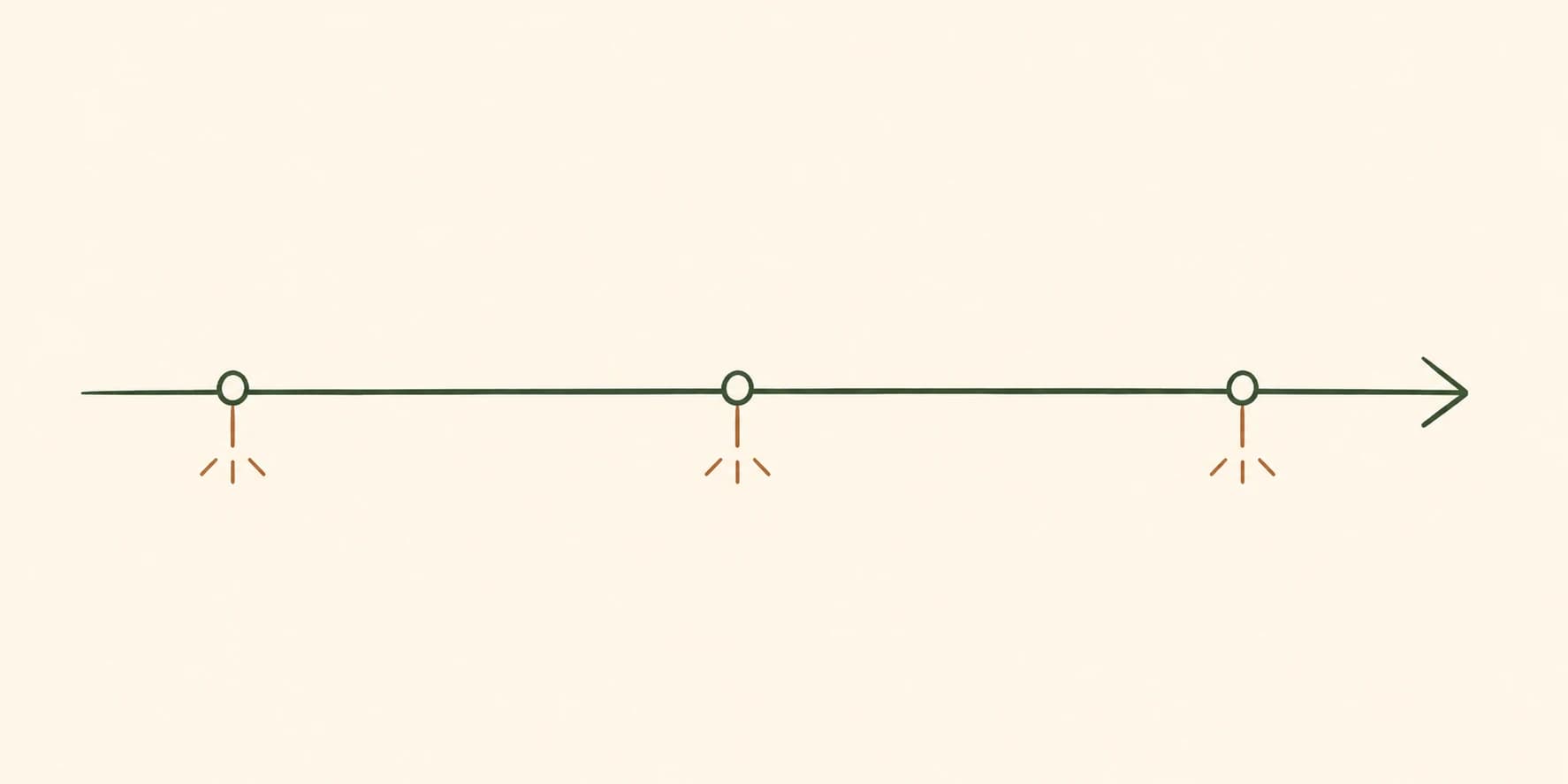
The most specific answer available comes from the British Heart Foundation: diet changes alone can lower cholesterol by up to about 10%, typically over 8 to 12 weeks; exercise alone can achieve up to about a 20% reduction, but generally over a much longer period, around 12 months; statins typically begin lowering cholesterol within 3 to 4 weeks; and combining lifestyle changes with medication can produce results within about 4 weeks (British Heart Foundation).
Notice the shape of that pattern: diet moves fastest relative to the size of its effect, statins move fastest of all, and exercise's larger ceiling effect takes the longest to show up in full. That's a genuinely useful thing to know before picking where to start — someone hoping for a quick recheck result is better served leaning on diet or, if appropriate, medication first, while someone building a long-term routine can expect exercise's benefit to keep accumulating well past the first few months.
Worth an honesty note here: even Healthline, a source that covers this topic directly, states outright that "there isn't much clear guidance and research about the time it actually takes to lower your cholesterol levels" for any given individual (Healthline). Treat the numbers above as reasonable general guides, not personal guarantees, and ask your doctor when to get a follow-up lipid panel rather than guessing at a timeline on your own. The smoking-cessation figure from earlier, HDL improvement in under 3 weeks, is one more concrete data point in this same "how long" picture — one of the faster-acting levers covered here.
When Lifestyle Changes Aren't Enough
If lifestyle changes alone don't bring your numbers into range after a follow-up test, or your calculated cardiovascular risk is high enough on its own, medication is the next step, and it works on a different scale, not just a different mechanism: statins can lower LDL by up to roughly 60% at maximum intensity (rosuvastatin 40mg), well beyond what diet alone typically achieves (NCBI Bookshelf / Endotext). This isn't a failure state — many people end up doing both together, and lifestyle changes still matter even once medication is added, since they support the same LDL and HDL numbers a statin is working on from a different angle. For the full medication landscape, see cholesterol medication.
Bottom Line
No single change works alone, but the combination of what you eat, how much you weigh, how active you are, and whether you smoke moves the number more than most people expect, and the realistic timeline is measured in weeks and months, not overnight. Whichever lever you want to start with, there's a deeper guide waiting: food to add (cholesterol diet), food to cut back on (foods to avoid with high cholesterol), supplements worth knowing about (supplements to lower cholesterol), or medication (cholesterol medication).
Frequently Asked Questions (FAQ)
How long does it take to see lower cholesterol from diet changes alone? Roughly 8 to 12 weeks for about a 10% reduction, according to the British Heart Foundation, though even authoritative sources acknowledge individual timing isn't precisely studied, so treat this as a reasonable general guide rather than a guarantee.
What's the single most effective lifestyle change for lowering cholesterol? There isn't one universal answer, but weight loss and cutting saturated fat are the two levers with the strongest evidence behind them. Weight loss lowers LDL cholesterol independent of its other benefits, though the exact effect varies with how much weight is lost and where someone starts, so there's no single verified percentage that applies to everyone.
Does quitting smoking actually lower cholesterol, and how fast? Yes — HDL cholesterol rises within under 3 weeks of quitting, with the biggest gains typically in the first 3 to 13 weeks, according to a review of within-subject changes in smokers who quit.
Can stress by itself cause high cholesterol? Chronic, especially occupational, stress is associated with less favorable cholesterol numbers in several studies, but this is associational evidence, not proof that stress alone causes high cholesterol or that reducing stress will lower it by a specific amount.
How much can lifestyle changes lower cholesterol compared to statins? Diet alone typically produces around a 10% reduction; statins can lower LDL by up to roughly 60% at maximum intensity — a meaningfully larger effect, which is why medication gets added when lifestyle changes alone aren't enough.
Medical disclaimer: This article is for informational purposes only. Always consult a qualified healthcare provider before making changes to your health routine.
Sources
- American Heart Association. Prevention and Treatment of High Cholesterol (Hyperlipidemia). https://www.heart.org/en/health-topics/cholesterol/prevention-and-treatment-of-high-cholesterol-hyperlipidemia
- Cleveland Clinic. Cholesterol Diet: How Nutrition & Foods Impact Levels. Reviewed October 17, 2022. https://my.clevelandclinic.org/health/articles/16867-cholesterol--nutrition-tlc
- MedlinePlus (National Library of Medicine, NIH). How to Lower Cholesterol with Diet. https://medlineplus.gov/howtolowercholesterolwithdiet.html
- British Heart Foundation. How Long Does It Take to Lower Cholesterol? https://www.bhf.org.uk/informationsupport/heart-matters-magazine/medical/how-long-to-lower-cholesterol
- Healthline. How Long Does It Take to Lower Cholesterol? Updated November 26, 2024. https://www.healthline.com/health/high-cholesterol/how-long-does-it-take-to-lower
- Biomarker Research. Effect of Smoking Cessation on Lipid Profile — Review, 2013, via PubMed Central. https://pmc.ncbi.nlm.nih.gov/articles/PMC4177613/
- Journal of Diabetes and Metabolic Disorders. Sleep Duration and Its Association with Lipid Profile — 2019, via PubMed Central. https://pmc.ncbi.nlm.nih.gov/articles/PMC6914752
- WebMD. The Stress-Cholesterol Link. https://www.webmd.com/cholesterol-management/stress-cholesterol-link
- NCBI Bookshelf / Endotext. Cholesterol Lowering Drugs. https://www.ncbi.nlm.nih.gov/books/NBK395573/

Olivia Smith, RDN
A registered dietitian who walks patients through levers in order of payoff.