Diet changes account for roughly 20–30% of the cholesterol in your blood — the rest is genetics and how much your own liver makes (Cleveland Clinic). In practice, that means a cholesterol diet is a real, worthwhile lever, not a cure-all, and most people can only reliably hit two or three of the targets below at once — start with the one that actually fits your kitchen rather than trying to overhaul everything on day one. That's a genuinely honest place to start, not a discouraging one: even a partial version of the eating pattern below has real, measurable evidence behind it, which is more than can be said for most "eat clean for your heart" advice that skips the actual numbers. This guide gives the real amounts behind every food claim, not just which foods to eat. For the broader lifestyle picture beyond diet, exercise, weight, and smoking among them, see our how to lower cholesterol guide; for what's actually driving a high number in the first place, see our causes guide. And if you're arriving without the foundational context, our cholesterol explained guide covers what cholesterol actually is and why your body needs it.
The TLC Diet: The Actual Numbers Behind "Eat Heart-Healthy"
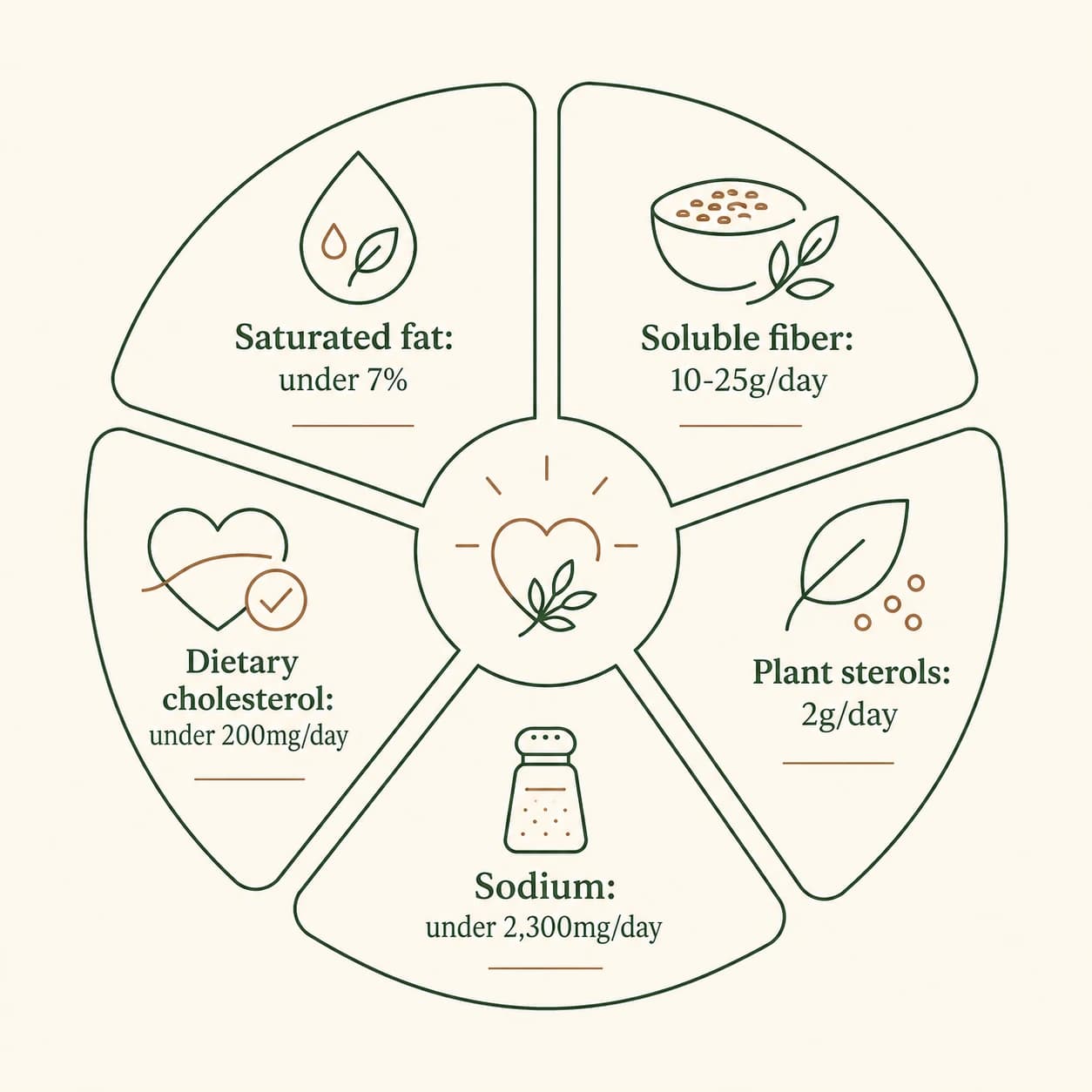
Therapeutic Lifestyle Changes, or TLC, is a structured, NHLBI-created three-part program, combining diet, physical activity, and weight management, that clinicians actually reference rather than a vague "eat healthier" suggestion; this diet section focuses on its eating-pattern component, the TLC Diet — the NHLBI page describing the full program was last updated February 26, 2026, genuinely current (NHLBI). Its numeric targets, in one place: total fat 25–35% of daily calories, saturated fat under 7% of daily calories, dietary cholesterol under 200mg/day, soluble fiber 10–25g/day, plant stanols/sterols around 2g/day, sodium under 2,300mg/day, and alcohol at or below 2 drinks/day for men or 1 for women (MedlinePlus). Worth being precise here: that 200mg/day figure is dietary cholesterol you eat, not your blood cholesterol number — the two get confused constantly, and they're not the same thing.
Cholesterol-Lowering Foods List (Quick Reference)
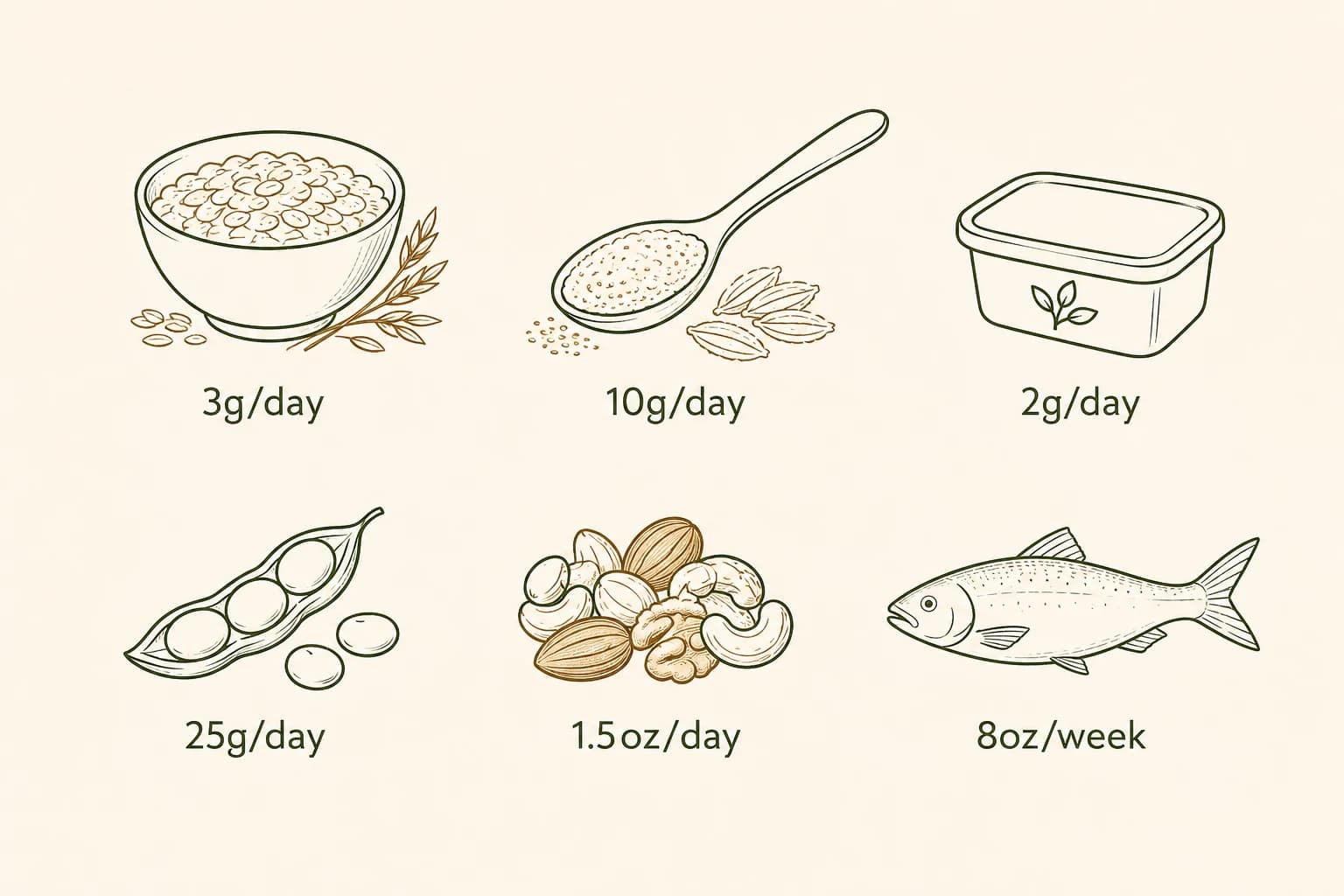
Here's the amount-by-amount version most food lists skip:
| Food | Amount | What it does |
|---|---|---|
| Oats or barley | 3g/day soluble beta-glucan fiber | FDA-recognized cholesterol-lowering claim (21 CFR 101.81) |
| Psyllium | ~10g/day | LDL down roughly 13 mg/dL (0.33 mmol/L) in a 28-trial meta-analysis (Harvard Health; Jovanovski et al., 2018) |
| Plant sterols/stanols | ~2g/day | LDL down roughly 8–10% (Cleveland Clinic) |
| Soy protein | ~25g/day | LDL down a modest ~4.76 mg/dL in a meta-analysis of 46 trials (Blanco Mejia et al., 2019) |
| Nuts (walnuts) | 1.5oz/day | FDA-qualified heart-health claim, as part of a low-saturated-fat diet (walnuts.org, quoting the FDA claim) |
| Fatty fish | ≥8oz/week | Cleveland Clinic's stated target for a cholesterol-friendly diet (Cleveland Clinic) |
Foods to Lower Cholesterol, One at a Time
Oats and barley. Their soluble fiber binds bile acids in the gut, which forces the liver to pull more LDL cholesterol out of the blood to make new bile acids (Harvard Health). In practice, 3g of beta-glucan is about one bowl of oatmeal or oat bran cereal.
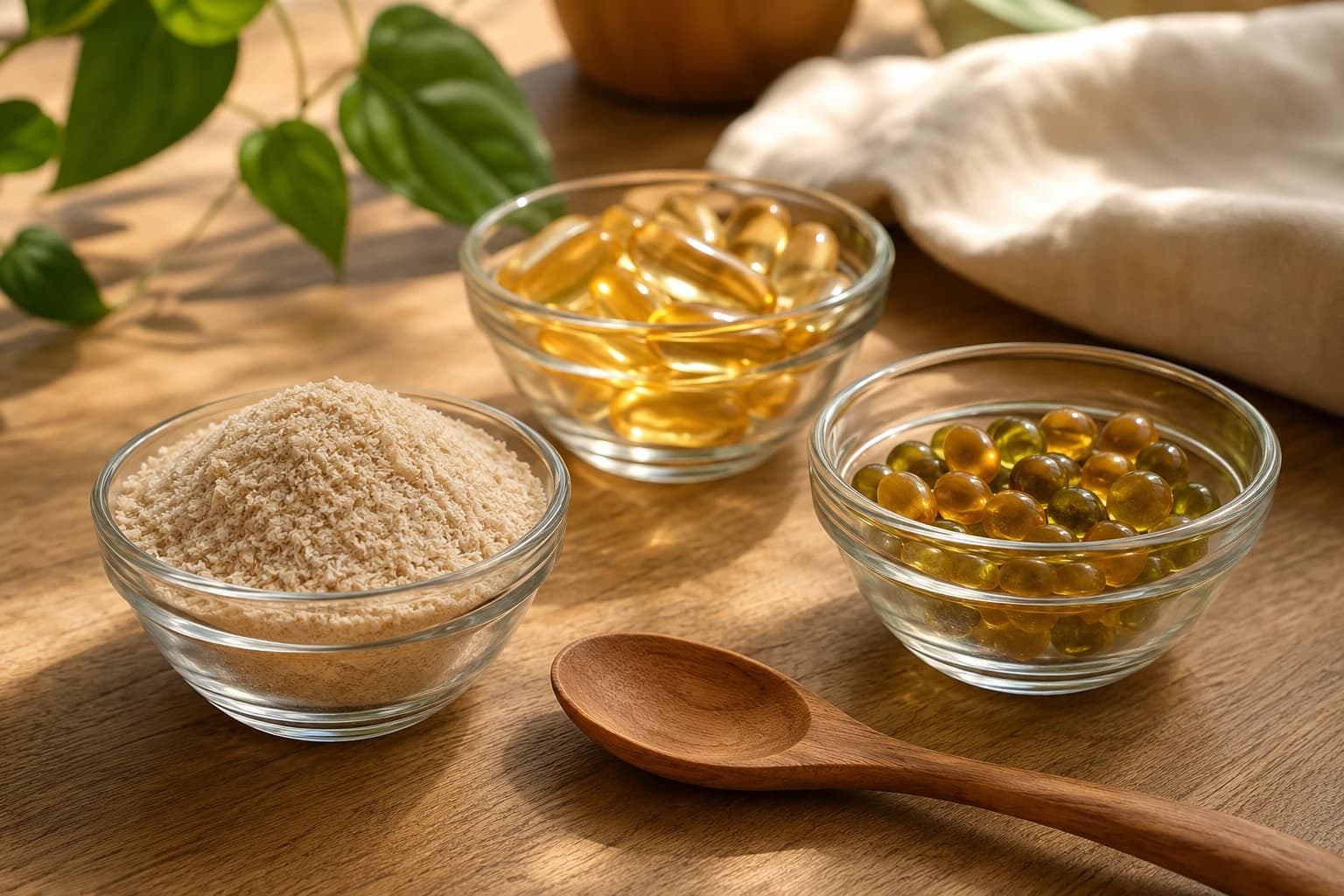
Psyllium. Works through the same bile-acid mechanism as oats, just more concentrated — the easiest way to add it is a fiber supplement stirred into water, rather than trying to eat your way to 10g through food alone.
Plant sterols and stanols. Structurally similar enough to cholesterol that they block some of its absorption in the small intestine. The catch: you mostly won't hit a real 2g/day from ordinary food — this amount realistically comes from fortified products like specific spreads or fortified orange juice, not from produce or grains naturally.
Soy protein. Worth framing honestly as a modest, useful protein swap for red meat rather than a miracle food — the current meta-analysis figure (about a 4.76 mg/dL LDL drop) is real but far more modest than older, more dramatic soy claims that still circulate.
Nuts. 1.5oz is roughly a small handful. Stick to unsalted, unsweetened versions — a candy-coated or heavily salted nut mix trades one problem (saturated fat, added sugar, sodium) for the benefit you're trying to get.
Fatty fish. Salmon, mackerel, and sardines, in roughly two 4oz servings a week to reach the 8oz/week target. Fish-oil capsules are a related but separate topic covered in the supplements post rather than here.
Beyond these six, Harvard Health names several supportive extras worth knowing about: avocado, beans, berries, and kiwifruit, among others (Harvard Health). Worth flagging honestly, since it's exactly the gap this post exists to close: that particular list, despite being current and well-trafficked, gives no gram or serving amount for ten of its eleven foods. They're still reasonable additions to a cholesterol-friendly plate, just without a specific dose to build a target around the way the six foods above have.
Best Diet for High Cholesterol: Putting the Pieces Together
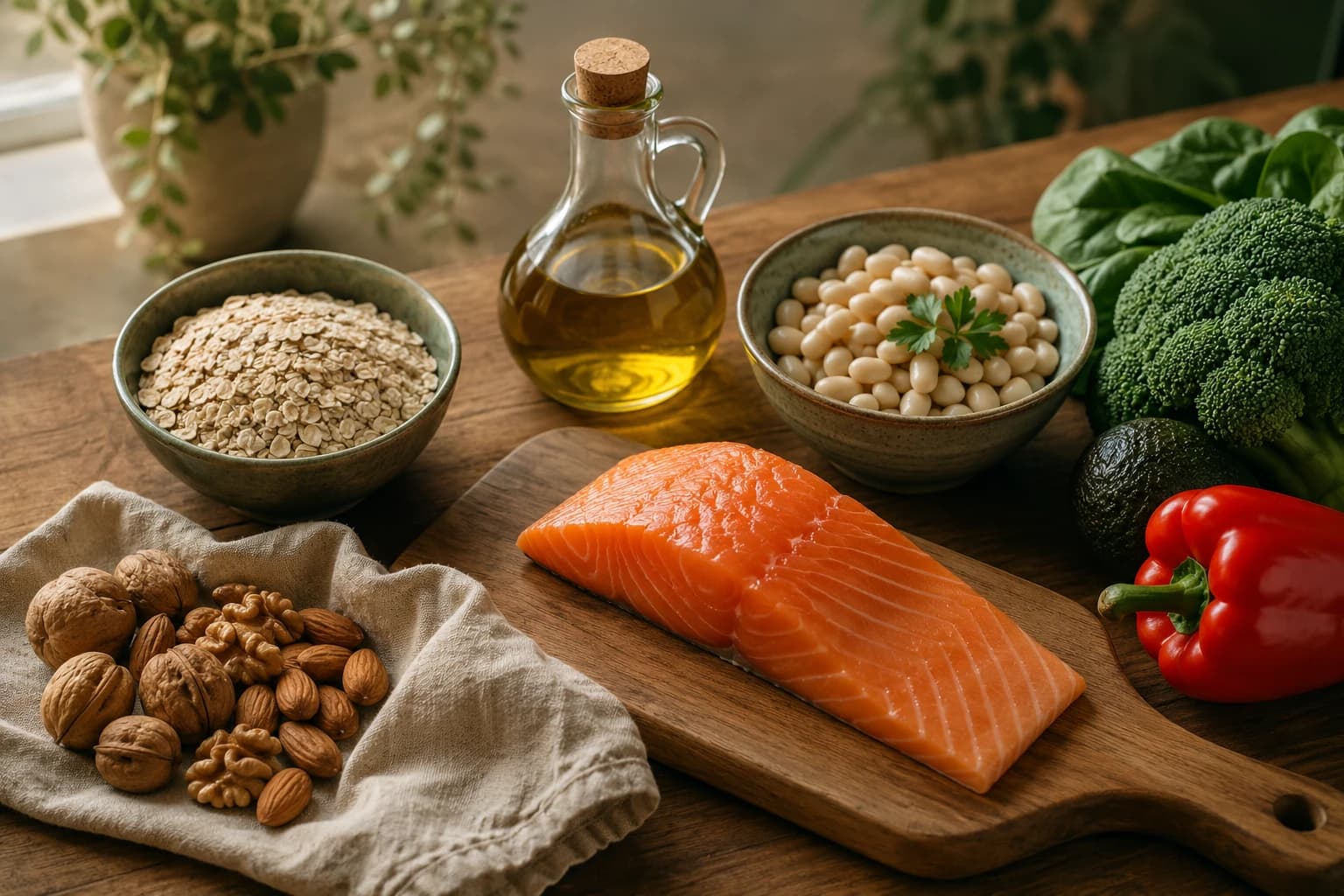
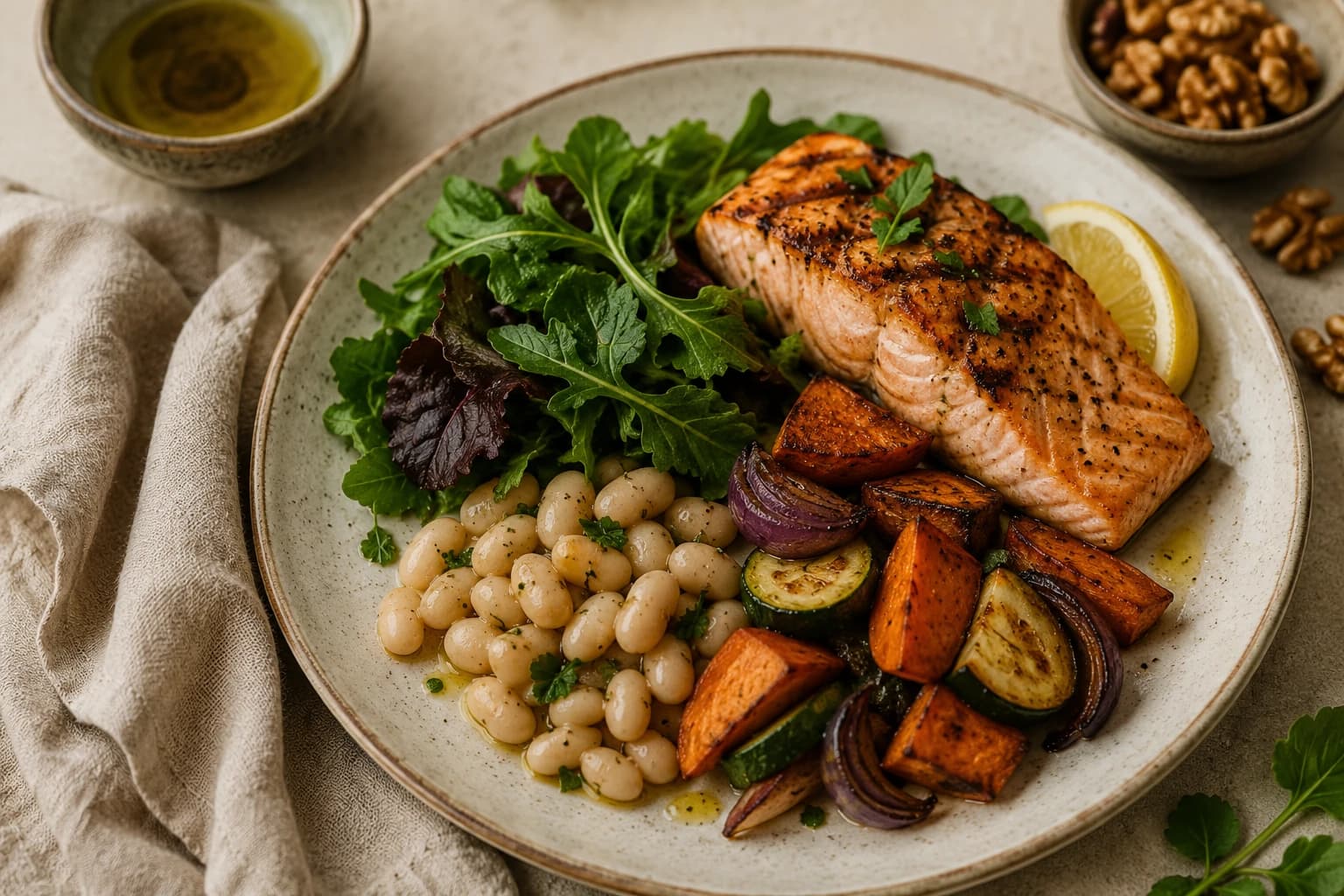
The evidence doesn't point to one single named "cholesterol diet" so much as a Mediterranean-style eating pattern built around the TLC numbers above: vegetables, legumes, whole grains, olive oil, nuts, fish, and limited red or processed meat. One honest example day, meant as an illustration rather than a rigid meal plan: oatmeal with ground flax and a few walnuts at breakfast; a bean-and-vegetable lunch dressed with olive oil; a small handful of almonds as a snack; and salmon with vegetables at dinner. For the underlying dietary-fat chemistry behind why these particular fats matter, see our lipids explained guide; for the broader eating pattern's overlap with inflammation, see anti-inflammatory foods.
The Portfolio Diet: What Happens When You Combine These Foods
When researchers combined several of these cholesterol-lowering foods at once in a single trial, LDL fell 28.6% in 4 weeks, statistically comparable to a starter-dose statin (30.9% in the same study) (Jenkins et al., JAMA, 2003). Worth hedging immediately and honestly: only 16 people were in the diet-portfolio arm, the trial ran just 4 weeks under closely controlled, prepared-food conditions, and results like this are genuinely harder to sustain in ordinary life. Even with that caveat, the underlying principle holds up as a useful takeaway: combining several LDL-lowering foods appears to have an additive effect, not just an individual one.
What to Cut Back On While You Add These Foods In
Addition and subtraction matter together — a bowl of oatmeal loaded with butter and brown sugar cancels out its own benefit. The saturated fat ceiling from earlier is worth repeating here: under 6% of daily calories, roughly 13g/day on a 2,000-calorie diet (American Heart Association). For the full treatment of what to limit, including the eggs question, see foods to avoid with high cholesterol; for supplement forms of psyllium, plant sterols, and fish oil rather than food sources, see supplements to lower cholesterol.
How Long Before a Cholesterol Diet Changes Your Numbers
Diet changes typically produce around a 10% cholesterol reduction over 8 to 12 weeks, the most specific timeline found anywhere in the research for this exact question (British Heart Foundation). For context, not comparison: statins typically begin working faster, within 3 to 4 weeks, per the same source — worth knowing without treating it as a reason to skip diet changes, since the two aren't mutually exclusive. A follow-up lipid panel around 8 to 12 weeks after starting changes is a reasonable next step to actually see where you land.
Frequently Asked Questions (FAQ)
How much oatmeal or oat bran do I actually need to eat to lower cholesterol? About 3 grams of soluble beta-glucan fiber a day, roughly one bowl of oatmeal or oat bran cereal, is the amount the FDA's own health claim is based on.
Is the Portfolio Diet really as effective as a cholesterol medication? In one small, tightly controlled 4-week study, a diet combining several cholesterol-lowering foods lowered LDL by 28.6%, statistically similar to a starter-dose statin's 30.9% — a real and interesting result, but from just 16 people under closely managed conditions, not a guarantee for everyday eating.
How long does it take for diet changes to lower cholesterol numbers? Roughly 8 to 12 weeks for about a 10% reduction, according to the British Heart Foundation, which is also a reasonable time to schedule a follow-up lipid panel.
Can diet alone lower cholesterol, or will I still need medication? Diet alone works for some people, but it only accounts for roughly 20-30% of the cholesterol in your blood — genetics and your liver's own production drive the rest, so some people need medication alongside diet rather than instead of it.
What is the TLC diet, and how is it different from just "eating healthy"? TLC stands for Therapeutic Lifestyle Changes, an NIH-developed program with specific numeric targets for fat, fiber, and dietary cholesterol, rather than a general "eat healthy" suggestion with no numbers attached.
Medical disclaimer: This article is for informational purposes only. Always consult a qualified healthcare provider before making changes to your health routine.
Sources
- Cleveland Clinic. Cholesterol Diet: How Nutrition & Foods Impact Levels. Reviewed October 17, 2022. https://my.clevelandclinic.org/health/articles/16867-cholesterol--nutrition-tlc
- National Heart, Lung, and Blood Institute (NIH). Therapeutic Lifestyle Changes (TLC) to Lower Cholesterol. Updated February 26, 2026. https://www.nhlbi.nih.gov/health/TLC-Therapeutic-Lifestyle-Changes-Lower-Cholesterol
- MedlinePlus (National Library of Medicine, NIH). How to Lower Cholesterol with Diet. https://medlineplus.gov/howtolowercholesterolwithdiet.html
- Cornell Law School, Legal Information Institute. 21 CFR 101.81 — Health Claims: Soluble Fiber from Certain Foods and Risk of Coronary Heart Disease. https://www.law.cornell.edu/cfr/text/21/101.81
- Harvard Health Publishing. Psyllium Fiber, Regularity, and Healthier Lipid Levels. https://www.health.harvard.edu/heart-health/psyllium-fiber-regularity-and-healthier-lipid-levels
- Jovanovski E, et al. Effect of Psyllium (Plantago ovata) Fiber on LDL Cholesterol and Alternative Lipid Targets — American Journal of Clinical Nutrition, 2018, via PubMed. https://pubmed.ncbi.nlm.nih.gov/30239559/
- Cleveland Clinic. Plant Sterols (Phytosterols): How They Help Manage Cholesterol. Reviewed July 30, 2022. https://my.clevelandclinic.org/health/drugs/17368-phytosterols-sterols--stanols
- Blanco Mejia S, et al. A Meta-Analysis of 46 Studies Identified by the FDA Demonstrates That Soy Protein Decreases Circulating LDL and Total Cholesterol — Journal of Nutrition, 2019, via PubMed. https://pubmed.ncbi.nlm.nih.gov/31006811/
- California Walnut Board/Commission. Heart Health — Areas of Study, quoting the FDA's qualified health claim. https://walnuts.org/health-professionals/areas-of-study/heart-health/
- Jenkins DJ, et al. Effects of a Dietary Portfolio of Cholesterol-Lowering Foods vs Lovastatin on Serum Lipids and C-Reactive Protein — JAMA, 2003, via PubMed. https://pubmed.ncbi.nlm.nih.gov/12876093/
- American Heart Association. Saturated Fats. https://www.heart.org/en/healthy-living/healthy-eating/eat-smart/fats/saturated-fats
- British Heart Foundation. How Long Does It Take to Lower Cholesterol? https://www.bhf.org.uk/informationsupport/heart-matters-magazine/medical/how-long-to-lower-cholesterol
- Harvard Health Publishing. 11 Foods That Can Help Lower Your Cholesterol. Updated April 13, 2026. https://www.health.harvard.edu/heart-health/11-foods-that-can-help-lower-your-cholesterol

Olivia Smith, RDN
A registered dietitian who deals in grams, not vague "eat more fiber" advice.