Search "ashwagandha benefits" and most results read like a supplement label — stress relief, better sleep, more energy, balanced hormones. Two things are harder to find. NCCIH, the NIH's own research center for complementary health, states that research shows ashwagandha may be effective for two uses — insomnia and stress — and separately notes limited evidence that it may help testosterone and sperm quality in men over two to four months. For nearly everything else credited to ashwagandha — including athletic performance, cognitive function, diabetes, and menopause — NCCIH says there isn't enough evidence yet to draw a conclusion (NCCIH). Weight loss isn't on NCCIH's list at all — the handful of trials that exist are small and preliminary, a different kind of uncertainty than "reviewed and found insufficient." And a federal case registry tracking herb-related liver injury has documented roughly two dozen ashwagandha cases, including one liver transplant and three deaths in people who already had liver disease. Neither fact is a reason to avoid ashwagandha — both are reasons to read further first.
One framing matters before anything else: most of the stress, sleep, and cortisol research below comes from general, mixed-sex adult populations — solid evidence, but not evidence about men or women specifically. Separately, real sex-specific trials exist: testosterone and fertility studies in men, menopause and sexual-function studies in women. Almost no site selling ashwagandha keeps those two categories distinct. This guide does.
Key takeaways
- NCCIH considers the evidence solid only for insomnia and stress, and separately notes limited evidence for testosterone and sperm quality in men. It calls the evidence for general anxiety, cognition, and menopause "not enough" to judge — weight loss isn't on its list at all.
- The clearest documented risk is liver injury: a federal case registry lists roughly 23 cases, a 2-to-12-week onset after starting, one liver transplant, and three deaths in people with pre-existing liver disease.
- Not all ashwagandha is dosed the same way — a crossover trial found one standardized extract delivered over 18 times more withanolides into the bloodstream than another extract at a comparable dose.
- Real sex-specific trial data exists separately for men (testosterone, sperm parameters) and women (menopause symptoms, sexual function) — distinct from the general-population stress and sleep research most sites apply to everyone equally.
- Avoid it in pregnancy and while breastfeeding; check with a doctor first for thyroid conditions, autoimmune disease, or if you take sedatives, thyroid medication, or antidepressants.
What Is Ashwagandha?
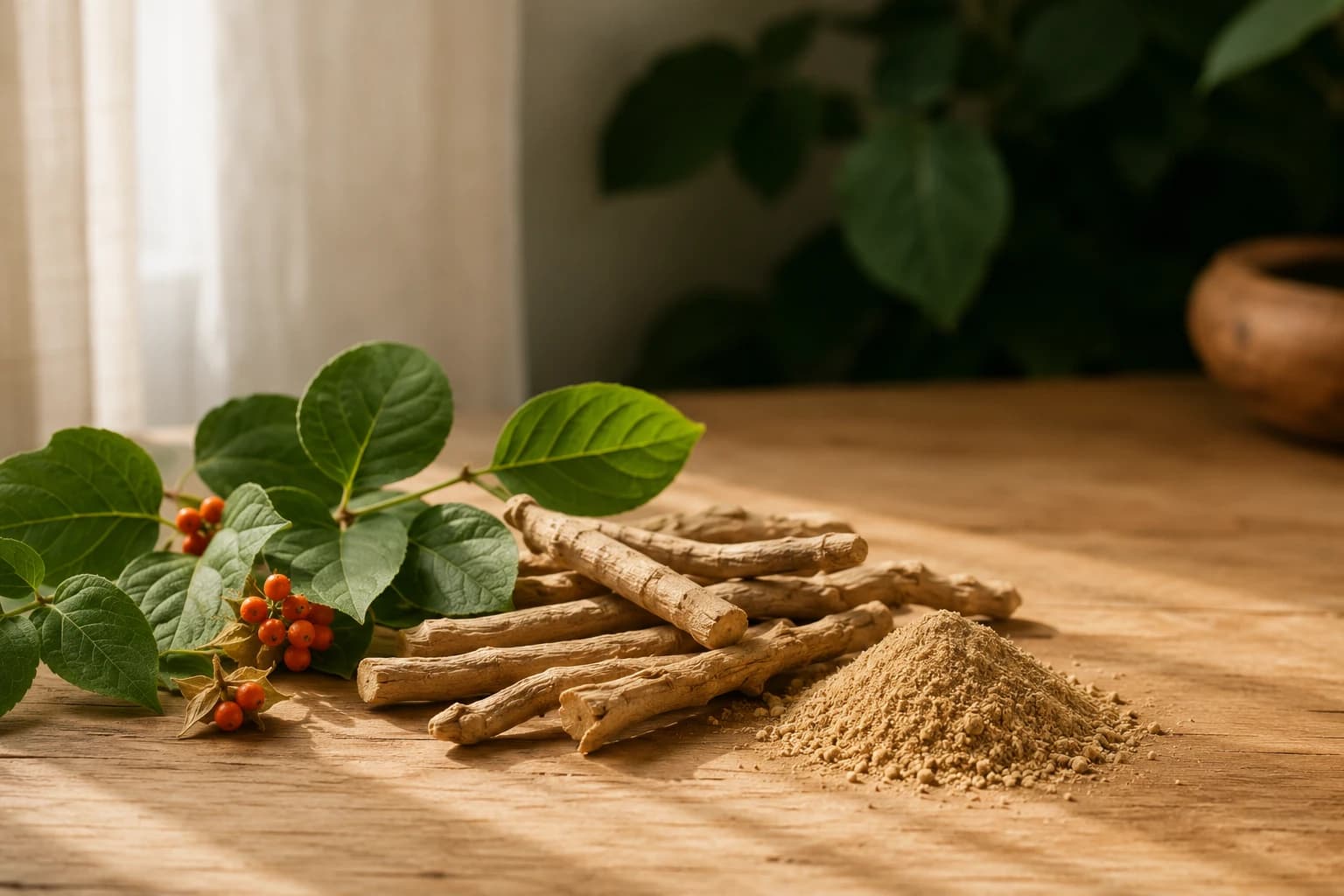
Ashwagandha is the root of Withania somnifera, a stout, knee-high shrub in the Solanaceae — nightshade — family, native to India, the Middle East, and parts of Africa, with oval grey-green leaves and a papery orange-red berry the size of a pea. The root is long, tuberous, and pale — dried, ground, and turned into the powder or extract sold as a supplement (Bone & Mills, Principles and Practice of Phytotherapy, 2013, p. 950).
The name is descriptive: in Hindi, ashwagandha translates roughly to "smell of horse," referring both to the root's odor and, traditionally, to the strength of a horse — a nod to its long use as a tonic and aphrodisiac (Chevallier, Natural Health Encyclopedia of Herbal Medicine, 2000, p. 155). In Ayurveda it's often called "Indian ginseng" — not a botanical relation, but a similar role: a general tonic taken to rebuild strength after illness or chronic stress. The Charaka and Sushruta Samhitas, foundational Ayurvedic texts, describe it as a tonic "for emaciation in people of all ages including babies, enhancing the reproductive function of both men and women" (Shah & Seth, Textbook of Pharmacognosy and Phytochemistry, 2012, p. 222).
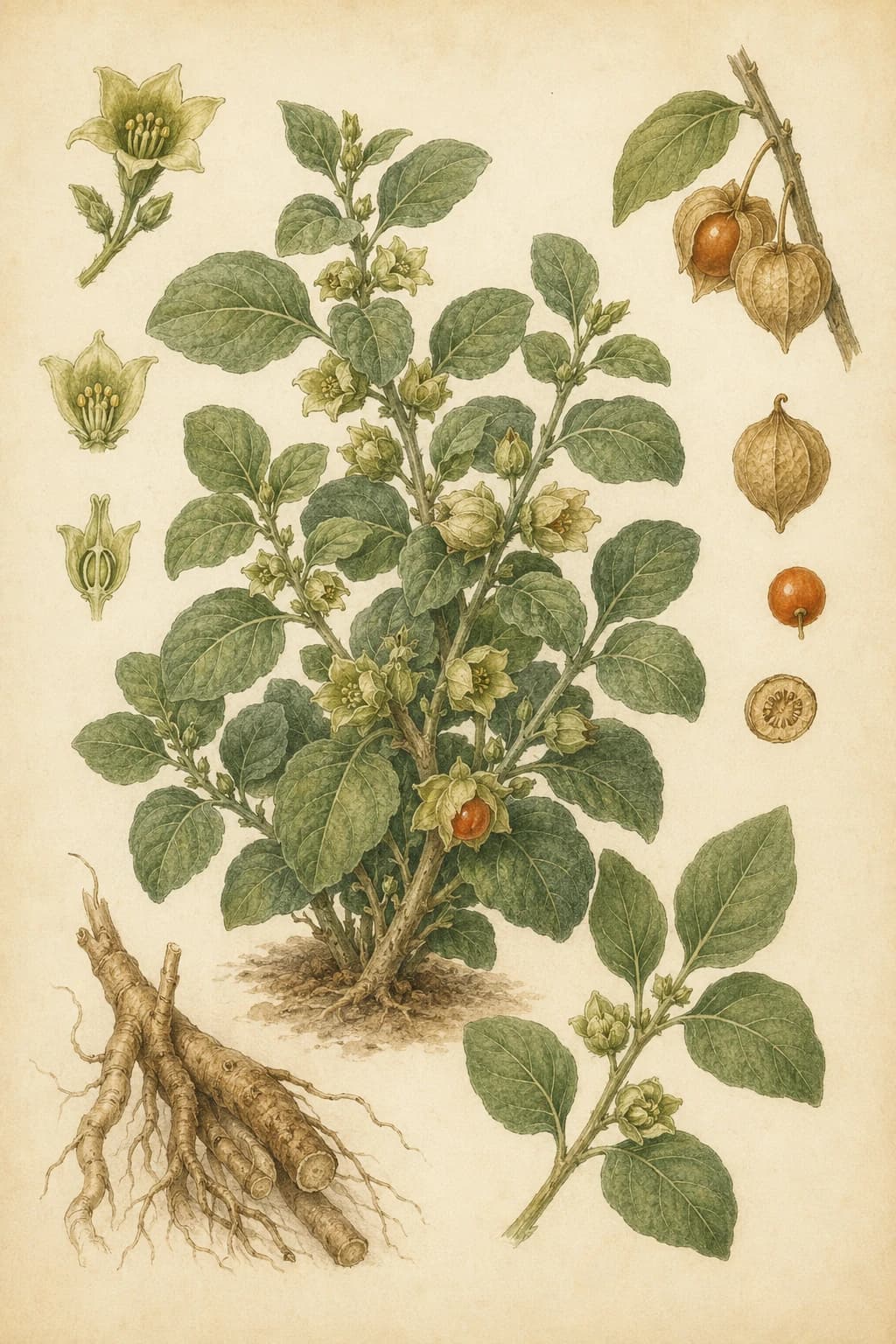
The compounds behind most modern research are withanolides — steroid-like lactones concentrated in the leaves but present in the root too — alongside a set of alkaloids largely unique to the plant (Bone & Mills, 2013, p. 950).
Ashwagandha is often described as an adaptogen — a traditional herbal-medicine term, not an FDA-recognized drug category, for a substance thought to help the body resist and recover from stress generally rather than target one specific symptom. Researchers don't agree on a single mechanism, but the leading hypothesis is that withanolides act on the hypothalamic-pituitary-adrenal (HPA) axis, the system that governs cortisol release under stress — a plausible explanation for the cortisol changes the trials below actually measured.
What the Evidence Actually Supports (and Doesn't)
That NCCIH framing is worth sitting with, because it's a useful map for the rest of this guide. NCCIH states that research shows some ashwagandha preparations may be effective for insomnia and stress, and separately notes limited evidence that taking it for two to four months may increase testosterone and sperm quality in men. On anxiety specifically, it says the evidence is unclear. For nearly everything else — asthma, athletic performance, cognitive function, diabetes, menopause, female infertility — NCCIH states there isn't enough evidence to judge yet (NCCIH). Weight loss isn't on that list at all — the handful of trials that exist are small and preliminary, a different kind of uncertainty than "reviewed and found insufficient."
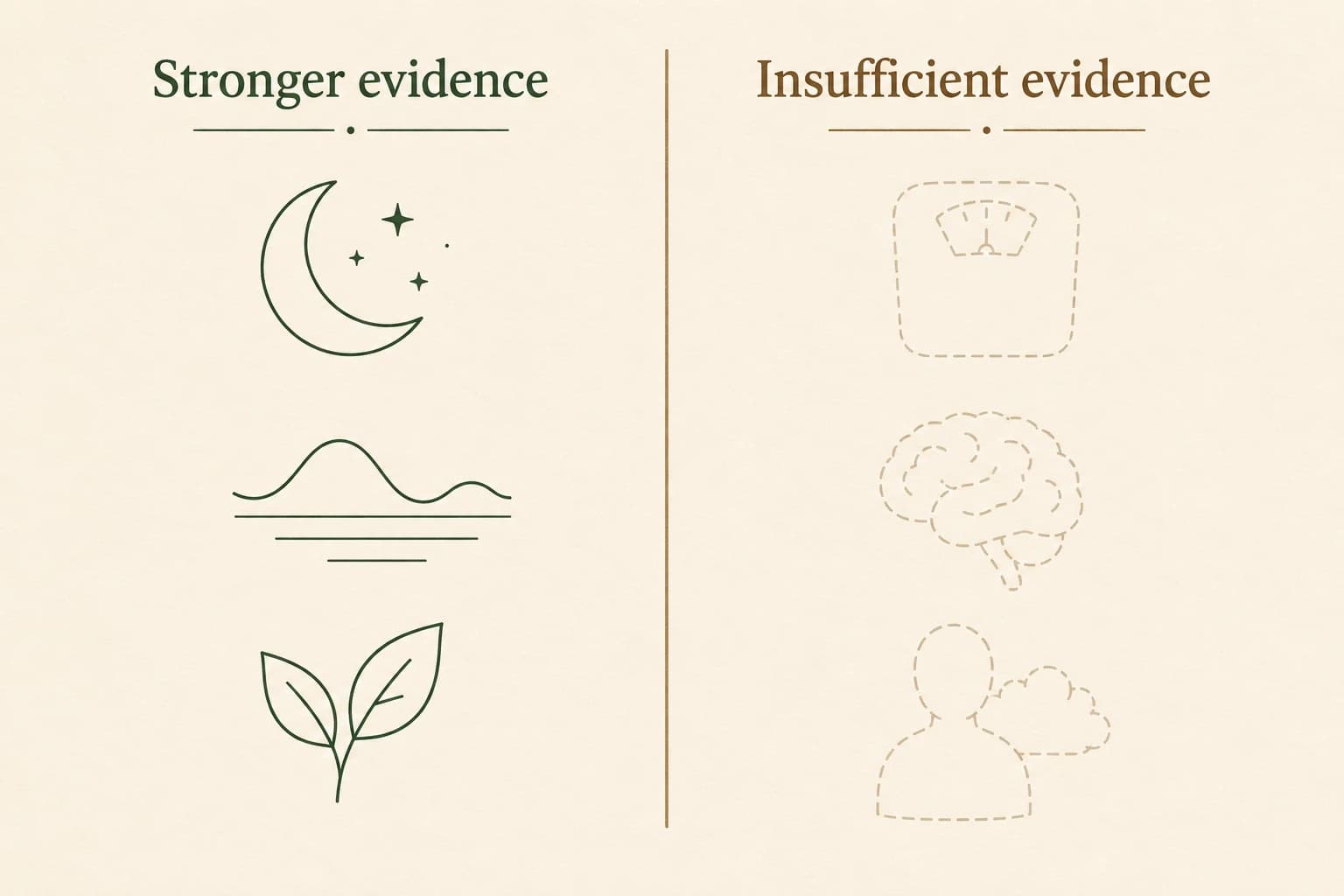
That's narrower than most "benefits" pages imply. It doesn't mean ashwagandha does nothing beyond sleep, stress, and male fertility — individual trials below report other positive findings, some well-designed. It means the totality of evidence hasn't reached the bar NCCIH sets for a confident recommendation elsewhere. The sections below walk through what those trials actually found, gaps included, so you can judge each claim's strength yourself. For a closer look at how these claims rank by evidence quality — meta-analyses versus single trials, industry funding, sample sizes — see our guide to ashwagandha's scientific evidence.
Stress, Anxiety, and Cortisol
Stress is the best-studied use of ashwagandha, and the evidence is unusually consistent for a herbal supplement.
In one frequently cited trial, 60 adults under chronic stress took 240mg/day of a concentrated extract (Shoden, 35% withanolide glycosides) or placebo for 60 days. Morning cortisol fell 23% versus a 0.5% rise on placebo, and anxiety fell 41% versus 24% — both significant (Lopresti et al., 2019). An 8-week trial in 60 adults comparing 250mg and 600mg doses found both significantly reduced stress and cortisol, with the higher dose better on a standard anxiety scale (Salve et al., 2019). A larger, more recent 60-day trial in 126 completers found perceived-stress scores fell 38.6% at 150mg/day and 41.6% at 300mg/day, though cortisol dropped significantly only at 300mg (Thanawala et al., 2026).
Not every trial lands cleanly. A 2023 trial in 120 adults over 12 weeks found significantly less fatigue and higher heart-rate variability, but its primary outcome — perceived stress — wasn't significantly different from placebo (p=.867) (Smith et al., 2023). A 2025 meta-analysis of 15 RCTs (n=873) confirms the overall direction on stress and cortisol but found no significant quality-of-life improvement — a more modest picture than individual headline trials suggest alone (Bachour et al., 2025).
Ashwagandha's stress and cortisol effect is one of the more reliably replicated findings in this literature, typically at 240–600mg/day over 6 to 12 weeks — but it isn't universal. For the wider diet-and-lifestyle picture around cortisol, see our cortisol diet guide.
Sleep Quality
Sleep has its own trial base, and it tells a more modest story than "ashwagandha helps you sleep" implies.
A 6-week trial in 150 adults taking 120mg/day found 72% reported improved sleep quality, versus 29% on placebo (Deshpande et al., 2020). A 10-week trial using KSM-66 at 300mg twice daily found significant gains in sleep-onset time, sleep efficiency, and validated sleep and anxiety scores versus placebo (Langade et al., 2019). A 2026 trial pitted ashwagandha directly against melatonin across 200 people in four arms over 8 weeks; a combination of both outperformed either alone (Movva et al., 2026).
Zoomed out, a 2021 meta-analysis of 5 RCTs (n=400) found the sleep benefit real but small overall, and strongest in people with diagnosed insomnia rather than healthy sleepers, at doses of 600mg/day or more over 8+ weeks (Cheah et al., 2021) — meaningfully different from "ashwagandha improves sleep" as a blanket claim.
Strength, Recovery, and Male-Specific Findings
Ashwagandha's other well-documented lane is male reproductive and physical-performance markers, covered in full in our dedicated men's guide — worth previewing here.
The most-cited strength trial gave 57 young men 300mg twice daily or placebo alongside 8 weeks of resistance training. The ashwagandha group added nearly twice the bench-press strength (+46.0kg vs +26.4kg) and a much larger testosterone rise (+96.2 vs +18.0 ng/dL) (Wankhede et al., 2015). The same signal shows up elsewhere — the Lopresti trial cited above also found an 11% testosterone rise in its male participants specifically (Lopresti et al., 2019). These are real, specific, reasonably sized trials, not a generic "boosts testosterone" bullet point. For fertility, sperm parameters, and men's dosing, see our Ashwagandha Benefits for Men guide.
Benefits Specific to Women
The same pattern — real sex-specific data, separate from the general-population evidence above — shows up for women, and it's arguably stronger.
Two placebo-controlled trials tested ashwagandha for perimenopausal and menopausal symptoms. An 8-week trial in 100 women taking 300mg twice daily found a significant drop in Menopause Rating Scale score, plus increased estradiol and decreased FSH/LH (Gopal et al., 2021). A newer trial, published in early 2026, tested the same dose in 60 women aged 45–55 over 56 days and found a highly significant reduction across psychological, somatic, and urogenital domains, with fewer hot flashes (Vani et al., 2026) — though its hormone shifts, while statistically significant, were numerically small.
Two further trials measured female sexual function on the validated FSFI scale, both finding significant improvement over placebo across domains like arousal and satisfaction (Ajgaonkar et al., 2022; Dongre et al., 2015). For the fuller picture, see our Ashwagandha Benefits for Women hub, plus dedicated guides on weight loss, women over 50, and menopause.
Thyroid Function: A More Nuanced Picture Than Most Sites Admit
Thyroid effects are genuinely two-sided, and most competitor content flattens that into one vague warning.
On the positive side, a randomized trial in 50 adults with subclinical hypothyroidism — a mildly elevated TSH without a full diagnosis — took 600mg/day for 8 weeks. TSH, T3, and T4 all moved significantly toward normal versus placebo, with mild side effects in only 8% (Sharma et al., 2018) — a real, positive finding, but specific to subclinical hypothyroidism, not a general population and not an overactive thyroid.
On the other side, case reports describe the opposite problem: thyrotoxicosis, generally in people without a hypothyroid diagnosis or who'd recently stopped thyroid medication. A 73-year-old woman with pre-existing hypothyroidism developed thyrotoxicosis and a fast heart rhythm after self-administering ashwagandha two years after stopping levothyroxine, resolving within 2–5 weeks of stopping the herb (Kamal et al., 2022). A 47-year-old man developed painless thyroiditis after two months' use for insomnia, recovering by day 50 (Hayashi et al., 2024), and the first published case, in 2005, was a 32-year-old woman whose thyrotoxicosis resolved spontaneously after her dose was stopped (van der Hooft et al., 2005).
"Ashwagandha and thyroid" is at least three stories: a documented modest benefit in subclinical hypothyroidism, a real thyrotoxicosis risk in susceptible people, and a hard contraindication in diagnosed hyperthyroidism or Graves' disease. Any thyroid condition is a talk-to-your-doctor-first situation. See our Ashwagandha Interactions with Medications guide for the full picture.
Why the Extract You Buy Matters as Much as the Dose
Almost every "ashwagandha benefits" article treats dosage as a single number. It isn't — "ashwagandha" on a label can mean genuinely different things.
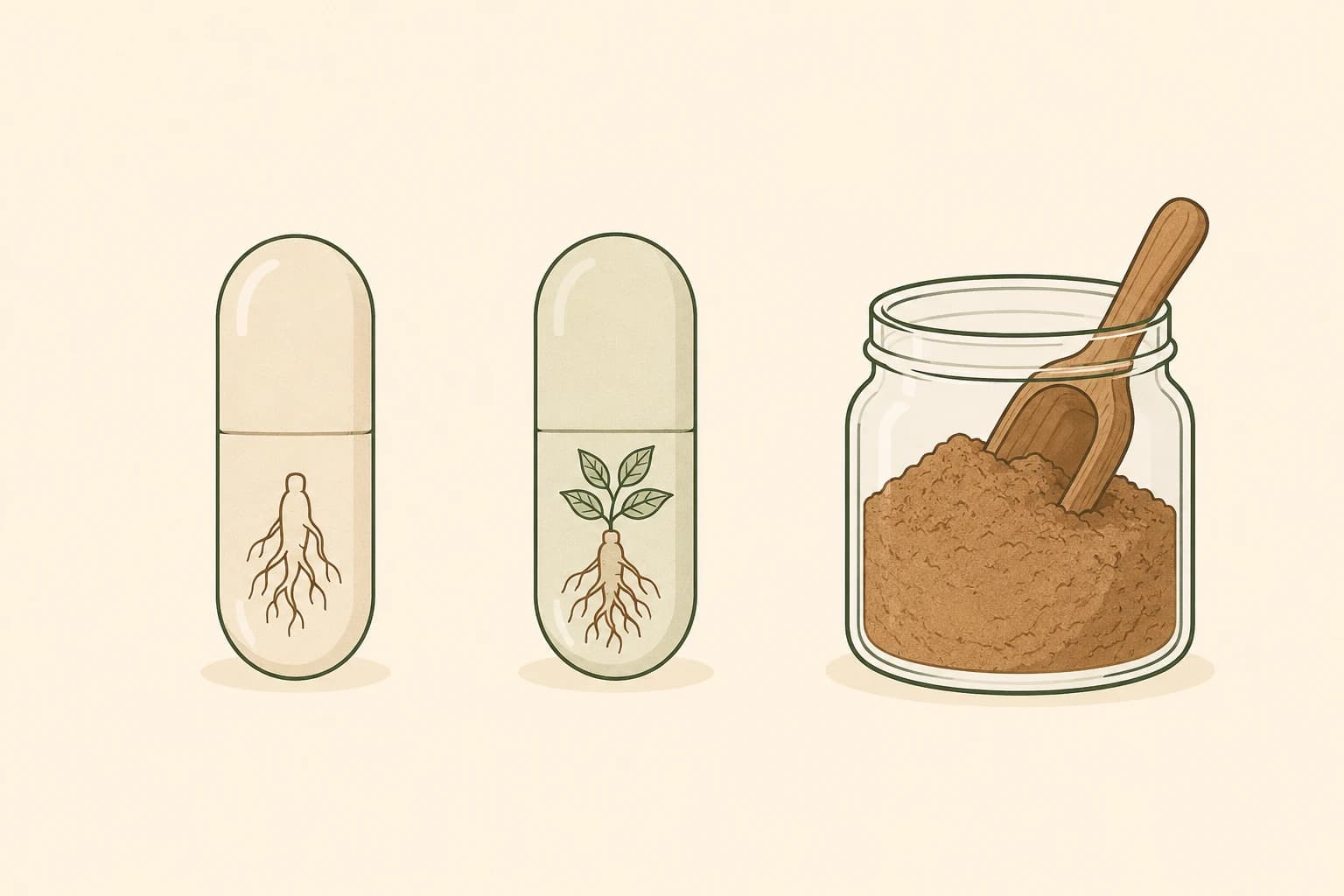
Three forms show up most often: KSM-66, a root-only extract standardized to roughly 5% withanolides, typically dosed around 300mg twice daily in trials; Sensoril, a root-and-leaf extract standardized to roughly 10% withanolide glycosides, typically dosed lower (125–250mg); and generic or unstandardized root powder, where withanolide content varies between products.
| Form | What it is | Standardization | Typical trial dose |
|---|---|---|---|
| KSM-66 | Root-only extract | ~5% withanolides | 300mg twice daily |
| Sensoril | Root-and-leaf extract | ~10% withanolide glycosides | 125–250mg, once or twice daily |
| Generic/unstandardized root powder | Raw dried root, ground | Varies by batch, often unlisted | No consistent trial dose — don't compare mg-for-mg with a standardized extract |
That variation isn't cosmetic. A 2023 crossover pharmacokinetic study gave 16 healthy adults two standardized extracts and measured how much withanolide actually reached the bloodstream: the higher-glycoside extract produced 18.2 times greater total exposure and 280.7 times greater bioavailability per milligram than the lower-glycoside one — despite both being sold as "ashwagandha" (Kim et al., 2023). Check the label for a named standardized extract and a withanolide percentage, not just a milligram total — "600mg ashwagandha" with no standardization tells you very little. Exact dosing by extract type is in our full dosage and timing guide.
Safety Snapshot: What to Watch For
Most "benefits" articles either skip liver risk entirely or reduce it to a single hedged sentence. It deserves more, even here.
The most detailed source is LiverTox, the NIH's own clinical reference on drug- and supplement-induced liver injury. Its ashwagandha entry compiles roughly 23 documented cases: symptoms (usually jaundice and itching) typically start 2–12 weeks after starting, the injury pattern is usually cholestatic or mixed, and the NIH rates ashwagandha a likely cause. Most people recover within 1–4 months of stopping. The severe end includes a 41-year-old woman who needed an emergency liver transplant, and three deaths in India in people who already had chronic liver disease (LiverTox, NIH Bookshelf). One case report is a concrete illustration that more isn't better: a 22-year-old woman developed jaundice about 30 hours after taking 1,350mg over two days, recovering in about nine weeks with standard treatment (Almuzghi et al., 2024).
This is rare relative to how many people take ashwagandha: a 2026 systematic review of 23 RCTs (2,317 participants, 125–600mg/day) found liver, kidney, blood, and cardiovascular biomarkers stayed normal, with no serious adverse events at typical trial doses (Coope et al., 2026). Both things are true at once: it's rare, and unexplained jaundice, dark urine, or persistent nausea after starting is a reason to stop and see a doctor. Our Ashwagandha Side Effects guide covers the full picture.
Medication Interactions Snapshot
A few categories are worth knowing before combining ashwagandha with anything else. It has sedative, GABA-active properties: a Withania extract enhanced a benzodiazepine's receptor binding and boosted diazepam's effect in animals, though the source textbook calls this specific finding speculative and based on relatively high doses (Bone & Mills, 2013, pp. 951, 953); Memorial Sloan Kettering's clinical herb database independently flags possible additive effects with benzodiazepines, anticonvulsants, and barbiturates (MSKCC, About Herbs). Antidepressants are a genuine, under-covered gap elsewhere: a 2023 pharmacovigilance review found 30 adverse events causally linked to adaptogen–antidepressant interactions (ashwagandha among 11 implicated herbs), about 9% of events reported with concurrent antidepressant use — though a separate in-vitro study found Withania alone didn't significantly inhibit the liver enzymes thought to be involved (Siwek et al., 2023; Kasarla et al., 2022). Thyroid medication, immunosuppressants, and diabetes medications round out what's worth flagging to a doctor or pharmacist — our Ashwagandha Interactions with Medications guide covers every class in depth.
How Much to Take, and When
There's no single "correct" dose — the trials above used different extracts at different strengths for different goals. As a rough map: most standardized-extract RCTs for stress and sleep used 240–600mg/day, split into two doses; several strong testosterone and strength findings used 300mg of KSM-66 twice daily; the traditional root-decoction standard is considerably higher, 3–8g of dried root per day, since raw powder is far less concentrated than a standardized extract (Bone & Mills, 2013, p. 950). Duration matters as much as dose: nearly every positive trial here ran 6–12 weeks, and a 2026 systematic review flagged that safety data beyond 180 days is still lacking (Coope et al., 2026) — not proof long-term use is dangerous, just that nobody has carefully studied it. Our full dosage and timing guide covers exact amounts by extract type and cycling schedules.
Who Should Avoid Ashwagandha
Pregnancy and breastfeeding. NCCIH states plainly that ashwagandha should be avoided during pregnancy and not used while breastfeeding (NCCIH). That lines up, for once, with a genuinely mixed traditional record: one major phytotherapy textbook notes historical Ayurvedic sources are themselves split, with Withania listed as an abortifacient in some texts and a pregnancy tonic in others — a confusion the textbook suggests may stem from conflating leaf and root, which differ chemically (Bone & Mills, 2013, p. 958). Old and new evidence land on the same answer, for different reasons.
Hyperthyroidism, Graves' disease, or a recent change in thyroid medication. The thyrotoxicosis cases above are concentrated in exactly this group.
Autoimmune conditions. A theoretical caution, not a documented harm. Animal research shows Withania can reverse drug-induced immune suppression and activate CD4 T cells and natural killer cells in a small human pilot (Bone & Mills, 2013, pp. 950–952, 957) — plausibly good for general immunity, but exactly the kind of immune-stimulating effect that could theoretically worsen an autoimmune flare. Raise it with your specialist rather than assuming either way.
Before surgery. No study tests ashwagandha specifically against surgical outcomes, so the "stop two weeks before surgery" line repeated online isn't ashwagandha-specific research. What's verifiable: its sedative, GABA-active properties plausibly add to anesthesia-related drugs (MSKCC), and general perioperative research recommends stopping herbal supplements broadly — not this one specifically — before elective surgery (Ang-Lee et al., 2001). Tell your surgical team you take it.
A nightshade-family note. Withania somnifera belongs to the Solanaceae, or nightshade, family. We found no studies quantifying cross-reactive allergy risk for ashwagandha specifically — but a known nightshade sensitivity is a reasonable extra reason to start small.
Product Quality: A Risk the Trials Don't Capture
Everything above describes what happens when ashwagandha is dosed the way trials dosed it. It says nothing about what's actually in the bottle you buy. Neither the FDA nor any other U.S. regulator routinely tests supplements for contamination before they reach shelves. A small peer-reviewed analysis of ashwagandha products found nickel exceeding safe limits in every sample tested (35–141% over the limit depending on the product) and lead exceeding safe limits in the tablet form tested, with Indian-sourced root material trending higher in nickel than Chinese-sourced material (Heavy Metal Contamination in Adaptogenic Herbal Dietary Supplements, 2025). That's a tiny sample — not proof your specific bottle is contaminated — but it's a real, documented risk category specific to root-based herbal supplements, and a reason to favor a product with third-party testing (USP, NSF Certified for Sport, or Informed Choice/Informed Sport) over the cheapest option on a shelf, regardless of which extract or dose you choose.
Bottom Line
Ashwagandha isn't hype, and it isn't a cure-all. It's a herb with real, replicated evidence behind two specific uses, promising-but-thinner data behind several more, and at least one risk worth knowing before you buy a bottle.
For stress or sleep, you're on its best-supported ground, at doses most trials tested between 240mg and 600mg a day for 6 to 12 weeks. For general anxiety, cognition, or menopause specifically, NCCIH itself — not a competitor, not a marketing claim — says the evidence isn't there yet, even though some individual trials look promising. Weight loss isn't even on NCCIH's list to weigh in on; what exists is a handful of small, preliminary trials, not the kind of evidence base worth building a purchase decision around. And if you have a thyroid condition, autoimmune disease, are pregnant or breastfeeding, or take sedatives, thyroid medication, or antidepressants, that's a conversation for a doctor or pharmacist before you start, not after.
None of that is a reason to avoid ashwagandha. It's a reason to take it the way the evidence actually supports — a specific extract, a specific dose, for a specific reason, for a defined stretch of time — rather than as a vague wellness habit you never reassess.
Frequently Asked Questions (FAQ)
How long does ashwagandha take to work? Most positive trials measured results at 6 to 12 weeks, not days — stress trials generally by around 60 days (Lopresti et al., 2019), sleep trials over 6 to 10 weeks (Deshpande et al., 2020). Treat any claim of near-instant results with skepticism.
Is ashwagandha safe to take every day, long term? Up to about 180 days, yes — a 2026 systematic review of 23 RCTs found normal biomarkers and no serious adverse events at typical doses (Coope et al., 2026). Beyond about 6 months is genuinely understudied, and rare but serious liver injury cases exist (LiverTox), so cycling is reasonable.
Does ashwagandha actually work, or is it hype? It isn't hype for stress, sleep, and male fertility, where trial evidence is genuinely solid. It's closer to hype for general anxiety and cognition, where NCCIH itself says the evidence isn't sufficient yet — and for weight loss, which NCCIH's ashwagandha page doesn't address at all, leaving only a handful of small, preliminary trials (NCCIH).
Who should not take ashwagandha? People who are pregnant or breastfeeding, have hyperthyroidism or Graves' disease, or take sedatives, thyroid medication, or antidepressants should check with a doctor first — as should anyone with an autoimmune condition, as a precaution. See "Who Should Avoid Ashwagandha" above for the full reasoning.
Can I take ashwagandha with alcohol? There's no dedicated clinical trial on ashwagandha combined with alcohol specifically, so this is reasoned from what is documented rather than direct evidence. Ashwagandha has sedative, GABA-active properties, and alcohol is also sedating — combining the two plausibly adds to drowsiness and impaired coordination. Ashwagandha also carries a rare but real liver-injury risk, and alcohol is a separate, well-established liver stressor, so combining daily heavy drinking with ongoing ashwagandha use isn't a combination there's safety data on. If you drink regularly, mention your ashwagandha use to a doctor.
What's the difference between KSM-66 and Sensoril ashwagandha? KSM-66 is a root-only extract standardized to about 5% withanolides, usually dosed around 300mg twice daily. Sensoril is a root-and-leaf extract standardized to about 10% withanolide glycosides, usually dosed lower. They aren't interchangeable milligram-for-milligram — one pharmacokinetic study found a standardized extract delivered over 18 times more bioavailable withanolides than another at a comparable dose (Kim et al., 2023).
Can ashwagandha cause weight gain? There's no robust clinical evidence that ashwagandha itself causes weight gain — NCCIH's ashwagandha page doesn't address weight at all in either direction. Some people report increased appetite after starting it, which researchers more often attribute to cortisol normalization (stress-suppressed appetite returning to normal) than to a direct metabolic effect. If you notice unexpected weight changes after starting, track it and mention it to a doctor rather than assuming it's the herb.
Is ashwagandha the same as ginseng? No. Ashwagandha (Withania somnifera) is sometimes called "Indian ginseng" in Ayurveda because it's traditionally used as a general tonic in a similar way to Panax ginseng — but the two aren't botanically related. Ashwagandha is a nightshade (Solanaceae family); true ginseng is in the Araliaceae family. Their active compounds (withanolides vs. ginsenosides) and most-studied effects also differ.
Is it better to take ashwagandha in the morning or at night? No trial in this guide isolated time-of-day as its own variable, so there's no head-to-head evidence for morning vs. night. Trials for stress and sleep commonly split the daily dose in two (morning and evening), which is the pattern most product labels follow. Because of its sedative properties, some people prefer taking it in the evening if sleep is the main goal; our full dosage and timing guide covers extract-specific scheduling.
How we made this guide: Researched, written, and fact-checked by The Wellness Voyage editorial team, with every health claim backed by a citable source — recognised health authorities and peer-reviewed studies are linked throughout and listed in full below. We fact-check and review this article periodically and update it as the evidence changes; the last reviewed and updated date is shown with this article. It is written to inform, not to replace personalised advice from a qualified healthcare professional.
Medical disclaimer: This article is for informational purposes only. Always consult a qualified healthcare provider before making changes to your health routine.
Sources
- National Center for Complementary and Integrative Health (NCCIH). Ashwagandha: Usefulness and Safety. https://www.nccih.nih.gov/health/ashwagandha
- Bone K, Mills S. Principles and Practice of Phytotherapy: Modern Herbal Medicine (2nd ed.). Churchill Livingstone, 2013 — Book. pp. 950–958.
- Chevallier A. Natural Health Encyclopedia of Herbal Medicine (2nd American ed.). DK Publishing, 2000 — Book. p. 155.
- Shah B, Seth A. Textbook of Pharmacognosy and Phytochemistry. Elsevier India, 2012 — Book. p. 222.
- Lopresti AL, Smith SJ, Malvi H, Kodgule R. An investigation into the stress-relieving and pharmacological actions of an ashwagandha extract. Medicine (Baltimore), 2019 — PMC. https://pmc.ncbi.nlm.nih.gov/articles/PMC6750292/
- Salve J, Pate S, Debnath K, Langade D. Adaptogenic and Anxiolytic Effects of Ashwagandha Root Extract in Healthy Adults. Cureus, 2019 — PMC. https://pmc.ncbi.nlm.nih.gov/articles/PMC6979308/
- Thanawala S, Shah R, Alluri KV, et al. Efficacy and safety of Ashwagandha root extract sustained-release (AshwaSR) capsules in healthy adult, stressed subjects. Medicine (Baltimore), 2026 — PubMed. https://pubmed.ncbi.nlm.nih.gov/41824889/
- Smith SJ, Lopresti AL, Fairchild TJ. Exploring the efficacy and safety of a novel standardized ashwagandha root extract (Witholytin) in adults experiencing high stress and fatigue. J Psychopharmacol, 2023 — PMC. https://pmc.ncbi.nlm.nih.gov/articles/PMC10647917/
- Bachour G, Samir A, Haddad S, Houssaini MA, El Radad M. Effects of Ashwagandha Supplements on Cortisol, Stress, and Anxiety Levels in Adults: A Systematic Review and Meta-Analysis. BJPsych Open, 2025 — PMC. https://pmc.ncbi.nlm.nih.gov/articles/PMC12242034/
- Deshpande A, Irani N, Balkrishnan R, Benny IR. A randomized, double blind, placebo controlled study to evaluate the effects of ashwagandha extract on sleep quality in healthy adults. Sleep Medicine, 2020 — PubMed. https://pubmed.ncbi.nlm.nih.gov/32540634/
- Langade D, Kanchi S, Salve J, Debnath K, Ambegaokar D. Efficacy and Safety of Ashwagandha Root Extract in Insomnia and Anxiety. Cureus, 2019 — PMC. https://pmc.ncbi.nlm.nih.gov/articles/PMC6827862/
- Movva N, Salve J, Wankhede K, Thakare V, Langade D. Comparative Evaluation of Ashwagandha Root Extract and Melatonin for Improving Sleep Quality in Adults. Clocks Sleep, 2026 — PubMed. https://pubmed.ncbi.nlm.nih.gov/42029558/
- Cheah KL, Norhayati MN, Yaacob LH, Rahman RA. Effect of Ashwagandha extract on sleep: a systematic review and meta-analysis. PLoS One, 2021 — PubMed. https://pubmed.ncbi.nlm.nih.gov/34559859/
- Wankhede S, Langade D, Joshi K, Sinha SR, Bhattacharyya S. Examining the effect of Withania somnifera on muscle strength and recovery: a randomized controlled trial. J Int Soc Sports Nutr, 2015 — PubMed. https://pubmed.ncbi.nlm.nih.gov/26609282/
- Gopal S, Ajgaonkar A, Kanchi P, et al. Effect of an ashwagandha root extract on climacteric symptoms in women during perimenopause: a randomized controlled trial. J Obstet Gynaecol Res, 2021 — PubMed. https://pubmed.ncbi.nlm.nih.gov/34553463/
- Vani I, Muralidhar G, Rao BS. A prospective, randomized, double-blind, placebo-controlled study on efficacy and safety of Ashwagandha root extract for managing menopausal symptoms in women. Front Reprod Health, 2025/2026 — PubMed. https://pubmed.ncbi.nlm.nih.gov/41561822/
- Ajgaonkar A, Jain M, Debnath K. Efficacy and Safety of Ashwagandha Root Extract for Improvement of Sexual Health in Healthy Women. Cureus, 2022 — PMC. https://pmc.ncbi.nlm.nih.gov/articles/PMC9701317/
- Dongre S, Langade D, Bhattacharyya S. Efficacy and Safety of Ashwagandha Root Extract in Improving Sexual Function in Women: A Pilot Study. Biomed Res Int, 2015 — PubMed. https://pubmed.ncbi.nlm.nih.gov/26504795/
- Sharma AK, Basu I, Singh S. Efficacy and Safety of Ashwagandha Root Extract in Subclinical Hypothyroid Patients: A Double-Blind, Randomized Controlled Trial. J Altern Complement Med, 2018 — PubMed. https://pubmed.ncbi.nlm.nih.gov/28829155/
- Kamal HI, Patel K, Brdak A, Heffernan J, Ahmad N. Ashwagandha as a Unique Cause of Thyrotoxicosis Presenting With Supraventricular Tachycardia. Cureus, 2022 — PMC. https://pmc.ncbi.nlm.nih.gov/articles/PMC9035336/
- Hayashi M, Hamada H, Azuma S, Hayashi K. Painless Thyroiditis by Withania somnifera (Ashwagandha). Cureus, 2024 — PMC. https://pmc.ncbi.nlm.nih.gov/articles/PMC10981964/
- van der Hooft CS, Hoekstra A, Winter A, de Smet PAG, Stricker BHCh. Thyrotoxicosis following the use of ashwagandha [Dutch]. Ned Tijdschr Geneeskd, 2005 — PubMed. https://pubmed.ncbi.nlm.nih.gov/16355578/
- Kim SK, Venkatesan J, Rathi P, Antony B. Pharmacokinetics and bioequivalence of Withania somnifera extracts — a double blind, crossover study in healthy adults. Heliyon, 2023 — PMC. https://pmc.ncbi.nlm.nih.gov/articles/PMC10746415/
- LiverTox: Clinical and Research Information on Drug-Induced Liver Injury — Ashwagandha. NCBI Bookshelf, National Institute of Diabetes and Digestive and Kidney Diseases. https://www.ncbi.nlm.nih.gov/books/NBK548536/
- Almuzghi F, Abdelmalik A, Abuhlaiga M. Ashwagandha-Induced Hepatic Injury: A Case Report. Cureus, 2024 — PMC. https://pmc.ncbi.nlm.nih.gov/articles/PMC11564894/
- Coope OC, Willems MET, Levington A, Tallon MJ, Roman-Viñas B, Spurr TJ. Back to the Roots: Safety and Tolerability of Standardised Ashwagandha Root Extract in Healthy Adults — A Systematic Review of Biomarkers and Adverse Events. Pharmaceuticals (Basel), 2026 — PubMed. https://pubmed.ncbi.nlm.nih.gov/42198398/
- Siwek M, Woroń J, Wrzosek A, Gupało J, Chrobak AA. Harder, better, faster, stronger? Retrospective chart review of adverse events of interactions between adaptogens and antidepressant drugs. Front Pharmacol, 2023 — PMC. https://pmc.ncbi.nlm.nih.gov/articles/PMC10565488/
- Kasarla SS, Borse SP, Kumar Y, Sharma N, Dikshit M. In vitro effect of Withania somnifera, AYUSH-64, and remdesivir on the activity of CYP-450 enzymes. Front Pharmacol, 2022 — PMC. https://pmc.ncbi.nlm.nih.gov/articles/PMC9597875/
- Memorial Sloan Kettering Cancer Center. About Herbs: Ashwagandha. https://www.mskcc.org/cancer-care/integrative-medicine/herbs/ashwagandha
- Ang-Lee MK, Moss J, Yuan CS. Herbal medicines and perioperative care. JAMA, 2001 — PubMed. https://pubmed.ncbi.nlm.nih.gov/11448284/
- Heavy Metal Contamination in Adaptogenic Herbal Dietary Supplements. 2025 — PMC. https://pmc.ncbi.nlm.nih.gov/articles/PMC12650394/
All sources accessed 17 July 2026; source 31 accessed 24 July 2026.

Emily Johnson, MSc, RH (AHG)
A registered herbalist who checks every ashwagandha claim against the actual trial data.