"How much ashwagandha should I take?" and "when should I take it?" sound like two simple questions with one simple answer. They aren't. The trials behind ashwagandha's evidence used different extracts, different concentrations, and different schedules — so a single "take 300–600mg" answer, repeated across most consumer sites, is imprecise in a way that actually matters. This guide answers both questions the way the evidence actually supports: by extract form, by goal, and honestly about what's genuinely unknown. For the full benefits and safety picture, start with our full evidence review of ashwagandha's benefits.
Quick answer: Most positive clinical trials used 300–600mg/day of a standardized root extract (commonly KSM-66), typically split into two doses, for at least 6–12 weeks before benefits showed up. There's no proven single "best" time of day — evening is a reasonable practical choice if you're using it mainly for sleep. The right number for you depends on which extract you're taking and what you're using it for; both are broken down below.
Why "How Much" Doesn't Have One Simple Answer
"Ashwagandha" on a supplement label can mean genuinely different products. Trials have used root-only extracts, root-and-leaf extracts, extracts standardized to different withanolide percentages, and plain unstandardized root powder — and a milligram number means little without knowing which of these you're looking at. A 2023 crossover pharmacokinetic study made this concrete: it gave 16 healthy adults two different standardized extracts and measured how much withanolide actually reached their bloodstream. The higher-glycoside extract produced 18.2 times greater total drug exposure and 280.7 times greater bioavailability per milligram than the lower-glycoside extract — despite both being sold as "ashwagandha" (Kim et al., 2023). A generic "take 300–600mg" recommendation, without specifying the extract, is answering a different question than the one you're actually asking.
Dosage by Standardized Extract Form
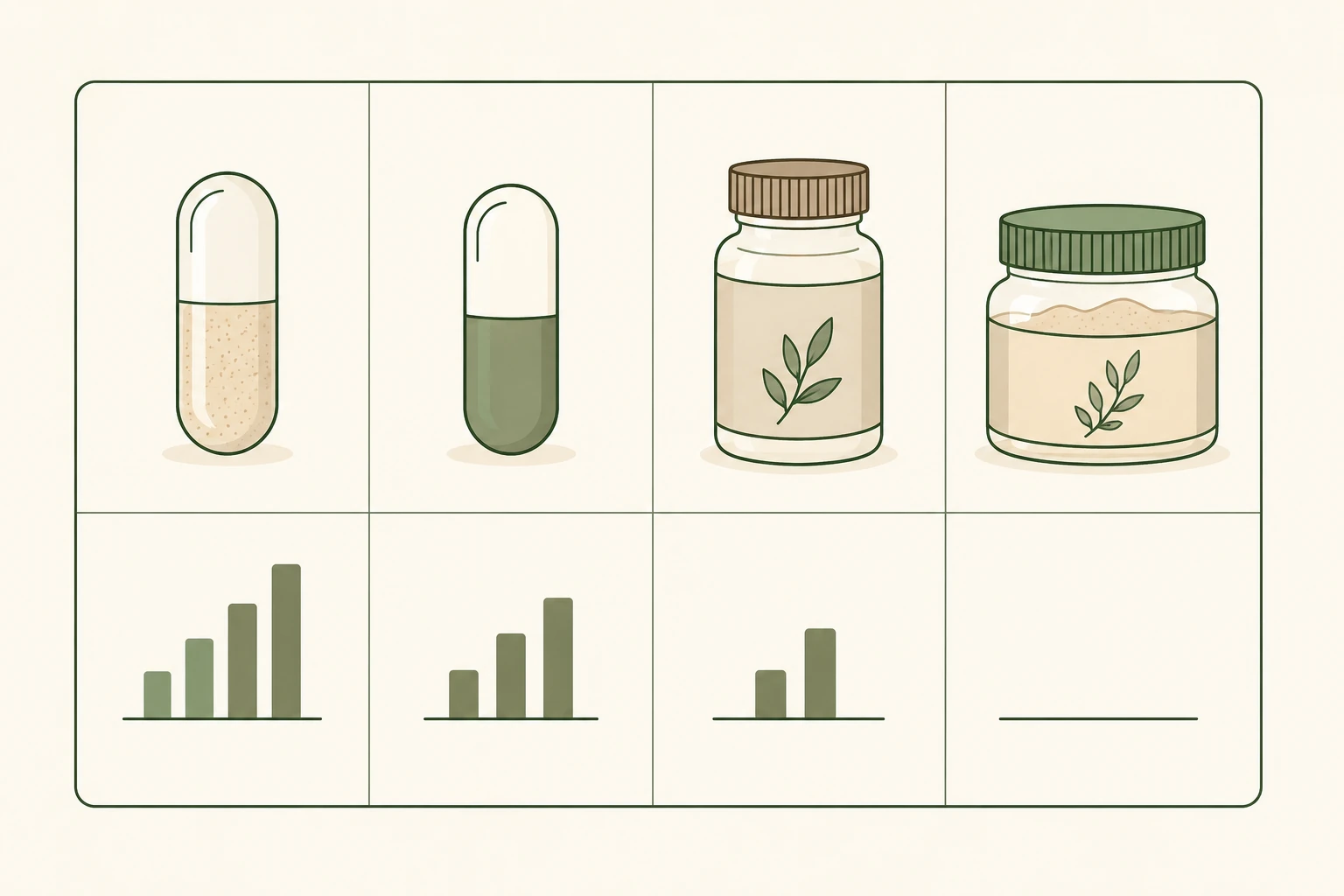
Four forms account for most of what's actually been studied or sold:
| Extract form | Withanolide standardization | Typical studied dose |
|---|---|---|
| KSM-66 (root-only) | ~5% withanolides | 300mg twice daily (600mg/day) |
| Root-and-leaf (e.g., Sensoril-type) | ~10% withanolide glycosides | ~125–250mg/day |
| Shoden | 35% withanolide glycosides | 240mg/day |
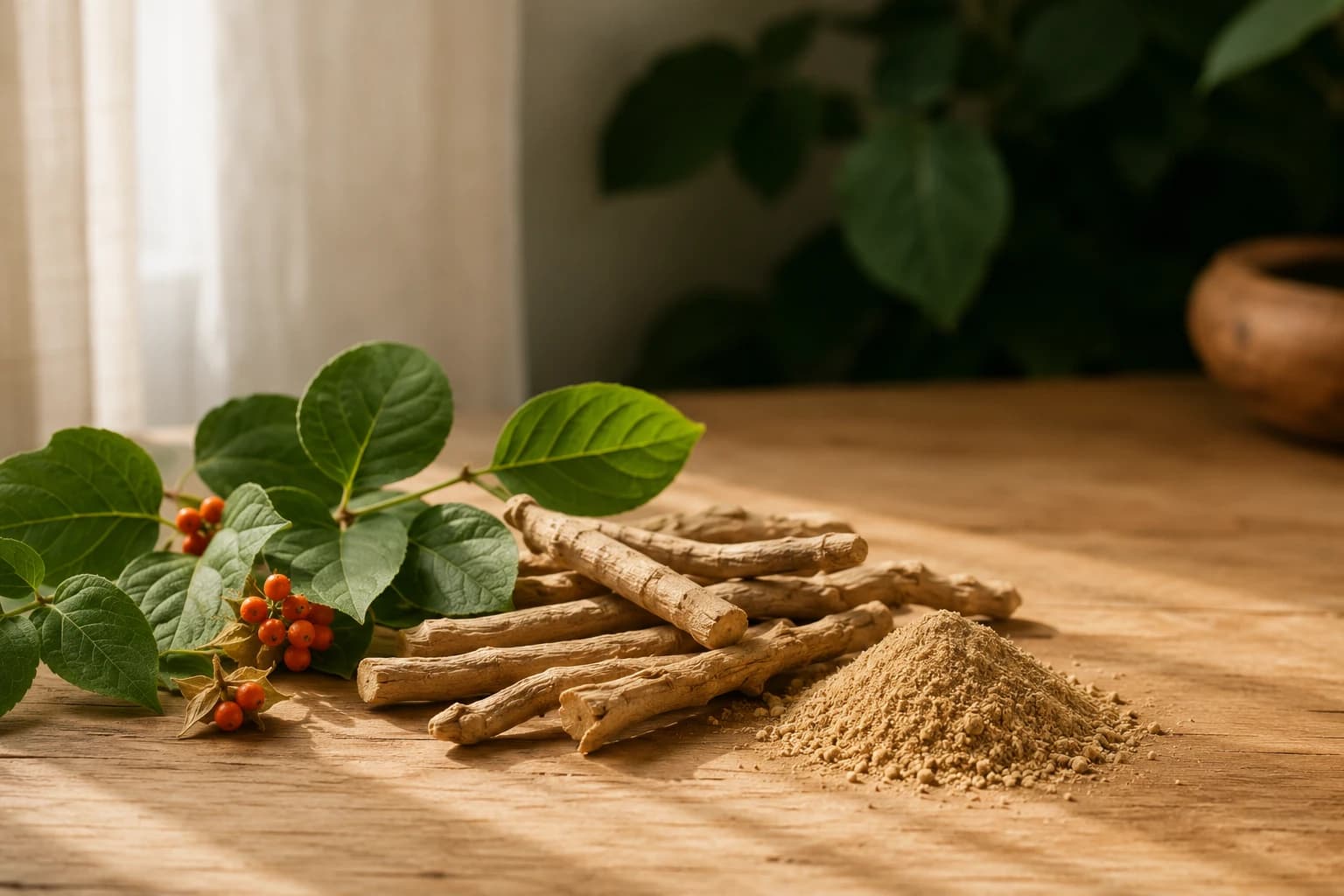
| Traditional root powder or decoction | Not standardized | 3–8g/day dried root (decoction), or 3–8mL/day of a 1:1 liquid extract |
KSM-66, a root-only extract standardized to roughly 5% withanolides, is the form behind some of the largest and most-cited trials. A 10-week insomnia and anxiety trial used KSM-66 at 300mg twice daily (600mg/day total) (Langade et al., 2019). Other trials using a similar root-only extract at the same 300mg-twice-daily pattern include an 8-week strength and testosterone trial in young men (Wankhede et al., 2015) and an 8-week trial comparing 250mg and 600mg doses for stress (Salve et al., 2019).
Root-and-leaf extracts (the category commercial products like Sensoril fall into), standardized to roughly 10% withanolide glycosides, are typically dosed lower — around 125–250mg/day. A book-documented 60-day chronic-stress trial used a comparable root-and-leaf extract (standardized to ≥8% withanolides) at 250mg twice daily, with mHAM-A anxiety scores falling roughly 70% by day 60 (Auddy et al., 2008, as reported in Bone & Mills, Principles and Practice of Phytotherapy, 2013, pp. 956–957). Because this form is more concentrated per milligram than KSM-66, the lower typical dose reflects potency, not a weaker product.
Shoden, an even more concentrated extract standardized to 35% withanolide glycosides, is dosed lower still — a 60-day stress trial used just 240mg/day, with morning cortisol falling 23% versus a slight rise on placebo (Lopresti et al., 2019).
Traditional, unstandardized root powder or decoction is the oldest form and the least dose-predictable, since withanolide content isn't guaranteed the way it is in a standardized extract. Classic phytotherapy dosing calls for considerably more: 3–8g of dried root per day by decoction, or 3–8mL/day of a 1:1 liquid extract (Bone & Mills, 2013, p. 950). Fertility research used a different dosing pattern too — a 90-day trial in men with low sperm counts used 675mg/day of root extract (225mg three times daily), moderately higher than the 600mg/day ceiling common in standardized-capsule trials, and found significant improvements in sperm concentration, motility, and semen volume (Ambiye et al., 2013).
The practical takeaway: check the label for a named standardized extract and a withanolide percentage, not just a milligram total. "600mg ashwagandha" with no standardization named tells you very little about how much active compound you're actually getting.
Dosage by Goal
Organized by what people are actually trying to achieve, with the trial behind each figure:
- Stress and cortisol: 240mg/day (Shoden) over 60 days lowered morning cortisol 23% (Lopresti et al., 2019); 150–300mg/day over 60 days lowered perceived-stress scores 38.6–41.6% in a larger, more recent trial (Thanawala et al., 2026). Looking across the broader stress and anxiety trial literature, NIH's Office of Dietary Supplements notes that benefits generally appeared greater at 500–600mg/day than at lower doses (NIH Office of Dietary Supplements). A supplement isn't the only lever for stress, either — pairing it with a non-pharmacological practice such as mindfulness is a reasonable complementary approach many people use alongside, not instead of, a supplement.
- Sleep: 120mg/day over 6 weeks improved self-reported sleep quality in 72% of participants versus 29% on placebo (Deshpande et al., 2020); 300mg twice daily (KSM-66) over 10 weeks improved sleep-onset time and efficiency (Langade et al., 2019). Reviewing this evidence base as a whole, NIH's Office of Dietary Supplements found sleep benefits were more pronounced specifically at 600mg/day and with at least 8 weeks of use (NIH Office of Dietary Supplements).
- Strength and testosterone: 300mg twice daily over 8 weeks, alongside resistance training, nearly doubled bench-press gains versus placebo (Wankhede et al., 2015).
- Male fertility: 675mg/day of root extract (225mg three times daily) over 90 days significantly improved sperm concentration, motility, and semen volume in men with low sperm counts — modestly higher than the standardized-capsule trials above, not the dramatically higher dose sometimes assumed; see our ashwagandha benefits for men guide for the full fertility picture (Ambiye et al., 2013).
- Female sexual function: 300mg twice daily over 8 weeks improved Female Sexual Function Index scores across domains including arousal, lubrication, orgasm, and satisfaction, versus placebo, in a registered clinical trial; see our ashwagandha benefits for women guide for the full picture (Dongre et al., 2015).
- Perimenopausal symptoms: 300mg twice daily (600mg/day) over 8 weeks significantly reduced total menopause-symptom scores (Menopause Rating Scale, p<0.0001) and improved menopause-specific quality of life versus placebo in 100 perimenopausal women, alongside a significant rise in estradiol and a significant fall in FSH and LH; testosterone didn't differ between groups (Gopal et al., 2021).
- Diagnosed anxiety disorders: a small trial of 39 people with an ICD-10 anxiety-disorder diagnosis (a mix of generalized anxiety disorder, panic disorder, and adjustment disorder with anxiety — not GAD alone) took doses titrated up toward roughly 1,000mg/day (as 250mg tablets, 2–10 per day) over 6 weeks — notably higher than the general-stress doses above. By 6 weeks, significantly more people met the study's response criteria on ashwagandha than on placebo (88.2% vs. 50%, p=0.026), and the drug was reported as well tolerated with no more adverse effects than placebo (Andrade et al., 2000). This is an older, small trial with a broad diagnostic mix rather than a GAD-only sample, so treat it as supportive, not definitive.
- Subclinical hypothyroidism specifically: 600mg/day over 8 weeks moved TSH, T3, and T4 significantly toward normal versus placebo — this dose and finding is specific to people with a mildly elevated TSH, not a general recommendation (Sharma et al., 2018).
- General wellbeing (broadest evidence base): a 2026 systematic review covering 23 RCTs found doses from 125–600mg/day were generally well tolerated, with biomarkers staying normal across that whole range (Coope et al., 2026); for the fuller picture of what the research does and doesn't support across all these use cases, see our review of the scientific evidence behind ashwagandha.
Starting Dose for Beginners
If you're new to ashwagandha, there's no need to jump straight to the top of a studied range. Most trials that showed a benefit used 300–600mg/day of a standardized extract, typically split into two doses — so starting at the lower end, around 300mg/day, for one to two weeks is a reasonable, low-risk way to gauge your own tolerance before increasing. No trial has specifically tested a formal dose-escalation protocol, so this is a sensible practical approach rather than a research-backed schedule. Once you've confirmed you tolerate it well, you can move toward the dose that matches your specific goal in the breakdown above.
Is There a Best Time of Day to Take It?
Honestly: the evidence doesn't support a single confident answer, and no trial has directly compared morning versus evening dosing head-to-head.
What trials actually did varies. Some dosed once daily without specifying a time. Others split the dose morning and evening — the 300mg-twice-daily pattern common to several trials above implies roughly 12 hours apart, though the exact clock time isn't always reported. We could not verify a specific pharmacokinetic figure (such as a precise half-life or "time to peak concentration") that would justify recommending one timing over another, and we chose not to repeat an unverified number some other sites cite for this reason.
There is a reasonable, practical (not proven-pharmacokinetic) argument for evening dosing specifically if you're taking ashwagandha for sleep: it has mild sedative properties, so taking it a few hours before bed is a sensible, low-risk choice — closer to common-sense timing than a research-backed protocol. If you're taking it mainly for daytime stress or strength training, morning or split dosing that matches when trials administered it is equally reasonable. If a dose makes you noticeably drowsy, that's useful personal information about when to take it, regardless of what any study says.
Taking It With or Without Food
Most guidance here is about tolerability, not absorption. High doses of ashwagandha have been reported to cause gastrointestinal upset, diarrhea, and vomiting, possibly related to its steroidal-saponin content (Bone & Mills, 2013, pp. 951–952). If it upsets your stomach, taking it with food is a reasonable, low-risk adjustment. We could not find a study specifically testing whether food affects how much active compound ashwagandha delivers — that's a genuinely different question from tolerability, and we're not aware of research answering it either way. Take that as an open question, not a settled "yes" or "no."
How Long Before It Works
Most positive trials measured results at 6 to 12 weeks, not days. A sleep trial showed a difference at 6 weeks (Deshpande et al., 2020); several stress, sleep, and menopause-symptom trials ran 8 weeks (Salve et al., 2019; Langade et al., 2019; Gopal et al., 2021); the book-documented Auddy trial noted its most marked results specifically at day 60 (Bone & Mills, 2013, pp. 956–957). No trial in this evidence base has shown a meaningful benefit within the first few days. The one exception worth naming separately: if you take a dose specifically for its calming, sedative effect at night, feeling drowsy that same evening is a plausible same-day effect — a different thing from the slower, cumulative changes in stress scores, sleep quality, or hormone levels that the trials above actually measured.
How Long Is It Safe to Take Continuously? (Cycling)
This is the question almost no mainstream competitor answers clearly, and the honest answer is a real limitation: nearly every positive trial cited in this cluster ran 6 to 12 weeks. The most thorough safety-focused systematic review to date covered doses from single-dose exposure up to 180 days (about 6 months) and explicitly flagged that safety data beyond that point is still lacking (Coope et al., 2026). That doesn't mean continuous use beyond 180 days is dangerous — one phytotherapy textbook states plainly that no problems are known with long-term use (Bone & Mills, 2013, p. 950) — but it does mean nobody has carefully studied it, which is a different, more honest claim than "safe long-term." Worth noting: that textbook's assessment predates the liver-injury case reports published between 2021 and 2024 that our side effects guide covers in detail, so it isn't the final word either.
Cycling protocols like "8 weeks on, 2 to 4 weeks off," or an Ayurveda-influenced "3 months on, 1 month off," circulate widely among practitioners and consumers. We want to be direct about what these are: common practice, not a research-validated protocol. No trial in this evidence base tested a specific cycling schedule against continuous use. Taking planned breaks is a reasonable, low-cost way to stay closer to what's actually been studied, but treat any specific "weeks on, weeks off" number you see online as a convention, not a finding.
Medication and Supplement Spacing
If you take a prescription medication, particularly a sedative, thyroid medication, antidepressant, or diabetes or blood pressure medication, ashwagandha's own sedative and blood-sugar and blood-pressure-lowering properties can plausibly add to what those medications already do. General pharmacy practice for supplement-medication combinations is to space doses by a couple of hours where practical, though this is a general precaution rather than an ashwagandha-specific proven protocol. For the full breakdown of which medication classes carry a real interaction concern and why, see our guide to ashwagandha and medication interactions. And if you're considering a notably high or fast-escalated dose, it's worth knowing that some of the more serious documented case reports involved exactly that pattern — see our guide to ashwagandha side effects for the specifics.
A note on pregnancy and breastfeeding: None of the dosing above applies if you're pregnant, trying to conceive, or breastfeeding. Some reports have linked ashwagandha to a risk of spontaneous abortion, and there's no published safety data on its use during breastfeeding — major reference sources advise avoiding it in both situations (NIH Office of Dietary Supplements). This isn't a dosing question, it's a "don't" — see our side effects guide before considering any dose at all.
What Do Health Regulators Say?
No single global safe-dose ceiling exists for ashwagandha, and several national health regulators specifically advise against its use for certain groups — pregnant women, children, and people with certain existing conditions — regardless of which extract or dose is chosen.
| Country/body | Position |
|---|---|
| France (ANSES) | Advises against use for pregnant or breastfeeding women, people under 18, people with endocrine disorders (particularly thyroid disorders and hyperandrogenism), hepatic or cardiac conditions, or anyone on medication with a central-nervous-system-depressant effect; also advises against driving or operating machinery after a sedating dose. ANSES states it cannot currently set a numeric maximum safe dose because the available data don't support one (ANSES, 2024). |
| Germany (BfR) | States it has not yet been possible to derive a safe intake level for healthy adults from the available data; recommends that children, pregnant and breastfeeding women, and people with acute or pre-existing liver disease not take ashwagandha supplements at all, and advises other population groups to exercise caution (BfR, 2024). |
| Denmark & Germany | Per ANSES's own 2024 opinion, both countries' national risk assessments (Denmark's DTU, 2020; Germany's BfR, 2012) recommend against using Withania somnifera in food supplements at all. |
| Poland | Sets a national maximum dose specifically for root powder in food supplements, per ANSES's opinion. We could not independently confirm the exact figure against a primary source, so we're not stating a number here. |
None of this contradicts the dose ranges above — it's a separate question of who shouldn't take ashwagandha at all, regardless of dose. ANSES's opinion draws in part on eight adverse-event reports collected by its Nutrivigilance surveillance system since it began tracking supplement reactions in 2009. If you're pregnant, breastfeeding, under 18, or manage a thyroid, liver, or heart condition, see our side effects guide and talk to a healthcare provider before using any ashwagandha product.
Frequently Asked Questions (FAQ)
Can I take ashwagandha while pregnant or breastfeeding? No — most reference sources advise against it. Some reports have linked ashwagandha to a risk of spontaneous abortion in pregnancy, and there's no published safety data on its use during breastfeeding, so it's best avoided in both situations regardless of dose (NIH Office of Dietary Supplements).
Do any health regulators warn against ashwagandha, or set a maximum safe dose? Yes. France's food safety agency (ANSES) and Germany's risk assessment institute (BfR) both advise against ashwagandha for pregnant or breastfeeding women, children, and people with certain thyroid, liver, or heart conditions, and neither has been able to set a numeric maximum safe dose from the data available. Denmark and Germany go further and recommend against using it in food supplements at all, while Poland sets a national maximum specifically for root powder. See the regulatory section above for the full breakdown by country (ANSES, 2024; BfR, 2024).
Is there a maximum safe dose of ashwagandha? There's no research-established maximum. The highest dose reviewed in the trials here was 2,500mg/day (titrated, in a small anxiety trial) (Andrade et al., 2000), and a 2026 systematic review of 23 studies found biomarkers stayed normal up to 600mg/day (Coope et al., 2026). Doses meaningfully above that range simply haven't been well studied, so there's no evidence-backed ceiling to point to — which is itself useful information, not a gap to fill with a guess.
What happens if I take too much ashwagandha, or miss a dose? Trials up to 1,000–2,500mg/day (in a small anxiety trial) didn't report serious harm, but fast dose-escalation to a high amount is exactly the pattern seen in some of the more serious documented liver-injury case reports, so more isn't automatically safer — see our side effects guide. If you miss a dose, there's no evidence you need to double up; just resume your normal schedule at the next planned dose.
Is 600mg of ashwagandha too much? No — 600mg/day is within the range several clinical trials tested, including studies on sleep, stress, and strength (Deshpande et al., 2020; Wankhede et al., 2015). It's on the higher end of standardized-extract dosing, not an unusually large amount, though "too much" depends heavily on which extract and how concentrated it is.
What's a good starting dose for a beginner? Most trials that showed benefit used 300–600mg/day of a standardized extract split into two doses. If you're new to ashwagandha, starting at the lower end (around 300mg/day) for a couple of weeks before increasing is a reasonable, low-risk way to gauge your own tolerance, since no trial has specifically tested a dose-escalation protocol.
Should I take ashwagandha in the morning or at night? Either can work — clinical trials have used both once-daily and split morning/evening dosing, and no study has directly compared timing head-to-head. If you're using it mainly for sleep, taking it in the evening is a reasonable practical choice given its mild sedative properties, not a proven pharmacokinetic requirement.
What's the difference between KSM-66 and Sensoril ashwagandha? KSM-66 is a root-only extract standardized to roughly 5% withanolides, typically dosed around 300mg twice daily in trials (Langade et al., 2019). Sensoril-type extracts use root and leaf, standardized to roughly 10% withanolide glycosides, typically dosed lower. A pharmacokinetic study found these extract types are not interchangeable milligram-for-milligram (Kim et al., 2023).
Do I need to cycle ashwagandha, or can I take it every day long-term? Most clinical trials ran 8 to 12 weeks, and the most thorough safety review covered up to 180 days; continuous use beyond that hasn't been well studied either way (Coope et al., 2026). Cycling is a reasonable, low-cost way to stay within what's actually been studied, though no specific cycling schedule is backed by research.
How long does it take for ashwagandha to start working? Most positive trials measured results at 6 to 12 weeks, not days. Sleep trials showed effects as early as 6 weeks (Deshpande et al., 2020); stress and cortisol trials generally showed significant changes by around 60 days (Lopresti et al., 2019).
Can I take ashwagandha on an empty stomach, or with other supplements like magnesium or melatonin? No trial has specifically tested ashwagandha against food or combined with other supplements. If it upsets your stomach, taking it with food is a reasonable adjustment. Combining it with other calming supplements like magnesium or melatonin hasn't been studied together and could add to sedative effects, so it's sensible to introduce one at a time and watch how you respond.
How we made this guide: Researched, written, and fact-checked by The Wellness Voyage editorial team, with every health claim backed by a citable source — recognised health authorities and peer-reviewed studies are linked throughout and listed in full below. We fact-check and review this article periodically and update it as the evidence changes; the last reviewed and updated date is shown with this article. It is written to inform, not to replace personalised advice from a qualified healthcare professional.
Medical disclaimer: This article is for informational purposes only. Always consult a qualified healthcare provider before making changes to your health routine.
Sources
- Kim SK, Venkatesan J, Rathi P, Antony B. Pharmacokinetics and bioequivalence of Withania somnifera extracts — a double blind, crossover study in healthy adults. Heliyon, 2023 — PMC. https://pmc.ncbi.nlm.nih.gov/articles/PMC10746415/
- Langade D, Kanchi S, Salve J, Debnath K, Ambegaokar D. Efficacy and Safety of Ashwagandha Root Extract in Insomnia and Anxiety. Cureus, 2019 — PMC. https://pmc.ncbi.nlm.nih.gov/articles/PMC6827862/
- Wankhede S, Langade D, Joshi K, Sinha SR, Bhattacharyya S. Examining the effect of Withania somnifera on muscle strength and recovery: a randomized controlled trial. J Int Soc Sports Nutr, 2015 — PubMed. https://pubmed.ncbi.nlm.nih.gov/26609282/
- Salve J, Pate S, Debnath K, Langade D. Adaptogenic and Anxiolytic Effects of Ashwagandha Root Extract in Healthy Adults. Cureus, 2019 — PMC. https://pmc.ncbi.nlm.nih.gov/articles/PMC6979308/
- Bone K, Mills S. Principles and Practice of Phytotherapy: Modern Herbal Medicine (2nd ed.). Churchill Livingstone, 2013 — Book. pp. 950–958.
- Lopresti AL, Smith SJ, Malvi H, Kodgule R. An investigation into the stress-relieving and pharmacological actions of an ashwagandha extract. Medicine (Baltimore), 2019 — PMC. https://pmc.ncbi.nlm.nih.gov/articles/PMC6750292/
- Ambiye VR, Langade D, Dongre S, Aptikar P, Kulkarni M, Dongre A. Clinical Evaluation of the Spermatogenic Activity of the Root Extract of Ashwagandha in Oligospermic Males: A Pilot Study. Evid Based Complement Alternat Med, 2013 — PMC. https://pmc.ncbi.nlm.nih.gov/articles/PMC3863556/
- Thanawala S, Shah R, Alluri KV, et al. Efficacy and safety of Ashwagandha root extract sustained-release (AshwaSR) capsules in healthy adult, stressed subjects. Medicine (Baltimore), 2026 — PubMed. https://pubmed.ncbi.nlm.nih.gov/41824889/
- Deshpande A, Irani N, Balkrishnan R, Benny IR. A randomized, double blind, placebo controlled study to evaluate the effects of ashwagandha extract on sleep quality in healthy adults. Sleep Medicine, 2020 — PubMed. https://pubmed.ncbi.nlm.nih.gov/32540634/
- Sharma AK, Basu I, Singh S. Efficacy and Safety of Ashwagandha Root Extract in Subclinical Hypothyroid Patients: A Double-Blind, Randomized Controlled Trial. J Altern Complement Med, 2018 — PubMed. https://pubmed.ncbi.nlm.nih.gov/28829155/
- Coope OC, Willems MET, Levington A, Tallon MJ, Roman-Viñas B, Spurr TJ. Back to the Roots: Safety and Tolerability of Standardised Ashwagandha Root Extract in Healthy Adults — A Systematic Review of Biomarkers and Adverse Events. Pharmaceuticals (Basel), 2026 — PubMed. https://pubmed.ncbi.nlm.nih.gov/42198398/
- Gopal S, Ajgaonkar A, Kanchi P, et al. Effect of an ashwagandha root extract on climacteric symptoms in women during perimenopause: a randomized controlled trial. J Obstet Gynaecol Res, 2021 — PubMed. https://pubmed.ncbi.nlm.nih.gov/34553463/
- Dongre S, Langade D, Bhattacharyya S. Efficacy and Safety of Ashwagandha Root Extract in Improving Sexual Function in Women: A Pilot Study. Biomed Res Int, 2015 — PubMed. https://pubmed.ncbi.nlm.nih.gov/26504795/
- Andrade C, Aswath A, Chaturvedi SK, Srinivasa M, Raguram R. A double-blind, placebo-controlled evaluation of the anxiolytic efficacy of an ethanolic extract of withania somnifera. Indian J Psychiatry, 2000 — PubMed. https://pubmed.ncbi.nlm.nih.gov/21407960/
- National Institutes of Health, Office of Dietary Supplements. Ashwagandha — Fact Sheet for Health Professionals. https://ods.od.nih.gov/factsheets/Ashwagandha-HealthProfessional/
- Agence nationale de sécurité sanitaire de l'alimentation, de l'environnement et du travail (ANSES). Avis relatif aux risques liés à l'utilisation des préparations de Withania somnifera (L.) Dunal dans les compléments alimentaires. Saisine n° 2021-SA-0077, 19 April 2024. https://www.anses.fr/fr/system/files/NUT2021SA0077.pdf
- Bundesinstitut für Risikobewertung (BfR). Ashwagandha: food supplements with potential health risks. Communication 39/2024, 10 September 2024. https://www.bfr.bund.de/cm/349/ashwagandha-food-supplements-with-potential-health-risks.pdf
Sources 1–13 accessed 17 July 2026; sources 14–15 accessed 24 July 2026; sources 16–17 accessed 6 September 2026.

Emily Johnson, MSc, RH (AHG)
A registered herbalist who matches every dose recommendation to the actual trial it came from.