Ashwagandha is generally well tolerated, and the biomarker data backs that up clearly. It's also linked to roughly two dozen documented liver injury cases in a federal government database, including one liver transplant and three deaths — numbers that essentially no mainstream "side effects" page states with this specificity. Both facts are true at once, and neither is the whole story. This guide goes through what the actual case reports say — ages, doses, timelines, outcomes — instead of a generic bullet list of possible symptoms, so you can weigh the real risk rather than a vague warning. For the full benefits picture, see our ashwagandha benefits guide; this one is about what can go wrong.
Key Takeaways
- Most people tolerate it well. A 2026 review of 23 randomized trials (2,317 participants) found liver, kidney, blood, and cardiovascular biomarkers stayed normal at typical doses.
- Liver injury is rare but real. LiverTox documents roughly 23 clinically apparent cases, including 3 deaths and 1 liver transplant — nearly all in people with pre-existing liver disease or very high, fast-escalated doses.
- Thyroid effects cut both ways. It may modestly help TSH in subclinical hypothyroidism, but has triggered thyrotoxicosis in people without a hypothyroid diagnosis or who recently stopped thyroid medication.
- Avoid it if you're pregnant or breastfeeding, have hyperthyroidism/Graves' disease, or already have liver disease. Talk to a doctor first if you have diabetes, an autoimmune condition, hormone-sensitive prostate cancer, or take sedatives, thyroid medication, blood pressure medication, or antidepressants.
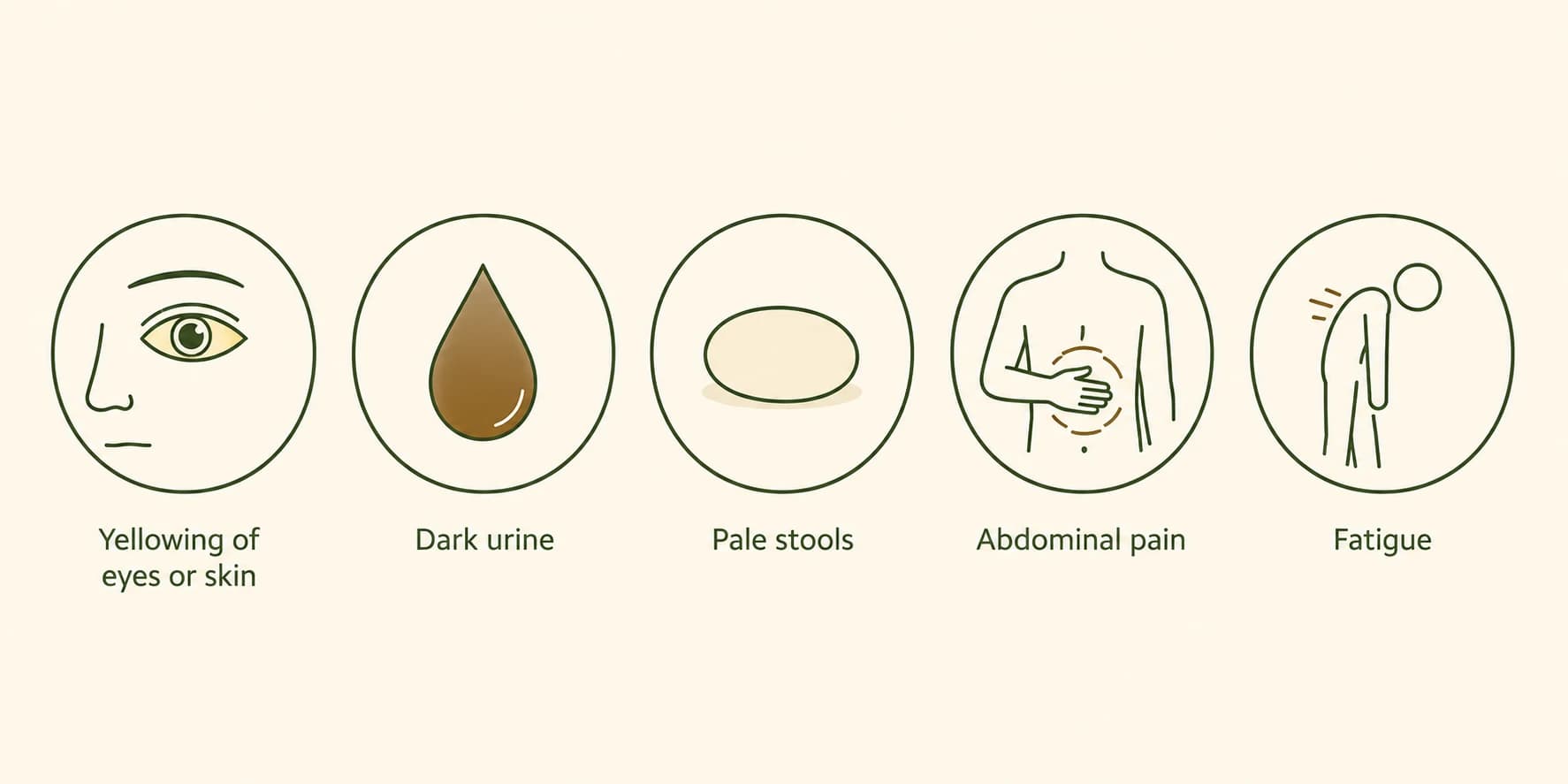
- Stop and get checked if you notice jaundice, dark urine, pale stools, persistent nausea, rapid heartbeat, or unexplained weight loss.
The Common, Usually-Mild Side Effects
Most people who take ashwagandha don't have a problem. A 2026 systematic review pooling 23 randomized trials (2,317 participants, doses of 125–600mg/day, from single doses up to 180 days) found liver, kidney, blood, and cardiovascular biomarkers stayed within normal ranges overall, with no serious adverse events attributed to standardized extracts at typical doses (Coope et al., 2026). The side effects that did show up were mild and familiar: gastrointestinal discomfort (nausea, stomach upset, occasionally diarrhea), headache, and drowsiness — the kind of thing a lower dose or taking it with food often resolves. If you notice drowsiness, hold off on driving or operating machinery until you know how it affects you. A separate critical review synthesizing the wider literature adds immune hypersensitivity reactions to that list of documented-but-uncommon effects, alongside the endocrine and liver effects covered below (Kumar et al., 2026).
Liver Injury: What the Actual Case Reports Show
This is the section most competitor articles skip or reduce to a single hedged sentence. It deserves real detail.
LiverTox, the NIH's own clinical reference on drug- and supplement-induced liver injury, compiles roughly 23 documented, clinically apparent liver injury cases linked to ashwagandha (Withania somnifera), most reported since 2017. The pattern across them is fairly consistent: symptoms — usually jaundice and itching — typically start 2 to 12 weeks after starting the supplement, the injury is predominantly cholestatic or mixed rather than classic hepatocellular damage, and the NIH's own causality assessment rates ashwagandha a likely ("B") cause. Most people recover within 1 to 4 months of stopping. The severe end of the series includes a 41-year-old woman who required an emergency liver transplant, and three fatal cases in India, all in people who already had chronic liver disease before starting (LiverTox, NIH Bookshelf).
Individual published case reports add detail LiverTox's summary doesn't. A 39-year-old woman developed jaundice and nausea within a week of starting ashwagandha; a biopsy showed acute cholestatic hepatitis with confluent necrosis, treated with ursodeoxycholic acid (UDCA) (Ireland et al., 2021). A 23-year-old man who had used it for about a year developed liver injury (Roussel Uclaf Causality Assessment Method, or RUCAM, causality score of 6, "probable") requiring plasmapheresis and penicillamine alongside UDCA, normalizing at 3.5 months (Lubarski et al., 2023). And a 22-year-old woman developed jaundice about 30 hours after taking a notably high, fast-escalated dose — 1,350mg over two days — recovering in about nine weeks with standard treatment (Almuzghi et al., 2024). That last case is a useful, concrete illustration that higher and faster isn't safer: her dose was several times a typical trial dose, taken over just two days rather than worked up to gradually.
To be clear about scale: this is rare set against how many people take ashwagandha, and the systematic-review data above shows biomarkers staying normal across thousands of study participants at standard doses. Both realities hold at once — it's uncommon, and unexplained jaundice, dark urine, pale stools, or persistent nausea after starting ashwagandha is a real reason to stop and see a doctor, not something to wait out.
Thyroid Effects: A Real but Nuanced Risk
Thyroid effects run in two different directions, and conflating them — as most competitor content does — misses something important.
On the positive side, a randomized trial in 50 adults with subclinical hypothyroidism (a mildly elevated TSH without a full diagnosis) found 600mg/day for 8 weeks moved TSH, T3, and T4 significantly toward normal versus placebo, with mild side effects in only 8% (Sharma et al., 2018).
On the other side, real case reports describe thyrotoxicosis — an overactive-thyroid state — and the circumstances matter. A 73-year-old woman with pre-existing hypothyroidism developed thyrotoxicosis and supraventricular tachycardia (a fast, irregular heart rhythm) after self-administering ashwagandha, two years after she had stopped her prescribed levothyroxine; her symptoms resolved within 2 to 5 weeks of stopping the herb (Kamal et al., 2022). That's a genuinely different risk profile than someone with untreated hyperthyroidism taking ashwagandha — this was self-directed use that replaced, rather than supplemented, prescribed thyroid treatment. A 47-year-old man developed painless thyroiditis after two months' use for insomnia, recovering fully by day 50 (Hayashi et al., 2024). The first published case, from 2005, was a 32-year-old woman whose thyrotoxicosis developed as her dose increased and resolved spontaneously after she stopped (van der Hooft et al., 2005).
The takeaway: a documented modest benefit exists specifically in subclinical hypothyroidism, alongside a real thyrotoxicosis risk concentrated in people without a hypothyroid diagnosis or who've recently changed their thyroid medication. Anyone with a thyroid condition should treat this as a talk-to-your-doctor-first situation, not a self-directed one.
Who Should Avoid Ashwagandha or Use Extra Caution
Pre-existing liver disease. The fatality cluster in the LiverTox data above happened specifically in people who already had chronic liver disease — a real, documented reason for extra caution, not just a generic warning.
Anyone on regular medication. A capsule is a much larger dose than an infusion, but the principle is the same in both cases — see herbal tea and medication interactions for how the risk differs between a cup and a concentrate.
Pregnancy. NCCIH states plainly that ashwagandha should be avoided during pregnancy (NCCIH). That modern guidance actually lines up with a genuinely mixed traditional record: one major phytotherapy textbook notes historical Ayurvedic sources are themselves split on this, with Withania listed as an abortifacient in some texts and a pregnancy tonic in others — a confusion the textbook attributes to possibly conflating leaf and root, which differ chemically (Bone & Mills, Principles and Practice of Phytotherapy, 2013, p. 958). Old and new evidence converge on the same caution, for different reasons.
Hyperthyroidism, Graves' disease, or a recent change in thyroid medication. The thyrotoxicosis cases above are concentrated in exactly this group.
Autoimmune conditions. A theoretical caution rather than documented harm — animal research shows Withania can stimulate immune activity, which is plausibly good for general immune function but could theoretically aggravate an autoimmune flare (Bone & Mills, 2013, pp. 950–952, 957). Raise it with your specialist rather than assuming either way.
Breastfeeding. NCCIH advises against use during breastfeeding as well as pregnancy, citing a lack of reliable safety data (NCCIH).
Diabetes or blood pressure medication. NCCIH notes ashwagandha may interact with medications for diabetes and high blood pressure (NCCIH) — plausibly by modestly lowering blood sugar or blood pressure itself, which could add to a medication's effect. Anyone on these medications should monitor their readings closely and loop in their prescriber before starting.
Hormone-sensitive prostate cancer. NCCIH flags this specifically, since ashwagandha may raise testosterone levels (NCCIH) — a theoretical concern worth raising with an oncologist rather than assuming it's fine.
Before surgery. NCCIH names ashwagandha specifically among the supplements "not recommended for people who are about to have surgery" (NCCIH) — so this caution is ashwagandha-specific, even though we could not find a dedicated study testing ashwagandha against surgical outcomes to explain the mechanism. What's mechanistically plausible: its sedative, GABA-active properties could have additive effects with anesthesia-related drugs (MSKCC, About Herbs), and general perioperative research recommends stopping herbal supplements broadly before elective surgery (Ang-Lee et al., 2001). Tell your surgical team you take it, and expect to be asked to stop it beforehand. For the full medication-interaction picture, see our guide on ashwagandha interactions with medications.
Withdrawal and Stopping Ashwagandha
Withdrawal effects are essentially unaddressed in most consumer content, and the reason is simple: until 2025, there was apparently no published case report on the topic at all. A single case report changed that. A 20-year-old man who had been taking 600mg/day (300mg twice daily) presented to an emergency room with tachycardia, insomnia, anxiety, elevated blood pressure, and loss of appetite, beginning about two days after he stopped taking ashwagandha. He was treated with an as-needed sleep aid and had no new symptoms at a follow-up visit two days later (Holzman et al., 2025). The authors themselves note they found no prior reports of addiction or withdrawal linked to ashwagandha before this case, and propose the herb's GABA-active properties — the same mechanism behind its sedative effects — as a plausible cause.
One case report doesn't establish a documented withdrawal syndrome, and this is honestly still an under-researched question. But it's a real, recent, peer-reviewed data point, not nothing — and a reasonable argument for stopping gradually rather than abruptly after taking a meaningful dose for a while, especially since the same GABA-activity mechanism already underlies the sedative-interaction caution elsewhere in this cluster.
Case Reports at a Glance
The individual case reports cited throughout this guide share comparable details — age, sex, dose, how quickly symptoms appeared, and how things resolved. Here they are side by side:
| Case | Age / Sex | Dose & Duration | Latency to Onset | Outcome |
|---|---|---|---|---|
| Liver injury (Ireland et al., 2021) | 39F | Not specified | ~1 week after starting | Acute cholestatic hepatitis with confluent necrosis on biopsy; treated with UDCA |
| Liver injury (Lubarski et al., 2023) | 23M | ~1 year of use | After ~1 year of use | RUCAM 6 ("probable"); plasmapheresis + penicillamine + UDCA; normalized at 3.5 months |
| Liver injury (Almuzghi et al., 2024) | 22F | 1,350mg over 2 days | ~30 hours after the dose | Recovered in about 9 weeks |
| Thyrotoxicosis + SVT (Kamal et al., 2022) | 73F | ~2 years of self-administered use | Developed after ~2 years of use, following prior levothyroxine discontinuation | Resolved within 2–5 weeks of stopping |
| Painless thyroiditis (Hayashi et al., 2024) | 47M | 2 months' use for insomnia | After 2 months of use | Recovered fully by day 50 |
| Thyrotoxicosis (van der Hooft et al., 2005) | 32F | Dose increased over time | As the dose increased | Resolved spontaneously after stopping |
| Withdrawal symptoms (Holzman et al., 2025) | 20M | 600mg/day (300mg twice daily) | ~2 days after stopping | Tachycardia, insomnia, anxiety, elevated blood pressure, loss of appetite; treated with an as-needed sleep aid; no new symptoms at 2-day follow-up |
How to Reduce Your Risk If You Choose to Take It
A few practical, low-cost habits track with what the case reports and safety data above actually show:
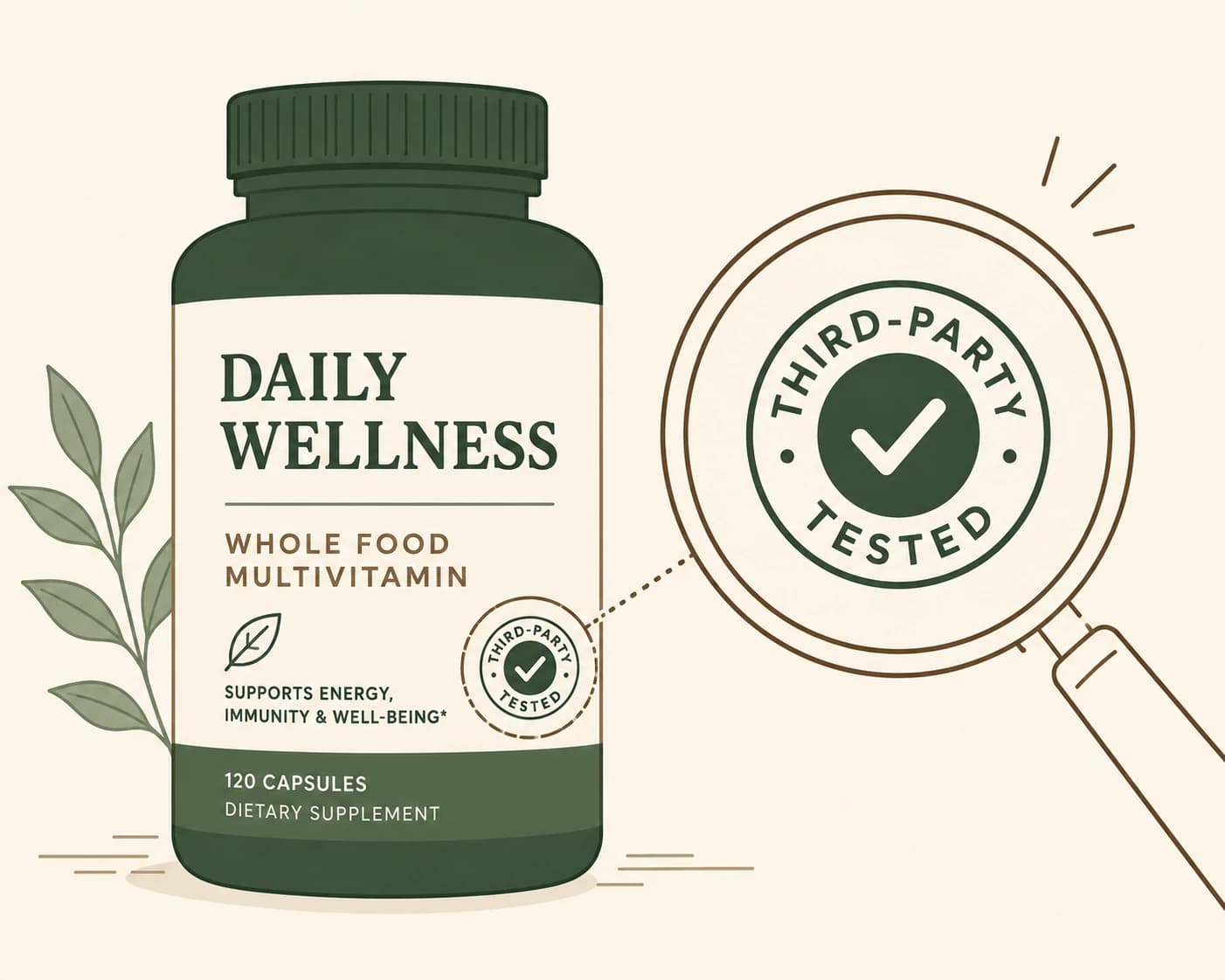
- Choose third-party-tested products. Look for a ConsumerLab, USP, or NSF verification mark — a practice Cleveland Clinic's own patient guidance also recommends, and a real trust signal in a supplement category the FDA doesn't test before sale.
- Start at the lower end of the studied range (roughly 240–300mg/day of a standardized extract) rather than jumping to a high dose. The case reports above generally involved doses considerably higher than what most trials tested.
- Avoid fast dose escalation. The clearest "more isn't better" data point here is a high dose taken over just two days, not built up gradually.
- Get baseline liver-function labs if you plan to take it for months, and repeat them periodically — a sensible precaution given that liver injury, while rare, is the best-documented serious risk.
- Don't stack it casually with other substances that stress the liver (alcohol included) if you're already taking a supplement with a documented, if uncommon, hepatotoxicity signal.
None of this eliminates risk. It's the same logic that applies to any supplement with a real but uncommon safety signal: know what you're taking, take the lowest effective amount, and don't stack unknowns. For exact dosing by extract type, see our full dosage and timing guide.
When to See a Doctor Right Away
Stop taking ashwagandha and seek care promptly if you notice: yellowing of the skin or eyes (jaundice), unusually dark urine, pale or clay-colored stools, persistent nausea or vomiting, abdominal pain, or unusual fatigue — the pattern seen across the liver case reports above. Separately, a rapid or irregular heartbeat, palpitations, unexplained weight loss, or heat intolerance are worth flagging quickly too, given the thyrotoxicosis cases described above. None of these are common. All of them are reasons to stop and get checked rather than wait it out.
Frequently Asked Questions (FAQ)
Can ashwagandha damage your liver? Rarely, but yes — documented cases exist. A federal case registry (LiverTox) lists roughly 23 clinically apparent cases, including a liver transplant and three deaths in people with pre-existing liver disease (LiverTox). This is uncommon relative to how many people take it safely, but real enough that unexplained jaundice or dark urine after starting warrants stopping and seeing a doctor.
What are the signs of an ashwagandha allergic reaction or serious side effect? Watch for jaundice, dark urine, pale stools, persistent nausea, or abdominal pain (possible liver injury), and for rapid heartbeat, palpitations, or unexplained weight loss (possible thyroid effects). True allergic reactions are possible with any supplement, though we found no ashwagandha-specific data quantifying how common that is.
Who should not take ashwagandha? People who are pregnant or breastfeeding, have hyperthyroidism or Graves' disease, or already have liver disease should avoid it. People with autoimmune conditions or hormone-sensitive prostate cancer, or who take sedatives, thyroid medication, diabetes medication, blood pressure medication, or antidepressants, should check with a doctor first. See "Who Should Avoid Ashwagandha" above for the full reasoning.
Is ashwagandha safe to take while breastfeeding? No — NCCIH advises against ashwagandha use during breastfeeding as well as pregnancy, citing a lack of reliable safety data (NCCIH).
Can ashwagandha affect blood sugar or interact with diabetes medication? It may modestly lower blood sugar, and NCCIH specifically notes ashwagandha can interact with diabetes medications and blood pressure medications — potentially adding to their effect and raising the risk of hypoglycemia or low blood pressure (NCCIH). Anyone on these medications should monitor their readings and check with their prescriber before starting.
Can ashwagandha cause thyroid problems? It can, in specific circumstances — mostly thyrotoxicosis in people without a hypothyroid diagnosis or who recently stopped thyroid medication (Kamal et al., 2022; van der Hooft et al., 2005). Separately, it may modestly help TSH in people with subclinical hypothyroidism specifically (Sharma et al., 2018). The two are genuinely different situations.
Is ashwagandha safe to take every day? For most people, short-term daily use looks reasonably safe — a 2026 systematic review of 23 RCTs found normal biomarkers and no serious adverse events at typical doses over periods up to 180 days (Coope et al., 2026). Genuinely long-term, continuous use beyond about 6 months hasn't been well studied.
Is ashwagandha safe for someone with prostate cancer? NCCIH specifically cautions against use for people with hormone-sensitive prostate cancer, since ashwagandha may raise testosterone levels (NCCIH). Anyone with this diagnosis should discuss it with their oncologist before use rather than assuming it's fine.
Can you drink alcohol while taking ashwagandha? There's no dedicated study on combining ashwagandha with alcohol, so this can't be answered with direct evidence. What is documented: ashwagandha carries a rare but real liver-injury signal (see the case reports above), and alcohol is an independent stressor on the liver — so combining regular alcohol use with ongoing ashwagandha use is a reasonable thing to avoid or discuss with a doctor, especially if you have any liver risk factors. This is a plausibility-based caution, not a proven interaction.
Is ashwagandha safe for children or teenagers? We could not find reliable published safety data on ashwagandha in children or adolescents — the clinical trials cited throughout this guide all enrolled adults. Without pediatric-specific safety data, it's reasonable to avoid giving it to children or teens without a pediatrician's guidance.
How we made this guide: Researched, written, and fact-checked by The Wellness Voyage editorial team, with every health claim backed by a citable source — recognised health authorities and peer-reviewed studies are linked throughout and listed in full below. We fact-check and review this article periodically and update it as the evidence changes; the last reviewed and updated date is shown with this article. It is written to inform, not to replace personalised advice from a qualified healthcare professional.
Medical disclaimer: This article is for informational purposes only. Always consult a qualified healthcare provider before making changes to your health routine.
Sources
- National Center for Complementary and Integrative Health (NCCIH). Ashwagandha: Usefulness and Safety. https://www.nccih.nih.gov/health/ashwagandha
- Bone K, Mills S. Principles and Practice of Phytotherapy: Modern Herbal Medicine (2nd ed.). Churchill Livingstone, 2013 — Book. pp. 950–958.
- Coope OC, Willems MET, Levington A, Tallon MJ, Roman-Viñas B, Spurr TJ. Back to the Roots: Safety and Tolerability of Standardised Ashwagandha Root Extract in Healthy Adults — A Systematic Review of Biomarkers and Adverse Events. Pharmaceuticals (Basel), 2026 — PubMed. https://pubmed.ncbi.nlm.nih.gov/42198398/
- Kumar A, Sah BK, Ahmad F, Jamwal V, Sahu SK. Potential Adverse Effects of Ashwagandha: A Critical Review of Preclinical and Clinical Evidence. Phytother Res, 2026 — PubMed. https://pubmed.ncbi.nlm.nih.gov/41502355/
- LiverTox: Clinical and Research Information on Drug-Induced Liver Injury — Ashwagandha. NCBI Bookshelf, National Institute of Diabetes and Digestive and Kidney Diseases. https://www.ncbi.nlm.nih.gov/books/NBK548536/
- Ireland PJ, Hardy T, Burt AD, Donnelly MC. Drug-induced hepatocellular injury due to herbal supplement ashwagandha. J R Coll Physicians Edinb, 2021 — PubMed. https://pubmed.ncbi.nlm.nih.gov/34882134/
- Lubarski M, et al. Liver Dangers of Herbal Products: A Case Report of Ashwagandha-Induced Liver Injury. Int J Environ Res Public Health, 2023 — PMC. https://pmc.ncbi.nlm.nih.gov/articles/PMC10002162/
- Almuzghi F, Abdelmalik A, Abuhlaiga M. Ashwagandha-Induced Hepatic Injury: A Case Report. Cureus, 2024 — PMC. https://pmc.ncbi.nlm.nih.gov/articles/PMC11564894/
- Sharma AK, Basu I, Singh S. Efficacy and Safety of Ashwagandha Root Extract in Subclinical Hypothyroid Patients: A Double-Blind, Randomized Controlled Trial. J Altern Complement Med, 2018 — PubMed. https://pubmed.ncbi.nlm.nih.gov/28829155/
- Kamal HI, Patel K, Brdak A, Heffernan J, Ahmad N. Ashwagandha as a Unique Cause of Thyrotoxicosis Presenting With Supraventricular Tachycardia. Cureus, 2022 — PMC. https://pmc.ncbi.nlm.nih.gov/articles/PMC9035336/
- Hayashi M, Hamada H, Azuma S, Hayashi K. Painless Thyroiditis by Withania somnifera (Ashwagandha). Cureus, 2024 — PMC. https://pmc.ncbi.nlm.nih.gov/articles/PMC10981964/
- van der Hooft CS, Hoekstra A, Winter A, de Smet PAG, Stricker BHCh. Thyrotoxicosis following the use of ashwagandha [Dutch]. Ned Tijdschr Geneeskd, 2005 — PubMed. https://pubmed.ncbi.nlm.nih.gov/16355578/
- Memorial Sloan Kettering Cancer Center. About Herbs: Ashwagandha. https://www.mskcc.org/cancer-care/integrative-medicine/herbs/ashwagandha
- Ang-Lee MK, Moss J, Yuan CS. Herbal medicines and perioperative care. JAMA, 2001 — PubMed. https://pubmed.ncbi.nlm.nih.gov/11448284/
- Holzman A, Brown AE, Kelley J, Rappaport D, Martini WA. Unmasking Potential Withdrawal Effects of Ashwagandha: A Case Report and Review. Cureus, 2025 — PubMed. https://pubmed.ncbi.nlm.nih.gov/40476122/
All sources accessed 17 July 2026.

Emily Johnson, MSc, RH (AHG)
A registered herbalist who reads the case reports most sites skip.