Quick answer: Yes — two placebo-controlled clinical trials in perimenopausal and menopausal women (2021 and January 2026) found that 300mg of KSM-66 ashwagandha extract taken twice daily significantly reduced hot flashes, mood and stress symptoms, and overall menopause symptom-scale scores compared to placebo, and modestly shifted estradiol, FSH, and LH in a favorable direction. Both trials were short (8 weeks and 56 days), used the same extract brand, and were run in India — a real but still-narrow evidence base that hasn't yet been independently replicated.
Two real, placebo-controlled trials — one from 2021, one from January 2026 — measured ashwagandha's effect on menopausal symptoms directly, with real numbers, in the population the claim is actually about. That's a meaningfully stronger evidence base than most of what's covered in our ashwagandha benefits for women guide. It still has real limits, and this guide names them below.
Key Takeaways
- MRS score improvement: Total menopause symptom scores fell 23.5% with ashwagandha versus 10.9% with placebo (Gopal 2021), and dropped from 31.37 to 18.53 versus 30.73 to 30.03 with placebo (Vani 2026) — both p<0.0001.
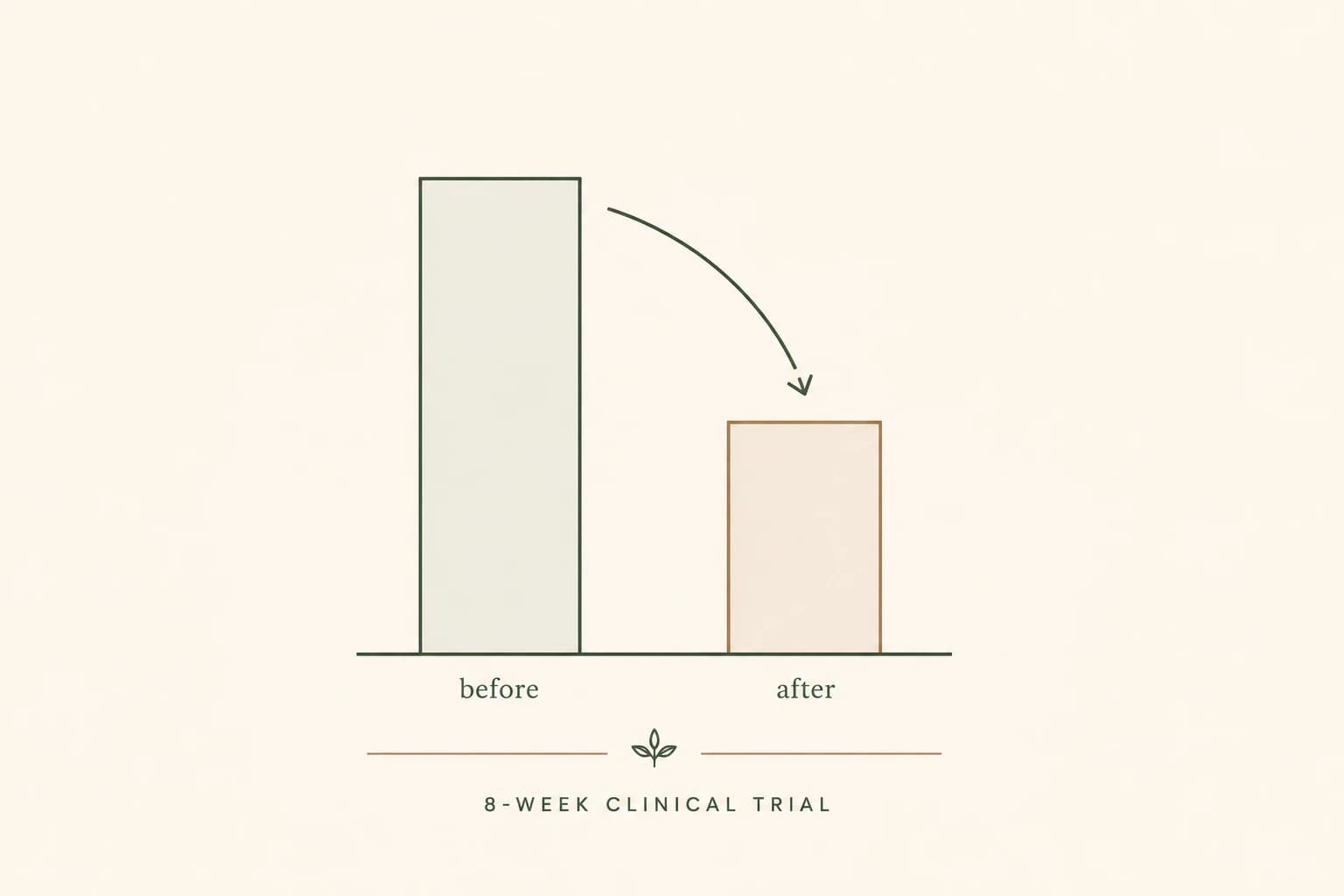
- Hot flashes: Weekly hot flash events fell from 14.50 to 10.60 with ashwagandha, versus an almost-flat 14.60 to 14.00 with placebo (p<0.001).
- Hormones: Estradiol, FSH, and LH all shifted in a favorable direction with ashwagandha (p<0.001 in each case) — real and statistically significant, but modest in size, not a dramatic hormonal swing.
- Duration tested: Only 8 weeks and 56 days have been studied for this specific use; no trial has followed women taking ashwagandha for menopause symptoms longer than about 2 months.
- Replication status: Both trials were conducted in India using the same branded extract (KSM-66) from the same manufacturer — a real but not yet independently replicated evidence base.
What the Research Actually Found
Gopal et al., 2021 gave 100 perimenopausal women (91 completing) 300mg of KSM-66 ashwagandha twice daily for 8 weeks, against placebo. Total Menopause Rating Scale (MRS) score fell 23.5% in the ashwagandha group versus 10.9% with placebo (p<0.0001) (Gopal et al., 2021). The MRS itself covers three separate domains — psychological symptoms like mood and irritability, somatic-vegetative symptoms like hot flashes and joint discomfort, and urogenital symptoms like vaginal dryness — and the improvement in this trial was significant across all three, not concentrated in just one.
Vani, Muralidhar & Rao, 2026 is a newer trial not yet cited by any consumer health site we found, published in January 2026. It gave 60 women aged 45 to 55 (30 per group, 100% completion) the same 300mg-twice-daily KSM-66 dose over 56 days. Total MRS score fell from 31.37 to 18.53 with ashwagandha, versus 30.73 to 30.03 with placebo (p<0.0001) — closely replicating Gopal's direction and magnitude with a fresh sample (Vani et al., 2026).
Long before either trial, practitioner case histories described the same use: one published account follows a 47-year-old woman with 18 months of hot flushes, sweating, depression, and disrupted sleep, treated with a blended tincture that included Withania alongside St. John's wort, false unicorn root, wild yam, and hawthorn, with considerable improvement by two months (Bone & Mills, 2013, pp. 300–301). That's a single case history using Withania in combination with four other herbs, not a controlled trial — context, not equivalent evidence to the RCTs below.
There's a real tension worth naming here too: NCCIH's own ashwagandha reference page doesn't have a menopause section at all, and lists menopause among the conditions with insufficient evidence, reserving its strongest — though still hedged — language for insomnia, stress, and separately, male infertility (NCCIH). That's not a contradiction of the trials above — both are genuine, randomized, placebo-controlled results — it more likely reflects how recent and narrow this specific evidence base still is. Two solid trials is a real foundation, not yet the dozens of studies a major reference body typically waits for before adding a new use to its list. We're presenting this evidence with genuine confidence because it's genuinely there, while being upfront that broader evidence-summarizing institutions haven't caught up to it yet.
Gopal 2021 vs. Vani 2026: The Two Trials Side by Side
| Gopal et al., 2021 | Vani et al., 2026 | |
|---|---|---|
| Participants | 100 randomized (91 completed) | 60 randomized (60 completed) |
| Population | Perimenopausal women | Women aged 45-55 |
| Duration | 8 weeks | 56 days |
| Dose | 300mg KSM-66, twice daily | 300mg KSM-66, twice daily |
| Location | Maharashtra, India | Srikakulam, Andhra Pradesh, India |
| Total MRS change | -23.5% vs. -10.9% (placebo) | 31.37→18.53 vs. 30.73→30.03 (placebo) |
| Hot flash events | Not reported separately | 14.50→10.60 vs. 14.60→14.00 (placebo) |
| Estradiol | Significant increase (p<0.0001) | 22.20→23.02 pg/mL vs. decline to 21.60 (placebo) |
| Extract supplied by | Ixoreal Biomed (KSM-66 maker) | Ixoreal Biomed (KSM-66 maker) |
Both trials point the same direction on the same extract, from the same country and manufacturer — which is why we treat this as a real but still-narrow evidence base rather than broad consensus.
Hot Flashes and Night Sweats
Vani 2026 measured hot flash events directly, and the numbers are specific enough to quote exactly. Weekly hot flash events fell from 14.50 to 10.60 with ashwagandha, versus 14.60 to 14.00 with placebo (p<0.001) — a real reduction in the ashwagandha group against an essentially flat placebo group (Vani et al., 2026). Gopal 2021's MRS scale includes hot flashes within its broader symptom scoring rather than reporting event counts separately, so we can't give the same precise before/after figure for that trial, but the overall symptom-score improvement it found is consistent with this result.
Mood, Sleep, and Perceived Stress
This is genuinely menopause-population data, not the general-adult stress evidence covered in our ashwagandha benefits guide with a "not sex- or life-stage-specific" caveat attached. In Vani 2026, the Perceived Stress Scale (PSS-10) fell from 28.50 to 15.10 with ashwagandha — a large, significant drop (p<0.001) — while the placebo group barely moved, from 27.70 to 27.40, a change that wasn't statistically significant on its own (p=0.326). Quality-of-life scores (SF-12) at day 56 were also substantially higher with ashwagandha than placebo on both the physical component (49.90 versus 34.20) and mental component (53.60 versus 36.40) (Vani et al., 2026). Patient-reported tolerability was rated good to excellent by 93.3% of the ashwagandha group versus 50% of the placebo group.
Does Ashwagandha Raise Estrogen?
This distinction matters more than most guides acknowledge: a "statistically significant" hormone shift is not automatically a large one, and treating the two as interchangeable is a common science-communication error.
In Vani 2026, serum estradiol rose from 22.20 to 23.02 pg/mL with ashwagandha over 56 days, while the placebo group's estradiol actually declined slightly, from 22.20 to 21.60 pg/mL (p<0.001 between groups). FSH fell from 61.90 to 60.90 mIU/mL with ashwagandha, against a slight rise from 58.20 to 58.60 with placebo (p<0.001). LH showed the same small-but-real pattern: 36.80 down to 35.50 with ashwagandha, versus 34.80 up to 35.60 with placebo (p<0.001) (Vani et al., 2026). Look at the actual magnitudes: FSH moved about one point on a scale where both groups sat in the high 50s to low 60s. That's a real, statistically detectable, consistently-directioned effect — not a dramatic hormonal swing. Gopal 2021 reported the same directional pattern — a significant estradiol increase (p<0.0001) and significant FSH decrease (p<0.0001), with a more modest LH decrease (p<0.05) — though its published abstract doesn't give the same exact before/after values, so we can't quote precise numbers for that trial the way we can for Vani's.
In short: yes, ashwagandha measurably shifted these hormones in two real trials, in a direction consistent with symptom improvement. No, it isn't a dramatic estrogen-boosting intervention, and nothing here suggests it works anything like hormone therapy in scale.
A Necessary Caveat: Two Studies, Similar Origins
Both trials share a limitation worth naming plainly: they come from a similar source, not independent replication.
Both trials were conducted in India (Gopal's team across sites in Maharashtra; Vani's team at a government medical college in Srikakulam, Andhra Pradesh), both used the same branded extract — KSM-66 — supplied free of charge by its manufacturer, Ixoreal Biomed, and both ran for a similarly short window (8 weeks and 56 days). Vani and colleagues explicitly declare no financial conflict of interest despite the free product, which is worth noting in their favor. But two trials sharing a similar population, product source, and duration is a meaningfully different, weaker form of evidence than two fully independent research groups, in different countries, using different extract brands, reaching the same conclusion. We're not aware of a menopause-specific ashwagandha trial run outside this pattern. Genuine independent replication would mean a separate research group, ideally outside India, using a different ashwagandha brand or extract, reaching a similar conclusion — that hasn't happened yet for this specific use. None of this makes either trial's findings less real — both are genuine, randomized, placebo-controlled results — but "two studies confirm this" should mean something more than it currently can here, and we'd rather say so than imply a stronger consensus than actually exists. Our guide to ashwagandha's scientific evidence walks through how this replication tier compares with the stronger stress and sleep evidence elsewhere in this cluster.
How Long Would You Need to Take It
The ceiling is short: 8 weeks and 56 days are the only durations tested for this specific use. Both trials showed improvement within that window, but neither — nor any other trial we could find — followed women taking ashwagandha for menopause symptoms for 6 months, a year, or longer. Vani and colleagues note this limitation themselves, writing that their 8-week duration "may limit the ability to conclude long-term benefits." Since menopause symptoms are often a multi-year experience, that's a real gap worth knowing about rather than assuming continuity past what's actually been studied. If you're considering trying it for this reason, both trials showed measurable change within their tested windows — 8 weeks is a reasonable minimum trial period to expect any effect to show up, based on what's actually been measured, rather than the shorter timeframes some marketing implies.
Dosage Used in the Menopause Trials
Both trials used the same regimen: 300mg of KSM-66, a root-only extract standardized to 5% withanolides, taken twice daily. Neither trial tested a different dose specifically for menopause, so we have no evidence that more or less would work better or worse. For the full picture on extract types, standardization, and dosing more broadly, see our dosage and timing guide.
Safety Considerations Specific to Menopause
Thyroid conditions become more common with age and are more prevalent in women generally, which makes the thyroid nuance covered elsewhere in this cluster matter more, not less, at this life stage — a randomized trial found ashwagandha improved thyroid hormone levels in people with subclinical hypothyroidism, while separate real case reports describe thyrotoxicosis developing in women who self-administered ashwagandha, including one case after stopping prescribed thyroid medication. Neither finding is menopause-specific, but thyroid disorders becoming more common around this life stage is a genuine reason to take that section seriously rather than skip it — our guide to ashwagandha's documented side effects covers the full thyroid and liver-injury picture in depth. For hormone replacement therapy specifically: we looked for a dedicated study testing ashwagandha alongside HRT and could not find one, consistent with what we found researching our guide for women over 50. General caution to discuss it with your prescriber is reasonable advice, but it isn't backed by a specific interaction trial. For the complete medication and interaction picture, see our medication interactions guide.
Weight gain is also a common menopause-adjacent complaint, and it's tempting to assume ashwagandha's stress-lowering evidence extends there automatically. It doesn't, directly: no trial covered on this page measured weight or body composition, so we can't extend the hormone and symptom-score findings above to weight specifically. The general-population evidence on ashwagandha and weight is itself mixed — see our guide to ashwagandha for weight loss for the full picture rather than a menopause-specific claim we can't support here.
Who Should Talk to a Doctor First
The evidence above involves real hormonal effects, even if modest ones — which makes a quick conversation with a healthcare provider worthwhile before starting, especially if you:
- Currently use hormone replacement therapy (HRT) or a selective estrogen receptor modulator (SERM)
- Have a personal or family history of thyroid disease
- Have a personal history of a hormone-sensitive cancer
None of these rule ashwagandha out — but each is a reason to loop in the person managing your care first, given the hormone shifts documented above.
Frequently Asked Questions (FAQ)
Can ashwagandha help with hot flashes and night sweats? In one real trial specifically, yes — hot flash events dropped from about 14.5 to 10.6 per week with ashwagandha, versus 14.6 to 14.0 with placebo, a statistically significant difference (Vani et al., 2026). It's one trial, not yet replicated by an independent research group.
Can ashwagandha replace hormone replacement therapy (HRT) for menopause? No. Nothing in the two trials covered on this page suggests ashwagandha works anything like HRT in scale — the hormone shifts measured were small and statistically detectable, not a dramatic hormonal intervention. HRT and ashwagandha haven't been compared head-to-head in any trial we could find, so this isn't an evidence-based substitution either way; talk to your prescriber before stopping or replacing HRT with a supplement.
Is ashwagandha safe to take with hormone replacement therapy (HRT)? We could not find a dedicated study testing ashwagandha alongside HRT. General caution to discuss it with your prescriber is reasonable, but it isn't backed by a specific interaction trial. Our medication interactions guide covers what has and hasn't been documented more broadly.
Does ashwagandha raise estrogen levels? In the trials that measured it, yes, but by a small amount. Estradiol rose from 22.20 to 23.02 pg/mL with ashwagandha in one trial, against a slight decline with placebo (Vani et al., 2026) — statistically significant, but a modest absolute movement, not a dramatic hormonal shift.
Is ashwagandha a phytoestrogen? Not in the classic sense. Phytoestrogens like soy isoflavones, red clover, and black cohosh act (or are believed to act) directly on estrogen receptors. Ashwagandha isn't classified that way — the modest estradiol, FSH, and LH shifts seen in the two menopause trials on this page are more likely a downstream effect of its broader adaptogenic action on the stress-hormone system than direct estrogen-receptor binding, but the exact mechanism hasn't been established in these trials.
How does ashwagandha compare to black cohosh for hot flashes? They haven't been tested against each other in a head-to-head trial, so a direct comparison isn't possible from the evidence. Black cohosh has a larger, longer research history specifically for hot flashes with mixed results across studies; ashwagandha's menopause-specific evidence is newer and smaller (two trials) but showed a statistically significant hot flash reduction in the one trial that measured it directly.
Does ashwagandha interact with birth control or other hormonal medications besides HRT? No dedicated trial has tested ashwagandha alongside hormonal contraceptives or other hormone-based medications. Given that two trials found measurable (if modest) effects on estradiol, FSH, and LH, it's reasonable to mention any hormonal medication to your prescriber before combining it with ashwagandha — see our full drug interactions guide for what has and hasn't been studied.
How long does it take to work for menopause symptoms? The two trials that tested this ran 8 weeks and 56 days, with improvements documented within that window (Gopal et al., 2021; Vani et al., 2026). No trial has studied use beyond about 2 months specifically for menopause symptoms, so we cannot confirm what happens with longer-term use.
What's the best ashwagandha dosage for menopause? Both trials with the strongest results used 300mg of KSM-66 twice daily. See our full dosage guide for how this compares to other extract types and doses used elsewhere in the research.
Does the Vani 2026 trial include postmenopausal women, or only perimenopausal women like Gopal 2021? The trial enrolled women aged 45 to 55 with menopausal symptoms; the published trial materials do not clearly separate participants into perimenopausal versus postmenopausal subgroups the way Gopal's trial specifically restricted enrollment to perimenopausal women. This is a real distinction worth knowing: the two trials' populations may not be perfectly identical, which is one more reason to treat this as an emerging rather than settled evidence base.
How we made this guide: Researched, written, and fact-checked by The Wellness Voyage editorial team, with every health claim backed by a citable source — recognised health authorities and peer-reviewed studies are linked throughout and listed in full below. We fact-check and review this article periodically and update it as the evidence changes; the last reviewed and updated date is shown with this article. It is written to inform, not to replace personalised advice from a qualified healthcare professional.
Medical disclaimer: This article is for informational purposes only. Always consult a qualified healthcare provider before making changes to your health routine.
Sources
- National Center for Complementary and Integrative Health (NCCIH). Ashwagandha. https://www.nccih.nih.gov/health/ashwagandha
- Gopal S, Ajgaonkar A, Kanchi P, et al. Effect of an ashwagandha root extract on climacteric symptoms in women during perimenopause: a randomized controlled trial. J Obstet Gynaecol Res, 2021 — PubMed. https://pubmed.ncbi.nlm.nih.gov/34553463/
- Vani I, Muralidhar G, Rao BS. A prospective, randomized, double-blind, placebo-controlled study on efficacy and safety of Ashwagandha root extract for managing menopausal symptoms in women. Front Reprod Health, 2025/2026 — PubMed (open-access full text via Frontiers). https://pubmed.ncbi.nlm.nih.gov/41561822/
- Bone K, Mills S. Principles and Practice of Phytotherapy: Modern Herbal Medicine (2nd ed.). Churchill Livingstone, 2013 — Book. pp. 300–301.
All sources accessed 17 July 2026.

Emily Johnson, MSc, RH (AHG)
A registered herbalist who reports trial numbers exactly as published, including when "statistically significant" and "numerically large" don't mean the same thing.