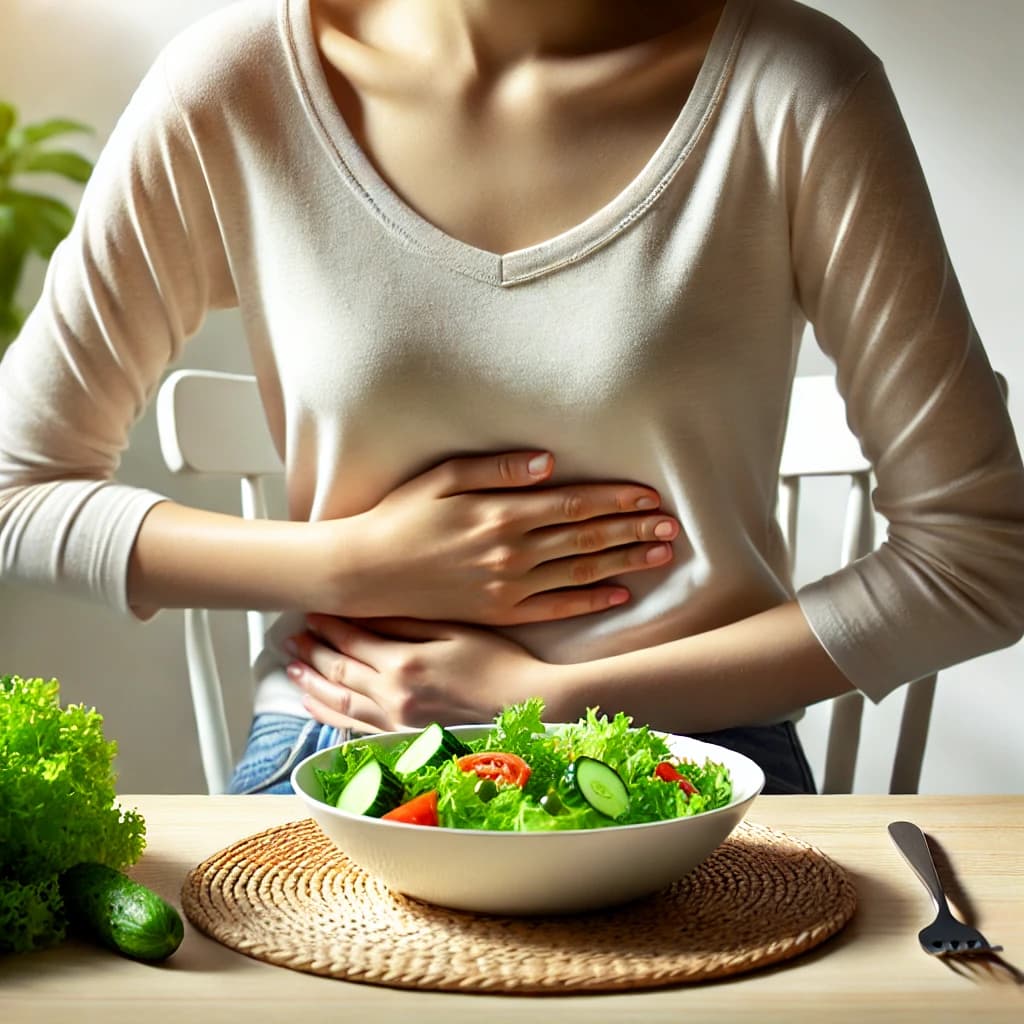
Salad discomfort almost never comes from "salad" as a category — it comes from one of a few specific, identifiable mechanisms: how your abdominal wall and diaphragm respond to a meal, particular ingredients that are high in FODMAPs, raw fiber your gut has to ferment instead of digest, a gut microbiome that hasn't caught up to more plant fiber yet, or, less often but importantly, contamination on raw greens that were never cooked. The first four cause ordinary bloating or cramping. The last one is a genuinely different problem, and it's worth knowing how to tell them apart — which is what the triage table further down is for.
Most of the time you're dealing with the ordinary kind: a gut that isn't used to a large volume of raw fiber, or a bowl built from a handful of classic gut irritants — onion, garlic, chickpeas — that would cause the same reaction on any plate, salad or not.
Lettuce specifically: it is usually not gas
If plain lettuce leaves you visibly bloated, the standard explanation — fiber fermenting in your colon and producing gas — is probably not what is happening to you. A team at the Digestive System Research Unit of University Hospital Vall d'Hebron in Barcelona tested that assumption directly rather than repeating it. In the laboratory arm, a preparation of human colonic microbiota (n = 3) fermented predigested lettuce alongside three comparators: gas production from lettuce was statistically indistinguishable from meat, a deliberately low gas-releasing substrate (P = .44), was 78 ± 15% lower than from beans (P < .001), and sat only 25 ± 19% above a nutrient-free control (P = .05). In the clinical arm, 12 patients who complained of abdominal distension after eating lettuce were CT-scanned during an episode and again at baseline. Their girth rose by 35 ± 3 mm (P < .001) — but their colonic gas did not significantly increase (39 ± 4 mL, P = .071). What did change was the position of the diaphragm, which descended by 7 ± 3 mm (P = .027), with the normal contents of the abdomen redistributed rather than inflated (Barba et al., 2019).
The composition data points the same way, and you can check this one in a nutrient database instead of taking our word for it. Raw cos/romaine lettuce is 94.6% water and carries 2.1 g of total dietary fiber per 100 g; iceberg has 1.2 g, green leaf 1.3 g, butterhead 1.1 g and red leaf 0.9 g. A USDA cup of shredded romaine weighs 47 g, so a generous two-cup bed of leaves is about 94 g and roughly 2 g of fiber — against 7.6 g in 100 g of cooked chickpeas (USDA FoodData Central, SR Legacy; FDC IDs 169247 and 173757). The leaves are rarely the fiber load in the bowl.
Where fiber genuinely does cause gas
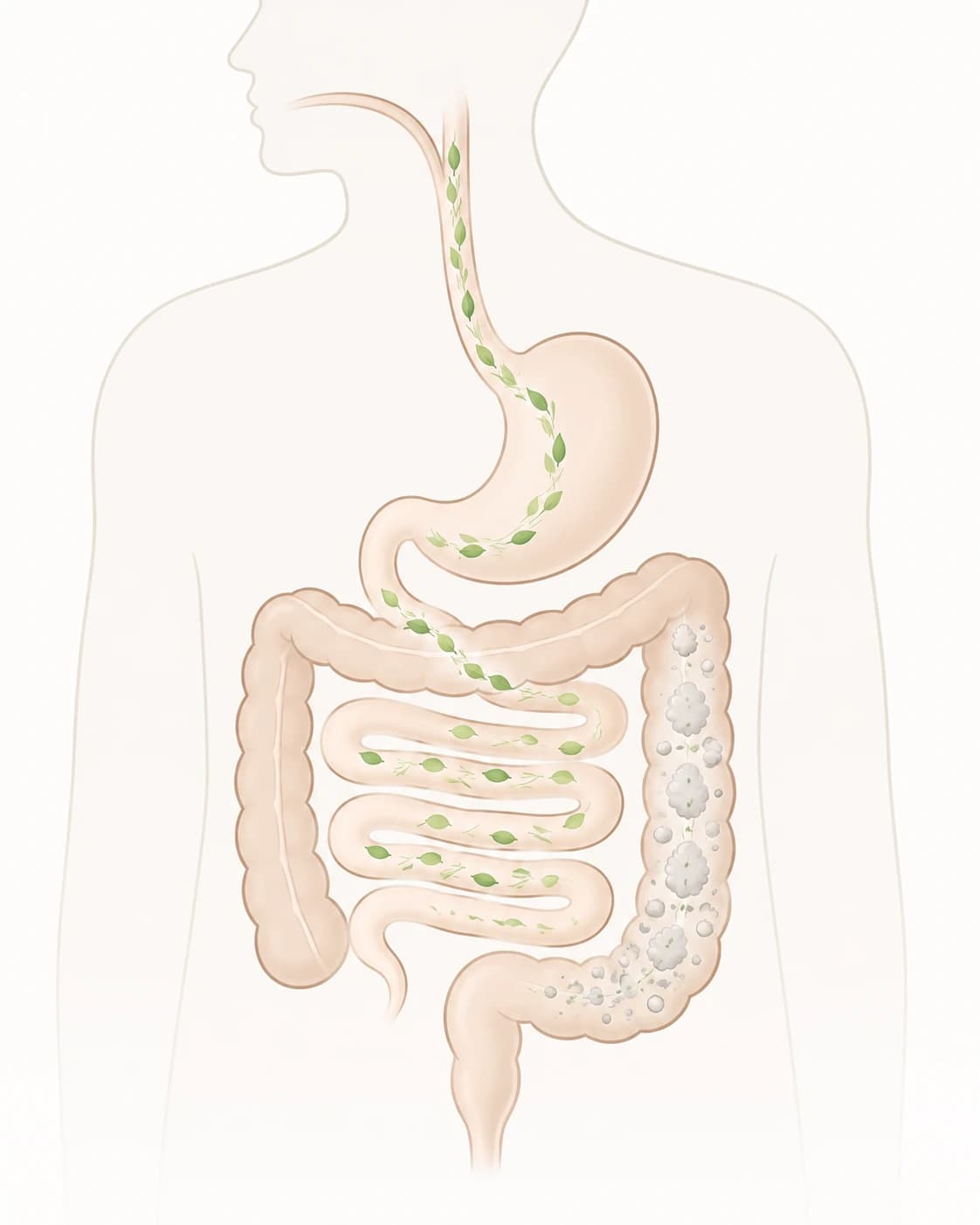
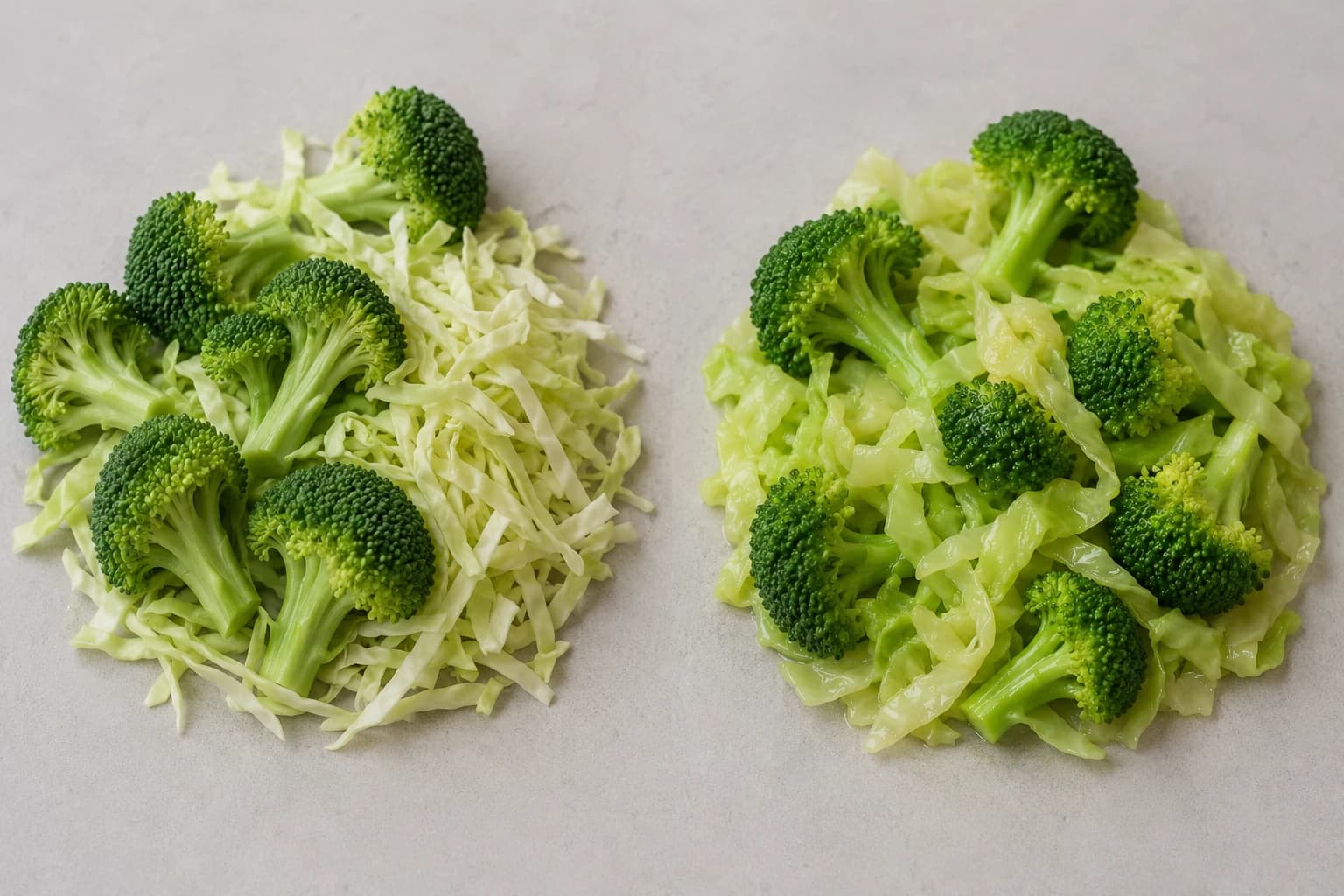
None of this makes fermentation a myth — it relocates it. Fiber that escapes digestion in the small intestine is fermented in the distal small bowel and colon, producing short-chain fatty acids and gas, and how much gas depends on the fermentation characteristics of that particular fiber; even used judiciously, fiber can exacerbate distension, flatulence, constipation and diarrhea (Eswaran et al., 2013). The useful question is therefore which fiber. Legumes and cruciferous vegetables — beans, chickpeas, broccoli, cabbage — are the high-fermentation items that commonly ride along in a salad, and beans were precisely the high gas-releasing comparator that out-gassed lettuce in the study above. Cooking partially breaks down that structural fiber before it ever reaches your gut, which is why those vegetables often sit easier steamed or roasted than raw.
What that means if you are the one bloating
Because the distension measured in that study tracked girth and diaphragm position rather than gas volume, cutting lettuce out of your meals would not obviously fix it. The authors' own conclusion is that lettuce is a low gas-releasing substrate and that "correction of the somatic response might be more effective than the current dietary restriction strategy." The pattern they describe — the diaphragm contracting downward while the abdominal wall relaxes outward, so an ordinary volume of gut contents produces a visibly protruding belly — has a name, abdomino-phrenic dyssynergia. It was first characterized with muscle recordings in 20 patients with bloating compared against 15 healthy volunteers (Villoria et al., 2011) and reviewed in the American Journal of Gastroenterology in 2023 (Damianos et al., 2023).
Two limits are worth stating plainly. This is a small study — 12 patients and three in-vitro microbiota preparations — and the clinical arm compared each patient against their own baseline rather than against a control group. And it tested a mechanism, not a treatment: it does not show that anything in particular will resolve your distension, and it is not a reason to skip a conversation with a doctor about symptoms that keep recurring.
FODMAPs are the more precise culprit
If plain lettuce doesn't bother you but a specific salad does, look at what's mixed in. FODMAPs — fermentable oligosaccharides, disaccharides, monosaccharides, and polyols — are short-chain carbohydrates that resist digestion in the small intestine, then get rapidly fermented once they reach the colon, drawing in water and gas as they go (Gibson & Shepherd, 2005). Onion, garlic, and legumes like chickpeas and beans are among the highest-FODMAP ingredients that regularly end up in salads. In a placebo-controlled rechallenge trial, IBS patients who were symptom-free on a low-FODMAP diet were secretly given fructans (the FODMAP concentrated in onion and garlic); 77% had symptoms return, as did 79% of those given a fructose-fructan mix, compared with just 14% of those given a glucose placebo (Shepherd et al., 2008). This is why two people can eat the "same" salad and only one of them hurts afterward — the reaction tracks the ingredients, not the format.
Your gut microbiome needs time to catch up
There's also an adjustment-period effect. Lauren Ball, a professor of community health and wellbeing, and Emily Burch, a dietitian and researcher, both at the University of Queensland, describe it plainly: when you increase fiber intake quickly, your gut microbes are multiplying and producing more of the enzymes needed to break plant matter down, and that process takes time (Ball & Burch, 2022). Until that population catches up, the same salad that felt fine last month can cause more gas than it will once your gut bacteria adapt. Their practical advice for legumes in particular: rinse them well and start with as little as a quarter cup if they're new to your routine, then build up gradually rather than adding a full serving all at once. What shifts that microbial population over time is the overall pattern of what you eat rather than any single supplement — our guide to the gut microbiome sets out where that evidence is strong and where it is still thin.
What's actually causing the pain
| Salad component | Why it can hurt | Source |
|---|---|---|
| Lettuce and other salad leaves | Low-fermentation and ~95% water; visible distension usually tracks a descending diaphragm and a relaxing abdominal wall, not gas volume | Barba et al., 2019 |
| Raw cruciferous vegetables and legumes (broccoli, cabbage, beans, chickpeas) | Resist digestion in the small intestine, then ferment in the colon, producing gas | Eswaran et al., 2013; Barba et al., 2019 |
| Onion, garlic, chickpeas, other legumes | High-FODMAP carbohydrates that ferment rapidly and draw water into the gut | Gibson & Shepherd, 2005; Shepherd et al., 2008 |
| Creamy dressings (ranch, caesar, blue cheese) | Often contain lactose, which people with lactose intolerance can't fully break down | NIDDK, Lactose Intolerance |
| Croutons and grain toppings | Contain gluten, which triggers an immune response in people with celiac disease | NIDDK, Celiac Disease |
| Contaminated raw greens (uncommon, but real) | Never cooked, so bacteria like E. coli aren't killed before eating | CDC, 2019 Romaine Lettuce Outbreak |
How to tell which one is happening to you
Two cues separate these mechanisms in practice: when the symptoms start, and what else was in the bowl. Neither is a diagnosis, but together they usually narrow the field to one or two things worth testing.
Timing helps because fermentation has an address. Fiber that escapes digestion in the small intestine is fermented in the distal small bowel and colon (Eswaran et al., 2013), so a mouthful has to travel there before it can produce any gas at all. Measured with a lactulose breath test, the median oro-cecal transit time in 60 healthy volunteers was 101 minutes (Gemignani et al., 2013). Symptoms that begin in the first half hour are therefore rarely that salad fermenting — and there is a well-described reason a meal can send you to the bathroom long before it has been digested. The gastrocolic reflex "controls the motility of the lower gastrointestinal tract following a meal," and myoelectric recordings show a spike of large-intestine activity "within minutes of food consumption" (Malone & Thavamani, 2023). It is triggered by the act of eating, not by what was on the plate.
| What you notice | Most likely mechanism | What to change first |
|---|---|---|
| Visible swelling after plain leaves, with little gas or flatulence | Abdominal wall relaxing while the diaphragm descends — not gas volume | Not elimination. The distension measured in these patients was not driven by gas, so cutting out lettuce aims at the wrong target (Barba et al., 2019) |
| An urgent bowel movement within minutes of starting to eat | Gastrocolic reflex — a normal post-meal response, triggered by eating rather than by the salad | Nothing dietary. If it follows most meals and disrupts your day, take the pattern to a doctor rather than to a food diary (Malone & Thavamani, 2023) |
| Gas and cramping that track one ingredient — onion, garlic, chickpeas, beans — and worsen with a bigger helping | FODMAP fermentation. In the rechallenge trial, symptoms were dose-dependent and reproduced each patient's usual IBS symptoms | Remove that single ingredient for a few days, not the salad (Shepherd et al., 2008) |
| Symptoms within a few hours, and only when the dressing is creamy | Lactose you cannot fully break down; NIDDK puts onset "within a few hours" of milk products | Switch to an oil-based dressing and see whether the pattern breaks (NIDDK, Lactose Intolerance) |
| Symptoms track the croutons or other wheat toppings rather than the greens | Gluten, in people with celiac disease | Ask about testing before you remove gluten. NIDDK: "Doctors don't recommend starting a gluten-free diet before diagnostic testing because a gluten-free diet can affect test results" |
| You recently increased fiber generally, and it is slowly getting easier week by week | Gut microbes still building the population that ferments plant fiber | Increase gradually; rinse legumes and start at about a quarter cup (Ball & Burch, 2022) |
The one pattern that is not a diet question. Food poisoning is identified by its symptoms, not by how quickly it arrived — and it usually does not arrive quickly. The CDC puts the usual onset of Shiga toxin-producing E. coli at "2 to 8 days (average of 3 to 4 days) after swallowing the germ" (CDC, 2019 E. coli Outbreak Linked to Romaine Lettuce), so the salad that made someone ill is often not the one they just ate. Call a doctor — not a diet plan — for "diarrhea or vomiting lasting more than 2 days," "bloody poop or pee," "a fever higher than 102°F," signs of dehydration, or signs of hemolytic uremic syndrome, which the CDC calls a medical emergency (CDC, Symptoms of E. coli Infection). If other people who ate the same food are also ill, seek advice sooner rather than later.
This table narrows the possibilities; it does not diagnose you. Celiac disease can only be confirmed by testing, and pain that keeps returning after ordinary, normal-sized salads is worth raising with a doctor as a possible sign of IBS or another digestive condition. Symptoms that are severe, persistent, or accompanied by weight loss or blood belong in a consultation, not in a food diary.
Dressings and croutons hide the real culprits
Sometimes the vegetables aren't the problem at all. Creamy dressings — ranch, caesar, blue cheese — are frequently dairy-based, and lactose intolerance causes bloating, gas, diarrhea, and abdominal pain in people who don't produce enough lactase to break it down (NIDDK, Lactose Intolerance: Symptoms & Causes). Croutons and other wheat-based toppings introduce gluten, which is harmless for most people but triggers an immune reaction that damages the small intestine and causes bloating and diarrhea in people with celiac disease (NIDDK, Celiac Disease: Symptoms & Causes). If pain tracks with the topping rather than the greens, this is where to look first.
When it's not digestion at all
Ordinary post-salad bloating comes on gradually and stays mild. It's worth knowing the difference, because raw leafy greens are also a documented source of foodborne illness, precisely because they're eaten uncooked and cooking is what normally kills contaminating bacteria. Romaine lettuce alone has been the source of multiple multistate E. coli O157:H7 outbreaks; in the outbreak traced to Salinas Valley, California growers in late 2019, 167 people across 27 states were sickened and 85 were hospitalized, including 15 who developed hemolytic uremic syndrome, a form of kidney failure (CDC, 2019 E. coli Outbreak Linked to Romaine Lettuce). Severe cramping, watery or bloody diarrhea, or fever points toward contamination rather than fiber or FODMAPs, and is a reason to contact a doctor rather than wait it out. Timing is a poor test here: the CDC puts the usual onset at "2 to 8 days (average of 3 to 4 days) after swallowing the germ," so the meal responsible is often several days back rather than the one just finished. Recurring pain after normal-sized, otherwise-fine salads, on the other hand, is a pattern worth discussing with a doctor as a possible sign of irritable bowel syndrome or another underlying digestive condition (NIDDK, Irritable Bowel Syndrome).
What actually helps
- Increase fiber gradually. Give your gut bacteria time to build up the population needed to ferment plant fiber without excess gas, rather than jumping straight to a large raw salad.
- Cook vegetables that give you trouble. Steaming or roasting breaks down structural fiber before it reaches your gut, easing the digestive load compared with eating the same vegetables raw.
- Try a low-FODMAP pass on your salad. Skip the onion, garlic, and legumes for a few days and see if symptoms ease — a rechallenge trial found these specific ingredients reliably brought symptoms back in IBS patients who had been symptom-free, far more often than a placebo did (Shepherd et al., 2008).
- Know where peppermint fits, and who should skip it. The clinical trial evidence sits with peppermint oil capsules in diagnosed IBS rather than with the tea, and peppermint is a poor choice if you have reflux, because relaxing smooth muscle also relaxes the valve that keeps stomach acid down — our guide to peppermint tea for digestion sets out both sides.
- Chew thoroughly. Mechanical breakdown in the mouth reduces the digestive burden your stomach and gut bacteria have to handle afterward.
- Take a short walk after eating. In a randomized clinical trial, a 10-15 minute walk after meals eased bloating and fullness in people with functional abdominal bloating at least as well as prokinetic medication did (Hosseini-Asl et al., 2021).
- Ask about probiotics if you have diagnosed IBS. A 2024 systematic review and meta-analysis of IBS patients found probiotics significantly reduced abdominal pain and bloating scores, though heterogeneity across the pooled trials was high, meaning results varied considerably by study protocol and probiotic strain used (Almabruk et al., 2024). This evidence applies to diagnosed IBS specifically, not bloating in general.
The bottom line
A salad that hurts isn't a mysteriously "bad" food — it's almost always traceable to one specific thing: how much raw fiber was in it, whether it contained high-FODMAP ingredients like onion or garlic, whether your gut microbiome has adapted to more plant fiber recently, or, occasionally, a dressing or topping doing the damage instead of the vegetables. Track which one applies to you, adjust that specific variable, and the same bowl of greens that used to cause trouble usually stops being a problem. The one exception to treat differently is sudden, severe illness after eating raw greens — that calls for a doctor, not a change in salad-building habits.
Frequently Asked Questions (FAQ)
Why does lettuce upset my stomach?
Usually not because it is producing gas. When researchers fermented predigested lettuce with human colonic microbiota, gas production was statistically indistinguishable from meat — a deliberately low gas-releasing comparator (P = .44) — and 78 ± 15% lower than from beans. In 12 patients who complained of distension after eating lettuce, girth rose 35 ± 3 mm during an episode while colonic gas did not significantly increase; what changed was the diaphragm, which descended 7 ± 3 mm (Barba et al., 2019). The composition points the same way: raw romaine is 94.6% water and carries 2.1 g of fiber per 100 g, so the leaves are rarely the fiber load in the bowl (USDA FoodData Central, FDC ID 169247). That study was small — 12 patients — and it tested a mechanism, not a treatment.
Why does salad make me bloated and gassy?
Usually because of what was mixed in, not the leaves themselves. Onion, garlic and legumes such as chickpeas are high-FODMAP ingredients that resist digestion in the small intestine and then ferment rapidly in the colon, drawing in water and gas (Gibson & Shepherd, 2005). In a placebo-controlled rechallenge trial, 77% of IBS patients had symptoms return when secretly given fructans — the FODMAP concentrated in onion and garlic — against 14% given a glucose placebo (Shepherd et al., 2008). Raw cruciferous vegetables and legumes ferment for the same reason (Eswaran et al., 2013). This is why two people can eat the same salad and only one of them hurts afterwards.
Can salad cause diarrhea?
Yes, and the common reasons are ordinary ones — but an urgent bowel movement within minutes of starting to eat is rarely that salad being fermented. The gastrocolic reflex "controls the motility of the lower gastrointestinal tract following a meal," with a spike of large-intestine activity "within minutes of food consumption," triggered by the act of eating rather than by what was on the plate (Malone & Thavamani, 2023). A creamy dressing is the other everyday explanation, because lactose that is not fully broken down causes diarrhea, gas and pain (NIDDK, Lactose Intolerance). Contamination is a genuinely different problem, and it is identified by its symptoms rather than by how fast it arrived — see the next two answers.
How long after eating salad should symptoms start?
Fermentation cannot begin until the food reaches your colon, and measured with a lactulose breath test the median oro-cecal transit time in 60 healthy volunteers was 101 minutes (Gemignani et al., 2013). So symptoms in the first half hour are more likely the gastrocolic reflex than the salad fermenting. Lactose from a creamy dressing sits in between: NIDDK puts onset "within a few hours" of consuming milk products. Contamination is the outlier and timing is a poor test for it — the CDC puts the usual onset of Shiga toxin-producing E. coli at "2 to 8 days (average of 3 to 4 days) after swallowing the germ" (CDC, 2019 E. coli Outbreak Linked to Romaine Lettuce), so the meal responsible is often several days back rather than the one just finished.
When should I see a doctor about stomach pain after eating salad?
Call a doctor for "diarrhea or vomiting lasting more than 2 days," "bloody poop or pee," "a fever higher than 102°F," signs of dehydration, or signs of hemolytic uremic syndrome, which the CDC calls a medical emergency (CDC, Symptoms of E. coli Infection). If other people who ate the same food are also ill, seek advice sooner rather than later. Separately from those red flags, pain that keeps returning after ordinary, normal-sized salads is worth raising with a doctor as a possible sign of irritable bowel syndrome or another digestive condition (NIDDK, Irritable Bowel Syndrome). One timing note if you suspect gluten: ask about testing before removing it, because NIDDK states that "doctors don't recommend starting a gluten-free diet before diagnostic testing because a gluten-free diet can affect test results."
How do I stop getting gas and bloating from salad?
In most cases by changing one variable rather than dropping salad. Increase fiber gradually so your gut bacteria have time to build the population that ferments it, and with legumes in particular rinse them well and start at about a quarter cup if they are new to your routine (Ball & Burch, 2022). Try a few days without onion, garlic and legumes to test whether one specific ingredient is responsible, cook the cruciferous vegetables that give you trouble, and consider a short walk afterwards — a randomized clinical trial found a 10-15 minute post-meal walk eased bloating and fullness at least as well as prokinetic medication did (Hosseini-Asl et al., 2021). One exception: if your pattern is visible swelling after plain leaves with little gas, elimination aims at the wrong target, because the distension measured in those patients was not driven by gas volume (Barba et al., 2019).
See also: What Foods Reduce Bloating Quickly?, Why Am I Hungry After Eating Protein?, What Happens If You Eat Cucumber Every Day? Benefits, Risks & Expert Insights.
Sources
-
Eswaran S, et al. Fiber and functional gastrointestinal disorders. American Journal of Gastroenterology. 2013;108(5):718-727. PMID: 23545709. https://pubmed.ncbi.nlm.nih.gov/23545709/
-
Gibson PR, Shepherd SJ. Personal view: food for thought—western lifestyle and susceptibility to Crohn's disease. Alimentary Pharmacology & Therapeutics. 2005;21(12):1399-1409. PMID: 15948806. https://pubmed.ncbi.nlm.nih.gov/15948806/
-
Shepherd SJ, et al. Dietary triggers of abdominal symptoms in patients with irritable bowel syndrome. Clinical Gastroenterology and Hepatology. 2008;6(7):765-771. PMID: 18456565. https://pubmed.ncbi.nlm.nih.gov/18456565/
-
National Institute of Diabetes and Digestive and Kidney Diseases. Irritable Bowel Syndrome (IBS). https://www.niddk.nih.gov/health-information/digestive-diseases/irritable-bowel-syndrome
-
National Institute of Diabetes and Digestive and Kidney Diseases. Lactose Intolerance: Symptoms & Causes. https://www.niddk.nih.gov/health-information/digestive-diseases/lactose-intolerance/symptoms-causes
-
National Institute of Diabetes and Digestive and Kidney Diseases. Celiac Disease: Symptoms & Causes. https://www.niddk.nih.gov/health-information/digestive-diseases/celiac-disease/symptoms-causes
-
Centers for Disease Control and Prevention. 2019 E. coli Outbreak Linked to Romaine Lettuce. https://archive.cdc.gov/www_cdc_gov/ecoli/2019/o157h7-11-19/index.html
-
Ball L, Burch E. Feeling bloated, hungry or bored after salad? These tips might help. The Conversation. 2022. https://theconversation.com/feeling-bloated-hungry-or-bored-after-salad-these-tips-might-help-190843
-
Hosseini-Asl MK, Taherifard E, Mousavi MR. The effect of a short-term physical activity after meals on gastrointestinal symptoms in individuals with functional abdominal bloating: a randomized clinical trial. Gastroenterology and Hepatology from Bed to Bench. 2021;14(1):59-66. PMID: 33868611. https://pubmed.ncbi.nlm.nih.gov/33868611/
-
Almabruk BA, Bajafar AA, Mohamed AN, et al. Efficacy of Probiotics in the Management of Irritable Bowel Syndrome: A Systematic Review and Meta-Analysis. Cureus. 2024;16(12):e75954. PMID: 39830577. https://pubmed.ncbi.nlm.nih.gov/39830577/
-
Barba E, Sánchez B, Burri E, Accarino A, et al. Abdominal distension after eating lettuce: The role of intestinal gas evaluated in vitro and by abdominal CT imaging. Neurogastroenterology & Motility. 2019;31(12):e13703. doi:10.1111/nmo.13703. PMID: 31402544. https://pubmed.ncbi.nlm.nih.gov/31402544/
-
Villoria A, Azpiroz F, Burri E, Cisternas D, Soldevilla A, Malagelada JR. Abdomino-phrenic dyssynergia in patients with abdominal bloating and distension. American Journal of Gastroenterology. 2011;106(5):815-819. doi:10.1038/ajg.2010.408. PMID: 21540894. https://pubmed.ncbi.nlm.nih.gov/21540894/
-
Damianos JA, Tomar SK, Azpiroz F, Barba E. Abdominophrenic Dyssynergia: A Narrative Review. American Journal of Gastroenterology. 2023;118(1):41-45. doi:10.14309/ajg.0000000000002044. PMID: 36191283. https://pubmed.ncbi.nlm.nih.gov/36191283/
-
U.S. Department of Agriculture, Agricultural Research Service. FoodData Central, SR Legacy: Lettuce, cos or romaine, raw (FDC ID 169247); Lettuce, iceberg, raw (169248); Lettuce, green leaf, raw (169249); Lettuce, butterhead, raw (168429); Lettuce, red leaf, raw (168431); Chickpeas (garbanzo beans, bengal gram), mature seeds, cooked, boiled, without salt (173757). https://fdc.nal.usda.gov/
-
Malone JC, Thavamani A. Physiology, Gastrocolic Reflex. In: StatPearls. Treasure Island (FL): StatPearls Publishing; last update 1 May 2023. Bookshelf ID NBK549888. https://www.ncbi.nlm.nih.gov/books/NBK549888/
-
Gemignani L, Savarino V, Ghio M, et al. Lactulose breath test to assess oro-cecal transit delay and estimate esophageal dysmotility in scleroderma patients. Seminars in Arthritis and Rheumatism. 2013;42(5):522-529. doi:10.1016/j.semarthrit.2012.09.004. PMID: 23352249. https://pubmed.ncbi.nlm.nih.gov/23352249/
-
Centers for Disease Control and Prevention. Symptoms of E. coli Infection. https://www.cdc.gov/ecoli/signs-symptoms/index.html
-
National Institute of Diabetes and Digestive and Kidney Diseases. Celiac Disease: Diagnosis. https://www.niddk.nih.gov/health-information/digestive-diseases/celiac-disease/diagnosis
All sources accessed 10 July 2026; sources 11-14 accessed 2 September 2026; sources 15-18 accessed 4 September 2026.

Olivia Smith, RDN
Registered Dietitian Nutritionist (RDN) and habit specialist, answering everyday questions about hunger, protein, and sustainable eating.