Table of Contents
- What Is a Gherkin Pickle?
- History of Gherkin Pickles
- Gherkin vs. Regular Cucumber: What's the Difference?
- How Gherkin Pickles Are Made
- Nutritional Facts
- Mexican Sour Gherkin (Melothria scabra)
- Culinary Uses Around the World
- Types of Gherkins
- Health Benefits and Risks
- Buying and Storing Gherkin Pickles
- FAQ
- Conclusion
Introduction
Imagine opening a jar and being hit by a sharp, briny cloud of vinegar and dill. That first whiff is the smell of preservation, tradition, and centuries of culinary ingenuity. Gherkin pickles are everywhere — tucked into burgers, stacked on charcuterie boards, floating in cocktails — yet most people couldn't tell you what makes a gherkin a gherkin, or why it tastes so different from the cucumber sitting next to it in the produce aisle.
There's even a small, grape-sized impostor out there called the Mexican sour gherkin that isn't technically a cucumber at all, yet goes by the gherkin name. And depending on which side of the Atlantic you're on, calling something a "pickle" versus a "gherkin" can mean entirely different things.
This guide untangles all of it — the botany, the history, the nutrition, and the surprising world of gherkin varieties. Whether you're a home pickler, a curious cook, or just someone who wonders what's actually in that little jar on the condiment shelf, you'll find your answers here.
What Is a Gherkin Pickle?
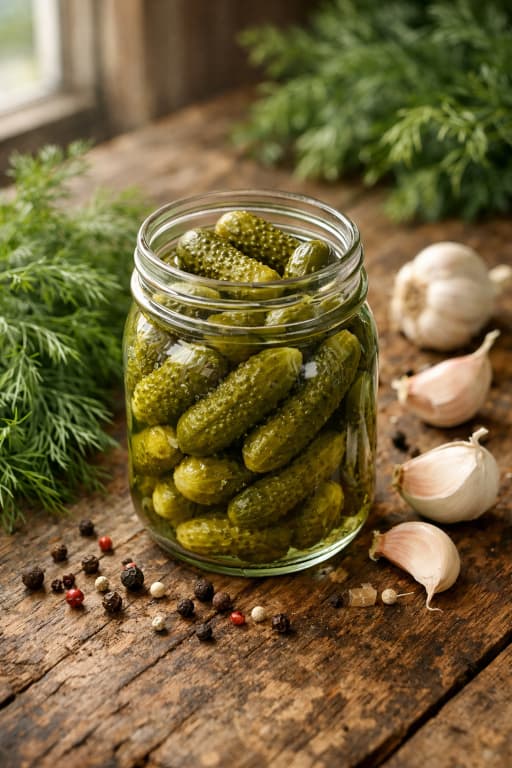
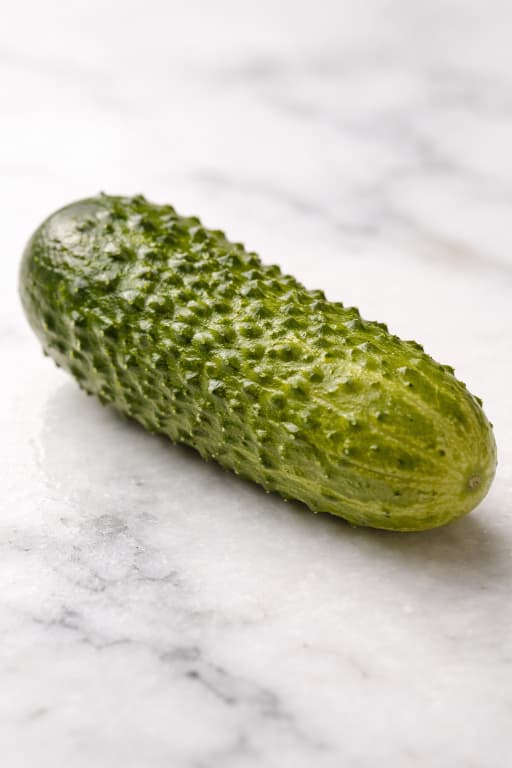
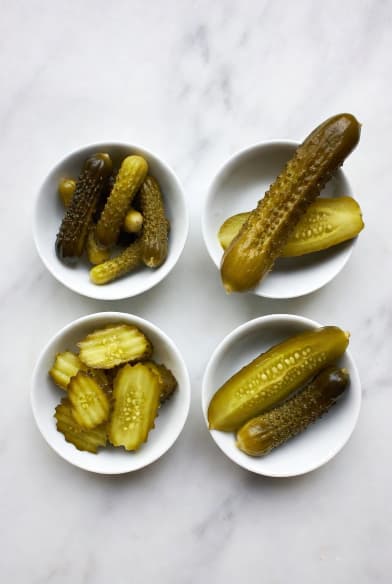
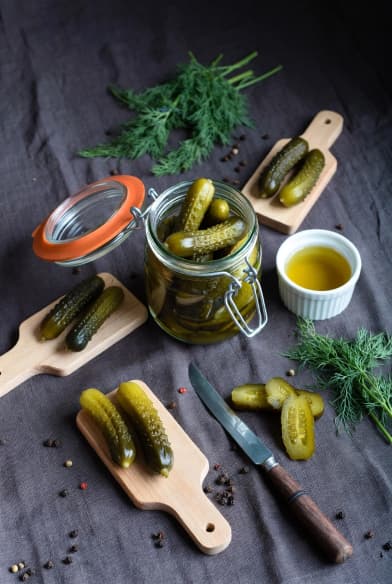
A gherkin pickle is a small cucumber, typically ranging from 3 to 13 cm (about 1 to 5 inches) in length, that has been preserved in a solution of brine, vinegar, or a combination of both. The term is used two ways depending on geography:
- In the United States and Canada, "pickle" usually refers to a pickled cucumber in general, while "gherkin" more specifically denotes a smaller, whole pickled cucumber.
- In Britain, Ireland, Australia, New Zealand, and South Africa, the word "gherkin" is the standard term for what Americans simply call a pickle.
The cucumber used for most gherkin pickles is Cucumis sativus, the same species as the slicing cucumber in your salad, just grown as a pickling type. These types are bred to be small, bumpy, crisp, and thin-walled, so they soak up brine evenly and stay crunchy after pickling.
The word "gherkin" comes from the old Dutch gurken, meaning "small pickled cucumber." That is a quiet hint that the Dutch helped spread pickling across northern Europe and, later, to the Americas.
Note on terminology: The term "gherkin" is also applied to Cucumis anguria, a related but distinct species native to southern Africa sometimes called the West Indian gherkin, and to Melothria scabra, the Mexican sour gherkin — an entirely different plant covered in detail below. When this article discusses gherkin pickles in general, it refers to products made from Cucumis sativus pickling varieties unless otherwise stated.
History of Gherkin Pickles
Cucumbers were first domesticated in India, from a wild, bitter-fruited relative (Cucumis sativus var. hardwickii) found in the Himalayan foothills, and people there have grown them for more than 3,000 years (University of Missouri IPM Extension; Chomicki et al., 2020, New Phytologist).
The popular story that Greek or Roman traders carried the cucumber into Europe doesn't hold up. A 2010 review in Annals of Botany found no solid evidence that true cucumber reached the Mediterranean before 500 CE — the "cucumbers" described by Roman writers like Pliny and Columella were most likely a different, hairy-fruited melon (the snake melon, Cucumis melo). Real cucumber arrived in Europe later, by two separate routes: overland into Slavic Europe from Persia, and by sea into Islamic Spain, reaching Andalusia by the 10th century and Italy by the 11th (Paris, Daunay & Janick, 2010). European colonization then carried it to North America in the 1500s.
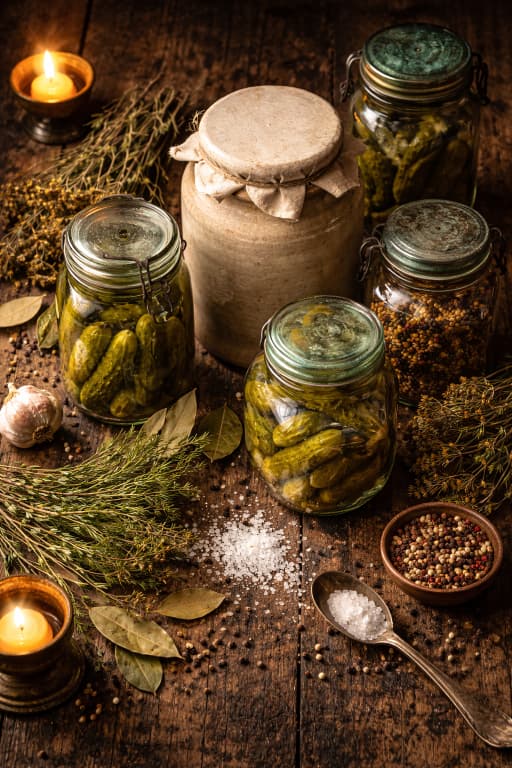
Pickling itself — preserving food in salt, brine, or acid — is far older, and cultures across the world developed it independently long before refrigeration existed. You may see the specific claims "pickled in Mesopotamia by 2400 BC" and "reached the Tigris Valley by 2030 BC" repeated across pickle-history sites; both trace back to a single uncited hobbyist page copied verbatim across the web rather than to an archaeological source, so we're leaving that false precision out here.
By the 19th century, pickled cucumbers were a commercial product at scale. Nicolas Appert's 1809 method for sealing food in airtight containers — developed for a prize offered by Napoleon — was a major step toward large-scale food preservation in France. In the United States, the Mason jar (patented 1858) and H. J. Heinz's pickle business, showcased at the 1893 Chicago World's Fair, turned home preservation into an industrial one (Harvard Business School, Working Knowledge).
Production today is measured in tens of millions of tonnes: FAO's own 2023 data puts global cucumber-and-gherkin output at roughly 98 million tonnes, the third-highest of any vegetable, with China as by far the largest single producer (FAOSTAT Analytical Brief No. 96).
Gherkin vs. Regular Cucumber: What's the Difference?
It's an honest question that catches many people off guard: if gherkins and cucumbers are the same species, what actually separates them?
The answer lies in breeding, harvest timing, and purpose.
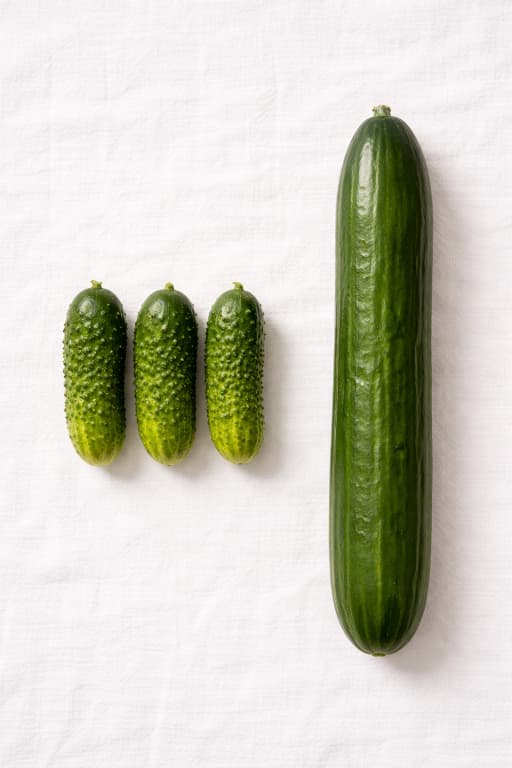
| Feature | Gherkin (Pickling Variety) | Slicing Cucumber |
|---|---|---|
| Size | 3–13 cm (1–5 in) | 15–30+ cm (6–12+ in) |
| Skin | Bumpy, thin, sometimes spiny | Smooth, thick |
| Flesh | Firm, dense, fewer voids | Softer, more watery |
| Water content | Lower | Higher (~95%) |
| Primary use | Pickling | Fresh eating |
| Harvest timing | Immature, young | Mature |
Gherkin cucumbers are picked young on purpose. That makes them firmer, which helps them stay crunchy in the acidic brine. Their thinner skin lets the brine soak in faster, and their lower water content keeps them from turning mushy the way a watery slicing cucumber would.
Slicing cucumbers can technically be pickled, and many home picklers do exactly that. But commercially, pickled cucumbers are made from varieties specifically bred for uniformity of shape, lack of internal voids, and the ability to stay crisp. That's the functional heart of what separates a gherkin from the cucumber you slice for a salad.
How Gherkin Pickles Are Made
Gherkin pickles are produced through one of two fundamentally different preservation methods: vinegar pickling (also called quick pickling or refrigerator pickling) and lacto-fermentation.
Vinegar Pickling (Acidified / Fresh-Pack)
In vinegar pickling — what food scientists call "acidified" or "fresh-pack" pickling — raw cucumbers are packed into jars, covered in a mix of vinegar, water, salt, spices, and sugar (in sweet types), and typically heat-processed at around 74°C (165°F) for about 15 minutes. US food-safety rules classify a pickle this way whenever added acetic acid brings it below pH 4.6; commercial fresh-pack brine usually runs 0.5–1.1% acetic acid (Pérez-Díaz et al., "Fermented and Acidified Vegetables," Compendium of Methods for the Microbiological Examination of Foods, USDA-ARS/APHA). It's fast — ready in a day or two — and gives a shelf-stable jar without relying on live bacteria. Most store-bought gherkins are made this way.
Lacto-Fermentation
Fermented pickles rely on salt and water alone (usually a 2–3% brine), letting bacteria already living on the cucumber's skin do the acidifying instead of added vinegar. That's not a single event — it's a documented handoff between species, each dominating briefly before a more acid-tolerant one takes over: Enterococcus faecalis first, then Leuconostoc mesenteroides, then Pediococcus species, then Lactobacillus brevis, finishing with L. plantarum and L. pentosus once the brine turns acidic enough for them. Beyond lactic acid (finished fermented pickles top out around 0.35%), these bacteria also produce diacetyl, ethanol, formic acid, hydrogen peroxide, and reuterin — compounds vinegar pickling never generates, which is a real chemical reason fermented dills taste more complex than a quick-pickled jar (Pérez-Díaz et al., USDA-ARS/APHA compendium chapter). Fermented pickles also carry live cultures, as long as they haven't been pasteurized afterward.
The Basic Steps for Home Pickling
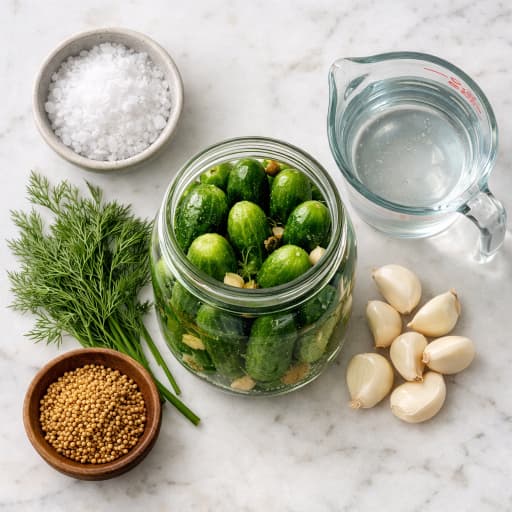
- Select fresh, firm, small cucumbers (pickling varieties work best)
- Wash cucumbers thoroughly; remove the blossom end (which contains enzymes that can soften pickles)
- Prepare brine (vinegar + salt + water, or salt + water for fermentation)
- Add spices — dill, garlic, mustard seed, peppercorns, red pepper flakes
- Pack cucumbers tightly into sterilized jars
- Pour brine over cucumbers, leaving appropriate headspace
- Process in a water bath canner (for shelf-stable pickles) or refrigerate
For shelf stability and food safety, the USDA National Center for Home Food Preservation provides tested pickling recipes with specific acidity and processing times. Following tested recipes is important, as deviating from established acid ratios can affect food safety.
Nutritional Facts of Gherkin Pickles
Gherkin pickles are very low in calories, contain virtually no fat, and are not a significant source of protein. Their nutritional profile changes substantially depending on whether they are dill (sour), sweet, or fermented.
The following data is sourced from the USDA Food Data Central database (FDC ID: 168558 for dill/kosher dill pickles):
| Nutrient | Per 100g (Dill Pickle) |
|---|---|
| Calories | ~12 kcal |
| Water | ~97% |
| Carbohydrates | ~1.4g |
| Protein | ~0.5g |
| Fat | ~0.2g |
| Sodium | ~809mg |
| Vitamin K | ~17µg (14% DV) |
| Vitamin C | Small amounts present |
Key nutritional points:
- Very low in calories. A whole dill pickle contains roughly 7–15 calories, making it a genuinely low-calorie snack.
- High in sodium. This is the single most significant nutritional concern. A large dill pickle can contain over 800 mg of sodium, more than a third of the 2,300 mg daily limit in U.S. dietary guidelines. Because high sodium intake raises blood pressure, and cutting it lowers blood pressure (Sacks et al., 2001), people managing hypertension or kidney disease should eat pickles in moderation.
- A source of Vitamin K. A whole dill pickle provides a meaningful share of the daily value of vitamin K, which supports blood clotting (USDA FoodData Central).
- Sweet gherkins have more sugar. Sweet gherkin varieties contain added sugars in the brine, which increases their carbohydrate content compared to dill varieties.
- Fermented pickles may contain probiotics. Unpasteurized, lacto-fermented pickles contain live Lactobacillus cultures. However, most commercially sold jarred pickles are pasteurized, which kills these cultures. If probiotic benefit is your goal, look for refrigerated, unpasteurized pickles with active cultures listed on the label.
Mexican Sour Gherkin (Melothria scabra)
Here is where the gherkin story takes an unexpected detour.
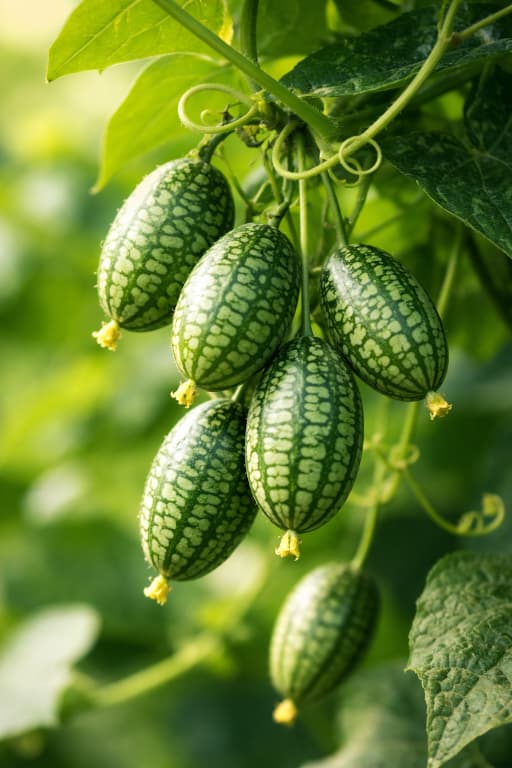
The Mexican sour gherkin, also called the cucamelon, mouse melon, or sandita ("little watermelon"), is not a cucumber at all. It is only a distant relative, in a different plant group (Melothria) from the everyday cucumber.
Its scientific name is Melothria scabra. Its native range runs from Mexico south to Venezuela, and people in that region are believed to have eaten it long before European contact (Kew, Plants of the World Online; University of Wisconsin–Madison Horticulture Extension). It wasn't formally described by Western botany until French botanist Charles Naudin classified it in 1866 (Kew POWO; GBIF).
What Does It Look Like?
The fruit is about the size of a large grape and looks, remarkably, like a miniature watermelon — oval-shaped and striped in dark and light green. This visual resemblance inspired its Spanish name, sandita, which translates as "little watermelon."
What Does It Taste Like?
The flavor is often described as cucumber with a pleasant tartness — like cucumber with a hint of lime or lemon. Despite the "sour" in its common name, the flesh is actually sweet, which is genuinely unusual: most wild cucurbit relatives stay bitter (a natural pest defense) until a domestication process breeds that trait out, and Melothria scabra is one of the few wild species that never had it in the first place (Chomicki, Schaefer & Renner, 2020, New Phytologist).
How It's Used
Mexican sour gherkins can be:
- Eaten fresh, straight off the vine, like a snack
- Sliced into salads for a pop of color and tart crunch
- Pickled as refrigerator pickles (their small size means they absorb brine quickly)
- Used as garnishes in cocktails
- Incorporated into salsas and ceviche-style preparations
Growing It
Melothria scabra is a vigorous climbing vine; the Royal Horticultural Society lists a mature height of 2.5–4 meters, about 8–13 feet (RHS). It grows quickly — seed suppliers cite around 67 days from direct seeding to harvest, with extension guidance putting it closer to 70–75 days depending on conditions (Johnny's Selected Seeds; UW–Madison Horticulture Extension). It tends to keep fruiting later into cool weather than regular cucumbers and isn't bothered by many common garden pests, though it isn't immune to disease — downy mildew, powdery mildew, and cucumber mosaic virus can all still affect it.
In USDA Hardiness Zones 10 and 11 it can behave as a perennial, dying back to fleshy underground tubers that re-sprout in spring; elsewhere it's grown as an annual (Garden Betty growing guide).
Extension guidance recommends harvesting the fruit at about 1 inch long, before it turns seedy (University of Georgia Extension, Cherokee County; Johnny's Selected Seeds).
Culinary Uses of Gherkin Pickles
Gherkin pickles serve as both a condiment and an ingredient across a striking range of cuisines.
As a condiment:
- Served alongside burgers, sandwiches, and hot dogs across North America and Europe
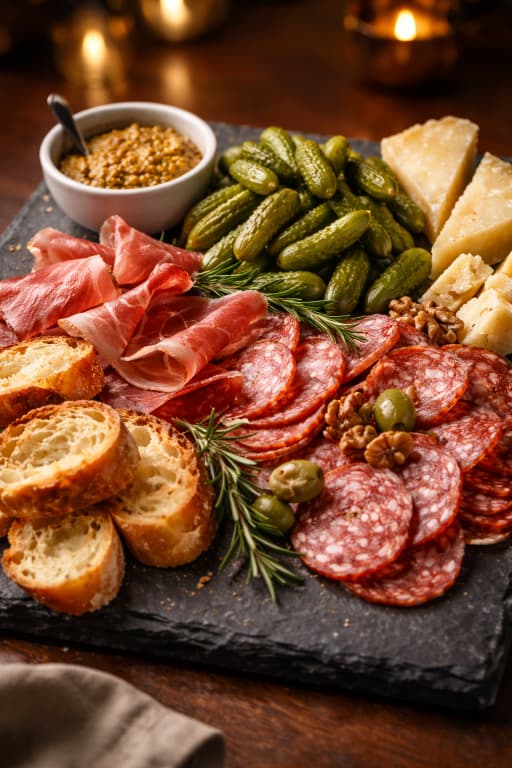
- Paired with pâtés and cold cuts in French cuisine (as cornichons)
- Offered at fish and chip shops in southern England as a side, sometimes called "wallies," a term for pickled cucumbers documented in London's East End since at least 1902 (Green's Dictionary of Slang)
- Included in ploughman's lunches in the UK alongside cheese and bread
As an ingredient:
- Chopped into tartar sauce, remoulade, and salad dressings
- Diced into potato salad, egg salad, and tuna salad
- Stirred into Russian rassolnik, a traditional soup of pickled cucumbers, barley, and meat that dates back centuries
- Used in Polish and other Eastern European sour soups
- Sliced for relish trays and charcuterie boards
In cocktails:
- The dirty martini has a close cousin — the pickle-brine martini — where gherkin brine (or pickle juice) replaces olive brine
- Gherkins are also used as garnishes in Bloody Mary cocktails
The acid and salt in gherkin pickles make them an effective counterpoint to fatty, rich foods. This is why they pair so well with fried fish, rich pâtés, cured meats, and oily dressings.
Types of Gherkins Around the World
Gherkin pickles vary considerably by region and preparation method. Here are the major varieties:
Cornichons (France) Small, tart French gherkins pickled in white wine vinegar with tarragon, pearl onions, and spices. They are typically very small — no more than 5 cm — and are the classic accompaniment to French charcuterie boards. The name comes from French cornichon, a diminutive of corne ("horn"), a nod to their curved shape (Etymonline).
Dill Gherkins (North America and Eastern Europe) The most common variety in the United States. Made with dill weed or dill seed, garlic, and brine. Flavor ranges from mildly tangy (half-sour) to fully fermented and pungent (full-sour or kosher dill).
Kosher Dill Pickles "Kosher dill" doesn't necessarily mean the pickle was actually prepared under Jewish dietary law (kashrut) — most jarred "kosher dills" on supermarket shelves today aren't certified kosher at all. The name instead marks a pickling style, brought to the US by Jewish immigrants and associated with New York City delis, that leans heavily on garlic and dill in a natural salt brine (Chabad.org). A "full-sour" kosher dill is fully fermented; a "half-sour" is cured for a shorter time and remains bright green and very crisp.
Sweet Gherkins (North America) Pickled in a brine containing sugar, vinegar, and spices. Their sweeter profile makes them a different culinary experience from dill varieties. The bread-and-butter pickle is a related sweet style; the name comes from Omar and Cora Fanning, Illinois cucumber growers whose bartering-for-bread-and-butter story is the origin tale, and Omar Fanning filed the trademark for "Fanning's Bread and Butter Pickles" in 1923, granted the following year (The Takeout).
West Indian Gherkin (Cucumis anguria) This is a distinct species — likely native to southern Africa — grown in warm climates worldwide (Britannica). Its fruits can be eaten raw, cooked, or pickled, though it is considered a separate botanical entity from Cucumis sativus gherkins. Commercial pickle mixtures sold as "gherkins" are more commonly made from small immature Cucumis sativus fruits.
Wally (UK) A large gherkin pickled in vinegar, sold from big jars in fish and chip shops, especially in London and southern England. "Wally" as slang for a pickled cucumber is documented back to at least 1902, when East End street vendors sold "wally wallies," and the usage persists today (Green's Dictionary of Slang).
Health Benefits and Risks
Potential Benefits
Low in calories. Gherkin pickles add sharp, briny flavor for almost no calories, which makes them an easy way to liven up a meal.
Source of Vitamin K. Dill pickles provide a meaningful amount of vitamin K per serving, which supports blood clotting (USDA FoodData Central).
Pickle juice and muscle cramps. Some athletes drink pickle juice for cramps. A small study did find it relieved an induced cramp faster than water, but interestingly the effect was too fast to be electrolyte replacement: the researchers attributed it to a reflex triggered in the mouth and throat, not to rehydration (Miller et al., 2010). The evidence is limited, so this is a curiosity rather than an established recommendation.
Probiotics (in fermented, unpasteurized varieties). Lacto-fermented pickles made without pasteurization contain live Lactobacillus cultures. Fermented foods may offer benefits beyond the original food, but only a limited number of clinical studies exist, so this remains an emerging area (Marco et al., 2017).
Antioxidants. Cucumbers contain beta-carotene and vitamin C, and some of these compounds are retained in pickled form.
Risks and Considerations
High sodium. This is the most significant concern. One large dill pickle can contain 800mg or more of sodium. People with hypertension, kidney disease, or on sodium-restricted diets should be cautious. High sodium intake over time has been linked to elevated blood pressure and increased risk of cardiovascular events.
Not a probiotic food if pasteurized. Most commercially jarred pickles are pasteurized after packing, which kills beneficial bacteria. Don't assume jarred gherkins from a grocery shelf provide probiotic benefit unless the label specifically states "live cultures" and recommends refrigeration.
High sugar in sweet varieties. Sweet gherkins can contain added sugars. Those monitoring blood sugar or carbohydrate intake should check nutrition labels.
Buying and Storing Gherkin Pickles
Buying
When buying gherkin pickles commercially, consider the following:
- Check the label for type. Dill, sweet, bread-and-butter, and kosher dill all have distinct flavor profiles. Match the style to your intended use.
- For probiotics, look for refrigerated, unpasteurized options. These will typically say "raw" or "live cultures" and must be kept cold. They'll often be found in the refrigerated section rather than on shelf-stable grocery aisles.
- Look for no added preservatives if you prefer a more traditional product. Many commercial pickles add preservatives like sodium benzoate; while considered safe for most people, some individuals may be sensitive.
Storing
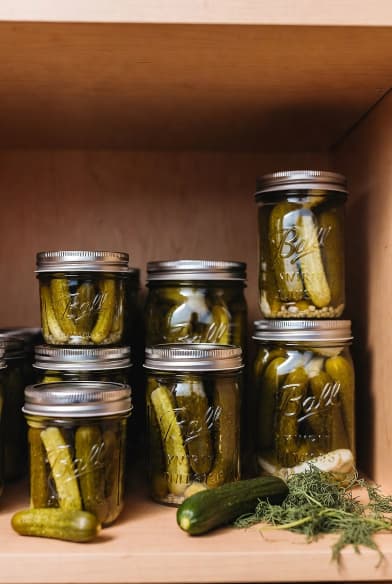
- Unopened jars: Shelf-stable, commercially processed jars can be stored at room temperature in a cool, dark pantry for up to 1–2 years (check the best-by date).
- After opening: Always refrigerate after opening. Opened jars of commercial gherkins will keep in the refrigerator for 1–3 months, depending on the brand.
- Refrigerator pickles (homemade or fresh-pack): Keep refrigerated at all times and consume within 4–6 weeks.
- Fermented pickles: Store in the refrigerator. Fermentation continues slowly in cold storage, so flavor will deepen over time.
FAQ
What is the difference between a gherkin and a pickle?
A gherkin refers to a small variety of cucumber (Cucumis sativus) typically harvested immature and used for pickling. A pickle refers to any food — including cucumbers — that has been preserved in vinegar or brine. In the US, "gherkin" usually describes a smaller pickled cucumber, while "pickle" covers the broader category. In the UK, "gherkin" is the standard term for what Americans call a pickle.
Are gherkin pickles healthy?
Gherkin pickles are very low in calories and contain Vitamin K, making them a reasonable condiment choice. However, they are high in sodium, which is a concern for people managing blood pressure or kidney health. Fermented, unpasteurized gherkins may also provide probiotics. Overall, they are best enjoyed in moderation as part of a balanced diet.
What is a Mexican sour gherkin?
The Mexican sour gherkin (Melothria scabra) is a separate plant species — not a cucumber — native to Mexico and Central America. Also called the cucamelon or mouse melon, it produces grape-sized fruits that look like miniature watermelons and taste like cucumber with a hint of lime. They can be eaten fresh or pickled.
What is the difference between a gherkin and a cornichon?
Cornichons are a specific style of gherkin originating in France. They are very small (typically under 5 cm), pickled in white wine vinegar with tarragon and other aromatics, and have a distinctly tart, herb-forward flavor. All cornichons are gherkins, but not all gherkins are cornichons.
How do you make gherkin pickles at home?
To make basic refrigerator gherkin pickles, pack small cucumbers into sterilized jars with dill, garlic, and your preferred spices. Pour a hot brine made from equal parts water and white vinegar with pickling salt over the cucumbers. Seal and refrigerate for at least 24–48 hours before eating. For shelf-stable pickles, follow tested recipes from the USDA National Center for Home Food Preservation, which provides specific acid ratios and processing times for safe canning.
Are gherkins the same as cucumbers?
Botanically, yes — most gherkins are a variety of Cucumis sativus, the same species as the cucumber. The difference lies in cultivar selection: gherkin varieties are bred to be small, firm, and bumpy-skinned, making them ideal for pickling. The Mexican sour gherkin is the notable exception: it belongs to a different genus entirely (Melothria) and is only distantly related to cucumbers.
Why are gherkin pickles so high in sodium?
Sodium is the key preservative in pickle brine. Salt lowers water activity in the cucumber, draws out moisture, and creates an environment hostile to spoilage bacteria. In vinegar pickles, salt also balances the sharpness of the acid. Without adequate salt, the pickle would spoil quickly and lack flavor structure. Low-sodium pickle options exist commercially, but they typically use other preservation methods and may have a softer texture.
Conclusion
Gherkin pickles are a small food with a surprisingly large story. From the cucumber's domestication in India thousands of years ago to the French cornichon, the New York kosher dill, and the garden novelty of the Mexican sour gherkin, they represent a long history of human ingenuity around the challenge of preservation.
What makes gherkin pickles worth understanding is how much variation hides behind that single word. The type of cucumber, the pickling method (vinegar vs. fermentation), the spices, the brine concentration — all of these shape the final flavor, nutrition, and culinary application. A sweet gherkin and a full-sour kosher dill share a jar shape and a name, but they occupy completely different flavor territory.
Whether you're slicing them onto a charcuterie board, dropping them into a relish, or growing Melothria scabra on a garden trellis for the sheer delight of it, gherkin pickles reward curiosity. And the next time someone at the table asks what the difference is between a gherkin and a pickle — you'll have the full answer.
Medical disclaimer: This article is for informational purposes only. Always consult a qualified healthcare provider before making changes to your health routine.
For more on the fresh side of the story, see our honest look at eating cucumber every day, and our guides to why salad can upset your stomach and foods that reduce bloating quickly, or browse our nutrition guides.
Sources
- USDA FoodData Central. Pickles, cucumber, dill (FDC ID 168558). https://fdc.nal.usda.gov/
- Miller KC, Mack GW, Knight KL, et al. Reflex inhibition of electrically induced muscle cramps in hypohydrated humans. Medicine & Science in Sports & Exercise, 42(5):953-61, 2010 — PubMed. https://pubmed.ncbi.nlm.nih.gov/19997012/
- Marco ML, et al. Health benefits of fermented foods: microbiota and beyond. Current Opinion in Biotechnology, 2017 — PubMed. https://pubmed.ncbi.nlm.nih.gov/27998788/
- Sacks FM, et al. Effects on blood pressure of reduced dietary sodium and the DASH diet. New England Journal of Medicine, 2001 — PubMed. https://pubmed.ncbi.nlm.nih.gov/11136953/
- University of Missouri IPM Extension. Cucumber: A Brief History. https://ipm.missouri.edu/meg/2014/3/cucumber-a-brief-history/
- Chomicki G, Schaefer H, Renner SS. Origin and domestication of Cucurbitaceae crops: insights from phylogenies, genomics and archaeology. New Phytologist, 226(5):1240-1255, 2020. https://nph.onlinelibrary.wiley.com/doi/10.1111/nph.16015
- Paris HS, Daunay M-C, Janick J. Occidental diffusion of cucumber (Cucumis sativus) 500-1300 CE: two routes to Europe. Annals of Botany, 105(2), 2010 — PMC. https://pmc.ncbi.nlm.nih.gov/articles/PMC3241595/
- Harvard Business School, Working Knowledge. Henry Heinz and Brand Creation in the Late Nineteenth Century. https://www.library.hbs.edu/working-knowledge/henry-heinz-and-brand-creation-in-the-late-nineteenth-century
- FAO. FAOSTAT Analytical Brief No. 96: Agricultural Production Statistics 2010-2023. https://openknowledge.fao.org/handle/20.500.14283/cd3755en
- Kew, Plants of the World Online. Melothria scabra Naudin. https://powo.science.kew.org/taxon/urn:lsid:ipni.org:names:293320-1
- GBIF Backbone Taxonomy. Melothria scabra Naudin, 1866. https://www.gbif.org/species/3623482
- University of Wisconsin–Madison Horticulture Extension. Mouse Melon or Mexican Sour Cucumber (Melothria scabra). https://hort.extension.wisc.edu/articles/mouse-melon-or-mexican-sour-cucumber-melothria-scabra/
- Royal Horticultural Society. Melothria scabra plant profile. https://www.rhs.org.uk/plants/343231/melothria-scabra/details
- Johnny's Selected Seeds. Mexican Sour Gherkin Cucumber. https://www.johnnyseeds.com/vegetables/cucumbers/specialty-cucumbers/mexican-sour-gherkin-cucumber-seed-3174.html
- Garden Betty. Mexican Sour Gherkin (Cucamelon) Growing Guide. https://gardenbetty.com/mexican-sour-gherkin-cucumbers/
- University of Georgia Extension, Cherokee County. Cucamelons: Cool as a Cucumber. https://site.extension.uga.edu/cherokee/2015/07/cucamelons-cool-as-a-cucumber/
- Etymonline. Cornichon. https://www.etymonline.com/word/cornichon
- The Takeout. An American Pickle: How a Chance Meeting Enhanced a Cucumber Farmer's Bread and Butter. https://www.thetakeout.com/the-history-of-bread-and-butter-pickles-in-america-1844651185/
- Britannica. Gherkin. https://www.britannica.com/plant/gherkin
- Green's Dictionary of Slang. Wally, n.¹. https://greensdictofslang.com/entry/pf7trbi
- Chabad.org. What Makes Kosher Pickles "Kosher"? https://www.chabad.org/library/article_cdo/aid/4059877/jewish/What-Makes-Kosher-Pickles-Kosher.htm
- Pérez-Díaz IM, et al. Fermented and Acidified Vegetables. Chapter 51, Compendium of Methods for the Microbiological Examination of Foods, USDA-ARS/American Public Health Association Press, 2013. https://www.ars.usda.gov/ARSUserFiles/60701000/Pickle%20Pubs/p390.pdf
All historical and botanical claims above are cited to their original source inline; sources verified 11 July 2026.

Sophia Martinez, MS, CNS
A wellness researcher focused on what the evidence actually says.