If you switched to plant-based eating and felt more tired, you are not imagining it, but the problem usually is not the "plant-based" part. It is the balance part. When snacks are mostly quick carbs (fruit, crackers, granola), energy spikes and drops fast. Build them with fiber, protein, and healthy fat and the energy steadies out. This guide gives you 25 real vegan snacks designed to fuel you, with approximate nutrition from USDA FoodData Central, the best time to eat each, and a prep tip.
Why plant-based snacks can fuel steady energy
Plant foods are naturally built around fiber and complex carbohydrate. Fiber slows digestion and moderates the rise in blood sugar, which means fewer crashes (Anderson et al., 2009). Pairing that carbohydrate with protein and fat slows the rise further (Jenkins et al., 1981). Your body does not store amino acids, so spreading protein through the day supplies the building blocks for recovery and steady energy. Plant foods also bring a wide range of beneficial compounds, which is part of why whole-food eating is linked with long-term health.
One honest caveat: a vegan diet needs a little planning to avoid gaps. Vitamin B12 is not found in plant foods, so fortified foods or a supplement are essential (Craig, 2009; Allen, 2012). Iron and zinc are present in plants but less easily absorbed, so consistent intake matters (Craig, 2009). Many of the snacks below help close those gaps.
The vegan energy snack formula
Plant protein (5 g+) + fiber (3 g+) + healthy fat. Protein and fat slow digestion while fiber moderates glucose release. A banana alone is mostly carbohydrate (about 27 g carbs, 1 g protein); add almond butter and chia and it becomes a balanced snack with a slower energy curve. You do not need perfection, just balance most of the time.
The 25 vegan snacks
Nutrition is approximate per serving, from USDA FoodData Central; values vary by brand and preparation.
Protein-first
- Edamame (½ cup). A complete plant protein with fiber. ~11 g protein, 3.8 g fiber, ~127 kcal. Best: mid-morning or post-workout. Tip: keep frozen and microwave with a pinch of salt.
- Roasted chickpeas (½ cup). Crunchy, fiber-rich, slow-release carbs. ~7 g protein, 6.2 g fiber, ~135 kcal. Best: afternoon slump. Tip: roast with smoked paprika at 400°F for 20–25 min.
- Lentil salad cup (lentils + carrots). Protein plus slow carbs. ~9.5 g protein, 9.3 g fiber, ~137 kcal. Best: pre-workout or midday. Tip: batch-cook and store with lemon and herbs.
- Tofu cubes (½ cup). Protein without a big carb load. ~11 g protein, 3.6 g carbs, ~98 kcal. Best: late afternoon. Tip: bake with tamari and garlic powder.
- Tempeh strips (½ cup). Fermented soy, very filling. ~17 g protein, ~159 kcal. Best: late afternoon. Tip: steam 10 min before searing to cut bitterness.
Fiber and crunch
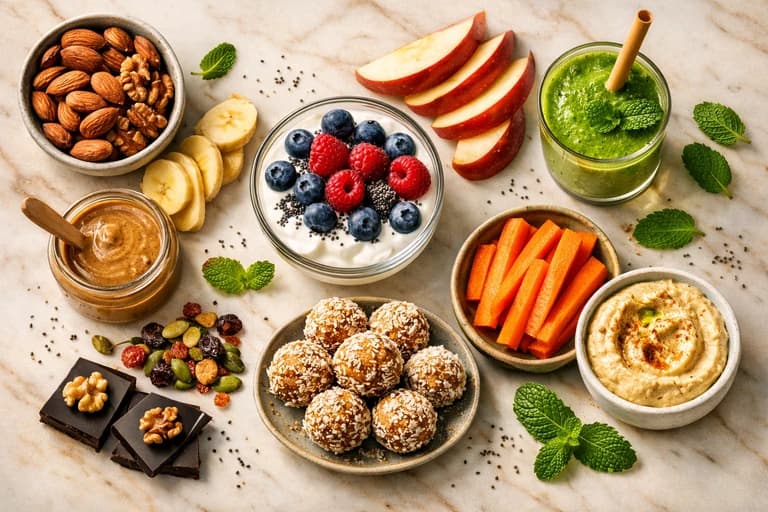
- Hummus + carrot and cucumber sticks. Vegetable fiber plus protein and fat. ~6 g protein, 7.1 g fiber, ~204 kcal. Best: mid-morning. Tip: pre-portion hummus to grab and go.
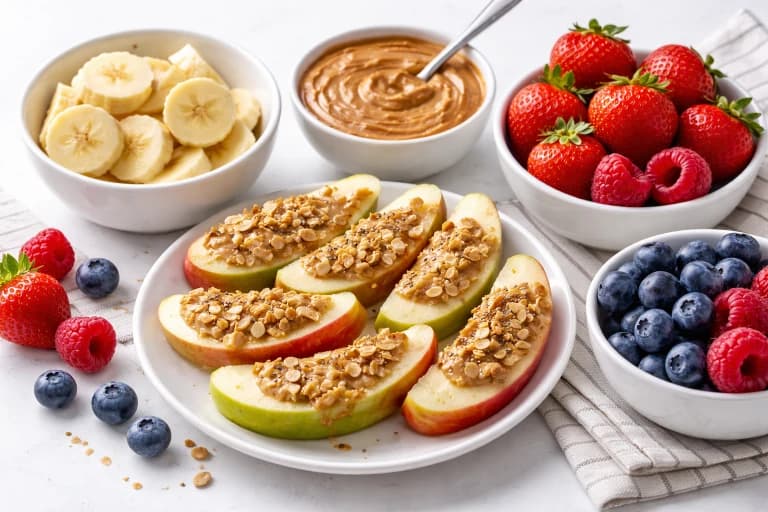
- Apple + almond butter. Fruit fiber slows the natural sugars; nut butter adds protein and fat. ~7 g protein, 7.7 g fiber, ~291 kcal. Best: pre-workout. Tip: slice and add cinnamon.
- Whole-wheat crackers + black bean dip. Whole grains plus legumes. ~7 g protein, 6.6 g fiber, ~176 kcal. Best: desk snack. Tip: mash black beans with lime and cumin.
- Air-popped popcorn + pumpkin seeds. Volume and fiber, plus protein and fat. ~7 g protein, 4.5 g fiber, ~172 kcal. Best: evening. Tip: toss with nutritional yeast.
- Soy yogurt + blueberries. Protein plus fiber and natural sweetness. ~6.5 g protein, 2.5 g fiber, ~189 kcal. Best: mid-afternoon. Tip: use frozen blueberries to chill it instantly.
Healthy fat
- Avocado toast. Healthy fat and fiber on slow carbs. ~6 g protein, 8.6 g fiber, ~241 kcal. Best: breakfast or pre-workout. Tip: add lemon and chili flakes.
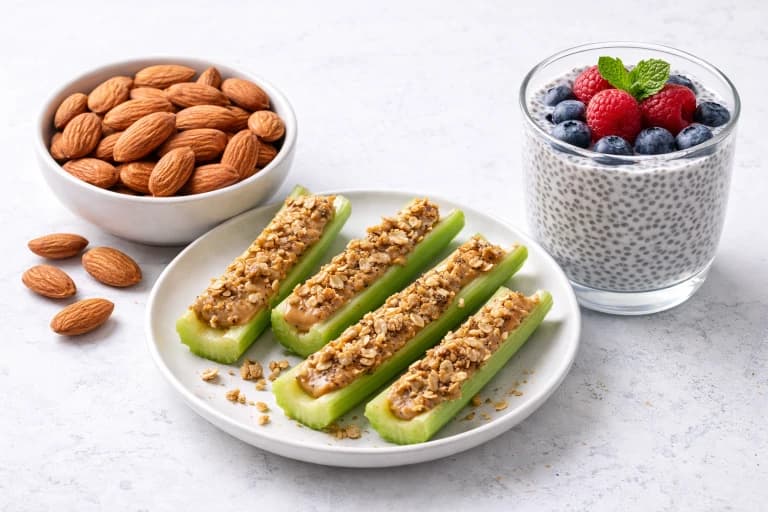
- Chia pudding (chia + soy milk). Chia gels and slows digestion. ~11 g protein, 11.1 g fiber, ~219 kcal. Best: morning. Tip: mix the night before with vanilla.
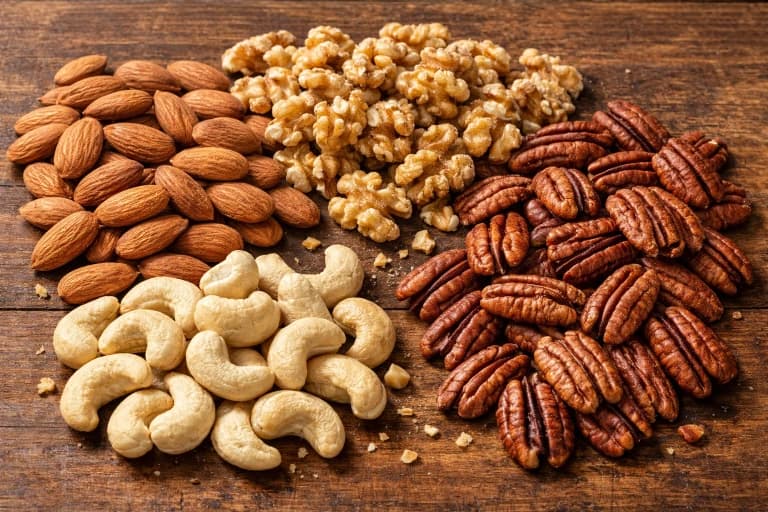
- Trail mix (almonds + pumpkin seeds + apricots). Portable, energy-dense (Ros, 2010). ~11 g protein, 6.6 g fiber, ~315 kcal. Best: travel or long meetings. Tip: pre-portion into small bags.
- Tahini + whole-wheat pita. Sesame fat and minerals on steady carbs. ~8 g protein, 4.5 g fiber, ~252 kcal. Best: midday. Tip: thin tahini with lemon and water for a dip.
- Flax oatmeal cup (oats + flax + soy milk). Strong fiber and fat profile. ~8.5 g protein, 6.2 g fiber, ~197 kcal. Best: morning. Tip: microwave 90 seconds, top with berries.
Quick energy
- Banana + peanut butter. Fast fuel with enough fat and protein to prevent a crash. ~8 g protein, 4.7 g fiber, ~296 kcal. Best: 30–60 min before a workout. Tip: slice and drizzle.
- Dates + almonds. Dates for fast carbs, almonds to slow the release. ~6 g protein, 5.2 g fiber, ~222 kcal. Best: pre-workout. Tip: stuff each date with an almond.
- Oat energy bites (oats + peanut butter + dates + chia). Compact and balanced. ~9 g protein, 8.1 g fiber, ~286 kcal. Best: on the go. Tip: roll into balls and freeze.
- Spinach-banana soy smoothie. Fast-digesting with protein and micronutrients. ~8 g protein, 3.7 g fiber, ~143 kcal. Best: pre-workout. Tip: use frozen banana for creaminess.
- Rice cakes + almond butter + blueberries. Crispy and sweet with a fat-protein anchor. ~5 g protein, 4 g fiber, ~207 kcal. Best: afternoon. Tip: spread the almond butter first so berries stick.
Meal-prep
- Quinoa + black bean cup. A mini meal: complete protein plus fiber-rich beans. ~14 g protein, 11.4 g fiber, ~280 kcal. Best: post-workout. Tip: brighten with lime and herbs.
- Chickpea salad lettuce wraps. Protein, fiber, and volume. ~8 g protein, 7.4 g fiber, ~144 kcal. Best: desk snack. Tip: mash chickpeas with mustard and lemon.
- Sweet potato + black beans. High-fiber, steady energy, satisfying. ~10 g protein, 11.2 g fiber, ~216 kcal. Best: early evening. Tip: bake sweet potatoes in bulk.
- Overnight oats (oats + soy yogurt + blueberries). Protein, fiber, and a little fat. ~7 g protein, 4.8 g fiber, ~216 kcal. Best: breakfast. Tip: mix in a jar the night before.
- Tofu-avocado lettuce cups. Protein and fat with crunch. ~11 g protein, 5.4 g fiber, ~168 kcal. Best: post-workout. Tip: season tofu with lime and cumin.
Vegan snacks around workouts
Before: lead with faster carbohydrate plus a little protein, such as banana with peanut butter, dates with almonds, or a small smoothie.
After: aim for about 20 to 40 grams of protein to support recovery, which sports-nutrition guidance puts at roughly 0.25 g per kg of body weight per feeding (Jäger et al., 2017). A plant protein shake, a quinoa and black bean cup, or tofu with whole grains can get you there.
Common mistakes
- Snacking on carbohydrate alone. All-carb snacks spike then crash. Add edamame, tofu, beans, or soy yogurt.
- Relying only on fruit. Fruit is great but mostly fast carbs. Pair it with nuts, nut butter, or chia.
- Skipping healthy fat. Fat slows digestion and helps you absorb fat-soluble vitamins, and it makes snacks more satisfying.
The bottom line
The formula is simple: plant protein plus fiber plus healthy fat. Build your vegan snacks that way and energy stays steadier, with a little B12, iron, and zinc planning in the background. Use this list as your rotation. For more, see the healthy snacks for energy pillar, pre-workout snacks, low-carb snacks, and best nuts for sustained energy.
Frequently Asked Questions (FAQ)
Are vegan snacks enough for athletes? Yes, if built around enough protein and total calories. Sports-nutrition guidance suggests about 20 to 40 grams of protein per feeding, which tofu, tempeh, legumes, or plant protein powders can provide. Consistency across the day matters most.
How do I get enough protein from plant snacks? Use protein-first anchors like edamame, tofu, tempeh, lentils, and beans. Pairing legumes with whole grains, such as beans with quinoa or hummus with pita, gives a fuller amino acid profile.
Which nutrients do vegans need to plan for? Vitamin B12 is the main one, since it is not in plant foods, so use fortified foods or a supplement. Iron and zinc are present in plants but less easily absorbed, so eat them consistently. A clinician can check your levels.
What are the best pre-made vegan snacks to buy? Look for legumes, soy, nuts, or seeds as the first ingredient, with at least 5 g protein and 3 g fiber per serving. Roasted chickpeas, edamame packs, and bean dips with whole-grain crackers are good picks.
What should I avoid in store-bought vegan snacks? Snacks that are mostly refined flour, added sugar, or oil with little protein or fiber. They are easy to overeat and do not give steady energy. Check the label for a few grams of protein and fiber.
Medical disclaimer: This article is for informational purposes only. Always consult a qualified healthcare provider before making changes to your health routine.
Sources
- Craig WJ. Health effects of vegan diets. American Journal of Clinical Nutrition, 2009 — PubMed. https://pubmed.ncbi.nlm.nih.gov/19279075/
- Jäger R, et al. International Society of Sports Nutrition position stand: protein and exercise. Journal of the International Society of Sports Nutrition, 2017 — PubMed. https://pubmed.ncbi.nlm.nih.gov/28642676/
- Anderson JW, et al. Health benefits of dietary fiber. Nutrition Reviews, 2009 — PubMed. https://pubmed.ncbi.nlm.nih.gov/19335713/
- Jenkins DJ, et al. Glycemic index of foods: a physiological basis for carbohydrate exchange. American Journal of Clinical Nutrition, 1981 — PubMed. https://pubmed.ncbi.nlm.nih.gov/6259925/
- Allen LH. Vitamin B-12. Advances in Nutrition, 2012 — PubMed. https://pubmed.ncbi.nlm.nih.gov/22332101/
- Ros E. Health benefits of nut consumption. Nutrients, 2010 — PubMed Central. https://pmc.ncbi.nlm.nih.gov/articles/PMC3257681/
- USDA FoodData Central — serving-size nutrition data. https://fdc.nal.usda.gov/
All sources accessed 31 May 2026.

Sophia Martinez, MS, CNS
A wellness researcher focused on what the evidence actually says.