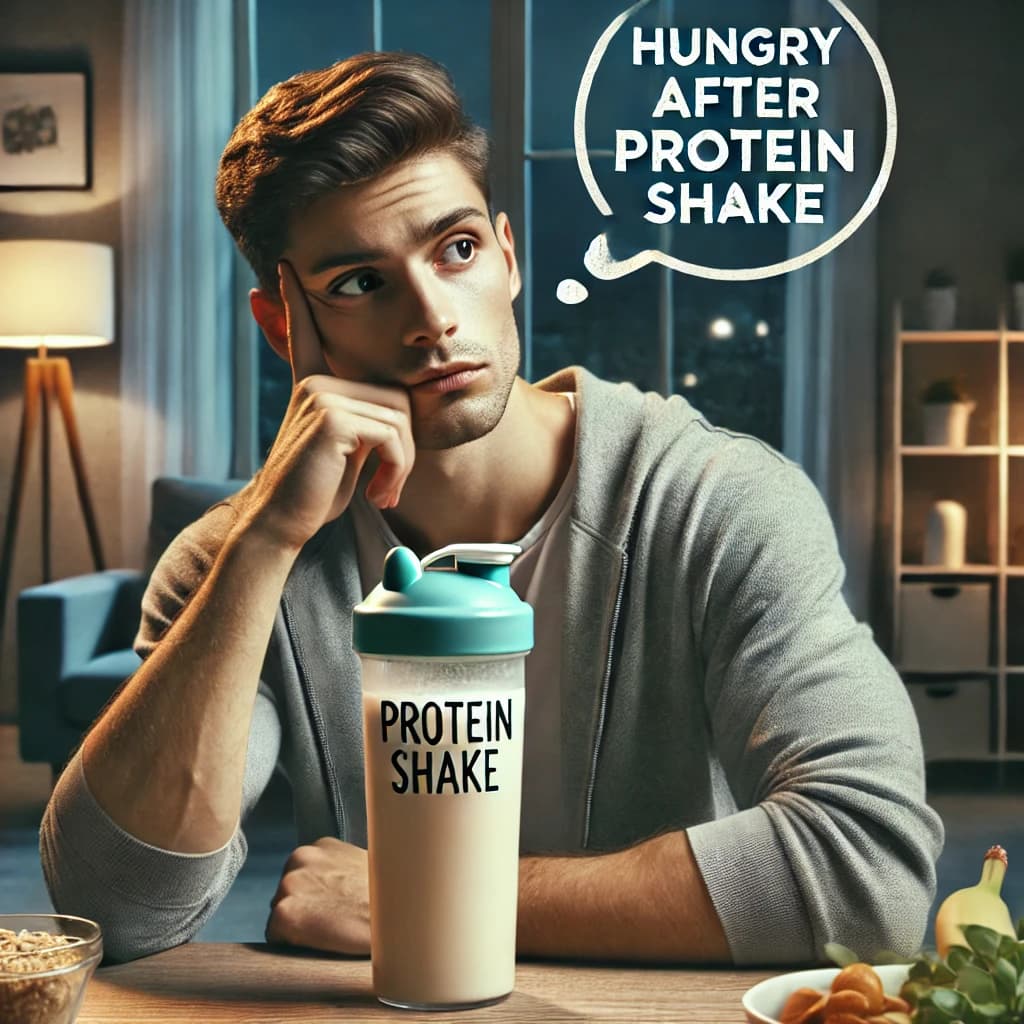
Protein's reputation as the hunger-killer macronutrient is well earned: a high-protein breakfast measurably suppresses the hunger hormone ghrelin in the hours afterward (Blom et al., 2006), and protein as a whole triggers satiety hormones that carbohydrate and fat barely touch (Leidy et al., 2015). So when you finish a shake or a chicken breast and you're hungry again within the hour, it's tempting to think protein "isn't working" for you specifically. It almost always is working — just not enough of it, or not enough around it. Two things explain most cases: the serving was too small to trigger the full hormonal response, or the rest of the meal was missing the fat, fiber, or calories that keep that response going. A few other factors, mainly how fast a liquid moves through your stomach, do the rest.
The dose matters more than the fact that it's protein
Not all "protein" hits the same. A 2020 systematic review and meta-analysis of 49 short-term feeding trials found that subjective hunger ratings improved with protein in general, but the hormones behind lasting fullness, ghrelin, cholecystokinin (CCK), and GLP-1, only changed significantly at protein doses of 35 grams or more per meal (Kohanmoo, Faghih & Akhlaghi, 2020). Below that, you may feel briefly less hungry without getting the hormonal cascade that keeps you full for hours.
This matters because plenty of "high-protein" servings don't actually clear that bar. Many single-scoop shakes, protein bars, and yogurt cups are built around 15-25 grams of protein rather than 35, and the label's "high protein!" claim doesn't tell you which side of that threshold you landed on. If a shake leaves you hungry fast, checking the actual gram count on the label is the first, most literal answer.
Protein alone doesn't finish the job
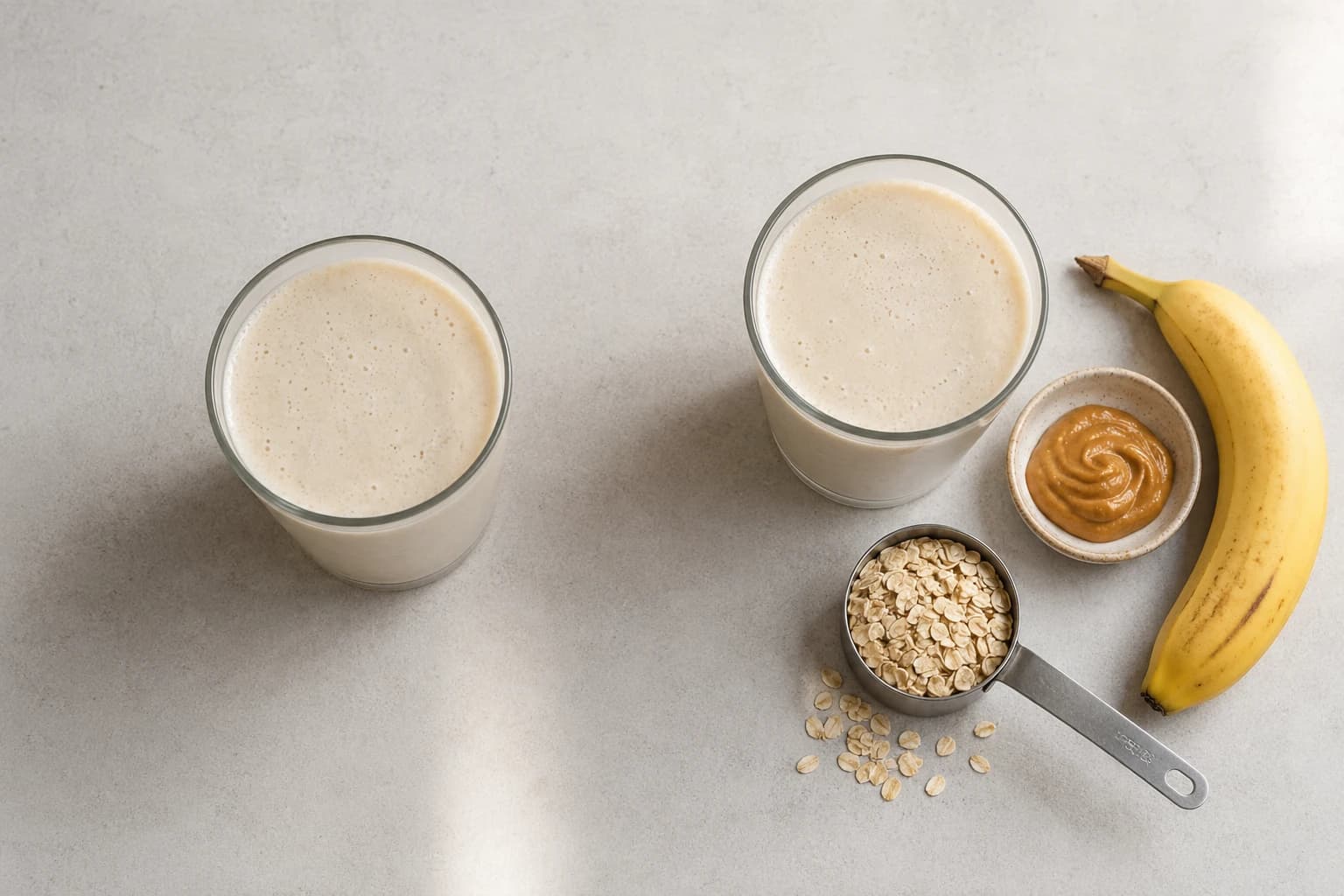
Protein slows gastric emptying and stimulates peptide YY and GLP-1, which is why it feels filling in the first place (Leidy et al., 2015; Paddon-Jones et al., 2008). But a meal built almost entirely around protein, with little fat, fiber, or carbohydrate, gives your stomach less to slow down and your blood sugar nothing to stabilize against. A shake that's mostly whey isolate and water empties out and gets absorbed with little left to extend the signal. Adding a source of fat (nut butter, avocado) or fiber (oats, chia, a piece of fruit) gives the meal something with bulk and slower digestion to carry the fullness further than protein manages by itself.
Are you actually eating enough
Protein shakes are often marketed as low-calorie, which means a "high-protein" drink can still leave you in a real energy deficit for that meal. Unlike fat or carbohydrate, your body doesn't store protein for later use the way it stores fat or glycogen (MedlinePlus, Dietary Proteins); it's built to keep protein intake fairly steady and burn what it needs for fuel from elsewhere. If a shake supplies protein but not enough total energy, especially on a workout day, hunger shortly after isn't a malfunction, it's your body accurately reporting that it's still short on calories.
Liquid moves through you differently than solid food does
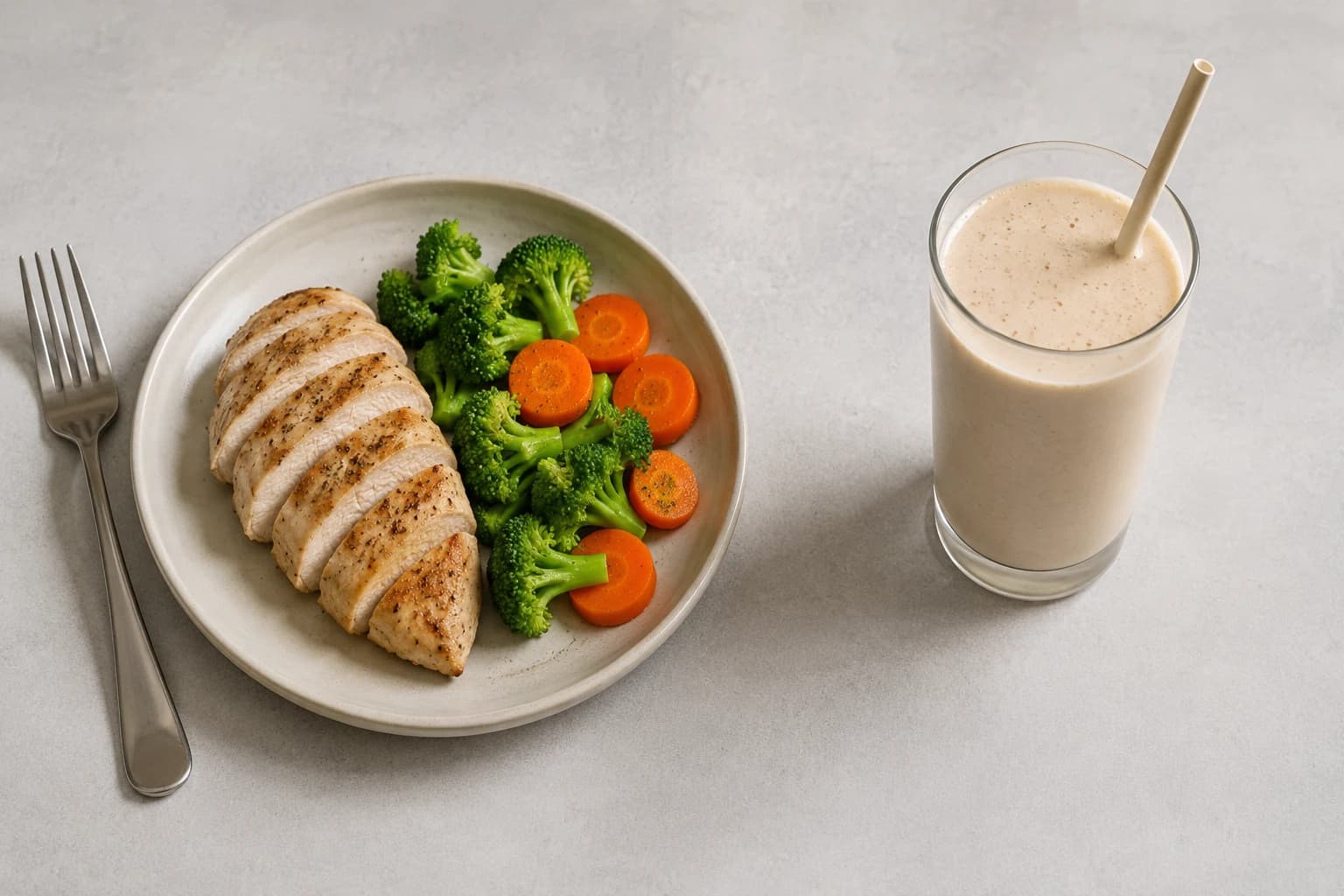
Chewing itself contributes to fullness. A systematic review and meta-analysis of chewing studies found that more mastication significantly lowers self-reported hunger and, in several trials, shifted the same gut hormones involved in protein satiety (Miquel-Kergoat et al., 2015). A shake skips that step entirely, along with the stomach-stretch cues that come from a bulkier solid meal. That doesn't mean liquid protein is useless for fullness, the hormonal response still happens, but it removes one of the physical cues your brain normally uses to register "meal eaten."
Digesting protein burns some of it back off
Protein has the highest thermic effect of food (TEF) of the three macronutrients, meaning your body burns a larger share of its calories just digesting and metabolizing it (Moon & Koh, 2020):
| Macronutrient | Share of its own calories spent on digestion (TEF) |
|---|---|
| Protein | 20-30% |
| Carbohydrate | 5-10% |
| Fat | 0-3% |
Source: Moon & Koh, 2020, Journal of Obesity & Metabolic Syndrome.
That's a real metabolic cost, not a gimmick, but it also means the calories you get to keep from a protein-heavy shake are meaningfully lower than the label's total. Combined with a meal that was already light on calories, this can tip an already-marginal shake into leaving you short.
What actually helps
- Check the gram count, not the marketing. Look for at least 30 grams of protein per serving if a shake is meant to function as a real meal, in line with the dose that reliably moves satiety hormones (Kohanmoo et al., 2020).
- Add fat and fiber, not just more protein. A tablespoon of nut butter, a handful of oats, or chia seeds slows digestion and extends the fullness that protein starts (Leidy et al., 2015).
- Match the calories to the day. A 200-calorie shake isn't a substitute for a meal on a day when you've trained hard or skipped lunch.
- Choose solid food when you can. Chewing and stomach distension both feed into satiety signaling in ways a liquid can't fully replicate (Miquel-Kergoat et al., 2015); when hunger after shakes is a recurring problem, swapping some of them for a solid meal with the same protein content is a reasonable fix to try first.
None of this means protein failed as a strategy. It means the dose and the plate around it carry as much weight as the protein itself. Get past roughly 30 grams, pair it with fat, fiber, and enough total calories for the day, and the hunger that shows up an hour later mostly stops showing up.
See also: Why Does Protein Make Me Sleepy?, Why Do I Feel Sick After Drinking a Protein Shake?, Why Am I Always Hungry on Rest Days?.
Sources
- Leidy HJ, et al. The role of protein in weight loss and maintenance. American Journal of Clinical Nutrition. 2015;101(6):1320S-1329S. PMID: 25926512. https://pubmed.ncbi.nlm.nih.gov/25926512/
- Blom WA, et al. Effect of a high-protein breakfast on the postprandial ghrelin response. American Journal of Clinical Nutrition. 2006;83(2):211-220. PMID: 16469977. https://pubmed.ncbi.nlm.nih.gov/16469977/
- Paddon-Jones D, et al. Protein, weight management, and satiety. American Journal of Clinical Nutrition. 2008;87(5):1558S-1561S. PMID: 18469287. https://pubmed.ncbi.nlm.nih.gov/18469287/
- Kohanmoo A, Faghih S, Akhlaghi M. Effect of short- and long-term protein consumption on appetite and appetite-regulating gastrointestinal hormones, a systematic review and meta-analysis of randomized controlled trials. Physiology & Behavior. 2020;226:113123. PMID: 32768415. https://pubmed.ncbi.nlm.nih.gov/32768415/
- Moon J, Koh G. Clinical Evidence and Mechanisms of High-Protein Diet-Induced Weight Loss. Journal of Obesity & Metabolic Syndrome. 2020;29(3):166-173. PMID: 32699189. https://pmc.ncbi.nlm.nih.gov/articles/PMC7539343/
- Miquel-Kergoat S, Azais-Braesco V, Burton-Freeman B, Hetherington MM. Effects of chewing on appetite, food intake and gut hormones: A systematic review and meta-analysis. Physiology & Behavior. 2015;151:88-96. PMID: 26188140. https://pubmed.ncbi.nlm.nih.gov/26188140/
- MedlinePlus (National Library of Medicine). Dietary Proteins. https://medlineplus.gov/dietaryproteins.html
All sources accessed 10 July 2026.

Olivia Smith, RDN
Registered Dietitian Nutritionist (RDN) and habit specialist, answering everyday questions about hunger, protein, and sustainable eating.