
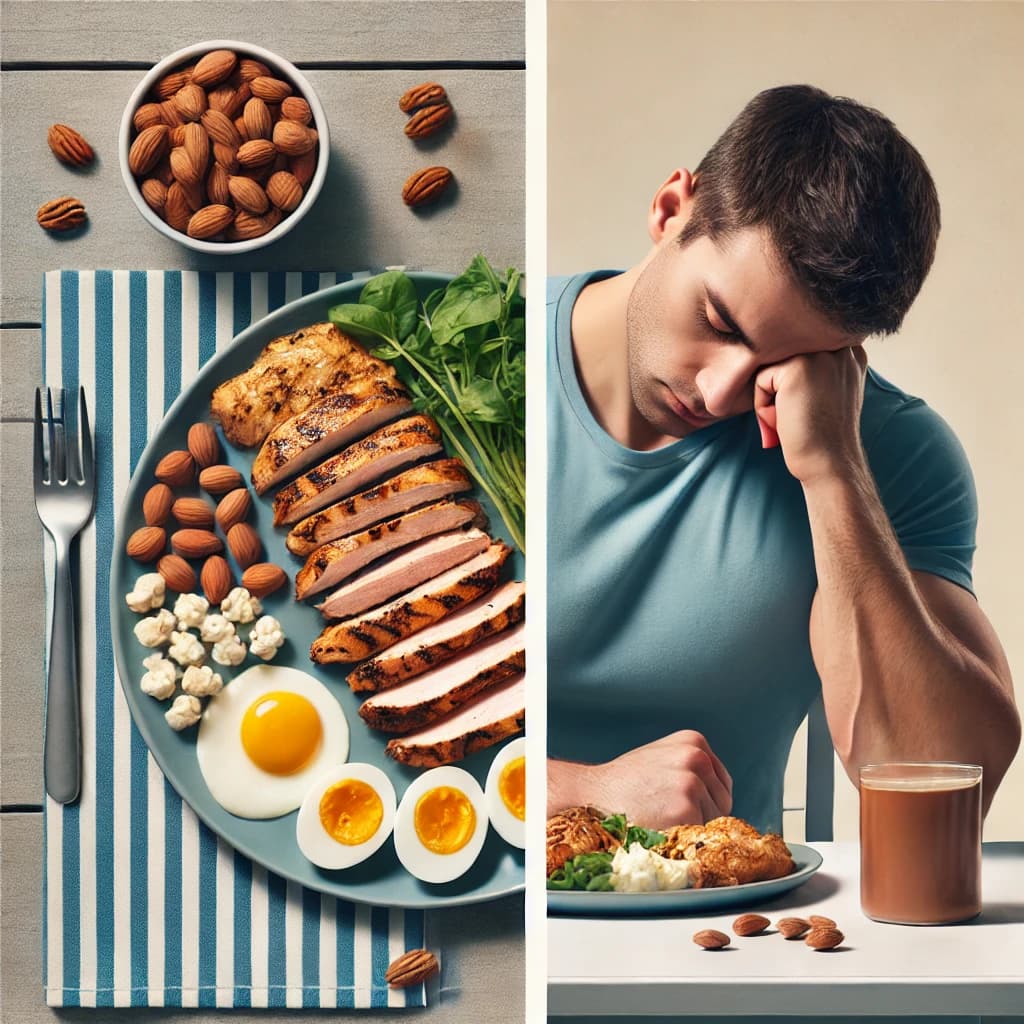
If you have searched "why does protein make me sleepy," you have probably read that protein is full of tryptophan, which turns into the sleep hormone melatonin. It is a tidy story. It is also mostly wrong. Here is what the evidence actually shows, and what is really making you drowsy after a meal.
The tryptophan story is backwards
Tryptophan is an amino acid your brain uses to make serotonin and melatonin, which is where the "protein makes you sleepy" idea comes from. The problem is the next step. To reach the brain, tryptophan has to compete with several other amino acids for the same transport route, and protein is loaded with those competitors. So a protein-rich meal actually lowers the share of tryptophan getting into the brain.
A study that compared a carbohydrate-rich breakfast (69.9 g carbohydrate, 5.2 g protein) against a protein-rich one (15.4 g carbohydrate, 46.8 g protein) found exactly this: the tryptophan:LNAA ratio in the blood rose by a median of 54% after the carbohydrate meal, while the protein meal suppressed it (Wurtman et al., 2003). It is carbohydrate, not protein, that drives tryptophan toward the brain, because the insulin a carb meal triggers clears the competing amino acids into muscle and leaves tryptophan a clearer path.
Protein does the opposite of sedating, if anything. Protein raises brain levels of tyrosine, the building block for dopamine and noradrenaline, the alertness chemicals (Fernstrom & Fernstrom, 2007). And it is carbohydrate meals, not protein ones, that research links to post-meal drowsiness and falling asleep faster: in one trial, a high-glycemic-index carbohydrate meal eaten four hours before bed cut sleep-onset latency to 9.0 minutes, versus 17.5 minutes after a low-glycemic-index meal of equal calories (Spring et al., 1989; Afaghi et al., 2007).
So why do I feel sleepy after a "protein" meal?
If protein is not the sedative, why does a steak dinner leave you yawning? A few real reasons:
- It is usually the whole meal. Most "protein" meals come with carbohydrate, the rice, potatoes, bread, or sauce, and that carbohydrate is the part nudging you toward drowsiness.
- Big meals make you sleepy, full stop. A large meal of any kind shifts your body into "rest and digest" mode, directing blood flow and parasympathetic activity toward digestion. The bigger the meal, the stronger the effect.
- The afternoon dip is real. Your body clock produces a natural lull in alertness in the early afternoon, so lunch often gets the blame for ordinary circadian timing.
- You might be under-fueled. If you are eating few total calories or are in the first week or two of a very low-carb diet, fatigue is common while your body adjusts. That is about the lack of carbohydrate and energy, not the protein.
The turkey myth
The classic example is Thanksgiving turkey "making everyone sleepy from tryptophan." Turkey has no more tryptophan than chicken or other meats, and as we have seen, protein does not raise brain tryptophan anyway. The post-dinner slump is the large, carbohydrate-heavy meal, often with wine, plus a relaxing afternoon, not the bird.
What actually helps
If meals leave you drowsy and it gets in the way, the fixes are about the meal as a whole, not avoiding protein:
- Watch total meal size. Smaller, more balanced meals cause less of a slump than one large one.
- Balance the plate. Protein and fiber alongside carbohydrate slow digestion and soften the blood-sugar swing. If it's specifically the mid-afternoon dip at your desk that's the problem, see Office Snacks for Energy for options that avoid the same crash.
- Move a little and hydrate. A short walk after eating and a glass of water both help counter the post-meal dip.
For related reading, see our honest take on Greek yogurt before bed, why you're still hungry after eating protein, and magnesium and sleep.
The bottom line
Protein is not a sleeping pill. The tryptophan-from-protein story is largely a myth: protein actually lowers brain tryptophan and raises the alertness precursor tyrosine. If a meal makes you sleepy, look at the whole meal, especially its carbohydrate load and overall size, not the protein. Browse our nutrition guides for more.
Frequently Asked Questions (FAQ)
Does protein actually make you sleepy? Not really, on its own. The popular idea that tryptophan in protein makes you drowsy is mostly a myth. A protein meal actually lowers the brain's tryptophan level; it is carbohydrate that raises it.
Then why do I feel sleepy after eating? Usually because of the whole meal, especially a large or carb-heavy one. Big meals shift the body into "rest and digest" mode, and the natural afternoon dip adds to it. The protein itself is rarely the cause.
Does turkey make you sleepy because of tryptophan? No. Turkey has no more tryptophan than other meats. Thanksgiving sleepiness comes from the large, carb-heavy meal and often alcohol, not the turkey.
Can a high-protein, low-carb diet make me tired? It can, temporarily. The first week or two of a very low-carb diet often brings fatigue while your body adjusts. This usually passes, and is about the lack of carbs, not the protein.
Medical disclaimer: This article is for informational purposes only. Always consult a qualified healthcare provider before making changes to your health routine.
Sources
- Wurtman RJ, et al. Effects of normal meals rich in carbohydrates or proteins on plasma tryptophan and tyrosine ratios. American Journal of Clinical Nutrition, 2003 — PubMed. https://pubmed.ncbi.nlm.nih.gov/12499331/
- Fernstrom JD, Fernstrom MH. Tyrosine, phenylalanine, and catecholamine synthesis and function in the brain. Journal of Nutrition, 2007 — PubMed. https://pubmed.ncbi.nlm.nih.gov/17513421/
- Spring B, et al. Psychobiological effects of carbohydrates. Journal of Clinical Psychiatry, 1989 — PubMed. https://pubmed.ncbi.nlm.nih.gov/2565898/
- Afaghi A, O'Connor H, Chow CM. High-glycemic-index carbohydrate meals shorten sleep onset. American Journal of Clinical Nutrition, 2007 — PubMed. https://pubmed.ncbi.nlm.nih.gov/17284739/
All sources accessed 31 May 2026.

Olivia Smith, RDN
A wellness researcher focused on what the evidence actually says.