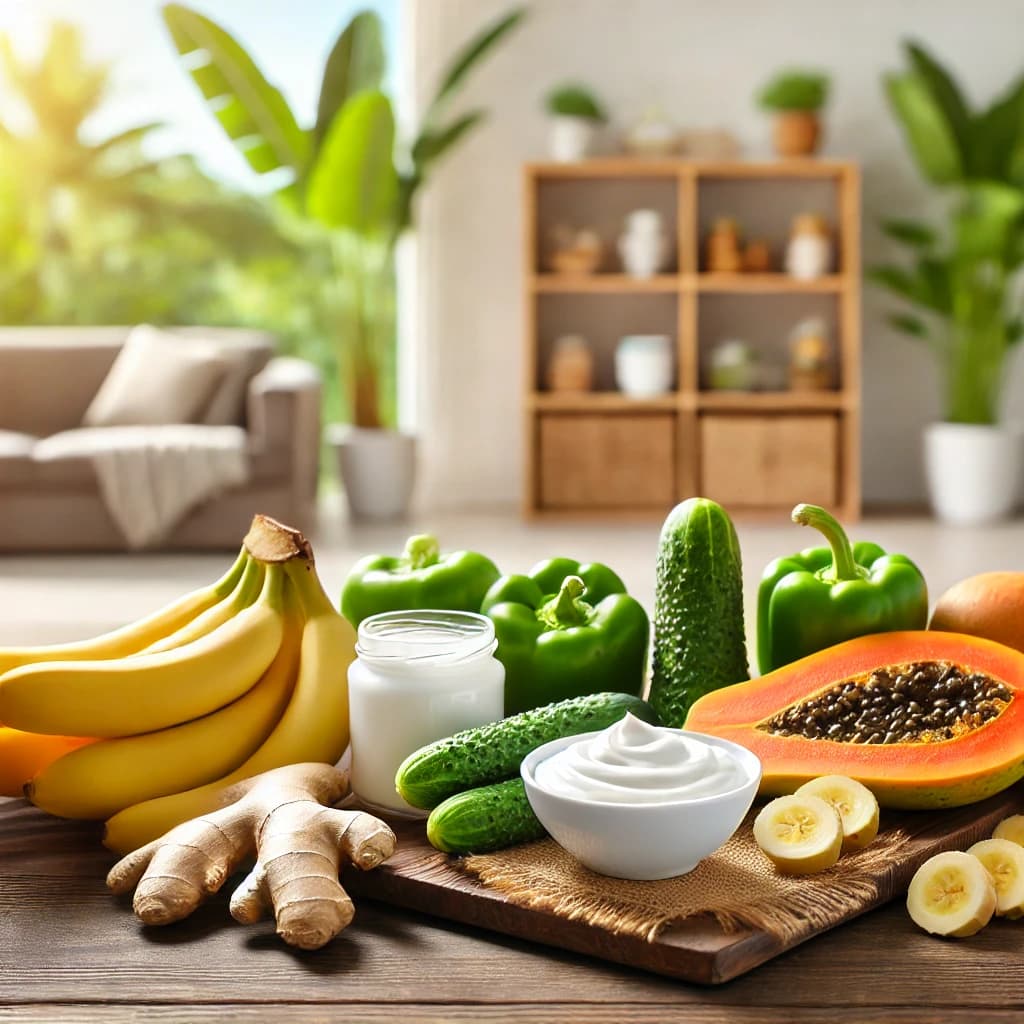
The idea that the bacteria in your gut influence your mood sounds like a wellness-industry exaggeration. It is not, there is genuine biology here. But the gap between "the gut-brain axis is real" and "take this probiotic to cure your anxiety" is enormous, and most popular coverage skips right over it.
What the research actually says
A 2019 review in Physiological Reviews, a top journal in biology, pulled together the gut-brain research. It laid out several real ways gut microbes talk to the brain: through the vagus nerve, the immune system, and the small molecules microbes make, including ones the body uses to build serotonin. The review found that gut microbes do shape brain function and behavior, especially the stress response. But most of that proof comes from animal and germ-free-mouse studies, and the authors were clear that the human evidence is still being worked out (Cryan et al., 2019).
An earlier review reached a similar place: changing gut microbes in animals reliably shifts anxiety-like and depression-like behavior, but proving the same cause-and-effect in humans is far harder (Foster & McVey Neufeld, 2013).
In people, the strongest data so far is from a 2019 study of over 1,000 adults. It linked depression with lower levels of two gut bacteria, even after accounting for antidepressant use (Valles-Colomer et al., 2019). But this is a link, not a trial. It cannot show the bacteria caused the depression rather than the other way around.
And the probiotic trials? A meta-analysis pooling controlled trials found no significant overall effect of probiotics on mood, with a possible benefit only in the subgroup of people who already had diagnosed depression (Ng et al., 2018). The studies used different strains, doses, and populations, which is part of why the results are so inconsistent. The honest summary: promising, but not something you can bank on.
What this means in practice
The gut-brain axis is a real, documented pathway. But "the pathway exists" is not the same as "probiotics will improve your mental health," and the human trial evidence for that is weak and mixed.
Diet has a better evidence base for gut health than probiotic pills do. A Mediterranean-style diet, high in fiber, vegetables, legumes, fermented foods, and olive oil, is consistently linked to a more diverse gut microbiome. Our anti-inflammatory foods guide covers that pattern in detail. Moving to that pattern quickly can be uncomfortable while the bacteria that ferment plant fiber build up, which is one of the reasons a salad can leave you bloated when the same bowl felt fine a month later.
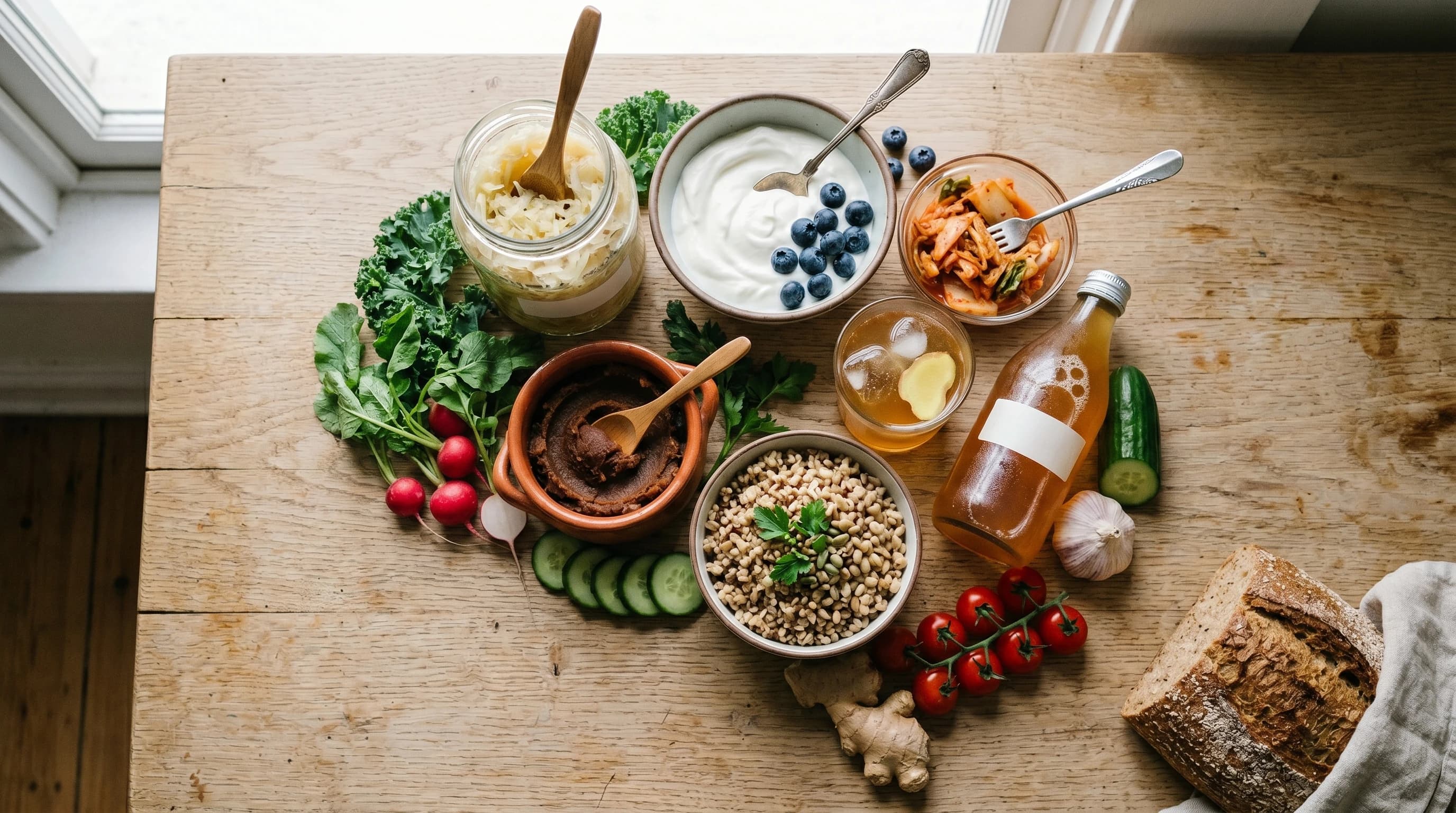
Fermented foods (yogurt, kefir, kimchi, sauerkraut) look promising. A 2021 controlled trial found that a diet high in fermented foods increased microbiome diversity and lowered inflammation markers, more clearly than a high-fiber diet did, though mental-health outcomes were not what that study measured (Wastyk et al., 2021).
A note if you are struggling
Gut-focused dietary changes can be a sensible complement to mental-health care, but they are not a replacement for it. If you have depression or anxiety, the treatments with strong evidence are things like therapy and, where appropriate, medication. Please talk to a doctor or mental-health professional rather than relying on diet alone. If you are in crisis in the US, you can call or text 988 for the Suicide and Crisis Lifeline, any time.
Common myths
"90% of serotonin is made in the gut, so gut health controls your mood." The number is roughly right, but the conclusion is not. Most of the body's serotonin is made in the gut, but it does not cross into the brain to set your mood. There, it mainly controls how the gut moves. The gut's effect on brain serotonin is indirect, and more subtle than the slogan suggests (Cryan et al., 2019).
"A specific probiotic strain can treat depression." No probiotic is approved to treat a mental-health condition in the US, UK, or EU. The meta-analysis found no reliable overall antidepressant effect, and the wide variation between strains means no single product can claim one (Ng et al., 2018).
"Everyone has an unhealthy microbiome that needs fixing." Gut bacteria vary enormously between healthy people, and there is no agreed "healthy" profile to measure against. The population study found associations, not universal deficiencies, and commercial microbiome-testing kits that hand back vague advice have very little evidence behind them (Valles-Colomer et al., 2019).
The bottom line
The gut-brain axis is one of the more genuinely exciting areas of current research. The evidence that gut microbes influence the brain is strong in animals and growing in human observational data. But clinical trials of probiotics for mental health show weak, inconsistent effects, promising, not practice-changing. Eating a varied, high-fiber diet with some fermented foods is a reasonable approach for your gut and your overall health. It is not a substitute for treatment if you have a diagnosed mental-health condition. Browse our nutrition guides for more.
Frequently Asked Questions (FAQ)
Can probiotics treat depression or anxiety? Not reliably. The best meta-analysis found no significant overall effect of probiotics on mood, with a possible benefit only in people who already have depression. No probiotic is approved to treat a mental health condition.
Is the gut-brain connection real? Yes. The gut and brain communicate through the vagus nerve, the immune system, and microbial byproducts. The biology is real, but that is not the same as a probiotic fixing your mood.
Is it true that 90% of serotonin is made in the gut? Roughly, yes, but that serotonin does not cross into the brain to set your mood. It mainly controls gut movement. The gut affects brain serotonin indirectly, which is more subtle than the popular claim.
What is the best diet for gut and mental health? A varied, high-fiber diet with vegetables, legumes, and some fermented foods is the most reasonable, evidence-aligned approach, and it supports overall health beyond the gut.
Medical disclaimer: This article is for informational purposes only. Always consult a qualified healthcare provider before making changes to your health routine.
Sources
- Cryan JF, et al. The microbiota-gut-brain axis. Physiological Reviews, 2019 — PubMed. https://pubmed.ncbi.nlm.nih.gov/31460832/
- Foster JA, McVey Neufeld KA. Gut-brain axis: how the microbiome influences anxiety and depression. Trends in Neurosciences, 2013 — PubMed. https://pubmed.ncbi.nlm.nih.gov/23384445/
- Valles-Colomer M, et al. The neuroactive potential of the human gut microbiota in quality of life and depression. Nature Microbiology, 2019 — PubMed. https://pubmed.ncbi.nlm.nih.gov/30718848/
- Ng QX, et al. A meta-analysis of the use of probiotics to alleviate depressive symptoms. Journal of Affective Disorders, 2018 — PubMed. https://pubmed.ncbi.nlm.nih.gov/29197739/
- Wastyk HC, et al. Gut-microbiota-targeted diets modulate human immune status. Cell, 2021 — PubMed. https://pubmed.ncbi.nlm.nih.gov/34256014/
All sources accessed 31 May 2026.

Sophia Martinez, MS, CNS
A wellness researcher focused on what the evidence actually says.