Most advice about exercise consistency assumes the problem is the plan. Find the right split, the right number of days, the right app, and the showing up will take care of itself.
The evidence points the other way. The programme details people agonise over turn out to matter surprisingly little, and the thing that separates people who keep training from people who stop is something almost nobody plans for: what happens in the week after a missed session.
The programme matters less than you have been told
In March 2026 the American College of Sports Medicine published its first update to its resistance-training position stand since 2009. The review pooled 137 systematic reviews covering more than 30,000 participants, which makes it the largest synthesis of resistance-training evidence available (Currier et al., 2026).
A handful of variables genuinely changed the result. Strength improved more with heavier loads (at or above 80% of a one-repetition maximum), through a full range of motion, for two to three sets, done early in the session, at least twice a week. Muscle size responded to higher weekly volume — at least ten sets per muscle group per week — and to eccentric overload.
The longer list is what makes this interesting. Training to momentary muscle failure, the type of equipment, exercise complexity, set structure, time under tension, blood-flow restriction and periodisation "did not consistently impact training outcomes." Machines or free weights, bands or bodyweight, a carefully periodised block or the same three lifts every week — the review could not find a reliable difference in the outcomes most people are training for.
The position stand's own framing is that programmes should be individualised "to maximize adherence, enjoyment, safety, and effectiveness." ACSM put it more bluntly in its announcement, quoting co-author Stuart Phillips: "The best resistance training program is the one you'll actually stick with" (ACSM, 17 March 2026).
That is not a motivational line. It is the practical reading of a review that looked hard for programme variables that matter and found fewer than expected.
The moment that decides it is the one after a missed session
The most useful piece of consistency research is not about exercise design at all. In 2021 a team led by Katherine Milkman ran what they called a megastudy: 30 scientists from 15 universities designed 54 different four-week digital programmes to encourage exercise, and all of them were tested on the same population — 61,293 members of an American fitness chain — against the same measured outcome, gym visits (Milkman et al., 2021).
Forty-five per cent of the programmes significantly increased weekly gym visits, by 9% to 27%. The single best performer offered a small reward for coming back to the gym after a missed workout.
Read that again with your own last three months in mind. The winning intervention in the largest field experiment on gym attendance was not a better plan, a tougher goal or a sharper reminder. It was a nudge aimed squarely at the gap — the week you were ill, travelling, busy, or simply did not go.
There is a second finding in the same paper that most coverage skips. Only 8% of the 54 programmes produced a change that was still measurable after the four-week intervention ended. Nudges work while they are running. Very little of it sticks by itself once the scaffolding comes down, which is an argument for building something you can keep doing rather than something you can complete.
How the session feels while you are in it
A 2015 systematic review examined a question most training advice ignores: does how exercise feels predict whether you do it again? Across 24 studies, a positive shift in mood during moderate-intensity exercise was linked to future physical activity. How people felt afterwards had no relationship with future behaviour at all (Rhodes & Kates, 2015).
This quietly undermines a popular piece of advice. "You never regret a workout once it's done" is probably true, and according to this review it is also useless as a prediction of whether you will go again. The minutes that predict your next session are the ones you are actually living through.
Practically, that argues for choosing intensity you can tolerate rather than intensity you can just survive, especially in the first months. If every session is unpleasant from start to finish, the review suggests you are quietly training yourself out of the habit even while you complete the sessions.
It also means the honest question when picking an activity is not "what burns the most calories" but "what will I not dread on a Wednesday evening in February."
What actually counts as consistent
Two findings should shrink the bar considerably.
Short sessions count. The 2008 US Physical Activity Guidelines required activity to be accumulated in bouts of at least ten minutes. The 2018 second edition removed that requirement outright, after the advisory committee concluded that "bouts of any length contribute to the health benefits associated with the accumulated volume of physical activity" (Physical Activity Guidelines for Americans, 2nd edition). A brisk ten minutes between meetings is not a failed workout. It is part of the total.
It does not have to be spread out. A 2023 analysis of 89,573 UK Biobank participants wearing accelerometers compared people who packed most of their weekly moderate-to-vigorous activity into one or two days against people who spread the same volume across the week. Both patterns were associated with similarly lower risk of atrial fibrillation, heart attack, heart failure and stroke (Khurshid et al., 2023).
That is an observational study, so it shows association rather than proof of cause, and it measured cardiovascular outcomes rather than strength or fitness. But for anyone whose real constraint is a weekday schedule, it removes a common reason to give up: two decent weekend sessions are not a consolation prize.
The volume worth aiming at, meanwhile, has not changed. The same US guidelines put it at 150 to 300 minutes a week of moderate-intensity aerobic activity, or 75 to 150 minutes of vigorous activity, plus muscle-strengthening activity involving all major muscle groups on two or more days. Globally, about 31% of adults do not reach even the aerobic half of that (WHO).
A week that survives contact with a real week

Planning research is one of the few areas where the effect sizes are decent. A 2022 meta-analysis of 35 randomised trials covering 5,439 people found that planning interventions — writing down when, where and how you will be active — improved physical activity with a standardised mean difference of 0.35 (95% CI 0.25–0.44), which is a small-to-moderate effect (Peng et al., 2022). Action planning outperformed coping planning, and effects were stronger when someone followed up.
Translating all of the above into something you can actually run:
- Pick two fixed slots, not a number of days. "Twice a week" is a wish. "Tuesday 7pm and Saturday morning" is a plan, and the planning trials suggest the difference is worth roughly the effect size above. Two sessions a week also happens to be the ACSM threshold for strength work.
- Write the comeback rule before you need it. Decide now what happens after a missed week — for example, that you return to the next scheduled slot at half the usual length, no catch-up session. The megastudy's best-performing intervention was, in effect, an external version of this rule.
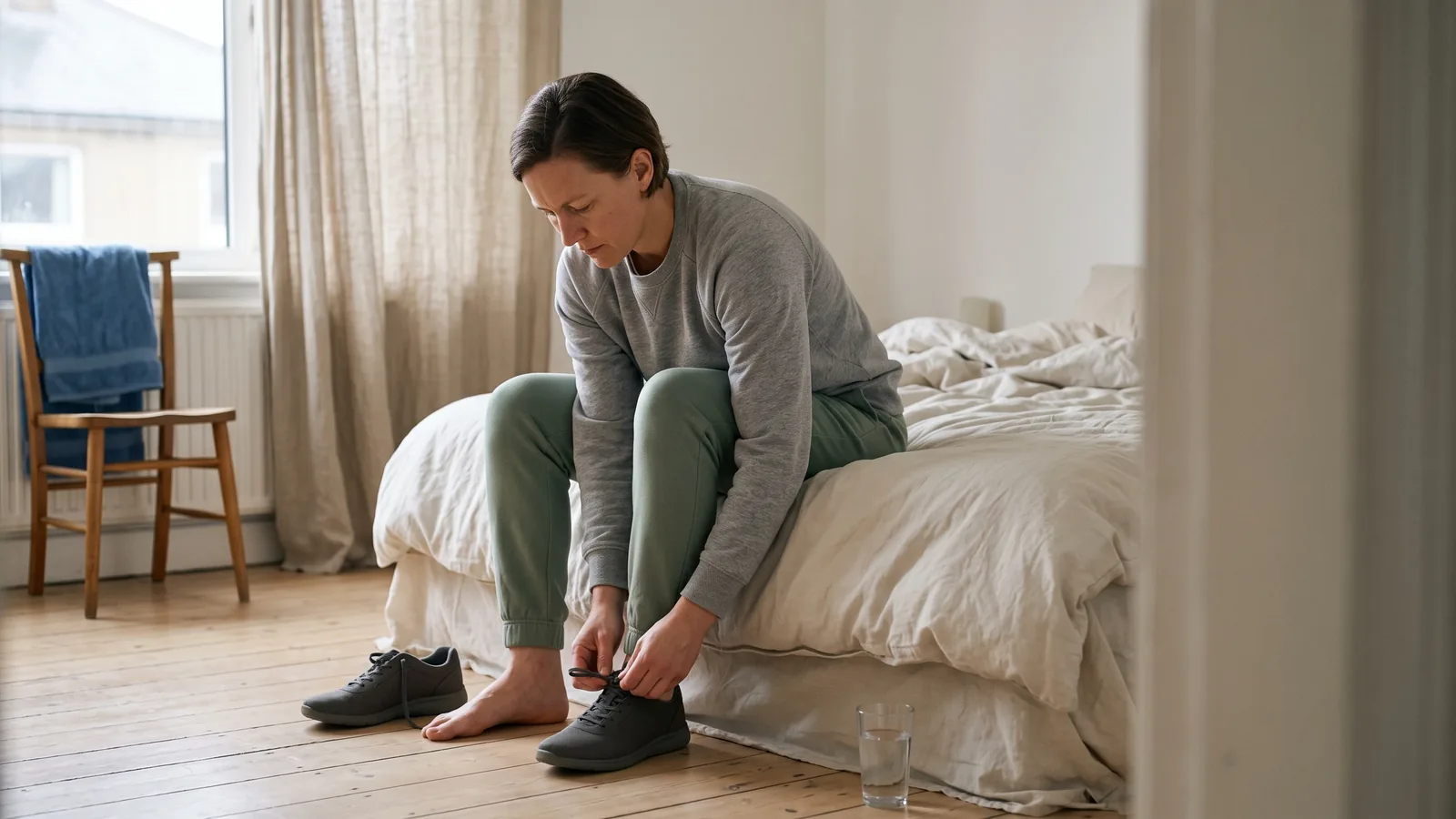
- Choose the version you can tolerate mid-session. Given how little the programme variables moved outcomes, use that freedom on enjoyment rather than optimisation. Bands at home beat a barbell programme you skip.
- Set the floor deliberately low. Since bouts of any length count toward the weekly total, a ten-minute version of each session is a legitimate outcome on a bad day, not a failure.
- Keep a record you can see. Self-monitoring sits inside most of the effective behaviour-change packages, and a visible record makes the comeback rule easier to apply honestly.
If you want a starting point that needs no equipment and has a real trial behind it, the Japanese walking method is a 30-minute interval protocol built around alternating three-minute blocks. For a structured resistance session, our guide to metabolic exercise circuits covers the movements themselves.
What consistency looks like when it works
It is worth having a realistic benchmark, because "consistent" gets used as if it means never missing.
A Japanese research group tracked 696 middle-aged and older adults on a supported home walking programme for 22 months, with devices, fortnightly data uploads and trainers following up. Average adherence was 70% of the four-days-a-week target. Adherence tracked closely with results: a 12% rise in peak aerobic capacity and a 13% fall in a composite lifestyle-disease score (Masuki et al., 2015).
Seventy per cent, with staff support and hardware. That is what a successful long-term programme looked like in research conditions — roughly three sessions out of four. If your internal standard is 100%, you are measuring yourself against something the literature does not produce either.
Where this advice changes
None of the above is a substitute for medical advice, and several situations change the recommendation materially.
- Cardiovascular disease, or symptoms during exertion. Chest pain, unusual breathlessness, dizziness or palpitations during exercise need assessment before you add intensity. The German national physical-activity recommendations note that sports-medicine guidance advises beginners and people returning after a long break to get a medical check to identify pre-existing conditions (Nationale Empfehlungen für Bewegung, German-language PDF).
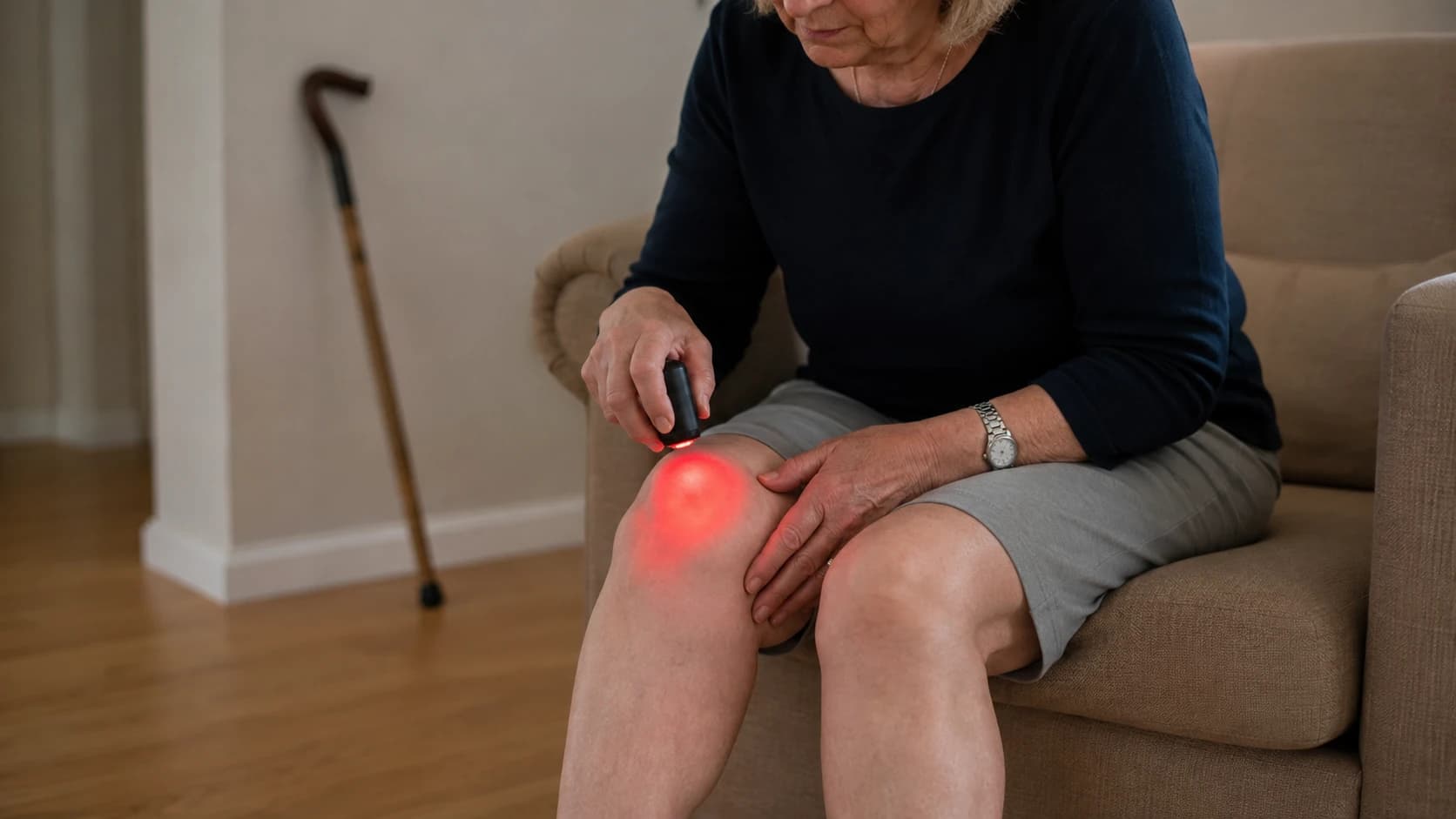
- Chronic conditions. The guidelines are explicit that adults with chronic conditions should be as active as their condition allows, and should get condition-specific guidance rather than generic targets.
- Pregnancy and the postpartum period. Activity is generally encouraged, but intensity guidance and warning signs differ; this needs advice from your own clinician.
- Injury or persistent pain. Consistency advice assumes the sessions are not making something worse. Pain that increases session to session is a reason to change the plan, not to push through it.
- Disordered eating, or exercise that has become compulsive. The framing in this article — lower the bar, miss sessions without penalty — is the opposite of what compulsive exercise feels like. If stopping feels impossible rather than tempting, that is worth raising with a healthcare professional rather than solving with a better schedule.
Common mistakes
Treating a missed week as a reset. Habit research finds that occasional missed opportunities do not meaningfully disrupt habit formation (Gardner, Lally & Wardle, 2012). The damage comes from the decision that the attempt is over, not from the gap itself.
Starting at the volume you hope to reach. Six sessions a week is not a more ambitious version of three; it is a different plan with a different failure mode. The ACSM review found the large gains come from moving from no resistance training to some.
Optimising before you have anything to optimise. Periodisation, set structure and training to failure did not consistently change outcomes in the review. They are refinements for people already training regularly.
Using intensity to buy back a missed week. Doubling the next session raises soreness and injury risk and, per the affective-response review, makes the experience less likely to repeat.
Confusing exercise with a weight-loss lever. Exercise does many things well; standalone weight loss is the one it does least reliably. Our guides on why hunger rises on rest days and which exercise actually helps with abdominal fat cover the gap between expectation and evidence.
The bottom line
Choose something you can do at least twice a week without dreading it, put it in two named slots, and decide in advance what your return after a missed week looks like. The largest review of resistance-training evidence could not find much difference between reasonable programmes, the largest field experiment on gym attendance found the comeback was the lever, and the guidelines count every ten-minute walk toward your total. Consistency is less about discipline than most articles suggest, and much more about how low you are willing to set the bar on a bad week.
Frequently Asked Questions (FAQ)
How many days a week do I need to train? For strength, the ACSM's 2026 position stand supports training each major muscle group at least twice a week. For general health, the guidelines are framed as 150 to 300 minutes a week of moderate activity or 75 to 150 of vigorous, however you distribute it — including across one or two days.
Is consistency really more important than intensity? For most people starting out, the evidence favours regular participation. The 2026 ACSM review found that most programme variables did not consistently change outcomes, while the largest gains came from moving from no training to some. Intensity still matters for specific goals — heavier loads for maximal strength, for instance — but it is a refinement on top of showing up.
How long before exercise feels automatic? Habit-formation research puts the average at around 66 days, with a very wide range between people and behaviours, and finds that missing an occasional day does not derail the process (Gardner, Lally & Wardle, 2012). Plan for a couple of months, not three weeks. Our guide to habits that hold up in research goes into the mechanics.
Does it count if I only exercise at the weekend? For cardiovascular outcomes, a 2023 UK Biobank analysis found that packing most weekly activity into one or two days was associated with similar reductions in heart attack, heart failure, stroke and atrial fibrillation as spreading it out. The study is observational and looked at cardiovascular endpoints, so it does not settle questions about strength or fitness gains.
What should I do after missing two weeks? Return to your next scheduled session at a reduced length rather than attempting to make up the lost volume. The best-performing intervention in a 61,293-person field experiment was specifically a reward for returning after a missed workout, which suggests the re-entry is the part worth protecting.
Medical disclaimer: This article is for informational purposes only. Always consult a qualified healthcare provider before making changes to your health routine.
Sources
- Currier BS, D'Souza AC, Singh MAF, Lowisz CV, Rawson ES, Schoenfeld BJ, Smith-Ryan AE, Steen JP, Thomas GA, Triplett NT, Washington TA, Werner TJ, Phillips SM. American College of Sports Medicine Position Stand. Resistance Training Prescription for Muscle Function, Hypertrophy, and Physical Performance in Healthy Adults: An Overview of Reviews. Medicine & Science in Sports & Exercise, 2026;58(4):851–872 — PubMed Central. https://pmc.ncbi.nlm.nih.gov/articles/PMC12965823/
- American College of Sports Medicine. ACSM Unveils Landmark 2026 Resistance Training Guidelines — First Update in 17 Years, 17 March 2026. https://acsm.org/resistance-training-guidelines-update-2026/
- Milkman KL, Gromet D, Ho H, et al. Megastudies improve the impact of applied behavioural science. Nature, 2021;600:478–483 — PubMed Central. https://pmc.ncbi.nlm.nih.gov/articles/PMC8822539/
- Rhodes RE, Kates A. Can the Affective Response to Exercise Predict Future Motives and Physical Activity Behavior? A Systematic Review of Published Evidence. Annals of Behavioral Medicine, 2015;49(5):715–731 — PubMed. https://pubmed.ncbi.nlm.nih.gov/25921307/
- Khurshid S, Al-Alusi MA, Churchill TW, Guseh JS, Ellinor PT. Accelerometer-Derived "Weekend Warrior" Physical Activity and Incident Cardiovascular Disease. JAMA, 2023;330(3):247–252 — PubMed Central. https://pmc.ncbi.nlm.nih.gov/articles/PMC10354673/
- Peng S, Othman AT, Yuan F, Liang J. The Effectiveness of Planning Interventions for Improving Physical Activity in the General Population: A Systematic Review and Meta-Analysis of Randomized Controlled Trials. International Journal of Environmental Research and Public Health, 2022;19(12):7337 — PubMed Central. https://pmc.ncbi.nlm.nih.gov/articles/PMC9223740/
- U.S. Department of Health and Human Services. Physical Activity Guidelines for Americans, 2nd edition, 2018. https://odphp.health.gov/sites/default/files/2019-09/Physical_Activity_Guidelines_2nd_edition.pdf
- Masuki S, Mori M, Tabara Y, et al. The factors affecting adherence to a long-term interval walking training program in middle-aged and older people. Journal of Applied Physiology, 2015;118(5):595–603 — PubMed. https://pubmed.ncbi.nlm.nih.gov/25539937/
- Gardner B, Lally P, Wardle J. Making health habitual: the psychology of 'habit-formation' and general practice. British Journal of General Practice, 2012 — PubMed Central. https://pmc.ncbi.nlm.nih.gov/articles/PMC3505409/
- World Health Organization. Physical activity fact sheet, 26 June 2024. https://www.who.int/news-room/fact-sheets/detail/physical-activity
- Bundesministerium für Gesundheit / BZgA. Nationale Empfehlungen für Bewegung und Bewegungsförderung, Sonderheft 03 (German-language PDF). https://www.bundesgesundheitsministerium.de/fileadmin/Dateien/5_Publikationen/Praevention/Broschueren/Bewegungsempfehlungen_BZgA-Fachheft_3.pdf
All sources accessed 22 September 2026.