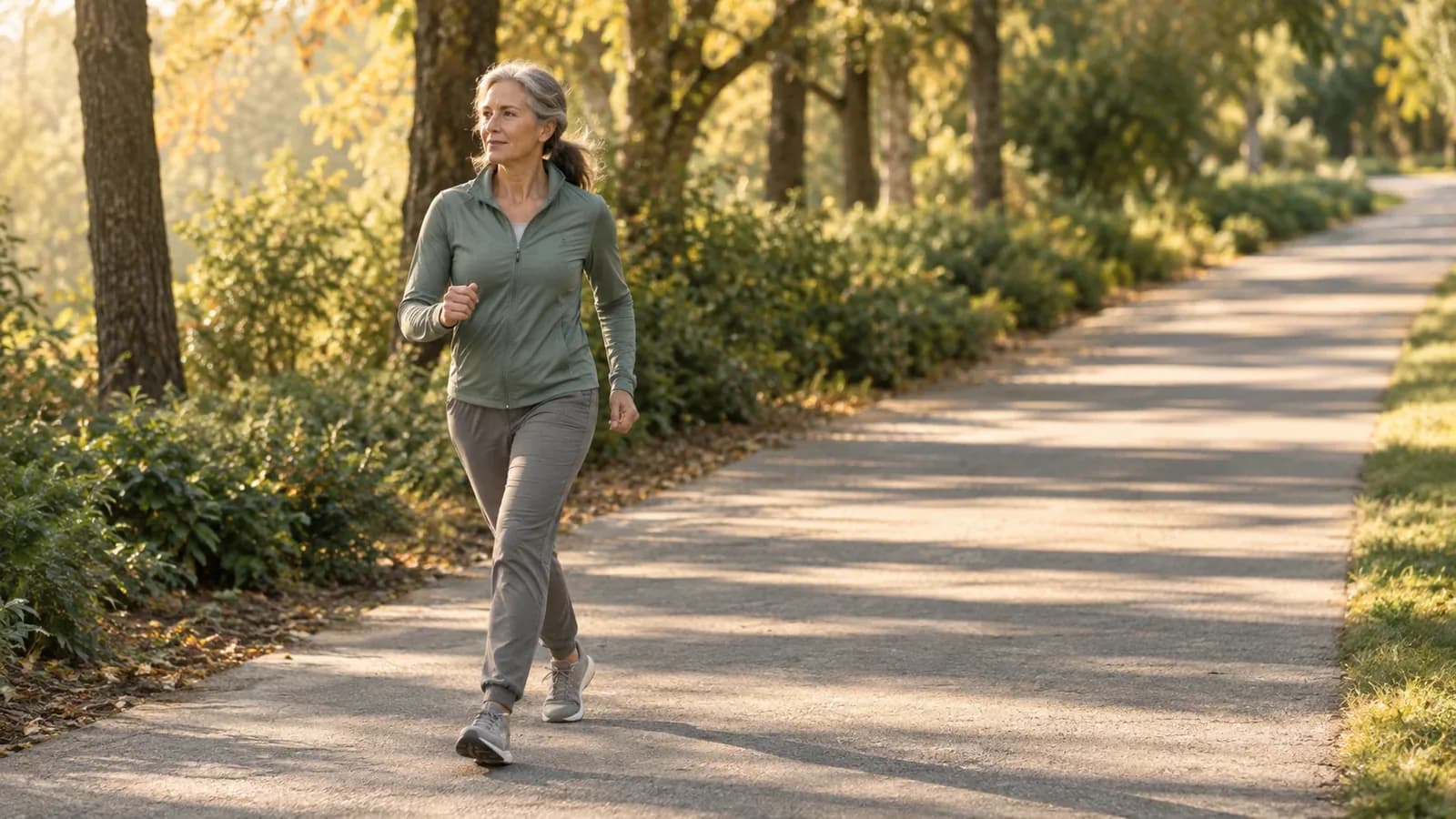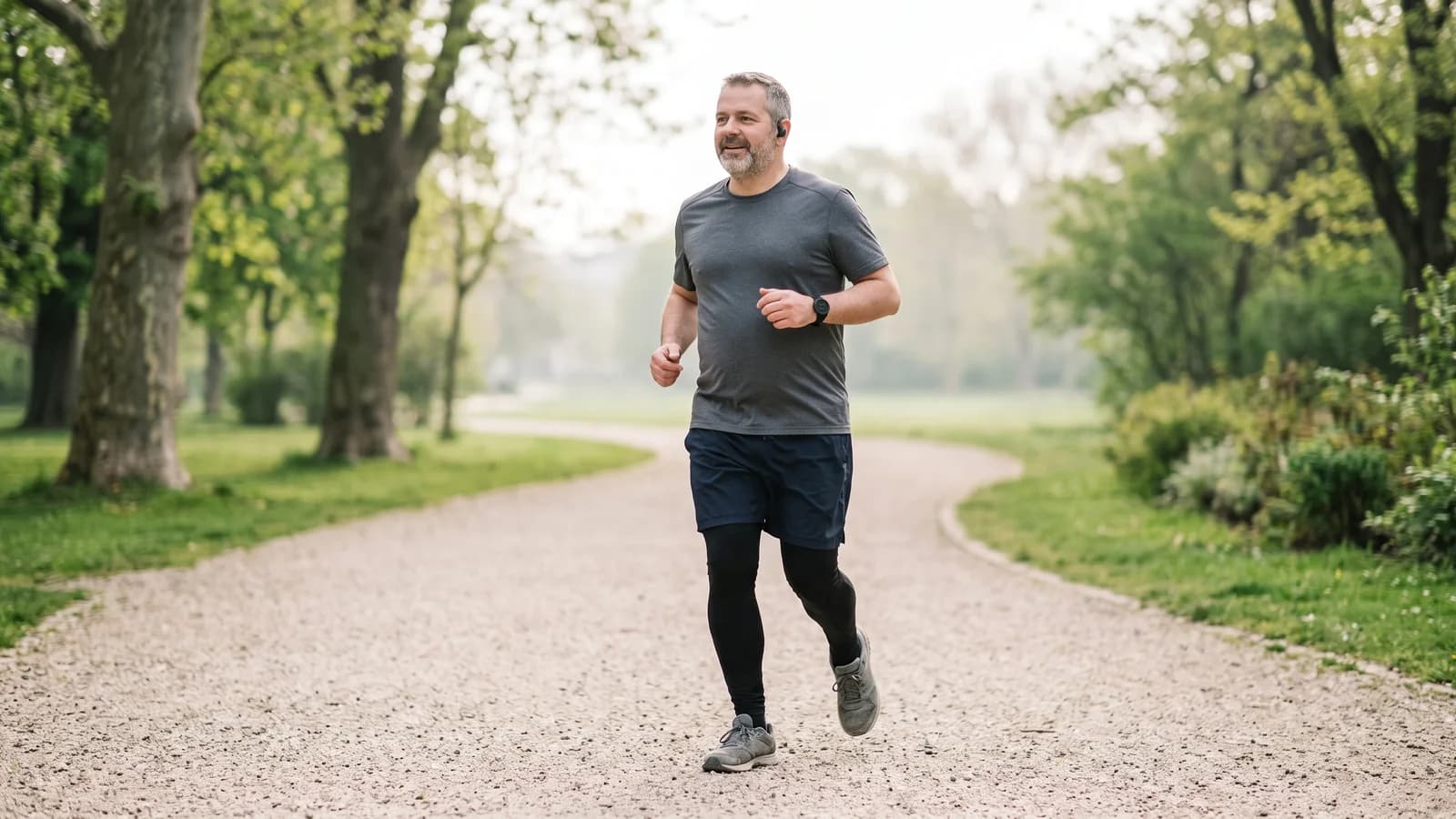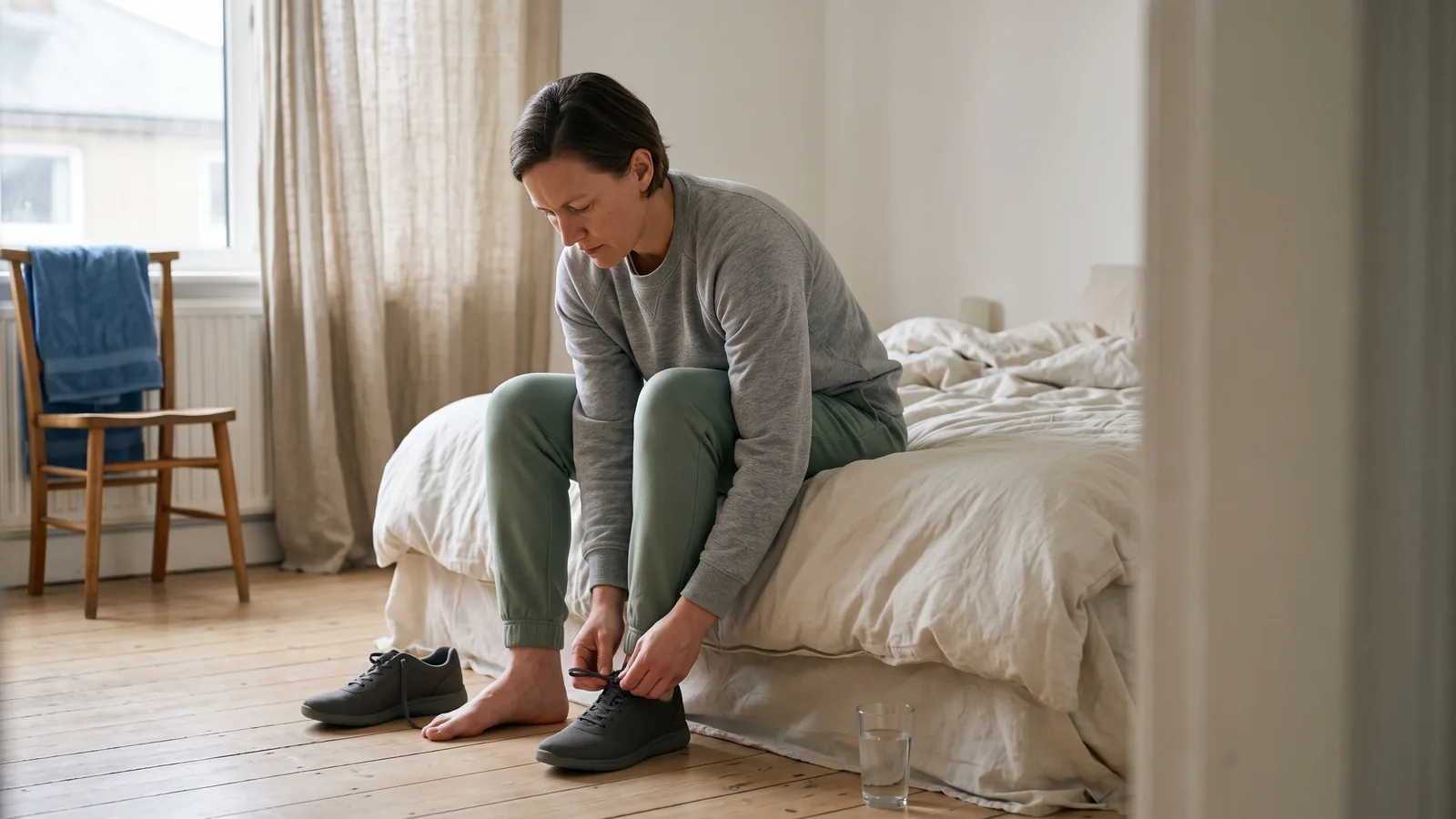
Short answer: A rest day takes the training load away. Active recovery replaces it with something easy — a walk, a loose spin, an unhurried swim. Both are reasonable. The evidence that the easy option speeds recovery is weaker than its reputation: the one review that pulled this research together found active cool-downs "largely ineffective" for most recovery markers. Pick the one you will actually do.
One catch first, because it limits everything below. Almost nothing in the research compares a whole day off with a whole easy day. What has been studied is smaller: the ten or twenty minutes right after a session, and single sessions of recovery treatments. Everything below says which of the two a finding came from.
What "recovery" means here — and what it doesn't
In a training context, recovery is the process that takes your body back toward its pre-exercise state. The Dupuy meta-analysis quotes the working definition it uses from an earlier text: "the return to homeostasis of various physiological systems following metabolic and inflammatory challenges and muscle damage induced by exercise training sessions" (Dupuy et al., 2018). It is not the same thing as healing an injury.
The international consensus statement on the subject frames it as a balance rather than a treatment: "An adequate balance between stress (training and competition load, other life demands) and recovery is essential for athletes to achieve continuous high-level performance." Monitoring recovery, it says, aims at "preventing negative developments such as underrecovery, nonfunctional overreaching, the overtraining syndrome, injuries, or illnesses" (Kellmann et al., 2018 — I could read only the abstract; this journal's full text is not open access). Note the phrase "other life demands". Training is not the only thing sitting on the stress side of that balance.
Now the two words that get mixed up. Passive means doing nothing. Active means doing something easy. The cool-down review that this page leans on defines an active cool-down as "an activity that involves voluntary, low- to moderate-intensity exercise or movement performed within 1 h after training and competition", and a passive cool-down as one "involving no activity". The authors note there is no formal definition of the term (Van Hooren & Peake, 2018).
That is a cool-down: minutes, straight after a session. An active recovery day is something else — a whole day given to easy movement instead of training. People use the same phrase for both. The research mostly tested the first one.
What actually happens while you recover
The adaptation you train for happens in the gap, not in the session. The joint consensus statement of the European College of Sport Science and the American College of Sports Medicine puts it as a pairing: "Successful training not only must involve overload but also must avoid the combination of excessive overload plus inadequate recovery." Push hard enough and performance dips for a while — the statement calls this functional overreaching, and says it "will eventually lead to an improvement in performance after recovery" (Meeusen et al., 2013 — abstract only; this one is behind a paywall too).
Several things are going on at once underneath that, and they do not run on one clock.
Refilling fuel. Hard exercise draws down glycogen, the carbohydrate your muscles store for fast energy. The cool-down review notes that this depletion can impair later high-intensity performance for up to 24 hours (Van Hooren & Peake, 2018).
Clearing lactate — somewhere. Lactate is a by-product of hard effort that rises in the blood during exercise and falls afterwards. It falls out of blood faster when you keep moving. Whether it leaves the muscle faster is a separate question, and a less flattering one.
Everything else. The same review finds that an active cool-down can partly blunt the dip in circulating immune cell counts after exercise, and can return heart rate and breathing toward resting values sooner. Whether either of those prevents anything — an illness, a fainting episode — is, in the authors' own words, unknown.
Does an easy session beat doing nothing?
The cool-down review set out to test exactly this, and its authors open by naming it as a belief rather than a finding: it is widely held that an active cool-down works better than doing nothing, "However, research on this topic has never been synthesized and it therefore remains largely unknown whether this belief is correct" (Van Hooren & Peake, 2018).
Their summary of what they found: active cool-downs are "largely ineffective for improving most psychophysiological markers of post-exercise recovery, but may nevertheless offer some benefits compared with a passive cool-down". The second half of that sentence is not decoration. On next-day performance they are explicit that the overall answer is no while "some beneficial effects on next-day(s) performance have been reported". Most evidence, they write, shows no significant effect on muscle soreness, markers of muscle damage, neuromuscular contractile properties, stiffness, range of motion, hormone concentrations or measures of psychological recovery.
Three details from the full text matter more than the headline.
The lactate story is weaker than the version you have heard. Active cool-downs do clear lactate from blood faster — "but the practical relevance of this findings is questionable, especially because lactate is not necessarily removed faster from muscle tissue and because lactate may not be the cause of metabolic acidosis". Blood and muscle are not the same compartment, and the folk version of this mechanism rests on a culprit the authors are not sure is guilty.
The glycogen cost is real but conditional. Moving easily can interfere with refilling muscle glycogen. Reading the section that finding comes from, the studies showing the most interference used cool-downs of 45 minutes up to 4 hours, and none of them standardized carbohydrate intake — they gave less, more, or none of the 1.2 g/kg/h the review names as recommended. Studies using 10, 15 and 45 minutes found no significant difference. The authors even suggest the effect might help adaptation during a subsequent easy session. Their practical guideline is to keep an active cool-down under roughly 30 minutes.
The people studied are probably more like you than like an elite athlete. The authors state that "most studies have investigated the effects on untrained or recreationally trained individuals, because the detrimental effects of training are easier to induce", and that the findings "may not necessarily transfer to better trained athletes". Their stated uncertainty runs toward athletes, not away from them — the opposite of the usual caveat.
A second paper asks a different question and is often quoted as though it answered this one. Dupuy and colleagues pooled 99 studies comparing ten post-exercise recovery techniques, each used once after a single session. For delayed-onset muscle soreness — DOMS, the ache that turns up after unfamiliar work rather than during it — active recovery produced a significant reduction, with a standardized effect of −0.94 and an interval of −1.61 to −0.28. For how tired people said they felt, the estimate was 0.64, interval −0.43 to 1.70, which crosses zero and is not significant; it rests on four study groups and 33 participants, and in the paper's sign convention it points toward feeling slightly worse rather than better (Dupuy et al., 2018). The table labels those intervals "interval of confidence"; the methods section specifies 95%.
What the paper does not do is rank active recovery. The authors write: "In our meta-analysis, we were not able to show a superior influence of AR compared with the other recovery techniques we studied." Massage came out as "the most powerful technique for recovering from DOMS and fatigue". Three further limits are the authors' own: only one recovery session was examined, performance was not measured at all, and because you cannot blind someone to a massage, a placebo effect could not be ruled out.
So: a short easy session after training reliably reduces soreness a little, does not reliably make you feel less tired, and has not been shown to improve what you can do tomorrow. Nobody has tested whether a whole easy day does any of this. The reasonable reading is that the easy day is fine, not that it is powerful.
Choosing: a rest day, an easy day, or neither
| Your situation | Rest day, easy day, or either | What the evidence actually supports |
|---|---|---|
| Sore after unfamiliar work | Either | A single session of easy movement reduced soreness in the 99-study pooling (−0.94; −1.61 to −0.28). Whether a full easy day does the same is not established |
| Another hard session later today, more than about 4 hours away | Rest, or keep the easy work very short | The cool-down review finds an active cool-down "generally does not improve and may even negatively affect performance later during the same day" at that spacing |
| Your next hard session is tomorrow | Either | Largely ineffective for next-day performance overall, though some beneficial effects have been reported |
| You want to be well fueled for a hard session tomorrow | Rest, or keep it under about 30 minutes | Easy movement may interfere with glycogen refilling; the review's own guideline is to stay under roughly 30 minutes. The underlying studies did not standardize carbohydrate intake |
| Feeling flat, sleeping badly, or life is loud this week | Rest | The consensus statement counts "other life demands" on the same side of the balance as training. The specific trade-off is not established |
| An easy day is what keeps you training at all | Easy day | Most people perceive an active cool-down as more beneficial than doing nothing, and the review concludes that recovery should be individualized. What predicts staying consistent is its own question, covered separately |
| Performance has been sliding for weeks, or you feel unwell | Neither — talk to a clinician | Telling non-functional overreaching from overtraining syndrome "is very difficult and will depend on the clinical outcome and exclusion diagnosis" |
One note on reading that table. Where a cell says the answer is not established, that is not hedging — it marks a question nobody has asked yet.
How long recovery takes
No number in these four papers covers it, and any page that gives you one is going beyond them.
The reason is in the section above: fuel, blood lactate and soreness are separate measurements running on separate clocks, so there is no one moment at which all of them are back. The consensus statement adds that those clocks differ between people, and within the same person from week to week (Kellmann et al., 2018, abstract).
And being able to perform is not the same as having recovered. The Dupuy authors make this point against their own paper: "When the athlete can meet their previous level of performance, this does not mean that the athlete has fully recovered from the previous session of exercise, particularly if perceived fatigue, muscle damage, DOMS and inflammation persist." They also note that blood markers and short-term performance can disagree with each other (Dupuy et al., 2018).
How you can tell you've recovered — and what no metric settles
There is no test for this. The overtraining consensus statement reviewed the candidates — hormones, performance tests, psychological questionnaires, biochemical and immune markers — and concluded that "none of them meet all the criteria to make their use generally accepted" (Meeusen et al., 2013, abstract). That is a statement about the whole field, not about one bad marker.
What is left is unglamorous, and it has not been validated as a test either: how you slept, whether the usual warm-up feels usual, whether you want to train, and whether your performance over a few weeks is holding or sliding. The time frame is the part the consensus statement does support. A short-term dip in performance is what it calls functional overreaching, and that one resolves into an improvement once you have recovered. For the state nobody wants, the phrase it offers is "prolonged maladaptation" (Meeusen et al., 2013, abstract).
That brings us to the watch. Readiness and recovery scores are produced by proprietary algorithms, and I cannot confirm what any particular device measures, how it weights those measurements, or whether its score has been validated against anything — that information is not public for the devices I am aware of, so no claim about any of them belongs on this page. What can be said is conceptual. A score is a model's summary of whatever signals a device can detect, which is a different thing from a measurement of recovery — and that gap is not a flaw in any one product, given what the statement above found about every marker sport science actually uses. So treat the number as a prompt rather than a verdict. If it says rest and you feel good, you are allowed to train. If it says go and you feel wrecked, you are allowed to rest.
What this page does not cover
Sleep belongs in any serious account of recovery, and it has its own page here: what catch-up sleep can and can't restore. Stretching gets filed under recovery constantly, and the research does not support that filing — our beginners' guide sets out why stretching is not a recovery tool, and it is worth noting that in the 99-study pooling above, stretching's soreness estimate was 0.15 with an interval of 0.00 to 0.29, not significant and pointing the wrong way.
Two more. If you find yourself much hungrier on rest days, that is a real and separate phenomenon with its own explanation. And if you are weighing a device or a treatment rather than a day's training, our evidence review of red light therapy for muscle recovery covers that ground. Food is adjacent in the same way: our look at the 4 R's of recovery nutrition sets out what that framework rests on and how conditional its numbers are.
This page is also only about training. "Recovery" means several other things — in medicine, in addiction care, in computing — and none of them is the subject here.
Frequently Asked Questions (FAQ)
Is a rest day or an easy day better? Neither has been shown to beat the other, because the comparison has not been run. What has been tested is the short easy session right after training, and the one review that pooled that research found it "largely ineffective" for most recovery markers, while adding that it "may nevertheless offer some benefits" over doing nothing. Pick on how you feel, how much sleep you got, and which one you will actually do.
What counts as active recovery? Movement easy enough that it does not add meaningful fatigue — a walk, an unhurried swim, a loose spin on a bike. The cool-down review defines the version it studied as "voluntary, low- to moderate-intensity exercise or movement performed within 1 h after training", and recommends keeping it under about 30 minutes, at low mechanical impact, doing something you like. People also use the phrase for a whole easy day, which is a different thing and much less studied.
Does an easy session reduce muscle soreness? A little, on the available evidence. Pooling 99 studies of single recovery sessions, active recovery produced a significant reduction in delayed-onset muscle soreness, with a standardized effect of −0.94 (95% interval −1.61 to −0.28). It did not significantly change how tired people reported feeling: 0.64, interval −0.43 to 1.70, from four study groups. The authors also state they could not show active recovery was superior to the other techniques they studied.
How long does it take to recover from a hard session? There is no established universal figure, and the four papers behind this article do not provide one. Different systems return at different speeds and are measured separately: glycogen depletion can affect high-intensity performance for up to about 24 hours, while lactate falls out of blood faster than it leaves muscle tissue. Being able to perform again is also not proof of full recovery — the meta-analysis authors say so explicitly, because soreness, fatigue and inflammation can persist past it.
My training keeps feeling worse week after week — is that overtraining? This page cannot tell you, and neither can a single marker. The ECSS/ACSM consensus statement says distinguishing non-functional overreaching from overtraining syndrome "is very difficult and will depend on the clinical outcome and exclusion diagnosis", and that none of the available markers meets all the criteria for general acceptance. A sustained drop in performance, disturbed sleep or mood, or feeling unwell is a reason to reduce load and speak to a clinician, not to self-diagnose.
Medical disclaimer: This article is for informational purposes only. Always consult a qualified healthcare provider before making changes to your health routine.
Sources
- Van Hooren B, Peake JM. Do We Need a Cool-Down After Exercise? A Narrative Review of the Psychophysiological Effects and the Effects on Performance, Injuries and the Long-Term Adaptive Response. Sports Medicine, 2018;48(7):1575–1595 — full text read. https://pmc.ncbi.nlm.nih.gov/articles/PMC5999142/ (record: https://pubmed.ncbi.nlm.nih.gov/29663142/)
- Dupuy O, Douzi W, Theurot D, Bosquet L, Dugué B. An Evidence-Based Approach for Choosing Post-exercise Recovery Techniques to Reduce Markers of Muscle Damage, Soreness, Fatigue, and Inflammation: A Systematic Review With Meta-Analysis. Frontiers in Physiology, 2018;9:403 — full text read. https://pmc.ncbi.nlm.nih.gov/articles/PMC5932411/ (record: https://pubmed.ncbi.nlm.nih.gov/29755363/)
- Kellmann M, Bertollo M, Bosquet L, et al. Recovery and Performance in Sport: Consensus Statement. International Journal of Sports Physiology and Performance, 2018;13(2):240–245 — abstract only; the full text is not openly accessible. https://pubmed.ncbi.nlm.nih.gov/29345524/
- Meeusen R, Duclos M, Foster C, et al. Prevention, diagnosis, and treatment of the overtraining syndrome: joint consensus statement of the European College of Sport Science and the American College of Sports Medicine. Medicine & Science in Sports & Exercise, 2013;45(1):186–205 — abstract only; the full text is not openly accessible. https://pubmed.ncbi.nlm.nih.gov/23247672/