The Japanese walking method means alternating three minutes of fast walking with three minutes of easy walking, repeated for about 30 minutes, four or more days a week. It comes from interval walking training (IWT), developed by Hiroshi Nose and Shizue Masuki at Shinshu University in Matsumoto, and unlike most viral fitness trends it rests on a real randomised trial with published numbers.
Those numbers are better than the sceptics assume and narrower than the headlines suggest. This is what the studies measured, what they found, and the details that keep getting dropped.
The protocol, as the trial actually ran it
The founding study enrolled 246 healthy adults aged 44 to 78 — 186 women and 60 men, none of them smokers, none with a history of cardiovascular or pulmonary disease. They were split into three groups for five months, from May to October 2004 (Nemoto et al., 2007).
- No walking training. Instructed to stay sedentary.
- Moderate continuous walking. At least 8,000 steps a day at roughly 50% of peak aerobic capacity for walking, four or more days a week, tracked with a pedometer.
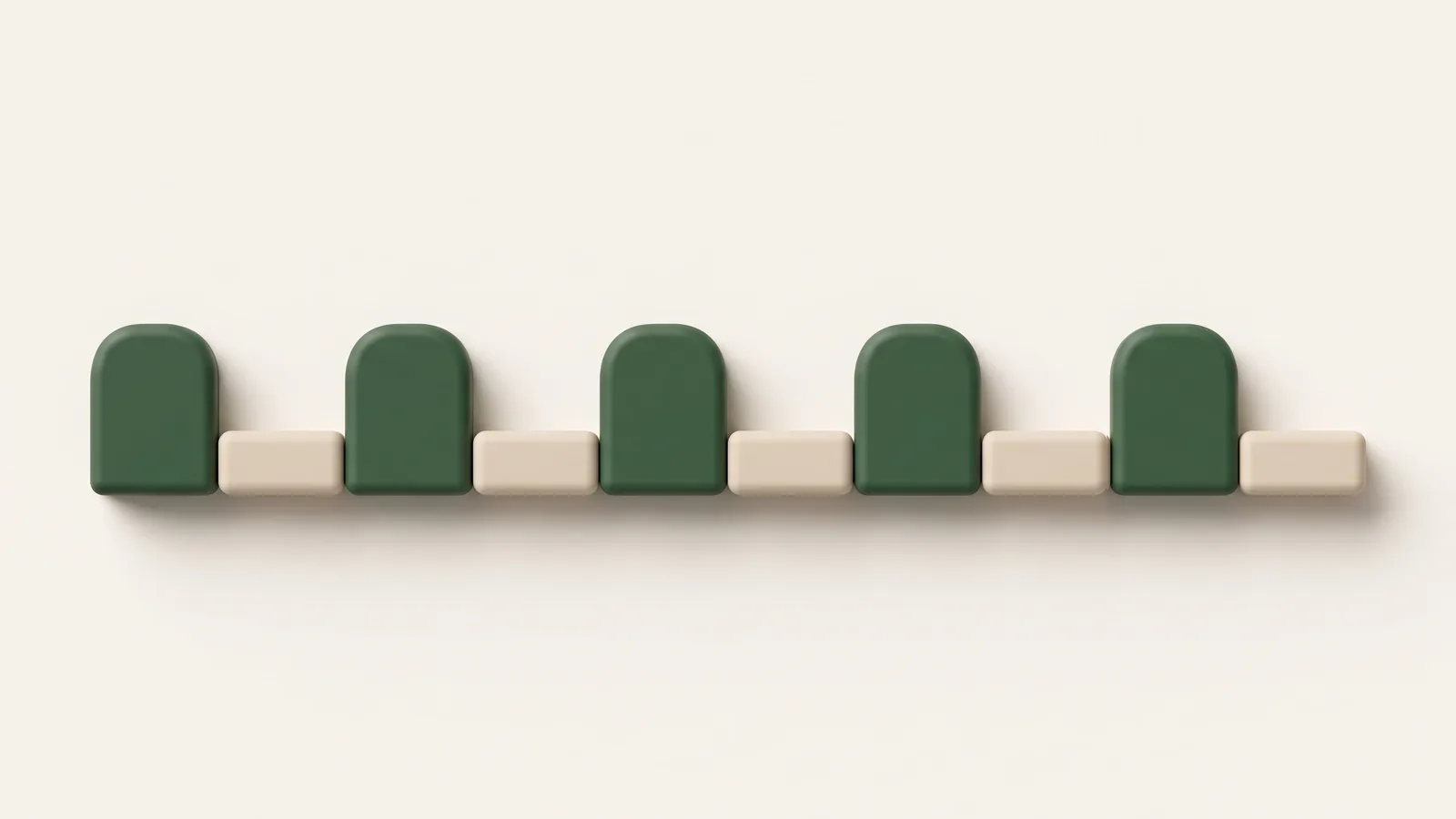
- High-intensity interval walking. Five or more sets of two-to-three minutes of low-intensity walking at about 40% of peak aerobic capacity, each followed by three minutes above 70% (but below 85%), four or more days a week.
Two things about that third arm rarely survive into the coverage. Intensity was set as a percentage of each person's own peak aerobic capacity, measured in a laboratory graded walking test — not as a speed. And the sessions were monitored: every participant carried a triaxial accelerometer that beeped when it was time to change pace, the first month was supervised instruction, data uploaded to a central server every two weeks, and trainers followed up with anyone missing the target.
The comparison is also worth pausing on. The control for interval walking was not sitting still. It was 8,000 steps a day.
What the five months produced
In the interval walking group, measured before and after:
| Outcome | Change after 5 months |
|---|---|
| Isometric knee extension force | +13% |
| Isometric knee flexion force | +17% |
| Peak aerobic capacity, walking | +9% |
| Peak aerobic capacity, cycling | +8% |
| Resting systolic blood pressure | −9 mm Hg |
| Resting diastolic blood pressure | −5 mm Hg |
All of these were statistically significant (P<.001), and the strength and aerobic gains were significantly larger than in the continuous-walking group. The drop in systolic blood pressure was significantly greater than in both the no-walking group (P=.002) and the continuous-walking group (P=.01) (Nemoto et al., 2007).
The mechanism the researchers point to is efficiency rather than effort. Daily energy expenditure did not differ significantly between the two walking groups (P=.66), and the interval group spent only 83% as much time walking — because they were working harder during part of it. Same energy cost, less time, better results on every fitness measure taken.
The three things the coverage leaves out
About 40% of participants were excluded from the analysis. The paper says so directly: "we excluded approximately 40% of the participants in each group from our analyses," and "We did not perform an intention-to-treat analysis." People who did not return for testing, or did not hit the targets they had been set, were dropped. In the interval group, 42 of the original 87 people were analysed — 48%. That does not invalidate the result, but it changes what it means. These are the outcomes for people who did the protocol as prescribed, not the outcomes for everyone who started it.
Baseline blood pressure was high. Before training, systolic pressure in the interval group averaged 146 mm Hg in men and 140 in women. A 9 mm Hg drop from that starting point is meaningful. Whether someone at 118 mm Hg would see the same fall is not something this trial can tell you — blood-pressure reductions from exercise are generally larger when the starting value is higher.
Participants walked more than 30 minutes. The prescription was a minimum of five sets. Accelerometers recorded what people actually did: about 51 to 55 minutes of walking a day, of which roughly 32 to 35 minutes was at the fast intensity, on about 4.5 days a week. The widely repeated "30 minutes" is the floor of the protocol, not the dose that produced the table above.
How fast is "fast"? The treadmill question
This is the most-searched follow-up question and the one nobody answers honestly: there is no speed in the research. Not in kilometres per hour, not in miles per hour, not as a treadmill incline. The fast interval was defined as above 70% of your peak aerobic capacity for walking, established in a lab test, and monitored by an accelerometer. Any specific treadmill setting you see attributed to this method has been added by someone after the fact.
I cannot confirm any published treadmill-speed equivalent for the IWT protocol; I could not find one in the trials.
What you can do instead is use the intensity proxies that public-health guidance already defines. The US Physical Activity Guidelines describe a 0-to-10 effort scale where sitting is 0: moderate intensity is a 5 or 6, and vigorous intensity begins at 7 or 8. They also give a talk test — at moderate intensity "a person... can talk, but not sing"; at vigorous intensity a person "cannot say more than a few words without pausing for a breath" (Physical Activity Guidelines for Americans, 2nd edition).
So: the fast block should leave you able to answer a question but not hold a conversation. The easy block should be comfortable but not a stroll — the trial's slow interval was still about 40% of peak capacity, which is genuine walking rather than window-shopping.
The same guidelines add a point that matters here: relative intensity depends on your fitness, so an older or less fit adult may find a pace labelled moderate feels vigorous. That is exactly why the protocol was written as a percentage rather than a speed. On a treadmill, set the belt to whatever produces the right breathing, then note that number for next time.
The dose that matters is fast minutes, not total minutes
A later analysis by the same group is the most practically useful paper in this literature and almost never gets cited. It followed 679 people, average age 65, through five months of interval walking, and asked which part of the session was doing the work (Masuki et al., 2019).
Estimated peak aerobic capacity rose 14% on average and a composite lifestyle-disease score fell 17%. But both outcomes improved as fast-walking minutes per week increased, up to about 50 minutes a week, and then plateaued. Neither slow-walking time nor total walking time was positively correlated with improvement.
That gives you an arithmetic you can act on. Five sets of three minutes is 15 minutes of fast walking per session. Four sessions a week is 60 minutes of fast walking — just past the point where the curve in this analysis flattens. The classic prescription, in other words, lands roughly where the dose-response evidence says it should, and there is no sign in this dataset that doing substantially more fast walking buys substantially more.
For context, participants in that study averaged 88 ± 65 minutes of fast walking a week, with wide variation between people.
Does it help with weight loss?
Not much on its own, and the original trial is clear about it if you look at the table rather than the headline.
Over five months, women in the interval group went from 53.7 kg to 52.9 kg — about 0.8 kg. Women in the continuous walking group lost slightly more, from 54.4 kg to 53.2 kg. Women in the no-walking group gained weight. Body weight was a reported characteristic, not a primary outcome, and interval walking had no weight advantage over ordinary brisk walking (Nemoto et al., 2007).
One trial did find a body-composition effect, and the difference in design explains a lot. A Danish randomised trial in 32 people with type 2 diabetes prescribed five 60-minute sessions a week for four months, with interval walkers alternating three-minute low- and high-intensity repetitions. VO₂max rose 16.1 ± 3.7% in the interval group only, and body mass, fat mass and visceral fat decreased in the interval group only — against a continuous-walking group matched for energy expenditure (Karstoft et al., 2013).
That is 300 minutes a week, roughly double the Japanese protocol, in a population with a different metabolic starting point. It is good evidence that interval walking can shift body composition. It is not evidence that 30 minutes, four times a week, will.
Japanese walking and the 10,000-step target
These two ideas are often presented as rivals, and they measure different things.
Step-count research tracks total daily volume against mortality, and finds the benefit largely levels off somewhere between about 6,000 and 10,000 steps depending on age — with walking speed adding no independent benefit once total steps are accounted for. Our guide to what the step-count research actually says covers that evidence in full.
Interval walking measures something else: fitness, leg strength and blood pressure over months. On those outcomes, intensity clearly did add something the 8,000-steps-a-day group did not get.
Both can be true. Accumulate steps for the mortality-associated volume; add fast intervals when you want the fitness and blood-pressure adaptations. If you are choosing where to put limited time, the interval version gets more fitness per minute — the 2007 trial's own finding.
Who it suits, and who should check first
It suits people who want a structured session with no equipment, no gym and no skill requirement; people in the age range the trials actually studied (the founding trial was 44 to 78, the dose-response analysis averaged 65); anyone whose blood pressure is raised and who has been cleared for exercise; and anyone who finds a timer easier to follow than a vague instruction to "walk briskly."
Check with a clinician first if you have known cardiovascular disease, uncontrolled hypertension, or you get chest pain, unusual breathlessness, dizziness or palpitations on exertion. The founding trial specifically excluded people with a history of cardiovascular or pulmonary disease, so it does not tell you how the protocol behaves in those groups. German national physical-activity guidance notes that sports-medicine bodies advise beginners and people returning after a long layoff to get a medical check first (Nationale Empfehlungen für Bewegung, German-language PDF).
Adapt it if you have knee, hip or foot problems — the fast blocks increase load, and a shorter fast interval at a lower effort is a reasonable starting point. If you are pregnant or postpartum, intensity guidance differs and should come from your own clinician.
What the studies have not established
A 2024 review by researchers including the protocol's originators is refreshingly direct about the limits. Interval walking improves physical fitness and muscle strength and reduces factors associated with lifestyle-related disease. But adherence is high in short-term studies and remains a challenge long term, "particularly in populations with chronic diseases and/or overweight/obesity," and "long-term studies in real-world settings are imperative to ascertain the widespread effectiveness of IWT and elucidate its impact on hard endpoints" (Karstoft et al., 2024).
"Hard endpoints" means heart attacks, strokes and deaths. No trial has shown that interval walking reduces those. It improves the measurements that tend to predict them, which is not the same claim.
Two further qualifications:
It does not always beat continuous walking. A 2025 randomised trial in 50 people with diabetes and lower-extremity weakness found no significant difference between interval and continuous walking for knee-extension strength, though the interval group did improve gait speed and physical quality of life (Ichihara et al., 2025).
Outdoor adherence is weather-dependent. A study of Japanese students found that over a summer training period participants walked 2.1 ± 0.3 days a week, against 4.2 ± 0.3 in winter, and fitness measures fell in the summer groups — attributed at least partly to high air temperature (Tanabe et al., 2018). If you live somewhere hot, plan for the season rather than blaming yourself in August.
The practical version
- Warm up with three to five minutes of easy walking.
- Walk fast for three minutes — hard enough that a full sentence is a struggle, around 7 on a 0–10 effort scale.
- Walk easy for three minutes — comfortable, but still purposeful walking.
- Repeat five times, for 30 minutes. A phone interval timer replaces the trial's beeping accelerometer.
- Aim for four days a week. That is roughly 60 minutes of fast walking, which sits just above where the dose-response curve flattened.
- Build up if you are starting from sedentary. Two or three sets is a legitimate beginning; the fast interval is the part that matters, so keep the intensity and shorten the session rather than the reverse.
If the difficulty is not the protocol but keeping it going, our guide to what actually predicts sticking with exercise covers the evidence on adherence, including why the week after a missed session matters more than the plan itself.
Frequently Asked Questions (FAQ)
What exactly is the Japanese walking method? Alternating three minutes of fast walking above roughly 70% of your peak aerobic capacity with three minutes of easy walking at about 40%, five or more times, on four or more days a week. It comes from interval walking training developed at Shinshu University and tested in a five-month randomised trial published in 2007.
What treadmill speed should I use? The research does not specify one. Intensity was set as a percentage of each participant's measured peak aerobic capacity, not as a speed, so any specific km/h or mph figure attached to this method comes from somewhere other than the studies. Use effort instead: the fast block should leave you unable to hold a conversation, which public-health guidance places at 7 to 8 on a 0–10 effort scale.
Will Japanese walking help me lose weight? On its own, probably very little. In the original trial, average weight change over five months was under a kilogram, and it was no better than ordinary continuous walking. A Danish trial did find fat-mass and visceral-fat reductions from interval walking, but it used five 60-minute sessions a week — about double the Japanese protocol.
Is it better than walking 10,000 steps? For fitness, leg strength and blood pressure over five months, the interval protocol outperformed a comparison group walking 8,000 or more steps a day at moderate intensity. For the mortality associations that step-count studies measure, total steps are what the data track, and pace adds no independent benefit. They answer different questions.
How long before I notice anything? The published outcomes were measured at five months. Interval walking studies of this protocol have not reported how quickly changes appear week by week, so I cannot give you a verified timeline shorter than that.
Medical disclaimer: This article is for informational purposes only. Always consult a qualified healthcare provider before making changes to your health routine.
Sources
- Nemoto K, Gen-no H, Masuki S, Okazaki K, Nose H. Effects of high-intensity interval walking training on physical fitness and blood pressure in middle-aged and older people. Mayo Clinic Proceedings, 2007;82(7):803–811 — PubMed. https://pubmed.ncbi.nlm.nih.gov/17605959/
- Masuki S, Morikawa M, Nose H. High-Intensity Walking Time Is a Key Determinant to Increase Physical Fitness and Improve Health Outcomes After Interval Walking Training in Middle-Aged and Older People. Mayo Clinic Proceedings, 2019;94(12):2415–2426 — PubMed. https://pubmed.ncbi.nlm.nih.gov/31477320/
- Karstoft K, Winding K, Knudsen SH, et al. The effects of free-living interval-walking training on glycemic control, body composition, and physical fitness in type 2 diabetic patients: a randomized, controlled trial. Diabetes Care, 2013;36(2):228–236 — PubMed Central. https://pmc.ncbi.nlm.nih.gov/articles/PMC3554285/
- Karstoft K, Thorsen IK, Nielsen JS, Solomon TPJ, Masuki S, Nose H, Ried-Larsen M. Health benefits of interval walking training. Applied Physiology, Nutrition, and Metabolism, 2024;49:1002–1007 — PubMed. https://pubmed.ncbi.nlm.nih.gov/38507778/
- Ichihara Y, Mori H, Kamada M, et al. Effects of high-intensity interval walking training on muscle strength, walking ability, and health-related quality of life in people with diabetes accompanied by lower extremity weakness: A randomized controlled trial. Journal of Diabetes Investigation, 2025;16:646–655 — PubMed Central. https://pmc.ncbi.nlm.nih.gov/articles/PMC11970289/
- Tanabe A, Masuki S, Nemoto KI, Nose H. Seasonal influence on adherence to and effects of an interval walking training program on sedentary female college students in Japan. International Journal of Biometeorology, 2018;62(4):643–654 — PubMed. https://pubmed.ncbi.nlm.nih.gov/29150762/
- Masuki S, Mori M, Tabara Y, et al. The factors affecting adherence to a long-term interval walking training program in middle-aged and older people. Journal of Applied Physiology, 2015;118(5):595–603 — PubMed. https://pubmed.ncbi.nlm.nih.gov/25539937/
- U.S. Department of Health and Human Services. Physical Activity Guidelines for Americans, 2nd edition, 2018. https://odphp.health.gov/sites/default/files/2019-09/Physical_Activity_Guidelines_2nd_edition.pdf
- Bundesministerium für Gesundheit / BZgA. Nationale Empfehlungen für Bewegung und Bewegungsförderung, Sonderheft 03 (German-language PDF). https://www.bundesgesundheitsministerium.de/fileadmin/Dateien/5_Publikationen/Praevention/Broschueren/Bewegungsempfehlungen_BZgA-Fachheft_3.pdf
All sources accessed 22 September 2026.