Short answer: An exercise snack is a very short bout of effort, somewhere between about 20 seconds and a few minutes, done several times through the day instead of as one session. The classic example is three hard climbs up a three-flight stairwell, spread across a working day. The most consistent finding in small, short trials (median length 7 weeks) is better cardiorespiratory fitness, mostly in younger adults; two 12-week trials in middle-aged adults found vigorous snacks no better than stretching. The "three minutes a day" death-risk figures come from a wrist-tracker study of people who did not exercise, not from a trial of exercise snacks.
Beyond that, agreement runs out. Researchers define the term in at least four different ways, and the trials of the idea itself are small and short. This guide separates what was tested from what was only observed, and says where the evidence stops.
Looking for what to eat before or after a workout? That is a different subject: see our guide to pre- and post-workout snacks. Exercise snacks are movement, not food.
What counts as an exercise snack
The phrase has been used for two rather different things. The first peer-reviewed trial to use the idea, published in New Zealand in 2006, asked 35 adults with high blood pressure to do four 10-minute brisk walks a day for four days, and compared that with one 40-minute walk and with no walking. Systolic pressure fell by 7.3 mmHg on the four short walks and 7.5 mmHg on the single long one, and did not fall without walking (Elley et al., 2006). A 2025 scoping review found that this appears to be the first peer-reviewed use of the concept, and noted that a 2007 Newsweek article, often credited as the first, came after it (Weston et al., 2025).
The modern meaning is much shorter. A 2022 review defined exercise snacks as "isolated ≤1-min bouts of vigorous exercise performed periodically throughout the day" and hypothesised, in its own word, that they would be feasible and time-efficient (Islam, Gibala & Little, 2022). Other reviews draw the line elsewhere:
| Source | Bout length | Effort | How often |
|---|---|---|---|
| Elley et al., 2006 (trial) | 10 minutes | Brisk walking | Four a day |
| Islam, Gibala & Little, 2022 (review) | 1 minute or less | Vigorous | "Periodically throughout the day" |
| Weston et al., 2025 (33 studies) | Median 120 seconds (20 seconds to 12 minutes) | Mean about 77% of maximum heart rate, in the studies that reported it | Median three a day, about an hour apart |
| Rodríguez et al., 2026 (meta-analysis inclusion rule) | 5 minutes or less | Moderate-to-vigorous up to near-maximal | At least twice a day, three or more days a week |
None of these is wrong. They describe different things, so when someone says exercise snacks do something, the first question is which kind they mean.
The "three minutes a day" figures came from a different kind of study
Headlines about three or four minutes a day lowering the risk of dying by a quarter or more do not trace back to a trial of exercise snacks. They trace back to a wrist-tracker study of people who did not exercise at all.
In 2022, Stamatakis and colleagues analysed accelerometer data from 25,241 UK Biobank participants who reported no leisure-time exercise. The devices picked up short bursts of vigorous movement inside ordinary life, such as hurrying uphill, carrying shopping or taking stairs fast, which the authors call vigorous intermittent lifestyle physical activity, or VILPA. Over an average of 6.9 years, 852 of the participants died. Those whose trackers showed about three bursts a day, of one or two minutes each, had a 38% to 40% lower risk of dying from any cause or from cancer, and a 48% to 49% lower risk of dying from cardiovascular disease, than people with none. Counted in minutes rather than bursts, the median of 4.4 minutes a day went with a 26% to 30% lower risk of all-cause and cancer death (Stamatakis et al., 2022).
Three things limit what that can tell you.
It is observational. Nobody was asked to do anything; the trackers recorded what people already did. The authors excluded anyone who died in the first two years and say their results were very robust to their sensitivity analyses, but they also write that they "cannot entirely rule out reverse causation bias": people who are unwell may move less, and the study cannot fully separate that from movement protecting health.
It concerns non-exercisers, and it is one dataset. It says nothing about adding a burst to a training routine. And the mortality, cancer and cardiovascular papers from the same group all use the same UK Biobank accelerometer data, so they are one dataset examined several ways rather than several confirmations (Ahmadi et al., 2023; Stamatakis et al., 2023).
The one non-UK analysis I found was less clear-cut. In US NHANES data (3,293 adults who reported no structured exercise, 290 deaths), the median 5.3 bursts a day went with a hazard ratio of 0.56 (95% CI 0.39 to 0.82) for dying from any cause, and the ratio stayed at 0.51 and 0.57 when people in poor health, or with no bursts at all, were excluded. After excluding people who already had cardiovascular disease or cancer at the start, which left 152 deaths, the ratio was 0.68 and the interval, 0.41 to 1.11, includes no effect. The authors say the association may, "at least partly", be driven by existing disease (Koemel et al., 2026). In the UK data, the cardiovascular results were clear in women (major cardiovascular events: hazard ratio 0.55, 95% CI 0.41 to 0.75, at a median 3.4 minutes a day) and less clear in men (Stamatakis et al., 2025).
VILPA is what a tracker finds in someone's day afterwards. An exercise snack is something you decide to do. I found no trial that randomised people to either and followed them for deaths, so the famous numbers are not results for exercise snacks.
Two other claims shrink when you read the paper. A widely shared summary says ten squats every 45 minutes beat a 30-minute walk for blood sugar. The study behind it had 18 young, overweight or obese men, and the squat break was a three-minute bout, repeated ten times over 8.5 hours, so thirty minutes of squatting in all. The glucose response was lower than after the single walk (7.9 against 9.2 mmol·h/L), but that is not what "ten squats" suggests (Gao et al., 2024). And the 31% cancer figure that circulates applies to a pre-defined set of 13 cancers linked to inactivity (hazard ratio 0.69); for cancer overall, the median-dose hazard ratio was 0.80 (Stamatakis et al., 2023).
What the trials tested
Deliberate exercise snacks have been tested, in studies that are small and short. The 2025 scoping review counted 33 studies with 1,118 participants in total, a median of 24 per study, and just over half were described by their own authors as pilot or feasibility studies. Twelve were single-day studies and 21 were training trials, which had a median length of 7 weeks (range 4 to about 35) (Weston et al., 2025). The outcomes were things like fitness, blood pressure, blood glucose and muscle function. I found no exercise-snack trial that reported deaths, heart attacks, strokes or cancers.
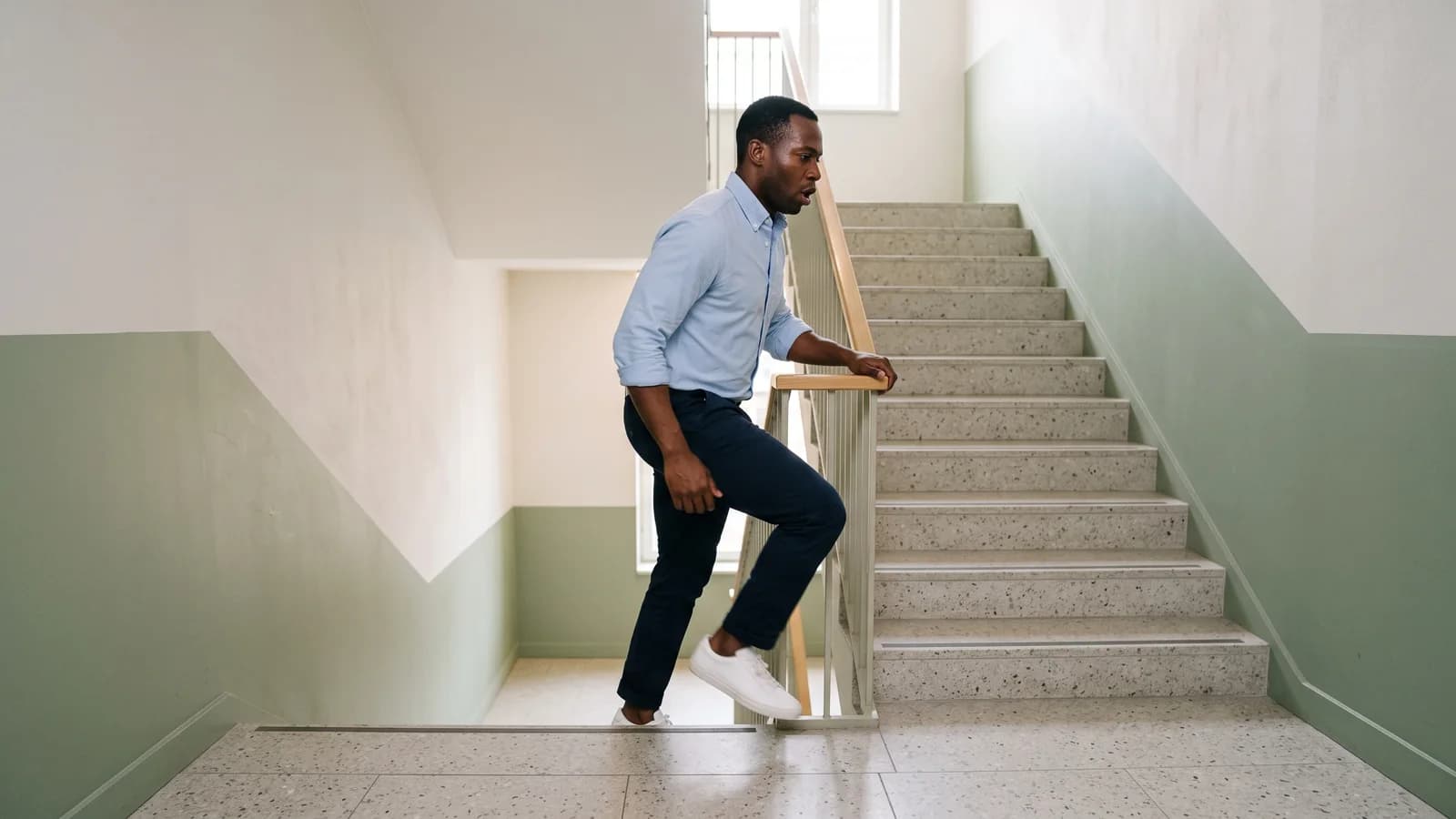
The clearest result is in young adults, supervised, over six weeks. In a 2019 trial, 24 sedentary young adults were randomly assigned to climb a three-flight stairwell (60 steps) vigorously three times a day, at least an hour apart, on three days a week, or to carry on as usual. Their peak oxygen uptake was higher afterwards (P = 0.003), though the authors call the absolute gain modest (Jenkins et al., 2019). A 2024 trial in 42 inactive adults with a mean age of 21.6 used three 30-second "all-out" stair climbs per session, three sessions a week: 4.5 minutes of climbing a week, by my arithmetic. Relative peak oxygen uptake rose 7% (mean difference 2.5 mL/kg/min, 95% CI 1.2 to 3.7). A group doing 40 minutes of moderate cycling showed no significant change, and the control group's fell, which widens the gap between the groups (Yin et al., 2024).
Ordinary life was less kind to the idea. In a 12-week trial, 77 inactive adults with a mean age of 54 were asked to do at least three bodyweight bouts of a minute or less a day, on at least three days a week: marching in place, step-ups, jumping jacks, lunges, squats and similar, following online videos at a pace of their choosing. A comparison group did stretching bouts on the same schedule. Both groups did more than the minimum, and there was no difference in peak oxygen uptake (0.0 L/min, 95% CI −0.1 to 0.1) or in blood markers. The snack group rated its effort 3.0 out of 10 on average, against 2.1 for stretching. The authors' own reading is that future work "may need to optimize the exercise snacks stimulus to elicit physiological changes" (Babir et al., 2025).
A second 12-week trial, in 69 adults with type 2 diabetes (mean age 58), had one group do four one-minute bouts of vigorous bodyweight exercise on five or more days a week and the other do gentle stretching on the same schedule. Effort averaged 5.7 out of 10 against 2.0. HbA1c, blood markers, grip strength and estimated fitness did not differ between the groups; the one exception was 1.9 more repetitions in a 30-second sit-to-stand test in the snack group (Babir et al., 2026). Over two days, a crossover trial in 31 adults with type 2 diabetes missed its primary outcome (mean 48-hour glucose, −0.2 mmol/L, 95% CI −0.4 to 0.0), although glucose variability and the post-breakfast and post-dinner peaks improved slightly (Babir et al., 2026).
In both 12-week trials adherence was high, but it was just as high in the stretching groups, and participants had regular check-in calls from the research team. It tells you the schedule is easy to follow while someone is checking in. It does not tell you the vigorous version works.
Where the meta-analyses agree, and where they do not
Since 2025 at least eight meta-analyses of exercise-snack trials have appeared (my count in PubMed on 24 September 2026), and they pool overlapping small trials, so they are not independent confirmations. One finding holds up across them: cardiorespiratory fitness improves.
A 2026 meta-analysis in the British Journal of Sports Medicine pooled 11 randomised trials in 414 physically inactive people. It found a large fitness effect (Hedges' g 1.37, 95% CI 0.58 to 2.17, moderate certainty) and no significant effect on lower-limb strength, body composition, blood pressure or blood lipids (Rodríguez et al., 2026). A 2025 one found no significant fitness effect in its main analysis (standardised mean difference 0.91, 95% CI −0.95 to 2.78) and a significant one only after excluding a single high-risk-of-bias study; it graded the certainty "very low" (Wan et al., 2025).
On everything else they split. One review of 27 studies reported significant improvements in systolic blood pressure, fasting glucose, HDL and LDL cholesterol and body fat (Chen et al., 2025). Another found body-fat percentage rising overall (g 0.51, low certainty), and fitness gains in studies with a mean participant age under 50 but not above it, an across-study comparison the authors say needs confirming (Meng et al., 2026). Read any one of them alone and you could support either a bold claim or a cautious one. The honest summary is fitness, in mostly younger adults, over weeks, with certainty rated anywhere from very low to moderate.
Breaking up long sitting is a related idea with different evidence
Some of what gets called an exercise snack is really research on interrupting long spells of sitting. The activity is lighter, and the readout is blood glucose and insulin over the hours after a meal, measured in a lab.
In a crossover trial of 19 overweight or obese adults, two minutes of light or moderate walking every 20 minutes lowered the glucose and insulin response to a standard test drink (75 g of glucose and 50 g of fat) over five hours (Dunstan et al., 2012). In 24 adults with type 2 diabetes, three minutes of light walking or simple resistance moves (half-squats, calf raises, knee raises) every 30 minutes over eight hours lowered the glucose response from 24.2 to about 14.8 mmol·h/L with either (Dempsey et al., 2016). The dose does not scale in an obvious way, though: in another crossover trial of 23 adults with type 2 diabetes, three minutes every 30 minutes did not differ from sitting for glucose, while six minutes every 60 minutes did (Homer et al., 2021).
These are acute studies over a day, at light effort. A 2026 meta-analysis of 20 crossover trials (392 people with metabolic disorders) found that short bouts lowered post-meal glucose compared with prolonged sitting (g −0.37, moderate certainty) but not measurably compared with one continuous exercise session (g −0.14, 95% CI −0.73 to 0.45). The authors note that the second comparison rests on only four small studies (Peng et al., 2026). If your day is mostly sitting, this is the closest evidence to what you would actually be doing. It says less about a one-minute maximal effort.
One national agency has put a number on it, for walking at least. In an opinion dated August 2025, France's ANSES recommended breaking up prolonged sitting with a 3-to-5-minute walk at low-to-moderate intensity, with the effect greatest if the break comes about every 30 minutes and fading beyond an hour. It noted that other kinds of break, such as cycling, stairs or strength moves, also have interesting physiological effects, but called the data still too limited to recommend precise ways of doing them, and it based the advice on short-term effects that it judged would protect over time if repeated (ANSES, 2025). ANSES describes the opinion as a systematic literature review based on in-house expertise, not a health risk assessment.
What the guidelines say about short bouts
For years, both the US and WHO guidelines said aerobic activity should be done in bouts of at least 10 minutes. Both have dropped that condition. The 2018 US guidelines say that "bouts of any length contribute to the health benefits associated with the accumulated volume of physical activity", and add: "Even a brief episode of physical activity like climbing up a few flights of stairs counts" (Physical Activity Guidelines for Americans, 2nd edition). WHO's 2020 guidelines say physical activity "of any duration, without a minimum threshold" is associated with better health outcomes, and that the 10-minute recommendation "has been removed" (WHO, 2020).
Two limits apply. The basis is observational: WHO rated the evidence moderate certainty, and the shortest bout in the hazard ratios it cites was 5 minutes. And neither document contains the word "snack" or lowers the weekly target, which for adults stays at 150 to 300 minutes of moderate-intensity or 75 to 150 minutes of vigorous-intensity aerobic activity.
Trying it: what has been tested, and what has not
| Version | Tested? | What the studies did | What to keep in mind |
|---|---|---|---|
| Fast stair climbing | Yes | Three flights (60 steps) three times a day, three days a week (2019); three 30-second all-out climbs per session (2024); both for six weeks | Young, inactive adults; effort was vigorous to all-out |
| Bodyweight bursts: squats, step-ups, jumping jacks, running on the spot | Yes | One-minute bouts for 12 weeks at home (2025, 2026) | Middle-aged adults; fitness and blood markers no better than with stretching, one sit-to-stand test aside |
| Brisk walking | Partly | Four 10-minute walks a day for four days in high blood pressure (2006); light-to-moderate 2–3 minute walks every 20–30 minutes in sitting studies (Dunstan et al., 2012; Dempsey et al., 2016) | A one-to-two-minute brisk walk as a "vigorous" snack is an extrapolation; the closest test was one-minute incline-treadmill intervals at 90% of maximum heart rate in nine people (Francois et al., 2014) |
| Chair stands | Yes, briefly | Ten stand–sit transitions in 30 seconds every 20 minutes, 14 adults, one day (Hawari et al., 2019) | Insulin lower after breakfast, not lunch; glucose and triglycerides unchanged |
| Push-ups, wall sits, planks | Only inside a mixed routine | Push-ups and wall sits were among the exercises in a 12-week pilot of 10-minute daily resistance breaks in 30 women with sedentary jobs, who chose their own group (muscle mass +0.42 kg against −0.16 kg; strength not significantly different) (Brandt et al., 2024). One registered trial is under way (NCT07362329) | Small, non-randomised, and not testing each exercise on its own. I found no published trial of planks |
How hard is "hard"? In the stair trials it meant all-out. In the 2026 diabetes trial the target was a self-rated effort of at least 7 out of 10, "very hard". The US guidelines give a rule of thumb for vigorous effort: you cannot say more than a few words without pausing for breath. A lab study of 70 adults (mean age 58) found that ordinary tasks such as fast walking, stair climbing or carrying a load took, on average, 77 to 83 seconds to produce a vigorous response by oxygen uptake or heart rate, and about 45 seconds by perceived effort (Ahmadi et al., 2024). That suggests a relaxed half-minute on the stairs is unlikely to count.
A day built from those protocols might look like this. It is a reconstruction, not a tested plan:
- Three times a day, at least an hour apart, climb two or three flights of stairs fast enough that you could not chat, or do a minute of squats, step-ups or running on the spot.
- Do that on three or more days a week. The stair trials ran six weeks and the home trials 12.
- On days when you sit for hours, stand up and walk or do simple leg moves for a few minutes at regular intervals. That is the sitting-break evidence, at light effort. The studies used breaks every 20 to 60 minutes and disagree on the best spacing; France's ANSES suggests a 3-to-5-minute walk about every 30 minutes.
- Keep whatever else you already do. The comparisons with continuous sessions were small and short.
Who should check first
The trials I read mostly enrolled healthy or inactive adults, or people whose diabetes was described as controlled and, in the 2006 walking trial, whose high blood pressure had no complications. I cannot confirm how each one screened out people with heart disease, so the evidence cannot tell you that hard one-minute efforts are safe if you have it. The scoping review found adverse events reported in only 16 of the 33 studies it examined (Weston et al., 2025).
The US guidelines say people without diagnosed chronic conditions (they name diabetes, heart disease and osteoarthritis) and without symptoms (chest pain or pressure, dizziness, joint pain) "most likely do not need to consult with a health care provider" before becoming active, and that people with chronic conditions or symptoms should be under a provider's care. For inactive adults they add that you should "start low and go slow", with lower-intensity activity and gradual increases in how often and how long. That sits uneasily with all-out stair sprints on day one, and nothing in the snack trials tells you how to progress towards them. If you are pregnant or postpartum, or your knees or hips object to stairs, ask your own clinician first.
What nobody has shown yet
- Effects on deaths, heart attacks, strokes or cancer. No exercise-snack trial I found measured them.
- How long any benefit lasts. The training trials had a median length of 7 weeks, and the longest ran about 35.
- The best dose. Number, length and spacing of snacks are not established, and the frequency findings conflict.
- Whether snacks can stand in for the weekly target. The few small trials that compared snacks with a continuous session measured fitness or one day's glucose, not health outcomes over years.
- Older adults and people with chronic disease doing vigorous snacks. The evidence is thin, and one meta-analysis found no fitness gain in studies with a mean participant age over 50, a comparison across studies that its authors say needs confirming.
The bottom line
Short bursts of effort are a low-cost thing to try, and the guidelines count them toward your weekly total. If you are inactive, the US guidelines advise starting with lighter activity and building up; if you have a chronic condition or symptoms such as chest pain or dizziness, talk to a clinician before adding hard efforts. The most consistent evidence is for cardiorespiratory fitness, in mostly younger adults, in trials lasting weeks. The mortality figures describe what people who do not exercise already did, not what happens when you start, and two 12-week trials in middle-aged adults found vigorous snacks no better than stretching on fitness or blood markers. Treat them as an addition to your week, not a proven substitute.
If the hard part is keeping any routine going rather than fitting in a bout, the evidence on what predicts sticking with exercise is a better place to start. If you would rather build toward continuous cardio, see how to start running when you are out of shape, and for one structured session with a real trial behind it, the Japanese walking method.
Frequently Asked Questions (FAQ)
What is an exercise snack, and is it the same as a workout snack? An exercise snack is a very short bout of effort, from about 20 seconds to a few minutes, repeated through the day. Researchers define it differently: bouts of a minute or less at vigorous effort in one review, up to five minutes in a 2026 meta-analysis, ten minutes of brisk walking in the first trial. It is not the same as a workout snack, which is food eaten before or after training. Our guide to pre- and post-workout snacks covers that.
Do exercise snacks replace a workout? Not shown. A few small trials have compared snacks with a continuous session, and none has followed health outcomes over years. In a six-week trial in 42 young adults, three 30-second stair climbs per session raised peak oxygen uptake while 40 minutes of moderate cycling showed no significant change; a 2026 meta-analysis found post-meal glucose no different after snacks than after one continuous session, but that rests on four small studies and cannot show the two are equivalent. The US and WHO guidelines count short bouts toward the weekly total but keep the target at 150 to 300 minutes of moderate activity or 75 to 150 of vigorous.
How many exercise snacks should I do a day? There is no established number. The median across 33 studies was three a day, about an hour apart, of about two minutes each. The stair trials used three bouts a day or three 30-second climbs per session on three days a week; the diabetes trial used four one-minute bouts on five or more days. One meta-analysis suggested more bouts a day and four to five days a week went with larger fitness gains, but that compares studies rather than testing a dose.
Do exercise snacks lower the risk of dying early? I found no exercise-snack trial that measured deaths. The figures behind the headlines are associations in people who did not exercise and whose trackers recorded short vigorous bursts: a hazard ratio of 0.61 (95% CI 0.50 to 0.74) for three bursts a day in 25,241 UK adults, and 0.56 in US data, which became 0.68 (0.41 to 1.11), an interval that includes no effect, once people with existing heart disease or cancer were excluded. Observational data cannot rule out that people who are already unwell simply move less.
Are exercise snacks safe if I have heart disease or high blood pressure? I cannot confirm this. The trials I read mostly enrolled healthy or inactive adults or people whose diabetes or blood pressure was described as controlled or uncomplicated, and a scoping review found adverse events reported in only 16 of its 33 studies. The US guidelines advise people with chronic conditions or symptoms such as chest pain or pressure or dizziness to be under a health care provider's care, so talk to yours before adding hard efforts.
Medical disclaimer: This article is for informational purposes only. Always consult a qualified healthcare provider before making changes to your health routine.
Sources
- Elley R, Bagrie E, Arroll B. Do snacks of exercise lower blood pressure? A randomised crossover trial. New Zealand Medical Journal, 2006;119(1235):U1996 — PubMed. https://pubmed.ncbi.nlm.nih.gov/16751820/
- Weston KL, Little JP, Weston M, et al. Application of Exercise Snacks across Youth, Adult and Clinical Populations: A Scoping Review. Sports Medicine – Open, 2025;11(1):27 — PubMed Central. https://pmc.ncbi.nlm.nih.gov/articles/PMC11920532/
- Islam H, Gibala MJ, Little JP. Exercise Snacks: A Novel Strategy to Improve Cardiometabolic Health. Exercise and Sport Sciences Reviews, 2022;50(1):31–37 — PubMed. https://pubmed.ncbi.nlm.nih.gov/34669625/
- Rodríguez MÁ, Quintana-Cepedal M, Cheval B, et al. Effect of exercise snacks on fitness and cardiometabolic health in physically inactive individuals: systematic review and meta-analysis. British Journal of Sports Medicine, 2026;60(2):133–141 — PubMed. https://pubmed.ncbi.nlm.nih.gov/41057224/
- Stamatakis E, Ahmadi MN, Gill JMR, et al. Association of wearable device-measured vigorous intermittent lifestyle physical activity with mortality. Nature Medicine, 2022;28(12):2521–2529 — PubMed Central. https://pmc.ncbi.nlm.nih.gov/articles/PMC9800274/
- Ahmadi MN, Hamer M, Gill JMR, et al. Brief bouts of device-measured intermittent lifestyle physical activity and its association with major adverse cardiovascular events and mortality in people who do not exercise: a prospective cohort study. The Lancet Public Health, 2023;8(10):e800–e810 — PubMed. https://pubmed.ncbi.nlm.nih.gov/37777289/
- Stamatakis E, Ahmadi MN, Friedenreich CM, et al. Vigorous Intermittent Lifestyle Physical Activity and Cancer Incidence Among Nonexercising Adults: The UK Biobank Accelerometry Study. JAMA Oncology, 2023;9(9):1255–1259 — PubMed. https://pubmed.ncbi.nlm.nih.gov/37498576/
- Koemel NA, Ahmadi MN, Biswas RK, et al. Vigorous intermittent lifestyle physical activity (VILPA) and mortality risk among US adults: a wearables-based national cohort study. International Journal of Behavioral Nutrition and Physical Activity, 2026;23(1) — PubMed. https://pubmed.ncbi.nlm.nih.gov/41612409/
- Stamatakis E, Ahmadi M, Biswas RK, et al. Device-measured vigorous intermittent lifestyle physical activity (VILPA) and major adverse cardiovascular events: evidence of sex differences. British Journal of Sports Medicine, 2025;59(5):316–324 — PubMed. https://pubmed.ncbi.nlm.nih.gov/39467622/
- Gao Y, Li Q-Y, Finni T, Pesola AJ. Enhanced muscle activity during interrupted sitting improves glycemic control in overweight and obese men. Scandinavian Journal of Medicine & Science in Sports, 2024;34(4):e14628 — PubMed. https://pubmed.ncbi.nlm.nih.gov/38629807/
- Jenkins EM, Nairn LN, Skelly LE, Little JP, Gibala MJ. Do stair climbing exercise "snacks" improve cardiorespiratory fitness? Applied Physiology, Nutrition, and Metabolism, 2019;44(6):681–684 — PubMed. https://pubmed.ncbi.nlm.nih.gov/30649897/
- Yin M, Deng S, Chen Z, et al. Exercise snacks are a time-efficient alternative to moderate-intensity continuous training for improving cardiorespiratory fitness but not maximal fat oxidation in inactive adults: a randomized controlled trial. Applied Physiology, Nutrition, and Metabolism, 2024;49(7):920–932 — PubMed. https://pubmed.ncbi.nlm.nih.gov/38569204/
- Babir FJ, Islam H, McCreary S, et al. Technology-Enabled Exercise "Snacks" Are Feasible to Perform in a Real-World Setting: A Randomized Controlled Trial. Scandinavian Journal of Medicine & Science in Sports, 2025;35(8):e70117 — PubMed Central. https://pmc.ncbi.nlm.nih.gov/articles/PMC12330779/
- Babir FJ, Marcotte-Chénard A, Sandilands RE, et al. Exercise Snacks Are Feasible to Perform in the Real World and Improve Physical Capacity for Adults Living With Non-Insulin Treated Type 2 Diabetes: A Randomised Trial. Diabetes, Obesity and Metabolism, 2026;28(10):9294–9303 — PubMed Central. https://pmc.ncbi.nlm.nih.gov/articles/PMC13538725/
- Babir FJ, Marcotte-Chénard A, Sandilands RE, et al. Exercise snacks performed in real-world settings reduce postprandial hyperglycaemia and glycaemic variability in individuals living with type 2 diabetes: a randomised crossover study. Diabetologia, 2026;69(8):2200–2211 — PubMed Central. https://pmc.ncbi.nlm.nih.gov/articles/PMC13310205/
- Wan KW, Dai ZH, Wong PS, et al. Effects of Exercise Snacks on Cardiometabolic Health and Body Composition in Adults: A Systematic Review and Meta-Analysis. Scandinavian Journal of Medicine & Science in Sports, 2025;35(8):e70114 — PubMed Central. https://pmc.ncbi.nlm.nih.gov/articles/PMC12354995/
- Chen J, Lu Y, Zhao H, Liu H, Yao J. The effectiveness of exercise snacks as a time-efficient treatment for improving cardiometabolic health in adults: a systematic review and meta-analysis. Frontiers in Cardiovascular Medicine, 2025;12:1643153 — PubMed. https://pubmed.ncbi.nlm.nih.gov/40881585/
- Meng L, Li Y, Chen J, Zheng H. Effects of exercise snacks on cardiorespiratory fitness, body composition, and blood lipids in adults across different age groups: a systematic review and meta-analysis. The Journal of Nutrition, Health & Aging, 2026;30(10):100940 — PubMed. https://pubmed.ncbi.nlm.nih.gov/42571752/
- Dunstan DW, Kingwell BA, Larsen R, et al. Breaking up prolonged sitting reduces postprandial glucose and insulin responses. Diabetes Care, 2012;35(5):976–983 — PubMed. https://pubmed.ncbi.nlm.nih.gov/22374636/
- Dempsey PC, Larsen RN, Sethi P, et al. Benefits for Type 2 Diabetes of Interrupting Prolonged Sitting With Brief Bouts of Light Walking or Simple Resistance Activities. Diabetes Care, 2016;39(6):964–972 — PubMed. https://pubmed.ncbi.nlm.nih.gov/27208318/
- Homer AR, Taylor FC, Dempsey PC, et al. Frequency of Interruptions to Sitting Time: Benefits for Postprandial Metabolism in Type 2 Diabetes. Diabetes Care, 2021;44(6):1254–1263 — PubMed. https://pubmed.ncbi.nlm.nih.gov/33905343/
- Peng Y, Kong H, Wang Q, Sun Q, Qu C, Leng Z. Acute Effects of Exercise Snacks on Glucose and Lipid Metabolic Outcomes in Individuals with Metabolic Disorders: A Systematic Review and Meta-Analysis. Diabetes, Metabolic Syndrome and Obesity, 2026;19:624200 — PubMed. https://pubmed.ncbi.nlm.nih.gov/42707187/
- Hawari NSA, Wilson J, Gill JMR. Effects of breaking up sedentary time with "chair squats" on postprandial metabolism. Journal of Sports Sciences, 2019;37(3):331–338 — PubMed. https://pubmed.ncbi.nlm.nih.gov/30058957/
- Francois ME, Baldi JC, Manning PJ, et al. 'Exercise snacks' before meals: a novel strategy to improve glycaemic control in individuals with insulin resistance. Diabetologia, 2014;57(7):1437–1445 — PubMed. https://pubmed.ncbi.nlm.nih.gov/24817675/
- Ahmadi MN, Holtermann A, Tudor-Locke C, et al. Time to Elicit Physiological and Exertional Vigorous Responses from Daily Living Activities: Setting Foundations of an Empirical Definition of VILPA. Medicine & Science in Sports & Exercise, 2024;56(12):2413–2420 — PubMed. https://pubmed.ncbi.nlm.nih.gov/39160703/
- U.S. Department of Health and Human Services. Physical Activity Guidelines for Americans, 2nd edition, 2018. https://odphp.health.gov/sites/default/files/2019-09/Physical_Activity_Guidelines_2nd_edition.pdf
- World Health Organization. WHO guidelines on physical activity and sedentary behaviour. Geneva: WHO; 2020. https://iris.who.int/server/api/core/bitstreams/faa83413-d89e-4be9-bb01-b24671aef7ca/content
- ClinicalTrials.gov. Use of Exercise Snacks to Improve Upper Body Fitness (NCT07362329). https://clinicaltrials.gov/study/NCT07362329
- Agence nationale de sécurité sanitaire de l'alimentation, de l'environnement et du travail (ANSES). Avis relatif à la révision des recommandations sur les ruptures de sédentarité (opinion on breaking up sedentary time, in French), saisine no. 2025-SA-0031, Maisons-Alfort, 28 August 2025. https://www.anses.fr/system/files/NUT2025-SA-0031.pdf
- Brandt T, Schwandner CTL, Schmidt A. Resistance exercise snacks improve muscle mass in female university employees: a prospective, controlled, intervention pilot-study. Frontiers in Public Health, 2024;12:1347825 — PubMed. https://pubmed.ncbi.nlm.nih.gov/38379679/
All sources accessed 24 September 2026.