If you take a prescription medication and you're considering St. John's Wort, the interaction list matters more than it does for almost any other herbal supplement. That's because St. John's Wort doesn't just add its own effects on top of a drug — it can switch on liver enzymes that clear a wide range of medications out of your body faster, quietly lowering their levels below what's needed to work. This guide leads with exactly which medications that affects, then covers how strong the evidence for its antidepressant effect actually is, so you have the safety picture first.
Quick Answer
St. John's Wort has documented, mechanism-based interactions with hormonal birth control, blood thinners like warfarin, other antidepressants (serotonin syndrome risk), cyclosporine and other immunosuppressants, digoxin, HIV medications and certain cancer drugs, and seizure medications — largely because it switches on liver enzymes (and a drug-transport protein) that clear these drugs from the body faster than normal, lowering their effective levels. Some of these interactions are backed by case reports of serious harm — organ-transplant rejection, HIV treatment failure — not just theoretical concern. Tell your doctor or pharmacist before combining St. John's Wort with any prescription medication, and don't stop a prescribed drug to replace it with this herb on your own.
Why This Matters Before You Take It
This is a safety-awareness guide, not an instruction manual for using St. John's Wort. Nothing here is personal medical advice, and nothing here should be read as permission to start, stop, or substitute a prescribed medication — that decision belongs to you and whoever prescribes your medication. What follows is meant to make that conversation an informed one, by naming exactly which drug classes carry a real, sourced interaction concern with St. John's Wort, and how that risk actually plays out.
The Drug Interactions You Need to Know About
At a Glance:
| Medication Class | What Happens | Strength of Evidence |
|---|---|---|
| Hormonal birth control | Reduced contraceptive hormone levels; breakthrough bleeding, contraceptive failure reported | Case reports + pharmacovigilance data |
| Warfarin and other anticoagulants | Reduced drug levels, weaker anticoagulation | Documented case reports |
| Other antidepressants / serotonergic drugs | Additive serotonin effect; serotonin syndrome risk | Case reports; mechanism-based caution |
| Cyclosporine and other immunosuppressants | Reduced drug levels; organ-transplant rejection reported | Published case reports (transplant patients) |
| Digoxin | Reduced digoxin absorption and blood levels | Randomized controlled trial |
| HIV medications (e.g., indinavir) | Sharply reduced drug levels; treatment-failure risk | Controlled pharmacokinetic study |
| Certain cancer drugs (e.g., irinotecan, imatinib) | Reduced active drug levels | Controlled pharmacokinetic studies |
| Seizure medications (e.g., phenytoin, carbamazepine) | Reduced drug levels; breakthrough-seizure risk | Mechanism-based caution (NCCIH) |
This table summarizes the sections below — see each one for full sourcing.
Hormonal Birth Control
The National Center for Complementary and Integrative Health (NCCIH) lists birth control pills among the medications St. John's Wort can weaken. The mechanism is the same one that runs through most of this article: St. John's Wort induces liver enzymes that break down the synthetic hormones in oral contraceptives faster than usual, lowering their blood levels. A peer-reviewed pharmacology review documents this playing out clinically as breakthrough bleeding, and case data collected through European drug-safety monitoring have included reports of unintended pregnancy in women taking St. John's Wort alongside hormonal contraception (Nicolussi et al., 2020). If you use a hormonal method — the pill, patch, ring, or implant — and are considering St. John's Wort, ask your prescriber whether a backup contraceptive method is warranted.
Blood Thinners (Warfarin and Others)
Warfarin is one of the more clearly documented interactions on this list. The same liver-enzyme induction that affects birth control lowers warfarin levels, which can weaken its anticoagulant effect and, in the reports that have surfaced, translate into a real clotting risk rather than a theoretical one (Nicolussi et al., 2020; NCCIH). Anyone on warfarin, or another anticoagulant, should treat St. John's Wort as something to flag to their prescriber — closer monitoring (such as more frequent INR checks for warfarin specifically) is the standard response, not stopping the herb or the medication on your own.
Antidepressants and Serotonin Syndrome Risk
St. John's Wort has its own effect on serotonin activity, which is part of why it works for mild depression — and part of why combining it with another serotonergic medication is a genuine safety concern rather than a minor caution. NCCIH's fact sheet warns that combining it with certain antidepressants or other drugs that affect serotonin can increase serotonin-related side effects seriously enough to matter. Case reports collected by regulators describe this playing out as serotonin syndrome — a cluster of symptoms that can include agitation, rapid heart rate, high blood pressure, dilated pupils, muscle twitching, and in severe cases fever and loss of consciousness — in people combining St. John's Wort with an SSRI or similar drug (NCCIH). This is not a combination to try without your prescriber's knowledge, and it is not a reason to stop a prescribed antidepressant on your own in favor of the herb.
Cyclosporine and Other Immunosuppressants
This is the interaction with the most serious documented consequences of anything on this page. In a landmark 2000 report, two heart-transplant patients developed acute organ rejection after starting St. John's Wort, traced to a drop in their cyclosporine blood levels below the therapeutic range; rejection resolved once St. John's Wort was stopped and cyclosporine levels recovered (Ruschitzka et al., The Lancet, 2000). A broader pharmacology review confirms this pattern across multiple transplant cases, both heart and kidney, with subtherapeutic cyclosporine levels normalizing again once the herb was discontinued (Nicolussi et al., 2020). Anyone taking cyclosporine, tacrolimus, or another immunosuppressant — whether for an organ transplant or an autoimmune condition — should treat St. John's Wort as something to avoid without their transplant team or prescriber's direct involvement, not a supplement to try casually alongside it.
Digoxin
A randomized, placebo-controlled trial gave healthy volunteers digoxin alone or alongside a standardized St. John's Wort extract for ten days and found the herb significantly reduced digoxin's absorption and blood levels, most likely by inducing the P-glycoprotein transporter that moves digoxin through the gut and kidneys (Johne et al., Clinical Pharmacology & Therapeutics, 1999). Because digoxin has a narrow therapeutic window — not much separates a helpful dose from an ineffective or a toxic one — a prescriber managing digoxin needs to know if St. John's Wort is added or stopped, since either change can shift blood levels enough to matter.
HIV and Cancer Medications
This is the interaction category with the clearest evidence of real-world harm from a controlled study, not just case reports. A National Institutes of Health-run pharmacokinetic study gave healthy volunteers the HIV medication indinavir before and during two weeks of St. John's Wort, and found the herb reduced indinavir's overall drug exposure by an average of 57% and its trough concentration — the lowest blood level before the next dose — by 81% (Piscitelli et al., The Lancet, 2000). A reduction of that size can allow HIV to replicate despite treatment and contribute to drug resistance, which is precisely why the researchers flagged it as clinically significant rather than a minor lab finding. NCCIH's fact sheet extends this same caution to other antiretrovirals, including nevirapine, based on the same enzyme-induction mechanism.
The same mechanism affects certain chemotherapy drugs. NCCIH lists irinotecan, imatinib, and docetaxel among the cancer medications St. John's Wort can weaken; published pharmacokinetic studies have found it can meaningfully lower blood levels of irinotecan's active metabolite and of imatinib specifically. Anyone in active cancer treatment should not add any herbal supplement, St. John's Wort included, without their oncology team's explicit knowledge — a lowered chemotherapy level isn't just "less effective," it can mean a treatment protocol calibrated to a specific dose stops working as intended.
Seizure Medications
NCCIH also names phenytoin and carbamazepine, two commonly prescribed anticonvulsants, among the medications St. John's Wort can weaken, through the same liver-enzyme-induction mechanism that runs through this entire list. Lowering blood levels of a seizure medication below its effective range is the mechanism by which breakthrough seizures happen in people whose epilepsy is otherwise well controlled — a real enough concern that anyone on anticonvulsant therapy should raise St. John's Wort with their neurologist or prescriber before trying it, rather than treating it as a low-stakes over-the-counter supplement.
How These Interactions Happen
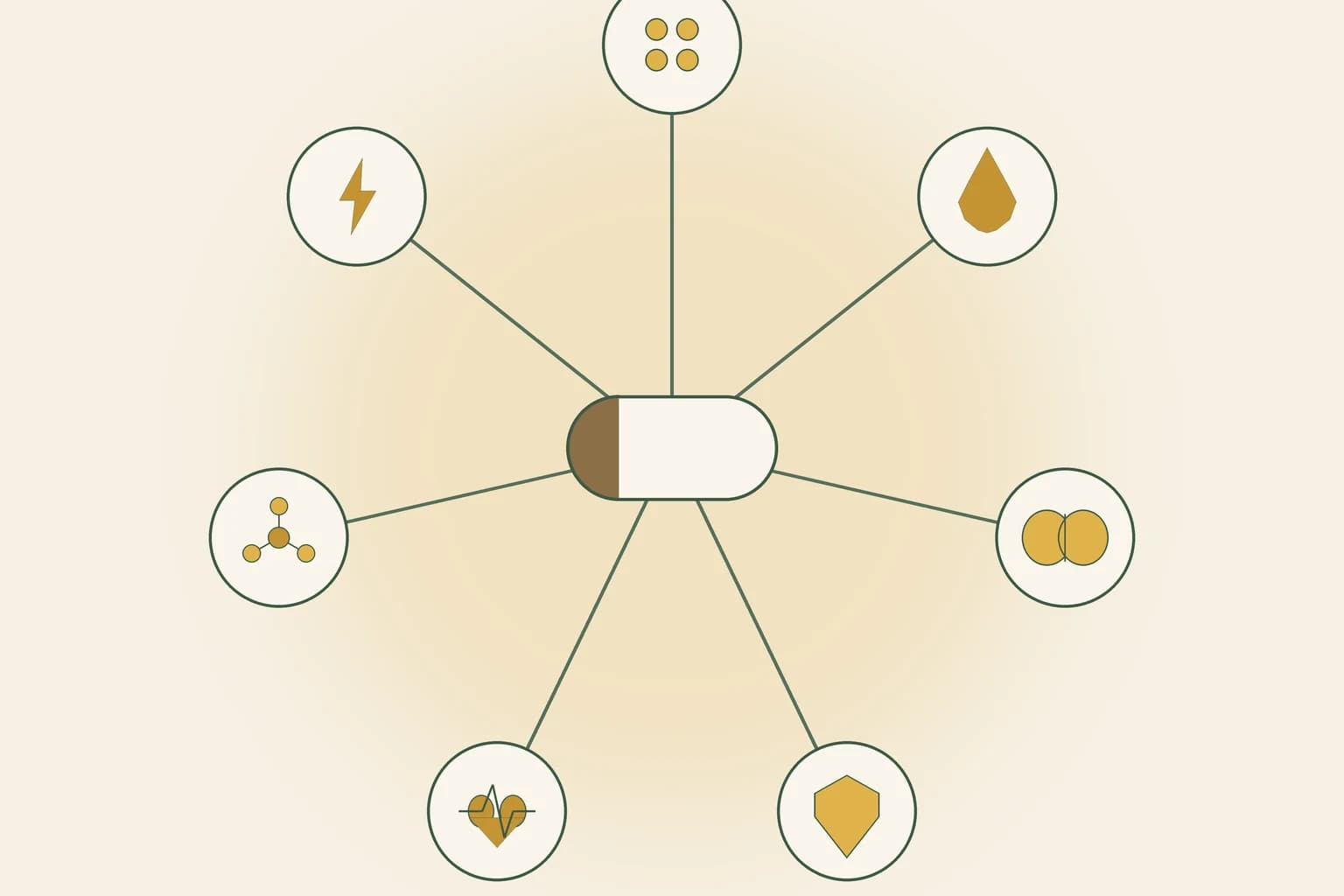
St. John's Wort's interaction profile traces back mostly to one compound: hyperforin. Hyperforin activates a receptor in liver and gut cells called the pregnane X receptor (PXR), which in turn switches on production of several drug-metabolizing enzymes — chiefly CYP3A4, along with CYP2C9, CYP2C19, and CYP1A2 — plus a transport protein called P-glycoprotein that pumps drugs out of cells before they can be absorbed (Nicolussi et al., 2020). All of that adds up to the same basic effect across a wide range of unrelated drugs: your body clears them faster than it normally would, so less of the medication is around to do its job.
This is worth understanding for a genuinely practical reason: not every St. John's Wort product carries the same risk. A 2020 pharmacology review found that clinically significant interactions have consistently involved products high in hyperforin, while products with low hyperforin content have not been linked to clinically meaningful interactions in the studies reviewed; European regulators have concluded that daily hyperforin intake around 1 mg or below is unlikely to cause a clinically relevant interaction (Nicolussi et al., 2020). In practice, hyperforin content isn't something most shoppers can easily check on a label, so this is more reason to disclose St. John's Wort use to a prescriber or pharmacist than a reason to assume a specific product is "one of the safe ones."
It's also worth knowing the effect doesn't switch off the moment you stop taking it. A pharmacokinetic study measured how quickly CYP3A activity, induced by two weeks of St. John's Wort, returned to baseline after people stopped, and found it took roughly a week for enzyme activity to normalize (Imai et al., British Journal of Clinical Pharmacology, 2008). That matters both ways: someone starting a new interacting medication shortly after stopping St. John's Wort, or restarting the herb shortly after adjusting a medication dose, is still in the window where the interaction can play out.
Is St. John's Wort Effective for Depression? What the Evidence Shows
This isn't the question this article leads with, but it's a reasonable one, and the evidence for it is genuinely more solid than for most herbal supplements marketed for mood. A Cochrane systematic review — the same rigorous, independently-conducted format used to evaluate conventional drugs — pooled 29 trials covering 5,489 patients and found St. John's Wort extracts outperformed placebo for major depression, and performed about as well as standard antidepressants (both older tricyclic-type drugs and SSRIs), with fewer people stopping treatment due to side effects (Linde et al., Cochrane Database of Systematic Reviews, 2008).
Two honest caveats matter here. First, the review itself flags that trials from German-speaking countries tended to report more favorable results than trials elsewhere, a pattern that can reflect real regional differences in study quality or product standardization, but is worth knowing about rather than glossing over. Second, and more practically: NCCIH is explicit that the evidence covers mild-to-moderate depression specifically, that St. John's Wort's benefit for severe depression is unclear, and that most trials only followed people for up to 12 weeks — so there's real uncertainty about long-term use. None of this contradicts the positive finding for mild-to-moderate depression; it just means "effective" here comes with real boundaries, not a blanket endorsement for any depth or duration of depression.
Who Should Not Take St. John's Wort
Based on the evidence above, a few situations call for caution or avoidance rather than a "try it and see" approach:
- Anyone on a medication named above — hormonal birth control, warfarin or another anticoagulant, another antidepressant, cyclosporine or another immunosuppressant, digoxin, HIV medication, certain cancer drugs, or a seizure medication — without their prescriber's direct involvement.
- Anyone with severe depression, or depression involving suicidal thoughts. The evidence base here is for mild-to-moderate depression; severe depression needs a clinician's evaluation, not a self-directed supplement choice.
- Anyone recently switching medications or dosages, given that the enzyme-inducing effect persists for roughly a week after stopping St. John's Wort — timing matters, not just whether it's being taken right now.
- People who are pregnant or breastfeeding. NCCIH notes St. John's Wort may be unsafe in pregnancy and may increase the risk of birth defects; safety data in breastfeeding is limited.
- Anyone planning to take large oral doses or use it topically for extended sun exposure, given the documented, if uncommon, risk of a severe skin reaction after sun exposure.
Talking to Your Doctor or Pharmacist
None of this means St. John's Wort is uniquely dangerous for everyone — the concern is specific to certain medications, not to taking it in isolation. A few practical steps cover most of what matters:
- Tell your doctor or pharmacist you're taking, or considering, St. John's Wort — especially if you're on hormonal contraception, a blood thinner, another antidepressant, an immunosuppressant, digoxin, an HIV medication, a cancer treatment, or a seizure medication.
- Don't stop a prescribed medication in order to start St. John's Wort instead, and don't stop St. John's Wort abruptly without your prescriber's input if you're on an interacting medication — either change can shift drug levels.
- If you're prescribed a medication with a narrow safety margin (digoxin, warfarin, an immunosuppressant), ask whether closer monitoring or blood-level testing makes sense while you're taking both.
- Watch for new symptoms — agitation, a racing heart, unusual bleeding or bruising, or a return of symptoms a medication was controlling — in the weeks after adding or stopping St. John's Wort.
- If you notice a new or concerning symptom, contact your prescriber rather than waiting to see if it resolves on its own.
St. John's Wort isn't the only herb worth checking against your medication list — see how ashwagandha's drug interactions compare, or read our guide to how we evaluate herb evidence for more on the evidence-strength language used throughout this piece.
Frequently Asked Questions (FAQ)
Does St. John's Wort interact with birth control pills? Yes. NCCIH lists hormonal birth control among the medications St. John's Wort can weaken, and case reports collected through European drug-safety monitoring describe breakthrough bleeding and unintended pregnancies in women taking both (NCCIH; Nicolussi et al., 2020). If you rely on hormonal contraception, ask your prescriber about a backup method before starting St. John's Wort.
Can I take St. John's Wort with antidepressants? This combination needs a doctor's involvement, not a decision made alone. St. John's Wort has its own effect on serotonin, so combining it with an SSRI, SNRI, or other serotonergic antidepressant carries a real risk of serotonin syndrome, a potentially serious reaction (NCCIH). Never add St. John's Wort to an existing antidepressant, or stop a prescribed antidepressant to switch to it, without talking to whoever prescribed your medication.
Does St. John's Wort interact with blood thinners like warfarin? Yes, and this is one of the better-documented interactions. St. John's Wort induces the liver enzymes that clear warfarin, which can lower warfarin levels enough to reduce its blood-thinning effect and raise clotting risk (Nicolussi et al., 2020). Anyone on warfarin or another anticoagulant needs closer monitoring, ideally arranged with their prescriber, before combining the two.
Is St. John's Wort safe to take with other medications generally? Not as a blanket rule. St. John's Wort induces several liver enzymes and a drug-transport protein that affect how a wide range of medications are processed, which is why it interacts with more drug classes than most herbal supplements (Nicolussi et al., 2020). Tell your doctor or pharmacist about any prescription medication before adding St. John's Wort, rather than assuming it is fine because it's sold over the counter.
How long do St. John's Wort's effects on drug metabolism last after stopping it? Roughly a week, based on a human pharmacokinetic study. Researchers measured how quickly a liver enzyme (CYP3A) that St. John's Wort induces returned to normal after people stopped taking it, and found levels were back near baseline about seven days later (Imai et al., 2008). That means the interaction risk doesn't disappear the moment you stop taking it.
Is St. John's Wort effective for depression? For mild-to-moderate depression, yes, reasonably well-supported. A Cochrane review of 29 trials found St. John's Wort outperformed placebo and worked about as well as standard antidepressants, with fewer people dropping out due to side effects (Linde et al., 2008). The evidence is much thinner for severe depression or for use beyond about 12 weeks.
Does St. John's Wort require a prescription? In the United States, no — it's sold over the counter as a dietary supplement, not an approved drug, so the FDA doesn't verify its potency or safety batch to batch. That regulatory picture is not universal: in some other countries, including Germany, certain St. John's Wort products approved specifically for moderate depression do require a prescription.
Can St. John's Wort cause a skin reaction in the sun? Yes, though it's an uncommon effect at typical doses. NCCIH notes that large oral doses, or St. John's Wort applied to the skin, can cause severe skin reactions after sun exposure, a reaction linked to a light-reactive compound in the plant called hypericin (NCCIH). It's worth knowing about, especially at higher doses or with prolonged sun exposure, rather than assuming any skin change is unrelated.
How we made this guide: Researched, written, and fact-checked by The Wellness Voyage editorial team, with every health claim backed by a citable source — recognised health authorities and peer-reviewed studies are linked throughout and listed in full below. We fact-check and review this article periodically and update it as the evidence changes; the last reviewed and updated date is shown with this article. It is written to inform, not to replace personalised advice from a qualified healthcare professional.
Medical disclaimer: This article is for informational purposes only. Always consult a qualified healthcare provider before making changes to your health routine.
Sources
- National Center for Complementary and Integrative Health (NCCIH). St. John's Wort. https://www.nccih.nih.gov/health/st-johns-wort
- European Medicines Agency (EMA). Hyperici herba — Herbal medicine: summary for the public / Final EU herbal monograph, Revision 1. https://www.ema.europa.eu/en/medicines/herbal/hyperici-herba-0
- Linde K, Berner MM, Kriston L. St John's wort for major depression. Cochrane Database of Systematic Reviews, 2008, Issue 4, CD000448. https://doi.org/10.1002/14651858.CD000448.pub3
- Nicolussi S, Drewe J, Butterweck V, Meyer zu Schwabedissen HE. Clinical relevance of St John's wort drug interactions revisited. British Journal of Pharmacology, 2020;177(6):1212–1226 — PMC. https://pmc.ncbi.nlm.nih.gov/articles/PMC7056460/
- Piscitelli SC, Burstein AH, Chaitt D, Alfaro RM, Falloon J. Indinavir concentrations and St John's wort. The Lancet, 2000;355(9203):547–548 — PubMed. https://pubmed.ncbi.nlm.nih.gov/10683007/
- Ruschitzka F, Meier PJ, Turina M, Lüscher TF, Noll G. Acute heart transplant rejection due to Saint John's wort. The Lancet, 2000;355(9203):548–549 — PubMed. https://pubmed.ncbi.nlm.nih.gov/10683008/
- Johne A, Brockmöller J, Bauer S, Maurer A, Langheinrich M, Roots I. Pharmacokinetic interaction of digoxin with an herbal extract from St John's wort (Hypericum perforatum). Clinical Pharmacology & Therapeutics, 1999;66(4):338–345 — PubMed. https://pubmed.ncbi.nlm.nih.gov/10546917/
- Imai H, Kotegawa T, Tsutsumi K, et al. The recovery time-course of CYP3A after induction by St John's wort administration. British Journal of Clinical Pharmacology, 2008;65(5):701–707 — PubMed. https://pubmed.ncbi.nlm.nih.gov/18294328/
- Mayo Clinic. St. John's Wort. https://www.mayoclinic.org/drugs-supplements-st-johns-wort/art-20362212
- U.S. Food and Drug Administration. Drug Development and Drug Interactions: Healthcare Professionals — Examples of Drugs that Interact with CYP Enzymes and Transporter Systems. https://www.fda.gov/drugs/drug-interactions-labeling/healthcare-professionals-fdas-examples-drugs-interact-cyp-enzymes-and-transporter-systems
Sources accessed 12 September 2026.

Emily Johnson, MSc, RH (AHG)
A registered herbalist who checks the mechanism behind an interaction warning, not just the warning itself.