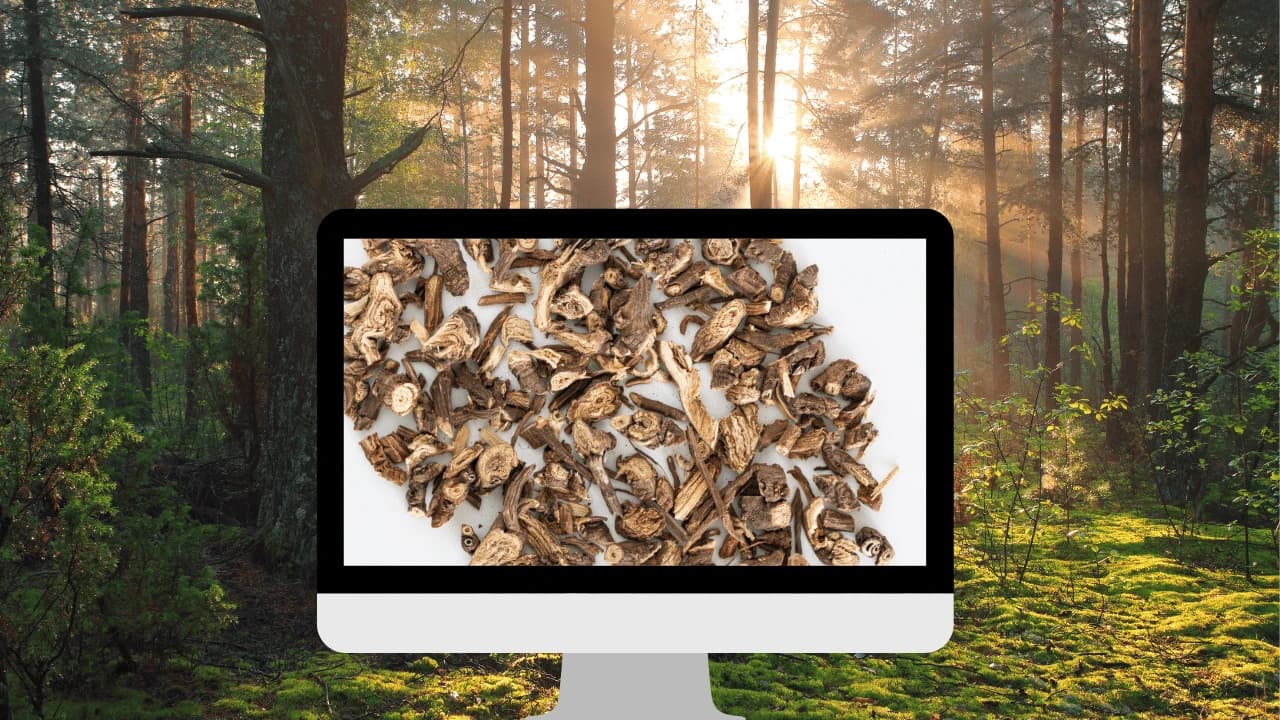

European peony, Paeonia officinalis, has a strange split identity: today it is mostly known as a garden flower, but for roughly two thousand years its root was a serious medicine in European herbalism, prescribed for epilepsy and menstrual complaints from antiquity through the 1500s (Plants For A Future, Paeonia officinalis). That medicinal use has largely faded, and it is also routinely confused with a completely different species — the Chinese white peony used in Traditional Chinese Medicine, which has far more research behind it. This guide sticks to the European species: what it was actually used for, what little direct research on it exists, and the safety issues — including one that has nothing to do with epilepsy or menstruation — that matter most for anyone who grows or handles the plant.
European peony vs. the peony used in Chinese medicine
Paeonia officinalis is native to southern Europe and is cultivated as an ornamental worldwide; a 2025 review describes it as "cultivated and cherished for centuries" across Spain, France, Italy, and the northwestern Balkans (Stoycheva et al., 2025). The root is the part with a medicinal history. It contains compounds such as paeoniflorin and paeonol, along with tannins and flavonoids, and — in the fresh plant only — an irritant called protoanemonin (Ahmad & Tabassum, 2013).
Here is the point that matters most for anyone researching "peony" online: the only peony root ever formally reviewed by a European medicines regulator is Paeonia lactiflora — a separate species — and even for that herb, the European Medicines Agency's expert committee did not end up adopting a monograph; it closed the assessment with a public statement instead, because the available data didn't meet the bar even for a traditional-use listing (EMA, Paeonia lactiflora assessment). Almost everything you'll read online about "paeoniflorin studies" or "total glucosides of peony" refers to that Chinese species, not the European one covered here. For that herb, see our separate guide to white peony.
Traditional and folk uses in European herbalism (historical, not proven)
In old European herbalism, P. officinalis root was used for seizures and epilepsy, to bring on menstruation, and as a calming remedy for nervous complaints and cramps — uses that trace back to ancient Greek and medieval medicine. Folk use also extended further than that: root decoctions were used for gout and general digestive complaints in parts of Spain, France, Italy, and the northwestern Balkans (Stoycheva et al., 2025), and older European herbal tradition also describes the root as a remedy for whooping cough, a suppository preparation for intestinal spasms, and a petal tea used for cough, hemorrhoids, and varicose veins (Plants For A Future, Paeonia officinalis). None of this is a modern clinical use case — these are historical folk traditions, not treatments confirmed by current science. As a consumer-health review puts it bluntly, people have used peony for menstrual cramps, cough, epilepsy, and skin problems, but "there is no good scientific evidence to support these uses" (WebMD, Peony).
Epilepsy in particular is a serious medical condition that needs proper diagnosis and treatment. Peony is not a substitute for that care.
What the lab and animal research actually shows
Direct research on European peony specifically — as opposed to its Chinese relative — is thin, and everything below is animal- or lab-dish-level evidence, not human trial data.
Liver and toxicity signal, in rats. The clearest study tested a water-based root extract in rats. It caused no deaths at doses up to 2,000 mg/kg, and in rats given a liver toxin (carbon tetrachloride), a 200 mg/kg dose of the extract improved liver-damage markers substantially — AST fell from 379.20 to 101.53 IU/L, ALT from 768.60 to 295.36 IU/L, and total bilirubin from 7.85 to 2.91 mg/dL, with tissue examination showing only scattered fatty changes instead of the extensive necrosis and inflammation seen in untreated animals (Ahmad & Tabassum, 2013). That is an early rodent-only signal of low acute toxicity and a possible liver-protective effect — not proof of a benefit in people, and no human hepatoprotective trials of this species exist.
Isolated root compounds, tested in a dish. A 2022 phytochemistry study isolated several compounds from P. officinalis root — including methyl gallate and a paeoniflorin derivative — and tested them in vitro against malaria-parasite cultures and several microbes. Two of the isolated compounds showed activity against Plasmodium falciparum strains (IC50 values around 0.6–4.7 µg/mL, compared with 0.03–0.14 µg/mL for the reference drug chloroquine), and root fractions showed some activity against yeast and bacterial strains in culture (Samy et al., 2022). This is basic laboratory chemistry on isolated compounds in a test tube — it says something about the plant's chemistry, nothing about treating malaria or infection in a person, and no animal or human testing has followed it.
Where this sits in the wider genus. A broad review of the whole Paeonia genus reports antioxidant and anti-inflammatory activity across species generally, but the species that show up in human clinical trials and standardized extracts like "total glucosides of peony" are P. lactiflora and its close Chinese relatives — not P. officinalis (Li et al., 2021). Put simply: there is more interesting root chemistry here than the "no research exists" stereotype suggests, but essentially none of it has reached animal safety/efficacy trials beyond the single toxicity study above, let alone human trials.
Toxicity and safety: what actually matters for this species
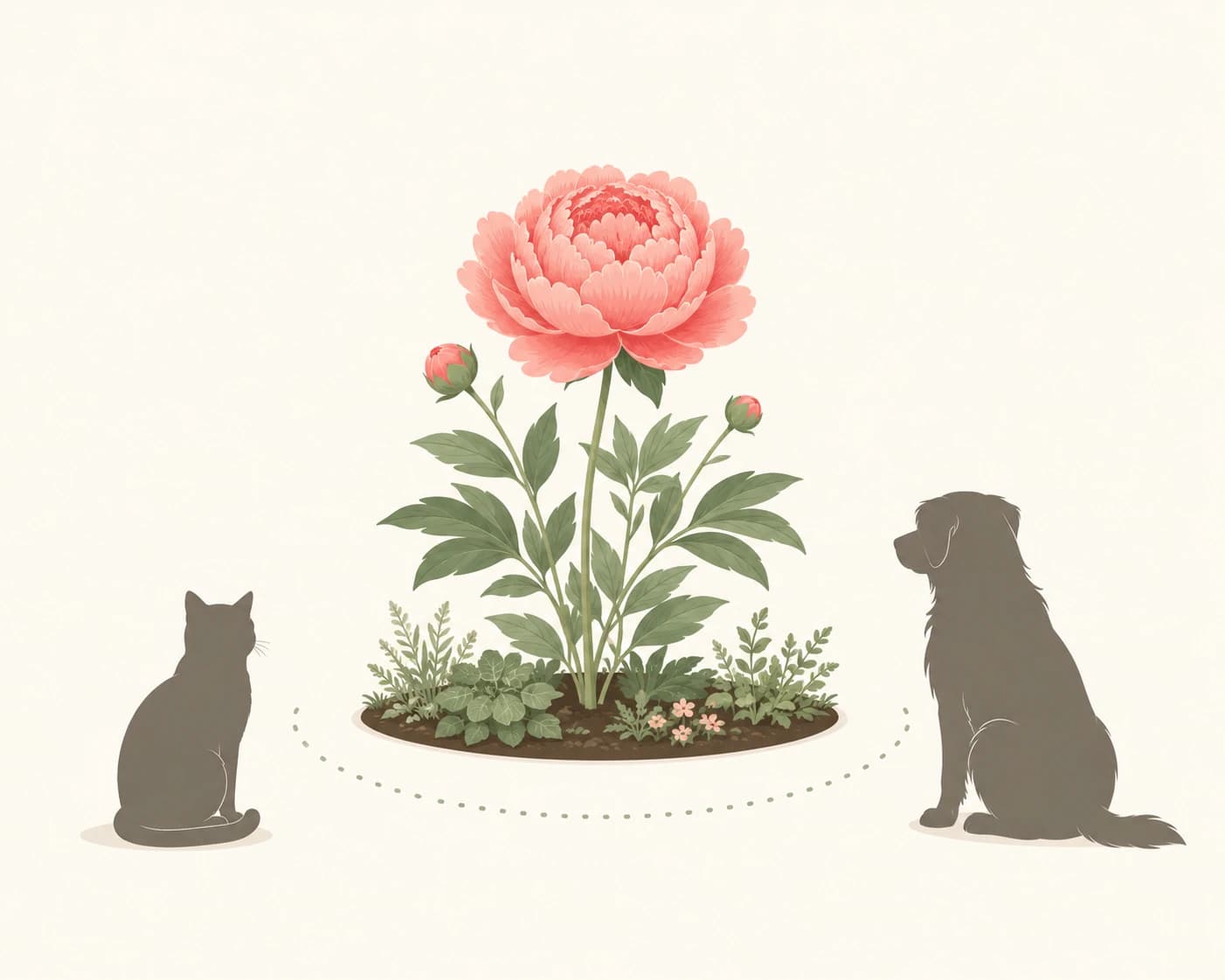
- It is toxic to pets. The ASPCA specifically lists Paeonia officinalis as toxic to dogs, cats, and horses, with paeonol as the toxic principle; ingestion of the plant can cause vomiting, diarrhea, and depression in animals (ASPCA, Toxic and Non-Toxic Plants: Peony). Since this species is grown mainly as a garden ornamental, this is a practical, everyday safety point that has nothing to do with human dosing — keep pets from chewing on the plant.
- The fresh plant is an irritant. Fresh peony contains protoanemonin, which can irritate the mouth and gut, so the raw plant should not be eaten.
- Avoid in pregnancy. WebMD rates peony as possibly unsafe by mouth in pregnancy because it may cause the womb to contract (WebMD, Peony) — consistent with its old folk reputation as a herb to "bring on a period."
- Do not self-treat serious conditions. Peony is not a proven treatment for epilepsy, and using it in place of medical care is dangerous.
- Duration of use is limited even in the most favorable reading. WebMD describes peony as possibly safe for up to 12 months of use but states there isn't enough reliable information to know whether it's safe long-term beyond that (WebMD, Peony). Stomach upset is the most commonly reported complaint.
- No established dose exists for this species. Unlike the standardized "total glucosides of peony" extract used in Chinese-peony trials, there is no clinically studied dose of P. officinalis root — so any product claiming a specific "effective dose" for this species is not backed by trial data.
- Supplement quality is a separate risk from the herb itself. What's on a supplement label isn't always what's in the bottle, and dietary supplements aren't reviewed by the FDA for safety or effectiveness before they reach the market — check with a clinician before combining any herbal product with medications, and be extra cautious in pregnancy, while nursing, or for children (NCCIH, Using Dietary Supplements Wisely).
For the better-researched, regulated relative, see our guide to white peony (Paeonia lactiflora), and for another root used in Chinese formulas see rehmannia.
Frequently Asked Questions (FAQ)
What is European peony used for? Historically, for seizures, nervous complaints, menstrual problems, gout, and coughs. None of these uses is backed by good modern human evidence — direct research on this species is limited to a handful of animal and lab-dish studies.
Is European peony the same as the peony in Chinese medicine? No. The Chinese herb is usually Paeonia lactiflora (white peony), a different species with far more research and its own (ultimately inconclusive) European regulatory assessment. Most "peony" study results you'll find online refer to that species, not P. officinalis.
Is peony toxic to pets? Yes. The ASPCA lists Paeonia officinalis as toxic to dogs, cats, and horses, causing gastrointestinal upset such as vomiting and diarrhea if eaten. This is worth knowing for anyone growing it as a garden flower, independent of any question about human use.
Is peony safe to take? Short-term use (WebMD cites data up to 12 months) is considered possibly safe for some adults, but evidence is weak and there's no established effective dose for this species. Avoid it in pregnancy because it may cause uterine contractions, never eat the fresh plant, and do not use it in place of treatment for epilepsy or other serious conditions.
Does peony balance hormones? The popular claim that European peony "fixes estrogen" is not supported by reliable human evidence. Do not rely on it for hormonal or menstrual conditions.
Medical disclaimer: This article is for informational purposes only. Always consult a qualified healthcare provider before making changes to your health routine.
Sources
- Li P, et al. Genus Paeonia: A comprehensive review on traditional uses, phytochemistry, pharmacological activities, clinical application, and toxicology. Journal of Ethnopharmacology, 2021 — PubMed. https://pubmed.ncbi.nlm.nih.gov/33346027/
- Ahmad F, Tabassum N. Preliminary phytochemical, acute oral toxicity and antihepatotoxic study of roots of Paeonia officinalis Linn. Asian Pacific Journal of Tropical Biomedicine, 2013 — PubMed Central. https://pmc.ncbi.nlm.nih.gov/articles/PMC3609391/
- Samy MN, Mahmoud BK, Shady NH, Abdelmohsen UR, Ross SA. Bioassay-Guided Fractionation with Antimalarial and Antimicrobial Activities of Paeonia officinalis. Molecules, 2022, 27(23):8382 — PubMed Central. https://pmc.ncbi.nlm.nih.gov/articles/PMC9739537/
- Stoycheva C, Batovska D, Malfa GA, Acquaviva R, Statti G, Kozuharova E. Prospective Approaches to the Sustainable Use of Peonies in Bulgaria. Plants (Basel), 2025, 14(6):969 — PubMed Central. https://pmc.ncbi.nlm.nih.gov/articles/PMC11944922/
- WebMD. Peony: Uses, Side Effects, and Safety. https://www.webmd.com/vitamins/ai/ingredientmono-32/peony
- American Society for the Prevention of Cruelty to Animals (ASPCA). Toxic and Non-Toxic Plants: Peony. https://www.aspca.org/pet-care/aspca-poison-control/toxic-and-non-toxic-plants/peony
- European Medicines Agency (EMA). Paeonia lactiflora Pallas, radix (Paeoniae radix alba) — assessment. https://www.ema.europa.eu/en/medicines/herbal/paeoniae-radix-alba
- National Center for Complementary and Integrative Health (NCCIH). Using Dietary Supplements Wisely. https://www.nccih.nih.gov/health/using-dietary-supplements-wisely
- Plants For A Future. Paeonia officinalis — Useful Temperate Plants database. https://temperate.theferns.info/plant/Paeonia+officinalis
All sources accessed 10 July 2026.

Emily Johnson, MSc, RH (AHG)
Registered Herbalist (AHG) specializing in natural remedies and medicinal plants, with a focus on the traditional and evidence-based uses of healing herbs.