
White peony root (Paeonia lactiflora, known in Chinese medicine as Bai Shao) is one of the most heavily studied single herbs in Traditional Chinese Medicine. It is the source of paeoniflorin, the compound behind a Chinese-regulated rheumatoid arthritis drug and a well-known Japanese Kampo formula for muscle cramps. That comparatively substantial research base is a real point of difference from many other TCM roots, so this guide leads with what that research actually shows before covering the wider traditional uses, forms, dosage, and safety.
Bai Shao: identity and how it differs from its relatives
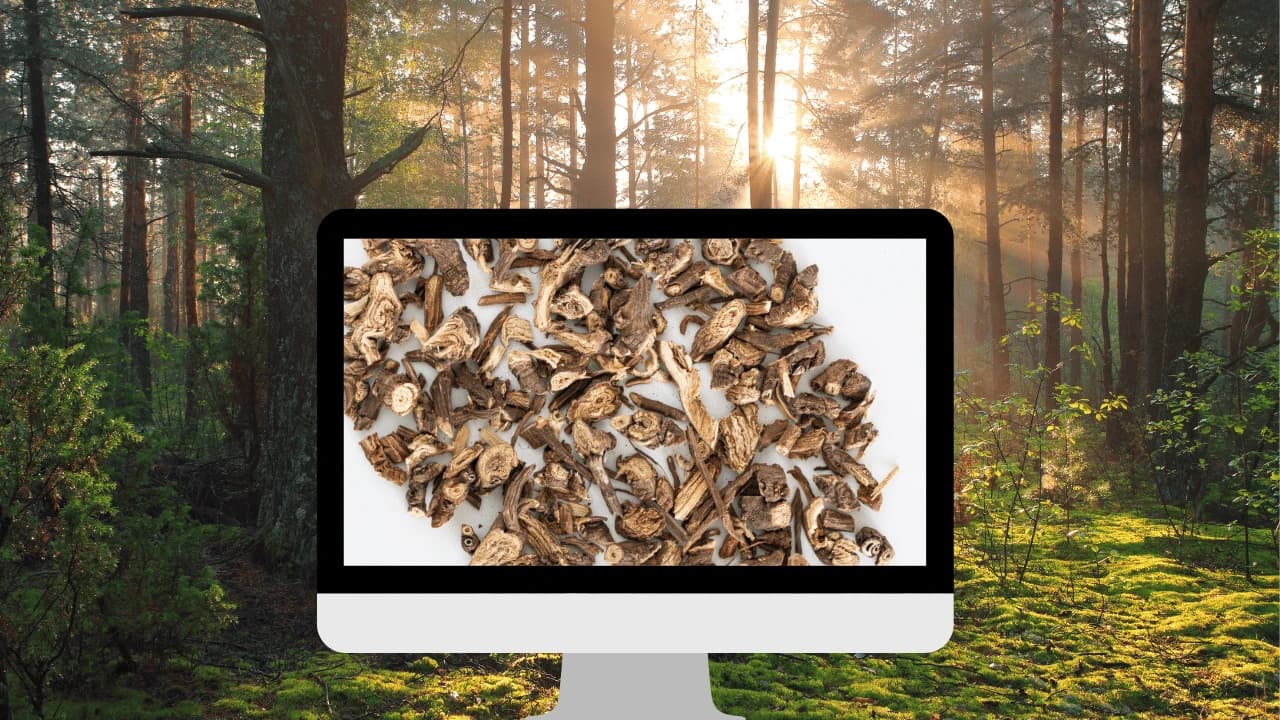
White peony root comes from Paeonia lactiflora, scraped, boiled, and dried before use. It is different from red peony (Chi Shao), which TCM uses for "blood-moving" and "heat-clearing" rather than the nourishing, relaxing role of white peony. It is also a different species from European peony (Paeonia officinalis), a much less-studied plant covered in our separate European peony guide.
Its main studied compound is paeoniflorin, alongside albiflorin, paeonol, and related glycosides. A standardised extract called total glucosides of peony (TGP), made mostly from this root, is where the strongest evidence lies, and paeoniflorin is also the shared ingredient behind the formula-based research covered below.
The strongest evidence: TGP for rheumatoid arthritis
TGP is not a typical supplement. It is a standardised extract that China's drug regulator approved as a medicine for rheumatoid arthritis in 1998, and its benefit there has been tested in controlled human trials (He & Dai, 2011). A later systematic review and meta-analysis pooled 8 randomised controlled trials with 522 patients and found TGP added to the usual drug, methotrexate, gave better overall therapeutic effects and a greater drop in erythrocyte sedimentation rate and swollen joint count than methotrexate alone, with fewer reported adverse events — though the authors rated trial quality as generally poor, citing weak reporting of randomisation and blinding, and called for larger, better-designed trials (Feng et al., 2017). That result applies specifically to the TGP drug added to methotrexate, not to a home tea or a generic capsule used alone.
Shakuyaku-kanzo-to: peony's best-known cramp formula
Beyond the rheumatoid arthritis research, white peony root is one half of Shakuyaku-kanzo-to (Shao-yao-gan-cao-tang), a traditional Kampo formula combining equal parts peony root and licorice root, long used in Japanese and Chinese medicine for muscle cramps. (The licorice half is worth knowing about on its own: glycyrrhizic acid can raise blood pressure and lower potassium, which is why licorice is the herb that most often turns up in interaction case reports — see herbal tea and medication interactions.) This is a different use case from the traditional single-herb menstrual-cramp use described below — for the trial evidence on herbs taken as tea for period pain, see herbal teas for period cramps — it is specifically a two-herb formula studied mainly for skeletal muscle cramps, such as leg cramps in people on dialysis or with cirrhosis.
The evidence here is small and mixed. A systematic literature review identified only three randomised controlled trials in total, covering cramps in people with liver cirrhosis and in people with lumbar spinal stenosis. None of the pooled comparisons — against placebo, against another Kampo formula, or against the muscle relaxant eperisone — reached statistical significance, and the reviewers concluded that current evidence is insufficient to support a formal meta-analysis, calling for larger, better-designed trials (Ota et al., 2020). An earlier, much smaller preliminary study gave the formula to five hemodialysis patients with frequent cramps for four weeks: cramps disappeared entirely in two patients and became noticeably less frequent in two of the remaining three, with no serious side effects reported — a suggestive but uncontrolled result from a very small group (Hinoshita et al., 2003). Proposed mechanisms include effects on potassium and calcium channels in muscle and nerve tissue, but this remains a traditional formula with a thin, inconclusive trial record — distinctly weaker evidence than the TGP-for-rheumatoid-arthritis research above.
Paeoniflorin's broader pharmacology: still preclinical
Paeoniflorin calms inflammation, eases pain, and protects tissue in many lab studies. A 2021 review of how it works across neurological, cardiovascular, and renal disease models is clear that this is "pre-clinical" work, from cell and animal studies, and explicitly calls for multicenter randomised controlled trials to establish whether any of it translates to people (Jiao et al., 2021). This broader mechanism research helps explain why paeoniflorin shows up in both the rheumatoid arthritis and muscle-cramp research above, but on its own it is mechanism evidence, not proof of benefit in humans.
Traditional TCM uses without single-herb trials
White peony is best known traditionally for period pain, cramps, and TCM "liver" patterns. It is almost always used inside multi-herb formulas, not alone, and there is no strong trial of the single herb for these uses, so they stay traditional uses, not proven treatments. Europe's herbal medicines committee reviewed white peony but did not issue an approved EU monograph for it (EMA, Paeoniae radix alba). Cramp bark is the Western herb traditionally aimed at the same kind of cramping — see our cramp bark guide for how it compares.
Traditional uses at a glance
| Traditional use | Proposed mechanism | Human evidence |
|---|---|---|
| Rheumatoid arthritis (as TGP) | Immune regulation | Randomised trials (TGP drug + methotrexate) |
| Muscle cramps (as Shakuyaku-kanzo-to) | Potassium/calcium channel effects on muscle and nerve | Small RCTs; systematic review found evidence insufficient |
| Menstrual cramps, period pain | Antispasmodic, smooth-muscle relaxation | Traditional / formula-based only |
| Abdominal pain and tension | Paeoniflorin smooth-muscle effects | Animal and cell studies |
| "Liver" patterns, general inflammation | Anti-inflammatory | Mostly preclinical |
Forms, processing, and dosage
White peony is almost always used within a formula, not on its own.
- Decoction: roughly 6–15 g of dried root per day inside a formula, sometimes higher under practitioner supervision.
- TGP products: these follow their own standardised dosing and are a different category from raw-herb teas or capsules; follow the product or prescriber instructions.
- Shakuyaku-kanzo-to: in the small hemodialysis study above, the formula was given at 6 g per day for four weeks under supervision (Hinoshita et al., 2003); this is not a general self-dosing recommendation.
Processed forms
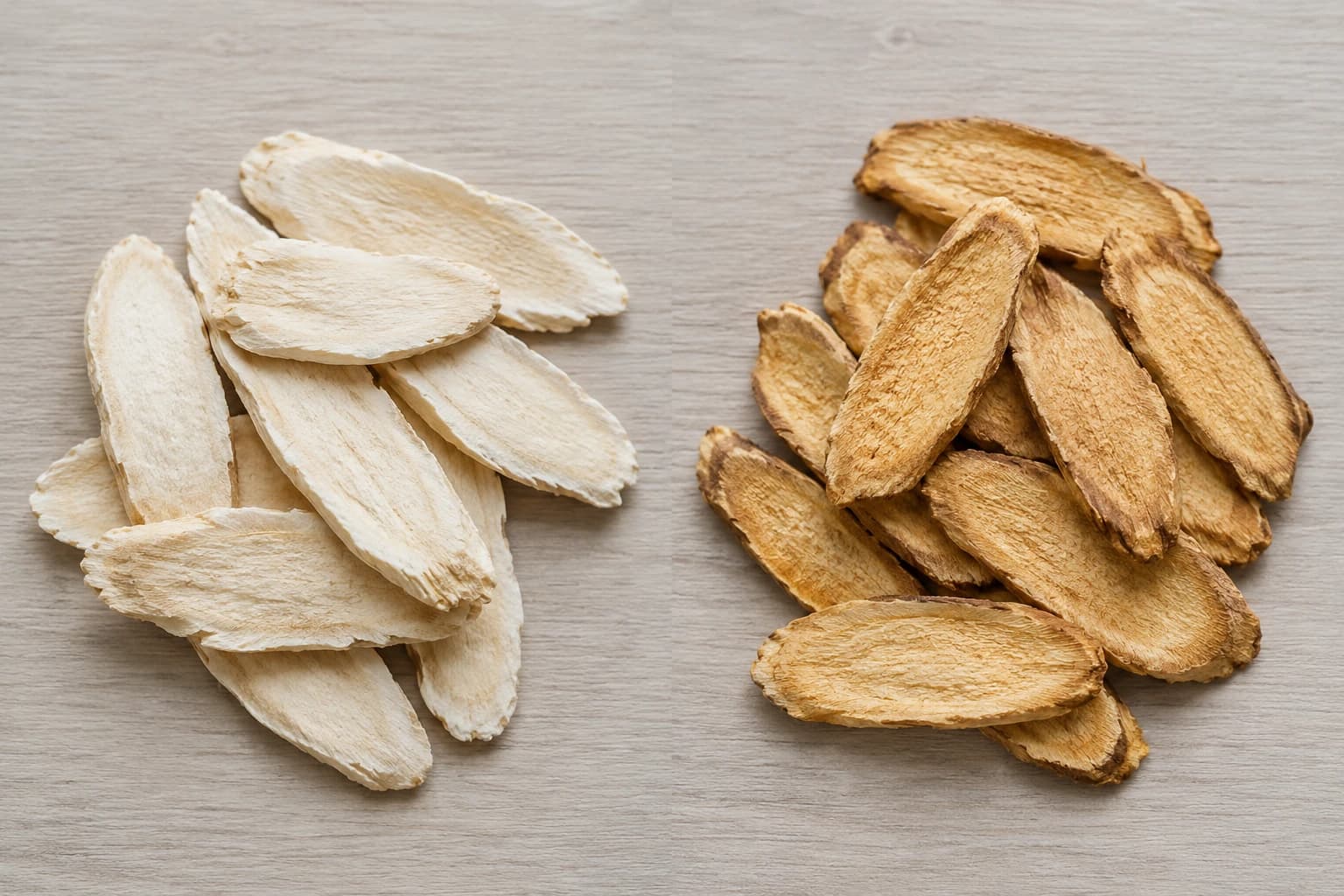
- Raw (sheng bai shao): considered cooling; used for "heat" patterns and menstrual issues.
- Stir-fried (chao bai shao): gentler on digestion, preferred for weak digestion.
- Vinegar-processed (cu bai shao): traditionally directed at "liver" patterns such as flank pain and cramping.
- Wine-processed (jiu bai shao): used in "blood-nourishing" contexts.
Most supplements use raw or stir-fried root; check the label for the processing type.
Safety, interactions, and who should avoid it
White peony is generally well tolerated at usual doses, with adverse effects uncommon. Still:
- Digestive upset: loose stools or mild nausea are the most reported effects, more so with raw forms or on an empty stomach. Mild diarrhoea was the main side effect seen in the rheumatoid arthritis trials.
- Pregnancy: avoid it without qualified clinical guidance, as peony may affect the uterus at higher doses.
- Blood thinners: paeoniflorin may have mild antiplatelet activity, so check with your prescriber before combining with anticoagulant or antiplatelet drugs.
- Immune-suppressing drugs: because TGP changes immune activity, do not combine it with these drugs without medical supervision.
- Serious conditions: do not use white peony in place of treatment for arthritis, persistent muscle cramps, or any diagnosed illness, and check for interactions if you take prescription medicines.
For background on using herbs and TCM safely, see NCCIH.
For related roots used in the same formulas, see our guides to rehmannia and bupleurum.
Frequently Asked Questions (FAQ)
What is white peony best supported for? Its strongest human evidence is for rheumatoid arthritis, but only as the TGP extract added to standard care. Its traditional menstrual and "liver" uses are not backed by good single-herb trials.
Is white peony the same as TGP? No. TGP (total glucosides of peony) is a standardised, drug-grade extract made mostly from this root. A raw-herb tea or generic capsule is not the same product and has not been tested the same way.
Does white peony help with muscle cramps? It is one of the two herbs in Shakuyaku-kanzo-to, a traditional Kampo formula studied for skeletal muscle cramps. A systematic review of the available randomised trials found the evidence insufficient to draw firm conclusions, and a small preliminary study in hemodialysis patients was suggestive but tiny and uncontrolled. This is a different, weaker evidence base than the TGP research for rheumatoid arthritis, and it should not be relied on for severe or persistent cramps without medical advice.
Can I use white peony for period pain? It is a traditional ingredient in TCM formulas for menstrual cramps, but there is no strong single-herb trial proving it works. Severe or worsening period pain should be assessed by a clinician.
Can white peony be combined with rehmannia? Yes, they are paired in many classic formulas. The right ratio and indication should be set by a qualified practitioner for your situation.
Medical disclaimer: This article is for informational purposes only. Always consult a qualified healthcare provider before making changes to your health routine.
Sources
- He DY, Dai SM. Anti-inflammatory and immunomodulatory effects of Paeonia lactiflora Pall., a traditional Chinese herbal medicine. Frontiers in Pharmacology, 2011;2:10 (PMID 21687505) — PubMed Central. https://pmc.ncbi.nlm.nih.gov/articles/PMC3108611/
- Feng ZT, Xu J, He GC, Cai SJ, Li J, Mei ZG. A systemic review and meta-analysis of the clinical efficacy and safety of total glucosides of peony combined with methotrexate in rheumatoid arthritis. Clinical Rheumatology, 2018;37(1):35-42 (published online 2017; PMID 28748514) — PubMed Central. https://pmc.ncbi.nlm.nih.gov/articles/PMC5754451/
- Ota K, Fukui K, Nakamura E, Oka M, Ota K, Sakaue M, Sano Y, Takasu A. Effect of Shakuyaku-kanzo-to in patients with muscle cramps: a systematic literature review. Journal of General and Family Medicine, 2020;21(3):56-62 (PMID 32489757) — PubMed Central. https://pmc.ncbi.nlm.nih.gov/articles/PMC7260166/
- Hinoshita F, Ogura Y, Suzuki Y, Hara S, Yamada A, Tanaka N, Yamashita A, Marumo F. Effect of orally administered shao-yao-gan-cao-tang (Shakuyaku-kanzo-to) on muscle cramps in maintenance hemodialysis patients: a preliminary study. American Journal of Chinese Medicine, 2003;31(3):445-453 (PMID 12943175) — PubMed. https://pubmed.ncbi.nlm.nih.gov/12943175/
- Jiao F, et al. Recent Insights into the Protective Mechanisms of Paeoniflorin in Neurological, Cardiovascular, and Renal Diseases. Journal of Cardiovascular Pharmacology, 2021 — PubMed Central. https://pmc.ncbi.nlm.nih.gov/articles/PMC8169546/
- European Medicines Agency (EMA). Paeonia lactiflora Pallas, radix (Paeoniae radix alba) — assessment (no EU herbal monograph adopted). https://www.ema.europa.eu/en/medicines/herbal/paeoniae-radix-alba
- National Center for Complementary and Integrative Health (NCCIH). Traditional Chinese Medicine: What You Need To Know. https://www.nccih.nih.gov/health/traditional-chinese-medicine-what-you-need-to-know
All sources accessed 10 July 2026.

Emily Johnson, MSc, RH (AHG)
Registered Herbalist (AHG) specializing in natural remedies and medicinal plants, with a focus on the traditional and evidence-based uses of healing herbs.