
Fumitory (Fumaria officinalis), also called earth smoke, is an old European bitter herb best known for traditional use in digestive and bile-related complaints. Unlike many mild bitter herbs, fumitory's activity comes from a genuine alkaloid load — which is also why European regulators treat its safe use more strictly than a simple digestive tea. This guide starts with that chemistry, then walks through what is officially recognized, what has actually been tested, and where the two diverge.
Protopine and the alkaloid identity behind the name
Fumitory is a small annual in the poppy family (Fumariaceae, now often folded into Papaveraceae), with pink flowers tipped in maroon-purple. The medicinal part is the dried aerial portion, harvested in full bloom. What sets it apart from a plant like agrimony (a tannin-rich astringent with a gentler safety profile) is that it is defined pharmacopeially by its alkaloid content: the European Pharmacopoeia requires a minimum of 0.40% total alkaloids, calculated as protopine, in the dried herb (EMA/HMPC assessment report on Fumaria officinalis L., herba).
Protopine is the quantitatively dominant alkaloid, alongside a family of related isoquinoline alkaloids the same EMA assessment documents by class: protopines (protopine, cryptopine), protoberberines (stylopine, aurotensine, N-methylsinactine), spirobenzylisoquinolines (fumaritine, fumaricine, fumariline), trace benzophenanthridines (sanguinarine, corydamine), and indenobenzazepines (fumaritrididine, fumaritrine). The plant also contains flavonoids (mainly quercetin glycosides such as rutin and isoquercitrin) and phenolic acids (chlorogenic, caffeic). A 2025 pharmacognosy review in Fitoterapia points to protopine and these phenolics as the compounds behind the plant's studied anti-inflammatory, liver-protective, and antioxidant activity in lab models — explicitly preliminary, not proof of benefit in people (Prokopenko et al., 2025). The bitter taste that gave fumitory its old reputation as a digestive stimulant traces to this same phytochemical profile.
A traditional bile remedy — but not quite the official indication
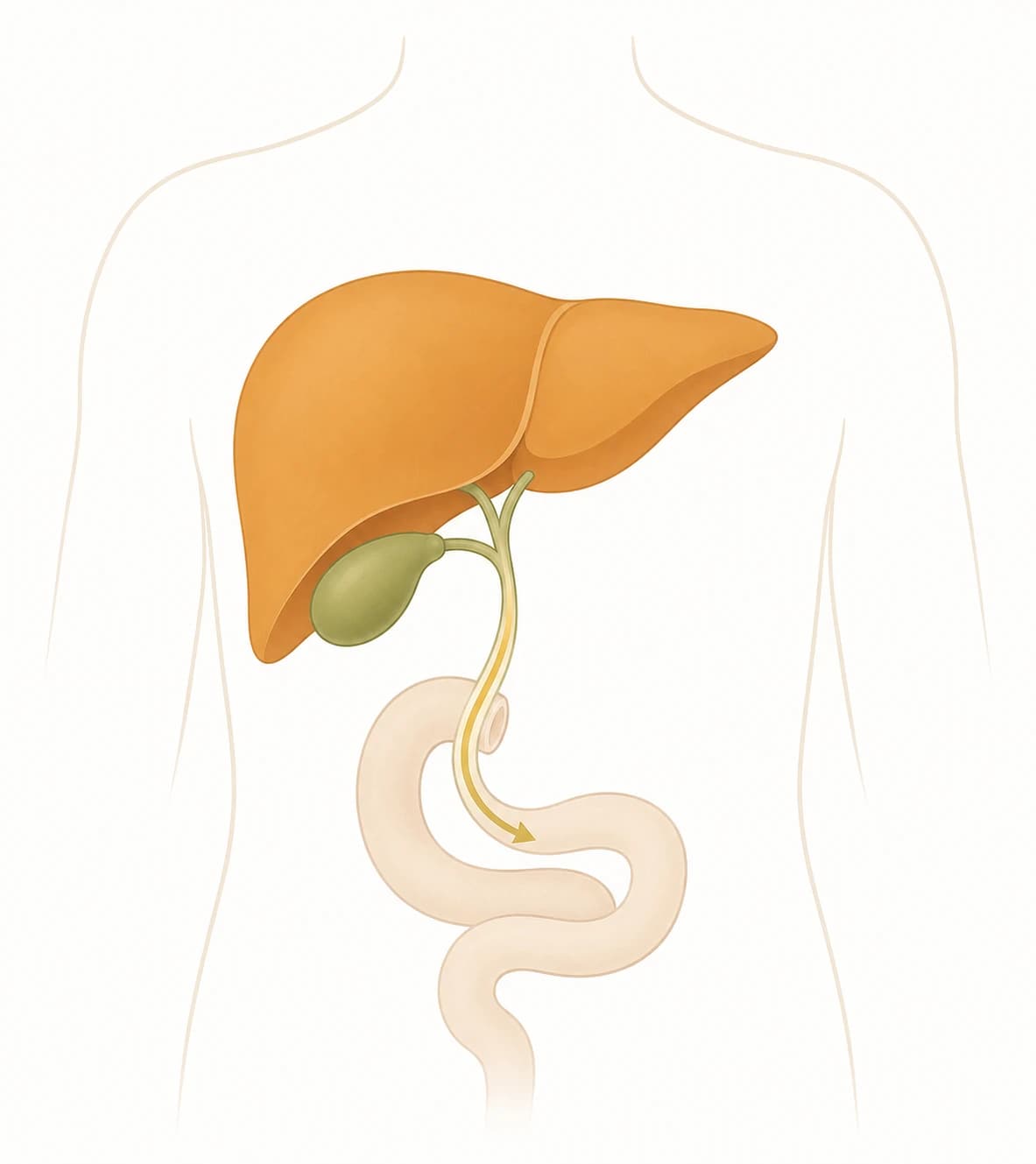
Fumitory's best-known reputation is for easing cramping linked to the gallbladder, bile ducts, and gut. Historically, Germany's Commission E approved it for "colicky pain affecting the gallbladder and biliary system," which a 1995 clinical review calls its most defensible traditional use (Hentschel, 1995).
It is worth being precise here, because the current EU-wide picture is narrower than that older biliary-colic framing. The European Union herbal monograph on Fumaria officinalis, finalized in its most recent revision in May 2023, registers fumitory only as "a traditional herbal medicinal product used for the relief of digestive disturbances, such as feelings of fullness, slow digestion and flatulence" — based purely on long-standing use, not on trial evidence (EMA/HMPC, EU herbal monograph on Fumaria officinalis L., herba, Revision 1, 2023). The more specific gallbladder-pain indication survives today mainly as a national well-established-use registration in Austria, for standardized dry-extract products (containing at least 1.5% alkaloids calculated as protopine) used for "dyskinesia of the biliary duct," pain from cholelithiasis when surgery isn't an option, cholecystitis, cholangitis, and post-cholecystectomy syndrome (EMA/HMPC assessment report). In practice, that means a home infusion and a standardized biliary-indicated extract are not interchangeable — the latter is a higher-alkaloid product used for a specific diagnosed condition, not a self-selected tea.
What clinical trials actually found
Fumitory's reputation for calming spasms has been tested once in a proper randomized trial, and the result was disappointing. A three-arm, double-blind, placebo-controlled trial in people with IBS gave one group Fumaria officinalis at 1,500 mg daily for 18 weeks; a 2012 review in the World Journal of Gastroenterology summarizes the outcome: fumitory did not beat placebo, with no meaningful difference in pain, distension, or overall IBS symptoms (Rahimi et al., 2012; trial details reproduced in the EMA/HMPC assessment report). So for IBS specifically, the honest answer is that the trial evidence is negative.
Beyond that one RCT, the evidence for fumitory's biliary and digestive use is thinner than it might appear. The EMA's own assessment report tallies roughly 710 patients across eight older clinical studies, one small double-blind placebo trial (30 patients), and two open studies — mostly from the 1960s–1980s, using standardized water extracts around 1,500 mg/day, with generally good tolerability reported. But the agency's own conclusion is blunt: the "methodological limitations of these studies do not allow attributing the reported effects to the administration of fumitory" (EMA/HMPC assessment report). That is why the current EU indication rests on long-standing use rather than proven efficacy.
Preliminary lab signals: diuretic, antioxidant, liver-related
A 2017 study in Molecules tested six Fumaria species, including F. officinalis, and found the extract increased urine output in rats — supporting the old use as a mild diuretic, though weaker than a standard diuretic drug — along with moderate antioxidant activity (Păltinean et al., 2017). The 2025 Fitoterapia review adds that protopine and the plant's phenolics show anti-inflammatory, hepatoprotective, and antioxidant effects in lab and animal models (Prokopenko et al., 2025). Both sources are explicit that this is early-stage, preclinical work — a signal for future research, not evidence of benefit in people.
The psoriasis mix-up, cleared up
Fumitory also has a folk reputation for eczema and other itchy skin problems, but the clinical-applications review found very little research supporting skin use (Hentschel, 1995). One confusion is worth clearing up directly: the prescription psoriasis drug is dimethyl fumarate, a manufactured fumaric acid ester. It is not the same as drinking fumitory tea, and the herb itself has not been shown to treat psoriasis.
Why the alkaloid content raises the safety bar
Because fumitory's activity comes from real isoquinoline alkaloids rather than mild tannins or mucilage, its safety profile needs more specific handling than a bland "generally well tolerated" line.
- Bile-duct and liver contraindication. The EU herbal monograph states plainly that, "due to possible stimulation on bile secretion," fumitory "is not recommended in case of obstruction of the bile duct, cholangitis, liver disease, gallstones and any other biliary disease" — precisely the population that might otherwise be drawn to it for "gallbladder support" (EMA/HMPC, EU herbal monograph, 2023). Suspected gallstones or a bile-duct blockage need medical diagnosis, not self-treatment.
- Age limits. The monograph advises against the herbal tea form in children under 12, and against powdered substance, extracts, tinctures, or fresh juice in anyone under 18, in both cases citing a lack of adequate data rather than a known harm (EMA/HMPC, EU herbal monograph, 2023).
- Pregnancy and breastfeeding. No reproductive or developmental toxicity studies have been carried out on fumitory, and no fertility data exist. In the absence of that data, the monograph recommends against use in pregnancy and lactation — an absence-of-evidence caution, not a documented-harm one (EMA/HMPC, EU herbal monograph, 2023).
- Documented but rare adverse reports. The EMA's pharmacovigilance review lists one published report of raised intraocular pressure and oedema, and one case of acute hepatitis "probably induced" by a product — though that product combined fumitory with grape (Vitis vinifera), not fumitory alone (EMA/HMPC assessment report). No case of overdose has been formally reported, and no genotoxicity or carcinogenicity studies exist either way.
- What the alkaloid itself does at higher doses. In animal pharmacology work cited in the EMA's own review, small doses of protopine produced antihistaminic, hypotensive, bradycardic, and sedative effects, while larger doses caused excitation and convulsions in animals (EMA/HMPC assessment report). That is animal data on the isolated alkaloid, not a documented human outcome — but it is the pharmacological reason "do not exceed the recommended dose" matters more here than it would for a tannin-based herb like agrimony.
Bottom line: stay within the doses below, do not use fumitory to self-treat suspected gallbladder or liver disease, and check with a clinician if you are pregnant, breastfeeding, or on other medication. For general guidance on using herbal products safely, the NCCIH is a reliable starting point.
EU-registered doses, by preparation form
The EU herbal monograph specifies exact single and daily doses for each traditional preparation, taken orally before meals (EMA/HMPC, EU herbal monograph, 2023):
- Herbal tea/infusion: 2 g of comminuted herb in 250 ml boiling water, or 1.6 g in 150 ml — daily dose 4.8–6.4 g, divided into 3–4 doses. Steep for several minutes, then strain.
- Powdered herbal substance: single dose 220 mg; up to 1,100 mg per day.
- Dry extract: single dose 250 mg; up to 1,000 mg per day.
- Liquid extract: single dose 0.5–2 ml; 2–4 ml per day.
- Tincture: single dose 0.5–1 ml; 1–4 ml per day.
- Juice of the fresh plant: 3.5–4 g per day.
Duration of use: if symptoms persist for more than two weeks of use, the monograph directs people to see a doctor or qualified healthcare practitioner rather than continue self-treating.
Where fumitory fits among bitter herbs
Fumitory sits at the more alkaloid-heavy end of the European bitters tradition — a contrast worth keeping in mind next to milder options. For other bitter and digestive herbs used in different traditions for related complaints, see our guides to agrimony, a tannin-rich astringent with a gentler profile, and bupleurum, used differently again in East Asian herbal medicine.
Frequently Asked Questions (FAQ)
What is fumitory mainly used for? Officially, the EU herbal monograph registers it for digestive disturbances — fullness, slow digestion, flatulence — based on long-standing traditional use rather than trial evidence. An older, narrower biliary-colic indication (from German and Austrian regulators) targets gallbladder- and bile-duct-related pain specifically, usually with standardized extracts.
Does fumitory help IBS? The one properly randomized, placebo-controlled trial (1,500 mg/day for 18 weeks) did not show a clear benefit over placebo, so the evidence for IBS is negative.
Can fumitory treat psoriasis? No. The psoriasis medicine dimethyl fumarate is a manufactured drug, not fumitory tea. The herb has not been shown to treat psoriasis.
Can I use fumitory if I have gallstones or a bile-duct problem? No. The EU herbal monograph specifically advises against fumitory in bile-duct obstruction, cholangitis, liver disease, gallstones, or any other biliary disease, because of its effect on bile secretion. See a doctor for diagnosis instead of self-treating.
How much protopine does fumitory actually contain? The European Pharmacopoeia requires a minimum of 0.40% total alkaloids, calculated as protopine, in the dried herb — the basis for the plant's cholagogue (bile-stimulating) reputation and for the more careful dosing limits it carries compared with non-alkaloid bitter herbs.
Medical disclaimer: This article is for informational purposes only. Always consult a qualified healthcare provider before making changes to your health routine.
Sources
- European Medicines Agency (EMA/HMPC). Fumariae herba — herbal medicinal product (overview page). https://www.ema.europa.eu/en/medicines/herbal/fumariae-herba
- European Medicines Agency (EMA/HMPC). European Union herbal monograph on Fumaria officinalis L., herba, Final – Revision 1 (EMA/HMPC/367011/2021, adopted 12 May 2023). https://www.ema.europa.eu/en/documents/herbal-monograph/final-european-union-herbal-monograph-fumaria-officinalis-l-herba-revision-1_en.pdf
- European Medicines Agency (EMA/HMPC). Assessment report on Fumaria officinalis L., herba (EMA/HMPC/576232/2010, 2011). https://www.ema.europa.eu/en/documents/herbal-report/draft-assessment-report-fumaria-officinalis-l-herba_en.pdf
- Hentschel C, Dressler S, Hahn EG. Fumaria officinalis (fumitory) — clinical applications. Fortschr Med, 1995 — PubMed. https://pubmed.ncbi.nlm.nih.gov/7672742/
- Rahimi R, Abdollahi M. Herbal medicines for the management of irritable bowel syndrome: A comprehensive review. World Journal of Gastroenterology, 2012 — PubMed Central. https://pmc.ncbi.nlm.nih.gov/articles/PMC3281215/
- Păltinean R, et al. Evaluation of Polyphenolic Content, Antioxidant and Diuretic Activities of Six Fumaria Species. Molecules, 2017 — PubMed Central. https://pmc.ncbi.nlm.nih.gov/articles/PMC6154649/
- Prokopenko, et al. Fumaria officinalis: Phytochemical complexity and its medicinal significance. Fitoterapia, 2025 — PubMed. https://pubmed.ncbi.nlm.nih.gov/40763876/
- National Center for Complementary and Integrative Health (NCCIH). Herbs at a Glance. https://www.nccih.nih.gov/health/herbs-at-a-glance
All sources accessed 10 July 2026.

Emily Johnson, MSc, RH (AHG)
Registered Herbalist (AHG) specializing in natural remedies and medicinal plants, with a focus on the traditional and evidence-based uses of healing herbs.