
Ju Hua — dried chrysanthemum flower — is one of the few Chinese medicinal herbs most people have actually tasted, since it is sold everywhere as an everyday tea rather than a rare formula ingredient. That everyday status is exactly why its claims are worth scrutinizing carefully. This guide leads with what is genuinely distinctive about Ju Hua: its long double life as both food and medicine, the specific "brightens the eyes" claim printed on almost every box of the tea, and a real, well-documented allergy risk for anyone sensitive to ragweed or other daisy-family plants. Along the way it separates tradition, lab findings, and the thin human-trial evidence so you can see exactly where each claim stands.
An everyday tea with a formal medical history
Ju Hua (菊花) is the flower head of Chrysanthemum morifolium, a plant in the daisy (Asteraceae) family. A 2024 review in the Journal of Ethnopharmacology traces its use in China back more than 3,000 years, describing a development path "from food and tea to medicine" rather than the reverse (Liu et al., 2024). The flowers are harvested in autumn, often steamed and then dried, and brewed as a pale tea on their own or blended with other herbs.
That food-first history is not just a footnote. A separate 2020 review in the same journal singles out the chrysanthemum flower as a "paradigm" case — a model example — of a Chinese herb that functions as an everyday dietary item rather than a substance reserved for illness (Yuan et al., 2020). That is a real point of difference from many of the more specialized herbs covered elsewhere on this site: Ju Hua is bought loose in supermarkets and sipped casually, not just dispensed by a practitioner.
The flowers are also rich in flavonoids such as luteolin and apigenin, plus chlorogenic acid and small amounts of essential oil — the compounds behind most of the herb's studied activity (Liu et al., 2024).
The eye-health claim: tradition versus what's actually been tested
Of all the traditional claims attached to Ju Hua, "brightens the eyes" is the one that shows up most often in marketing copy — and the one most worth slowing down on.
What tradition says. In the Chinese Pharmacopoeia, Ju Hua is described as cool in nature and used to "disperse wind-heat," "clear liver fire," and "brighten the eyes" (Liu et al., 2024). In practice, that has traditionally meant use for red, tired, or dry eyes and for dizziness linked in TCM theory to the liver. White-flowered Ju Hua is favored for these eye and liver patterns, while yellow-flowered Ju Hua is favored for colds (Liu et al., 2024).
What lab research shows. A 2025 review of C. morifolium and C. indicum found antioxidant, anti-inflammatory, and antimicrobial activity across cell and animal models generally — it was not eye-specific research. The review's authors state plainly that they identified no human clinical studies of these effects (Liang et al., 2025).
What the one relevant human trial actually tested. A multicenter, randomized, placebo-controlled trial in 112 adults with mild-to-moderate dry eye tested a topical "compound wild chrysanthemum" eye mask — an external compress combining chrysanthemum with other ingredients, not a tea and not necessarily the same species covered in this article. Self-reported symptom scores improved more in the treatment group than placebo, but objective measures of eye health — tear break-up time, the Schirmer wetness test, and corneal staining — showed no statistically significant difference between groups (Wu et al., 2021).
Bottom line: no study identified for this article tested drinking Ju Hua tea itself for any eye condition. The one human eye-related trial used a different preparation, applied a different way, with mixed results even on its own terms. "Brightens the eyes" remains a traditional indication, not a proven one — if you have a persistent eye problem, see an eye-care professional rather than relying on tea.
Beyond the eyes: what the antioxidant and anti-inflammatory research shows
Most chrysanthemum research outside the eye-mask trial above is also preclinical, meaning it comes from cells and animals rather than people.
In the 2025 review, chrysanthemum flavonoids raised antioxidant enzyme activity and lowered inflammatory signals such as TNF-alpha and IL-6 in mouse studies. The same review notes that Chinese medicine traditionally uses herbs like this within multi-herb formulas rather than alone, which the authors say is one reason single-herb clinical trials are hard to design and rare (Liang et al., 2025).
The one small human trial available tested chrysanthemum extract, not tea, against a high-fat meal in 37 healthy adults. The extract improved several blood antioxidant markers (T-AOC, SOD, and GSH went up; MDA went down) and modestly lowered the 1-hour post-meal glucose rise. It did not, however, produce a significant reduction in the overall rise in triglycerides or total cholesterol after the meal (Chen et al., 2023). In plain terms: a measurable antioxidant effect, a possible short-term glucose effect, but no proven benefit for blood fats — and this was tested only in healthy young adults, so it says nothing about anyone with a diagnosed condition.
Taken together, the antioxidant and anti-inflammatory story is genuinely promising at the lab-bench level, but strong human evidence that Ju Hua treats colds, eye disease, high blood pressure, or high cholesterol is not there yet.
Teacup versus therapeutic dose: how Ju Hua is actually used
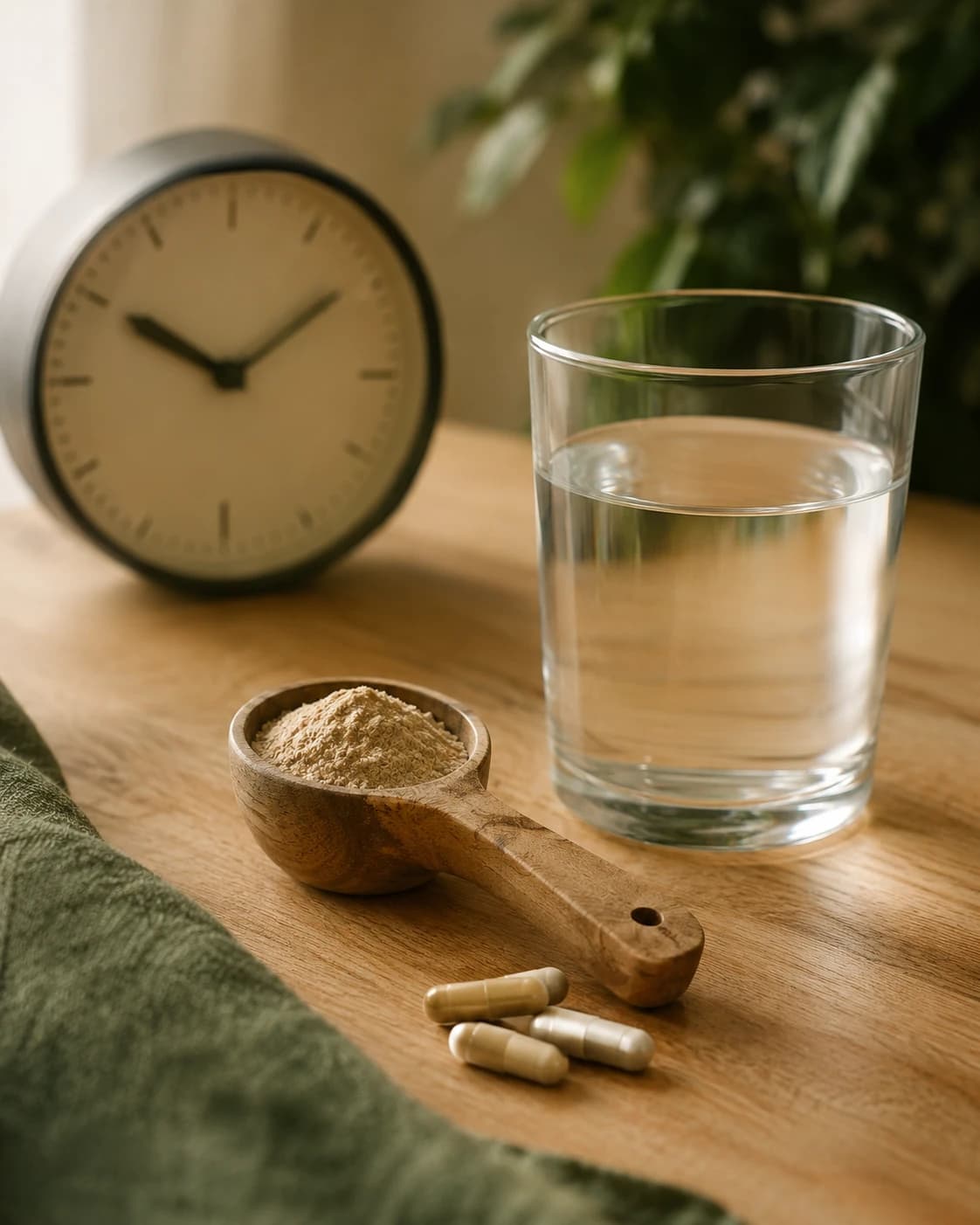
Ju Hua is almost always taken as a tea or within a herbal formula, not as a high-dose supplement.
- Tea: a few dried flower heads steeped in hot water for several minutes, often with a little rock sugar. It is a mild everyday drink, especially in warm weather.
- In formulas: practitioners pair it with herbs like honeysuckle flower for colds, or with liver-supporting herbs for eye and headache patterns.
- Practitioner dosing: traditional texts list roughly 4.5 to 15 grams of dried flower per day within a formula — far more concentrated than a casual cup of tea.
Because the meaningful therapeutic dosing comes from formulas rather than a beverage, anyone using Ju Hua for a specific health reason (rather than as a drink) is best guided by a qualified TCM practitioner. For general brewing technique that applies to any dried-flower or leaf infusion, see our herbal tea benefits guide.
The allergy risk that matters most: ragweed and the daisy family
This is the safety point most worth being specific about, because it is common and practical rather than theoretical.
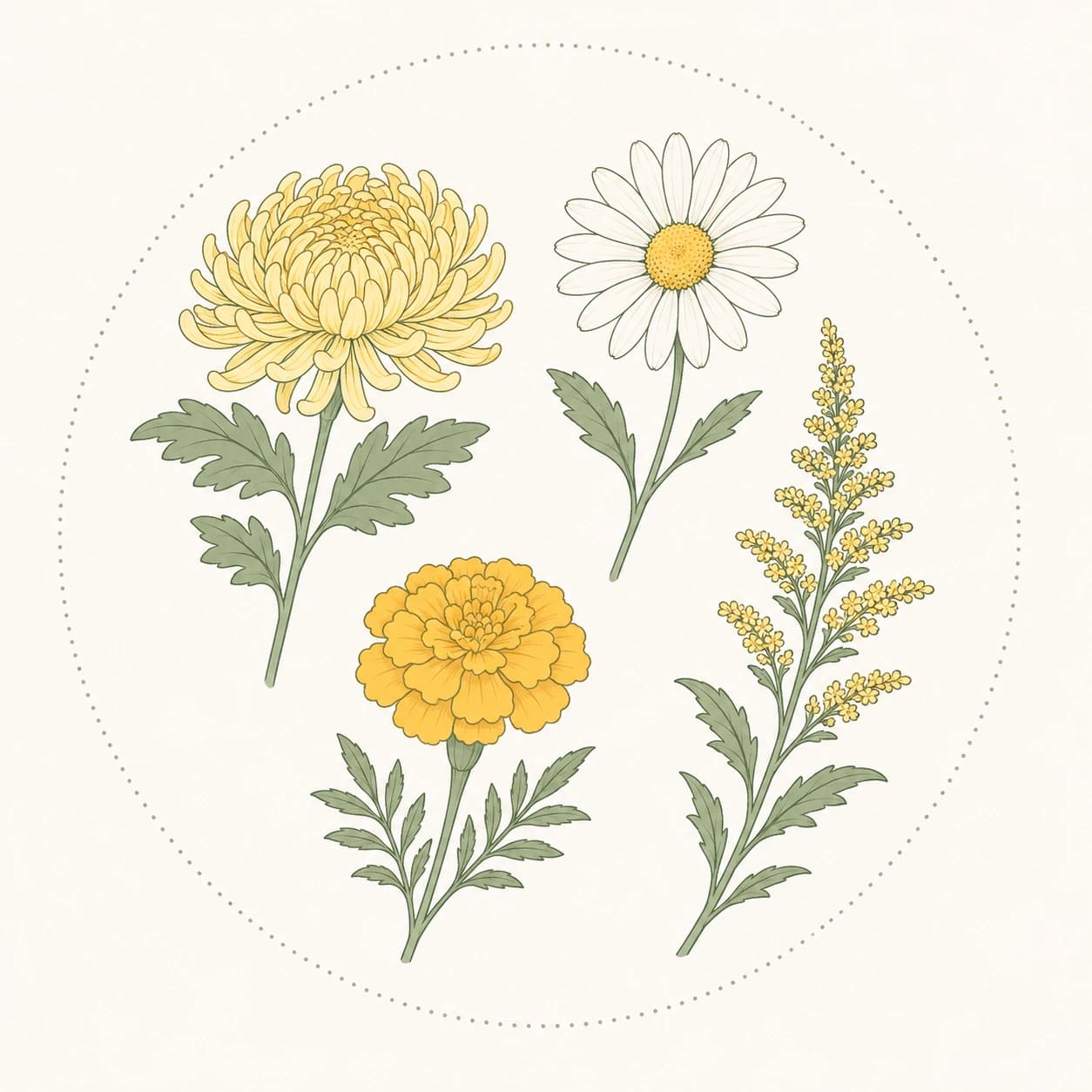
Chrysanthemum belongs to the Asteraceae (Compositae) family — the same botanical family as ragweed, mugwort, marigolds, and daisies. The main allergens responsible for this cross-reactivity are sesquiterpene lactones, compounds found in the flowers, leaves, and pollen of Asteraceae plants; roughly half of known sesquiterpene lactones are considered potential contact allergens (Denisow-Pietrzyk et al., 2019). Ragweed and mugwort pollen in particular show a high degree of cross-reactivity with other Asteraceae species, and chrysanthemum itself is identified in the occupational-medicine literature as a leading sensitizer — accounting for an estimated 60% of Asteraceae-related occupational contact dermatitis cases among florists and growers in Western Europe, with general-population contact-allergy rates to Asteraceae sesquiterpene lactones estimated between 0.1% and 2.7% (mean around 1.5%) across studied countries (Denisow-Pietrzyk et al., 2019). Those occupational and contact-allergy figures describe people handling raw plants or patch-test panels, not tea drinkers specifically, but they illustrate how real and well-documented cross-reactivity within this plant family is.
The practical takeaway, consistent with consumer safety guidance: if you have hay fever or a known allergy to ragweed, marigolds, daisies, or other Asteraceae plants, you are in the group most likely to react to chrysanthemum as well (WebMD, Chrysanthemum). Stop drinking the tea and seek care if you notice rash, swelling, or trouble breathing.
Other safety notes:
- Duration of use: chrysanthemum extract is considered possibly safe for short-term use of up to about 12 weeks; reliable data beyond that is limited (WebMD, Chrysanthemum).
- Sun sensitivity: chrysanthemum can increase sensitivity to sunlight in some people (WebMD, Chrysanthemum).
- Pregnancy and breastfeeding: there is not enough reliable safety data, so it is best avoided (WebMD, Chrysanthemum).
- Everyday dietary use specifically: even the 2020 review that frames Ju Hua as a model dietary herb notes that safety evaluation aimed specifically at regular dietary/tea-level use is still limited in the literature, separate from its long history of traditional use (Yuan et al., 2020).
- Other medicines or conditions: if you take prescription drugs or have a chronic illness, check with your clinician first, and do not use Ju Hua in place of treatment for an eye, heart, or blood pressure condition.
For general background on using herbs and TCM safely, see NCCIH.
For other herbs used this way, see our guides to Korean mint and bupleurum, which also appear in cooling and liver-related formulas.
Frequently Asked Questions (FAQ)
Is Ju Hua tea safe to drink every day? For most people, a normal cup of chrysanthemum tea is well tolerated. The main groups who should be cautious are those allergic to ragweed or other daisy-family plants, and those who are pregnant. Higher, formula-strength doses should be supervised by a practitioner rather than self-directed.
Does Ju Hua actually help with eye problems? "Brightens the eyes" is a genuine traditional indication, but no study identified for this article tested drinking Ju Hua tea for an eye condition. The one related human trial tested a different, topical multi-herb chrysanthemum eye mask for dry eye and found improved symptom scores but no significant change in objective eye measurements (Wu et al., 2021). See an eye-care professional for any persistent eye problem rather than relying on tea.
Does Ju Hua lower blood pressure or cholesterol? There is no solid human evidence that it does. The one available human trial found an antioxidant effect from chrysanthemum extract but no significant reduction in post-meal blood fats (Chen et al., 2023). Do not use it to manage blood pressure or cholesterol on your own.
I have hay fever or a ragweed allergy — can I still drink chrysanthemum tea? Be cautious. Chrysanthemum is in the same Asteraceae family as ragweed, and cross-reactivity between these plants is well documented in the allergy literature (Denisow-Pietrzyk et al., 2019; WebMD, Chrysanthemum). If you have a known ragweed, marigold, or daisy allergy, talk to an allergist before trying it, and stop immediately if you notice any allergic symptoms.
Medical disclaimer: This article is for informational purposes only. Always consult a qualified healthcare provider before making changes to your health routine.
Sources
- Liu Y, et al. Chrysanthemum morifolium as a traditional herb: A review of historical development, classification, phytochemistry, pharmacology and application. Journal of Ethnopharmacology, 2024 — PubMed. https://pubmed.ncbi.nlm.nih.gov/38621465/
- Yuan H, Jiang S, Liu Y, Daniyal M, Jian Y, Peng C, Shen J, Liu S, Wang W. The flower head of Chrysanthemum morifolium Ramat. (Juhua): A paradigm of flowers serving as Chinese dietary herbal medicine. Journal of Ethnopharmacology, 2020;261:113043 — PubMed. https://pubmed.ncbi.nlm.nih.gov/32593689/
- Liang Y, et al. Exploring the antimicrobial, anti-inflammatory, antioxidant, and immunomodulatory properties of Chrysanthemum morifolium and Chrysanthemum indicum: a narrow review. Frontiers in Pharmacology, 2025 — PubMed Central. https://pmc.ncbi.nlm.nih.gov/articles/PMC11963160/
- Wu JL, Liu ZG, Jin M, et al. A multicenter, randomized, double-masked, placebo-controlled trial of compound wild chrysanthemum eye masks for mild and moderate dry eye. Zhonghua Yan Ke Za Zhi, 2021;57(8):601-607 — PubMed. https://pubmed.ncbi.nlm.nih.gov/34344121/
- Chen L, et al. Analysis of Chemical Constituents of Chrysanthemum morifolium Extract and Its Effect on Postprandial Lipid Metabolism in Healthy Adults. Molecules, 2023 — PubMed Central. https://pmc.ncbi.nlm.nih.gov/articles/PMC9866508/
- WebMD. Chrysanthemum: Uses, Side Effects, and Safety. https://www.webmd.com/vitamins/ai/ingredientmono-904/chrysanthemum
- Denisow-Pietrzyk M, Pietrzyk Ł, Denisow B. Asteraceae species as potential environmental factors of allergy. Environmental Science and Pollution Research, 2019;26(7):6290-6300 — PubMed Central. https://pmc.ncbi.nlm.nih.gov/articles/PMC6428906/
- National Center for Complementary and Integrative Health (NCCIH). Traditional Chinese Medicine: What You Need To Know. https://www.nccih.nih.gov/health/traditional-chinese-medicine-what-you-need-to-know
All sources accessed 10 July 2026.

Emily Johnson, MSc, RH (AHG)
Registered Herbalist (AHG) specializing in natural remedies and medicinal plants, with a focus on the traditional and evidence-based uses of healing herbs.