
Cramp bark earned its name for one thing: easing the gripping pain of a cramping muscle, especially the uterus during a period. That single-use reputation is unusually specific for a traditional herb, so this guide is built around it — what the mechanism evidence actually shows, why that same "uterine" reputation creates a real pregnancy caution, what a clinical trial with cramp bark's name attached to it does and doesn't prove, and only then the broader folk uses, preparation, and remaining safety points.
What cramp bark is
Cramp bark is the dried bark of Viburnum opulus, a shrub also called guelder rose that is native to Europe and North America. The bark was listed in the United States National Formulary from 1894 to 1960, reflecting how established it once was in Western practice (Herbal Reality).
The bark contains a coumarin called scopoletin, plus a compound called viopudial, bitter iridoids, chlorogenic acid, and tannins. Of these, scopoletin is the one most often linked to the herb's muscle-relaxing reputation (Dietz et al., 2016).
Its signature use: relaxing a cramping uterus
Unlike herbs with a scattershot list of folk uses, cramp bark's reputation centers on one mechanism: relaxing smooth muscle, especially the uterus. Physicians were already writing about Viburnum opulus for dysmenorrhoea and uterine pain in 1882 (Purdy, 1882), and that use has carried into modern Western herbalism largely unchanged.
The laboratory evidence behind it is real, if old. A 1966 study in Nature reported that Viburnum extracts relaxed uterine muscle in laboratory tissue (Jarboe et al., 1966). A 2016 review of botanicals for women's health in Pharmacological Reviews agrees: animal studies, and experiments on isolated human uterine tissue, show a relaxant effect, with scopoletin as the likely active compound (Dietz et al., 2016). That gives the traditional use for period pain a genuinely plausible mechanism — more than can be said for most of cramp bark's other folk uses (below). For the herbs that have been tested in menstrual-pain trials, see our guide to herbal teas for period cramps.
The pregnancy paradox
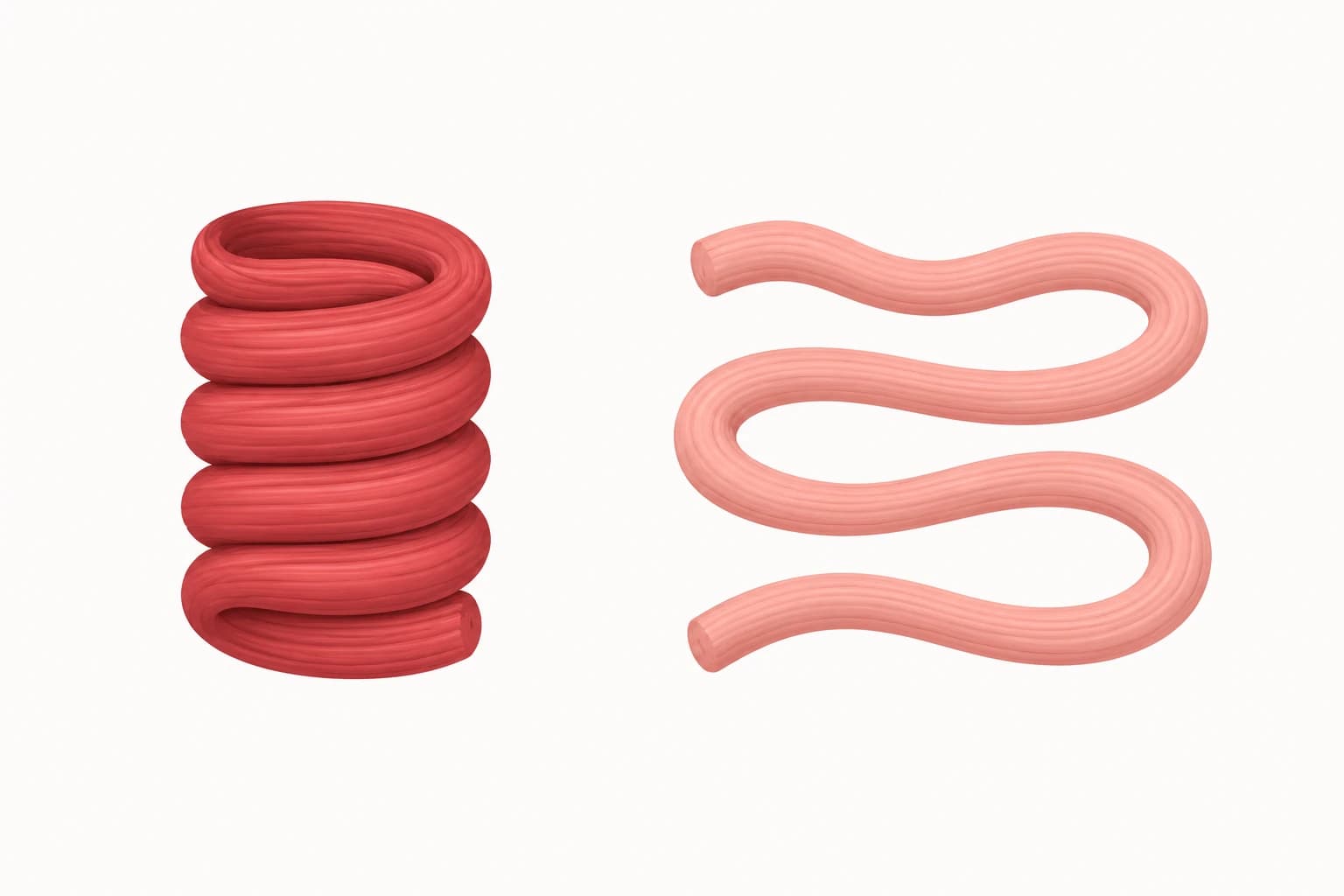
Because cramp bark's whole reputation rests on relaxing the uterus, it carries a use most other muscle-relaxant herbs don't: Western herbalists have also used it, under direct supervision, to help calm uterine contractions during a threatened miscarriage — dosed very differently, and much more frequently, than a standard cramping dose (Herbal Reality). This article is not recommending that use; it is explaining why it exists, because it is the reason the pregnancy caution below is so specific rather than a generic "ask your doctor" line.
That same uterine action is exactly why cramp bark shouldn't be self-administered in pregnancy. Consumer-health references are blunt that there isn't enough reliable information to know whether it's safe when pregnant or breastfeeding, and advise avoiding it (WebMD, Viburnum opulus). Combined with its history as a supervised remedy for threatened miscarriage, that means any use of cramp bark during pregnancy — for cramps or anything else — belongs only in the hands of a qualified midwife, doctor, or medical herbalist, never as a self-prescribed remedy.
What the clinical trial record actually shows
This is where honesty matters most, because the picture is more specific than "no research exists."
No trials of the herb itself
The 2016 Pharmacological Reviews review says it plainly: there are "no randomized, placebo-controlled clinical trials evaluating the efficacy of viburnum" for period-related symptoms (Dietz et al., 2016). Consumer-health sources agree — cramp bark is used for cramps and other complaints, but "there is no good scientific evidence to support these uses," and no studies exist to guide dosing (WebMD, Viburnum opulus; Drugs.com, Cramp Bark).
A registered trial exists — but it isn't the herb
Searching "Viburnum opulus" alongside dysmenorrhea does turn up a registered clinical trial: "The Efficacy of Viburnum Opulus 3X in the Treatment of Primary Dysmenorrhea," a completed Phase 2 study (ClinicalTrials.gov identifier NCT02467543). The fine print matters before treating that as evidence for cramp bark: "3X" denotes a homeopathic dilution, dosed as ten drops of a diluted preparation three times a day — not the bark decoction or tincture covered in this article. The trial's primary completion was in December 2015, and as of this writing no results have ever been posted to its ClinicalTrials.gov record. So it neither confirms nor rules out anything about the herbal-strength preparations herbalists actually use, and it isn't the missing clinical trial this herb needs.
The honest bottom line
Cramp bark has a long, narrow tradition and a believable laboratory mechanism for relaxing uterine muscle, but no human trial — homeopathic or herbal — has confirmed it works for period pain or anything else. Treat it as a traditional remedy with a plausible mechanism, not a proven treatment.
Other traditional uses
Beyond menstrual cramps, Western herbalism has also used cramp bark for general muscle tension, back and leg cramps, and gut cramping — the same smooth-muscle-relaxant logic applied more broadly, though none of it is confirmed by modern research.
Older folk traditions list further uses, including high blood pressure and asthma. None of these has reliable supporting evidence; they're included here only to be transparent about how broadly this bark was once used, not because they're recommended.
Preparation and dosage
Because no clinical studies exist, there is no proven dose. The ranges below come from traditional practice, not trials. Cramp bark is woody, so it is usually simmered (a decoction) rather than steeped.
- Decoction: roughly 2 teaspoons (about 4 g) of dried bark simmered in a cup of water for 10–15 minutes, taken up to three times a day.
- Tincture: a 1:5 tincture in around 45% alcohol, commonly 4–8 ml up to three times a day.
Because dosing is not standardised, it is best used with guidance from a qualified herbalist or clinician rather than self-prescribed at high doses.
Safety beyond pregnancy
Reliable safety data are limited overall. Consumer-health references note there isn't enough good information to be sure cramp bark is safe or to define its side effects, and its toxicology hasn't been formally studied (WebMD, Viburnum opulus; Drugs.com, Cramp Bark). Beyond the pregnancy caution above:
- Kidney stones — the evidence actually runs the opposite way you might expect. Rather than being a reason for caution on its own, Viburnum opulus has a folk reputation for helping pass kidney stones. In a rat model of oxalate-induced urolithiasis, Viburnum opulus fruit juice reduced crystal formation compared with untreated controls (İlhan et al., 2014). A human retrospective study of a concentrated Viburnum extract — not the bark tincture described in this article — found faster stone passage when added to standard treatment, but 5 of 53 patients on the extract developed dyspeptic complaints, and one case report described acute pancreatitis in a man who drank concentrated Viburnum extract water daily for several days (Kajszczak et al., 2020). None of this evidence involves the bark decoction or tincture this article covers, so if you have a history of calcium-oxalate stones, treat it as an open question for your clinician rather than a settled reason for confidence either way.
- Blood-thinning medicines: the coumarin (scopoletin) content means a theoretical interaction with anticoagulants such as warfarin; check with your prescriber first.
- Serious symptoms: severe, worsening, or unusual period pain should be checked by a doctor to rule out causes such as endometriosis. Do not use cramp bark in place of proper care, and check for interactions if you take prescription medicines.
For background on choosing herbs safely, see NCCIH.
For related herbs, see our guides to white peony and tormentil.
Cramp Bark FAQ
Does cramp bark really help menstrual cramps? Laboratory studies show Viburnum can relax uterine muscle, which fits its traditional use, but there are no human trials proving it eases period pain. It may help some people, but the evidence is not there yet.
Is the "Viburnum opulus" clinical trial evidence that cramp bark works? No. The one registered trial (NCT02467543) tested a homeopathic 3X dilution, not an herbal-strength bark preparation, and it never published results. It doesn't close the evidence gap for the decoctions or tinctures covered in this article.
How is cramp bark usually taken? Most often as a simmered decoction of the dried bark or as a tincture. Because no clinical studies guide dosing, the amounts used come from tradition, so it is best taken with practitioner guidance.
Is cramp bark safe in pregnancy? Avoid self-use. Its whole reputation is built on affecting the uterus, and while herbalists have historically used it under direct supervision for threatened miscarriage, that is precisely why it should never be self-prescribed during pregnancy.
Can I take cramp bark with magnesium? They are often combined in herbal practice and no specific interaction is documented, but because evidence on cramp bark is thin, it is sensible to mention any combination to your healthcare provider.
Medical disclaimer: This article is for informational purposes only. Always consult a qualified healthcare provider before making changes to your health routine.
Sources
- Dietz BM, et al. Botanicals and Their Bioactive Phytochemicals for Women's Health. Pharmacological Reviews, 2016 — PubMed Central. https://pmc.ncbi.nlm.nih.gov/articles/PMC5050441/
- Jarboe CH, Schmidt CM, Nicholson JA, Zirvi KA. Uterine relaxant properties of Viburnum. Nature, 1966;212(5064):837 — PubMed. https://pubmed.ncbi.nlm.nih.gov/5988219/
- Purdy AME. On the Use of Viburnum opulus (L.) in Dysmenorrhoea and Uterine Pain. Southern Medical Record, 1882 — PubMed Central (historical). https://pmc.ncbi.nlm.nih.gov/articles/PMC9093996/
- WebMD. Viburnum opulus: Uses, Side Effects, and Safety. https://www.webmd.com/vitamins/ai/ingredientmono-746/viburnum-opulus
- Drugs.com. Cramp Bark: Uses, Benefits and Dosage. https://www.drugs.com/npp/cramp-bark.html
- National Center for Complementary and Integrative Health (NCCIH). Herbs at a Glance. https://www.nccih.nih.gov/health/herbsataglance
- Kajszczak D, Zakłos-Szyda M, Podsędek A. Viburnum opulus L.—A Review of Phytochemistry and Biological Effects. Nutrients, 2020;12(11):3398. https://pmc.ncbi.nlm.nih.gov/articles/PMC7694363/
- İlhan M, et al. Preclinical Evaluation of Antiurolithiatic Activity of Viburnum opulus L. on Sodium Oxalate-Induced Urolithiasis Rat Model. Evidence-Based Complementary and Alternative Medicine, 2014;2014:578103. https://pmc.ncbi.nlm.nih.gov/articles/PMC4137613/
- ClinicalTrials.gov. The Efficacy of Viburnum Opulus 3X in the Treatment of Primary Dysmenorrhea. Identifier NCT02467543. https://clinicaltrials.gov/study/NCT02467543
- Herbal Reality. Cramp Bark (Viburnum opulus): Benefits, Uses, Safety. https://www.herbalreality.com/herb/cramp-bark/
All sources accessed 10 July 2026.

Emily Johnson, MSc, RH (AHG)
Registered Herbalist (AHG) specializing in natural remedies and medicinal plants, with a focus on the traditional and evidence-based uses of healing herbs.