
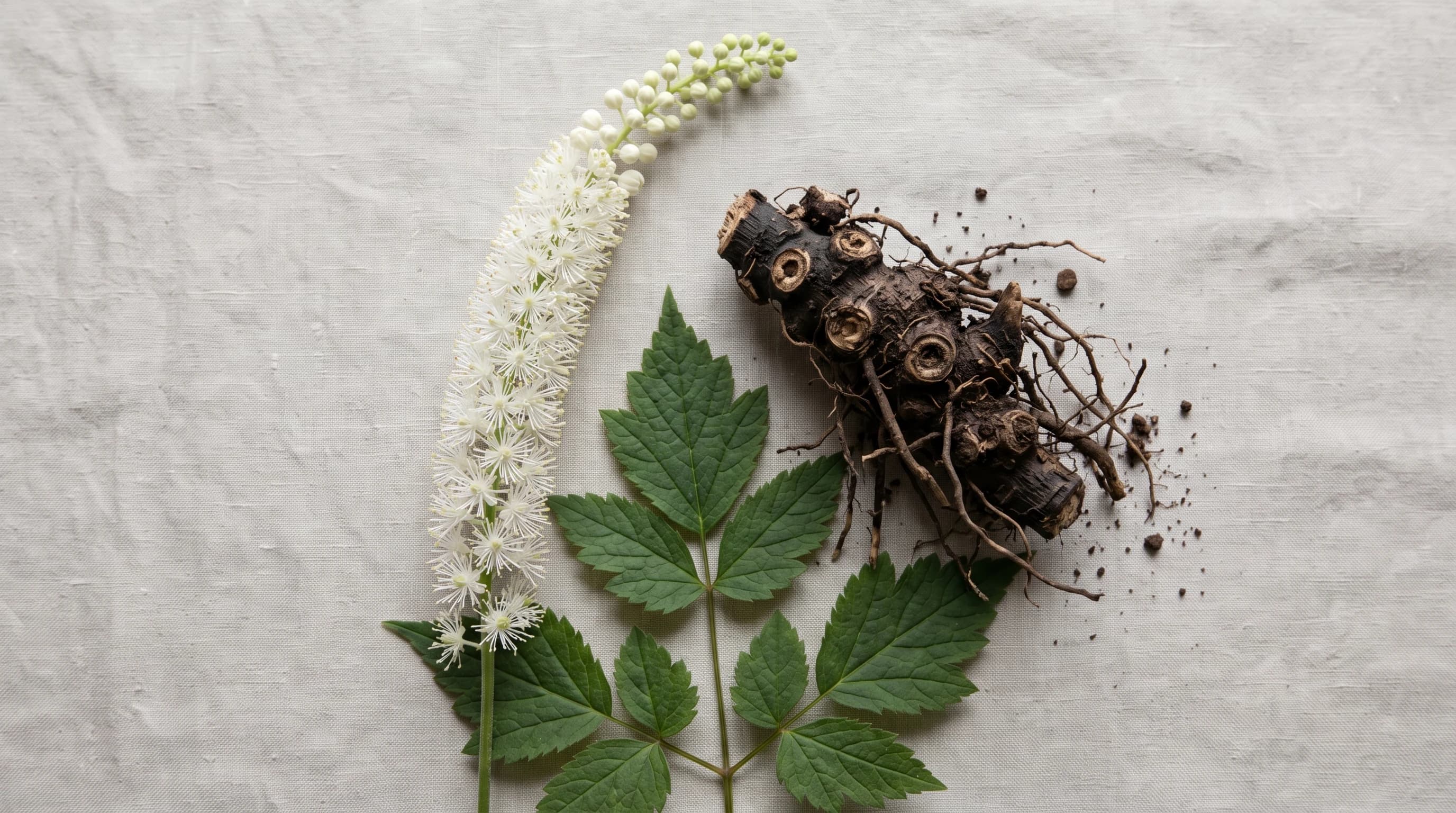
Black cohosh is the most purchased botanical for menopause symptoms, according to The Menopause Society (formerly the North American Menopause Society), and one of the most studied. It is also a herb where the answer depends on who you ask. A Cochrane review found insufficient evidence that it works. European regulators list specific black cohosh extracts as a "well-established use" for menopausal complaints such as hot flushes. And reports of liver injury have led regulators in Europe and Canada to require warnings. This guide sets those positions side by side, explains why they differ, and covers the liver question before the benefits, because it is the one worth understanding before you buy.
Quick Answer
The evidence that black cohosh reduces hot flashes is mixed, and the size of any benefit is uncertain. A 2012 Cochrane review of 16 trials (2,027 women) concluded there was "insufficient evidence to support the use of black cohosh for menopausal symptoms," and The Menopause Society's 2023 statement does not recommend it. A 2023 meta-analysis that also counted combination products found hot flashes improved compared with placebo. EU regulators classify three specified extracts as "well-established use," although the EU's own assessment report concedes that no high-quality study showed significant hot-flush results.
On safety, liver injury has been reported in people taking products labeled as black cohosh. NCCIH calls these problems rare, but EU regulators list their frequency as not known, and whether the herb itself is responsible is unresolved. Mislabeled products are a documented problem but not a proven explanation. Black cohosh is not a like-for-like substitute for hormone therapy. Talk to a clinician first if you have liver disease, take other medicines, or have had a hormone-sensitive cancer; the EU monograph does not recommend it during pregnancy or breastfeeding. Stop it and seek medical advice if you develop signs of liver trouble.
Where the Major Bodies Stand
| Source | Bottom line | What it rests on |
|---|---|---|
| Cochrane review (2012) | "Insufficient evidence to support the use of black cohosh for menopausal symptoms" | 16 trials, 2,027 women; single-ingredient products only; the hot-flush estimate pools just 3 trials |
| Meta-analysis cited by NCCIH (2023) | Hot flashes improved compared with placebo; anxiety and depressive symptoms did not significantly improve | 22 articles, 2,310 women; black cohosh alone or combined with other ingredients |
| IQWiG, Germany (2025) | Moderate-certainty advantage over placebo on a pooled vasomotor measure; mixed quality-of-life results of very low certainty | 7 trials identified, 4 with usable data; only extracts and doses matching German approvals |
| The Menopause Society (2023) | "Insufficient evidence to support the use of black cohosh for VMS"; not recommended | Expert panel review of the literature |
| NICE, UK (NG23) | "Some evidence" it "may relieve" vasomotor symptoms, with warnings about safety, variable preparations and interactions | Recommendation wording dating from 2015 |
| European Medicines Agency (2018, re-reviewed 2025) | "Well-established use" for menopausal complaints such as hot flushes and profuse sweating, for three specified extracts | Regulatory review of about 20 studies plus long-standing use, adopted by 20 of 25 votes; the report concedes no high-quality study showed significant hot-flush results |
| WHO monograph (2002) | Lists climacteric symptoms under "uses supported by clinical data"; WHO says this is not an endorsement | Clinical studies from 1959 to 1998, several without control groups |
Positions as of September 2026. Each row is explained, with sources, in the sections below.
What Black Cohosh Is, and What Nobody Knows About How It Works
Black cohosh (Actaea racemosa, also called Cimicifuga racemosa) is a North American plant in the buttercup family. Herbal products use the root or rhizome, and NCCIH notes it has been used medicinally in Germany since the late 19th century. It is a different plant from blue cohosh, which NCCIH says can cause high blood pressure and chest pain and has been linked to life-threatening complications in infants when used to induce labor.
How black cohosh might work is not settled. The EU monograph states that neither "the mode of action nor the constituents relevant for the improvement of menopausal complaints are known." Early work suggested estrogen-like activity, but the National Cancer Institute's summary says the purported estrogenic actions "are refuted" by current studies of commercial hydroalcoholic extracts, while it calls suggestions of serotonergic activity "well supported" (NCI PDQ). That is a hypothesis about pharmacology, not a demonstrated reason it relieves hot flashes.
If you are still working out whether your symptoms are perimenopausal, start with our perimenopause symptoms guide. For how black cohosh sits alongside other supplements, see our perimenopause vitamins and supplements guide.
Is Black Cohosh Safe? The Liver Question, Explained
In trials black cohosh is generally well tolerated: NCCIH notes it "has been used safely in research studies that lasted as long as a year," and the EU monograph lists stomach upset and allergic skin reactions as reported effects. The serious concern is the liver.
What the Reports Show
Cases of liver damage, some very serious, have been reported in people taking products labeled as black cohosh. NIH's LiverTox database counts more than fifty clinically apparent cases, from raised liver enzymes to hepatitis and, in some, liver failure requiring a transplant or ending in death. Symptoms usually began within 2 to 12 weeks of starting (LiverTox). NCCIH calls these problems "rare" and says "it's uncertain whether black cohosh was responsible for them."
Regulators treated the reports as a signal. The EU's herbal committee described "a potential connection" in 2006 (EMA, 2006) and, after reviewing 44 poorly documented case reports, concluded in 2007 that the link "should be seen as a signal" (EMA, 2007). The current EU monograph lists liver toxicity as "associated with the use" of black cohosh products, frequency not known, and a more recent EU safety review kept the medicines authorized while saying hepatotoxicity "should further be closely monitored" (EMA, 2025). The 2018 assessment report says the additional case reports, "even if poorly documented," present "a clear signal of safety concern," and lists spontaneous reports to the German pharmacovigilance database involving tablets whose stated extract matches the monograph, one scored "probable" (7 points) on the RUCAM causality scale (EMA assessment report). In the US, an expert committee of the US Pharmacopeial Convention rated all 30 non-duplicate reports it reviewed only "possible" (none probable or certain) and recommended a label warning (Mahady et al., 2008).
Why the Cause Is Disputed
Experts scoring the same kind of reports have reached different answers. The US Pharmacopeial committee used a general-purpose scale. A hepatologist who re-scored 69 suspected cases with a liver-specific tool judged causality excluded, unlikely, unrelated or unassessable in 68 of them, pointing to missing data, other liver diseases, co-medication and unidentified products (Teschke et al., 2009). Both analyses are peer-reviewed, and neither can prove or rule out a rare, idiosyncratic reaction.
Trial data cannot settle it either. LiverTox notes no clinically apparent liver injury among more than 1,200 trial participants, and a meta-analysis of five trials (1,117 women) of one extract found no significant change in average liver-enzyme levels (Naser et al., 2011). That analysis's first author is affiliated with the extract's manufacturer, and trials of this size can miss a rare reaction. LiverTox's own verdict sits in the middle. It scores the risk "A," described as "products sold as black cohosh are well established causes of clinically apparent liver injury, but the specific ingredient or component that accounts for the injury is unclear," and adds that black cohosh "does not appear to be inherently hepatotoxic."
Product Identity: A Documented Problem, Not a Proven Explanation
One reason the cause is hard to pin down is that "black cohosh" on a label has not always meant black cohosh. Health Canada is the clearest example. Of six serious liver reports it received between 2005 and 2009, the products in four were found not to contain authentic black cohosh (two by its own laboratories, whose analyses found chemical profiles consistent with related plant species, and two by manufacturers' analyses). The other two were unauthorized products with no authenticity data. Health Canada wrote that these cases "demonstrate that products not containing authentic black cohosh may be associated with liver adverse reactions." The products in those four reports were voluntarily recalled, and a review of all licensed black cohosh products in Canada led to the voluntary withdrawal of several more. The agency did not name the substitute species or say it is harmful, and its newsletter notes that a definite causal association often cannot be determined (Health Canada, 2010).
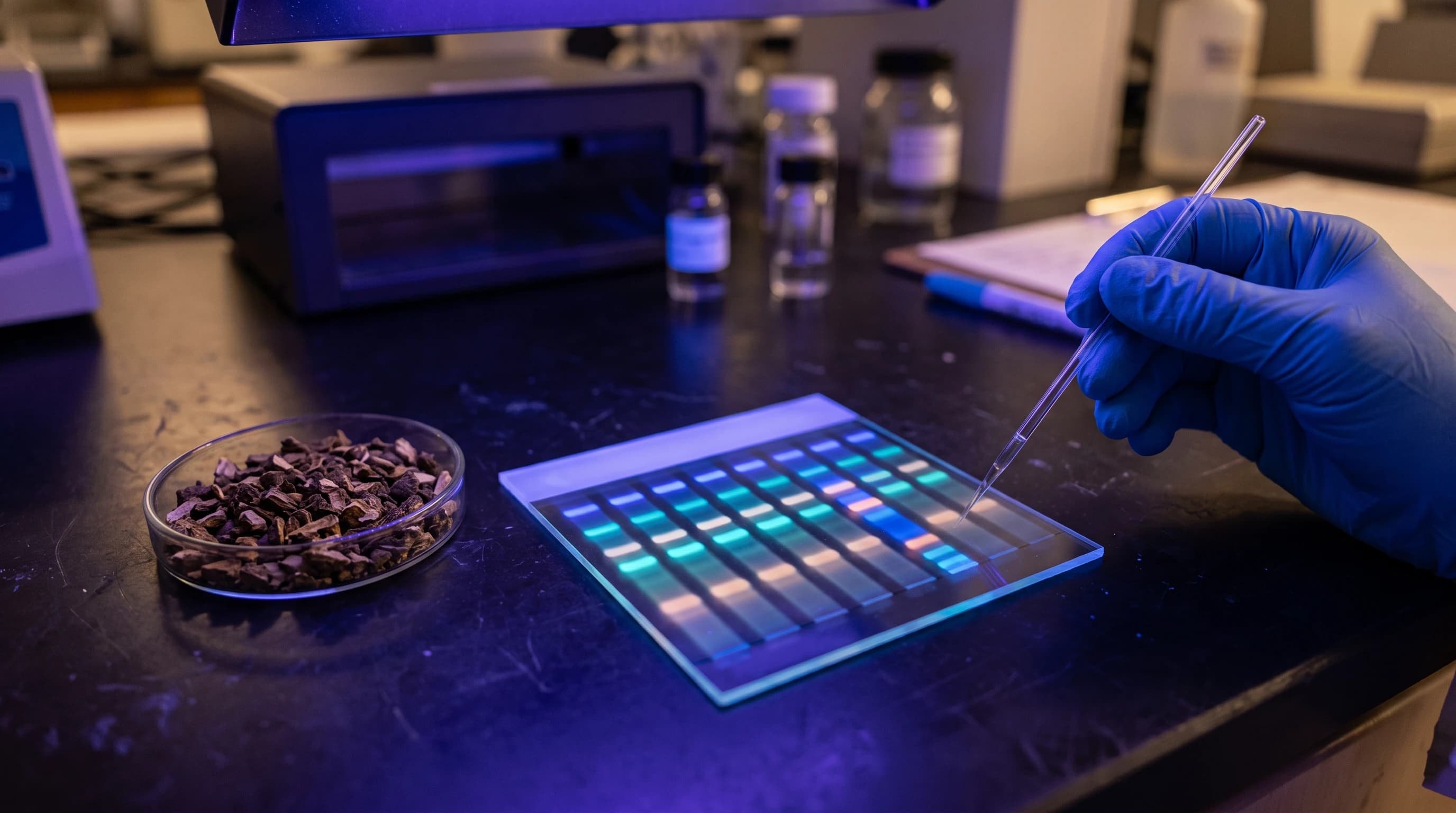
Analyses of products from the US market and the internet point the same way, with caveats. Of 11 products bought mainly in the New York City area in 2002-2004, four contained Asian Actaea species instead of, or mixed with, black cohosh (Jiang et al., 2006). In a 2014 study, seven of 19 supplements from US distributors were misbranded or adulterated, while all six German and Swiss over-the-counter medicines were authentic (Masada-Atsumi et al., 2014). In 2022, 33 of 60 samples labeled black cohosh were of questionable quality: 15 mixed with other Actaea species and 18 with no black cohosh detected (Frommenwiler et al., 2022). These are small convenience samples, not market-wide rates.
Whether such products explain any liver cases is not known. NCCIH puts it this way: "It is possible but not proven that these contaminants might be responsible for cases of liver damage linked to black cohosh products." The EU assessment adds that a major limitation of the case reports is "the lack of information concerning the quality of the products that allegedly caused the reaction." Mislabeling also cannot be the whole story, because the same assessment lists reports involving tablets whose stated extract matches the monograph.
What That Means in Practice
Neither simple story holds. The evidence does not show that authentic black cohosh reliably damages the liver, and it does not show that mislabeled products explain the cases. It does support caution:
- Stop and get medical advice if you develop signs of liver trouble. The EU lists tiredness, loss of appetite, yellowing of the skin or eyes, severe upper stomach pain with nausea and vomiting, or dark urine.
- If you have or have had a liver disorder, do not start it without medical advice. The EU monograph calls for caution, and the US Pharmacopeial Convention's recommended label advises anyone with a liver disorder to consult a healthcare practitioner.
- Product identity matters, which is covered below.
Does Black Cohosh Reduce Hot Flashes?
What the Cochrane Review Found
The 2012 Cochrane review by Leach and Moore pooled 16 randomized trials of single-ingredient black cohosh (2,027 women; median dose 40 mg a day; average duration about 23 weeks). For hot-flush frequency, the outcome most women care about, only three trials (393 women) could be pooled. The black cohosh groups had on average 0.07 more flushes a day than the placebo groups (95% confidence interval from 0.43 fewer to 0.56 more), which the review rated as moderate-quality evidence. The four trials pooled for overall symptom scores also showed no significant difference, and reporting was poor: allocation concealment was described in only one trial. The authors concluded that "there is currently insufficient evidence to support the use of black cohosh for menopausal symptoms," and the review's summary adds that the evidence cannot "either support or oppose" its use (Leach and Moore, 2012). No updated Cochrane version exists.
Newer Analyses, and the "26%" Figure
Several later analyses are more favorable. The 2023 meta-analysis that NCCIH cites (22 articles, 2,310 women) found that black cohosh extracts improved hot flashes compared with placebo (a standardized effect of 0.32, 95% CI 0.11 to 0.52, where 0 means no difference) and overall menopausal symptoms, but not anxiety or depressive symptoms. It included products that combine black cohosh with other ingredients, and its units cannot be converted into "flashes per day" (Sadahiro et al., 2023). Germany's health technology assessment institute, IQWiG, reviewed only trials of extracts matching German approvals in 2025. A pooled analysis of two trials favored black cohosh on a vasomotor measure with moderate certainty, but that measure came from questionnaires rather than flush counts, and postmenopausal women showed no significant difference at six months (IQWiG, 2025). A 2026 review prepared for the International Menopause Society rated the evidence for black cohosh on vasomotor and menopausal symptoms as moderate certainty, while calling the overall evidence for complementary therapies limited (Maunder et al., 2026).
You will also see "26%" quoted. It traces to a 2010 meta-analysis whose search ended in 2008, which reported that preparations containing black cohosh "improved these symptoms overall by 26% (95% confidence interval 11%-40%)," with significant heterogeneity (Shams et al., 2010). An independent appraisal by the University of York's Centre for Reviews and Dissemination explains that this was a pooled difference in the proportion of women improving, that more than half of the trials tested combination products, and that the two trials of black cohosh alone gave 11% (95% CI 1% to 20%) (CRD appraisal). It is not a "26% drop in hot flashes."
Why Credible Reviews Disagree
- They ask different questions. Cochrane and The Menopause Society ask whether trials show a benefit over placebo. The EU's "well-established use" category rests on bibliographic data covering at least 10 years of use in the EU. EMA's plain-language summary says that, taken together, about 20 clinical studies with over 6,000 patients "indicate that black cohosh improves menopausal symptoms" (EMA summary). Its assessment report says that "no study of high quality has demonstrated significant results for the used scores in total or in particular for 'hot flushes,'" and that "the long standing use of these herbal medicinal products and the high sales numbers in the European Union and worldwide are accepted as indicators for efficacy" (EMA assessment report). The monograph passed by 20 of 25 votes; Finland and the Netherlands judged the benefit-risk balance negative, and Ireland and the UK found the trials not of adequate quality (EMA opinion). A periodic review completed in November 2025 decided no revision was needed.
- They count different products. Cochrane included only single-ingredient products made with different extracts. The 2023 analysis also counted combinations. The EU category covers three named dry extracts and says data for other extracts are not sufficient. A result for one extract cannot be assumed for another.
- They measure different things. Flush counts, composite scales such as the Kupperman Index and Menopause Rating Scale, and quality-of-life questionnaires do not move together.
- Placebo responses are large and trials are uneven. The Menopause Society notes a placebo improvement rate of 20% to 66% in trials of nonhormone treatments for hot flashes. In a 12-month, publicly funded trial comparing black cohosh, red clover, placebo and hormone therapy, vasomotor symptoms fell by 34%, 57%, 63% and 94% respectively, and only hormone therapy differed significantly from placebo (Geller et al., 2009).
- Who ran the study is worth knowing. Some of the most favorable analyses of specific extracts were written by authors affiliated with the extract's manufacturer, such as a 2021 meta-analysis of one isopropanolic extract (Castelo-Branco et al., 2021). The publicly funded US trials found no benefit over placebo (Newton et al., 2006; Geller et al., 2009). That does not make the industry-linked results wrong, but it is context for weighing them.
WHO's 2002 monograph lists climacteric symptoms under "uses supported by clinical data," but states that its descriptions "should not be taken as implying WHO's official endorsement or approval." It draws on studies published up to 1998 and predates the liver reports (WHO, 2002).
Black Cohosh and Hormone Therapy
Hormone therapy is the benchmark. The Menopause Society's 2022 statement says it "remains the most effective treatment for vasomotor symptoms" (The Menopause Society, 2022). A Cochrane review of 24 trials of oral hormone therapy found a 75% reduction in weekly hot-flush frequency relative to placebo (95% CI 64% to 82%), while the placebo groups themselves improved by about 58% from baseline, which shows how much placebo effect there is to beat (MacLennan et al., 2004). In a US trial that tested both (351 women), hormone therapy reduced vasomotor symptoms by about four a day compared with placebo, while the difference between black cohosh and placebo was under one a day and not statistically significant (Newton et al., 2006). In the Cochrane black cohosh review, hormone therapy reduced daily hot flushes significantly more than black cohosh in all three trials that compared them.
Black cohosh is therefore not a like-for-like substitute, and the EU monograph says it should not be used with estrogens unless a doctor advises. For women who cannot or prefer not to take hormone therapy, The Menopause Society's 2023 statement recommends several nonhormone options, rating cognitive behavioral therapy, clinical hypnosis and certain prescription medicines at Level I, its highest evidence grade (The Menopause Society, 2023). Our guide to perimenopause treatment options sets them out.
Who Should Be Cautious or Avoid Black Cohosh
- People with a liver disorder. Ask a clinician first (see above).
- Pregnancy and breastfeeding. The EU monograph says use is not recommended because safety has not been established, and NCCIH says black cohosh "may not be safe" in either.
- People who have had breast cancer or another hormone-sensitive condition. NCCIH says it is uncertain whether black cohosh is safe in these cases, and the EU monograph says not to use it without medical advice. NCCIH also says it is uncertain whether black cohosh helps with hot flashes caused by breast cancer treatment.
- People taking estrogens. The EU says not to combine them unless a doctor advises it.
- Anyone taking other medicines. NICE notes that interactions with other medicines have been reported, and the EU assessment notes weak inhibition of CYP2D6, an enzyme that processes tamoxifen and some other drugs, which it considers possibly not clinically relevant. Tell your prescriber or pharmacist.
If You Decide to Try It: Choosing a Product That Is Actually Black Cohosh
This is general information, not a recommendation to take black cohosh or a dosing guide.
- Check the plant. The label should name Actaea racemosa (or Cimicifuga racemosa) and the root or rhizome. Asian Actaea species such as A. dahurica are the substitutes most often reported in mislabeled products.
- Prefer a single ingredient if you want to know what you are taking. The Cochrane evidence is for single-ingredient products, and a blend makes it impossible to tell which ingredient caused a benefit or a side effect.
- The extract matters. The EU category covers three specified dry extracts, and the assessment says data supporting other extracts are not available. Root powder or an unspecified extract is not what the EU category covers.
- Labels are not proof of quality. NCCIH notes that a manufacturer's use of "standardized," "verified" or "certified" "does not necessarily guarantee product quality or consistency" (NCCIH). Independent testing seals mean a laboratory checked what is in the bottle, but we could not find a source measuring how much they improve label accuracy for black cohosh. Licensing can help: Health Canada's monograph requires unambiguous identity testing by validated chemical methods.
- Know the time limit. The EU monograph says not to take it for more than six months without medical advice, and to see a doctor or pharmacist if symptoms persist or worsen.
Frequently Asked Questions (FAQ)
Is black cohosh safe for your liver? Usually well tolerated in trials, but liver injury has been reported in people taking products labeled as black cohosh. NCCIH calls these problems rare and says it is uncertain whether black cohosh was responsible (NCCIH). Stop taking it and seek medical advice if you develop tiredness, loss of appetite, yellowing of the skin or eyes, severe upper stomach pain with nausea and vomiting, or dark urine. With a liver disorder, ask a clinician first.
Does black cohosh actually help with hot flashes? Reviews disagree. A 2012 Cochrane review found no significant difference from placebo in hot-flush frequency and called the evidence insufficient (Leach and Moore, 2012). A 2023 meta-analysis that included combination products found hot flashes improved (Sadahiro et al., 2023). The Menopause Society does not recommend black cohosh. Any benefit is uncertain, and trials cannot tell you whether it will work for you.
Can black cohosh be taken with hormone replacement therapy? The EU herbal monograph says black cohosh preparations "should not be used together with oestrogens unless advised by a doctor" (EMA monograph). If you take hormone therapy, raise black cohosh with whoever prescribes it before starting.
Why do studies on black cohosh disagree with each other? They differ in the extract tested, in whether the product is a single ingredient or a blend, in what they measure, in how well they were run, and in who paid for them. Placebo responses are also large: The Menopause Society notes a 20% to 66% improvement rate in trials of nonhormone treatments for hot flashes (The Menopause Society, 2023).
Who should avoid black cohosh? The EU monograph calls for caution if you have a history of liver disorder, does not recommend use during pregnancy or breastfeeding, and says people who have had or are being treated for breast cancer or other hormone-dependent tumors, or who take estrogens, should not use it without medical advice (EMA monograph).
Is black cohosh regulated in Europe? In the EU, certain black cohosh extracts are authorized as herbal medicines: the 2018 monograph covers three specified dry extracts for menopausal complaints in adult women, with a six-month limit without medical advice. In the US, black cohosh is sold as a dietary supplement, which the FDA does not approve before sale (NCCIH).
How is black cohosh different from ashwagandha for menopause? They are different plants with different evidence. Black cohosh has a long research history for hot flashes, but its trials disagree and how it works is unsettled. Our ashwagandha for menopause guide finds that herb's menopause-specific evidence newer and smaller, with two trials.
How long does black cohosh take to work? The trials in the Cochrane review averaged about 23 weeks (Leach and Moore, 2012). The EU monograph gives no time to effect. It says to consult a doctor or pharmacist if symptoms persist and not to take black cohosh for more than six months without medical advice.
How we made this guide: Researched, written, and fact-checked by The Wellness Voyage editorial team, with every health claim backed by a citable source — recognised health authorities and peer-reviewed studies are linked throughout and listed in full below. We fact-check and review this article periodically and update it as the evidence changes; the last reviewed and updated date is shown with this article. It is written to inform, not to replace personalised advice from a qualified healthcare professional.
Medical disclaimer: This article is for informational purposes only. Always consult a qualified healthcare provider before making changes to your health routine.
Sources
- National Center for Complementary and Integrative Health (NCCIH). Black Cohosh (last updated November 2024). https://www.nccih.nih.gov/health/black-cohosh
- Leach MJ, Moore V. Black cohosh (Cimicifuga spp.) for menopausal symptoms. Cochrane Database of Systematic Reviews, 2012, Issue 9, CD007244 — PubMed 22972105. https://doi.org/10.1002/14651858.CD007244.pub2
- Sadahiro R, Matsuoka LN, Zeng BS, et al. Black cohosh extracts in women with menopausal symptoms: an updated pairwise meta-analysis. Menopause, 2023;30(7):766–773 — PubMed. https://pubmed.ncbi.nlm.nih.gov/37192826/
- Shams T, Setia MS, Hemmings R, et al. Efficacy of black cohosh-containing preparations on menopausal symptoms: a meta-analysis. Alternative Therapies in Health and Medicine, 2010;16(1):36–44 — PubMed. https://pubmed.ncbi.nlm.nih.gov/20085176/
- Centre for Reviews and Dissemination, University of York. Critical abstract of Shams et al. 2010 (DARE record 12010001523). https://www.crd.york.ac.uk/CRDWeb/ShowRecord.asp?ID=12010001523
- Institut für Qualität und Wirtschaftlichkeit im Gesundheitswesen (IQWiG). Cimicifuga: Evidenzbericht V24-05C (IQWiG-Berichte Nr. 1923), version 1.0, 20 January 2025. https://www.iqwig.de/download/v24-05c_cimicifuga_evidenzbericht_v1-0.pdf
- Maunder A, Mardon AK, Rao V, et al. Complementary therapies for management of menopausal symptoms: a systematic review to inform the update of the International Menopause Society recommendations on women's midlife health. Climacteric, 2026;29(2):165–209 — PubMed (abstract). https://pubmed.ncbi.nlm.nih.gov/41498229/
- Castelo-Branco C, Gambacciani M, Cano A, et al. Review & meta-analysis: isopropanolic black cohosh extract iCR for menopausal symptoms - an update on the evidence. Climacteric, 2021;24(2):109–119 — PubMed. https://pubmed.ncbi.nlm.nih.gov/33021111/
- The North American Menopause Society (now The Menopause Society). The 2023 nonhormone therapy position statement. Menopause, 2023;30(6):573–590. https://menopause.org/wp-content/uploads/professional/2023-nonhormone-therapy-position-statement.pdf
- The North American Menopause Society (now The Menopause Society). The 2022 hormone therapy position statement. Menopause, 2022;29(7):767–794. https://menopause.org/wp-content/uploads/professional/nams-2022-hormone-therapy-position-statement.pdf
- National Institute for Health and Care Excellence (NICE). Menopause: identification and management (NG23), last updated 15 April 2026. https://www.nice.org.uk/guidance/ng23
- European Medicines Agency (HMPC). European Union herbal monograph on Cimicifuga racemosa (L.) Nutt., rhizoma, revision 1 (EMA/HMPC/48745/2017), adopted 27 March 2018. https://www.ema.europa.eu/en/documents/herbal-monograph/final-european-union-herbal-monograph-cimicifuga-racemosa-l-nutt-rhizome-revision-1_en.pdf
- European Medicines Agency (HMPC). Assessment report on Cimicifuga racemosa (L.) Nutt., rhizoma, revision 1 (EMA/HMPC/48744/2017), 27 March 2018. https://www.ema.europa.eu/en/documents/herbal-report/final-assessment-report-cimicifuga-racemosa-l-nutt-rhizome-revision-1_en.pdf
- European Medicines Agency (HMPC). Opinion on the European Union herbal monograph on Cimicifuga racemosa (EMA/HMPC/195629/2018), 27 March 2018. https://www.ema.europa.eu/en/documents/herbal-opinion/final-opinion-hmpc-european-union-herbal-monograph-cimicifuga-racemosa-l-nutt-rhizome-revision-1_en.pdf
- European Medicines Agency (HMPC). Addendum to assessment report on Cimicifuga racemosa (L.) Nutt., rhizoma (EMA/HMPC/8411/2025), 19 November 2025. https://www.ema.europa.eu/en/documents/herbal-report/addendum-assessment-report-cimicifuga-racemosa-l-nutt-rhizoma_en.pdf
- European Medicines Agency. Black cohosh: public summary (EMA/265439/2018), 2018. https://www.ema.europa.eu/en/documents/herbal-summary/black-cohosh-summary-public_en.pdf
- European Medicines Agency. Public statement on herbal medicinal products containing Cimicifugae racemosae rhizoma (Black Cohosh, root): serious hepatic reactions (EMEA/269259/2006), 18 July 2006. https://www.ema.europa.eu/en/documents/public-statement/emea-public-statement-herbal-medicinal-products-containing-cimicifugae-racemosae-rhizoma-serious-hepatic-reactions_en.pdf
- European Medicines Agency (HMPC). Assessment of case reports connected to herbal medicinal products containing Cimicifugae racemosae rhizoma (Black Cohosh, root) (EMEA/HMPC/269258/2006 Rev. 1), 8 May 2007. https://www.ema.europa.eu/en/documents/herbal-report/assessment-case-reports-connected-herbal-medicinal-products-containing-cimicifugae-racemosae-rhizoma-black-cohosh-root_en.pdf
- World Health Organization. WHO monographs on selected medicinal plants, Volume 2 (2002): Rhizoma Cimicifugae Racemosae. https://iris.who.int/handle/10665/42052
- LiverTox: Clinical and Research Information on Drug-Induced Liver Injury. Black Cohosh (NIDDK; updated 15 April 2025). https://www.ncbi.nlm.nih.gov/books/NBK547990/
- Mahady GB, Low Dog T, Barrett ML, et al. United States Pharmacopeia review of the black cohosh case reports of hepatotoxicity. Menopause, 2008;15(4 Pt 1):628–638 — PubMed. https://pubmed.ncbi.nlm.nih.gov/18340277/
- Teschke R, Bahre R, Genthner A, et al. Suspected black cohosh hepatotoxicity: challenges and pitfalls of causality assessment. Maturitas, 2009;63(4):302–314 — PubMed. https://pubmed.ncbi.nlm.nih.gov/19586731/
- Naser B, Schnitker J, Minkin MJ, et al. Suspected black cohosh hepatotoxicity: no evidence by meta-analysis of randomized controlled clinical trials for isopropanolic black cohosh extract. Menopause, 2011;18(4):366–375 — PubMed. https://pubmed.ncbi.nlm.nih.gov/21228727/
- Painter D, Perwaiz S, Murty M. Black cohosh products and liver toxicity: update. Canadian Adverse Reaction Newsletter, 2010;20(1):1–2 (Health Canada). https://www.canada.ca/content/dam/hc-sc/migration/hc-sc/dhp-mps/alt_formats/pdf/medeff/bulletin/carn-bcei_v20n1-eng.pdf
- Jiang B, Kronenberg F, Nuntanakorn P, et al. Evaluation of the botanical authenticity and phytochemical profile of black cohosh products by high-performance liquid chromatography with selected ion monitoring liquid chromatography-mass spectrometry. Journal of Agricultural and Food Chemistry, 2006;54(9):3242–3253 — PubMed. https://pubmed.ncbi.nlm.nih.gov/16637680/
- Masada-Atsumi S, Kumeta Y, Takahashi Y, et al. Evaluation of the botanical origin of black cohosh products by genetic and chemical analyses. Biological and Pharmaceutical Bulletin, 2014;37(3):454–460 — PubMed. https://pubmed.ncbi.nlm.nih.gov/24583864/
- Frommenwiler DA, Reich E, Sharaf MHM, et al. Investigation of market herbal products regulated under different categories: how can HPTLC help to detect quality problems? Frontiers in Pharmacology, 2022;13:925298 — PMC. https://pmc.ncbi.nlm.nih.gov/articles/PMC9393483/
- Newton KM, Reed SD, LaCroix AZ, et al. Treatment of vasomotor symptoms of menopause with black cohosh, multibotanicals, soy, hormone therapy, or placebo: a randomized trial. Annals of Internal Medicine, 2006;145(12):869–879 — PubMed. https://pubmed.ncbi.nlm.nih.gov/17179056/
- Geller SE, Shulman LP, van Breemen RB, et al. Safety and efficacy of black cohosh and red clover for the management of vasomotor symptoms: a randomized controlled trial. Menopause, 2009;16(6):1156–1166 — PubMed. https://pubmed.ncbi.nlm.nih.gov/19609225/
- MacLennan AH, Broadbent JL, Lester S, Moore V. Oral oestrogen and combined oestrogen/progestogen therapy versus placebo for hot flushes. Cochrane Database of Systematic Reviews, 2004, Issue 4, CD002978 — PubMed. https://pubmed.ncbi.nlm.nih.gov/15495039/
- National Cancer Institute. Black Cohosh (PDQ), Health Professional Version. https://www.cancer.gov/about-cancer/treatment/cam/hp/black-cohosh-pdq
- National Center for Complementary and Integrative Health (NCCIH). Using Dietary Supplements Wisely (last updated January 2019). https://www.nccih.nih.gov/health/using-dietary-supplements-wisely
- Health Canada. Natural Health Products compendial monograph: Black Cohosh (Actaea racemosa), 31 January 2025. https://webprod.hc-sc.gc.ca/nhpid-bdipsn/dbImages/mono_black-cohosh_english.pdf
Sources accessed 30 September 2026.

Emily Johnson, MSc, RH (AHG)
A registered herbalist who reads what regulators actually wrote about a herb, not just how it is marketed.


