You reach for a snack at 3 p.m., feel good for twenty minutes, then crash harder than before. The snack was not the problem; the type of snack was. The fix is one simple rule, and the rest of this guide explains why it works and how to use it.
The one rule
Pair a fiber-rich carbohydrate with some protein or healthy fat. An apple on its own is fine, but an apple with peanut butter gives you steadier energy. That pairing is the whole game, and the science behind it is solid.
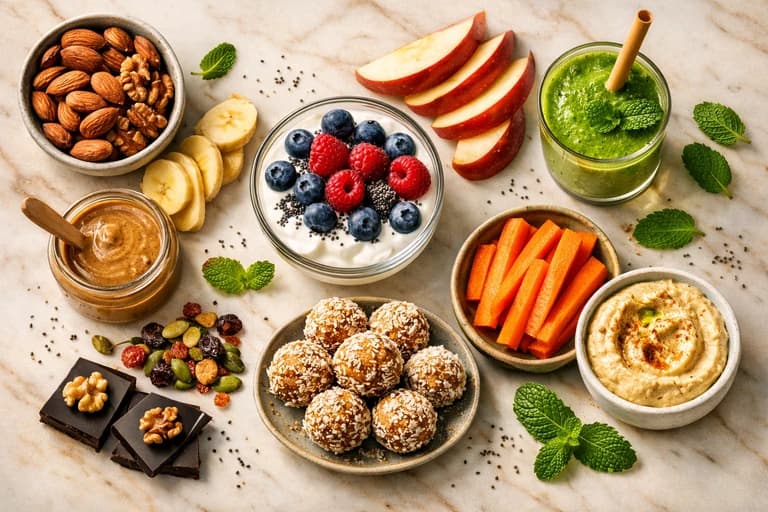
Quick options that follow the rule:
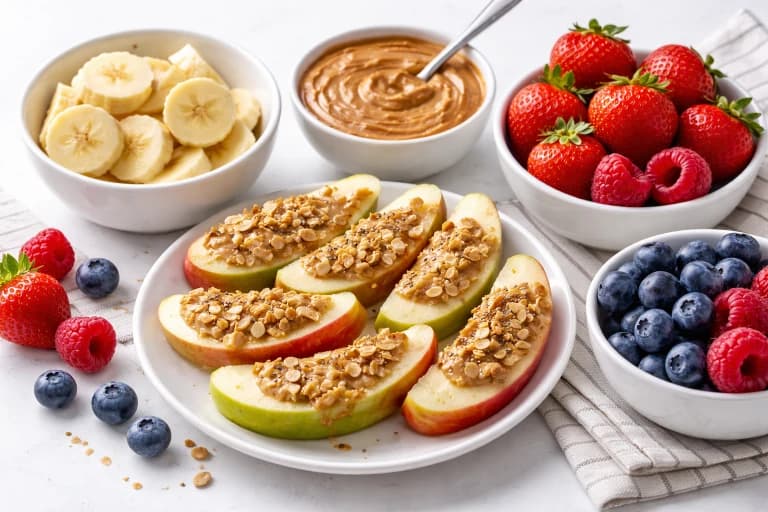
- Apple or banana with a spoon of nut butter
- Greek yogurt with berries
- A small handful of trail mix (nuts, seeds, a little dried fruit)
- Hummus with carrots and peppers
- Whole-grain crackers with cheese
Why some snacks last and others don't
When you eat carbohydrate on its own, especially refined carbohydrate, your blood sugar rises quickly and then drops, and that drop is what you feel as the afternoon slump. The classic research that created the glycemic index showed that foods raise blood sugar at very different rates, and crucially, that adding fat and protein to a meal slows that rise (Jenkins et al., 1981). That single finding is why pairing works.
Fiber helps for the same reason. Soluble fiber slows digestion and improves the body's blood-sugar response (Anderson et al., 2009). So a snack built from whole foods, with their fiber intact, gives a gentler, longer curve than something processed.
Protein adds a second benefit: it keeps you full. Reviews of protein and appetite show that protein increases the feeling of fullness between meals, partly by shifting the hormones that signal hunger (Leidy et al., 2015; Pesta & Samuel, 2014). A snack that holds off hunger for a couple of hours is doing its job.
What to look for in a snack
You do not need to count anything. Aim for a combination rather than a single nutrient:
| Component | Why it helps | Good sources |
|---|---|---|
| Fiber-rich carbohydrate | Steady, gradual energy | Fruit, oats, whole grains, beans |
| Protein | Fullness and focus | Yogurt, nuts, seeds, eggs, hummus |
| Healthy fat | Slows the sugar rise | Nuts, seeds, nut butter, avocado |
| Fiber | Smooths blood sugar | Berries, vegetables, seeds |
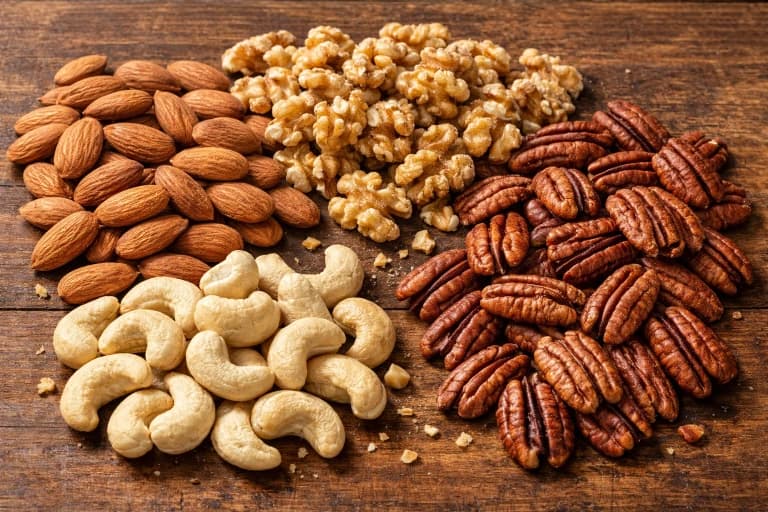
Nuts are worth singling out, because they pack several of these into one handful. They are nutrient-dense, rich in unsaturated fat, plant protein, fiber, and magnesium, and regular nut eating is linked to better heart and metabolic health rather than weight gain (Ros, 2010). For a deeper look, see our guide to the best nuts for sustained energy.
Ten balanced snack ideas
Each of these follows the pairing rule.
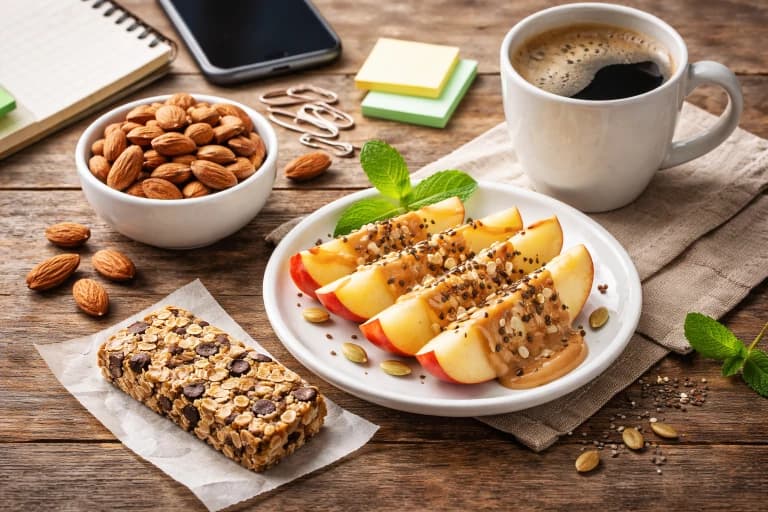
- Apple slices with peanut or almond butter — carbohydrate, fiber, and fat.
- Greek yogurt with berries and a sprinkle of chia — protein and antioxidants.
- Banana with a small handful of almonds — easy and portable.
- Trail mix — nuts, seeds, and a little unsweetened dried fruit.
- Hummus with carrot and pepper sticks — plant protein and fiber.
- Overnight oats with nuts and seeds — slow carbohydrate and protein.
- Whole-grain crackers with cheese — balanced and quick.
- Date-and-nut energy balls — naturally sweet, no refined sugar.
- A boiled egg with a piece of fruit — protein plus carbohydrate.
- Dark chocolate (70% or higher) with walnuts — a treat that still pairs fat with carbohydrate.
For diet-specific versions, see our guides to fruit snacks for quick energy, low-carb snacks for energy, and vegan snacks for energy.
The 60-second snack formula
When you are not sure what to grab, build it in this order:
- Start with a carbohydrate: fruit, oats, or whole-grain crackers.
- Add protein: yogurt, nuts, seeds, cheese, or hummus.
- Add a fat if it is not already there: nut butter, seeds, or a few nuts.
That is it. Banana plus almond butter. Yogurt plus berries plus walnuts. Crackers plus hummus plus cucumber. You can apply it anywhere without a recipe.
Making your own
Homemade snacks let you skip the added sugar in many packaged options. A simple base of blended dates, nuts, and a spoon of nut butter, pressed into a pan and chilled, gives you a week of energy bites. Our guide to homemade energy bar recipes has more, and for the workplace, see office snacks for energy and pre-workout snacks.
Common mistakes
- Snacking on carbohydrate alone. A plain cookie or a piece of white bread spikes and crashes. Add protein or fat.
- Trusting the word "energy" on a label. Many energy bars are mostly sugar. Read the ingredients.
- Mistaking thirst for hunger. Mild dehydration feels like fatigue. Have some water first.
- Leaning on caffeine instead of food. Caffeine masks tiredness for a while but does not replace fuel or sleep.
The bottom line
Lasting energy from snacks is not complicated: pair a fiber-rich carbohydrate with protein or healthy fat, lean on whole foods, and drink enough water. Do that and the afternoon crash mostly takes care of itself. Browse all our nutrition guides for more.
Frequently Asked Questions (FAQ)
What makes a snack give lasting energy instead of a crash? Pairing a fiber-rich carbohydrate with protein or healthy fat. The protein and fat slow how fast the carbohydrate raises your blood sugar, so energy comes in steadily rather than as a spike and crash.
What are some quick balanced snacks? Apple with peanut butter, Greek yogurt with berries, a banana with a few nuts, hummus with vegetables, or a small handful of trail mix. Each pairs a carb with protein or fat.
Are low-sugar snacks better for energy? Generally yes. Snacks with less added sugar and more fiber, protein, and fat give steadier energy than sugary snacks, which tend to spike blood sugar and then leave you tired.
How often should I snack? There is no single rule. Many people feel steadier eating something every few hours, but snack when you are genuinely hungry rather than on a fixed schedule.
Do I need energy bars or supplements for energy? No. Whole foods like fruit, nuts, yogurt, and vegetables cover it. Many commercial "energy" bars are mostly sugar, so check the label.
Medical disclaimer: This article is for informational purposes only. Always consult a qualified healthcare provider before making changes to your health routine.
Sources
- Jenkins DJ, et al. Glycemic index of foods: a physiological basis for carbohydrate exchange. American Journal of Clinical Nutrition, 1981 — PubMed. https://pubmed.ncbi.nlm.nih.gov/6259925/
- Anderson JW, et al. Health benefits of dietary fiber. Nutrition Reviews, 2009 — PubMed. https://pubmed.ncbi.nlm.nih.gov/19335713/
- Leidy HJ, et al. The role of protein in weight loss and maintenance. American Journal of Clinical Nutrition, 2015 — PubMed. https://pubmed.ncbi.nlm.nih.gov/25926512/
- Pesta DH, Samuel VT. A high-protein diet for reducing body fat: mechanisms and possible caveats. Nutrition & Metabolism, 2014 — PubMed Central. https://pmc.ncbi.nlm.nih.gov/articles/PMC4258944/
- Ros E. Health benefits of nut consumption. Nutrients, 2010 — PubMed Central. https://pmc.ncbi.nlm.nih.gov/articles/PMC3257681/
- Harvard T.H. Chan School of Public Health. The Nutrition Source: Healthy snacks. https://www.hsph.harvard.edu/nutritionsource/
All sources accessed 31 May 2026.

Sophia Martinez, MS, CNS
A wellness researcher focused on what the evidence actually says.