It is 2:30 p.m., your focus is fading, and your brain wants a candy bar. Fruit is the smarter move. Its natural sugars become usable fuel quickly, but whole fruit also brings fiber and water that keep the lift from turning into a crash. The catch: fruits do not all energize the same way. This guide covers which fruits work fastest, their nutrition data, and the pairings that make the energy last.
How fruit fuels you
When you eat fruit, its carbohydrate breaks down into simple sugars your muscles and brain can use. Fruits with more readily available sugar and less fiber act faster; fruits with more fiber release their energy more gradually. That is also why whole fruit gives steadier energy than juice: the fiber slows how quickly the sugar reaches your blood (Anderson et al., 2009).
The broader point is that whole fruit delivers more than sugar. A review of fruits and vegetables concluded that their benefits come from the mix of fiber, vitamins, and plant compounds working together, which is why food beats isolated supplements (Liu, 2013).
Glycemic index, briefly
The glycemic index (GI) ranks carbohydrate foods by how quickly they raise blood sugar. It is a useful speedometer, not the whole story, since fiber, water, ripeness, and serving size all change the real-world effect. The GI values below come from the University of Sydney's international GI database, and the nutrition snapshots from USDA FoodData Central (per 100 g).
The 8 best fruits for quick energy
1. Banana
GI ~52. Per 100 g: 89 kcal, 22.8 g carbs, 2.6 g fiber, 358 mg potassium. Carb-dense and easy to digest, with enough fiber to smooth the edge. A reliable pre-workout pick. Try: sliced onto whole-grain toast with cinnamon.
2. Dates
GI ~54. Per 100 g: 282 kcal, 75 g carbs, 8 g fiber, 656 mg potassium. Concentrated energy, essentially nature's energy gel, with surprisingly high fiber. Portions matter. Try: two or three stuffed with peanut butter.
3. Mango
GI ~51. Per 100 g: 60 kcal, 15 g carbs, 1.6 g fiber, plus vitamin C. A quick, bright lift that does not feel heavy. Try: diced into plain Greek yogurt with lime.
4. Apple (with skin)
GI ~44. Per 100 g: 52 kcal, 13.8 g carbs, 2.4 g fiber. Steady and portable; the skin's fiber makes apples feel more even than some fruits. Try: sliced with a small handful of walnuts.
5. Blueberries
GI ~53. Per 100 g: 57 kcal, 14.5 g carbs, 2.4 g fiber. Quick carbohydrate with a fiber cushion and a light feel. Try: stirred into cottage cheese or overnight oats.
6. Watermelon
GI ~50. Per 100 g: 30 kcal, 7.6 g carbs, 0.4 g fiber. Mostly water, so it hydrates while giving a small, fast carbohydrate dose. Try: cubed with a pinch of sea salt, chilled.
7. Orange
GI ~45. Per 100 g: 47 kcal, 11.8 g carbs, 2.4 g fiber, plus a big vitamin C payoff. Try: peeled and eaten whole, with a few almonds.
8. Grapes
GI ~54. Per 100 g: 69 kcal, 18.1 g carbs, 0.9 g fiber, 191 mg potassium. Fast energy with no prep. Lower fiber means they act quickly, so pair them for staying power. Try: frozen, for a slow-eating cold snack.
Smart pairings: why fruit alone is not always enough
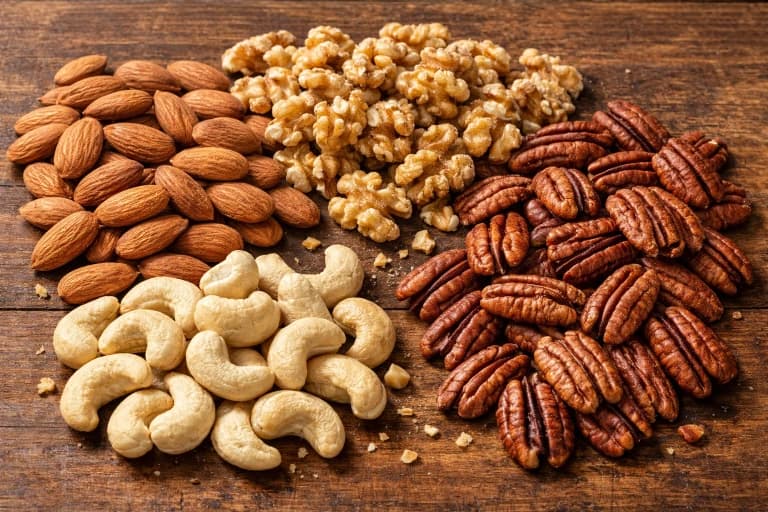
Fruit is fast; protein and fat are slow. Combine them and you flatten the blood-sugar curve and stretch the energy out. The classic glycemic-index research showed that adding fat and protein to a carbohydrate meal slows how quickly blood sugar rises (Jenkins et al., 1981). Nuts are a particularly good partner, since they add fat, plant protein, fiber, and magnesium in one handful (Ros, 2010).
| Fruit | Protein source | Fat source | Result |
|---|---|---|---|
| Banana | Greek yogurt | Chia seeds | Fast lift, steadier release |
| Dates | Peanut butter | Almonds | Quick burst, longer burn |
| Mango | Cottage cheese | Flaxseed | Fast lift, smoother curve |
| Apple | Cheddar | Walnuts | Slower rise, longer fullness |
| Blueberries | Skyr | Hemp hearts | Light energy, focus-friendly |
| Watermelon | Feta | A little olive oil | Hydration, gentler rise |
| Orange | Boiled egg | Avocado | Bright energy, stable finish |
| Grapes | Turkey slices | Pistachios | Fast carbs, sustained |
Who should be careful with fruit for energy
- People with type 2 diabetes or prediabetes. Fruit is still carbohydrate, and serving size matters. Mayo Clinic notes a fruit serving for people with diabetes is about 15 grams of carbohydrate, so portion awareness helps, especially with dried fruit. Favor pairing higher-GI fruits like dates with protein or fat.
- People with fructose intolerance. When fructose is incompletely absorbed, it can ferment in the gut and cause bloating, gas, and discomfort after certain fruits (Fedewa & Rao, 2014). A dietitian can help you test tolerance and pick lower-fructose options.
- People on low-carb or ketogenic diets. These plans limit total carbohydrate, so fruit portions may need to be small or timed around workouts. See our low-carb snacks for energy guide.
Five quick fruit combos
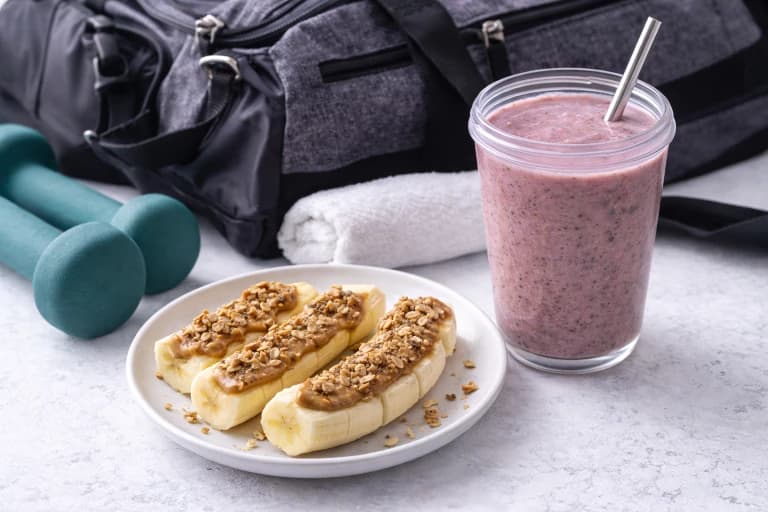
- Banana + almond butter + chia. Slice a banana, add a spoon of almond butter and a sprinkle of chia. Two minutes.
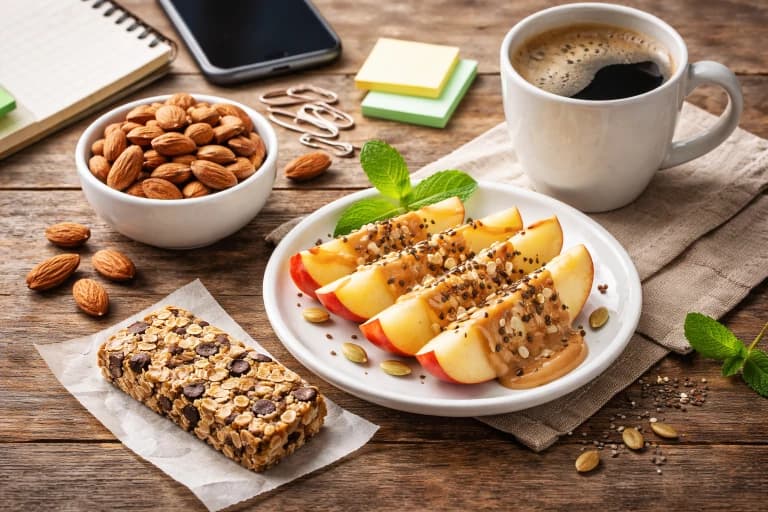
- Apple + cheddar + walnuts. Slice an apple, add a little cheese and a few walnuts. Three minutes.
- Dates + peanut butter. Split two or three dates, fill with peanut butter, pinch of salt. Two minutes.
- Blueberries + cottage cheese. Stir berries into cottage cheese. Two minutes.
- Orange + pistachios. Peel an orange, add a small handful of pistachios. Two minutes.
The bottom line
Fruit is one of the simplest ways to get fast, real energy: choose for the moment (bananas and dates for speed, apples and oranges for a steadier lift) and pair with protein or fat when you want it to last. For more, see the healthy snacks for energy pillar, best nuts for sustained energy, pre-workout snacks, and homemade energy bar recipes.
Frequently Asked Questions (FAQ)
What fruit gives the fastest energy? Dates and bananas are among the fastest, because they pack concentrated, easy-to-digest carbohydrate. Dates are especially dense, so keep the portion small and add a protein or fat if you want the energy to last.
Is fruit better before or after a workout? Both work. Quicker-digesting fruit like a banana before training tops up fuel, while pairing fruit with protein such as yogurt afterward supports recovery.
Can fruit replace caffeine for energy? They work differently. Fruit supplies carbohydrate your body turns into fuel, while caffeine just changes how alert you feel. If you are genuinely low on fuel, fruit helps more than caffeine alone.
Why does whole fruit beat fruit juice for steady energy? Whole fruit keeps its fiber, which slows how fast the sugar reaches your blood. Juice has had much of that fiber removed, so it hits faster and fades faster.
Should anyone be cautious with fruit for energy? People with diabetes should mind portions and pairing, and people with fructose intolerance may get bloating from certain fruits. A clinician or dietitian can help.
Medical disclaimer: This article is for informational purposes only. Always consult a qualified healthcare provider before making changes to your health routine.
Sources
- Jenkins DJ, et al. Glycemic index of foods: a physiological basis for carbohydrate exchange. American Journal of Clinical Nutrition, 1981 — PubMed. https://pubmed.ncbi.nlm.nih.gov/6259925/
- Anderson JW, et al. Health benefits of dietary fiber. Nutrition Reviews, 2009 — PubMed. https://pubmed.ncbi.nlm.nih.gov/19335713/
- Liu RH. Health-promoting components of fruits and vegetables in the diet. Advances in Nutrition, 2013 — PubMed. https://pubmed.ncbi.nlm.nih.gov/23674808/
- Fedewa A, Rao SSC. Dietary fructose intolerance, fructan intolerance and FODMAPs. Current Gastroenterology Reports, 2014 — PubMed. https://pubmed.ncbi.nlm.nih.gov/24357350/
- Ros E. Health benefits of nut consumption. Nutrients, 2010 — PubMed Central. https://pmc.ncbi.nlm.nih.gov/articles/PMC3257681/
- USDA FoodData Central — nutrition data per 100 g. https://fdc.nal.usda.gov/
- University of Sydney — Glycemic Index database. https://glycemicindex.com/
- Mayo Clinic — Diabetes diet: fruit servings. https://www.mayoclinic.org/diseases-conditions/diabetes/in-depth/diabetes-diet/art-20044295
All sources accessed 31 May 2026.

Sophia Martinez, MS, CNS
A wellness researcher focused on what the evidence actually says.