This post contains Amazon affiliate links. If you purchase through these links, I may earn a small commission at no extra cost to you.
"True HEPA" is a real, tested standard: a filter that removes at least 99.97% of particles at 0.3 microns, per the U.S. Department of Energy's DOE-STD-3020 specification. "HEPA-type," "HEPA-style," and "99% HEPA" are not the same thing — they're unregulated marketing terms with no enforced minimum efficiency behind them, and can describe a filter as low as roughly 85% efficient. That one distinction is the single most protective piece of knowledge you can walk away with before buying a purifier.
Where HEPA Actually Comes From
HEPA (High Efficiency Particulate Air) filtration was originally developed in the 1940s, during the Manhattan Project, to capture airborne radioactive particles. The technology later moved into cleanrooms, medical and laboratory facilities, and eventually consumer air purifiers and vacuum cleaners. The testing methodology in wide use today — measuring capture rate at 0.3 microns, the historically identified Most Penetrating Particle Size — was formalized by the Institute of Environmental Sciences and Technology (IEST) in a recommended practice first published in 1986, and the U.S. Department of Energy's own specification (currently DOE-STD-3020-2015) sets the 99.97%-at-0.3-microns bar for HEPA filters used by DOE contractors — the same benchmark that "True HEPA" borrows for consumer marketing.
The Grading Scale, in Consumer Terms
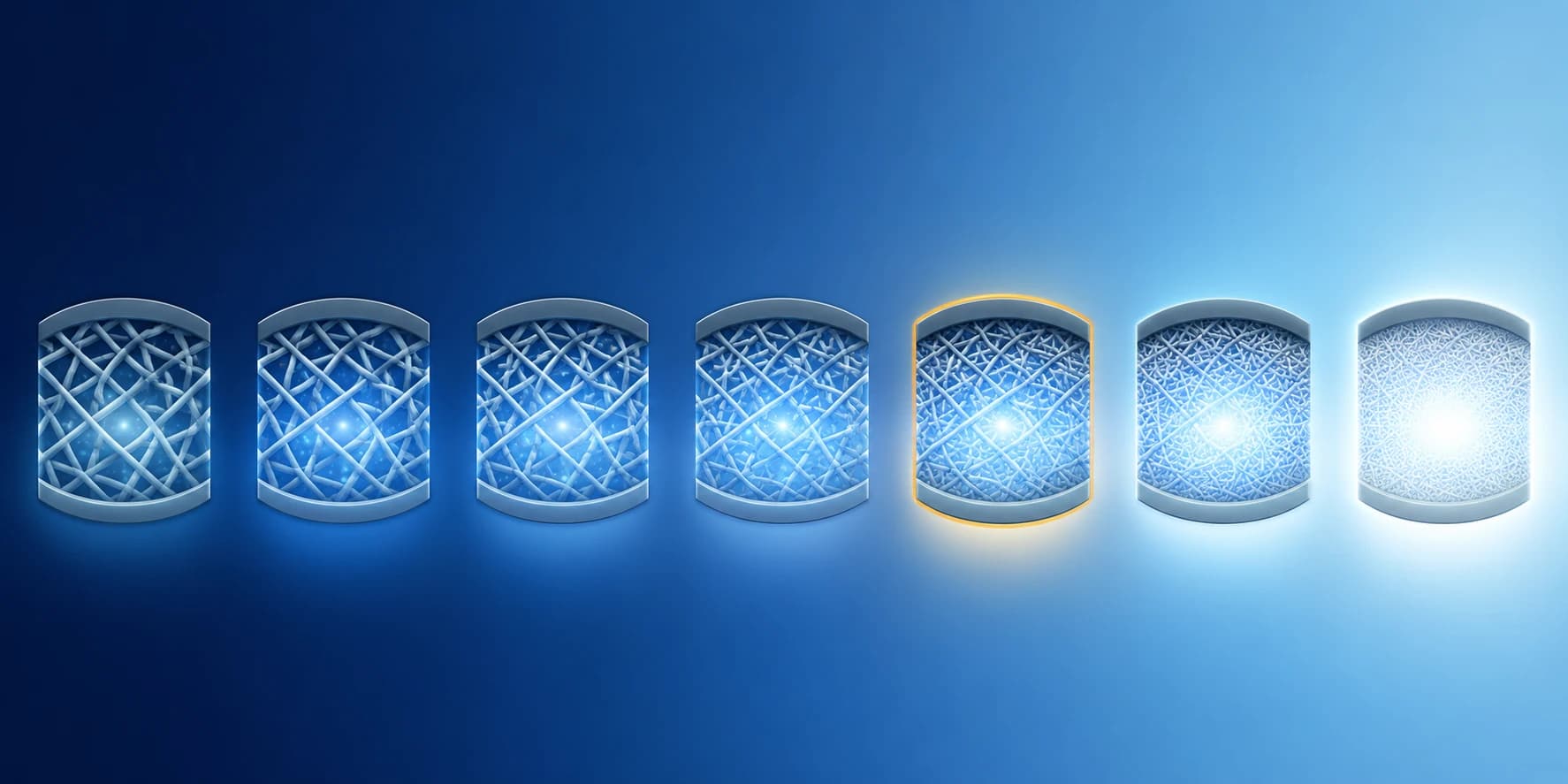
Europe uses a more granular scale under the EN 1822 standard, and it's worth understanding even if you're shopping in the US, since some manufacturers reference it directly:
| Grade | Efficiency at MPPS | What it means for a home purifier |
|---|---|---|
| E10 | ~85% | Below the HEPA threshold — sometimes marketed loosely as "HEPA-type." Meaningfully weaker than True HEPA. |
| E11 | ~95% | Still below HEPA. Better than E10, not a substitute for a genuine HEPA claim. |
| E12 | ~99.5% | The best of the non-HEPA "EPA" grades (efficient particulate air, a different category from HEPA despite the confusingly similar name) — closer to HEPA but not equivalent. |
| H13 | ~99.95% | The entry point for genuine HEPA under EN 1822 — this is the grade you want for home allergy/asthma use. |
| H14 | ~99.995% | A step up from H13, roughly 10x more efficient at the hardest-to-capture particle size — see below for whether you actually need it at home. |
| U15–U17 | 99.9995%–99.999995% | ULPA grade, used in semiconductor and pharmaceutical cleanrooms — well beyond what a home purifier needs or is typically built to achieve. |
One detail worth being precise about, since sources genuinely disagree on it: the commonly cited US "True HEPA" figure is 99.97% at 0.3 microns (the DOE standard), while the European EN 1822 H13 grade is specified at 99.95% — not an identical number, even though both are correctly described as "true HEPA" in everyday use. If a product cites a specific percentage, it's worth noting which standard it's measured against rather than assuming the two figures are interchangeable.
"True HEPA" vs. "HEPA-Type" vs. "HEPA-Style" vs. "99% HEPA"
This is the section that actually protects your wallet. "True HEPA" and an explicit H13 or H14 rating correspond to tested, defined standards. "HEPA-type," "HEPA-style," "HEPA-like," and "99% HEPA" are marketing language with no enforced minimum efficiency behind them — in practice, these terms can describe filters performing at efficiencies as low as an E10-equivalent (roughly 85%), a real gap from True HEPA's 99.95–99.97%.
On a real product listing, look for the specific phrase "True HEPA" or an explicit H13/H14 grade stated as a spec, not just implied by the product name. If a listing only says "HEPA-type filtration" or "99% HEPA filter" without a specific tested grade, treat that as a weaker, unverified claim rather than assuming it's equivalent to the real thing.
Do You Need H13, or Is H14 Overkill for a Home?
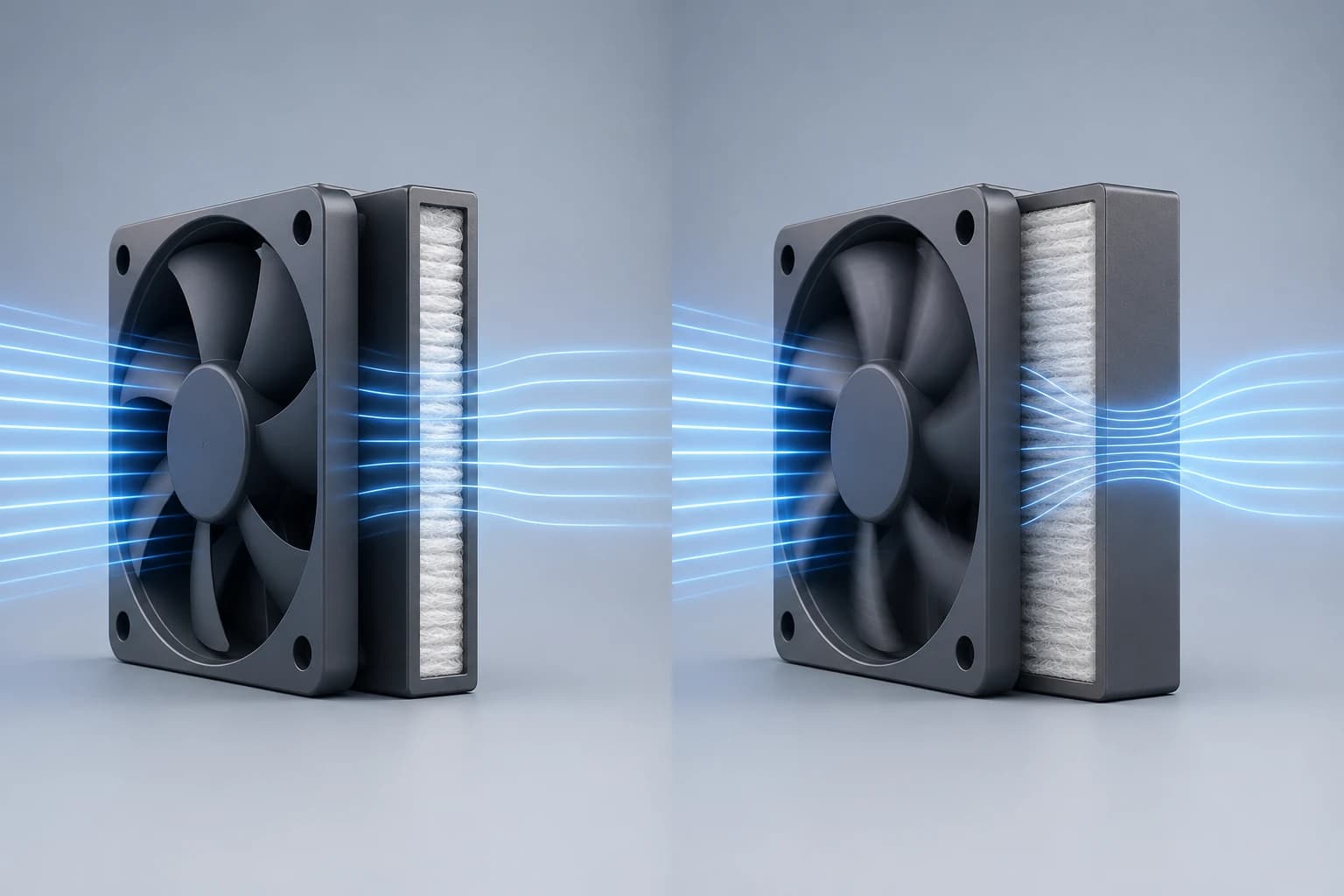
For home allergy and asthma use, H13/True HEPA is generally sufficient — it's the grade used across nearly every well-reviewed consumer allergy purifier. H14 offers roughly ten times better capture at the hardest particle size, but that extra filtration density comes with more airflow resistance, which typically means either a bigger, more power-hungry fan to compensate or reduced airflow — plus added cost. H14 is more commonly reserved for medical and pharmaceutical cleanroom applications where the extra margin genuinely matters. For a bedroom or living room, look for a well-sized H13/True HEPA unit rather than assuming H14 is automatically the better buy.
How This Connects to Allergy Relief Specifically
Once you know a listing's HEPA claim is genuine, the next question is whether the unit is actually sized for your room — a real True HEPA filter in an undersized unit still won't deliver enough CADR for a large room. See our worked example in how air purifiers work for the CADR/room-size math, and our guides on dust and mold for how the True-HEPA-vs-HEPA-type distinction plays out for those specific triggers.
FAQ
Is "True HEPA" just a marketing term, or is it regulated?
"True HEPA" itself is an informal consumer label, but it's meant to signal compliance with a real, defined standard — commonly the US DOE specification of 99.97% capture at 0.3 microns, or the European EN 1822 H13/H14 grades (99.95%/99.995%). That's different from "HEPA-type" or "99% HEPA," which have no enforced minimum efficiency standard behind them at all.
What's the difference between H11, H13, and H14 filters?
Under EN 1822, H11 isn't actually a HEPA grade — the HEPA grades start at H13 (~99.95% efficiency at the Most Penetrating Particle Size) and go up to H14 (~99.995%, roughly ten times more efficient at that hardest-to-capture size). Grades below H13 (E10, E11, E12) are sometimes called "EPA" filters (efficient particulate air — a different, lower-efficiency category despite the similar name) and are not true HEPA regardless of how they're marketed.
Do I need an H14 filter for allergies, or is H13 enough?
H13/True HEPA is sufficient for home allergy and asthma use in the view of the sources reviewed for this guide. H14 offers meaningfully higher capture at the hardest particle size but trades that for more airflow resistance and cost, and is more relevant to medical and cleanroom settings than a home bedroom or living room.
How can I tell if a cheap air purifier's HEPA claim is real?
Check the specific language on the listing: "True HEPA" or an explicit H13/H14 rating indicates a tested standard. "HEPA-type," "HEPA-style," "HEPA-like," or "99% HEPA" without a specific grade are unregulated marketing terms that can describe filters performing well below genuine HEPA efficiency. When in doubt, look for the manufacturer's spec sheet rather than trusting the product title alone.
Does a higher HEPA grade mean a noisier or more expensive purifier?
Often, yes, though not automatically. Denser filter media (like H14 versus H13) creates more airflow resistance, which a unit typically compensates for with a stronger fan — which can mean more noise and higher cost, or reduced airflow if the fan isn't upgraded to match. This is part of why H13/True HEPA is treated as the practical sweet spot for home use rather than always chasing the highest available grade.
Written by Marcus Thorne, Wellness Tools Researcher.
Sources
- U.S. Department of Energy. DOE-STD-3020-2015, Specification for HEPA Filters Used by DOE Contractors. https://www.standards.doe.gov/standards-documents/3000/3020-astd-2015
- Institute of Environmental Sciences and Technology (IEST). IEST-RP-CC001, HEPA and ULPA Filters. https://www.iest.org/Standards-RPs/Recommended-Practices/IEST-RP-CC001
- EN 1822:2019 grading scale, as summarized by filtration-industry technical references: https://airfiltration.mann-hummel.com/en-uk/insights/filter-classification/din-en-1822.html and https://www.klcintl.com/h13-vs-h14-vs-u15-vs-u16-the-definitive-hepa-efficiency-classification-guide-en-1822-data-table
- U.S. EPA. Guide to Air Cleaners in the Home, 2nd Edition. https://www.epa.gov/sites/default/files/2018-07/documents/guide_to_air_cleaners_in_the_home_2nd_edition.pdf

Marcus Thorne
A wellness tools researcher at The Wellness Voyage, focused on evaluating home health products against independent testing and real specs rather than marketing claims.