This post contains Amazon affiliate links. If you purchase through these links, I may earn a small commission at no extra cost to you.
A purifier marketed purely around "HEPA" often disappoints buyers whose main problem is a smell, and there's a real reason for that: HEPA filtration and odor removal are handled by two entirely different mechanisms, and a lot of listings don't make clear which one (or both) you're actually getting. Most household odors come from VOCs and other gas-phase molecules, and standard particle filtration — including True HEPA — cannot capture a gas molecule no matter how fine its mesh is. The feature that actually matters for smell is activated carbon, and specifically, how much of it there is.
Why "HEPA" on the Box Doesn't Mean "Removes Odors"
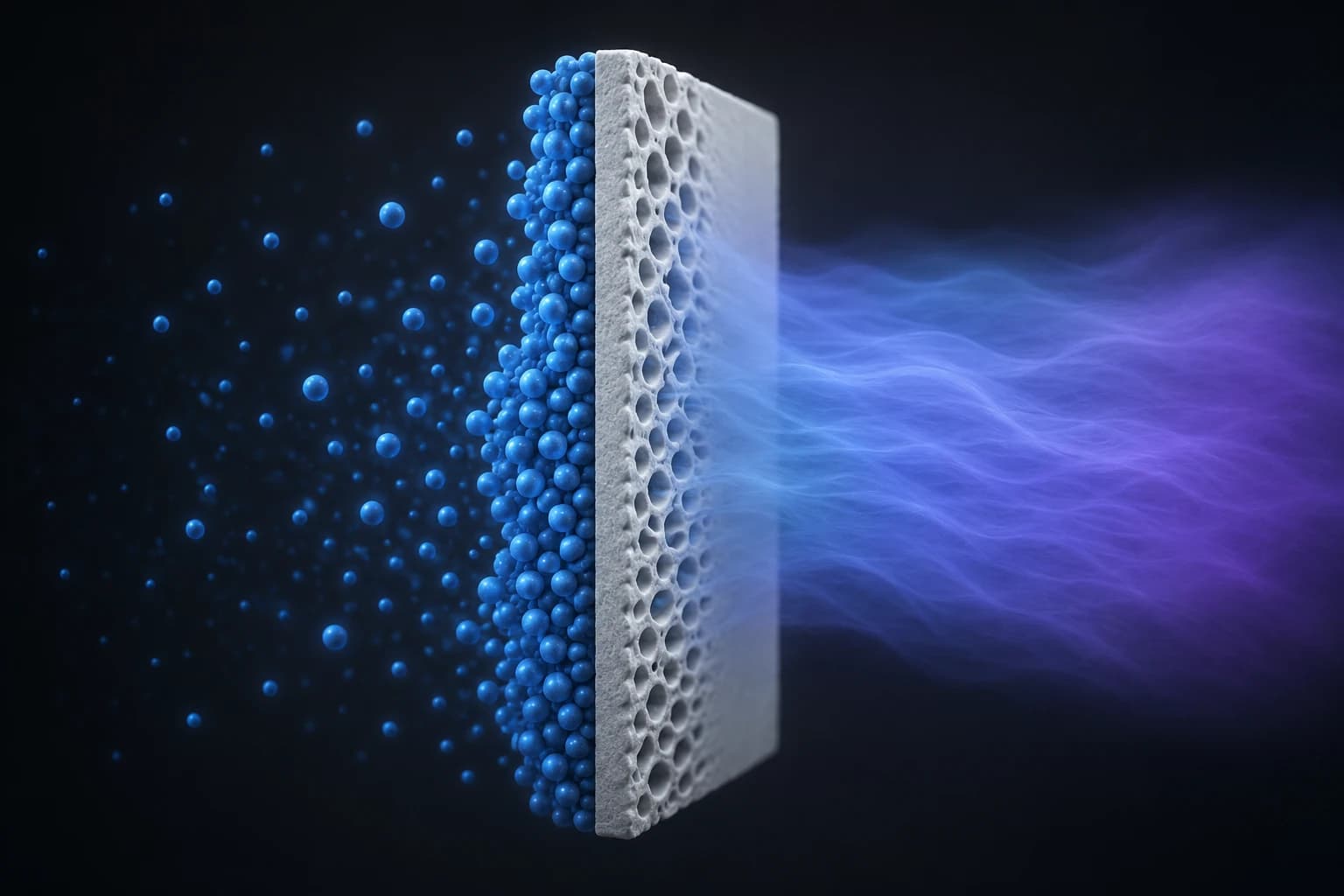
A 2024 systematic review and meta-analysis in Science of the Total Environment, which reviewed 148 field studies of portable air cleaners in detail, found a clear split: of the studies measuring fine particulate matter (PM2.5), air cleaners produced a mean reduction of 49%. Of the smaller subset of studies that specifically examined gas-phase pollutants like VOCs, the review found particle filtration alone had very little measurable effect. That's a real, independently reviewed finding, not a manufacturer's talking point — and it directly explains why a purifier marketed as "HEPA" without a genuine carbon stage often does a fine job on dust and pet dander while leaving a lingering smell completely untouched.
How Activated Carbon Actually Works, and Why the Amount Matters
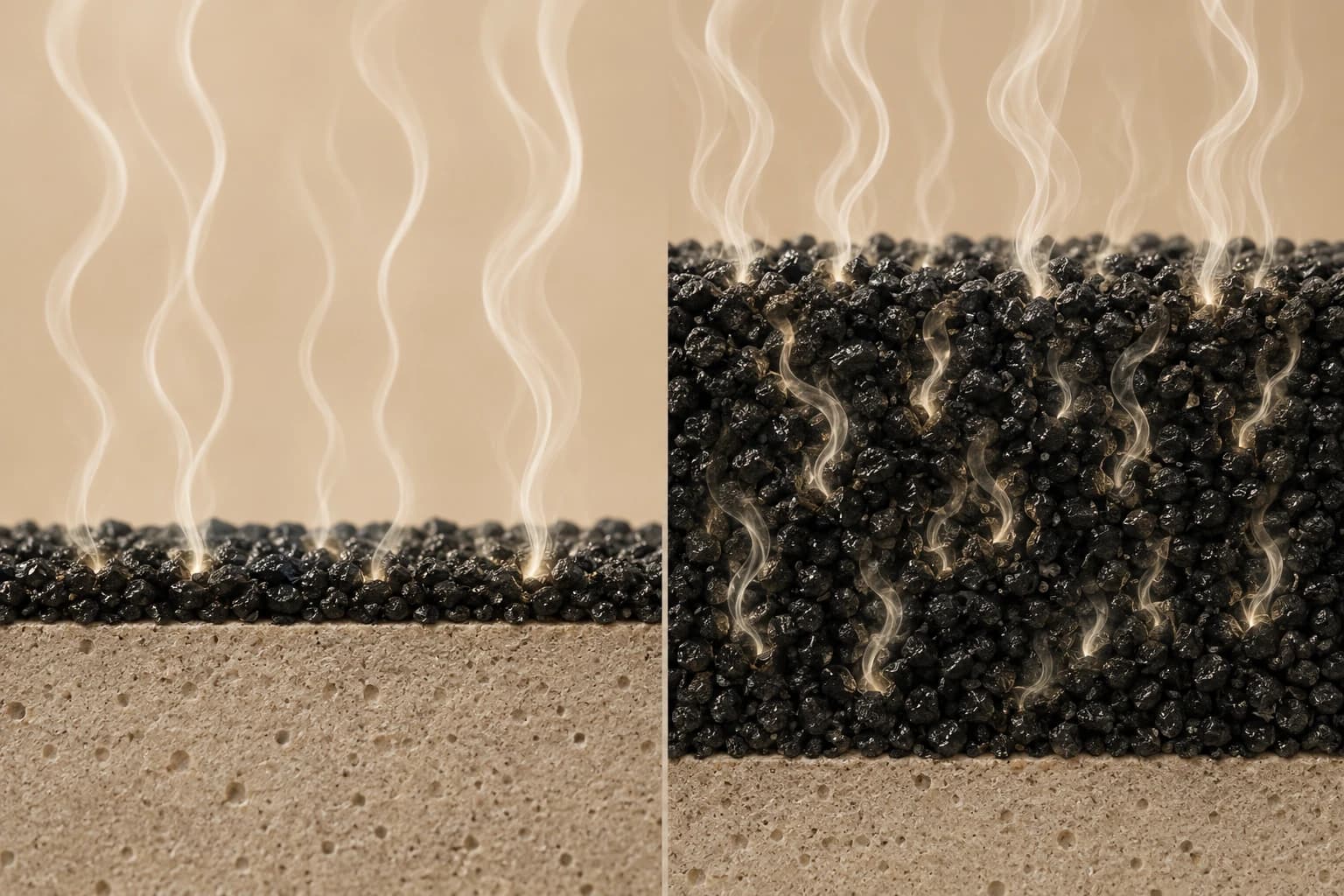
Activated carbon captures gas molecules through adsorption: its structure is so porous that even a modest volume of carbon has an enormous internal surface area, and VOC and odor molecules physically bind to that surface as air passes through. This is a fundamentally different mechanism from HEPA's particle capture, which is why the two need to be evaluated separately rather than assumed to come as a package.
The detail most listings don't disclose clearly is quantity. A filter with a thin, cosmetic layer of carbon has meaningfully less adsorption capacity and saturates faster than one built around a genuinely substantial carbon bed — the same way a small sponge holds less water than a large one, even if both are technically "a sponge." Where a product specification is available, checking for a stated carbon weight — or simply a visibly thick carbon layer rather than a thin pad — is one of the few genuinely actionable things a buyer can check before purchasing if odor removal is the priority.
Odor-Specific Guidance
Pet odor is a combined problem: dander and hair need particle filtration, while the odor component needs a real carbon stage. Continuous operation in the room your pets use most matters more than raw power here, since odor-causing compounds are constantly being replenished.
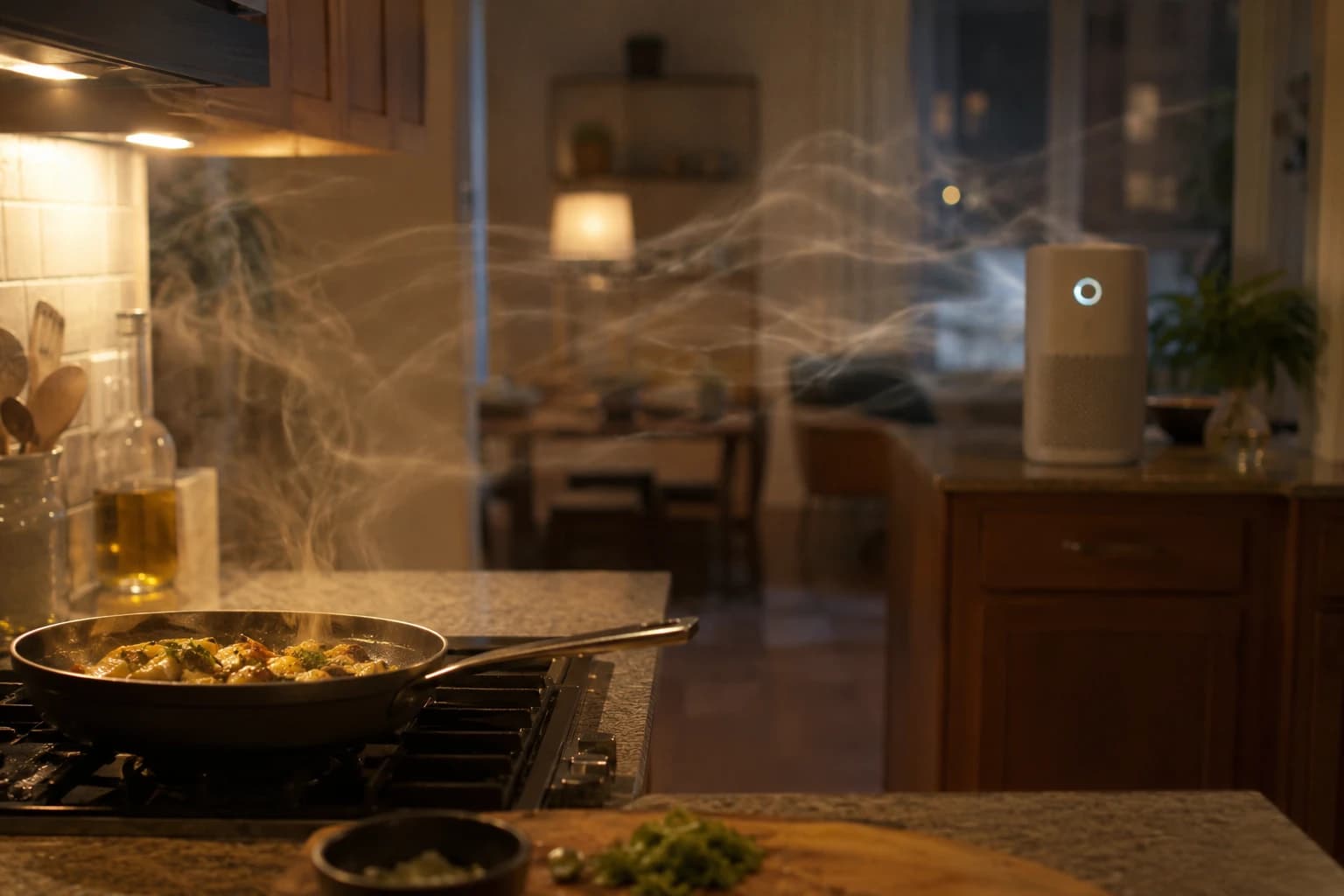
Cooking odors are also mixed — grease and smoke particles plus gas-phase compounds — so placement matters: near enough to the kitchen to help, but not directly adjacent to the stove, where grease can prematurely clog a pre-filter meant to last months.
Smoke (cigarette or wildfire) needs both fine-particle HEPA filtration and a substantial carbon stage together, since smoke is a genuine mix of fine particulates and gas-phase compounds — neither technology alone addresses the full picture.
Musty/mold odor is a special case worth calling out separately: it comes from mVOCs (microbial volatile organic compounds), the same gas-phase category that requires carbon rather than HEPA. See our guide to air purifiers and mold for the full explanation of why a HEPA-only purifier can be genuinely working on spores while doing nothing for the smell.
Maintenance Reality: Carbon Saturates
Activated carbon has a finite adsorption capacity — it doesn't filter forever on the schedule of a "set it and forget it" HEPA filter. Manufacturers commonly recommend carbon filter replacement every 3 to 6 months depending on usage and air quality, and a filter well past its rated life simply stops adding meaningful odor capture, even while the HEPA stage (if present) keeps working on particles. Treat the carbon replacement schedule as a separate maintenance item from the main filter, not an assumption that "changing the filter" covers both.
What to Actually Check Before Buying if Odor Is Your Main Concern
- A stated activated carbon component — not just "HEPA" in the product name.
- Some indication of carbon quantity or bed thickness, where the manufacturer discloses it.
- A realistic replacement schedule you're actually willing to follow — a great carbon filter that never gets replaced performs like a mediocre one.
- If odor and allergy relief both matter to you, a unit that explicitly pairs True HEPA with a substantial carbon stage rather than either alone — see our full allergy purifier roundup for picks that include a real carbon layer.
FAQ
Will an air purifier get rid of cigarette smoke smell?
Partially, and only with the right filter combination. Smoke is both fine particulates (which True HEPA captures well) and gas-phase compounds (which need a substantial activated carbon stage). A HEPA-only purifier will reduce visible smoke particles but leave much of the smell behind; a unit with both technologies addresses more of the problem, though very strong or deeply embedded smoke odor in fabric and walls may still need direct cleaning.
Do air purifiers help with pet odor and litter box smell?
Yes, when the unit combines particle filtration for dander and hair with a real activated carbon layer for the gas-phase odor component. Continuous operation in the room your pets spend the most time matters, since odor compounds are constantly replenished rather than a one-time event a filter can permanently clear.
How often do I need to replace an activated carbon filter?
Commonly every 3 to 6 months, depending on how much odor load the room generates and how continuously the unit runs — a smoky or pet-heavy environment saturates carbon faster than a low-odor space. Check your specific manufacturer's guidance, since carbon replacement is a separate schedule from the main HEPA filter in many units.
Can an air purifier make a room smell worse if the carbon filter is old?
A carbon filter that's well past its useful adsorption capacity simply stops adding meaningful odor capture — it's more accurate to say it becomes ineffective rather than actively worse than no filter at all, but either way, an old, saturated carbon filter isn't doing the job its presence on the spec sheet implies. Replacing it on schedule matters if odor control is part of why you bought the unit.
Is a separate odor-removal air purifier different from a regular HEPA one?
Not fundamentally — the difference is whether a unit includes a substantial activated carbon stage alongside HEPA, not a different category of device. Some purifiers marketed around odor removal simply disclose or emphasize their carbon component more clearly; check for carbon presence and quantity on any unit rather than assuming a "HEPA air purifier" and an "odor-removal air purifier" are different underlying technologies.
Written by Marcus Thorne, Wellness Tools Researcher.
Sources
- Ebrahimifakhar A, Poursadegh M, Hu Y, Yuill DP, Luo Y. A systematic review and meta-analysis of field studies of portable air cleaners: Performance, user behavior, and by-product emissions. Science of the Total Environment. 2024;912:168786. PMID: 38008326. https://pubmed.ncbi.nlm.nih.gov/38008326/
- U.S. EPA. Guide to Air Cleaners in the Home, 2nd Edition. https://www.epa.gov/sites/default/files/2018-07/documents/guide_to_air_cleaners_in_the_home_2nd_edition.pdf

Marcus Thorne
A wellness tools researcher at The Wellness Voyage, focused on evaluating home health products against independent testing and real specs rather than marketing claims.