This post contains Amazon affiliate links. If you purchase through these links, I may earn a small commission at no extra cost to you.
How we evaluate products → — we do not test products first-hand. This is what we check instead, and what we cannot tell you.
Crane's True HEPA line is a genuine, established product line — not a knockoff or a white-label reshuffle — sold directly by Crane USA and independently through Walmart, The Home Depot, and Staples. Real owner reviews across all three retailers are consistently positive on quiet operation and easy filter changes, with several reviewers specifically mentioning less sneezing and congestion, including for a child managing asthma. The honest caveat: no independent lab (Consumer Reports partially excepted, see below) has published a comprehensive third-party test of this specific line, so most of what you can verify comes from the manufacturer's own specs plus genuine, if unverified-by-a-lab, customer experience.
The Lineup: What Each Model Actually Offers
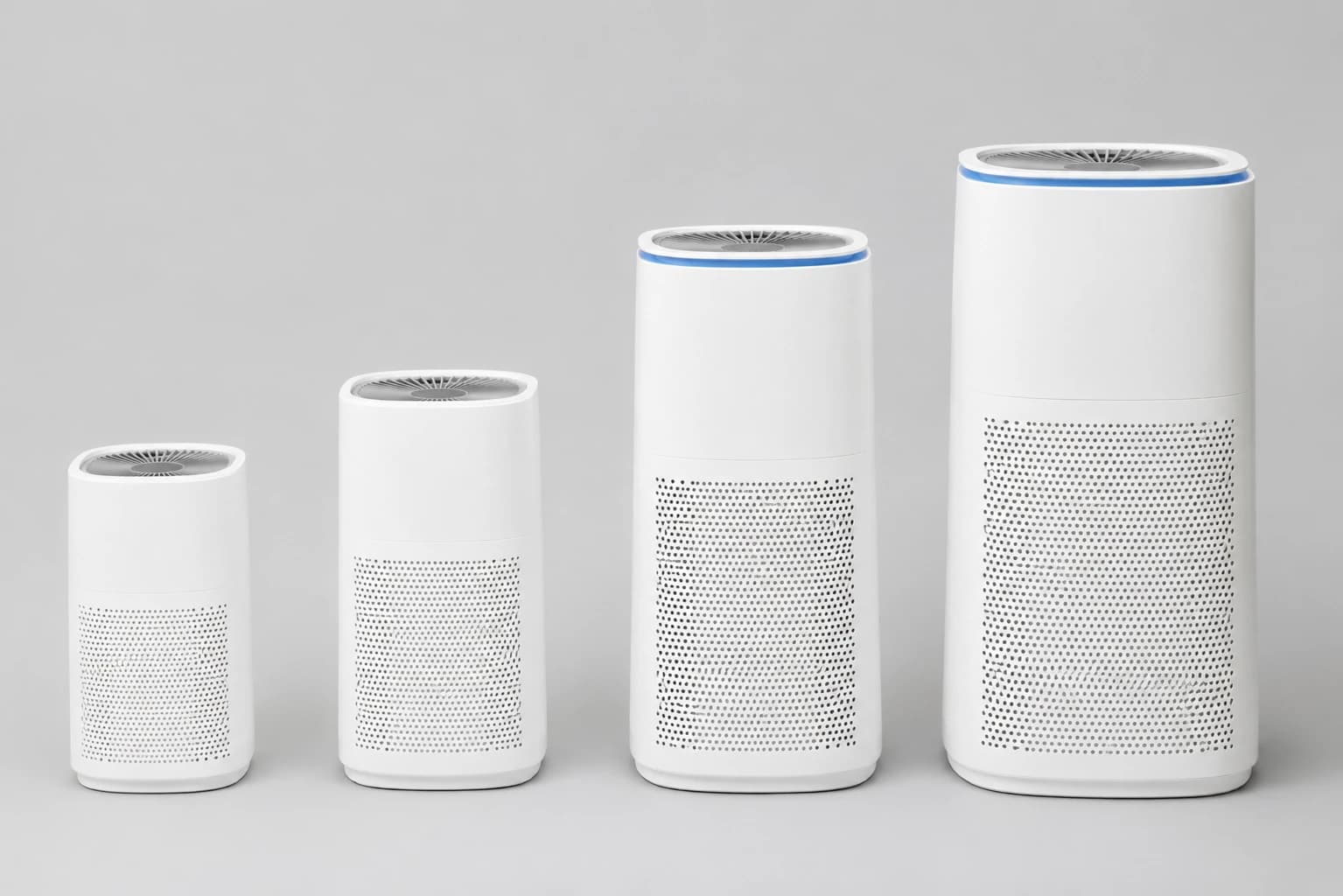
Crane's True HEPA purifiers come in a few distinct configurations rather than one single model, and the difference that matters most is room size and whether the germicidal UV feature is included:
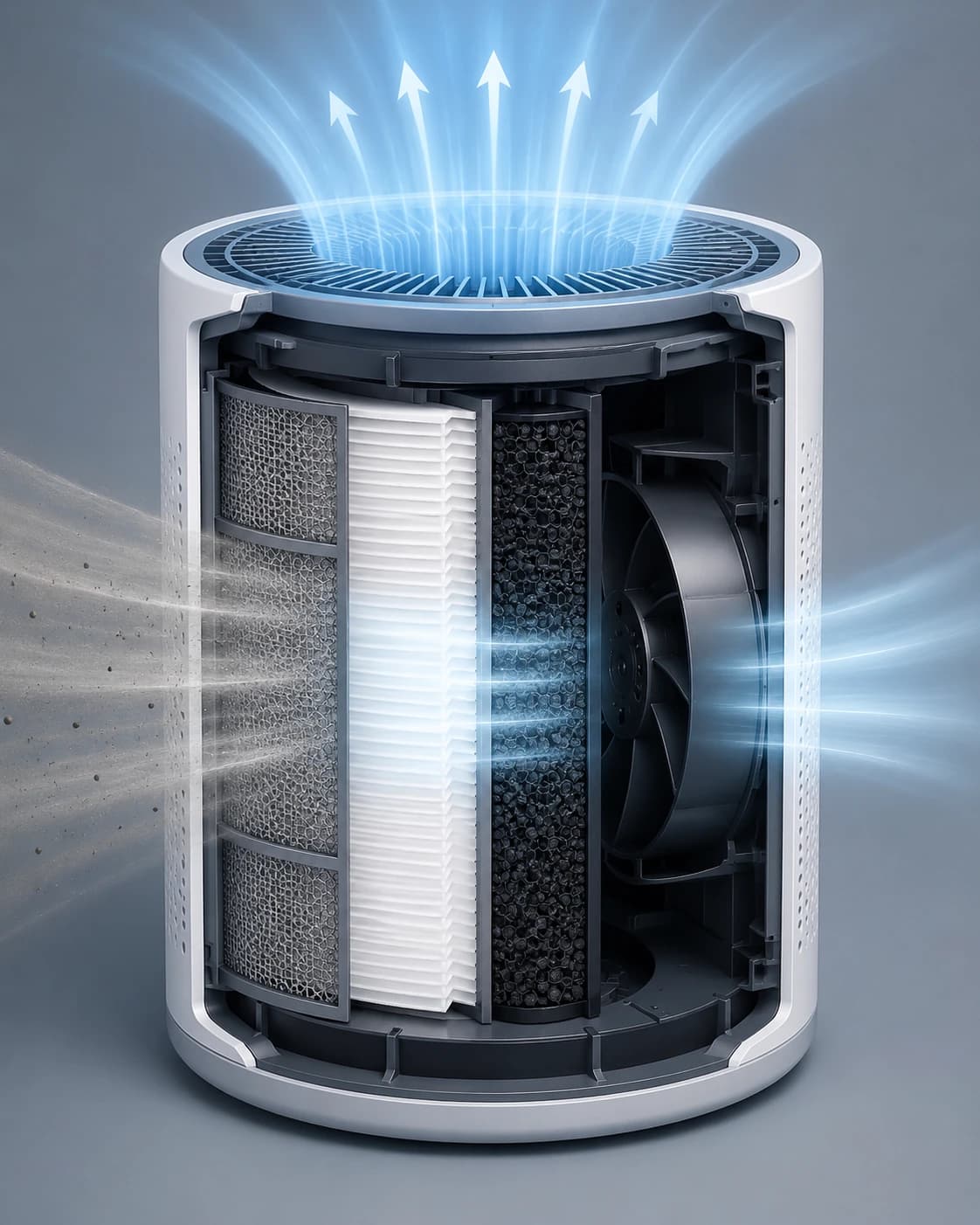
- EE-5067 — True HEPA, up to 250 sq ft, 3-stage filtration (pre-filter, True HEPA, activated carbon), no UV light.
- EE-5068 — True HEPA with Germicidal UV Light, rated up to 300 sq ft.
- EE-5069 — True HEPA with Germicidal UV Light and a built-in air quality monitor, rated up to 500 sq ft — the largest-room option in the line.
- EE-7002AIR — marketed for allergies, dust, smoke, and pet odors, described by reviewers as lightweight and simple to operate; worth noting that some retailer listings describe this specific model's filter as "HEPA-type" rather than explicitly "True HEPA" — a distinction that matters, since HEPA-type is an unregulated marketing term, not the same tested standard as True HEPA. If that distinction matters to you, verify the exact filter language on the specific listing before buying this model over the EE-5067/68/69.
Crane's own product pages state the True HEPA models remove up to 99.97% of airborne particles including dust, pollen, pet dander, mold spores, and smoke — that's a manufacturer spec, not an independently confirmed lab result, and should be read as such.
What Real Owners Say
Genuine customer reviews across Walmart, Home Depot, and Staples consistently praise quiet operation — several reviewers specifically call it good for bedrooms and nurseries — along with easy filter changes, compact size, and perceived allergy relief. Multiple reviewers mention reduced sneezing or congestion for themselves or a family member, including at least one account involving a child with asthma.
It's not universal praise, and the mixed data point is worth including honestly rather than cherry-picking only the positive reviews: at least one verified Home Depot reviewer of the UV-light variant reported that the unit did not fully eliminate a strong pre-existing odor — a rental home's lingering carpet and smoke smell — despite the purifier otherwise working as expected on particles. That's consistent with a pattern covered in our guide to air purifiers and smells: HEPA filtration handles particles well, but a strong, embedded odor needs a substantial activated carbon stage to actually address the gas-phase component, and a thinner carbon layer in a compact unit may not be enough for a severe pre-existing smell.
The Germicidal UV Feature: What It Claims, and the Honest State of the Debate
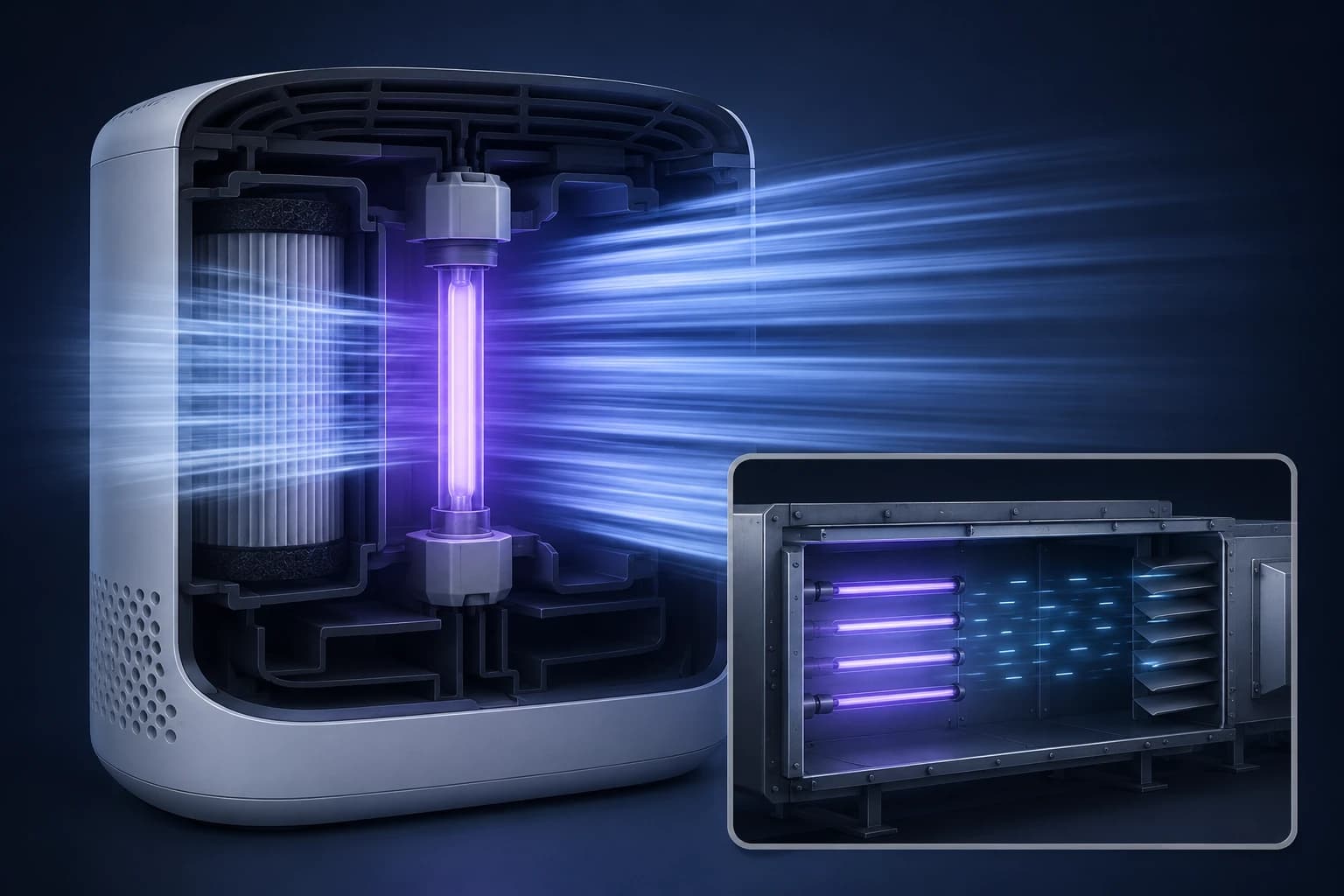
The UV-light variants (EE-5068, EE-5069) add a germicidal UV lamp intended to target bacteria and germs in the air alongside HEPA particle filtration. This is a manufacturer claim, and it's worth knowing that UV-C efficacy in fast-airflow residential units is a genuinely debated point in the wider air-purifier industry — the concern raised by some independent sources is that air moving quickly past a UV lamp in a compact consumer unit may not get enough exposure time for the UV dose to meaningfully affect microorganisms, compared to the much slower airflow and higher-intensity lamps used in dedicated germicidal UV installations. We're not aware of a dedicated independent test of UV-C efficacy specific to Crane's implementation, so this is presented as an open industry question rather than a settled verdict either way — if the UV feature is a deciding factor for you, treat it as a bonus on top of genuine HEPA filtration rather than the main reason to buy.
Where the Crane Line Fits vs. Our Full Allergy Roundup
Crane's True HEPA line is best understood as a compact, budget-to-mid-range bedroom option — not a large-room or customizable-filtration competitor to something like the Levoit Core 600S-P or Rabbit Air A3 covered in our full allergy purifier roundup. If your room is on the smaller side and quiet, no-fuss operation matters more to you than app connectivity or swappable specialty filters, Crane is a reasonable fit. If you need to cover a large or open-concept room, or want independently tested performance data with published results freely available, the picks in our full roundup have more third-party testing behind them.
One data point worth knowing: Consumer Reports does maintain a review page for the Crane EE-5068 specifically, meaning it is included in CR's test program — full numeric scores appear to require an active CR membership to view, so we can't cite a specific score here, but it's worth checking directly if you have access, since it's the one piece of independent lab data that exists for this line.
Who Should (and Shouldn't) Buy It
Good fit: bedrooms and nurseries where quiet operation matters, buyers who want a straightforward, no-app HEPA purifier at a moderate price, and anyone whose main concern is dust, pollen, and dander rather than a severe pre-existing odor problem.
Reconsider if: you're dealing with a strong, embedded odor (like the rental-carpet case above) and odor removal is your primary goal — check the specific carbon stage carefully or consider a unit built more explicitly around odor control. Also reconsider if you need to cover a large or open-concept room; the EE-5069's 500 sq ft rating is the ceiling of this line.
FAQ
Does the Crane True HEPA air purifier really remove 99.97% of particles?
That figure comes from Crane's own product specifications for the True HEPA models (EE-5067, EE-5068, EE-5069), consistent with the general True HEPA standard. We did not find an independent lab test that re-confirms this specific number for Crane's line, so treat it as a manufacturer claim consistent with the True HEPA standard rather than an independently re-verified result — see our True HEPA explainer for what that standard actually requires.
Is the Crane air purifier good for a nursery or baby's room?
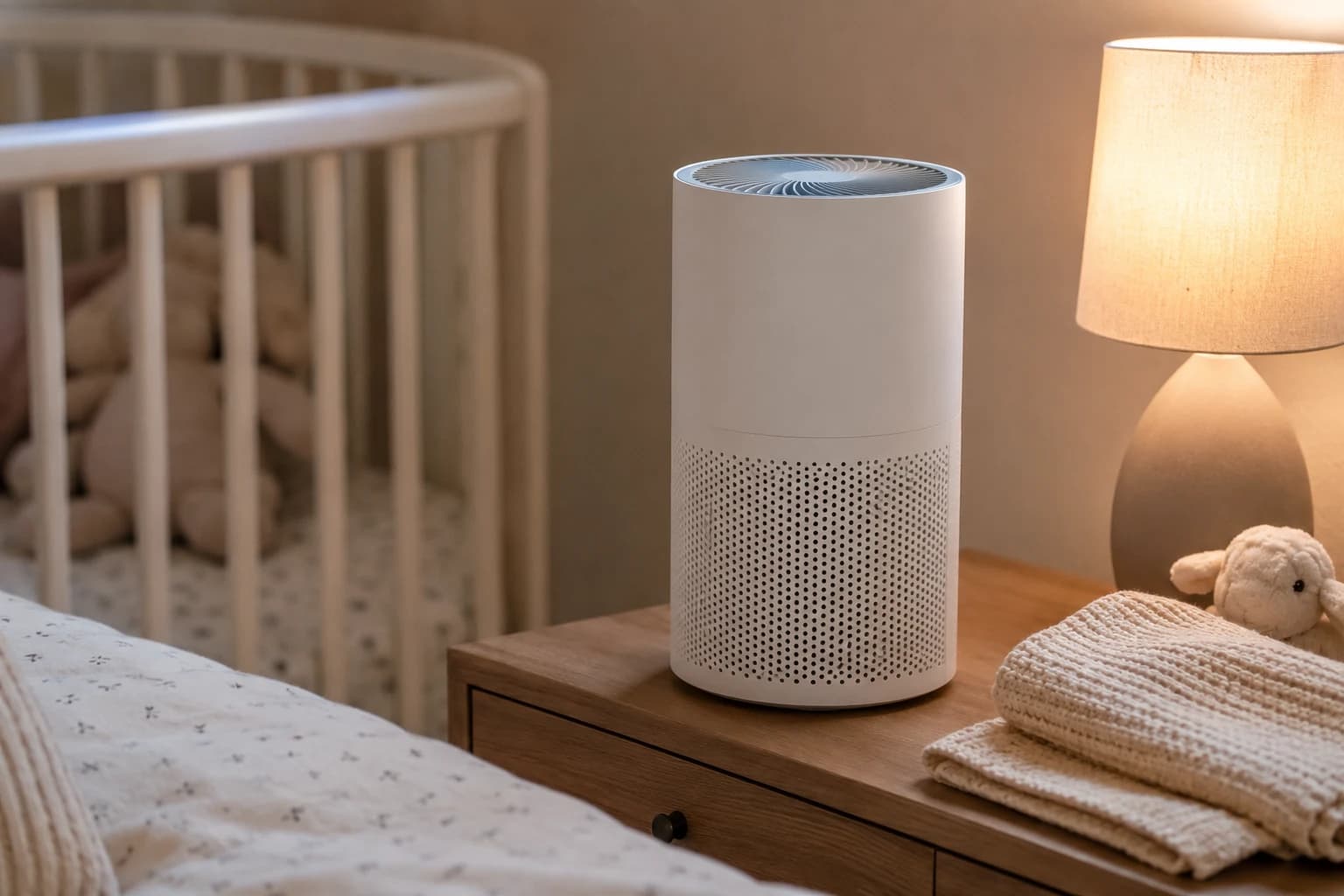
Real owner reviews across multiple retailers specifically praise quiet operation as suitable for bedrooms and nurseries, and Crane also sells a baby-specific line (Crane Baby) with the same underlying True HEPA technology. As with any device in a nursery, follow the manufacturer's placement and safety guidance.
Does the Crane True HEPA air purifier produce ozone?
Crane's True HEPA models are filtration-based (HEPA plus activated carbon), not ionizers or ozone generators, so they aren't in the category the EPA and CARB specifically warn about. If you're considering a UV-light variant, that's a separate germicidal feature, not an ozone-generating mechanism.
How often do I need to replace the Crane filter?
Check the specific model's manual for its rated filter life, since this varies by model and usage. As a general rule across HEPA purifiers, the main filter is typically rated for several months of continuous use, while an activated carbon component (where present) may need more frequent replacement — see our odor guide for why carbon saturates faster than the HEPA stage.
Is the Germicidal UV Light version worth the extra cost?
That depends on how much weight you put on an unsettled industry debate. UV-C's effectiveness in a fast-airflow residential unit is genuinely disputed among independent sources, without a dedicated test of Crane's specific implementation that we could locate. If the True HEPA filtration and larger room coverage of the EE-5068/5069 already fit your needs, the UV feature is reasonably treated as a bonus rather than the deciding factor.
Written by Marcus Thorne, Wellness Tools Researcher. Product specifications are sourced from Crane's own product pages and cross-referenced retail listings as of July 2026; customer experience is drawn from verified reviews on Walmart, Home Depot, and Staples. No independent lab test of this specific product line beyond Consumer Reports' listing (content access-restricted) was found in this research. Crane did not pay for or influence this review.
Sources
- Crane USA. True HEPA Tower Air Purifier product page. https://crane-usa.com/product/true-hepa-tower-air-purifier/
- Crane Baby. Air purifier product page. https://crane-baby.com/product/air-purifier-small-room-size/
- U.S. Department of Energy. DOE-STD-3020-2015, Specification for HEPA Filters Used by DOE Contractors. https://www.standards.doe.gov/standards-documents/3000/3020-astd-2015
- Consumer Reports. Crane EE-5068 air purifier listing (test program inclusion confirmed; full scoring requires membership access). https://www.consumerreports.org/appliances/air-purifiers/crane-ee-5068/m402823/

Marcus Thorne
A wellness tools researcher at The Wellness Voyage, focused on evaluating home health products against independent testing and real specs rather than marketing claims.