This post contains Amazon affiliate links. If you purchase through these links, I may earn a small commission at no extra cost to you.
How we evaluate products → — we do not test products first-hand. This is what we check instead, and what we cannot tell you.
If you searched "MK0 air purifiers," you're almost certainly looking for AROEVE's MK0-numbered lineup — MK01, MK03, MK04, MK06, and others — a real, established budget brand sold on Amazon and through aroeve.com. The MK01 is the flagship and the one we're focusing on here, and we're going to lead with the least comfortable part first rather than bury it: an independent lab test found the MK01 failed to clear a test room's air the way its H13-filter marketing and its wall of near-5-star reviews would suggest. We think that's the single most useful thing you can know before buying it, and we're not going to soften it into vague both-sides language just because this page carries an affiliate link.
What AROEVE Claims About the MK01
AROEVE's own product page describes the MK01 as filtering smoke, pollen, dander, and hair, with coverage up to 287 sq ft, a sleep-mode noise level as low as 22 dB, an aroma pad for essential oils, and a 2,000-hour filter-life indicator with a reset button. Worth flagging precisely: AROEVE's own listing does not explicitly state an "H13" HEPA grade on that specific product page — the H13 claim circulates in third-party marketing and reviews rather than appearing verbatim on the manufacturer's own spec sheet we reviewed. AROEVE also doesn't publish a CADR figure for the MK01, which itself is notable, since CADR is the actual number that determines real-world performance rather than a filter grade alone.
What Independent Testing Actually Found
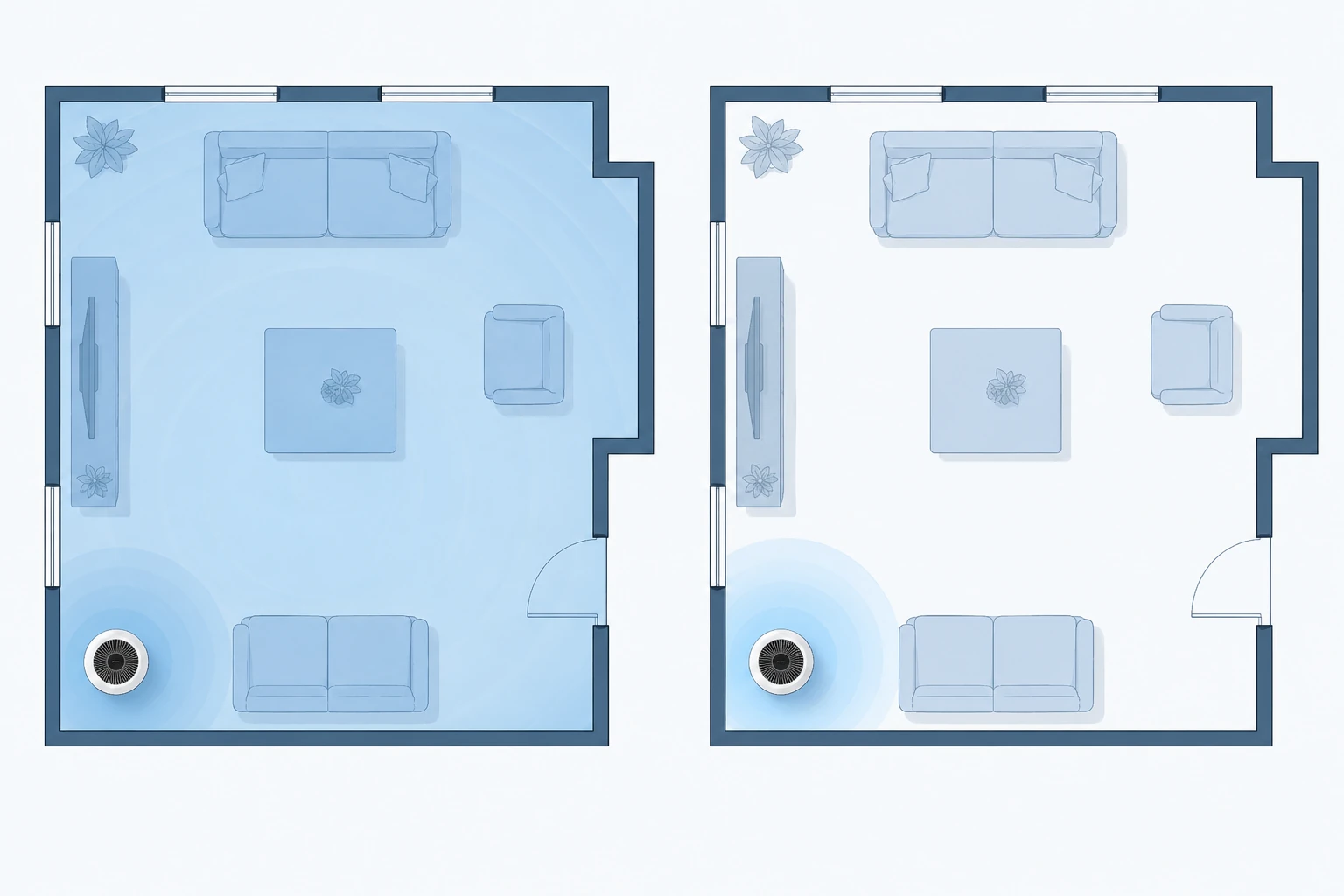
HouseFresh, an outlet whose stated editorial policy is declining free review units specifically to avoid the bias that creates, ran a controlled home-office fog test on the MK01 — introducing incense-stick particulates, then measuring PM1.0/PM2.5/PM10 clearance with a PurpleAir sensor while tracking energy use and noise. The result: the unit took 2 hours and 43 minutes to bring particulate levels down to WHO-guideline breathable air, and did not fully clear pollutants within the 5-hour test window. HouseFresh estimated the MK01's real-world CADR at roughly 25 CFM — and, based on that measured output, recommended a rated coverage area of around 39 sq ft, a fraction of AROEVE's own 287 sq ft claim. HouseFresh's published verdict was blunt: they called it one of the worst-performing air purifiers they've tested, and recommended a competing model priced only modestly higher instead.
Consumer Reports independently includes the AROEVE MK01 in its official test program, in the medium-room category (150–350 sq ft) alongside comparable units like the Molekule Air Mini+ and Bionaire BAP9260W — testing dust, pollen, and smoke removal at low and high fan speed, plus noise. CR's specific numeric scores for the MK01 require an active CR membership to view in full; we're noting the access limitation honestly rather than guessing at a score we can't see. What matters here is simply that a second, well-resourced independent lab found this specific product worth including in its formal test program at all — it's not an obscure product nobody's checked.
We want to represent both of these fairly: HouseFresh's fog-clearance test is one outlet's specific methodology and result, not a universal, unappealable verdict — but it's a real, described, controlled test, not a vague impression, and no competing independent source we found contradicts it.
Why a Small H13-Rated Unit Might Underperform in Practice
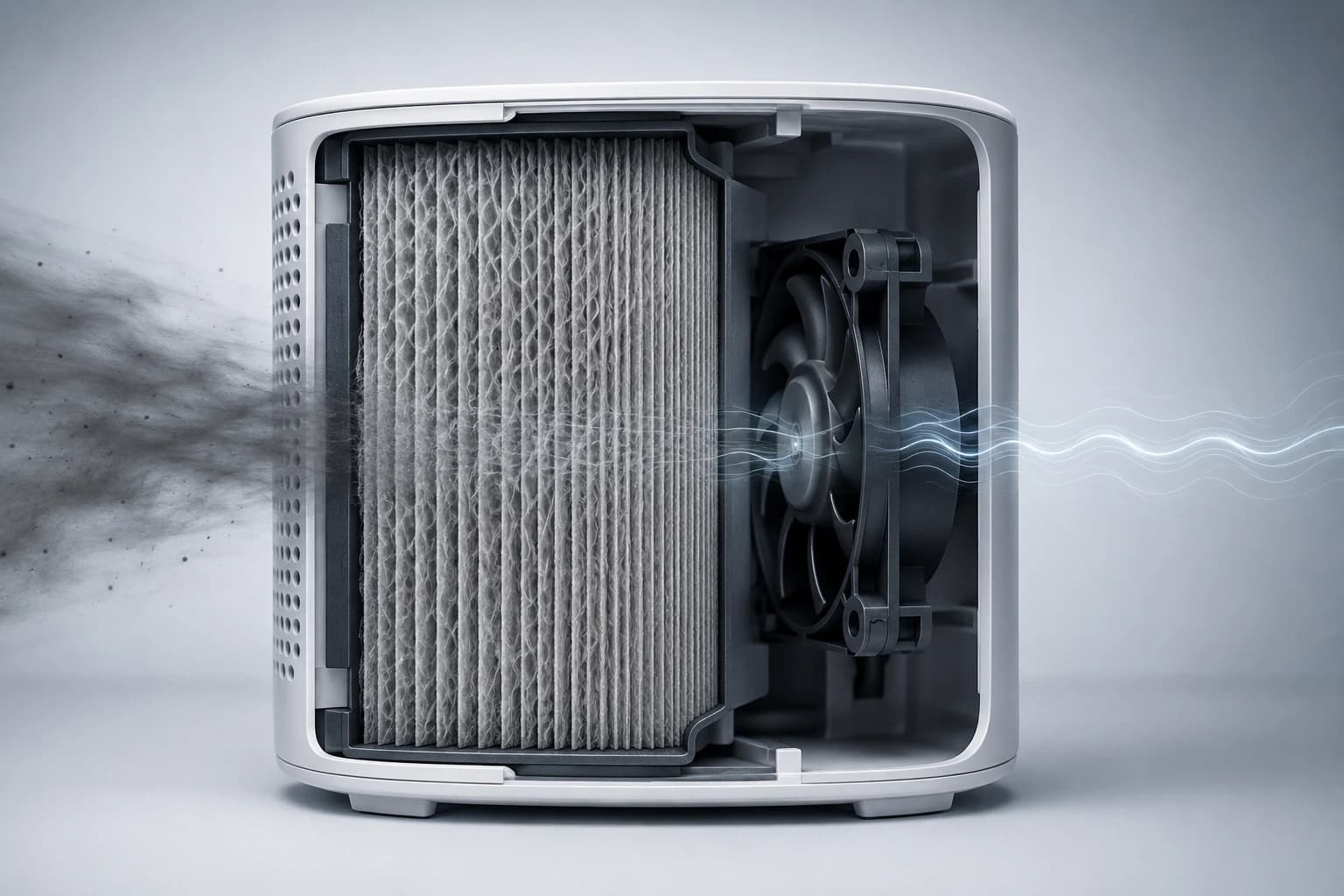
HouseFresh's review offers a specific, genuinely useful mechanical explanation, which we're paraphrasing and attributing directly to them rather than presenting as our own finding: higher-grade HEPA media (like an H13 rating) is denser and generally needs more airflow and fan power to move a meaningful volume of air through it efficiently. Pairing a high-grade filter claim with a small, low-power unit is an unusual design trade-off — the filter media itself may be capable of high capture efficiency, but if the fan can't push enough air through it fast enough, the unit's real-world clearance performance suffers regardless of what the filter grade on the box implies. That tension is a plausible, concrete explanation for the gap between the MK01's marketing and HouseFresh's measured results — see our True HEPA explainer for why a filter grade alone never tells you the whole story without a real CADR number alongside it.
The Incentivized-Review Pattern Worth Knowing About

HouseFresh's reviewer noted a specific suspicion worth passing along carefully: the volume of near-identical, highly positive YouTube reviews for the MK01 looked, to them, like a pattern consistent with creators having received free units — a suspicion they raised specifically in contrast to their own stated policy of declining free review products. We want to be precise about what this is: it's HouseFresh's own observation and policy contrast, not a proven fact we independently verified about any specific other reviewer's arrangement with AROEVE. It's included here because it's a genuinely useful piece of context for interpreting a wall of glowing reviews, not because we can confirm it as settled fact.
Is There a Good Use Case for the MK01 Anyway?
Even with HouseFresh's finding in mind, it's worth being fair rather than dismissive: at roughly 39 sq ft of real-world effective coverage by HouseFresh's own estimate, the MK01 may reasonably suit a small desk or personal workspace rather than a bedroom or living room. What it's not well-suited for, based on the independent testing available, is the whole-bedroom allergy-relief role it's often marketed and reviewed for.
What to Buy Instead If Independent-Tested Performance Is the Priority
If allergy relief in an actual bedroom or living room is your goal, our full allergy purifier roundup covers picks with published CADR figures from Forbes Vetted and Consumer Reports testing, including budget options in a similar price range to the MK01 that come with real, independently measured performance data behind them.
For reference, in case you already own or are evaluating the specific unit discussed here, the AROEVE MK01 is sold on Amazon under ASIN B09FJSJQ95 (white) and B09GM8Y8BN (black) — we're not featuring a prominent "buy now" link to it above, given the independent test results discussed in this review.
FAQ
What does "MK0" mean on an AROEVE air purifier?
It refers to AROEVE's MK0-numbered product line — MK01, MK01A, MK03, MK04, MKD05, MK06, MK07, MK08W, MK09W, and MK12 — a budget air purifier lineup sold on Amazon and aroeve.com. "MK0 air purifiers" as a search term is almost always shorthand for this specific line, most often the flagship MK01.
Is the AROEVE MK01 actually a true HEPA filter?
AROEVE's own current product page for the MK01 describes its filtration for smoke, pollen, dander, and hair without stating an explicit H13 grade on that specific page, even though "H13" appears in third-party marketing and reviews for the product. We'd recommend checking the exact current listing language directly, and treating an unstated grade as a reason for caution rather than assuming it meets the True HEPA standard — see our True HEPA vs. HEPA-type explainer for why that distinction matters.
Did Consumer Reports test the AROEVE MK01?
Yes — it's included in Consumer Reports' official air purifier test program in the medium-room category. Full numeric scores require a CR membership to view; we can confirm its inclusion in the test program but not cite specific scores we couldn't access.
Why does the AROEVE MK01 have so many 5-star reviews if independent testing found problems?
HouseFresh's reviewer raised a specific concern that the volume of glowing YouTube coverage looked consistent with creators receiving free review units — a pattern they contrasted with their own policy of declining them. We can't independently confirm that as fact about any specific reviewer, but it's a reasonable piece of context: a large positive review volume doesn't substitute for a controlled, independent lab test, which is exactly the gap HouseFresh's fog-clearance test was designed to check.
What's a better alternative to the AROEVE MK01 for allergies?
For a similar or only modestly higher price with real, independently measured performance data, see the budget picks in our full allergy purifier roundup — the Levoit Core 300-P, for instance, is priced in a comparable range and carries a documented True HEPA grade and CADR figure from independent testing.
Written by Marcus Thorne, Wellness Tools Researcher. Independent test findings in this review are sourced directly to HouseFresh's published test and Consumer Reports' test program listing, not to in-house testing by this site. AROEVE did not pay for or influence this review.
Sources
- HouseFresh. AROEVE MK01 Air Purifier Review. https://housefresh.com/aroeve-mk01-review/
- Consumer Reports. AROEVE MK01 Air Purifier test program listing. https://www.consumerreports.org/appliances/air-purifiers/aroeve-mk01/m409601/
- AROEVE. MK01 Air Purifier product page. https://aroeve.com/products/aroeve-air-purifiers-mk01

Marcus Thorne
A wellness tools researcher at The Wellness Voyage, focused on evaluating home health products against independent testing and real specs rather than marketing claims.