This post contains Amazon affiliate links. If you purchase through these links, I may earn a small commission at no extra cost to you.
Short answer: yes and no, depending on what you mean by "work." Air purifiers reliably and measurably reduce airborne particle concentrations — that part is well-established and not seriously disputed. Whether that translates into you personally sneezing less is a smaller, more variable effect that depends on your specific trigger, correct sizing, and whether your exposure is mostly airborne or from things you touch and sit on. If a site tells you an unqualified "yes" and immediately pivots to product links, that's a sign it's skipping the nuance this question actually deserves.
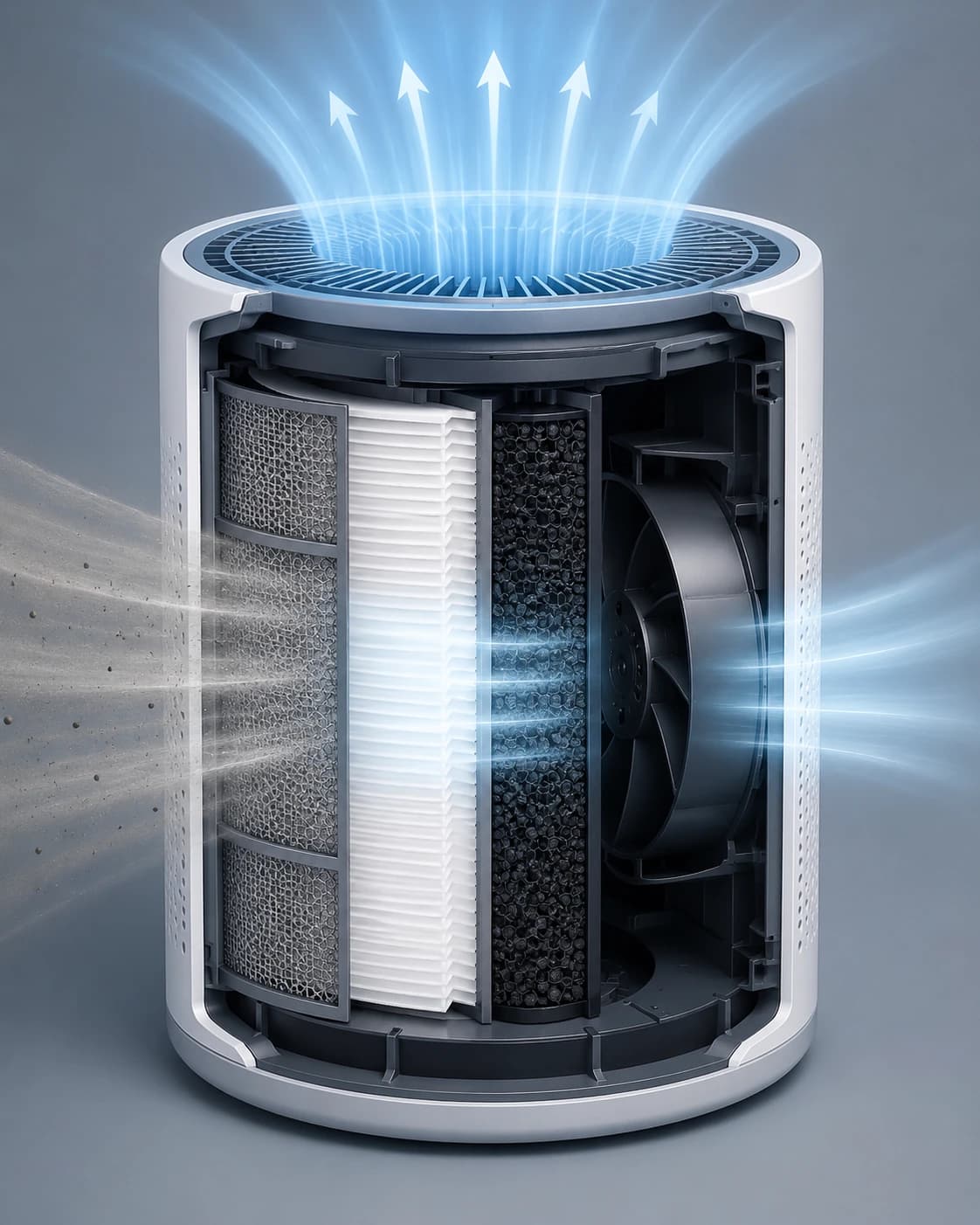
What's Well-Established: Air Purifiers Reduce Airborne Particle Counts
This part of the question has strong, consistent evidence behind it. A 2024 systematic review and meta-analysis in Science of the Total Environment, which screened over 500 papers and reviewed 148 in detail, found that of 83 studies measuring PM2.5 (fine particulate matter), air cleaners produced a mean reduction of 49% (with meaningful variation between studies, standard deviation 20 percentage points). That's a real, independently reviewed number, not a manufacturer claim.
The EPA's own guidance is consistent with this: portable air cleaners with HEPA filtration can meaningfully reduce indoor particle concentrations when properly sized for the room and run continuously. A 2020 study in Environment International measured HEPA purifiers against particles in the 18–514 nanometer range and found removal efficiency that varied by particle size — notably, efficiency was lowest in the 200–250 nanometer range, a useful reminder that "HEPA removes particles" isn't a flat, single number across every size class, even though overall performance was strong.
What's More Mixed: Symptom Relief Specifically
This is where honest coverage of this topic gets more complicated — and where a lot of competing content quietly oversells.
A June 2024 meta-analysis in the World Allergy Organization Journal looked at air purification as part of dust mite allergen avoidance strategies for allergic asthma. The finding worth knowing: nocturnal air purification of the breathing zone was associated with a real improvement in asthma symptom scores (a mean difference of −0.7 on a symptom scale, statistically significant), but that result came from just two trials totaling 24 patients — a genuinely small evidence base. The same review found that HEPA filtration combined with allergen-impermeable bedding covers performed considerably better together than HEPA alone. The honest takeaway isn't "air purifiers don't help with asthma" — it's that the specific evidence for symptom improvement is real but thin, and pairing filtration with other allergen-reduction steps outperforms filtration by itself.
A smaller 2021 study (n=38) in Allergologia et Immunopathologia found that six months of HEPA air purifier use was associated with decreased indoor dust mite allergen levels (Der p1 and Der f1) and improved asthma control scores (ACT/C-ACT) in patients with allergic asthma. The same study measured exhaled nitric oxide (a marker sometimes used as a proxy for airway inflammation) and found no significant change there — worth noting so the finding isn't overstated as a complete picture of lung function improvement.
On the allergic rhinitis side, a multicenter, randomized, double-blind, placebo-controlled study in the Yonsei Medical Journal found active HEPA purifiers significantly reduced both indoor particulate concentrations and medication scores compared to a placebo device, though the improvement in self-reported symptom scores was smaller than the improvement in air quality itself. A related rostrum from the American Academy of Allergy, Asthma & Immunology's Indoor Allergen Committee, published in the Journal of Allergy and Clinical Immunology, reached a similar conclusion: filtration reduces airborne allergen load and works best as one part of a broader strategy, not a standalone fix.
Put plainly: "does it reduce what's floating in the air" has strong evidence behind it. "Will it noticeably reduce your specific symptoms" is real but more variable, and depends heavily on how much of your exposure is airborne versus from bedding, carpets, and direct contact with a pet.
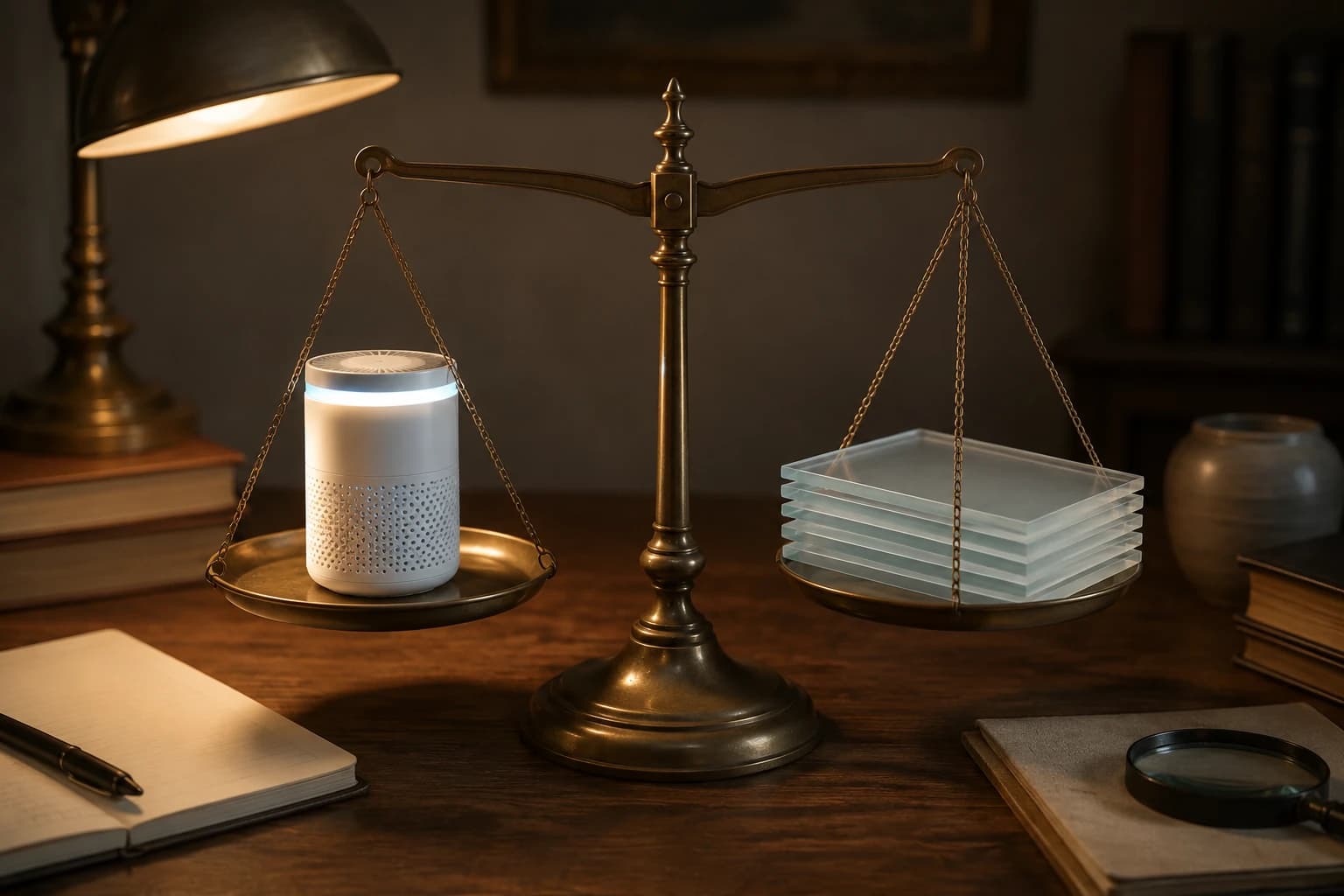
Are Air Purifiers Worth It? A Framework, Not a Blanket Yes
Rather than a universal yes or no, here's a more honest way to think about it:
Likely worth it if:
- Your main trigger is genuinely airborne (pollen, dust, smoke, pet dander in the air) rather than purely surface/contact-based.
- You size the unit correctly for the room using CADR and ACH — see our how air purifiers work guide for the actual math.
- You run it continuously in the room you spend the most time in, typically the bedroom overnight.
Less likely to be worth it, or worth reconsidering, if:
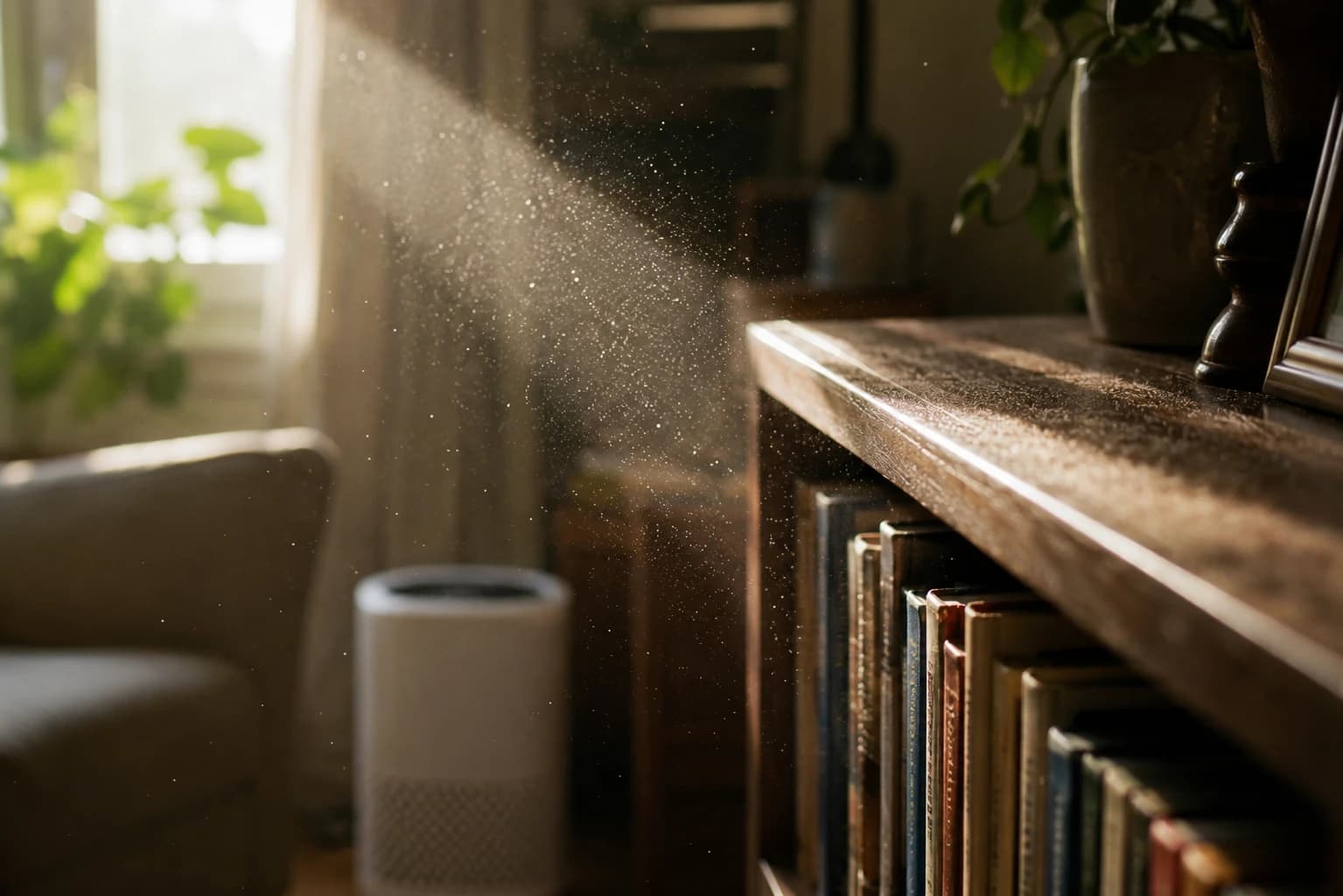
- Your main problem is settled dust or dander on furniture and bedding — a purifier can't retroactively pull that back into the air to filter it; see our dust-specific guide for what actually helps there.
- You buy an undersized or underpowered unit and expect it to handle a room well beyond its rated coverage.
- You're expecting it to be a complete, standalone fix rather than one part of a broader strategy alongside source control.
What an Air Purifier Won't Do
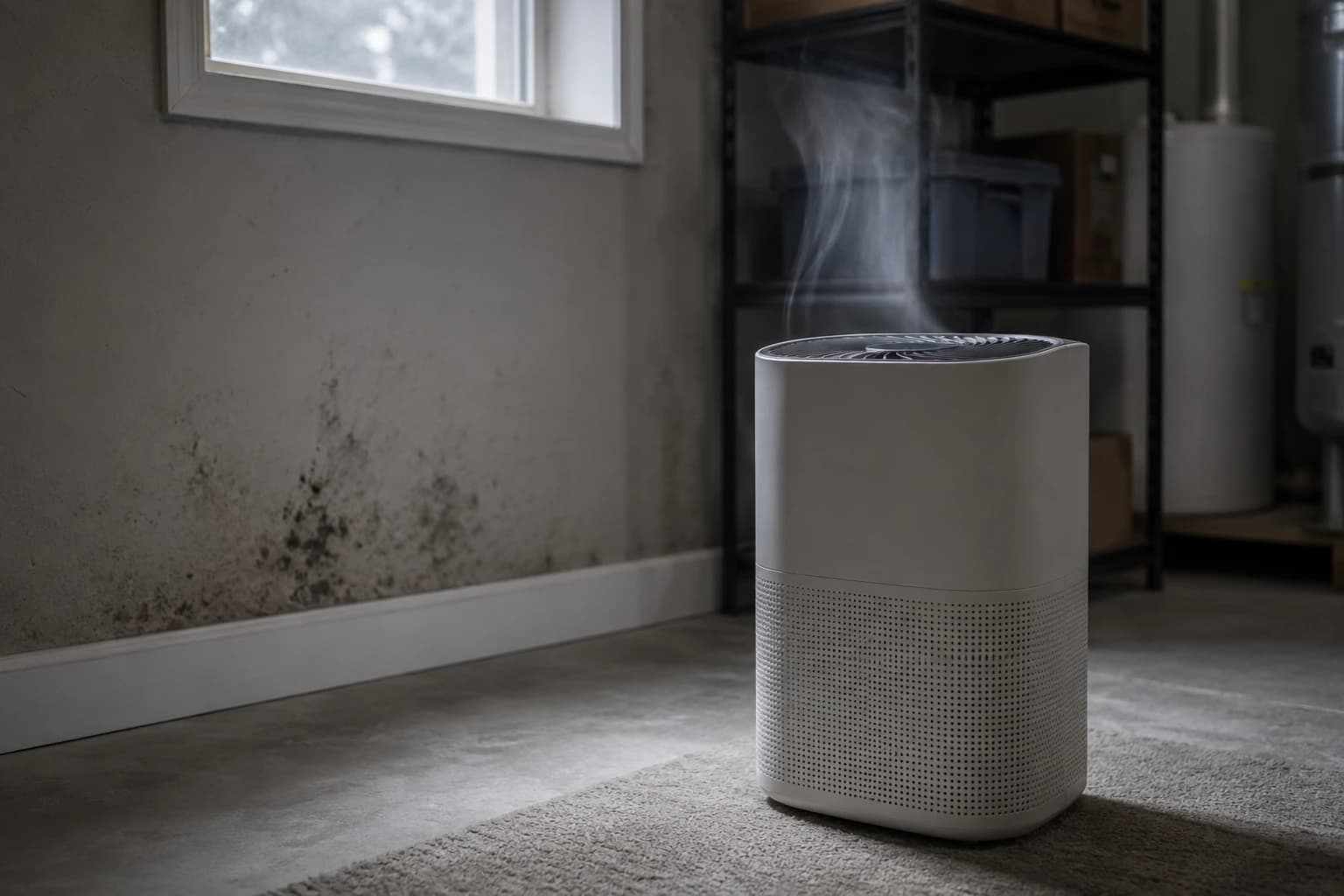
An honest answer to "do air purifiers work" has to include their limits. A portable purifier won't clean carpets or bedding, won't fix a moisture or mold source, and isn't a substitute for medical treatment if you have a diagnosed allergy or asthma condition — it's a supplement to a treatment plan, not a replacement for one.
FAQ
Do air purifiers really help with allergies, or is it placebo?
It's not placebo — the particle-reduction effect is measurable and independently documented, including in placebo-controlled trials. What's genuinely more variable is how much that translates into less sneezing or congestion for a specific person, since that depends on how much of their trigger is airborne versus contact-based, and whether the unit is correctly sized and run continuously.
How long does it take to notice a difference after running an air purifier?
Studies showing measurable symptom or allergen-level improvement generally used several weeks to months of continuous, correctly-sized use rather than measuring same-day effects — the 2021 Allergologia et Immunopathologia study used a 6-month window, for example. Airborne particle counts themselves can drop quickly once a correctly sized unit is running, but symptom improvement tends to lag behind that.
Are expensive air purifiers actually more effective than cheap ones?
Not necessarily, and not automatically. Price often reflects extra features (app connectivity, specialty filter cartridges, additional certifications) rather than raw filtration power for your specific room size. A correctly sized, genuine True HEPA unit at a moderate price point will usually outperform an oversized-claim budget unit that can't actually deliver the CADR its marketing implies — see our HEPA grading explainer for how to check a real spec versus a marketing term.
Do air purifiers help with asthma specifically?
There's real, if limited, evidence here. A 2024 World Allergy Organization Journal meta-analysis found nocturnal air purification associated with improved asthma symptom scores, though based on a small trial base (two trials, 24 patients), and found the effect was stronger when paired with allergen-impermeable bedding covers rather than air purification alone. If you have diagnosed asthma, treat an air purifier as a potential supplement to your existing treatment plan, and discuss it with your doctor rather than substituting it for prescribed care.
Is it worth buying an air purifier for a home without any specific health condition?
It can be a reasonable general air-quality measure, particularly if you live somewhere with high outdoor pollen counts, wildfire smoke risk, or you have pets — but it's a smaller-impact purchase for someone with no particular airborne trigger than for someone managing a diagnosed allergy. If you're on the fence, correct room sizing matters more than buying "just in case" with an oversized or top-of-the-line unit.
Written by Marcus Thorne, Wellness Tools Researcher.
Sources
- Ebrahimifakhar A, Poursadegh M, Hu Y, Yuill DP, Luo Y. A systematic review and meta-analysis of field studies of portable air cleaners: Performance, user behavior, and by-product emissions. Science of the Total Environment. 2024;912:168786. PMID: 38008326. https://pubmed.ncbi.nlm.nih.gov/38008326/
- Lowther SD, Deng W, Fang Z, et al. How efficiently can HEPA purifiers remove priority fine and ultrafine particles from indoor air? Environment International. 2020;144:106001. PMID: 32739515. https://pubmed.ncbi.nlm.nih.gov/32739515/
- van Boven FE, et al. House dust mite allergen avoidance strategies for the treatment of allergic asthma: A hypothesis-generating meta-analysis. World Allergy Organization Journal. 2024;17(6). https://pmc.ncbi.nlm.nih.gov/articles/PMC11223119/
- Luo J, Ou L, Ma J, Lin X, Fan L, Liu H, Sun B. Efficacy of air purifier therapy for patients with allergic asthma. Allergologia et Immunopathologia. 2021;49(5). https://www.all-imm.com/index.php/aei/article/view/146
- Park KH, et al. Effects of Air Purifiers on Patients with Allergic Rhinitis: A Multicenter, Randomized, Double-Blind, and Placebo-Controlled Study. Yonsei Medical Journal. 2020;61(8):689-697. PMID: 32734732. https://pubmed.ncbi.nlm.nih.gov/32734732/
- Sublett JL, et al. Air filters and air cleaners: Rostrum by the American Academy of Allergy, Asthma & Immunology Indoor Allergen Committee. Journal of Allergy and Clinical Immunology. 2010;125(1):32-38. PMID: 19910039. https://pubmed.ncbi.nlm.nih.gov/19910039/
- U.S. EPA. Guide to Air Cleaners in the Home, 2nd Edition. https://www.epa.gov/sites/default/files/2018-07/documents/guide_to_air_cleaners_in_the_home_2nd_edition.pdf

Marcus Thorne
A wellness tools researcher at The Wellness Voyage, focused on evaluating home health products against independent testing and real specs rather than marketing claims.