
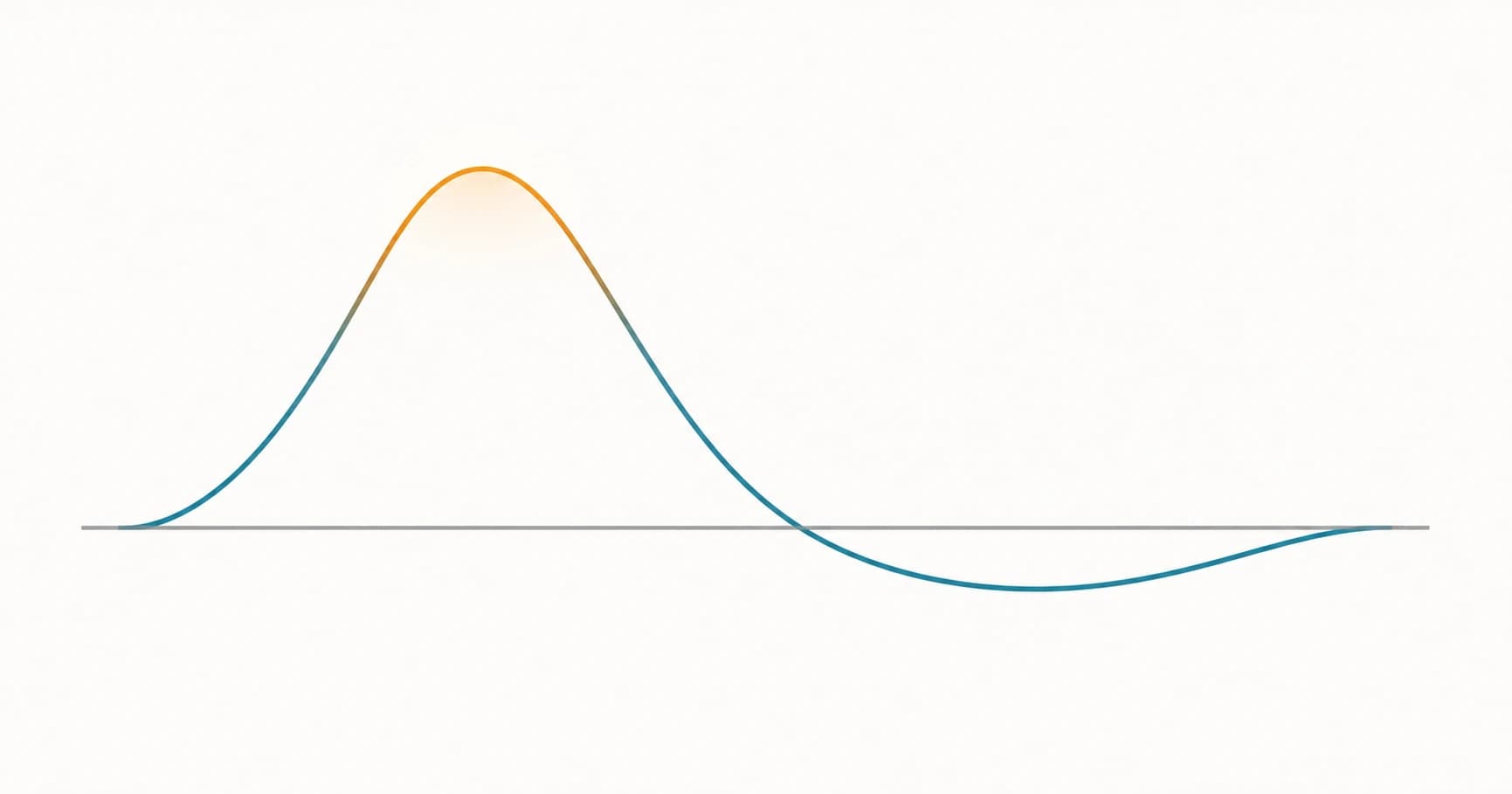
The short answer: your pancreas overcorrects. Sugar reaches the bloodstream fast, glucose spikes, and the pancreas answers with a burst of insulin large enough to push glucose back down past where it started. That overshoot, combined with the adrenaline your body releases to fight the resulting dip, is what produces the shaky, drained, weak feeling — not a shortage of fuel. Doctors call this pattern reactive hypoglycemia, sometimes postprandial hypoglycemia, and it has a specific timing: symptoms typically set in 1 to 4 hours after eating, not in the first few minutes (Cleveland Clinic; Medical News Today).
That delay is the tell. If you feel weak the moment you finish a sugary snack, insulin overshoot probably isn't the cause. The classic crash lands later, once insulin has done more than its job.
What's actually happening: an insulin overshoot, not an empty tank
When you eat something high in sugar, glucose is absorbed quickly, and the pancreas releases insulin to move it out of the blood and into cells. In a balanced meal this is a gentle, well-matched process. With a large dose of fast sugar — especially on an empty stomach — the glucose spike is sharp, and in some people the insulin response overshoots it, driving blood glucose down below where it was before you ate (Harvard T.H. Chan School of Public Health, Nutrition Source).
A 2002 physiological review by David Ludwig in JAMA found that high-glycemic foods produce only a transient rise in available energy before triggering this kind of reactive hypoglycemia, in contrast to protein-rich or fiber-rich meals, which raise and release glucose more gradually (Ludwig, 2002).
The weakness itself isn't purely "low fuel." When glucose falls, the body releases counter-regulatory hormones, including epinephrine (adrenaline), to push it back up. In a controlled trial, Ludwig and colleagues fed obese adolescent boys meals matched for calories but differing in glycemic index, and found the high-glycemic-index meal produced measurably higher insulin and epinephrine levels afterward, alongside lower glucagon and free fatty acids, compared with medium- and low-glycemic-index meals (Ludwig et al., 1999, Pediatrics). That epinephrine surge is what gives the crash its shaky, jittery, "weak" quality, on top of the glucose dip itself.
Is it "real" reactive hypoglycemia, or just a normal dip?
Here's the part most explainers skip: not every post-sugar slump is actually low blood glucose. Clinically, reactive hypoglycemia is diagnosed when glucose falls below roughly 70 mg/dL, or below 55 mg/dL under the stricter criteria some researchers use for a confirmed diagnosis, measured 2 to 5 hours after eating (Medical News Today; Altuntaş, 2019, Sisli Etfal Hastanesi Tıp Bülteni). A 2019 review by endocrinologist Yüksel Altuntaş notes that symptoms can also occur without glucose actually testing that low — a pattern researchers label idiopathic postprandial syndrome, where the symptoms are real but a true hypoglycemic drop isn't confirmed on testing.
In other words, feeling weak after sugar doesn't automatically mean your blood glucose is crashing to a clinical low. It may be a milder, still-real overshoot that never dips far enough to meet the diagnostic threshold.
| A normal post-meal response | Reactive hypoglycemia | |
|---|---|---|
| Blood glucose on a standard test | 139 mg/dL or below at 2 hours is the benchmark for normal glucose handling (NIDDK) | Falls below ~70 mg/dL by common clinical definition; below 55 mg/dL under stricter research criteria (Medical News Today; Altuntaş, 2019) |
| When symptoms appear | Rare, and mild if present | Roughly 1–4 hours after eating; formally classified as early (under 2 hours), classic (~3 hours), or late (4–5 hours) onset (Altuntaş, 2019) |
| What you might feel | Slight post-meal lull, if anything | Shakiness, sweating, dizziness, rapid heartbeat, hunger, weakness, irritability, headache (Cleveland Clinic; Medical News Today) |
| What's driving it | Insulin returns glucose to baseline without overshooting | An exaggerated or delayed insulin response pushes glucose below baseline; some people have the symptoms without a confirmed low reading (Altuntaş, 2019) |
Why some people get hit harder than others
A few real, distinct causes sit behind reactive hypoglycemia, beyond "ate too much sugar":
- Prediabetes or early insulin resistance. When the pancreas's insulin release is already mistimed, a sugar load is more likely to trigger an overshoot. Clinicians use reactive hypoglycemia as one reason to check for prediabetes (Medical News Today).
- Prior gastric bypass or bariatric surgery. Food can empty from a smaller stomach into the small intestine unusually fast (sometimes called dumping syndrome), which alters gut-hormone signaling and glucose absorption. Mayo Clinic notes this form of reactive hypoglycemia typically begins 1 to 2 years after surgery, though it can appear at other times too (Mayo Clinic).
- Rare inherited enzyme deficiencies that affect how the body processes certain sugars can also produce this pattern, though this is uncommon (Medical News Today).
- No identifiable cause at all. In people without diabetes or prior surgery, Mayo Clinic notes the exact trigger often isn't clear, and symptoms seem tied more to what and when someone eats than to any diagnosed condition (Mayo Clinic).
What actually reduces the crash
The fix isn't cutting out sugar entirely; it's changing what surrounds it:
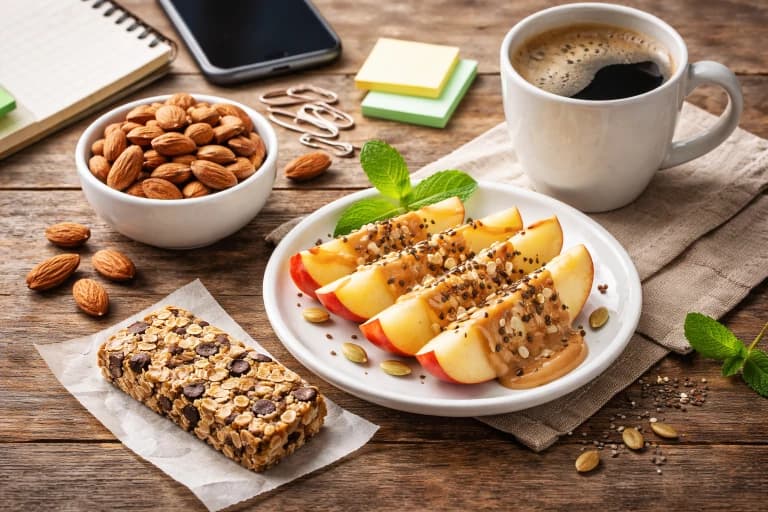
- Pair sugar with protein, fat, or fiber. Any of the three slows gastric emptying and blunts how fast glucose hits the bloodstream, which moderates the insulin response that follows (Cleveland Clinic; Harvard Nutrition Source). Fruit alongside a protein source rather than fruit alone is a simple version of this.

- Don't eat sugar on an empty stomach. Without other food already slowing absorption, glucose floods in faster and the swing in both directions is sharper.
- Eat regularly rather than going long stretches without food. Cleveland Clinic recommends meals or snacks roughly every 2 to 4 hours to keep glucose from swinging as widely in either direction (Cleveland Clinic). See Low-Carb Snacks for Energy for options built around that steadier glucose profile.
When it's worth seeing a doctor
If this happens occasionally after a large dessert, it's not an emergency. But recurring weakness, shakiness, or dizziness after meals is worth raising with a doctor, both because it can be a signal of prediabetes and because the only way to tell a true hypoglycemic drop from idiopathic postprandial syndrome is to actually measure glucose during an episode or through formal testing, not to guess from symptoms alone (Medical News Today; Altuntaş, 2019).
See also: Cortisol and Blood Sugar: Why Stable Levels Matter, Why Am I Always Hungry on Rest Days?, What Foods Reduce Bloating Quickly?.
Sources
- Ludwig DS, et al. High glycemic index foods, overeating, and obesity. Pediatrics. 1999;103(3):e26. PMID: 10049982. https://pubmed.ncbi.nlm.nih.gov/10049982/
- Ludwig DS. The glycemic index: physiological mechanisms relating to obesity, diabetes, and cardiovascular disease. JAMA. 2002;287(18):2414-2423. PMID: 11988062. https://pubmed.ncbi.nlm.nih.gov/11988062/
- Harvard T.H. Chan School of Public Health. The Nutrition Source: Carbohydrates and Blood Sugar. https://nutritionsource.hsph.harvard.edu/carbohydrates/carbohydrates-and-blood-sugar/
- Cleveland Clinic. How to Treat Reactive Hypoglycemia. Health Essentials. https://health.clevelandclinic.org/how-to-treat-reactive-hypoglycemia
- Medical News Today. Reactive hypoglycemia: Causes, symptoms, and treatment. https://www.medicalnewstoday.com/articles/reactive-hypoglycemia
- Mayo Clinic. Reactive hypoglycemia: What causes it? https://www.mayoclinic.org/diseases-conditions/diabetes/expert-answers/reactive-hypoglycemia/faq-20057778
- Altuntaş Y. Postprandial Reactive Hypoglycemia. Sisli Etfal Hastanesi Tıp Bülteni. 2019;53(3):215-220. PMC7192270. https://pmc.ncbi.nlm.nih.gov/articles/PMC7192270/
- National Institute of Diabetes and Digestive and Kidney Diseases (NIDDK). Diabetes Tests & Diagnosis. https://www.niddk.nih.gov/health-information/diabetes/overview/tests-diagnosis

Olivia Smith, RDN
Registered Dietitian Nutritionist (RDN) and habit specialist, answering everyday questions about hunger, protein, and sustainable eating.