

The short answer is that several things happen at once after something sweet, and glucose is only one of them. Blood sugar rises, insulin brings it back down, and over the next couple of hours a mix of ordinary processes can leave you flat. That much is uncontroversial.
What is less certain is the part everyone repeats. The idea that a "sugar crash" is specifically what makes you sleepy is stated with far more confidence online than the research supports. Sorting the established parts from the assumed parts is genuinely useful here, because it changes what is worth doing about it.
One thing to settle first: occasionally feeling drained after a large dessert is normal and is not a sign of disease. A repeating pattern of shakiness, sweating or dizziness a few hours after eating is a different situation, and one to raise with a doctor rather than diagnose yourself.
What actually happens after something sweet
Carbohydrate is broken down into glucose, which enters the bloodstream. The pancreas releases insulin to move it into cells, and glucose returns toward where it started. In some people that response overshoots and glucose dips below its starting point, which produces the shaky, weak version of the feeling.
That overshoot is a topic in its own right, and we cover it separately in why you feel weak after eating sugar, including the clinical numbers involved. This article is about the tired version of the symptom, which turns out to have more than one driver.
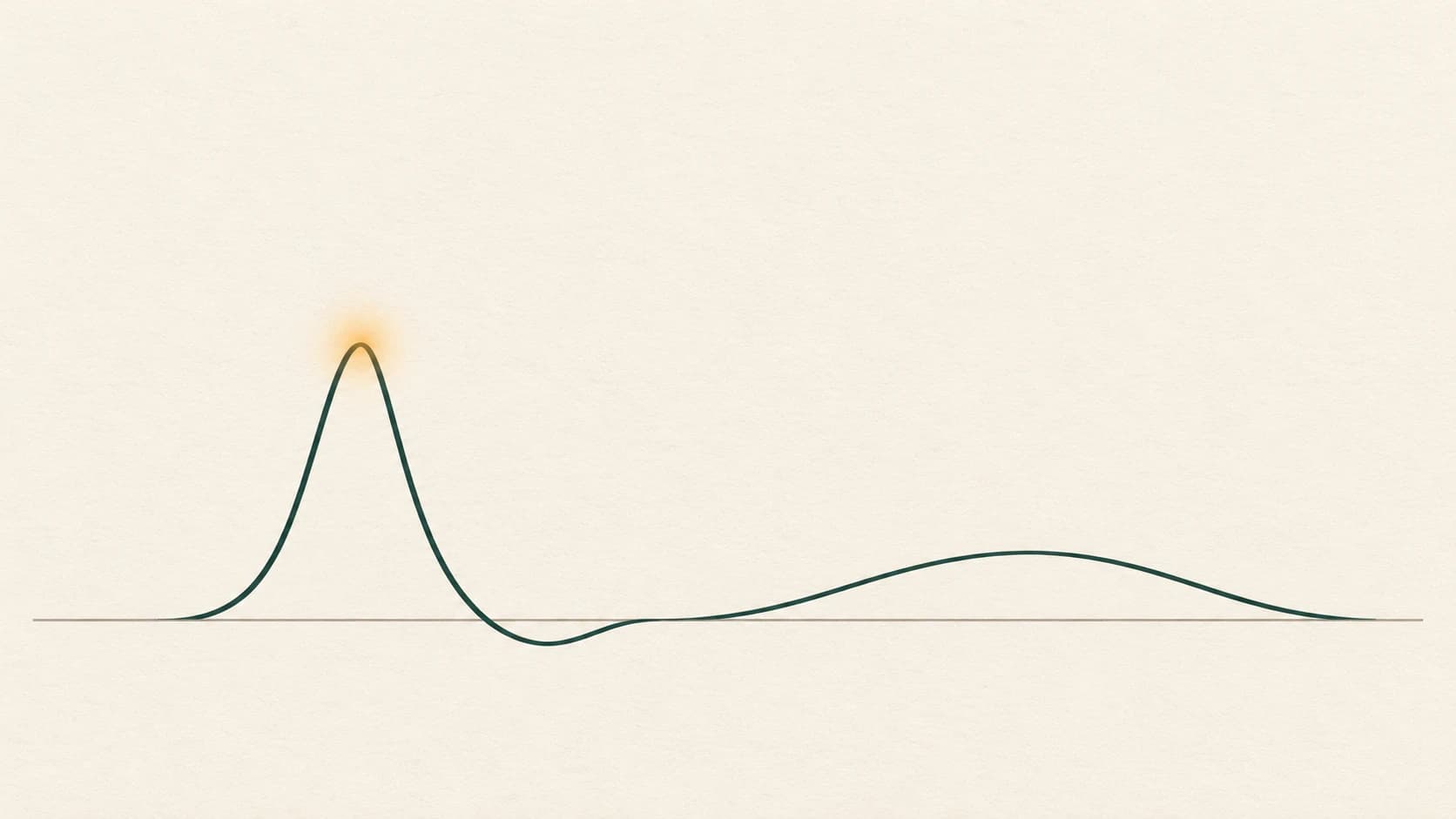
"Sugar crash" is a real phrase, but a crowded explanation
Three strands of research bear on post-meal tiredness. None of them is a clean story about sugar.
Glucose itself talks to the brain's wakefulness system. Orexin neurons in the hypothalamus promote wakefulness, and their loss causes narcolepsy. Working in mouse brain tissue, researchers showed that glucose switches these neurons off through a particular family of potassium channels, and that the mechanism is sensitive enough to register the glucose changes that occur between ordinary meals (Burdakov et al., 2006, Neuron). Two limits matter. This is laboratory work on mouse brain slices, not a study of tired people. And it points the opposite way from the popular story: it is the glucose rise that quiets wakefulness neurons, not the fall.
Immune signaling plays some part. In a double-blind crossover experiment, 8 lean and 8 obese men ran for 30 minutes and then ate a meal high in both fat and carbohydrate. Blocking the inflammatory messenger IL-1 with a drug reduced their post-meal fatigue, more noticeably in the obese participants (Lehrskov et al., 2018, Molecular Metabolism). The authors are careful about what this means, concluding that "it remains to be shown whether this effect translates into clinical relevant effects."
Sixteen men, all male, given a drug after deliberately exercising is a long way from evidence that sugar inflames you into a nap. If you have read that sugar causes fatigue through inflammation, this small study is usually what sits underneath the claim. Our piece on anti-inflammatory foods covers how often that framing outruns its evidence.
The overall picture is genuinely unsettled. A 2025 scoping review looked for research connecting food intake, blood glucose and sleepiness at work. Of 521 articles screened, nine met the inclusion criteria, and only one measured blood glucose and sleepiness at the same time. The authors' summary is blunt: workplace sleepiness is influenced by sleep, diet and blood glucose levels, "but the causal relationship is unclear" (Kaneda et al., 2025, Nutrients).
Then there are the explanations that have nothing to do with sugar at all: the sheer size of the meal, the shift toward digestion afterward, and the natural dip in alertness the body clock produces in the early afternoon. We unpack those in why protein makes you sleepy, where the popular tryptophan explanation turns out to be backwards.
Glycemic index and glycemic load: the distinction worth learning
If you want one concept from this article, make it this one, because it explains why "avoid sugar" is poor advice.
Glycemic index (GI) scores a food by how sharply it raises blood glucose, on a scale of 0 to 100 where pure glucose is 100. The lower the number, the slower the rise. In general, the more processed a food, the higher its GI, and the more fiber or fat it contains, the lower (Harvard Health). Values of 55 or below count as low, up to 70 as medium, and above 70 as high (Fédération Française des Diabétiques; Atkinson et al., 2021).
Glycemic load (GL) adds the piece GI leaves out: how much carbohydrate is actually in the portion. The calculation is straightforward:
Glycemic load = (glycemic index × grams of carbohydrate in the portion) ÷ 100
A glycemic load of 11 to 19 is considered medium and above 20 high, with lower figures counting as low (Fédération Française des Diabétiques).
Two worked examples show why the difference matters:
| Food | Glycemic index | Carbohydrate | Glycemic load |
|---|---|---|---|
| Watermelon | 80 (high) | very little per serving | 5 (Harvard Health) |
| White baguette, 100 g | 70 (high) | 57 g | 39.9 (Fédération Française des Diabétiques) |
Watermelon and baguette sit at a similar point on the glycemic index. Their real-world effect on blood sugar is not remotely similar, and the reason is portion, not sweetness.
The most recent systematic review of glycemic index values, covering more than 4,000 items, sharpens the point further. Dairy, legumes, pasta and fruit are usually low-GI and behave consistently around the world. Cereals and cereal products vary widely, including whole-grain versions. Breads, breakfast cereals, rice and savory snacks each come in high, medium and low-GI versions. And most varieties of potato are high-GI foods (Atkinson et al., 2021, American Journal of Clinical Nutrition).
So the sweet thing is not automatically the problem, and "whole grain" is not automatically the solution.
There is an honest caveat to attach to all of this. Harvard's own summary notes that the total amount of carbohydrate in a food, rather than its glycemic index or load, is the stronger predictor of what happens to blood sugar, and that some dietitians consider GI and GL an unnecessary layer of complexity. The French Federation of Diabetics makes a related point: glycemic index applies to a single food, so within a mixed meal its relevance is only relative.
What happened when researchers actually swapped the food
This is the part missing from nearly every page on this topic, and it is worth knowing before you reorganize your diet.
Two randomized crossover trials in German schoolchildren tested the popular claim directly, by serving the same dish with rice of different glycemic index and then measuring alertness and cognitive performance.
In the first, 189 children ate either high-GI rice (GI 86) or medium-GI rice (GI 62) and were tested 45 minutes later. There were no effects on alertness, task switching or working memory. Where single measures did differ, they slightly favored the higher GI rice (Jansen et al., 2020, European Journal of Clinical Nutrition).
In the second, 212 children ate rice at GI 79 or GI 64 and were tested 90 minutes after lunch, in the window a crash would be expected. Again, no effect. Adjusting the analysis for the meal's glycemic load did not change the result (Drozdowska et al., 2022, European Journal of Nutrition).
These trials have real limits. They studied children rather than adults, compared medium against high GI rather than low against high, and measured performance on cognitive tests rather than how sleepy the children felt. They do not prove that nobody experiences an afternoon slump. But they are close to a controlled test of the everyday claim that swapping a higher-GI carbohydrate for a lower one will pick your energy up, and they did not find it.
When it is more than a normal dip
Sometimes the tiredness really is part of a low blood glucose episode. The clinical bar for saying so is higher than most articles imply.
For many people with diabetes, low blood glucose means a reading below 70 mg/dL, though the National Institute of Diabetes and Digestive and Kidney Diseases notes your own number may differ and is worth confirming with your care team (NIDDK). Its listed symptoms include feeling shaky, hungry, tired, dizzy or irritable, and a fast or irregular heartbeat.
Before reactive hypoglycemia is diagnosed, clinicians look for low glucose measured while symptoms are happening, with the symptoms easing once glucose returns to normal. Even the threshold is debated: one clinical account notes that proposed definitions have ranged between 2.2 and 4.0 mmol/L, roughly 40 to 72 mg/dL (Stuart et al., 2013, Case Reports in Medicine — a two-patient case report, not a large study).
The practical consequence is that this is not something to settle at home. Plenty of people have genuine post-meal symptoms without ever testing low, and the only way to tell the difference is measurement during an episode.
Book an appointment if the episodes repeat, if they arrive with sweating, dizziness, confusion or palpitations, or if you have had bariatric surgery. None of that means something is seriously wrong. It means the question is answerable with a test rather than a guess.
What actually helps
The realistic options are modest, which is itself useful information:
- Think in portions, not in "good" and "bad" foods. Because glycemic load depends on how much carbohydrate is on the plate, portion size does more work than swapping one carbohydrate for another.
- Build the plate out. Adding vegetables for fiber along with a source of fat and protein lowers a meal's overall glycemic load, which is the standing dietary advice from the Fédération Française des Diabétiques.
- Watch total meal size. A large meal of any composition produces more of a slump than a smaller one.
- Move a little afterward. A short walk is low-cost and low-risk, whatever the mechanism turns out to be.
- Keep expectations proportionate. Given the trial evidence above, treat a dramatic energy transformation from glycemic-index swaps as unproven rather than promised.

Is this the same as a cortisol-driven energy crash?
No, and the distinction matters because the fix is different. This article describes a dietary pathway: the food's carbohydrate content and portion drive the glucose rise and fall.
There is a separate, stress-hormone pathway in which cortisol raises blood glucose and low blood glucose prompts more cortisol. That is a different mechanism with different triggers, and we treat it separately in cortisol and blood sugar. If your slumps track stress, poor sleep or a demanding week more closely than they track what you ate, that piece is the more relevant one.
Frequently Asked Questions (FAQ)
Is feeling tired after eating sugar a sign of diabetes?
Usually not on its own. Feeling flat after a sweet or carbohydrate-heavy meal is common in people with completely normal glucose handling. What is worth checking is a pattern, especially tiredness alongside unusual thirst, frequent urination, blurred vision or unexplained weight loss. Only a blood test can answer this, so ask a doctor rather than reading it off your symptoms.
When should I see a doctor about tiredness after eating?
Make an appointment if the episodes repeat, if they come with shakiness, sweating, dizziness, confusion or a racing heartbeat, or if you have had bariatric surgery. Those features point toward a genuine drop in blood glucose, which needs to be measured during an episode rather than guessed at.
What is the difference between a normal blood sugar dip and reactive hypoglycemia?
A normal dip is the ordinary fall in glucose that follows any meal, and most people barely notice it. Reactive hypoglycemia is a clinical finding: symptoms occurring while glucose is genuinely low, which ease once it returns to normal. Many people with real post-meal symptoms never actually test low, which is why measurement matters more than comparing symptom lists.
What is the difference between glycemic index and glycemic load?
Glycemic index ranks how fast a food raises blood glucose, on a scale where pure glucose is 100. Glycemic load also accounts for how much carbohydrate is in the portion you actually eat. Watermelon is the standard illustration: its glycemic index is 80, but a serving carries so little carbohydrate that its glycemic load is only 5.
Can eating protein or fiber alongside sugar prevent the crash?
Adding vegetables for fiber plus a source of fat and protein lowers a meal's overall glycemic load, which is standard advice from the Fédération Française des Diabétiques. It is a sensible thing to try. Bear in mind that controlled trials swapping higher for lower glycemic index food have not reliably changed how alert people were afterward.
How long does a post-meal energy crash usually last?
There is no reliable published figure, and pages that give a precise window are generally stating it with more confidence than the evidence allows. Symptoms tied to a genuine glucose drop are typically assessed in the hours after eating rather than the first few minutes. If yours last long enough to disrupt your day, that is worth mentioning to a doctor.
Do low-glycemic-load meals help people without diabetes?
The evidence is strongest in people with type 2 diabetes or impaired glucose tolerance. For otherwise healthy people the picture is much less clear, and the trials described above did not find an alertness benefit from lowering glycemic index at lunch. Eating less heavily processed food is worth doing on its own merits.
Does eating sugar cause inflammation that makes me tired?
There is a thread of research here, but it is thin. The main human experiment involved 16 men who exercised before a high-fat, high-carbohydrate meal, and its authors explicitly said it remains to be shown whether the effect is clinically relevant. That is a starting point for research, not a settled explanation.
Sources
- Harvard Health Publishing. The lowdown on glycemic index and glycemic load. August 2, 2023. https://www.health.harvard.edu/diseases-and-conditions/the-lowdown-on-glycemic-index-and-glycemic-load
- Atkinson FS, Brand-Miller JC, Foster-Powell K, Buyken AE, Goletzke J. International tables of glycemic index and glycemic load values 2021: a systematic review. American Journal of Clinical Nutrition. 2021;114(5):1625-1632. PMID: 34258626. https://pubmed.ncbi.nlm.nih.gov/34258626/
- Fédération Française des Diabétiques. L'index glycémique. https://planalimentaire.federationdesdiabetiques.org/familles-aliment/lindex-glycemique/
- Burdakov D, Jensen LT, Alexopoulos H, et al. Tandem-pore K+ channels mediate inhibition of orexin neurons by glucose. Neuron. 2006;50(5):711-722. PMID: 16731510. https://pubmed.ncbi.nlm.nih.gov/16731510/
- Lehrskov LL, Dorph E, Widmer AM, et al. The role of IL-1 in postprandial fatigue. Molecular Metabolism. 2018;12:107-112. PMID: 29705519. https://pubmed.ncbi.nlm.nih.gov/29705519/
- Kaneda H, Kageyama I, Kobayashi Y, Kodama K. The influence of food intake and blood glucose on postprandial sleepiness and work productivity: a scoping review. Nutrients. 2025;17(20):3217. PMID: 41156470. https://pubmed.ncbi.nlm.nih.gov/41156470/
- Jansen K, Tempes J, Drozdowska A, et al. Short-term effects of carbohydrates differing in glycemic index (GI) consumed at lunch on children's cognitive function in a randomized crossover study. European Journal of Clinical Nutrition. 2020;74(5):757-764. PMID: 32203229. https://pubmed.ncbi.nlm.nih.gov/32203229/
- Drozdowska A, Jansen K, Wolters M, et al. Impact of lunch with carbohydrates differing in glycemic index on children's cognitive functioning in the late postprandial phase: a randomized crossover study. European Journal of Nutrition. 2022;61(3):1637-1647. PMID: 34902050. https://pubmed.ncbi.nlm.nih.gov/34902050/
- National Institute of Diabetes and Digestive and Kidney Diseases (NIDDK). Low Blood Glucose (Hypoglycemia). https://www.niddk.nih.gov/health-information/diabetes/overview/preventing-problems/low-blood-glucose-hypoglycemia
- Stuart K, Field A, Raju J, Ramachandran S. Postprandial reactive hypoglycaemia: varying presentation patterns on extended glucose tolerance tests and possible therapeutic approaches. Case Reports in Medicine. 2013;2013:273957. PMID: 23424590. https://pubmed.ncbi.nlm.nih.gov/23424590/

Sophia Martinez, MS, CNS
A wellness researcher focused on what the evidence actually says.