Ultra-processed foods now make up a huge share of what people eat, and headlines increasingly link them to disease. The link is real and worth taking seriously, but the evidence is more nuanced than the scariest stories suggest. Here is what the research actually shows, where it is uncertain, and how to eat fewer ultra-processed foods without overhauling your life.
What ultra-processed foods are
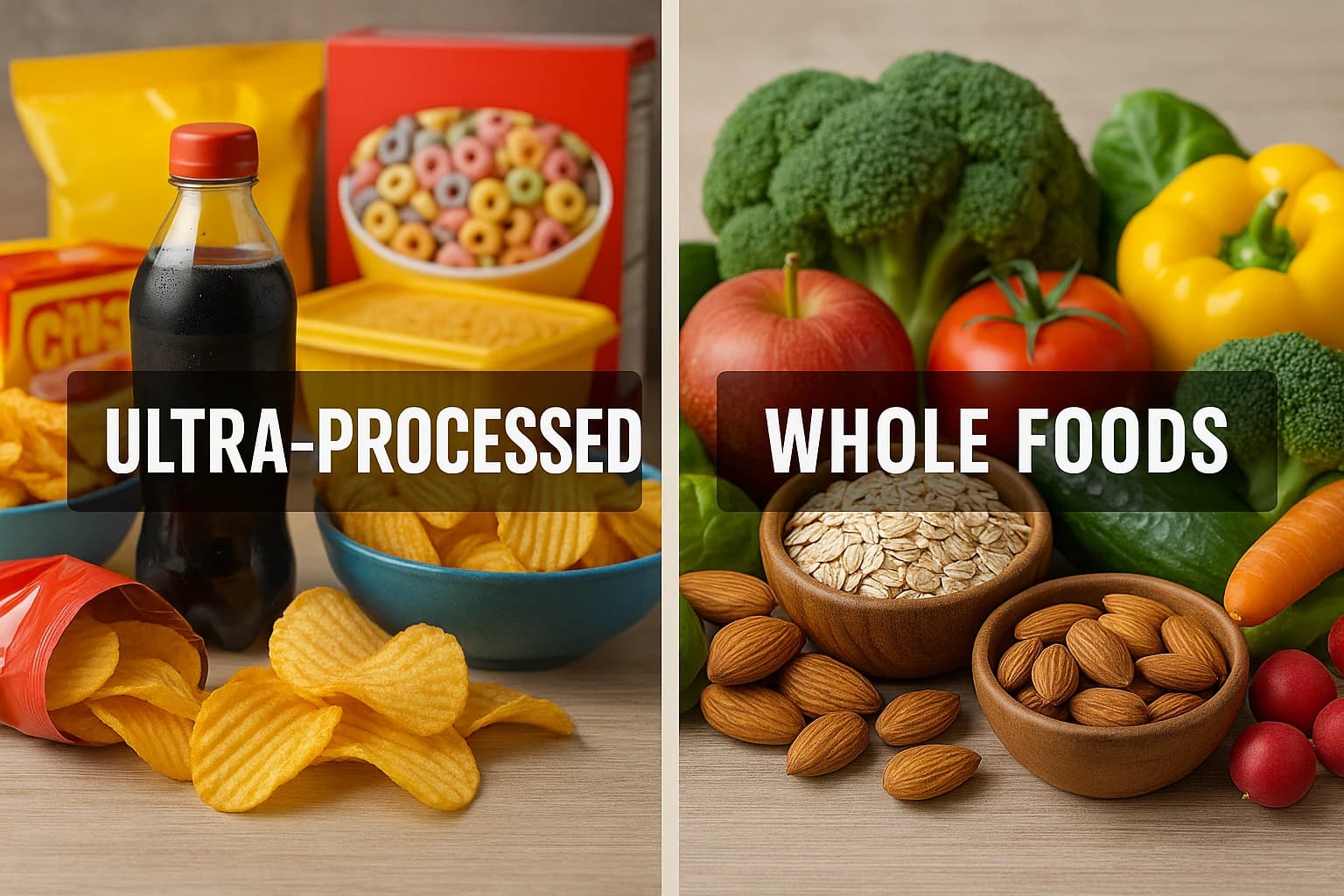
Ultra-processed foods (UPFs) are industrial products made largely from extracted substances, sugars, oils, starches, and proteins, combined with additives like preservatives, sweeteners, colors, flavorings, and emulsifiers. They contain little or no intact whole food and are built for long shelf life, convenience, and being very easy to overeat.
The most-used framework for this is the NOVA system, which sorts foods by how much they are processed (Monteiro et al., 2019). NOVA's Group 4 (ultra-processed) includes soft drinks, packaged snacks, reconstituted meat products, instant noodles, mass-produced bread, and sweetened breakfast cereals. By contrast, fruits, vegetables, beans, whole grains, and plain dairy are minimally processed, and consistently linked to better health.
It is worth being clear up front: "processed" is not the problem. Frozen vegetables, tinned beans, and plain yogurt are all processed and perfectly healthy. The concern is specifically the ultra-processed category.
How common they are
UPFs make up roughly half or more of daily calories in countries like the United States and the United Kingdom. That scale is part of why researchers pay so much attention to them: even a small effect per serving could add up across a population.
What the evidence shows, and its limits
This is the part that gets oversimplified, so it is worth slowing down.
Large studies that follow people over years have repeatedly found that those who eat more UPFs tend to have worse health outcomes. Higher UPF intake has been associated with more cardiovascular disease (Srour et al., 2019), a higher risk of several cancers (Fiolet et al., 2018), and a higher risk of dying during the study period (Schnabel et al., 2019). Roughly, each 10% increase in the share of UPFs in the diet was linked to about a 10 to 15% higher risk in these studies.
But here is the important caveat: these are observational studies. They show a correlation, not proof that UPFs cause the harm. People who eat a lot of UPFs often differ in other ways, less exercise, more smoking, lower income, less sleep, and researchers can only partly adjust for those differences. On top of that, "ultra-processed" is a broad label covering everything from soda to packaged wholegrain bread, so lumping them together blurs the picture. The honest summary is that the association is consistent and concerning, but not the same as a proven cause of death.
The one experimental clue
There is one study that goes beyond correlation. In a tightly controlled trial, people lived in a research unit and ate either an ultra-processed or a whole-food diet for two weeks each, with the diets matched for calories offered, sugar, fat, fiber, and salt. On the ultra-processed diet, they freely ate about 500 calories more per day and gained weight; on the whole-food diet they ate less and lost weight (Hall et al., 2019).
That is the strongest evidence we have, and it points to a simple mechanism: ultra-processed foods are easy to overeat. They are soft, calorie-dense, and engineered to be moreish, so you consume more before feeling full. Over years, that extra intake and the weight it adds is a plausible route to the disease risks the cohort studies pick up.
How UPFs may affect health
The clearest mechanism is the overeating shown above. Other proposed mechanisms, such as additives and emulsifiers disrupting the gut, are mostly based on animal and laboratory studies and remain preliminary, so they are worth watching rather than treating as settled. The practical takeaway does not depend on them: eating fewer UPFs means eating less excess and more whole food, which is sound advice either way.
Five practical ways to cut back
- Cook from whole ingredients a few times a week. Even simple meals, eggs, rice and beans, roasted vegetables, automatically cut UPF intake.
- Read the ingredient list. Products with a long list of additives (emulsifiers, flavorings, colors) are usually ultra-processed, regardless of health claims on the front.
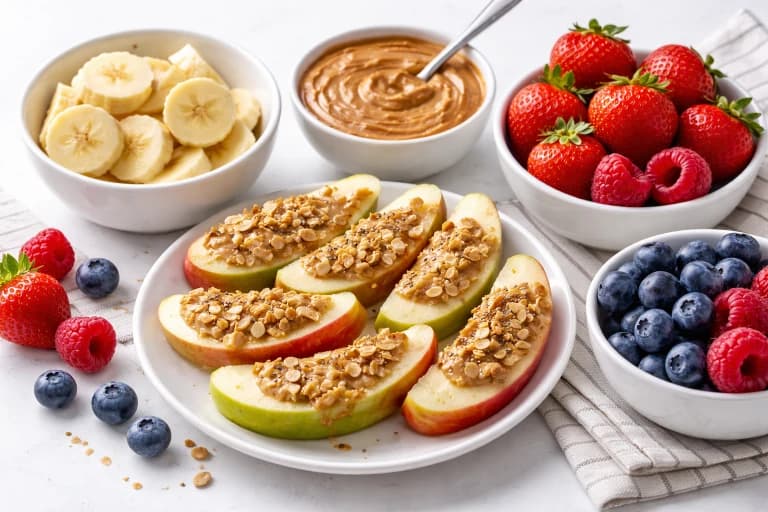
- Plan snacks ahead. Keeping nuts, fruit, yogurt, or cut vegetables handy removes the convenience gap that drives grab-and-go choices. Our healthy snacks guide has ideas.
- Swap sugary and ultra-processed drinks. Trading soft drinks and energy drinks for water, plain milk, or unsweetened options is the single highest-impact change for most adults.
- Swap one thing at a time. Replace a sugary cereal with oats, or a packaged sandwich with a homemade one. Small swaps add up without a total overhaul.
The bottom line
Ultra-processed foods are linked to worse health, and a controlled trial shows they make it easy to overeat, so cutting back is a genuinely good idea. Just keep the evidence in proportion: most of it shows association, not proven cause, and the goal is a pattern shift toward whole foods, not fear of every package. For the bigger dietary picture, see our guides to anti-inflammatory foods and lipids and healthy fats, or browse our nutrition guides.
Frequently Asked Questions (FAQ)
What counts as an ultra-processed food? Industrially made products with ingredients you would not cook with, like additives, sweeteners, and emulsifiers, and little intact whole food. Think soft drinks, packaged snacks, mass-produced bread, and reconstituted meat products.
Do ultra-processed foods actually cause disease? Most of the evidence is observational, so it shows a link, not proof of cause. The one controlled trial found people ate about 500 calories more a day on an ultra-processed diet, which points to overeating as a likely driver.
Are all processed foods bad? No. Frozen vegetables, plain yogurt, canned beans, and tinned fish are processed but perfectly healthy. The concern is specifically with ultra-processed products.
What is the single best change to make? For most people, swapping sugary and ultra-processed drinks for water, plain milk, or unsweetened options is the highest-impact step.
Medical disclaimer: This article is for informational purposes only. Always consult a qualified healthcare provider before making changes to your health routine.
Sources
- Monteiro CA, et al. Ultra-processed foods: what they are and how to identify them. Public Health Nutrition, 2019 — PubMed. https://pubmed.ncbi.nlm.nih.gov/30744710/
- Hall KD, et al. Ultra-processed diets cause excess calorie intake and weight gain: an inpatient randomized controlled trial of ad libitum food intake. Cell Metabolism, 2019 — PubMed. https://pubmed.ncbi.nlm.nih.gov/31105044/
- Srour B, et al. Ultra-processed food intake and risk of cardiovascular disease (NutriNet-Santé). BMJ, 2019 — PubMed. https://pubmed.ncbi.nlm.nih.gov/31142457/
- Schnabel L, et al. Association between ultraprocessed food consumption and risk of mortality among middle-aged adults in France. JAMA Internal Medicine, 2019 — PubMed. https://pubmed.ncbi.nlm.nih.gov/30742202/
- Fiolet T, et al. Consumption of ultra-processed foods and cancer risk (NutriNet-Santé). BMJ, 2018 — PubMed. https://pubmed.ncbi.nlm.nih.gov/29444771/
All sources accessed 31 May 2026.

Sophia Martinez, MS, CNS
A wellness researcher focused on what the evidence actually says.