Most beginner mindfulness advice fails for the same reason: it makes the practice sound either mystical or effortless, and it is neither. The truth is plainer and more encouraging. Mindfulness is a skill anyone can start in the next five minutes, you will be bad at it at first in a way that does not matter, and the part that feels like failing is actually the part that works.
This guide gives you a real first practice, sets honest expectations, and helps you avoid the handful of mistakes that make people give up in week one.
Before you start: what mindfulness is not
Two beliefs sink more beginners than anything else, so let's clear them first.
It is not about emptying your mind. Thoughts will keep arriving the entire time. The job is not to stop them but to notice when one has carried you off and to come back. If your mind wandered fifty times in five minutes, you got fifty chances to practise returning. That is a good session, not a bad one.
It is not about feeling instantly relaxed. Calm is a frequent side effect, not the goal. Some sessions feel peaceful; others feel fidgety and long. Both are normal, and chasing the calm ones is itself a distraction. For the bigger picture of how the practice works, our mindfulness basics guide is the place to start.
Your first practice, step by step
Here is a complete five-minute practice. You need no equipment and no special posture.
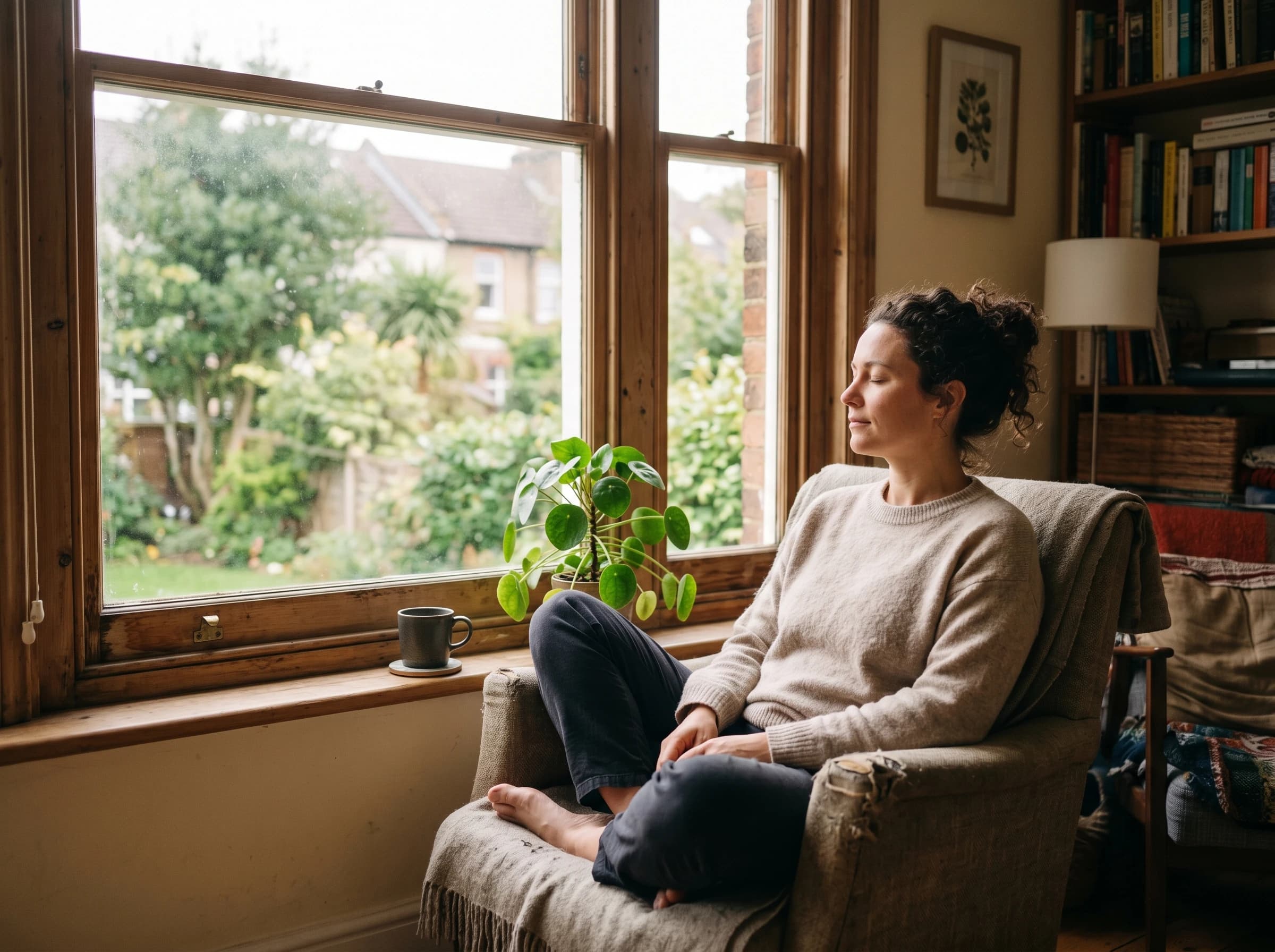
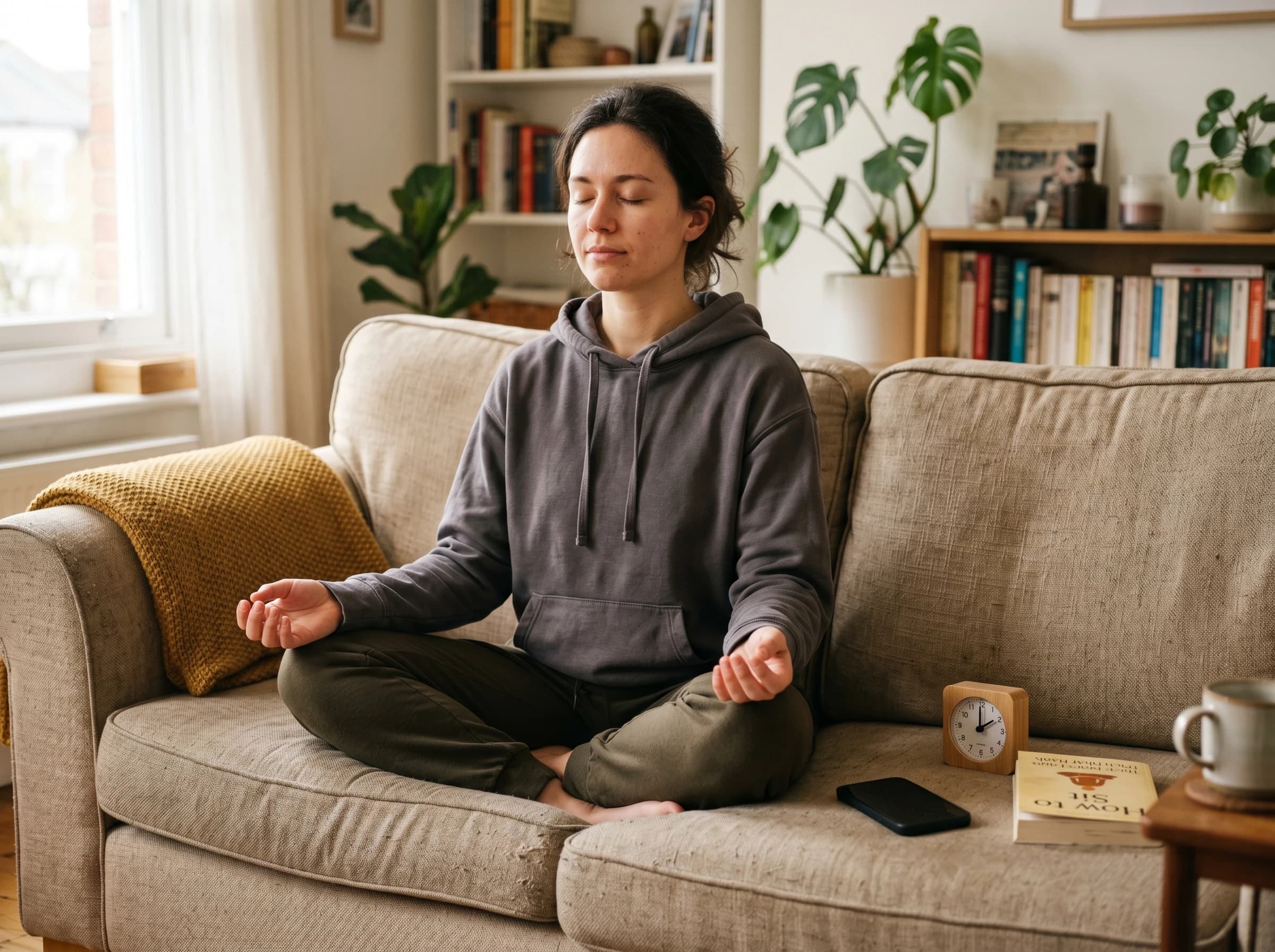
- Sit somewhere you won't be disturbed. A chair is perfectly fine. Sit upright but relaxed — alert, not rigid. You can close your eyes or lower your gaze.
- Set a timer for five minutes. Watching the clock pulls you out of the practice; a timer lets you forget about time. If you'd like something to ease you in first, our breathing timer can pace a few settling breaths before you drop into just observing.
- Find your breath. Notice where you feel it most clearly — the air at your nostrils, or the rise and fall of your chest or belly. Don't control it. Just observe it.
- When your mind wanders, come back. It will, within seconds. The moment you realise you've been thinking about lunch or an email, that noticing is the win. Gently return your attention to the breath. No frustration needed.
- End softly. When the timer sounds, take one fuller breath, open your eyes, and notice how you feel before you stand up.
That's it. Do that once a day for a week before changing anything.
What to expect in the first two weeks
Knowing the arc ahead of time keeps you from misreading normal experiences as failure.
- Days 1–3: It feels awkward and possibly pointless. Your mind seems busier than ever — actually, you're just noticing the noise that was always there.
- Days 4–7: Slightly easier to settle. You may catch your mind wandering a little faster than before. That faster catching is real progress.
- Week 2: The five minutes start to feel less like a chore. Some people notice they're a touch less reactive during the day — a beat of space before snapping at a slow website or a sharp email.
Clinical mindfulness courses such as MBSR run for eight weeks for a reason: the benefits accumulate gradually (NCCIH). Give it more than a few days before deciding whether it's for you.
The mistakes that make beginners quit
Almost everyone who abandons mindfulness hits one of these. Knowing them in advance is half the cure.
- Starting too long. Twenty-minute ambitions on day one usually mean day two never comes. Three to five minutes is the sweet spot for building the habit.
- Judging each session. "That was a bad one" is just another thought. Drop the scorecard; show up tomorrow.
- Waiting to feel motivated. Motivation is unreliable. Attach the practice to something you already do every day so it doesn't depend on how you feel.
- Treating a wandering mind as proof you can't do it. This is the big one. The wandering is the raw material of the practice, not an obstacle to it.
Make it stick: attach it to something you already do
The single most effective trick for beginners is to anchor the new practice to an existing habit. After you pour your morning coffee, before you open your laptop, or right after you brush your teeth — pick a fixed, daily cue and let your practice ride on the back of it. This removes the need to remember and the need to decide, which are the two points where most habits die.
If mornings suit you, our morning mindfulness routine guide shows how to build the practice into the start of a real, busy day.
When the breath isn't the right anchor
For some people — particularly anyone with a history of panic or trauma — focusing closely on the breath can feel uncomfortable or even trigger anxiety. If that's you, you have good alternatives. Anchor your attention on the soles of your feet, the sounds in the room, or the feeling of your hands resting in your lap instead. Eyes-open practice is completely valid. The NCCIH notes that while serious side effects are rare, meditation can sometimes stir up difficult feelings, so go gently and stop if a practice reliably increases distress (NCCIH).
If a busy, anxious mind is the main thing pulling you out of practice, our guide to meditation for anxiety and overthinking offers techniques built for exactly that.
Where to go next
You don't need to graduate to anything. A steady five minutes a day is a genuine practice that many lifelong meditators never really move beyond. When you're ready to expand, add a second short session, lengthen the morning one, or bring mindful attention to a daily activity like walking or eating.
To calm your body in moments of acute stress, pair this with breathing exercises for stress. And whenever the practice starts feeling abstract, return to the fundamentals in our mindfulness basics guide (linked above). If you're also weighing supplement options for stress, our review of ashwagandha's scientific evidence lays out what the trials actually show — strong for stress and cortisol, thinner elsewhere — rather than treating it as a single yes-or-no question.
Frequently Asked Questions (FAQ)
What time of day is best for beginners? Whenever you can be consistent. Morning works for many because the day hasn't crowded it out yet, but a reliable evening practice beats an aspirational morning one you keep skipping.
Should I use a guided app? If a calm voice helps you stay on track, yes — guided sessions are a fine way to learn. Just make sure you can also practise without one, so the habit doesn't depend on a screen.
What if I fall asleep? Common, especially lying down or when tired. Sit upright in a chair, keep your eyes slightly open, and practise earlier in the day. A little drowsiness is harmless; consistent sleep means you're choosing the wrong time or posture.
How will I know it's working? Look for small shifts off the cushion: a slightly longer pause before you react, noticing a tense jaw sooner, catching a spiral of worry a beat earlier. The benefits show up in daily life, not in the session itself.
How we made this guide: Researched, written, and fact-checked by The Wellness Voyage editorial team, with every health claim backed by a citable source — recognised health authorities and peer-reviewed studies are linked throughout and listed in full below. We fact-check and review this article periodically and update it as the evidence changes; the last reviewed and updated date is shown with this article. It is written to inform, not to replace personalised advice from a qualified healthcare professional.
Medical disclaimer: This article is for informational purposes only. Always consult a qualified healthcare provider before making changes to your health routine.
Sources
- National Center for Complementary and Integrative Health (NCCIH). 8 Things To Know About Meditation and Mindfulness. https://www.nccih.nih.gov/health/tips/8-things-to-know-about-meditation-and-mindfulness
- National Center for Complementary and Integrative Health (NCCIH). Meditation and Mindfulness: Effectiveness and Safety. https://www.nccih.nih.gov/health/meditation-and-mindfulness-effectiveness-and-safety
All sources accessed 9 April 2026.

Sophia Martinez
A wellness researcher focused on what the evidence actually says.