
Vitamin D is one of the most talked-about nutrients in health media, and one of the most misunderstood. Vitamin D deficiency is genuinely common in some groups and rare in others who spend plenty of time outdoors — knowing where you stand means understanding who is actually at risk, what the warning signs look like, and what the evidence does and does not support.
This guide covers the symptoms and causes of vitamin D deficiency, how it's actually tested, and what to do if your level is low, without the exaggerated claims that show up in a lot of supplement marketing.
Quick answer: Vitamin D deficiency means a blood level of 25-hydroxyvitamin D below about 30 nmol/L (12 ng/mL). It's most common in people with limited sun exposure, darker skin, obesity, older age, or a condition that affects fat absorption, and it's usually symptomless. A blood test confirms it; for most people, a modest daily supplement corrects it safely.
Who Is Actually at Risk
Vitamin D deficiency affects an estimated 1 billion people worldwide (StatPearls / NCBI Bookshelf), and it clusters predictably: people with darker skin, older adults, people who are mostly indoors, and anyone living far from the equator in winter (Holick, 2007). Doctors typically call it a deficiency when a blood test falls below 30 nmol/L (12 ng/mL). Severe, long-term shortfall causes the bone diseases rickets in children and osteomalacia (bone softening) in adults.
In the United States, a nationally representative government survey found 41.6% of adults had a vitamin D level below 20 ng/mL — the cutoff that particular study used for deficiency — with much higher rates in Black Americans (82.1%) and Hispanic Americans (69.2%) (Forrest & Stuhldreher, 2011). The reason is skin pigment: melanin filters the UVB light that triggers vitamin D production in skin, so people with darker skin need substantially more sun exposure to make the same amount.
Symptoms of Vitamin D Deficiency
Most people with low vitamin D have no symptoms at all, which is a big reason it goes undiagnosed. When deficiency is severe or long-standing, it shows up mainly through its effects on bone and muscle.
In adults, possible signs include:
- Fatigue and low energy
- Bone pain, especially in the lower back, hips, or shoulders
- Muscle weakness or aching, including trouble rising from a chair or climbing stairs
- More frequent falls in older adults
- Slower healing after cuts, fractures, or surgery
- Getting sick more often
- Low mood, especially in winter
The bone and muscle effects have the strongest mechanistic basis: without enough active vitamin D, new bone doesn't mineralize properly (osteomalacia in adults), and the muscle fibers most involved in balance and catching a fall weaken along with it (Holick, 2007). The links to mood, infection frequency, and wound healing are weaker and more preliminary — biologically plausible, since vitamin D receptors sit on immune cells, but not as firmly established as the bone and muscle findings.
In infants and young children, deficiency causes rickets, a different problem than in adults because their growth plates are still open. Signs include:
- Bowed or bent legs
- Delayed growth or delayed walking
- Soft, delayed-closing skull bones or a late-closing fontanelle
- Beading along the ribs
- Bone pain and irritability
- In severe cases, seizures caused by low blood calcium
Exclusively breastfed infants who don't receive a vitamin D supplement are the classic at-risk group, because human milk naturally contains very little vitamin D (MedlinePlus; CDC).

Causes of Vitamin D Deficiency
Vitamin D deficiency comes down to two things: not making or getting enough of it, or not absorbing and activating what you do get. Most cases involve more than one of these at once (NIH ODS).
- Limited sun exposure — an indoor lifestyle, living at a high latitude, winter months, and consistently covered skin all reduce the UVB exposure needed for skin synthesis.
- Darker skin — melanin competes for the UVB light that drives vitamin D production, so it takes substantially longer sun exposure to make the same amount (Forrest & Stuhldreher, 2011).
- Older age — aging skin produces vitamin D less efficiently for the same sun exposure, and older adults tend to spend less time outdoors.
- Obesity — vitamin D is fat-soluble and gets sequestered in body fat rather than released into circulation, so people with a higher body-fat percentage often need a larger dose to reach the same blood level.
- Malabsorption conditions — celiac disease, Crohn's disease, and cystic fibrosis all interfere with the body's ability to absorb fat-soluble vitamins, including vitamin D.
- Bariatric or gastric bypass surgery — rerouting the digestive tract reduces contact between food and the bile acids needed to absorb vitamin D.
- Chronic kidney or liver disease — vitamin D is activated in two steps, one in the liver and one in the kidney; disease in either organ can block that process.
- Certain medications — some anticonvulsant (anti-seizure) drugs speed up the breakdown of vitamin D in the liver, and long-term corticosteroid use separately increases calcium loss and reduces calcium absorption, adding to the same bone risk.
- Exclusively breastfed infants without a supplement — human milk is naturally low in vitamin D.
- Strict vegan diets — most natural food sources of vitamin D (oily fish, egg yolks, fortified dairy) are animal-based, so a vegan diet without fortified foods provides very little.
These are the same risk groups flagged by major health authorities as needing closer attention to their vitamin D status (NIH ODS).

How Vitamin D Deficiency Is Tested
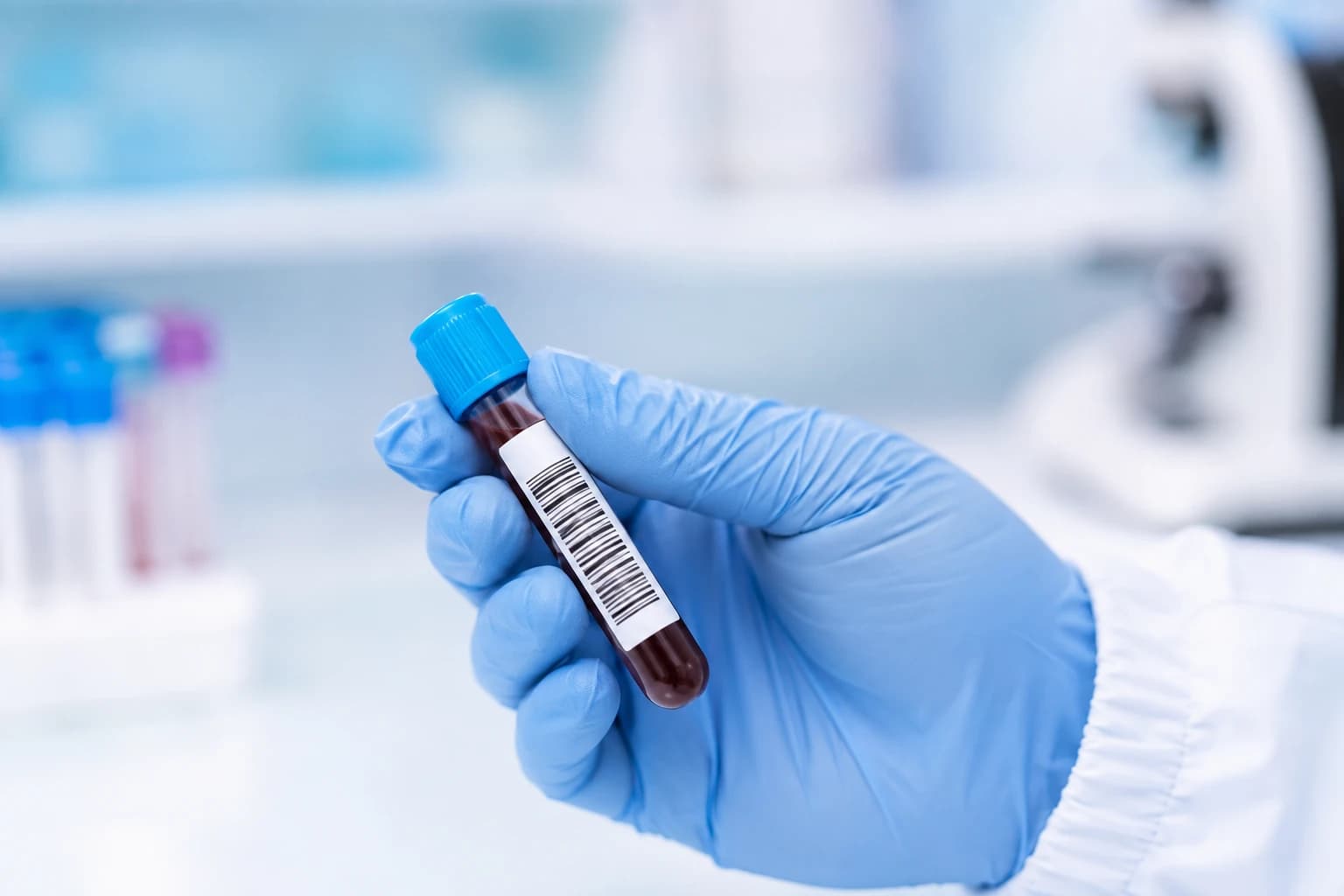
A blood test for 25-hydroxyvitamin D (25(OH)D) is the only reliable way to know your vitamin D status. You cannot tell from symptoms alone, since most deficiency is silent.
| Status | ng/mL | nmol/L |
|---|---|---|
| Deficient | Below 12 | Below 30 |
| May be inadequate | 12–20 | 30–50 |
| Sufficient for most people | 20 or above | 50 or above |
| Linked to potential harm | Above 50 | Above 125 |
(1 ng/mL is about 2.5 nmol/L.) These figures reflect U.S. population-health guidance from the NIH Office of Dietary Supplements. Some labs and specialists use a stricter clinical scale when actively treating a diagnosed deficiency — deficient below 20 ng/mL (50 nmol/L), sufficient at 30 ng/mL (75 nmol/L) or higher. Neither scale is wrong; one describes population-wide adequacy, the other a treatment target for someone already being monitored.
Testing isn't recommended for everyone. A 2024 Endocrine Society clinical practice guideline advises against routine 25(OH)D testing in generally healthy adults, since no trial has pinned down a specific blood level that predicts who benefits from treatment (Demay et al., 2024). Instead of testing then treating everyone, the guideline recommends going straight to a modest daily supplement, without testing first, for four groups where trials show a clear benefit: children and teens aged 1–18, adults 75 and older, pregnant women, and adults with prediabetes. Testing still makes sense if you have symptoms, a condition that affects absorption, or your doctor has another reason to check. In medical records, vitamin D deficiency is generally coded as ICD-10 E55.9.
What to Do About It
Because few foods contain much vitamin D, sunlight and supplements do most of the work, and sunlight is unreliable in winter at higher latitudes. UK health guidance is a good template: most people should consider a daily 10-microgram (400 IU) supplement through the darker months (roughly October to March), and people at higher risk, those with darker skin, who rarely go outside, who cover their skin, or who live in care homes, should take it year-round (NHS).
That dose is conservative and safe for most adults. In the US, the standard recommended intake is similar: 600 IU (15 mcg) a day for most adults, rising to 800 IU (20 mcg) after age 70, with a safe upper limit of 4,000 IU (100 mcg) a day without medical supervision (NIH ODS).
If you fall into one of the higher-benefit groups identified by the 2024 Endocrine Society guideline, ages 1 to 18, 75 and older, pregnant, or living with prediabetes, a modest daily supplement is recommended without needing a blood test first (Demay et al., 2024). Outside those groups, a blood test is the only way to know your actual level, and a doctor can arrange one if you're in a high-risk category.
One often-overlooked detail: magnesium acts as a cofactor for the enzymes that activate vitamin D in the liver and kidney, so a magnesium shortfall can blunt the response to vitamin D supplements even at an adequate dose (Uwitonze & Razzaque, 2018). If your level stays low despite consistent supplementation, it's worth checking your magnesium status too, our magnesium form selector can help you find the right type and dose.
Where the Evidence Is Strongest: Bone Health
The case for vitamin D and bone health is among the strongest in nutrition. Beyond preventing rickets and osteomalacia, a higher dose helps protect older adults from fractures. A pooled analysis of 11 trials in more than 31,000 older adults found that vitamin D doses around 800 IU a day, the highest level the trials tested, cut the risk of hip fracture by roughly 30%, while lower doses showed no benefit (Bischoff-Ferrari et al., 2012). For the wider role of vitamins in women's health, see our guide to metabolism vitamins for women.
Where the Evidence Is Weaker
Vitamin D is often sold as protection against cancer, heart disease, and more. For people who are not deficient, that claim doesn't hold up. A trial of nearly 26,000 adults found that vitamin D supplements did not reduce the risk of cancer (hazard ratio 0.96) or major cardiovascular events (hazard ratio 0.97) compared with a placebo (Manson et al., 2019). The honest position: correcting a real shortfall matters, but topping up levels that are already adequate does not appear to add protection against these diseases.
Common Myths
"Vitamin D supplements protect everyone from cancer and heart disease." Not in people who are not deficient. The large trial above found no reduction in cancer or cardiovascular events from supplementing (Manson et al., 2019).
"You can get enough vitamin D from food." Very few foods contain much. Oily fish, egg yolks, and fortified products help, but food alone rarely meets needs, especially in winter (NIH ODS).
"A tan means you have enough." Melanin lowers the skin's vitamin D production, so people with darker skin need much more sun for the same amount, which is exactly why deficiency rates are higher in darker-skinned people at northern latitudes (Forrest & Stuhldreher, 2011).
"If I feel fine, I don't need to get tested." Most deficiency causes no symptoms at all, which is exactly why current guidance doesn't recommend testing everyone. It recommends supplementing certain groups directly and reserving testing for people with symptoms or risk factors (Demay et al., 2024).
"More vitamin D is always better." Vitamin D is fat-soluble, so excess builds up in the body rather than washing out. Levels above roughly 50 ng/mL (125 nmol/L) are linked to potential harm, and very high doses can raise blood calcium to dangerous levels, causing nausea, confusion, and in severe cases kidney damage (MedlinePlus). More is not the goal; adequate is.
The Bottom Line
Vitamin D deficiency is genuinely common, especially with darker skin, limited sun, older age, or a condition that affects absorption, and it's usually symptomless, so most people only find out through a blood test. A modest daily supplement in winter, and year-round for higher-risk groups, is well supported and safe. Chasing high doses in the hope of preventing cancer or heart disease is not backed by the evidence. Fix a real deficiency; do not chase ever-higher levels. Browse our nutrition guides for more.
Frequently Asked Questions (FAQ)
What are the symptoms of vitamin D deficiency? Most people have no symptoms. When they appear, the strongest-evidence signs are fatigue, bone pain, and muscle weakness; low mood and getting sick more often are less firmly established. In infants and young children, deficiency causes rickets — bowed legs, delayed growth, and soft skull bones.
What causes vitamin D deficiency? Limited sun exposure, darker skin, older age, obesity, malabsorption conditions like celiac disease or Crohn's disease, bariatric surgery, chronic kidney or liver disease, certain medications, exclusive breastfeeding without a supplement, and strict vegan diets without fortified foods.
How is vitamin D deficiency tested? A blood test for 25-hydroxyvitamin D (25(OH)D). Most healthy adults don't need routine testing — a 2024 Endocrine Society guideline recommends it mainly for people with symptoms, risk factors, or a condition that affects absorption.
Who is most at risk of vitamin D deficiency? People with darker skin, older adults, those who rarely get outdoors or cover most of their skin, and anyone living far from the equator during winter. Diet alone rarely covers it, because few foods contain much vitamin D.
How much vitamin D should I take? Public health guidance suggests around 10 micrograms (400 IU) a day, especially in winter, and year-round for higher-risk groups. Do not exceed 100 micrograms (4,000 IU) a day without medical advice.
What does low vitamin D feel like? In most people, nothing at all. When low vitamin D does cause symptoms, it usually feels like general fatigue and vague muscle or bone aches rather than anything specific, which is part of why it so often goes unnoticed.
Do vitamin D supplements prevent cancer or heart disease? No. A large trial found vitamin D did not reduce cancer or cardiovascular disease in people who were not deficient. Correcting a real deficiency matters; topping up normal levels does not appear to add protection.
Can I get enough vitamin D from food? Rarely. Oily fish, egg yolks, and fortified foods provide some, but most people cannot reach adequate levels from food alone, especially in winter.
Is it possible to take too much vitamin D? Yes. Vitamin D is fat-soluble, so excess builds up rather than washing out. Levels above roughly 50 ng/mL (125 nmol/L) are linked to potential harm, and very high doses can raise blood calcium to dangerous levels.
Medical disclaimer: This article is for informational purposes only. Always consult a qualified healthcare provider before making changes to your health routine.
Sources
- Holick MF. Vitamin D deficiency. New England Journal of Medicine, 2007 — PubMed. https://pubmed.ncbi.nlm.nih.gov/17634462/
- Forrest KY, Stuhldreher WL. Prevalence and correlates of vitamin D deficiency in US adults. Nutrition Research, 2011 — PubMed. https://pubmed.ncbi.nlm.nih.gov/21310306/
- Bischoff-Ferrari HA, et al. A pooled analysis of vitamin D dose requirements for fracture prevention. New England Journal of Medicine, 2012 — PubMed. https://pubmed.ncbi.nlm.nih.gov/22762317/
- Manson JE, et al. Vitamin D supplements and prevention of cancer and cardiovascular disease (VITAL). New England Journal of Medicine, 2019 — PubMed. https://pubmed.ncbi.nlm.nih.gov/30415629/
- Demay MB, et al. Vitamin D for the Prevention of Disease: An Endocrine Society Clinical Practice Guideline. Journal of Clinical Endocrinology & Metabolism, 2024. https://academic.oup.com/jcem/article/109/8/1907/7685305
- Endocrine Society. Vitamin D for Prevention of Disease (guideline summary). https://www.endocrine.org/clinical-practice-guidelines/vitamin-d-for-prevention-of-disease
- NHS. Vitamin D. https://www.nhs.uk/conditions/vitamins-and-minerals/vitamin-d/
- NIH Office of Dietary Supplements. Vitamin D Fact Sheet for Health Professionals. https://ods.od.nih.gov/factsheets/VitaminD-HealthProfessional/
- MedlinePlus (NIH). Vitamin D Deficiency. https://medlineplus.gov/vitaminddeficiency.html
- MedlinePlus (NIH) Medical Encyclopedia. Hypervitaminosis D. https://medlineplus.gov/ency/article/001594.htm
- CDC. Vitamin D and Breastfeeding. https://www.cdc.gov/breastfeeding-special-circumstances/hcp/diet-micronutrients/vitamin-d.html
- ICD10Data.com. Diagnosis Code E55.9 — Vitamin D deficiency, unspecified. https://www.icd10data.com/ICD10CM/Codes/E00-E89/E50-E64/E55-/E55.9
- StatPearls (NCBI Bookshelf). Vitamin D Deficiency. https://www.ncbi.nlm.nih.gov/books/NBK532266/
- Uwitonze AM, Razzaque MS. Role of Magnesium in Vitamin D Activation and Function. Journal of the American Osteopathic Association, 2018 — PubMed. https://pubmed.ncbi.nlm.nih.gov/29480918/
All sources accessed 19 July 2026.

Sophia Martinez, MS, CNS
A wellness researcher focused on what the evidence actually says.