Introduction
Have you ever wondered if that grab-and-go sandwich or fizzy drink could be quietly chipping away at your health? Recent studies link ultra-processed food deaths to skyrocketing rates of chronic disease—and it’s not just about calories. Below, we’ll unpack what ultra-processed foods (UPFs) really are, examine the health risks of processed foods, and share science-backed tips to reduce your UPF intake for good.
1. What Are Ultra-Processed Foods?
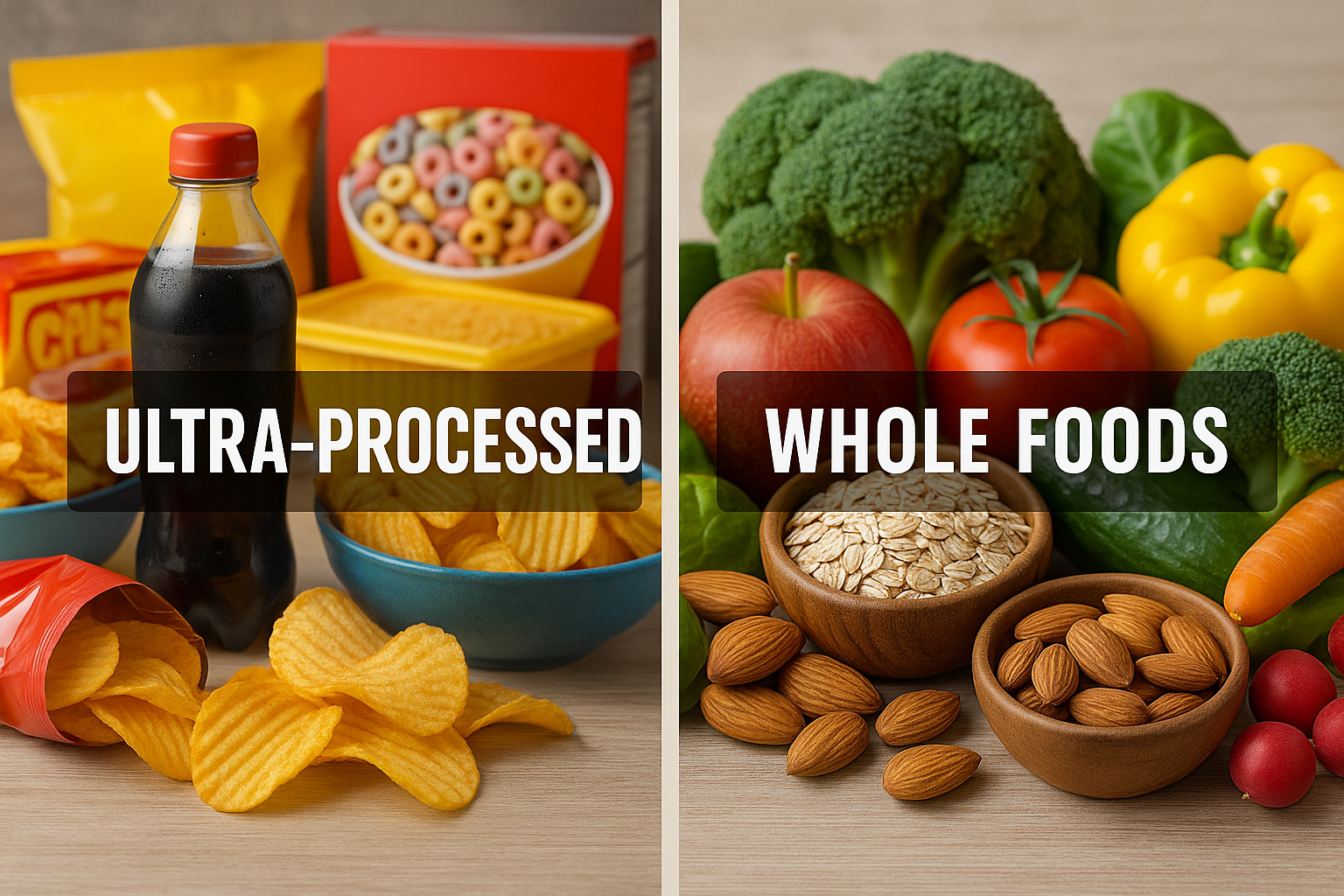
Ultra-processed foods are industrial formulations made mostly from substances extracted or synthesized from foods, plus additives like preservatives, sweeteners, and emulsifiers. They’re engineered to be hyper-palatable and cheap to produce. Examples:
- Packaged snacks
- Sugary cereals
- Instant noodles
- Soft drinks
Contrast with whole foods: Fruits, vegetables, and grains in their natural or minimally altered state, which are linked to lower mortality risk according to a National Institutes of Health (NIH).
2. Why UPFs Are on the Rise
Global sales of UPFs have more than doubled since 2000, accounting for up to 60% of dietary calories in high-income countries, according to the WHO European Regional Obesity Report 2022. Key drivers include:
- Convenience: Ready-to-eat, long shelf-life.
- Aggressive marketing: Targeted ads, child-friendly packaging.
- Affordability: Economies of scale keep prices low.
3. Health Risks & Mortality Rates
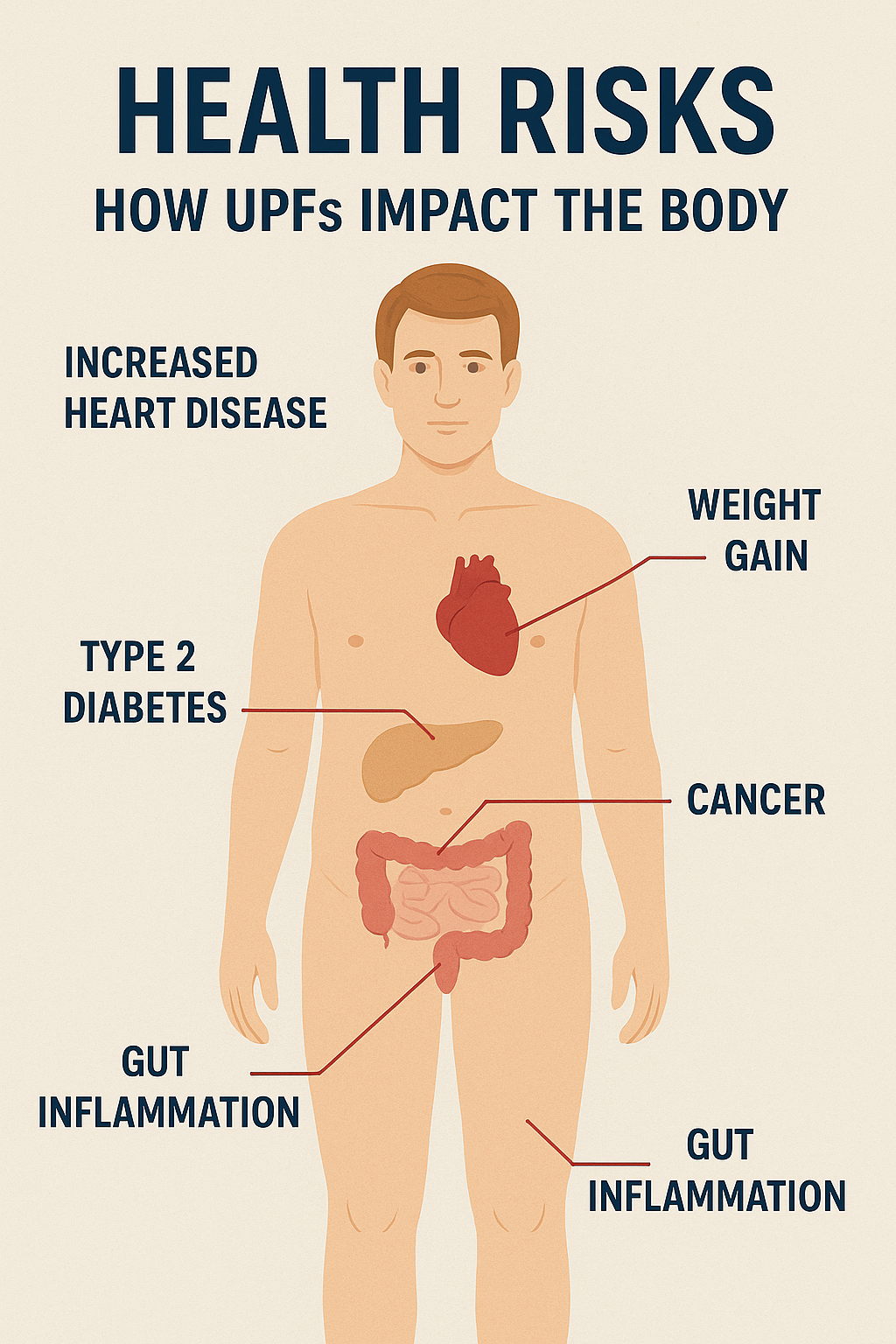
UPFs are linked to severe health outcomes:
- Cardiovascular disease: 15% higher risk per daily UPF serving BMJ, 2023.
- Type 2 diabetes: 20% increased incidence in heavy UPF consumers NIH, 2021.
- Cancer: Higher rates of breast and colorectal cancers The Lancet, 2022. A landmark cohort study found that each 10% increase in UPF intake raises ultra-processed food mortality rates by 14% (HR 1.14, 95% CI 1.05–1.24) BMJ, 2023.
Pro Tip: Swap one UPF serving daily for a whole-food alternative to lower long-term mortality risk by up to 5%.
4. How UPFs Hijack Your Body
- “Bliss point” engineering: Exact sugar-salt-fat ratios override natural satiety Harvard Health Publishing.
- Gut microbiome disruption: Emulsifiers like carboxymethylcellulose trigger inflammation National Institutes of Health (NIH).
- Behavioral loops: Cue-triggered snacking reinforced by instant gratification.
5. Actionable Tips to Cut Down
- Cook at home: Aim for 80% unprocessed ingredients per meal.
- Read labels: Avoid products with >5 unpronounceable additives.
- Plan snacks: Keep nuts, fruit, or yogurt on hand.
- Hydrate wisely: Replace soda with sparkling water.
6. FAQs
Q1:Are “minimally processed” foods safe?
Yes—chopped veggies or frozen fruit are fine. Limit industrial UPFs like soda or chips WHO, 2022.
Q2: How quickly do UPFs affect health?
Long-term risks accumulate over years, but bloating or fatigue can occur within days Harvard Health Publishing.
Q3: Can policy changes help?
Yes! Chile’s front-of-pack warning labels cut UPF sales by 24% National Library of Medicine, 2019.
Want deeper insights?
- The WHO Report on Ultra-Processed Foods details global UPF consumption trends, policy concerns, and health impacts.
- The Centers for Disease Control (CDC) explains how dietary shifts—including reducing UPF intake—can significantly extend life expectancy.
Conclusion
With ultra-processed food deaths climbing, now is the time to act. Start by swapping one UPF serving daily for whole foods. Small changes can slash mortality risks, according to peer-reviewed studies from the BMJ and The Lancet.
Medical Disclaimer: This article is for informational purposes only and does not constitute medical advice. Consult a registered dietitian or physician before making significant changes to your diet, particularly if you have existing health conditions or take medications.

