Controlled breathing produces real, measurable drops in stress in clinical trials. It works because breathing is the one automatic function you can easily take over on purpose. The effects are modest, though, and it works best as a daily self-regulation habit rather than a cure for an anxiety disorder.
Here is the physiology, the techniques with the most evidence, and how to practice them safely.
Why slow breathing calms you: the physiology
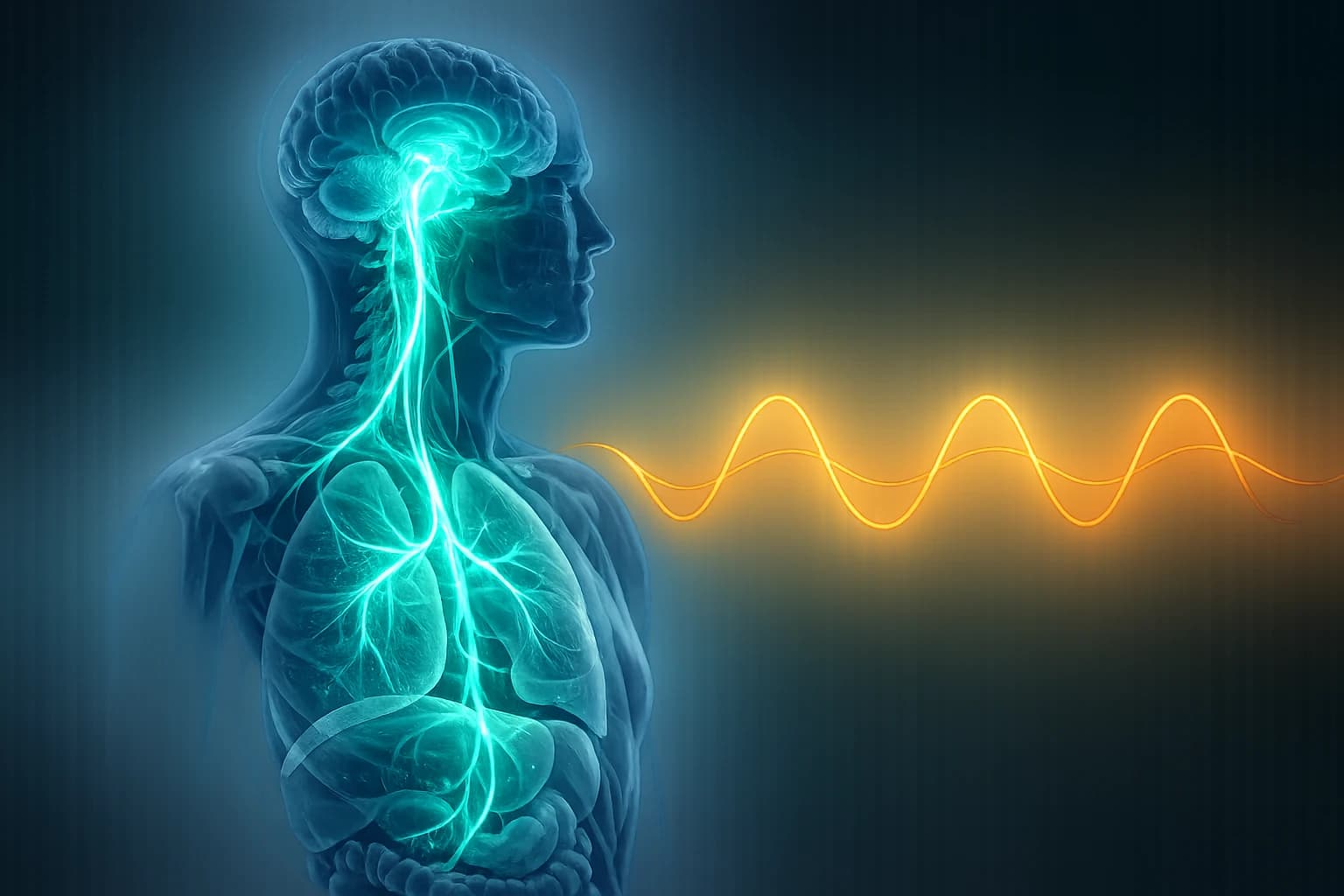
Your nervous system has two broad modes: a "fight or flight" sympathetic side and a "rest and digest" parasympathetic side. Slow breathing nudges you toward the second. A 2018 systematic review of slow-breathing techniques, generally fewer than 10 breaths a minute, found that they consistently raise heart-rate variability, a marker of parasympathetic activity and stress resilience, while lowering blood pressure and respiratory rate (Zaccaro et al., 2018). The effect is strongest at around 6 breaths a minute — close to what researchers call an individual's "resonance frequency," typically somewhere between 4.5 and 7 breaths a minute depending on the person. In a controlled trial, breathing at this personal resonance frequency lowered systolic blood pressure and improved mood during a stress task more than breathing at a nearby rate or simply sitting quietly did (Steffen et al., 2017).
The exhale seems to do much of the work. A longer, slower out-breath raises vagal (parasympathetic) tone — the mechanism reviewed in detail by Russo, Santarelli & O'Rourke (2017) — which is why exhale-focused techniques tend to calm you faster than simply breathing deeply (Balban et al., 2023; Russo et al., 2017).
What the evidence shows (and its limits)
Breathwork is one of the better-studied self-help tools, but be realistic about the size of the effect. A 2023 meta-analysis of randomized controlled trials found that breathwork produced small-to-medium reductions in stress, with similar reductions in anxiety and depression symptoms, compared with control conditions (Fincham et al., 2023). Small-to-medium is meaningful but not dramatic. Breathwork is a helpful tool, not a replacement for treatment of a diagnosed condition.
Regular practice can also shift your baseline, not just the moment. In an 8-week trial, adults who practiced diaphragmatic breathing had lower cortisol and less negative affect than a control group (Ma et al., 2017). That is one reason to practice on ordinary days, not only when you are already stressed. For how cortisol and daily habits interact, see the cortisol diet guide.
Three protocols to try
You need no equipment beyond a clock — or, if you'd rather not watch one, our breathing timer will pace each pattern below for you, along with two techniques not covered in detail here: alternate-nostril breathing (Nadi Shodhana) and the more advanced Wim Hof Method. If you'd rather match a technique to the moment — acute stress, daily resilience, or winding down before sleep — our companion practical guide to breathing exercises for stress walks through that situational picture in more depth than this article does.
Start with five minutes. If you're not sure which of the three below to reach for, here's how they compare:
| Technique | Best for | Onset | Evidence strength |
|---|---|---|---|
| Slow-paced breathing (~6 breaths/min) | Daily resilience | Minutes of daily practice | Strongest: a systematic review (Zaccaro et al., 2018) plus a dedicated resonance-frequency trial (Steffen et al., 2017) |
| Extended-exhale (cyclic sighing) | Acute stress, fastest relief | Effects within minutes | Strong: outperformed other breathing styles and meditation in a randomized trial (Balban et al., 2023) |
| Box breathing / 4-7-8 | A structured, popular routine | Moderate, unhurried | Thinner: one randomized trial supports 4-7-8 specifically, in post-surgical patients (Aktaş & İlgin, 2023); box breathing has no dedicated trial of its own |
1. Slow-paced breathing (about 6 breaths per minute): the best-evidenced option
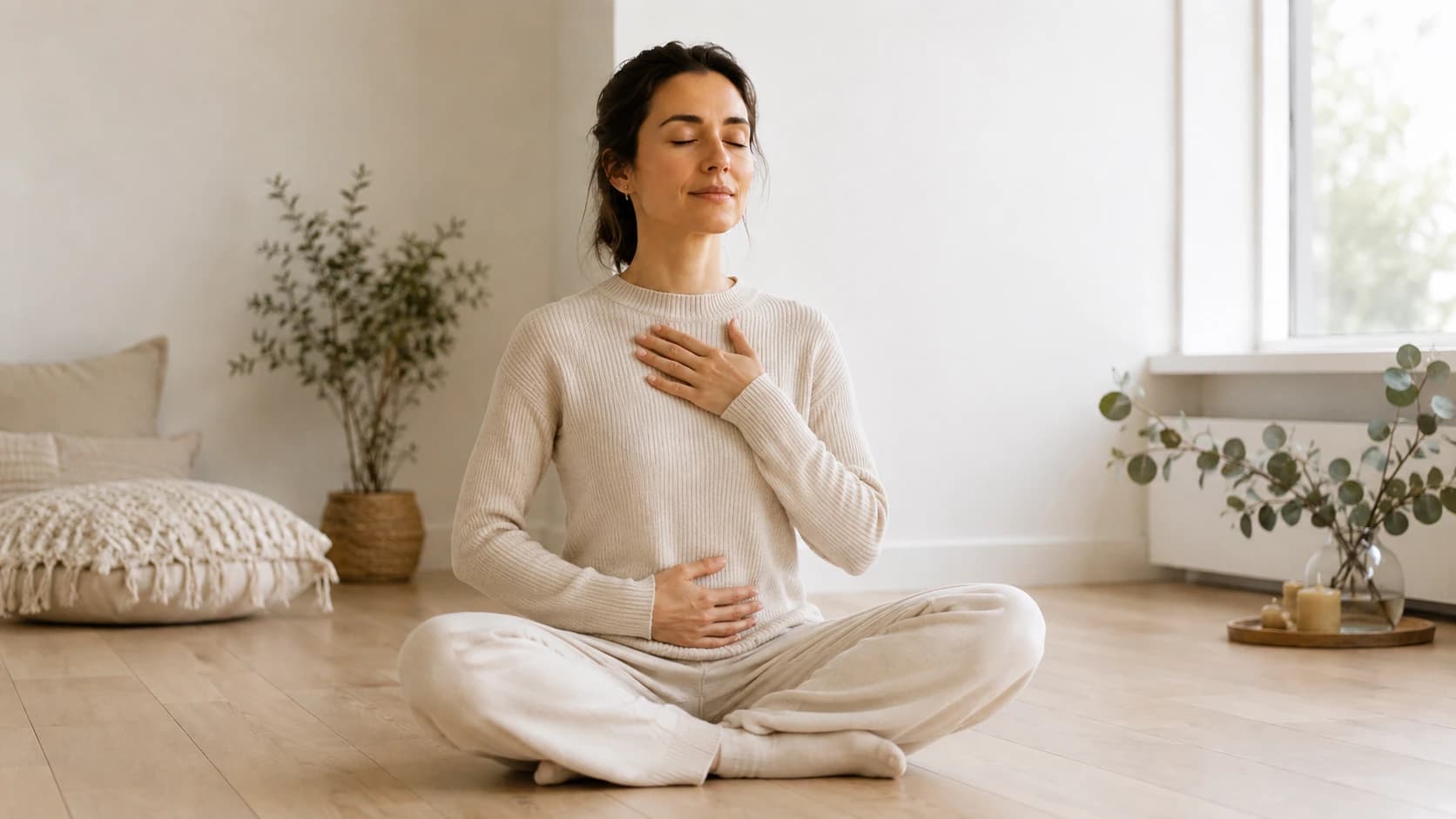
This is the technique with the most research behind it. Breathe in gently through your nose for a count of five, then out through your mouth for a count of five, for about five minutes. The NHS recommends essentially this pattern for stress, anxiety, and panic (NHS). Let the breath fall into your belly rather than forcing a big chest breath.
2. Extended-exhale breathing (cyclic sighing): strong recent evidence
In the 2023 Balban trial, this outperformed both other breathing styles and mindfulness meditation for improving mood (Balban et al., 2023). Take a normal breath in through the nose, add a second short sniff to top up the lungs, then release a long, slow exhale through the mouth until your lungs feel empty. Repeat for five minutes.
3. Box breathing and 4-7-8: popular, but less studied
Box breathing (in for 4, hold for 4, out for 4, hold for 4) and 4-7-8 (in for 4, hold for 7, out for 8) are widely shared, but they have far less direct trial evidence than slow-paced or extended-exhale breathing. The 4-7-8 pattern was popularized by Dr. Andrew Weil, adapted from pranayama yoga breathing; one randomized trial found it reduced anxiety more than both a standard deep-breathing exercise and routine care in patients recovering from bariatric surgery (Aktaş & İlgin, 2023) — a genuine result, though evidence outside that specific surgical population is still limited. Box breathing has less dedicated trial evidence of its own. Both are low-risk, and many people like the structure. If you use them, notice that both share the likely active ingredient: a slow rate and a long exhale. Skip the breath-holds if they make you tense.
Which one should you actually use? A 2025 review of the evidence on this exact question found that most well-practiced breathing techniques converge on similar longer-term reductions in perceived stress, even though their short-term physiological effects differ (Siebieszuk et al., 2025). In practice, that means the technique you'll actually keep doing matters more than finding a single "best" one — use the table above to match a technique to the moment, then let consistency do the rest.
Cautions: breathe slower, not bigger
A few safety points matter.
- Do not over-breathe. Taking huge, fast breaths lowers carbon dioxide and can cause dizziness, tingling, or more anxiety, the opposite of what you want. The goal is slow and gentle, not big.
- Certain health conditions call for extra caution. If you have a respiratory condition such as asthma or COPD, a cardiovascular condition, or you are pregnant, skip prolonged breath holds and check with your clinician before starting a regular practice.
- Be careful with intense hyperventilation methods. Techniques built on rapid, forceful breathing — such as Wim Hof-style cyclic hyperventilation, which produces a marked, voluntary surge in sympathetic nervous system activity (Kox et al., 2014) — can cause fainting. Never do them in or near water, while driving, or standing up.
- Go gently if you are prone to panic. Focusing closely on the breath can feel uncomfortable or even triggering for some people with panic or trauma histories. Ease in slowly, and stop if it increases your distress.
- It is a complement, not a cure. For diagnosed anxiety or panic disorders, breathwork can support treatment but should not replace therapy or medication.
Frequently Asked Questions (FAQ)
Does breathwork really reduce stress? Yes, with realistic expectations. Trials show small-to-medium reductions in stress, anxiety, and depression. It is a genuine tool, not a cure-all.
Which technique is best? Slow-paced breathing at about six breaths a minute and extended-exhale (cyclic sighing) have the most evidence. Box breathing and 4-7-8 are popular but less studied.
How long and how often? Five minutes a day is a reasonable starting dose, and regular practice matters more than length. Practicing on calm days, not just stressful ones, helps build the effect.
Can breathwork replace therapy for anxiety? No. For a diagnosed anxiety or panic disorder, it is a helpful add-on, not a substitute for professional care.
Is breathwork safe if I have a health condition? If you have a respiratory condition such as asthma or COPD, a cardiovascular condition, or you are pregnant, skip prolonged breath holds and check with your clinician before starting a regular practice.
Aren't big deep breaths the goal? No. Slow beats big. Over-breathing can actually increase anxiety; the calming effect comes from a slow rate and a long exhale.
For where breathwork fits among other evidence-based practices, see mindful habits backed by research and the mindful living guide. For the emotional side of practice, see mindfulness and emotional well-being.
How we made this guide: Researched, written, and fact-checked by The Wellness Voyage editorial team, with every physiological and clinical claim tied to a citable, peer-reviewed source — full citations are linked throughout and listed below. We review and update this article as new evidence emerges; the last-reviewed date is shown with this article. It is written to inform, not to replace personalised advice from a qualified healthcare professional.
Medical disclaimer: This article is for informational purposes only. Always consult a qualified healthcare provider before making changes to your health routine.
Sources
- Fincham GW, et al. Effect of breathwork on stress and mental health: a meta-analysis of randomised-controlled trials. Scientific Reports, 2023 — PubMed Central. https://pmc.ncbi.nlm.nih.gov/articles/PMC9828383/
- Zaccaro A, et al. How Breath-Control Can Change Your Life: A Systematic Review on Psycho-Physiological Correlates of Slow Breathing. Frontiers in Human Neuroscience, 2018 — PubMed Central. https://pmc.ncbi.nlm.nih.gov/articles/PMC6137615/
- Balban MY, et al. Brief structured respiration practices enhance mood and reduce physiological arousal. Cell Reports Medicine, 2023 — PubMed Central. https://pmc.ncbi.nlm.nih.gov/articles/PMC9873947/
- Ma X, et al. The Effect of Diaphragmatic Breathing on Attention, Negative Affect and Stress in Healthy Adults. Frontiers in Psychology, 2017 — PubMed. https://pubmed.ncbi.nlm.nih.gov/28626434/
- Breathing exercises for stress — NHS. https://www.nhs.uk/mental-health/self-help/guides-tools-and-activities/breathing-exercises-for-stress/
- Russo MA, Santarelli DM, O'Rourke D. The physiological effects of slow breathing in the healthy human. Breathe (Sheffield), 2017 — PubMed Central. https://pmc.ncbi.nlm.nih.gov/articles/PMC5709795/
- Steffen PR, Austin T, DeBarros A, Brown T. The Impact of Resonance Frequency Breathing on Measures of Heart Rate Variability, Blood Pressure, and Mood. Frontiers in Public Health, 2017 — PubMed Central. https://pmc.ncbi.nlm.nih.gov/articles/PMC5575449/
- Kox M, et al. Voluntary activation of the sympathetic nervous system and attenuation of the innate immune response in humans. PNAS, 2014 — PubMed Central. https://pmc.ncbi.nlm.nih.gov/articles/PMC4034215/
- Aktaş GK, İlgin VE. The Effect of Deep Breathing Exercise and 4-7-8 Breathing Techniques Applied to Patients After Bariatric Surgery on Anxiety and Quality of Life. Obesity Surgery, 2023 — PubMed. https://pubmed.ncbi.nlm.nih.gov/36480101/
- Siebieszuk A, Płoński AF, Baranowski M. Breathwork for Chronic Stress and Mental Health: Does Choosing a Specific Technique Matter? Medical Sciences, 2025 — PubMed Central. https://pmc.ncbi.nlm.nih.gov/articles/PMC12372116/
All sources accessed 12 September 2026.

Sophia Martinez
A wellness researcher focused on what the evidence actually says.