Introduction
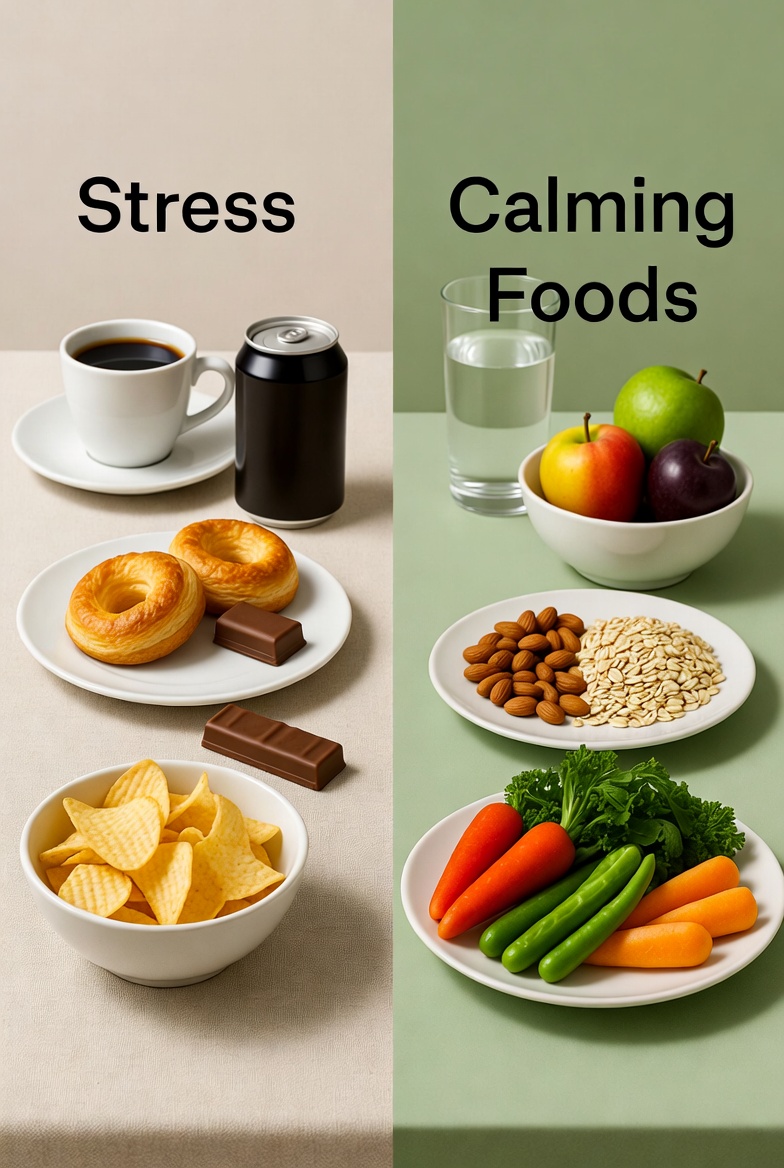
When stress feels constant, food choices can quietly make it better—or worse. Cortisol, your body’s main stress hormone, is meant to rise and fall during the day. But certain foods and drinks can push cortisol higher and keep it there longer than needed.
This doesn’t mean you have to eat perfectly or give up your favorite foods forever. The goal is awareness. By knowing which foods may raise cortisol, you can make calmer choices most of the time and support your body’s natural stress balance.
Let’s break it down in simple, practical terms.
How Some Foods Raise Stress Hormones
Your body sees certain foods as “stress signals.”
Highly sugary, heavily processed, or stimulant-heavy foods can:
- Spike blood sugar quickly
- Trigger insulin crashes
- Stimulate the nervous system
- Disrupt sleep and digestion
All of these signals tell your body it needs to stay alert. Cortisol rises to help manage that perceived stress—even if the stress came from food, not life.
Foods and Drinks to Watch
You don’t need to avoid these forever. Just be mindful of how often, how much, and when you consume them.
Sugary Foods and Drinks
Why they raise cortisol:
Sugar causes fast blood sugar spikes followed by crashes. Those crashes signal stress, prompting cortisol release.
Common examples:
- Candy and sweets
- Sugary cereals
- Soda and sweetened drinks
- Pastries and baked goods
Better alternatives:
- Fruit with nuts or yogurt
- Oatmeal with berries
- Dark chocolate in small amounts
Caffeine (Especially on an Empty Stomach)
Why it raises cortisol:
Caffeine directly stimulates cortisol release, especially when consumed first thing in the morning without food.
Common sources:
- Coffee
- Energy drinks
- Strong tea
- Pre-workout drinks
Better alternatives:
- Coffee after breakfast
- Half-caf or smaller servings
- Herbal teas like chamomile or peppermint
Processed and Packaged Foods
Why they raise cortisol:
These foods often combine sugar, refined carbs, unhealthy fats, and additives. This combo stresses digestion and blood sugar control.
Common examples:
- Chips and crackers
- Frozen meals
- Fast food
- Packaged snack bars
Better alternatives:
- Simple meals with whole ingredients
- Nuts, seeds, or yogurt for snacks
- Homemade versions when possible
Alcohol
Why it raises cortisol:
Alcohol can interfere with sleep and blood sugar regulation. Poor sleep alone can raise cortisol the next day.
Better alternatives:
- Alcohol-free days during the week
- Sparkling water with citrus
- Herbal tea in the evening
Refined Carbohydrates
Why they raise cortisol:
White bread, white rice, and refined pasta digest quickly, leading to blood sugar swings.
Better alternatives:
- Whole-grain bread
- Brown rice or quinoa
- Sweet potatoes
Short “Foods to Watch” List
Keep an eye on these, especially during stressful periods:
- Sugary drinks
- Energy drinks
- Candy and desserts
- Fast food
- White bread and pastries
- Late-night alcohol
Awareness matters more than restriction.
Why Reducing These Foods Helps
When you limit foods that spike blood sugar or overstimulate your system:
- Cortisol has fewer triggers
- Energy feels steadier
- Cravings may lessen
- Sleep quality can improve
It’s not about cutting everything out. It’s about reducing stress signals your body doesn’t need.
Tips for Reading Food Labels
Food labels can be sneaky. Here’s what to look for:
- Added sugars: Look for words like syrup, cane sugar, dextrose, maltose
- Ingredient length: Shorter lists usually mean less processing
- Hidden caffeine: Found in energy drinks and “energy” snacks
- Trans fats: Avoid anything with “partially hydrogenated oils”
If sugar or refined grains are in the first few ingredients, it’s likely a cortisol-spiking food.
Practical Swaps That Support Calm
Instead of… try this:
- Soda → sparkling water with fruit
- Candy → fruit with nut butter
- Energy drinks → coffee with food or green tea
- Chips → nuts or popcorn
- Pastries → oatmeal or yogurt
Small swaps add up fast.
Putting It All Together
You don’t need to eat perfectly to support cortisol balance. Just reducing frequent triggers can make a noticeable difference in how your body handles stress.
That guide walks you through what to add to your plate, not just what to limit. Learn more about a full cortisol diet here: Cortisol Diet Guide: How to Lower Stress Hormone Naturally with Food.
Frequently Asked Questions
Do I have to completely avoid sugar?
No. Whole-food sugars like fruit are fine. Focus on reducing added and refined sugars.
Is caffeine always bad for cortisol?
Not necessarily. Timing and amount matter more than total avoidance.
Can processed foods raise cortisol even if calories are low?
Yes. Blood sugar swings and additives matter more than calories alone.
How quickly can cutting these foods help?
Some people notice better energy and fewer cravings within a week.
What if stress comes from life, not food?
Food won’t remove stress, but it can make your body more resilient to it.
Final Thought
Food shouldn’t be another source of stress. By gently limiting cortisol-raising foods and choosing calmer alternatives, you support your body instead of fighting it.
One choice at a time is enough. 🌿
